数字中国

Search documents
前三季度赔付超4400万件!中国人寿2025年三季度寿险理赔服务报告发布
Zhong Guo Zheng Quan Bao· 2025-10-17 05:09
Core Viewpoint - China Life Insurance Company has demonstrated strong claims service capabilities, with over 44 million claims and more than 73 billion yuan in payouts in the first three quarters of 2025, maintaining a leading position in the industry [2][4]. Claims Performance - In the first three quarters of 2025, China Life processed a total of 44.09 million claims, amounting to 73.3 billion yuan in payouts [4]. - Health insurance claims accounted for over 43.4 million cases, reflecting a year-on-year increase of over 13.3%, with payouts exceeding 56 billion yuan, a year-on-year increase of over 2.2% [4]. - The distribution of claims across four major categories was as follows: 19.1% for death, 58.0% for medical, 18.3% for critical illness, and 3.0% for disability [4]. Technological Innovations - China Life is actively responding to the "Digital China" strategy by exploring cutting-edge insurance fields and transforming claims services to enhance efficiency [6]. - The company has integrated systems with social security, medical institutions, and third-party data companies to simplify claims processes, achieving 5.98 million direct payment claims totaling over 3.2 billion yuan in the first three quarters of 2025 [6]. - The introduction of the "electronic invoice hassle-free claims" service resulted in 6.93 million claims processed with an average service time of only 0.28 days [6]. Health Trends and Recommendations - Claims data reflect changing trends in customer risk exposure, with an increase in cardiovascular disease claims during the autumn and winter seasons compared to spring and summer [8]. - The company emphasizes the importance of preventive measures against high-incidence diseases and suggests timely medical insurance product configurations to enhance health protection [8]. - There is a noted gap in critical illness insurance coverage, particularly for malignant tumors, which account for over 70% of critical illness claims, yet the average payout is only 43,000 yuan, highlighting the need for supplementary commercial health insurance [8]. Commitment to Service - China Life continues to fulfill its role as an economic "shock absorber" and social "stabilizer," providing prompt and compassionate claims services to its customers [9].


双节点下的盛典叙事:在时代坐标中读懂“在一起就可以”
Huan Qiu Wang Zi Xun· 2025-10-17 04:39
Core Insights - The event "Hongmeng Starry Night Festival" is set to take place on November 28, 2025, marking significant milestones in China's digital economy and technology self-reliance [1][3] - The theme "Together, we can" reflects on the past decade of China's technological advancements and emphasizes the commitment to future digital civilization [3][11] Digital Economy and Technological Development - The Hongmeng operating system symbolizes China's journey towards technological independence, evolving from an emergency solution in 2019 to a fully self-researched system by 2024, achieving full coverage across devices by 2025 [5][6] - The development of Hongmeng is supported by over 2.54 million developers, showcasing a collaborative spirit akin to China's aerospace achievements [6][7] Societal Impact and User Experience - Hongmeng enhances user experience through features like instant app launch, cross-device collaboration, and accessibility tools for individuals with disabilities, promoting inclusivity in technology [6][7] - The operating system drives digital upgrades across various sectors, including public services, finance, and manufacturing, thereby integrating technology into the fabric of society [7][9] Economic and Employment Growth - The flourishing of the Hongmeng ecosystem stimulates related industries such as hardware production, software development, and talent training, creating numerous job opportunities [9][11] - The festival serves as a platform to connect the public with the technological advancements that impact their daily lives, fostering a sense of relevance and engagement with technology [9][11] Future Outlook - The "Hongmeng Starry Night Festival" is not just a celebration but a declaration of future development, highlighting the collective effort behind technological innovation and its profound impact on everyday life [11]

通信行业2025年三季报业绩前瞻:算力景气,红利稳健,战力将起
ZHESHANG SECURITIES· 2025-10-11 07:44
Investment Rating - The industry investment rating is "Positive" [4][19] Core Views - The telecommunications industry is benefiting from the ongoing Digital China strategy, leading to stable growth in overall business for operators, with innovative services experiencing higher growth rates and increasing proportions [2] - The AI computing power sector continues to thrive globally, with significant investments from major companies, indicating a rapid growth period for domestic computing power targets [4] - New growth drivers such as satellite internet are injecting new momentum into the industry, providing additional performance elasticity [4] Summary by Relevant Sections Telecom Operators - China Mobile is expected to report Q3 revenue of CNY 245.1 billion to CNY 246 billion, a year-on-year growth of 0.2% to 0.5%, with net profit of CNY 32.1 billion to CNY 32.4 billion, a growth of 4.6% to 5.6% [2][16] - China Telecom is projected to achieve Q3 revenue of CNY 127.2 billion to CNY 128.5 billion, a growth of 1% to 2%, with net profit of CNY 7.75 billion to CNY 8.05 billion, a growth of 3.5% to 7.5% [2][16] - China Unicom's Q3 revenue is expected to be CNY 93.7 billion to CNY 94.6 billion, with a growth of 1% to 2%, and net profit of CNY 2.41 billion to CNY 2.49 billion, a growth of 4.8% to 8.3% [3][16] - China Tower is anticipated to report Q3 revenue of CNY 24.9 billion to CNY 25.2 billion, a growth of 2.9% to 4.1%, with net profit of CNY 2.97 billion to CNY 3.05 billion, a growth of 5.2% to 8% [3][16] AI and Network Connectivity - The AI optical module sector is experiencing significant growth, with companies like Zhongji Xuchuang expected to report Q3 revenue of CNY 8.9 billion to CNY 9.6 billion, a growth of 37% to 47%, and net profit of CNY 2.9 billion to CNY 3.2 billion, a growth of 108% to 130% [4][16] - Tianfu Communication is projected to achieve Q3 revenue of CNY 1.8 billion to CNY 2.1 billion, a growth of 115% to 150%, with net profit of CNY 650 million to CNY 750 million, a growth of 102% to 133% [5][16] AI Applications and Data Centers - AI server demand is rapidly increasing, with ZTE expected to report Q3 revenue of CNY 31 billion to CNY 32 billion, a growth of 12% to 16%, and net profit of CNY 1.95 billion to CNY 2.1 billion, a decrease of 3% to 10% [7][16] - The AIDC sector is also growing, with Keda Data expected to report Q3 revenue of CNY 24 billion to CNY 27 billion, a growth of 44% to 62%, and net profit of CNY 180 million to CNY 230 million, a growth of 1347% to 1748% [8][16] Satellite Internet and Military Communication - The military communication sector is expected to see increased investment due to regional tensions, with companies like Zhenlei Technology projected to report Q3 revenue of CNY 150 million to CNY 160 million, a growth of 125% to 141%, and net profit of CNY 45 million to CNY 50 million, a growth of 409% to 466% [10][16]




我国1-6月GDP70强城市排名洗牌:上海突破2.6万亿,苏州约1.3万亿,福州逆袭合肥!
Sou Hu Cai Jing· 2025-10-10 18:43
Core Insights - China's economy demonstrated strong resilience in the first half of 2025, with the top 70 cities contributing over 70% to the national GDP, highlighting their role as key indicators of regional development [1] - The "dual circulation" strategy and industrial upgrading policies are driving growth in regions like the Yangtze River Delta and the Guangdong-Hong Kong-Macau Greater Bay Area, while central and western cities are accelerating by attracting industrial transfers [1] Economic Performance - Shanghai leads with a GDP of 26.22 trillion yuan, followed by Beijing at 25.03 trillion yuan and Shenzhen at 18.32 trillion yuan, showing significant nominal growth rates of 4.61%, 5.5%, and 5.9% respectively [2] - A total of 11 cities exceeded a GDP of 700 billion yuan, with Wenzhou, Hangzhou, and Xi'an achieving double-digit growth rates of 12.42%, 11.5%, and 11.21% respectively [3] Regional Development - The economic total of the Chengdu-Chongqing economic circle is nearing 3 trillion yuan, indicating the effectiveness of regional coordinated development strategies [3] - The top cities are increasingly focusing on technological innovation and industrial transformation, as seen in Shanghai's shift towards innovation-driven growth and Suzhou's transition from traditional manufacturing to intelligent manufacturing [8][11] Sectoral Highlights - Shanghai's economic growth is supported by its international shipping center, with a 8% increase in throughput at the automated terminal of Yangshan Port, contributing to a total import-export volume of 21 trillion yuan [8] - Suzhou's manufacturing sector is evolving, with a 20% reduction in logistics costs due to the collaboration between Taicang Port and Shanghai, and a 23% increase in technology spending [11] - Fuzhou's economy is driven by a "land-sea-air" strategy, with a 33% increase in trade with Taiwan and a 45% rise in investment in the new energy equipment manufacturing sector [12] Conclusion - Cities are shaping their core competitiveness through differentiated paths, with Shanghai focusing on technological innovation, Suzhou on intelligent manufacturing, and Fuzhou on marine economy breakthroughs [14] - The ongoing optimization of regional development policies will favor cities that can effectively position themselves in new production capacity sectors and stimulate endogenous growth [14]

中国实现全球突破!首座海底数据中心成功部署
是说芯语· 2025-10-05 01:49
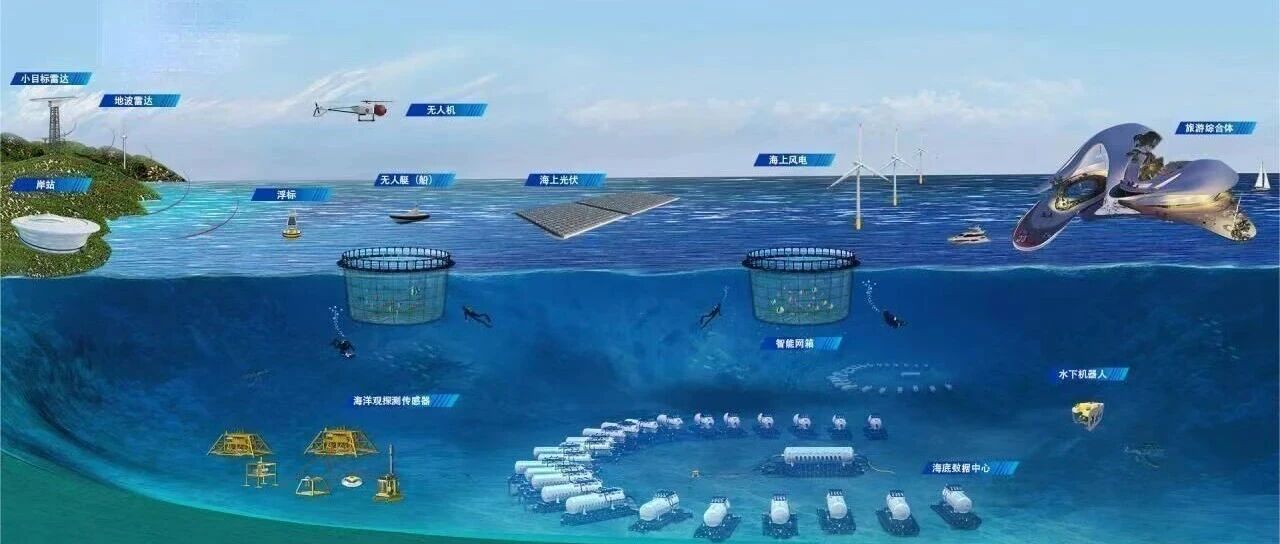
Core Insights - China has achieved a world-class breakthrough in the integration of marine technology and digital economy with the successful deployment of the world's first commercial underwater data center core equipment in Hainan Ling Shui, marking a significant advancement in digital infrastructure [1] Project Overview - The project was initiated in 2022 and is divided into three phases, with plans to deploy 100 data pods [3] - The first underwater data center is expected to be completed by November 2023, with the Hainan Underwater Intelligent Computing Center cluster set to be operational by February 2024 [3] Technological Advantages - The underwater data center utilizes seawater for natural cooling, achieving low energy consumption (PUE value below 1.1) and high reliability (server failure rate only one-eighth that of land-based data centers) [5] - The modular design allows for rapid deployment within 90 days, enhancing operational efficiency [3][5] Strategic Significance - This breakthrough provides robust green computing support for China's "East Data West Computing" initiative, addressing the urgent demand for efficient, low-carbon digital infrastructure in coastal regions [7] - It exemplifies the deep integration of the "Marine Power" and "Digital China" strategies, showcasing China's global leadership in cross-disciplinary technological innovation [7]
亿道信息双并购背后,一场AIoT赛道的时间竞赛与战略豪赌
Tai Mei Ti A P P· 2025-09-30 11:00
Core Viewpoint - Yidao Information (001314.SZ) announced a significant acquisition plan to acquire controlling stakes in Guangzhou Langguo Electronic Technology Co., Ltd. and Shenzhen Chengwei Information Co., Ltd., while also planning to raise matching funds. This move is seen as a strategic effort to open new growth avenues amid a competitive landscape in the AI and consumer electronics sectors [2][4]. Group 1: Acquisition Details - The acquisition targets, Langguo Technology and Chengwei Information, have previously attempted independent IPOs but were unsuccessful. Langguo Technology specializes in interactive control and device interconnection solutions, with a product line that includes various TV technologies and partnerships with major brands globally [3][4]. - Chengwei Information focuses on AIDC (Automatic Identification and Data Capture) with products like handheld terminals and RFID readers, serving over 5,000 enterprise clients across more than 150 countries [3][4]. Group 2: Strategic Rationale - The acquisition reflects a strategic pivot for Yidao Information, aiming to enhance its capabilities in AIoT (Artificial Intelligence of Things) and XR (Extended Reality) to address growth challenges. The company reported a revenue of 1.52 billion yuan in the first half of 2025, with a year-on-year growth of 19.24%, but still relies heavily on traditional hardware, which contributes over 70% of its revenue [5][6]. - Yidao Information has identified "AI+" as a top-level strategy, emphasizing the need to strengthen its XR and AIoT product development to capture opportunities in digital transformation and industrial advancements [5][6]. Group 3: Market Context and Challenges - The current IPO environment poses challenges for tech companies, as evidenced by the failed attempts of the acquisition targets to go public. This acquisition is seen as a response to the harsh market conditions and a way to leverage complementary strengths in human-machine interaction and data collection [4][6]. - Despite the clear strategic logic behind the acquisition, uncertainties remain regarding the specific valuation, profit commitments, and integration effectiveness of the acquired companies, which have not yet been disclosed [6].

业界:地理信息融合AI技术 推动产业创新发展
Ren Min Wang· 2025-09-29 13:57
Core Viewpoint - Geographic information data is essential for the digital transformation in various fields such as natural resources, low-altitude economy, smart cities, ecological environment, and emergency rescue, and must be ensured to be safe and reliable [1] Group 1: Importance of Geographic Information - Geographic information is a fundamental and strategic resource for the country, playing a crucial supporting role in the construction of a digital China [1] - The geographic information industry is deeply integrated into various sectors of the economy and society, becoming a core engine driving digital transformation [1][2] - The new round of technological revolution and industrial transformation is creating a "leap moment" for geographic information technology, enhanced by artificial intelligence, achieving significant advancements in intelligence, visualization, and interactivity [1] Group 2: Innovation and Development - GIS-related enterprises are encouraged to prioritize innovation as their core competitiveness, keeping pace with international technological frontiers while addressing domestic needs [2] - Geographic information technology is showing foundational importance in modern surveying, GIS, remote sensing, and satellite navigation, and is deeply integrated into new infrastructure, smart city construction, rural development, and ecological civilization [2] - Future urban and rural planning will rely on artificial intelligence, emphasizing collaboration between planners and residents to meet human needs and innovate geographic information technology applications [2] Group 3: Low-altitude Economy - The development of the low-altitude economy represents a new phase in the utilization of natural resources, necessitating the establishment of a low-altitude public air route network to support safe and efficient large-scale transportation [3]
沈竹林任国家发改委党组成员、副主任(兼职)
中国基金报· 2025-09-26 07:32
Group 1 - The core point of the article is the appointment of Shen Zhulin as a member and deputy director (part-time) of the National Development and Reform Commission (NDRC) [1][2] - Shen Zhulin previously served as a member and deputy director of the National Data Bureau [1][4] - Shen has extensive experience in the NDRC, having held various positions including deputy inspector of the High-tech Industry Department and director of the Innovation and High-tech Development Department [3][4] Group 2 - The National Data Bureau was established during the 2023 institutional reform, responsible for coordinating data infrastructure construction and promoting digital economy and society [4] - Shen Zhulin's role in the NDRC will likely enhance the integration of data resources and support the development of digital initiatives in China [4]

全力打造数字中国标杆实践区
Qi Lu Wan Bao· 2025-09-25 23:40
Core Insights - Qingdao is implementing the "Digital Qingdao 2.0" initiative to transform into a benchmark for digital China, focusing on market-oriented data element allocation reform since 2025 [1] Group 1: Strengthening Coordination and Leadership - The establishment of a special group consisting of 34 departments and 10 districts to promote the Digital Qingdao initiative [2] - Over 44,500 5G base stations have been opened, significantly improving internet connectivity [2] - The total computing power transaction volume reached 77 million yuan, serving over 300 enterprises [2] Group 2: Enhancing Efficiency and Expanding Smart Scenarios - A key project library has been established, with the "Marine Trusted Data Space" approved for central budget investment [3] - The implementation of "Artificial Intelligence +" has led to the creation of over 60 large model products, with 5 models registered nationally [3] - Smart dispatching for urban management has achieved a 99% automation rate, resulting in a 15.3% decrease in complaints [3] Group 3: Empowering Digital Economy and Governance - Qingdao has been selected as a provincial-level digital economy innovation development pilot zone, with over 90% of industrial enterprises undergoing digital transformation [4] - The digital copyright trading center's transaction volume exceeded 1 billion yuan in the first half of the year [4] - A unified digital government service platform has integrated 49 digital resources across various departments [5] Group 4: Revitalizing Cultural and Social Services - The city has produced over 500 micro-short films, achieving over 22 billion views [6] - Nearly 100 digital reform initiatives have been launched in education, healthcare, and other public services, improving efficiency by an average of 60% [7] - The "No Proof" initiative has reduced the need for paper submissions by over 43 million [5][7] Group 5: Breaking Data Barriers and Enhancing Value - Local legislation for data circulation is in the legal review stage, aiming to establish new rules for data utilization [8] - The establishment of a provincial-level data circulation infrastructure hub is underway [8] - The marine data transaction volume has exceeded 35 million yuan, promoting cross-regional data cooperation [9] Group 6: Future Goals and Plans - The "14th Five-Year Plan" aims to create a data-driven and intelligent Qingdao, focusing on comprehensive digital transformation across various sectors [10] - The initiative includes plans for international communication hubs and national data circulation infrastructure [10]
经典重温 | “十五五”:产业破局与重构 ——“十五五”规划研究系列之三(申万宏观·赵伟团队)
申万宏源宏观· 2025-09-25 16:03
Core Insights - The article discusses the importance of industrial structure adjustment in China's 14th and upcoming 15th Five-Year Plans, emphasizing the shift from focusing on the ratio of the three industries to prioritizing technological innovation and R&D investment [3][5][28]. Group 1: Industrial Structure Adjustment in Five-Year Plans - Industrial structure adjustment is a crucial component of China's Five-Year Plans, serving as a key means to achieve core objectives [3][16]. - The focus of industrial structure adjustment has evolved from the ratio of the three industries to a greater emphasis on technological innovation and R&D investment [5][28]. - The 14th Five-Year Plan has introduced specific targets for R&D expenditure and digital economy core industries, reflecting a shift towards more refined and precise planning [5][28]. Group 2: Trends in Industrial Structure Adjustment - The direction of industrial structure adjustment has transitioned from emphasizing the three industries' ratios to focusing on technological innovation [5][28]. - The importance of the service sector has increased, with a notable shift from finance and real estate to information technology and production services [6][47]. - The 15th Five-Year Plan is expected to continue supporting technological innovation and address issues such as supply-demand mismatches and "involution" in the manufacturing sector [7][8][22]. Group 3: Key Areas of Focus in the 15th Five-Year Plan - The 15th Five-Year Plan is likely to prioritize emerging industries such as artificial intelligence, marine economy, and commercial aerospace [7][22]. - There is an anticipated increase in the emphasis on service industry development, particularly in enhancing service consumption and trade [8][26]. - The plan may also focus on improving the quality and efficiency of service industries, aligning with the broader economic development goals [8][49].