美元贬值

Search documents
外汇即时点评:如何看待年末人民币汇率的加速升值
2025-12-31 16:02
Summary of Conference Call on RMB Exchange Rate Appreciation Industry Overview - The report discusses the recent trends in the offshore and onshore RMB exchange rates, highlighting the appreciation of the RMB against the USD, particularly as it surpassed the 7.0 mark in late December 2025. [1][2] Key Points and Arguments RMB Exchange Rate Trends - The offshore RMB exchange rate has appreciated significantly since late November 2025, reaching a new high for the year by surpassing 7.0 on December 25, 2025. The onshore RMB is also close to this threshold, marking its highest level since May 2023. [1] - The appreciation is attributed to the depreciation of the USD and seasonal factors, although the monetary authorities have moderated the pace of appreciation. [1] USD Depreciation - The USD index has weakened continuously since late November 2025, with a decline of over 2% by December 25, 2025. This is primarily driven by market expectations of a more accommodative monetary policy from the Federal Reserve. [2] Labor Market and Inflation Data - The US labor market showed signs of weakness, with the unemployment rate rising to 4.6% in November 2025, and average hourly wages declining to a low of 3.5% year-on-year. [3] - The US CPI for November 2025 was reported at 2.7%, significantly below market expectations, which supports the case for potential interest rate cuts by the Federal Reserve. [3] Correlation Between USD and RMB - Analysis indicates a historical correlation between the USD index and RMB exchange rate movements, with a ratio of approximately 3:1, meaning a 3% depreciation in the USD corresponds to a 1% appreciation in the RMB. [4] Seasonal Factors - Historically, the RMB tends to appreciate during the end of the year due to increased demand for currency conversion by exporters and a general weakening of the USD. [5] - The net settlement of foreign exchange transactions typically peaks in December, contributing to the RMB's appreciation. [5] Monetary Policy and Exchange Rate Management - The central bank's intervention has been noted, with the midpoint exchange rate appreciating at a slower pace compared to the spot rate, indicating a desire to smooth out short-term volatility. [7] - The "counter-cyclical factor" in the pricing model has turned positive, suggesting a controlled approach to managing the exchange rate. [7] Future Outlook for RMB - The RMB is expected to maintain a moderate appreciation trend, with a monthly appreciation of around 1% in December 2025, translating to an annualized rate exceeding 10%. However, this pace is deemed unsustainable in the long term. [8] - Factors supporting the RMB's strength include a weak USD, low inflation, strong exports, and a high trade surplus, with the trade surplus exceeding $1 trillion in November 2025. [9] - The report anticipates that the RMB will continue to appreciate moderately, driven by both external and internal factors, despite potential fluctuations in the exchange rate. [9] Conditions for Sustainable Appreciation - The report outlines several dimensions for assessing appropriate appreciation rates, including expected USD depreciation of around 5% in the coming year, which could lead to a 1.7% appreciation of the RMB. [10] - The analysis also considers the impact of interest rate differentials and inflation differences between China and the US on the RMB's exchange rate stability. [10] Additional Important Insights - The report emphasizes the importance of balancing the exchange rate to support cross-border capital flows and the internationalization of the RMB. [9] - The potential for a more accommodative monetary policy in the US, coupled with weak employment data, may continue to exert downward pressure on the USD, thereby supporting the RMB's appreciation. [8][9] This summary encapsulates the key insights and projections regarding the RMB exchange rate dynamics and the influencing factors as discussed in the conference call.
美元遭遇8年来最惨一年!华尔街正紧盯美联储换帅
Jin Shi Shu Ju· 2025-12-31 12:59
Group 1 - The US dollar is facing its most severe annual decline in eight years, with a year-to-date drop of 8.1% in the dollar index, primarily due to expectations of significant interest rate cuts by the next Federal Reserve chair [2][4] - The market has priced in at least two rate cuts in the coming year, which has diminished the dollar's attractiveness compared to other developed countries [2] - The focus is on the Federal Reserve and the potential successor to Chair Powell, with candidates like Hassett and Walsh being considered, which could influence future dollar performance [4] Group 2 - The euro has surged against the dollar due to mild inflation and anticipated defense spending in Europe, leading to negligible expectations for rate cuts [3] - In contrast, rate traders in Canada, Sweden, and Australia are betting on interest rate hikes, indicating a divergence in monetary policy expectations [3] - Market sentiment has shifted back to a more pessimistic view on the dollar, as evidenced by recent CFTC data showing a return to bearish positions [3]
【环球财经】英媒:美元走向自2017年以来最深年度跌幅
Xin Hua She· 2025-12-31 12:38
新华财经北京12月31日电 英国《金融时报》12月30日报道,美元正走向自2017年以来最深年度跌幅。 随着美国联邦储备委员会持续推进降息,金融界预测,美元2026年将进一步走弱。 《金融时报》指出,美国总统特朗普今年发动贸易战,引发市场对美国经济的担忧,动摇了美元传统的 避险资产地位,导致美元今年对一揽子主要货币汇率大跌9.5%。 与之相对的是,欧元今年对美元汇率飙升近14%,至1欧元兑换1.17美元上方,达到2021年以来最高水 平,成为西方主要货币中涨幅最大币种。 一些分析师和投资者认为,美联储明年可能继续降息,而包括欧洲央行在内的其他一些央行则维持甚至 提高借贷成本,这种政策分化将推动美元进一步走弱。一些交易员预计,美联储2026年将实施两到三次 25个基点降息。 德意志银行外汇研究部全球主管乔治·萨拉韦洛斯说,这是自由浮动汇率制度史上美元表现最糟糕的年 份之一。 美国知名投资人彼得·席夫预测,美元明年可能加速下跌。他12月早些时候警告,美国经济正走向一场 历史性危机。他认为,通货膨胀以及黄金和白银价格飙升,正削弱市场对美国国债的信心,为美元急剧 下跌埋下伏笔。 他说,资本流动方向已开始逆转。例如,过 ...
美元霸权在摇晃!特朗普2.0重塑全球货币格局,今年美元贬值10%只是开始?
Sou Hu Cai Jing· 2025-12-31 12:31
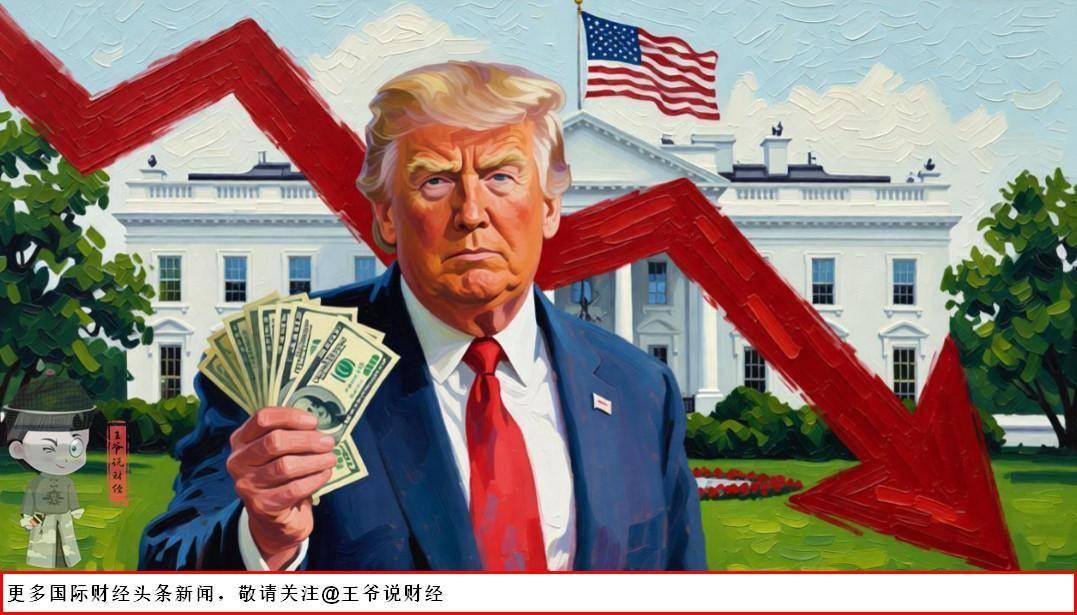
王爷说财经讯:你敢信吗?2025年12月31日,特朗普重返白宫执政满一年的节点,美元交出了一份"贬值10%"的成绩单! 从年初美元指数110的高位,一路震荡跌至年末的97左右,创下2017年以来的最差年度表现。 什么情况会让曾经的"全球货币霸主"一年跌去10%?是特朗普政策的刻意推动,还是美国经济的必然结果?这波贬值接下来还会持续吗?咱们今天把这事扒 得明明白白。 01、特朗普2.0的第一年:美元下跌10%! 先把时间拉回2025年初,特朗普2.0时代正式开启,一上台就抛出两大核心政策:对外加征10%基准关税,对内施压美联储降息。 当时市场还在期待"强势美元回归",没成想这两大政策直接成了美元贬值的"导火索"。 数据不会说谎,上半年美元指数就狂跌10.8%,创下1973年以来同期最大跌幅,直接奠定了全年的弱势基调。 最终,在2025年一整年, 美元兑一篮子主要货币今年已大幅下挫9.5%,不仅创下近十年来最大年度跌幅;而欧元汇率飙升近14%,突破1.17关口,达到2021 年以来的最高水平。 这可不是小波动——全球贸易结算、你的海外购物、甚至手里的理财资产,都可能被这波贬值波及。 简单来说,货币就像商品,供应多 ...

【特稿】英媒:美元走向自2017年以来最深年度跌幅
Sou Hu Cai Jing· 2025-12-31 09:09
Group 1 - The dollar is heading towards its deepest annual decline since 2017, with a predicted further weakening by 2026 due to ongoing interest rate cuts by the Federal Reserve [1] - The dollar has dropped 9.5% against a basket of major currencies this year, influenced by concerns over the U.S. economy stemming from President Trump's trade war [1] - The euro has surged nearly 14% against the dollar this year, reaching its highest level since 2021, making it the best-performing major Western currency [1] Group 2 - Analysts predict that the Federal Reserve may continue to cut rates next year, while other central banks, including the European Central Bank, may maintain or even raise borrowing costs, leading to further dollar depreciation [1] - The future trajectory of the dollar in 2026 may depend on the successor to current Fed Chairman Jerome Powell, particularly if the new appointee is perceived to be more susceptible to White House pressure for aggressive rate cuts [1] - Investor Peter Schiff warns of a potential historic crisis for the U.S. economy, with inflation and rising gold and silver prices undermining confidence in U.S. Treasury securities, which could lead to a sharp decline in the dollar [2]
“川普2.0”第一年,美元贬值近10%,跌幅十年最大
Hua Er Jie Jian Wen· 2025-12-31 00:14
Core Viewpoint - The US dollar is experiencing its worst annual sell-off since 2017, primarily due to economic concerns stemming from the trade war and expectations of a loose monetary policy from the Federal Reserve [1] Group 1: Dollar Performance - The dollar has depreciated by 9.5% against a basket of major currencies this year, marking the largest annual decline in nearly a decade [1] - The euro has appreciated nearly 14% against the dollar, reaching its highest level since 2021 [1] Group 2: Monetary Policy Divergence - The divergence in monetary policy between the Federal Reserve and other major central banks is a key driver of currency fluctuations, with traders expecting two to three rate cuts by the Fed by the end of 2026 [2] - The European Central Bank has adopted a more hawkish stance, which is expected to further weaken the dollar's attractiveness [2] Group 3: Federal Reserve Leadership Uncertainty - Uncertainty regarding the next Federal Reserve chair is contributing to the pressure on the dollar, with concerns that a new appointee may yield to political pressure for more aggressive rate cuts [3] - Investors are preparing for a potentially more interventionist Fed under new leadership, which could lead to further dollar depreciation [3] Group 4: Trade War and Investment Behavior - Despite a recent 2.5% rebound from September's lows, the dollar's overall downward trend remains intact, influenced by the trade war and economic forecasts [4] - Structural changes in investor behavior have emerged, with foreign investors increasingly hedging their dollar exposure due to market volatility following tariff announcements [5]
美元指数持续走弱 在岸人民币升破7关口
Xin Hua Cai Jing· 2025-12-30 07:05
Group 1 - The core viewpoint of the articles highlights the recent appreciation of the Renminbi (RMB) against the US dollar, with both onshore and offshore RMB surpassing the "7.0" mark for the first time since October 2022, indicating a significant shift in currency dynamics [1][2] - The onshore RMB reached a high of 6.9915 against the US dollar, marking its highest level since May 2023, while the offshore RMB also broke the "7" threshold, reflecting a 4% and 5% increase respectively [1] - The People's Bank of China emphasizes maintaining ample liquidity and aligning social financing growth with economic growth, while also advocating for a flexible exchange rate to prevent excessive fluctuations [2] Group 2 - Analysts suggest that the recent RMB appreciation may enhance the attractiveness of China's capital markets to foreign investors, potentially increasing foreign exchange gains [2] - Despite the RMB's rise, foreign trade enterprises are advised to avoid betting on a one-sided currency trend and to utilize financial instruments like options and futures to manage exchange rate risks [2]
FT中文网精选——展望2026:人民币升值的四大支撑
日经中文网· 2025-12-29 02:57
Core Viewpoint - The article discusses the appreciation of the Renminbi (RMB) against the US dollar, highlighting key factors contributing to this trend and projecting further strengthening in the coming years [6]. Group 1: Economic Factors Influencing RMB Appreciation - The RMB has shown a trend reversal since April, moving from depreciation to appreciation, with the exchange rate surpassing 7.1 and approaching the 7 mark [6]. - Four main factors are identified as driving the RMB's strength: the expansion of the current account surplus, easing trade conflicts, increasing purchasing power of the RMB, and the potential continued depreciation of the US dollar [6]. - China's current account surplus is expected to reach a historical high in 2025, providing significant support for the appreciation of the RMB [7]. Group 2: Implications for the Chinese Economy - A sustained weak US dollar and rising international commodity prices, along with a moderate appreciation of the RMB, could alleviate the impact of rising raw material prices on the Chinese economy and enhance the international purchasing power of Chinese residents [5].
中金公司:美元贬值和季节性因素或是人民币当前升值的直接推动力
Di Yi Cai Jing· 2025-12-29 00:22
Core Viewpoint - The report from CICC indicates that the RMB exchange rate has been appreciating continuously since late November, recently reaching new highs for the year, with the offshore RMB rate surpassing 7.0, accelerating in its appreciation [1]. Summary by Relevant Sections - **Exchange Rate Movement** - The offshore RMB exchange rate broke the 7.0 mark on December 25, reaching its highest level since September 2024, while the onshore RMB rate is also close to the 7.0 threshold, marking its highest since May 2023 [1]. - **Drivers of Appreciation** - The depreciation of the US dollar and seasonal factors are identified as direct drivers of the current appreciation of the RMB. However, monetary authorities have moderately restrained the pace of this appreciation [1]. - **Market Expectations** - Overall, the year-end appreciation of the RMB is not unexpected, although the extent of the appreciation has slightly exceeded expectations. The primary factors contributing to this rapid appreciation in the short term are the significant decline of the US dollar and the resonance of seasonal factors [1].

中金:如何看待年末人民币汇率的加速升值?
中金点睛· 2025-12-28 23:55
Core Viewpoint - The recent appreciation of the offshore RMB exchange rate, surpassing the 7.0 mark, is attributed to the depreciation of the USD and seasonal factors, with the pace of appreciation exceeding expectations [2][3][4]. Group 1: USD Depreciation and Market Conditions - The USD index has weakened continuously since late November, with a decline of over 2% as of December 25, driven by market expectations of a more accommodative monetary policy from the Federal Reserve [3][4]. - Weak performance in the US labor market and inflation data has contributed to expectations of a potential easing by the Federal Reserve, with the unemployment rate rising to 4.6% in November and average hourly earnings dropping to a low of 3.5% year-on-year [4][9]. Group 2: Seasonal Factors Influencing RMB Appreciation - Historically, the RMB tends to appreciate significantly at the end of the year, driven by factors such as increased settlement needs from exporters and a general weakening of the USD [13][15]. - In December, the RMB appreciated by approximately 1%, with an annualized rate exceeding 10%, although such rapid appreciation may not be sustainable [20][21]. Group 3: Internal and External Factors Supporting RMB Strength - The RMB's strength is supported by low inflation, strong exports, and high trade surpluses, with the trade surplus exceeding $1 trillion in November [22][23]. - The Chinese government is focusing on boosting domestic demand rather than relying solely on external demand, which is expected to support the RMB's appreciation in the medium to long term [22][24]. Group 4: Future Outlook for RMB Exchange Rate - The RMB is expected to maintain a moderate appreciation trend, with potential fluctuations influenced by external factors such as the USD's seasonal rebound and domestic market conditions post-Chinese New Year [20][21]. - The anticipated depreciation of the USD by around 5% next year could lead to a corresponding RMB appreciation of approximately 1.7% based on historical relationships [24].