美元走势

Search documents
Why Oil Prices Could Defy Sellers and The Bears
See It Market· 2025-11-25 19:11
Core Viewpoint - The article discusses the current state of crude oil prices, highlighting the factors influencing price movements and potential future trends in the market. Group 1: Current Price Trends - Crude oil futures are currently trading at low prices, with a recent low of $56 per barrel recorded on October 20th [2] - The 50-day moving average (50-DMA) has been acting as a resistance level since the recent low [3] Group 2: Factors Weighing on Oil Prices - Several factors are contributing to the downward pressure on oil prices, including a stronger dollar, firm interest rates, slower US factory activity at a four-month low due to tariffs, and discussions of a potential Russia-Ukraine peace deal that could allow for increased Russian oil exports [4] Group 3: Potential Catalysts for Price Increase - Possible catalysts that could lead to higher oil prices include a break of the US dollar below 99, a Federal Reserve rate cut in December, failure of peace agreements, emergence of other geopolitical stresses, and unexpected production cuts from OPEC+ [4] Group 4: Investment Strategies - The article suggests looking for a close above $59 per barrel as a signal for potential price increases, with a phased approach to adding positions based on moving averages [8] - The strategy includes monitoring futures charts as a guide for trading the USO ETF and adjusting risk levels according to the Average True Range (ATR) strategy as prices rise [8] Group 5: Broader Market Context - There is an increasing focus on commodities, with potential spillover effects into other hard assets like silver and gold, indicating a broader investment strategy for 2026 [6]


周周芝道 - 从宏观角度理解AI
2025-11-25 01:19
Summary of Key Points from Conference Call Industry and Company Involved - The discussion primarily revolves around the **technology sector**, with a specific focus on **AI** and its implications for the **U.S. economy** and **global asset allocation**. Core Insights and Arguments 1. **Technology Capital Expenditure as a Key Variable** Technology capital expenditure is identified as a crucial factor influencing the global economic cycle and asset allocation in 2026, affecting major assets like the dollar, U.S. Treasuries, and U.S. equities [2][4][12] 2. **Impact of AI on U.S. GDP Growth** The technology sector, particularly AI, contributes significantly to U.S. GDP growth, accounting for at least 0.5 percentage points of GDP increase. This contribution is more pronounced due to the U.S.'s leading position in technology capital expenditure compared to other countries like China [8][12] 3. **Current Monetary Policy Environment** The U.S. is currently in a loose monetary policy cycle, with the Federal Reserve likely to maintain this stance to address complex economic issues, reducing concerns about an AI bubble burst [5][6][7] 4. **Political Influence on Monetary Policy** The Federal Reserve's monetary policy may be influenced by political factors, leading to continued loose policies even in the face of improving employment data and rising inflation pressures [6][7] 5. **Global Capital Flows and the Dollar** AI development is expected to attract global capital into the U.S., supporting a strong dollar. In 2024, the U.S. technology sector is projected to outperform, maintaining a high dollar index despite potential trade war impacts [9][10] 6. **Debt Management through Technology Investment** The resolution of U.S. government debt issues relies heavily on technology capital expenditure and Federal Reserve policies. Sustained technology investment can attract foreign capital, aiding in debt management [14] 7. **Concerns about AI Bubble** Market concerns regarding an AI bubble are primarily focused on financing and over-investment issues. However, the current liquidity environment is relatively loose, mitigating these concerns [5][15] 8. **Future of the Dollar and Gold Prices** The strength of the dollar is influenced by economic cycles, demand changes, and liquidity conditions. While short-term fluctuations may occur, the long-term strength of the dollar is tied to the performance of the technology sector [16] 9. **Investment Opportunities in December** December presents potential investment opportunities in the technology sector, especially if market concerns about financing and investment arise, coinciding with expected interest rate cuts by the Federal Reserve [17] Other Important but Overlooked Content 1. **AI's Political Dimension** The current AI revolution is characterized by its strong political attributes, with the U.S. facing intense competition from China, leading to unprecedented governmental focus on technology development [11][12] 2. **Long-term Economic Strategy** The U.S. government is expected to increase investments in AI and emerging technologies to maintain its competitive edge, which will significantly impact global capital markets and international political economy [12][13]
美元走势平稳,美联储前景不确定
Sou Hu Cai Jing· 2025-11-24 07:42
Core Viewpoint - The stability of the US dollar is influenced by uncertainty regarding the Federal Reserve's potential interest rate cut in December, with recent comments from officials indicating a divide in decision-making [1] Economic Data - Recent US economic data, including the delayed September non-farm payroll report, did not provide clear signals for the interest rate path, showing a higher-than-expected increase in employment but an unexpected rise in the unemployment rate [1] - The complete employment data for October will not be available due to a recent government shutdown, adding to the uncertainty [1] Market Indicators - The DXY dollar index remained flat at 100.192, reflecting the current stability of the dollar amidst the mixed economic signals [1]
金价反弹无力?关键看12月这个“转折点”
Sou Hu Cai Jing· 2025-11-23 13:43
Core Viewpoint - The recent fluctuations in international gold prices have left new investors confused, with a significant drop in mid-October followed by a weak rebound in November, raising concerns about future price movements [1] Current Status of International Gold Prices - International gold prices are currently experiencing weak rebounds and face short-term downward pressure, primarily due to a decrease in market risk aversion [2] - A technical analysis indicates three bearish signals: a "death cross" in MACD indicators, the price falling below multiple short-term moving averages, and a larger correction in October compared to April, reflecting insufficient market confidence [2] Key Price Levels - Investors should focus on two critical price levels: - The short-term support level at $4000 per ounce, which is likely to be breached, potentially leading to a drop to the $3900 per ounce range [4] - A strong support level between $3885 and $3880 per ounce, represented by the 60-day moving average, which has historically provided significant support [4] Potential Price Movements - If the 60-day moving average holds, potential rebound targets are set at $4040-$4050 per ounce and $4100-$4140 per ounce, with the latter facing considerable resistance [6] Core Influencing Factors - The primary factors affecting international gold prices include: - Federal Reserve interest rate expectations, which are currently not leaning towards a rate cut, impacting gold prices negatively [8] - The strength of the US dollar, which typically inversely correlates with gold prices; recent dollar strength may face resistance, potentially allowing for gold price rebounds [8] - Upcoming US economic data, which will significantly influence market expectations regarding Federal Reserve policies and, consequently, gold prices [8] Future Scenarios for Gold Prices - Two potential scenarios for gold prices based on upcoming US economic data: - A pessimistic scenario where strong employment data and rising inflation lead to expectations of no rate cuts, potentially pushing gold prices below $4000 per ounce and targeting $3750 per ounce [10] - An optimistic scenario where weak employment data and falling inflation raise expectations for a rate cut, possibly allowing gold prices to break through the $4150-$4200 per ounce resistance and target $4500-$4600 per ounce [10]
STARTRADER:美联储降息预期降温,黄金的“避风港”效应还灵吗?
Sou Hu Cai Jing· 2025-11-21 08:36
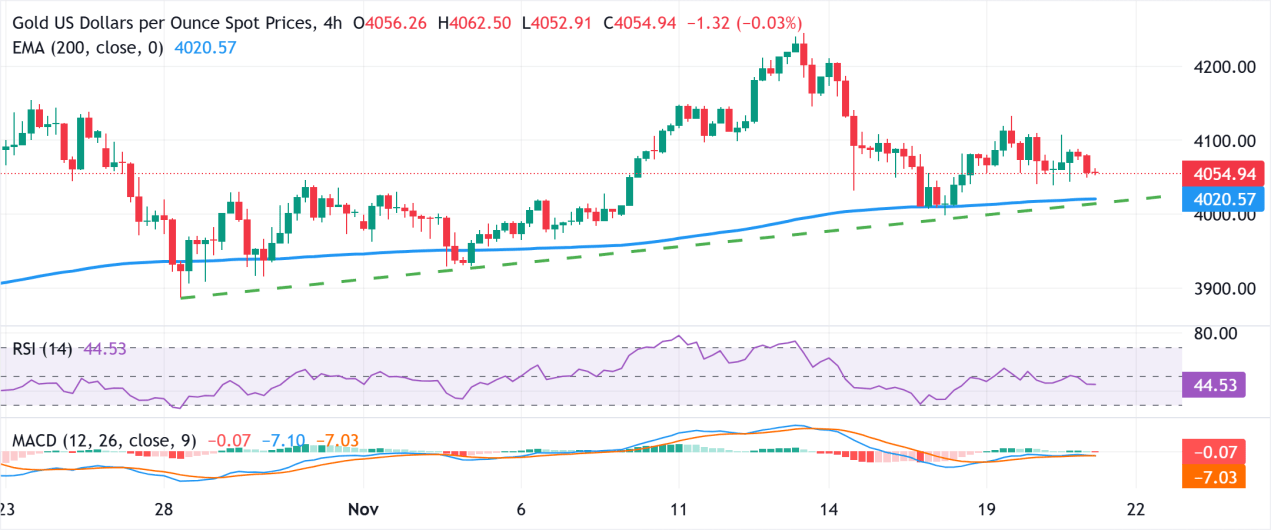
Group 1 - The core viewpoint of the articles indicates that gold prices are under pressure due to a stronger US dollar and reduced expectations for a Federal Reserve rate cut in December, despite some support from geopolitical uncertainties and economic concerns related to the US government shutdown [1][3] - The latest non-farm payroll report showed an addition of 119,000 jobs in September, significantly above the market expectation of 50,000, with average hourly earnings increasing by 3.8% year-on-year, which is slightly higher than the expected 3.7% [1] - The unemployment rate rose from 4.3% to 4.4%, but overall labor market data remains robust, leading to a decreased probability of a rate cut by the Federal Reserve in December, currently estimated at about 35% [1] Group 2 - Gold prices are currently hovering around $4,020, which is close to a one-month upward trendline support area and coincides with the 200-period exponential moving average, forming a significant support zone [3] - If gold prices break below this support area, they may further decline to below the psychological level of $4,000, potentially approaching $3,931 or the October low of $3,886 [3] - On the upside, if prices steadily break above $4,100 and gain confirmation, they may test the $4,152-$4,155 range and could approach the $4,200 round number [3]
美元延续疲软走势 分析师:仍预计美联储12月按兵不动
Sou Hu Cai Jing· 2025-11-21 08:30
来源:滚动播报 9月非农就业报告显示失业率意外上升,带动美元延续走弱态势。丹斯克银行分析师在报告中指出,此 次失业率上升源于劳动力供给增加,缓解了劳动力市场的紧张状况,从而提振了市场对美联储降息的预 期,推动美债收益率和美元小幅回落。然而,分析师强调,这一数据尚不足以构成美联储明确降息的强 有力信号,趋势难以为继。该行仍预计美联储12月将按兵不动,目前市场对降息的定价概率约为32%。 ...
美联储12月降息预期降温 对A股影响如何?
Zhong Guo Jing Ying Bao· 2025-11-20 14:21
Group 1 - The Federal Reserve's October FOMC meeting minutes reveal significant disagreement among officials regarding the potential for a rate cut in December, with a vote resulting in a 10 to 2 decision to lower the federal funds rate by 25 basis points to a range of 3.75% to 4% [1] - Following the release of the minutes, market expectations shifted dramatically, with the probability of a December rate cut dropping from nearly 50% to around 30%, while the likelihood of maintaining the current rate increased to nearly 70% [1][2] - The U.S. stock market responded positively to the FOMC minutes, with the Dow Jones increasing by 0.1%, the S&P 500 rising by 0.38%, and the Nasdaq gaining 0.59% as of the close on November 19 [2] Group 2 - The uncertainty surrounding a potential December rate cut is heightened due to delays in key economic data releases caused by the recent U.S. government shutdown, which has left the Fed with insufficient information for decision-making [2] - The resilience of the U.S. economy, characterized by a stable job market and ongoing growth momentum, reduces the urgency for immediate policy easing, suggesting that the Fed may opt for a wait-and-see approach in December [2][3] - A potential decrease in expectations for a December rate cut could impact the domestic stock market through both funding and sentiment channels, with a stronger dollar potentially suppressing foreign capital inflows and increasing valuation volatility in sectors like AI and semiconductors that are closely linked to global markets [3]
三菱日联:9月非农报告必须非常疲软 才能削弱美元
Sou Hu Cai Jing· 2025-11-20 12:53
Core Insights - The cancellation of the October non-farm payroll report by the U.S. Bureau of Labor Statistics has led to a decrease in investor confidence regarding a potential interest rate cut by the Federal Reserve in December [1] - The delay of the November non-farm report to December 16 means the Federal Reserve will only have the September report to base its decision on, creating uncertainty about the labor market conditions for October and November [1] - A significant drop in the September non-farm report would be necessary to encourage market participants to increase bets on a December rate cut, which could weaken the U.S. dollar [1]
金晟富:11.20黄金持续拉锯扫荡!非农来袭如何布局?
Sou Hu Cai Jing· 2025-11-20 10:12
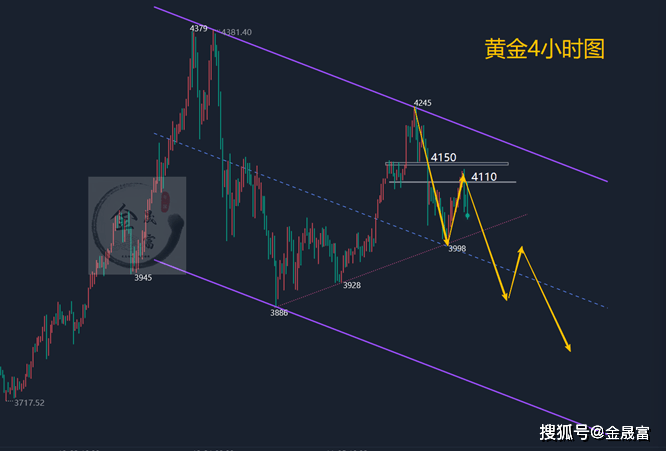
Core Viewpoint - The market is currently experiencing fluctuations in gold prices, influenced by various factors including U.S. economic data, Federal Reserve interest rate expectations, and global risk sentiment [1][2][4]. Market Analysis - Gold prices are hovering around $4060, with investors cautious ahead of the U.S. non-farm payroll report, reflecting increased sensitivity to macroeconomic uncertainties [1][2]. - The expectation of a December interest rate cut by the Federal Reserve has diminished, leading to a stronger dollar, which exerts pressure on non-yielding gold [2][4]. - Global stock markets are showing positive sentiment, reducing the demand for gold as a safe-haven asset [2][4]. Technical Analysis - Recent gold price movements have been characterized by volatility, with a focus on short-selling strategies around resistance levels near $4090 [4][5]. - The upcoming non-farm payroll data is highly anticipated, as it will provide insights into the U.S. employment market and influence future Federal Reserve monetary policy [2][4]. Trading Strategies - Suggested trading strategies include short positions on gold around $4090-$4100 with targets set at $4050-$4030, and potential long positions if prices retrace to $4000-$4005 [5][6]. - Emphasis on strict risk management and position sizing is highlighted to mitigate potential losses in a volatile market [5][6].
美经济挺过政府停摆但并不乐观,美联储“救命稻草”还能抓多久?
Sou Hu Cai Jing· 2025-11-17 03:09
Economic Overview - The U.S. economy has not significantly worsened during the longest government shutdown in history, according to Wall Street economists, who base their views on limited information, particularly weekly unemployment claims [1][3] - During the 43-day government shutdown, initial unemployment claims remained low, with estimates showing 218,000 claims in the last week before the shutdown and 228,000 in the most recent week [3][4] - Economists believe that the labor market has not experienced a sharp deterioration, despite a slowdown in hiring activity since spring [4][5] Labor Market Dynamics - The low layoff rate is crucial for the ongoing economic expansion, with the unemployment rate remaining below historical averages, previously at 4.3% before the shutdown [3][4] - However, hiring has nearly stalled, making it more difficult for job seekers, although low unemployment rates may still support consumer confidence and spending [4][5] - Structural changes in the labor market, such as the retirement of the baby boomer generation and a decrease in immigration, are contributing to the slowdown in hiring [5] Inflation Concerns - Inflation pressures remain high, with the annual inflation rate at 3%, significantly above the Federal Reserve's target of 2% and nearly double the average inflation rate from 2010 to 2019 [6] - The impact of tariffs on inflation may not yet be fully realized, and persistent inflation could lead the Federal Reserve to maintain interest rates during its December meeting [6][7] - The dual pressures of a tightening labor market and high inflation are affecting the economy, particularly impacting middle- and low-income households [6] Dollar Impact Analysis - In the short term, persistent inflation expectations may support the dollar, but medium-term pressures are accumulating, with the dollar's trajectory dependent on the interplay between inflation resilience and economic slowdown [8][9] - The dollar index showed a slight increase of 0.08% to around 99.35, indicating market reactions to inflation and employment data [9]