量化紧缩

Search documents
CA Markets:达利欧警告,美联储泡沫中放水或酿更大风险
Sou Hu Cai Jing· 2025-11-07 09:06
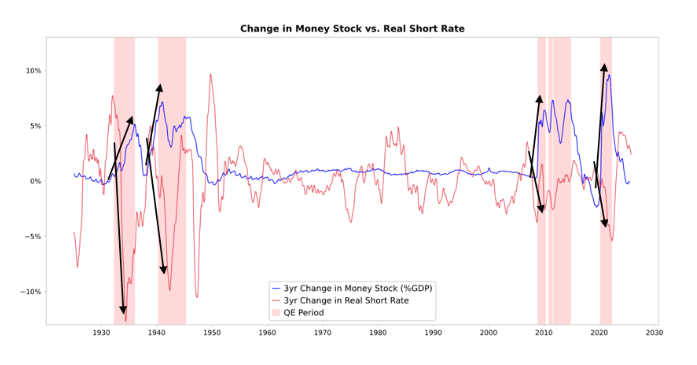
Core Viewpoint - Ray Dalio, founder of Bridgewater Associates, warns that the Federal Reserve's end to quantitative tightening (QT) is not a technical adjustment but a dangerous experiment that adds liquidity to an already inflated bubble [2][3] Group 1: Current Economic Environment - The current policy mix of expanding fiscal deficits, restarting monetary easing, and the AI narrative is pushing the U.S. towards a perilous end of a large debt cycle characterized by a liquidity-driven super bubble [2] - Historically, quantitative easing (QE) has been introduced during recession periods when asset valuations were low, inflation was subdued, and credit was frozen, providing significant policy space [3] - In contrast, the current environment features a S&P 500 earnings yield of only 4.4%, nearly inverted with the nominal yield of 10-year U.S. Treasuries at 4%, and a compressed equity risk premium of just 0.3% [3] Group 2: Risks of Current Policies - The economy is maintaining a 2% real growth rate, with an unemployment rate of 4.3% and inflation still above 3%, indicating overheating rather than recession [3] - The government continues to accumulate debt aggressively, and if the Fed resumes bond purchases, it effectively monetizes the fiscal deficit, creating a closed loop of debt monetization [3] - A significant expansion of the balance sheet alongside a simultaneous reduction in interest rates could lead the market to perceive this as fiscal dominance, where the central bank is forced to cover government overspending, potentially unanchoring inflation expectations [3] Group 3: Asset Impact and Market Dynamics - Liquidity will not be evenly distributed; QE tends to lower real interest rates and compress risk premiums, directly boosting assets that are most sensitive to discount rates, such as technology, AI, cryptocurrencies, and gold [3] - Dalio anticipates a short-term liquidity frenzy reminiscent of the 1999 internet bubble, with price-to-earnings multiples continuing to expand, benefiting both long-duration growth stocks and inflation-hedging assets [3] - Experts from CAMarkets note that behind this frenzy, issues such as wealth disparity, financial fragility, and inflationary pressures are likely to intensify, and when policies eventually shift, the cost of the bubble's collapse will exceed that of any historical cycle [3]

美联储三把手:可能很快需要扩表以满足流动性需求
智通财经网· 2025-11-07 08:57
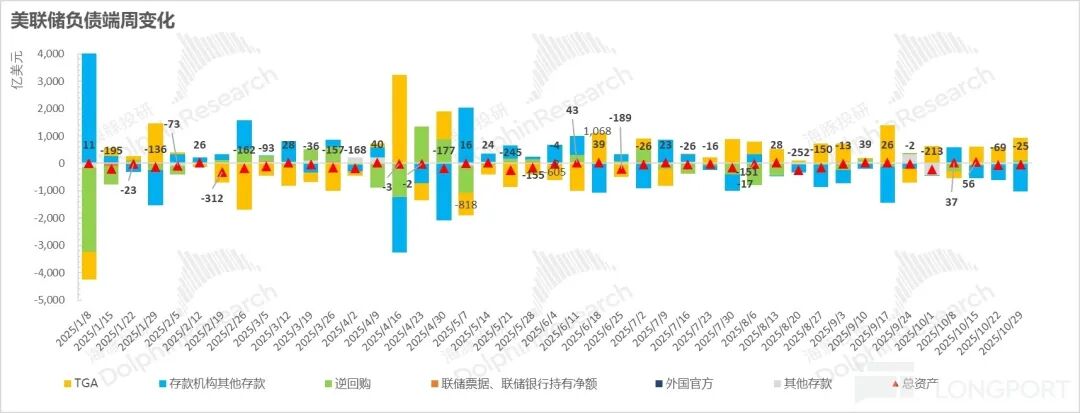
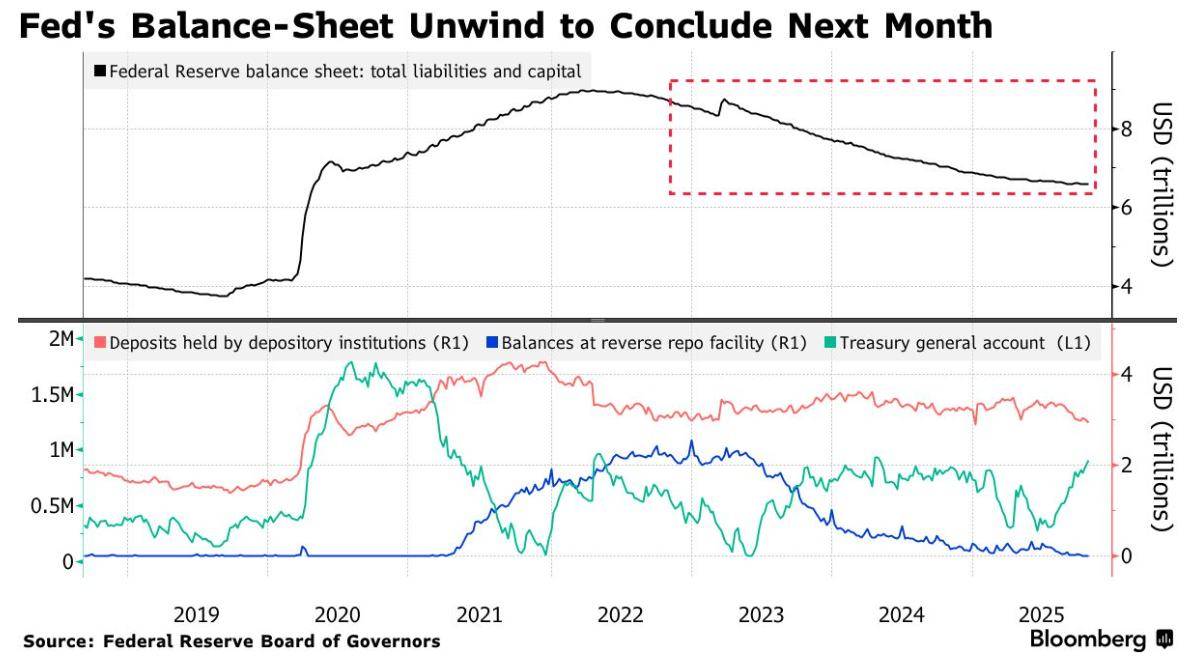
Core Viewpoint - The Federal Reserve may soon need to purchase bonds to expand its balance sheet after halting the reduction of its bond holdings, as indicated by John Williams, the President of the New York Fed [1][2]. Group 1: Federal Reserve's Actions - The Federal Reserve has officially announced the end of quantitative tightening (QT) on December 1, but liquidity in the U.S. market remains tight, with key interest rates rising significantly [1]. - The secured overnight financing rate (SOFR) recently surged to 4.22%, exceeding the upper limit of the Fed's target policy rate range of 4% [1]. - The use of the Standing Repo Facility (SRF) reached a historical high of $50.35 billion last Friday, indicating increased reliance on emergency tools [2]. Group 2: Liquidity Crisis Factors - The liquidity crisis is primarily linked to the U.S. Treasury, which has been unable to release liquidity due to government shutdown impacts, leading to a Treasury General Account (TGA) balance swelling to approximately $1 trillion [2]. - Bank reserves have decreased to $2.85 trillion, and the balance of overnight reverse repurchase agreements (ON-RRP) is nearly exhausted, significantly weakening the liquidity buffer [2]. Group 3: Future Outlook - Williams emphasized that determining when the Fed will need to inject cash into the system is complex and requires close monitoring of various market indicators [2]. - He clarified that purchasing bonds to maintain adequate liquidity does not equate to a change in monetary policy stance, but rather represents a natural next step in implementing a strategy for sufficient reserves [2].
美国货币市场或迎新一波压力?华尔街警告:美联储或被迫重启资产购买
Hua Er Jie Jian Wen· 2025-11-07 07:15
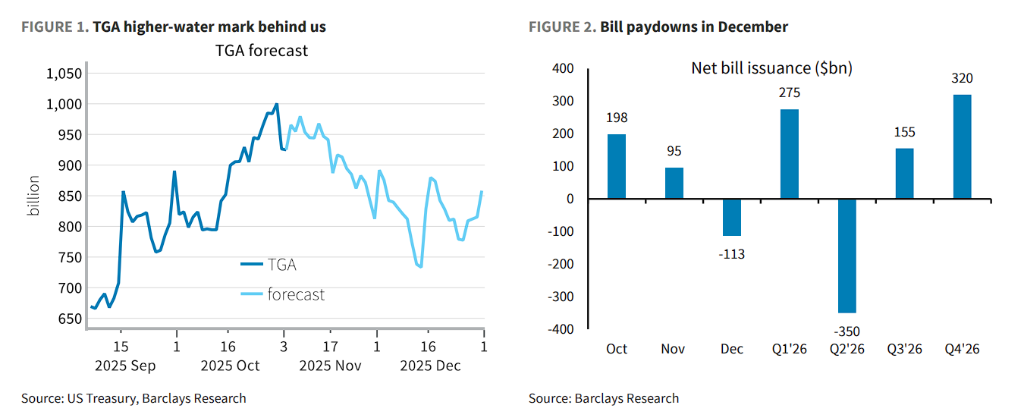
Core Insights - The financing pressure in the U.S. money market is raising concerns on Wall Street, with major investment banks warning that ongoing funding stress may force the Federal Reserve to take more rapid actions, potentially even restarting its dormant asset purchase program [1][18] Group 1: Current Market Conditions - Key market interest rates have reached their highest level since 2020, with the spread between tri-party repo rates and the Fed's set rates peaking last Friday [1] - Although tri-party repo rates have slightly eased this week, market participants believe this is only a temporary relief [1][2] - Analysts indicate that the combination of three years of quantitative tightening and record U.S. Treasury issuance is pushing bank reserves into a dangerous territory [1][3] Group 2: Factors Contributing to Financing Pressure - Barclays identifies two main factors behind the recent funding pressure: a massive issuance of short-term Treasury bills and a growing financing demand from leveraged investors [3] - The Treasury General Account (TGA) balance surged to $1 trillion by October 30, significantly exceeding the Treasury's quarterly target of $850 billion, draining liquidity from the banking system [3][5] - The end of the month saw a drop in reserve balances to nearly $2.8 trillion, exacerbated by the withdrawal of funds from the U.S. repo market by the Bank of Canada [3] Group 3: Short-term Positive Factors - Barclays notes two potential short-term positive factors that may alleviate funding pressure before year-end: a decrease in TGA and a reduction in Treasury issuance [4][5] - The TGA balance is expected to decline to $850 billion by year-end, allowing approximately $150 billion in reserves to flow back into the banking system [5] - The peak of short-term Treasury issuance has passed, with minimal net issuance expected in December, which could inject significant liquidity into the market [8] Group 4: Ongoing Risks - Despite short-term relief, Barclays emphasizes that structural pressures will continue to pose threats to the funding market in Q4 [9] - Traditionally, Q4 sees increased funding pressure as Global Systemically Important Banks (GSIBs) actively shrink their balance sheets to manage systemic risk scores [10] - The effectiveness of the Fed's Standing Repo Facility (SRF) is being challenged, as tri-party general collateral repo rates have recently exceeded SRF rates, indicating a reluctance among traders to borrow from the Fed [11][14] Group 5: Potential Fed Actions - Analysts suggest that if funding pressures persist, the Fed may need to resume direct asset purchases [18][19] - The Dallas Fed President has indicated that if recent repo rate increases are not temporary, the Fed should begin purchasing assets [18] - Barclays believes that while the Fed is closely monitoring repo pressures, immediate intervention is unlikely due to the presence of "hawkish" members on the committee [18][19]
避无可避!38万亿债务爆雷,美联储连夜刹车,中方成最大赢家?
Sou Hu Cai Jing· 2025-11-07 04:55
Core Viewpoint - The issuance of $4 billion sovereign bonds by the Chinese Ministry of Finance in Hong Kong has attracted a staggering subscription amount of $118.2 billion, resulting in a subscription multiple of 30 times, indicating strong international investor confidence in Chinese sovereign credit [1][6]. Group 1: Market Reactions and Implications - The 3-year and 5-year bond rates were set at 3.646% and 3.787% respectively, which has caused significant ripples in the global capital markets [3]. - The U.S. federal debt has surpassed $38 trillion, with a debt-to-GDP ratio soaring to 126.8%, significantly exceeding the IMF's safety threshold of 100% for developed economies [3]. - The Federal Reserve's recent decision to halt its balance sheet reduction and cut interest rates by 25 basis points reflects concerns over potential liquidity crises in the financial markets [3][5]. Group 2: Investor Composition and Trends - The bond issuance saw 53% of investors from Asia, 25% from Europe, 16% from the Middle East, and 6% from the U.S., with sovereign investors making up 42% of the total [6]. - The structure of investors indicates a strong recognition of Chinese sovereign credit among international mainstream capital [8]. Group 3: Strategic Financial Moves - The issuance of sovereign dollar bonds serves as a critical pricing benchmark for Chinese enterprises seeking cross-border financing, potentially lowering their financing costs and uncertainties [8]. - The issuance is part of a broader strategy to utilize international financial market rules to showcase China's creditworthiness, especially if the yields on Chinese bonds are lower than U.S. Treasuries [10]. Group 4: Global Financial Dynamics - The global reserve currency landscape is shifting, with the U.S. dollar's share declining from 73% in 2000 to below 59%, while the renminbi's reserve share has increased to 2.3% [10]. - China's approach to issuing dollar-denominated bonds is not aimed at undermining the existing dollar system but rather at providing alternative options, gradually reshaping the international financial landscape [15]. Group 5: Future Outlook - Analysts predict that by 2035, U.S. interest payments on debt could consume 7% of GDP, which is more than double the entire U.S. military budget, indicating a potential shift in global capital flows [15]. - The ongoing financial power transition may redefine the global monetary order, with implications for the future economic landscape [15].
美国10月非制造业PMI高于预期:申万期货早间评论-20251106
申银万国期货研究· 2025-11-06 00:40
Group 1 - The core viewpoint of the article highlights the positive performance of the US non-manufacturing PMI in October, which stood at 52.4, exceeding expectations and previous values, leading to a collective rise in major US stock indices [1] - The US stock market saw the Nasdaq increase by 0.65%, the Dow Jones by 0.48%, and the S&P 500 by 0.37%, indicating a favorable market response to the PMI data [1] - Domestic futures markets showed mixed results, with certain commodities like coking coal and various agricultural products experiencing gains, while others like propylene and asphalt saw declines [1] Group 2 - The article discusses the performance of major stock indices, noting a recovery after a previous decline, with the electric equipment sector leading gains and the computer sector lagging [2] - The financing balance decreased by 3.32 billion yuan to 24.73687 trillion yuan, indicating a potential shift in market liquidity [2] - The article emphasizes the long-term focus on technology self-reliance as part of the 14th Five-Year Plan, suggesting that the technology sector will be a key investment direction [2] Group 3 - The article reports on the shipping market, specifically the European container shipping index, which rose by 3.82% to surpass 1900 points, reflecting positive macroeconomic sentiment [3] - The average price for large containers in early November stabilized around 2200 USD, with expectations for price adjustments based on seasonal demand [3] - The article notes that the glass and soda ash markets are in a phase of inventory digestion, with cautious market sentiment prevailing [3][19] Group 4 - The article highlights the significant growth in China's new energy storage capacity, which has exceeded 100 million kilowatts, representing a more than 30-fold increase compared to the end of the 13th Five-Year Plan [8] - The article mentions that this capacity now accounts for over 40% of the global total, positioning China as a leader in this sector [8]

等不到12月?货币市场压力持续发酵,美联储或提前出手救流动性
美股研究社· 2025-11-05 11:56
Core Viewpoint - The tightening of the money market is expected to persist until November, with increasing pressure on the Federal Reserve to support liquidity before halting balance sheet reduction next month [2][3]. Group 1: Market Conditions - The Secured Overnight Financing Rate (SOFR) surged by 18 basis points last Friday, marking the largest single-day increase since the Fed's rate hike cycle began in March 2020 [2]. - Despite a slight retreat on Monday, SOFR remains above key policy benchmarks like the federal funds rate, indicating ongoing liquidity issues in the market [2]. - Other short-term rates in the overnight repurchase market continue to trade above the Fed's managed rates, reflecting persistent funding pressures [2]. Group 2: Federal Reserve Actions - The Federal Reserve announced it will stop reducing its holdings of Treasury securities in December, ending a three-year quantitative tightening effort due to increasing liquidity constraints [3]. - There are internal disagreements within the Fed regarding the timing of asset purchases, with some officials advocating for a minimal balance sheet while others suggest increasing reserves to keep pace with the banking system and economic growth [3][4]. - Recent data shows bank reserves have fallen to $2.8 trillion, the lowest level since September 2020, raising concerns about market distortions [3]. Group 3: Interest Rate Dynamics - Dallas Fed President Logan indicated that if repo rates remain high, the Fed will need to purchase assets, expressing disappointment over the three-party repo rates exceeding the Fed's standing repo facility rate [4]. - The SOFR was 32 basis points higher than the reserve balance rate last Friday, the largest spread since 2020, although it fell to 4.13% on Monday, still above the current reserve balance rate of 3.9% [4]. - The pressure in the tri-party market may be more severe than indicated by published rates, prompting calls for the Fed to take more aggressive actions, including purchasing Treasury securities [4][5]. Group 4: Historical Context and Future Implications - The current situation may reflect greater fragility in overnight financing rates compared to 2019, with large hedge funds holding approximately $1 trillion more in Treasury long positions than six years ago [5]. - The use of repo financing has nearly doubled since then, suggesting that similar actions to those taken in 2019, where the Fed injected $500 billion into the market, may be necessary to alleviate pressure during Treasury settlement periods or critical payment dates [5].

货币市场紧张或持续至11月 美联储缩表政策遭市场“逼宫”
Sou Hu Cai Jing· 2025-11-05 08:57
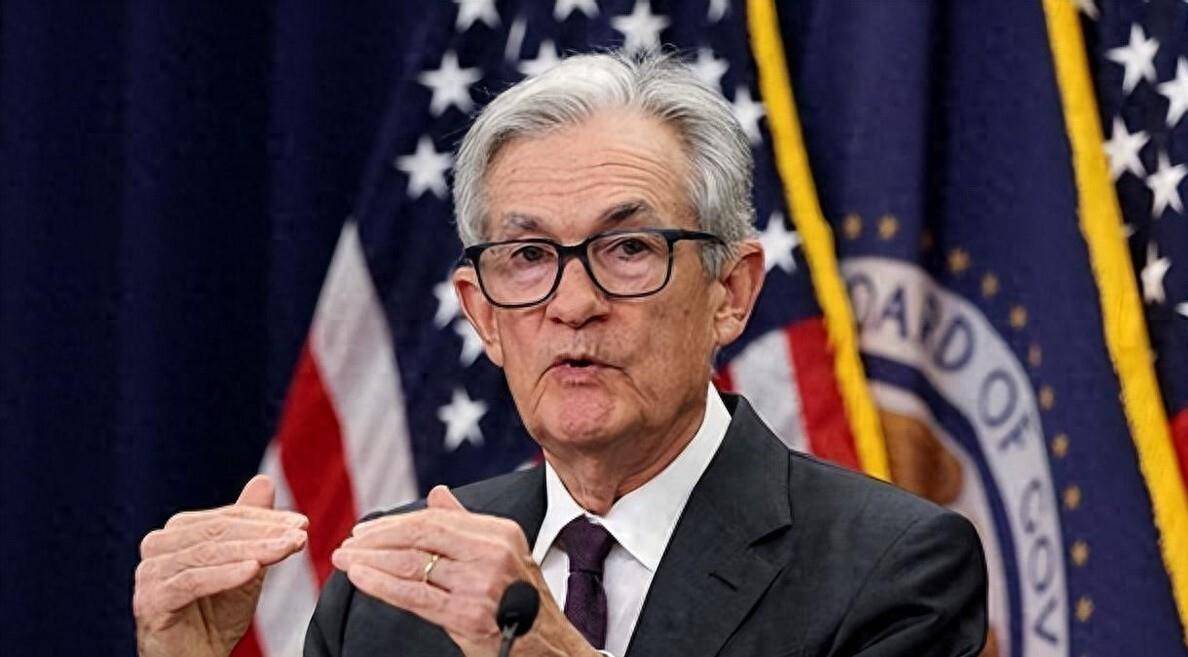
Core Viewpoint - The tightening conditions in the money market may persist until November, pressuring the Federal Reserve to act before halting balance sheet reduction next month [1] Group 1: Market Conditions - The overnight secured financing rate (SOFR) surged by 18 basis points last Friday, marking the largest single-day fluctuation since the Fed's rate hike cycle began in March 2020 [1] - Despite a decrease in SOFR on Monday, it remains above the Fed's key policy benchmark rates, including the federal funds rate [1][6] - Other short-term rates in the interbank repo market continue to trade above the Fed's managed rates [1] Group 2: Federal Reserve Actions - The Federal Reserve announced it will stop reducing its holdings of U.S. Treasury securities by December, ending a three-year quantitative tightening effort due to increasing financing pressures [1][5] - Fed Chair Jerome Powell indicated that at some point, the Fed will gradually increase reserve levels, but did not specify a timeline [5] - Dallas Fed President Lorie Logan stated that if repo rates remain high, the Fed will need to purchase assets, expressing disappointment over the three-party repo rates exceeding the Fed's standing repo facility rate [5] Group 3: Financial Market Dynamics - The spread between SOFR and the interest on reserve balances (IORB) reached 32 basis points last Friday, the largest since 2020, before falling to 4.13% on Monday [6] - The effective federal funds rate was lowered by 25 basis points to a range of 3.75%-4% on October 29 [6] - Joseph Abate from SMBC Nikko Securities suggested that market pressures may be more significant than reported rates indicate, advocating for more aggressive Fed actions, including purchasing Treasury bills [9]
Arthur Hayes 博文:SRF 的启用与隐性量化宽松
Sou Hu Cai Jing· 2025-11-05 04:25
Group 1 - The article discusses the inevitability of government debt and the political incentives behind it, emphasizing that governments prefer to issue debt rather than raise taxes to fund expenditures [2][3] - It highlights the relationship between government borrowing and the Federal Reserve's balance sheet, suggesting that an increase in government debt will lead to an increase in the money supply, benefiting the liquidity of the dollar and potentially driving up the prices of Bitcoin and other cryptocurrencies [3][32] - The article outlines the projected federal deficits, estimating around $2 trillion annually, and discusses the implications for U.S. Treasury bond issuance and financing [6][7] Group 2 - The article identifies the primary buyers of U.S. debt, including foreign central banks, the private sector, and commercial banks, concluding that the marginal buyers are RV hedge funds, particularly those based in the Cayman Islands [9][14][12] - It explains the trading strategies of RV funds, which involve buying U.S. Treasury bonds and financing these purchases through repurchase agreements (repos) [19][21] - The article discusses the role of the Federal Reserve in managing short-term interest rates and how it influences the liquidity in the market, particularly through tools like the Standing Repo Facility (SRF) [22][28] Group 3 - The article warns of a potential liquidity crisis if RV funds cannot secure financing at favorable rates, which would hinder their ability to purchase U.S. debt and impact government financing [27][26] - It introduces the concept of "stealth quantitative easing," suggesting that the SRF will become a primary channel for injecting liquidity into the financial system without being labeled as traditional quantitative easing [32][31] - The article concludes that the current market stagnation presents opportunities, particularly as the government prepares to release additional liquidity once operations resume, which could reignite interest in cryptocurrencies [33]
预计美联储将救市黄金TD退守900
Jin Tou Wang· 2025-11-05 03:17
Group 1 - The current liquidity tension in the U.S. money market is expected to persist throughout November due to high financing costs, potentially prompting the Federal Reserve to take emergency measures to enhance liquidity before officially halting balance sheet reduction on December 1 [2] - The secured overnight financing rate (SOFR) surged by 18 basis points last Friday, marking the largest single-day increase since March 2020 outside of a rate hike cycle, indicating rising short-term borrowing costs in the repo market [2] - The Federal Reserve plans to stop reducing its Treasury holdings starting December 1, ending its quantitative tightening policy, as internal disagreements were evident during the last meeting [2] Group 2 - The technical analysis for gold T+D indicates resistance levels between 949-1030 CNY/gram and support levels between 890-940 CNY/gram, with a potential rise to 1010 CNY/gram if it breaks above 1000 CNY/gram, while a drop below 890 CNY/gram could lead to further declines [3]
慌,美国政府停摆要引发 “美元荒” ?
3 6 Ke· 2025-11-05 02:27
Core Viewpoint - The recent tightening of dollar liquidity is impacting various assets, including Bitcoin and overvalued tech stocks, as the market experiences a withdrawal of liquidity due to government shutdown and ongoing quantitative tightening by the Federal Reserve [1][5]. Group 1: Government Shutdown and TGA - The U.S. Treasury has been unable to distribute funds to the economy due to the government shutdown, leading to a situation where it is effectively "sucking" liquidity from the market [1]. - The Treasury General Account (TGA) has increased from under $300 billion to nearly $1 trillion, absorbing approximately $700 billion from the market, with $160 billion accumulated since November [2]. Group 2: Federal Reserve's Quantitative Tightening - The ongoing quantitative tightening by the Federal Reserve is exacerbating liquidity issues, despite indications that it may end on December 1 [5]. - The Federal Reserve's target federal funds rate is set at 3.75%-4%, but the effective federal funds rate (EFFR) is being influenced by the interest on reserve balances (IORB) and overnight reverse repurchase agreements (ON RRP) [7][8]. Group 3: Indicators of Liquidity Tightness - The widening spread between official rates and market rates indicates liquidity tightness, with the SOFR rate currently at 4.22%, exceeding the Federal Reserve's target range [8]. - The current conditions suggest that the Federal Reserve may not intervene unless the EFFR exceeds the target range significantly, which has not yet occurred [13]. Group 4: Future Outlook - The resolution of the liquidity crisis hinges on the timing of the government reopening and potential actions by the Federal Reserve to release liquidity [11]. - Market expectations suggest that a resolution may occur in mid-October, which could lead to a resurgence in liquidity-sensitive assets once the government reopens [12][14].