
资产配置

Search documents
两个最惨的指数,活生生的演示了怎样把钱亏光!
雪球· 2025-08-01 13:01
以下文章来源于不在此山中 ,作者不在此山中 不在此山中 . 专注基金投资和资产配置,著有《指数基金投资从入门到精通》,雪球有基金组合"天行健" 风险提示:本文所提到的观点仅代表个人的意见,所涉及标的不作推荐,据此买卖,风险自负。 万得近端次新股指数 , 跟踪的是那些刚上市不久的新鲜股票 。 从2015年2月1日到2025年7月29日 , 这 十年多点的时间 , 从1000点跌到目前的35点 , 跌幅高达96.5% , 年化-27.9% : 为什么这两个指数会这么惨 ? 它们到底做错了什么 ? 这两个指数的亏损根源 , 其实是类似的 , 就是投资中许多人爱做的事 —— 追热点 ! 作者: 不在此山中 来源:雪球 在股市里 , 要问怎么赚钱 , 可能各有各的办法 , 但要问怎么亏钱 , 却往往是大同小异 。 今天要说这两个最惨的股票指数 , 活生生的演示了怎样把钱亏光 ! ↑点击上面图片 加雪球核心交流群 ↑ 这两个难兄难弟 , 一个叫申万活跃指数 , 另一个叫万得近端次新股指数 。 申万活跃指数 , 从1999年12月30日到2017年1月20日 , 大概17年的时间 , 从1000点开始 , 最后还 剩10点 ...


减少现金增持黄金,三成亚太区家族办公室拟增加对大中华区投资
Hua Xia Shi Bao· 2025-08-01 12:39
Core Insights - The report from UBS indicates a shift in asset management strategies among ultra-high-net-worth clients, with a notable decrease in cash holdings and an increased interest in gold and alternative investments [2][6] Group 1: Family Office Trends - The average net worth of surveyed family offices reached $2.7 billion, with total assets under management amounting to $651 billion [2] - Family offices plan to hold only 6% of their assets in cash by 2025, reflecting a desire to invest more in global assets [2] - 21% of family offices globally plan to increase their allocation to gold and precious metals, a significant rise from the 10%-16% range observed in the past five years [2] Group 2: Investment Allocation - In the U.S., alternative investments constitute 54% of family office portfolios, with private equity at 27% and real estate at 18% [5] - Swiss family offices allocate 56% to traditional assets, with 34% in stocks and 13% in fixed income, while 44% is directed towards alternative assets [5] - North America is the preferred region for family office investments, accounting for 55% of allocations, followed by Western Europe at 21% and the Middle East at 14% [5] Group 3: Motivations Behind Investment Shifts - The decline in cash holdings and the increase in gold investments are driven by low interest rates and geopolitical instability, making gold an attractive option for wealth preservation [6] - The current 4% interest rate on USD deposits is no longer appealing to ultra-high-net-worth clients, leading them to seek greater appreciation potential in gold and alternative investments [6] Group 4: Interest in Chinese Assets - 35% of family offices plan to increase investments in the Asia-Pacific region over the next five years, with 30% targeting Greater China [7] - 39% of family offices intend to boost their investments in China within the next 12 months, indicating a growing interest in the Chinese market [7] - There is a consensus among global family offices regarding investment opportunities in sectors like pharmaceuticals and generative AI, with a significant focus on healthcare technology and innovation [7] Group 5: Hong Kong Market Appeal - The Hong Kong stock market has become increasingly attractive to global family offices, particularly due to the strong performance of technology companies listed there [8] - The availability of high-growth A+H listed companies has drawn overseas investors to the Hong Kong capital market [8]


历史与创新的双重叙事:摩根资产管理多资产投资的全球范式
远川投资评论· 2025-08-01 12:20
Core Viewpoint - The article emphasizes the importance of multi-asset investment strategies to navigate market volatility and economic cycles, advocating for a diversified approach rather than focusing on single assets [2][6][19]. Group 1: Historical Context and Evolution - George Peabody Morgan's leadership in the late 19th and early 20th centuries led to significant mergers and restructuring in the railroad and steel industries, establishing a foundation for modern diversified financial investment [3]. - Morgan Asset Management has over 50 years of experience in multi-asset investment management, providing a rich product portfolio and deep insights into global capital markets [5][14]. Group 2: Investment Strategies and Methodologies - The Long-Term Capital Market Assumptions (LTCMAs) published annually by Morgan Asset Management offer a framework for predicting returns and risks across various asset classes over a 10-15 year horizon [6][12]. - Multi-asset investment is characterized by innovation, combining previously uninvested assets or creating new combinations of assets, positioning Morgan Asset Management as a global asset allocation expert [7][9]. Group 3: Product Offerings and Client Solutions - Morgan Global Multi-Asset Allocation Fund (QDII-FOF) provides a one-stop solution for global asset allocation, covering a diverse range of stocks and bonds to meet the needs of domestic investors [7][8]. - The fund's top holdings include various equity and bond funds, reflecting a strategic allocation approach to enhance returns [8]. Group 4: Dynamic Asset Management - Morgan Asset Management employs a systematic approach to asset allocation, integrating long-term strategic planning with short-term tactical adjustments to respond to market changes [12][16]. - The firm emphasizes the need for a platform-based operational capability to manage diverse assets effectively, ensuring a sustainable investment strategy [13][14]. Group 5: Market Adaptation and Future Outlook - The financial industry is undergoing structural changes due to technological advancements and market dynamics, necessitating a more sophisticated approach to asset management [19]. - Morgan Asset Management aims to provide tailored investment solutions that adapt to varying client risk profiles and market conditions, leveraging its extensive global research and investment capabilities [15][19].

对国债取消免税的解读
表舅是养基大户· 2025-08-01 12:06
Core Viewpoint - The article discusses the recent announcement by two departments regarding the reinstatement of value-added tax (VAT) on interest income from newly issued government bonds, local bonds, and financial bonds starting from August 8, which reverses the previous tax exemption policy [1]. Summary by Sections Tax Implications - The cancellation of the tax exemption applies specifically to the VAT on interest income, which is a fundamental aspect of the discussion [4]. - Different types of investors and their respective tax rates on bond investments are outlined, showing that public funds and certain asset management products previously enjoyed a 0% tax rate on government and local bonds [5]. Market Reactions and Conclusions - The first conclusion indicates that existing bonds (old bonds) will not be affected by the new tax policy, which is beneficial for these older securities [6]. - The second conclusion suggests that the new tax policy is relatively favorable for interest rate bonds while being unfavorable for financial bonds issued by banks and brokerages, as the latter will be subject to the new tax rules [8]. - The third conclusion states that credit bonds will benefit from the policy change since their tax obligations remain unchanged, leading to a narrowing of the price gap between credit bonds and interest rate bonds [9][10]. - The fourth conclusion emphasizes that the overall impact on bond investments is negative, as the removal of the tax exemption is detrimental to the bond category as a whole [11]. Fiscal Context - The fifth conclusion highlights the need for the government to find new sources of revenue, as public budget revenues have declined, necessitating the introduction of taxes on bond interest income [13][15]. Impact on Financial Institutions - The sixth conclusion discusses the implications for banks, brokerages, and insurance companies, noting that their bond issuance costs will increase and their profits will be affected due to the additional tax burden [16][17]. Individual Investors - The seventh conclusion reassures individual investors that the impact of the tax change on their investments is minimal, suggesting they should continue with their investment strategies without significant concern [18][19].

有问有答 | “收蛋”变“碎蛋”,为何债券市场波动变大?
中泰证券资管· 2025-08-01 07:03
Core Viewpoint - The recent volatility in the bond market is attributed to increased inflation expectations and a rising risk appetite among investors, leading to a decline in the attractiveness of bonds [4] Group 1: Market Conditions - The bond market has experienced increased fluctuations due to frequent "anti-involution" policies and a notable rise in commodity prices, which have heightened inflation expectations [4] - The stock market's enthusiasm has led to a significant recovery in risk appetite, causing investors to favor riskier assets over bonds [4] - Despite the current volatility, the long-term outlook for the bond market remains positive, supported by a need for low market interest rates and a relatively loose liquidity environment [4] Group 2: Bond Types and Volatility - Bonds with longer durations tend to exhibit the highest volatility, followed by medium to long-term credit bonds, while short-duration credit bonds and money market products show the least volatility [5][6] - For investors seeking stability and lower volatility, short-term credit bond funds or money market products are recommended [6] Group 3: Bonds in a Bull Market - Even in a bull market, bonds retain their value due to the cash flow generated from interest payments, which can provide stable returns despite price fluctuations [7] - Bonds play a crucial role in asset allocation, serving as a stabilizing force in an investment portfolio, especially for conservative investors [7] - The presence of bonds in a diversified investment strategy is essential, as they continue to fulfill their function regardless of market conditions [7]

十年国债ETF(511260)盘中飘红,债市调整后配置价值显现
Mei Ri Jing Ji Xin Wen· 2025-08-01 06:07
相关机构表示,由于宏观政策保持稳定,债券市场情绪有望得到修复。中期来看,在经济基本面和流动 性未发生改变的情况下,尽管商品和股市的表现可能会出现阶段性波动,但尚不足以动摇债市的基础。 3 、持仓透明:ETF每日公布PCF清单,持仓透明。 4 、可进行质押回购:当市场其他资产有投资机会、恰巧手头资金不够充裕时,投资者就可以通过ETF 质押换取资金,来参与其他类资产的投资,到期时再赎回ETF即可。 风险提示:数据来源基金定期报告、wind,相关业绩经托管行核对,过往表现不代表未来。十年国债 ETF成立于2017年8月4日,2017年-2025年上半年净值增长率/业绩比较基准为:-1.55%/-1.01%; 7.6%/8.47%;2.49%/4.81%;1.92%/2.09%;5.19%/5.78%;2.52%/2.87%;4.37%/4.83%;9.02%/8.09%; 0.67%/-0.24%。基金规模数据仅供参考,不代表投资建议。本基金属于债券基金,其预期收益及风险水 平低于股票基金、混合基金,高于货币市场基金。本基金属于国债指数基金,是债券基金中投资风险较 低的品种。本基金采用优化抽样复制策略,跟踪上证10 ...
又真香了?大资金在调整中坚定抢筹红利ETF
Sou Hu Cai Jing· 2025-08-01 03:16
Core Viewpoint - The recent inflow into dividend ETFs indicates a shift in investor sentiment towards stable cash flow assets amidst market volatility and economic uncertainties [1][4]. Group 1: Market Trends - Major indices opened lower but recovered, alleviating some panic from previous adjustments, yet concerns about market fluctuations remain [1]. - Significant inflows into representative dividend ETFs, such as the China Securities Dividend ETF (515080), Dividend Quality ETF (159209), and Hong Kong Dividend Low Volatility ETF (520550), totaled 160 million in a single day [1]. - The trend of seeking high dividend assets as a safe haven has been ongoing, with the China Securities Dividend ETF (515080) seeing a net inflow of 140 million over 10 trading days [1]. Group 2: ETF Characteristics - The Hong Kong Dividend Low Volatility ETF (520550) features a monthly dividend mechanism, T+0 trading, and a single stock weight limit of 5%, making it a strong candidate for avoiding "dividend yield traps" [3]. - The China Securities Dividend ETF (515080) has a quarterly dividend assessment and has distributed dividends 13 times since its inception, with annual dividend ratios between 4.14% and 4.78% over the past five years, indicating stable and consistent returns [3]. - The China Securities Dividend Quality ETF (159209) focuses on companies with stable dividends, strong profitability, and financial health, aligning with long-term value investment principles [3]. Group 3: Investment Strategy - The influx into dividend ETFs is driven by factors such as U.S.-China talks, Nvidia's scrutiny, and policy corrections against excessive competition, leading to a consensus on the value of stable cash flow and high dividend assets [4]. - The strategy of combining dividend and growth investments, referred to as the "dumbbell" strategy, has gained traction, emphasizing a balanced and diversified asset allocation for long-term, stable returns [4]. - A suggested allocation strategy includes 40% in the China Securities Dividend ETF (515080), 30% in the Dividend Quality ETF (159209), and 30% in the Hong Kong Dividend Low Volatility ETF (520550) to create a cash flow fortress across A+H markets [4].
FOF也是好起来了
Xin Lang Zheng Quan· 2025-08-01 02:36
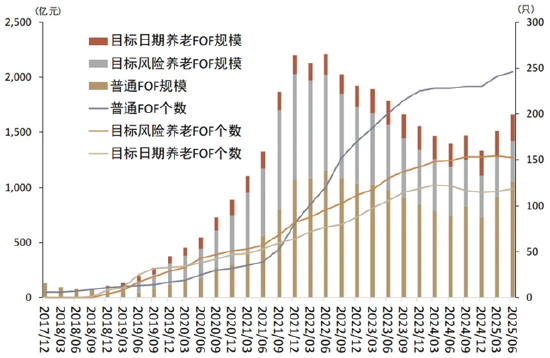
最近梳理二季度各类产品的增量,不得不感叹一句,FOF也是好起来了。 在经历连续三年的规模下滑之后,今年以来,FOF迎来"两连增",规模连续两个季度回升。曾经不被看 好的FOF,正以一种低调的姿态重新回到增长的路径上来。 Wind数据显示,截至 2025 年二季末, 全市场FOF 基金数量合计 518 只,较上季末增加 6 只。基金规 模合计 1657.1 亿元,较上季末上升 9.7%。 为什么今年以来FOF基金开始受到市场关注? 这要先从FOF基金本身说起。简单来说,FOF是一种专门投资于其他基金的基金,通过持有多个基金, 实现资产的多元化配置,以分散风险并追求稳健的投资回报。 国泰基金FOF投资部投资总监曾辉做过一个有趣的比喻:管理FOF基金有点像"开餐厅"。 "如果将股票比作FOF产品的原材料,那么单只基金相当于餐厅的半成品,FOF要做的,就是将半成品 加工成成品。这非常考验餐厅的搭配能力,也就是资产配置的能力。" 说到底,FOF基金并不简单的是一种产品,而是提供了关于资产配置的一站式解决方案。 其次,FOF基金顺应了当前低利率环境下的财富管理需求。目前国有大行一年期定存利率已经进入0字 头,在低利率环境 ...
二季度全球黄金需求总量同比增长3%
Guo Ji Jin Rong Bao· 2025-08-01 01:21
Group 1 - The World Gold Council's report indicates that global gold demand reached 1249 tons in Q2 2025, a 3% year-on-year increase, driven primarily by gold ETF investments which saw inflows of 170 tons [1] - Gold jewelry consumption fell by 14% year-on-year to 341 tons, marking the lowest quarterly demand since Q3 2020, although the total value of gold jewelry consumption increased by 21% to $36 billion [1] - In China, gold jewelry demand weakened significantly, dropping 20% year-on-year to 69 tons in Q2 2025, with a substantial 45% quarter-on-quarter decline, leading to a total of 194 tons for the first half of the year, a 28% decrease [1] Group 2 - The decline in gold jewelry consumption is attributed to a combination of economic cycles and changes in consumer behavior, with high gold prices reducing purchasing willingness, particularly among younger consumers [2] - Gold ETFs are favored for their liquidity, low transaction costs, and high transparency, serving as a preferred tool for both institutional and individual investors to hedge risks and diversify portfolios [2] - The increase in ETF holdings reduces the available deliverable gold in the market, indirectly supporting higher gold prices, while investors are advised to adopt a layered allocation strategy in a high gold price environment [2]
银行理财产品资产配置结构
Zhong Guo Zheng Quan Bao· 2025-07-31 21:02
数据来源/《中国银行业理财市场半年报告(2025年上)》 制表/李静 2025年6月末 2025年3月末 2025年初 余额(万亿元) 占总投资资产比例(%) 余额(万亿元) 占总投资资产比例(%) 余额(万亿元) 占 总投资资产比例(%) 债券 13.78 41.8 13.68 43.9 13.98 43.5 现金及银行存款 8.18 24.8 7.27 23.3 7.68 23.9 非标准化债权类资产 1.82 5.52 1.75 5.6 1.74 5.4 公募基金 1.38 4.2 0.93 3 0.93 2.9 权益类资产 0.78 2.38 0.81 2.6 0.83 2.58 ...