资产配置

Search documents
投资“触礁”之后,我选择一年“躺赚”近30%
雪球· 2025-07-30 13:00
Core Viewpoint - The article emphasizes the importance of asset allocation as a crucial strategy for investors to manage risks and achieve stable returns in fluctuating markets [4][20][46]. Group 1: Understanding Asset Allocation - Asset allocation is described as the art of distributing investment funds across different asset classes, such as stocks, bonds, commodities, and cash, to minimize risk [5][6]. - The concept of "not putting all eggs in one basket" is highlighted, indicating that merely buying multiple funds is insufficient; true diversification requires spreading investments across various asset types [5][6]. - Benjamin Graham's 50-50 investment strategy is introduced, suggesting a balanced approach of allocating 50% to stocks for growth and 50% to bonds for stability, which serves as a safety net during market volatility [6][20]. Group 2: Performance Analysis of Different Strategies - A backtest of three investment strategies shows that the 50-50 allocation outperformed both all-stock and all-bond portfolios over a five-year period, with a cumulative return of +18.38% compared to -4.66% for the stock index [9][18]. - The all-stock portfolio exhibited high volatility, with a maximum drawdown exceeding 35%, while the 50-50 portfolio maintained lower volatility and drawdown levels [13][18]. - The all-bond portfolio, while initially underperforming, eventually surpassed the all-stock strategy due to its lower risk profile and quicker recovery from downturns [15][18]. Group 3: Advanced Asset Allocation Strategies - The article discusses modern asset allocation strategies, such as Ray Dalio's All Weather Portfolio, which aims for consistent performance across various economic conditions by diversifying into low-correlation assets [20][21]. - Harry Browne's Permanent Portfolio is also mentioned, advocating for an equal distribution of assets across stocks, bonds, gold, and cash to ensure stability regardless of economic fluctuations [21][22]. Group 4: Practical Implementation of Asset Allocation - The article outlines a practical approach for constructing a diversified fund portfolio, emphasizing the need to assess risk tolerance and investment goals before allocation [28][29]. - It suggests a three-part allocation strategy, including 15% in bonds, 70% in stocks, and 15% in commodities like gold, to balance growth and stability [25][26]. - Regular rebalancing of the portfolio is recommended to maintain the desired risk-return profile, ensuring that no single asset class dominates the portfolio [29][30]. Group 5: Advantages and Limitations of the Proposed Strategies - The diversified investment approach is praised for its ability to reduce risk and provide resilience during economic downturns, making it suitable for various market conditions [40][41]. - However, limitations such as regulatory constraints on QDII investments and the inherent volatility of A-shares are acknowledged, which may require investors to exercise discipline [41][42]. - The article concludes that while asset allocation may not yield overnight wealth, it serves as a reliable compass in the unpredictable investment landscape, promoting steady growth over time [46][47].


申万宏源香港发盈喜,预期中期综合除税后溢利5500万港元至6500万港元 同比扭亏为盈
Zhi Tong Cai Jing· 2025-07-30 12:16
Core Viewpoint - The company expects a significant turnaround in its financial performance, projecting an unaudited consolidated profit after tax of between HKD 55 million and HKD 65 million for the six months ending June 30, 2025, compared to a loss of HKD 37 million in the same period last year [1] Financial Performance - The projected profit represents a substantial improvement from the previous year's loss, indicating a recovery in the company's financial health [1] - The company has effectively capitalized on market opportunities, leading to a notable increase in core business revenues, including institutional services, trading, wealth management, and corporate financing [1] Strategic Management - The company has optimized asset allocation and prudently managed market risk exposure, contributing to the enhanced financial results [1] - Active control of operating costs has also played a crucial role in driving profit growth for the first half of 2025 [1]

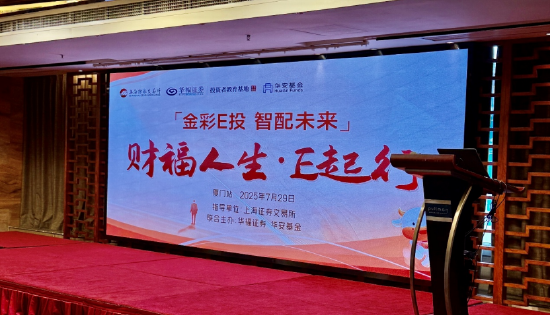
金彩E投 智配未来——华福证券携手上交所、华安基金成功举办“财福人生·E起行”厦门投资策略会
Xin Lang Ji Jin· 2025-07-30 02:17
Group 1 - The investment strategy conference "Wealth of Finance · Start Together" was successfully held in Xiamen, focusing on ETF market dynamics and allocation strategies to provide professional asset allocation ideas for investors [1][2] - The event highlighted the high market interest in gold investment and ETFs as inclusive investment tools, with a strong exchange of professional insights among participants [2] - Shanghai Stock Exchange presented a session on the development trajectory, product innovation, and future trends of the ETF market, emphasizing ETFs as core choices for asset allocation due to their transparency, efficiency, and low cost [2][3] Group 2 - Huang Hao from Huabao Fund delivered a speech on "Gold Investment and ETF Allocation Strategies," analyzing the investment value of gold in the context of macroeconomic conditions and asset performance data, highlighting gold's advantages such as high liquidity and risk diversification [3][6] - The collaboration between Huafu Securities and Huabao Fund aims to enhance investor education, with Huafu Securities acting as a bridge for professional exchanges and Huabao Fund providing data-driven insights into ETF and index allocation [6] - Future initiatives will focus on targeted investor education activities, responding to regulatory calls and market demands, while Huabao Fund plans to expand its ETF product line to offer more suitable asset allocation tools [6]
固定收益点评:2025年理财半年报点评及展望,理财的变化与挑战
GOLDEN SUN SECURITIES· 2025-07-29 14:07
Report Investment Rating - No information regarding the industry investment rating is provided in the report. Core Viewpoints - In the first half of 2025, the growth of wealth management scale slowed down due to the high base in the same period last year and the weakened income advantage. Looking ahead to the second half of the year, wealth management may face greater challenges, but its ability to handle redemptions has increased [3][7]. Summary by Directory I. Wealth Management Product End: Weakened Income Advantage and Slowed Scale Growth - Affected by the high base in the first half of 2024, the scale of wealth management, money market funds, and bond funds all increased less year-on-year in the first half of 2025. In the first half of 2025, deposits increased by 17.92 trillion yuan, wealth management increased by 0.72 trillion yuan, money market funds increased by 0.62 trillion yuan, and bond funds increased by 0.44 trillion yuan. Among them, deposits increased by 6.47 trillion yuan year-on-year, while wealth management increased 1.0 trillion yuan less year-on-year, money market funds increased 1.29 trillion yuan less year-on-year, and bond funds increased 1.13 trillion yuan less year-on-year [14][15]. - The decline in wealth management income was significantly greater than that of deposits and money market funds, and the weakened income advantage was another important reason for the slowed scale growth in the first half of this year. The average monthly yield of wealth management in the first half of 2025 further dropped to 2.12%, a decrease of 53 bps compared to the end of last year. In the first half of this year, the reduction in the listed deposit interest rate was between 5 bps - 25 bps, and the average seven-day annualized yield of money market funds only decreased by 22 bps [15]. II. Wealth Management Asset End: Reduced Bond Holdings, Increased Deposits and Public Fund Investments - In terms of asset allocation structure, bond investments decreased in the first half of the year, while deposits and public fund investments increased significantly. The proportions of public funds and cash and bank deposits increased the most, with the proportion of public funds rising by 1.3 pct to 4.2%, and the proportion of cash and bank deposits rising by 0.9 pct to 24.80%. The proportion of bonds decreased by 2.3 pct to 55.60%. In terms of scale, cash and bank deposit investments increased by 0.5 trillion yuan, public fund investments increased by 0.45 trillion yuan, and bond investment scale decreased by 0.27 trillion yuan [4]. - In the first half of 2025, wealth management reduced its total bond holdings by 0.27 trillion yuan, mainly reducing credit bonds and certificates of deposit, and increasing interest rate bonds. As of June 2025, wealth management held 18.33 trillion yuan of bonds, including 12.79 trillion yuan of credit bonds, 0.99 trillion yuan of interest rate bonds, and 4.55 trillion yuan of interbank certificates of deposit. In terms of increments, in the first half of 2025, bond holdings decreased by 0.27 trillion yuan, among which interest rate bonds increased by 0.24 trillion yuan, credit bonds decreased by 0.42 trillion yuan, and certificates of deposit decreased by 0.08 trillion yuan [5][25]. III. Wealth Management Operation Mode: Continued Contraction of Cash - Type Products and Significant Growth of Other Open - Ended Products - The proportion of closed - end products and cash management products decreased, while the scale and proportion of other open - ended products increased. In the first half of the year, the scale of closed - end products increased by 0.1 trillion yuan to 5.85 trillion yuan, the scale of cash management products decreased by 0.9 trillion yuan to 6.4 trillion yuan, and the scale of other open - ended products increased by 1.52 trillion yuan to 18.42 trillion yuan. The proportions of closed - end products and cash management products decreased by 0.13% and 3.51% respectively, and the proportion of other open - ended products rose from 56.43% at the end of 2024 to 60.06% in June 2025 [6][31]. - In terms of the term of closed - end products, the term of newly issued closed - end products in the first half of 2025 was extended. As of the end of June 2025, the proportion of the outstanding scale of closed - end products with a term of more than one year in all closed - end products was 72.86%, an increase of 5.71 percentage points compared to the beginning of the year and an increase of 4.99 percentage points compared to the same period last year [31]. Outlook for the Second Half of 2025 - Wealth management yields may decline further. With the decline in the yields of underlying asset bonds and the gradual release of retained earnings, wealth management yields may decline trend - wise. Coupled with the maturity of previously allocated relatively high - yield assets, the downward pressure on wealth management yields will be more obvious [7][36]. - There may be some pressure on the expansion of wealth management scale. As the advantage of wealth management product yields over deposits weakens, especially for products like cash management products that invest more in short - term assets, the advantage over deposits is limited, which may lead to a slowdown in the growth rate of wealth management scale [7][36]. - The net value fluctuations of wealth management may increase, but the ability to handle redemptions has increased. Although the means of smoothing the valuation of wealth management products are restricted, and as the proportion of open - ended products in the wealth management product structure rises, the exposure level of products to fluctuations has further increased, the net value fluctuations of wealth management may increase. However, the significant increase in deposit investment scale in the wealth management asset allocation structure has enhanced the liquidity management ability of wealth management, giving it a strong ability to handle redemptions [7][36]. - High - interest assets are becoming scarcer, and wealth management may rely more on trading and entrusted investments to obtain returns. From the wealth management investments in the first half of 2025, the proportion of bond investments decreased, and among bonds, interest rate bonds were mainly increased while credit bonds were reduced. Against the background of an asset shortage, the supply of high - coupon assets is decreasing, and there are certain challenges in diversified investments in the future. Wealth management may rely more on interest rate trading and entrusting public fund investments to obtain higher returns [8][37].
兴华基金吕智卓:利率波动风险敞口可控 债市风险有限
Zhong Zheng Wang· 2025-07-29 14:06
Core Viewpoint - The key change in asset allocation for investors in 2023 compared to 2024 is an increase in risk appetite, driven by a strong performance in equity markets and upward pressure on nominal interest rates due to rising commodity prices [1][2] Group 1: Market Dynamics - Since early April 2025, equity assets have strengthened, leading to a diversion of funds from bond funds [1] - The rise in equity markets indicates a marginal improvement in macroeconomic conditions, while collective price increases in commodities have contributed to upward pressure on nominal interest rates [1] - The rally in cyclical and energy stocks has placed significant pressure on the bond market [1] Group 2: Bond Market Outlook - The central bank maintains a relatively loose monetary market environment, suggesting that interest rate volatility risks are manageable and bond market risks are limited [1] - Three core factors driving the bond market remain unchanged: 1. Price increases in upstream industrial products will not quickly transmit to downstream sectors 2. The real estate sector is still bottoming out, and a structural asset shortage persists 3. The monetary market environment remains accommodative, which is favorable for the bond market [1] - Recent economic data shows signs of recovery, with expectations that upstream industrial prices will eventually lead to a broad price index increase, which is already reflected in the recent stock and bond markets [1] Group 3: Fixed Income Investment Strategy - For the second half of the year, long-term and ultra-long-term bonds are expected to remain core assets in the bond market, with a low probability of unilateral interest rate increases [2] - When approaching the upper limit of the interest rate range, it may be advisable to extend duration and invest in long-term bonds [2] - In the credit bond sector, the current 4-5 year high-grade credit spread is at a historically low level, suggesting a strategy of shortening duration and selectively investing in lower-rated bonds [2] - Convertible bonds in sectors such as photovoltaic, solid-state batteries, and banks are recommended, as these sectors benefit from multiple favorable factors and the valuations of these convertible bonds are closely correlated with the performance of their underlying stocks [2]
你的投资收益率该跟谁PK?我跑赢基准的秘密,根本不在沪深300里!
雪球· 2025-07-29 13:01
Core Viewpoint - The article emphasizes the importance of a diversified asset allocation strategy, particularly through the "three-part method," which has yielded a cumulative return of 9.32% this year, outperforming the benchmark index of 7.85% and the CSI 300's return of 5.11% [3][5]. Group 1: Performance Comparison - The use of the CSI 300 as a performance benchmark is deemed unfair for diversified portfolios, as the CSI 300 primarily represents large-cap stocks in traditional sectors like banking and energy [7][12]. - A multi-asset strategy, which includes stocks, bonds, and commodities, has shown superior performance over the past seven years, with a cumulative return of nearly 100% and an annualized return exceeding 10%, compared to the CSI 300's cumulative return of only 3.96% [14][16]. - The article highlights that during periods of market volatility, a diversified approach tends to outperform the CSI 300, while in strong bull markets, single-asset strategies may yield higher returns [15][21]. Group 2: Investment Methodology - Investors are encouraged to understand the risk-return characteristics of different strategies through performance benchmarks, which can help them identify suitable investment methodologies [19][20]. - The article notes that the CSI 300 has an annualized return of approximately 8% over the last 20 years, but with a maximum drawdown exceeding 70%, indicating a high-risk profile [20]. - A diversified asset allocation strategy can mitigate risks associated with market downturns while still achieving reasonable returns, suggesting a more favorable risk-return ratio compared to concentrated investments in the CSI 300 [21]. Group 3: Three-Part Method for Asset Allocation - The "three-part method" allows investors to customize their asset allocation based on their risk tolerance and return expectations, with a typical allocation being 60% stocks, 30% bonds, and 10% commodities [22][24]. - The article provides a detailed example of a diversified portfolio, including specific fund allocations, which aims to balance risk and return effectively [30]. - The three-part method promotes long-term investment through diversification across different asset classes, markets, and timing, thereby enhancing the potential for returns while reducing overall risk [30].

工资出逃记:当代年轻人为何集体押注“一金一银”?
Sou Hu Cai Jing· 2025-07-29 10:02
当 "搞钱" 成为年轻人社交平台的高频词,当 "财务自由" 的口号在深夜朋友圈此起彼伏,现实中的年轻 人却做出了颇具反差的选择 —— 交完五险一金后,工资纷纷涌入 "一金一银"。这里的 "一金一银",并 非金银首饰,而是稳健理财界的 "扛把子":债券基金与银行理财。这场看似平淡的资金迁徙,实则是 当代年轻人在复杂经济环境下,对风险与收益的重新权衡,更是一场静悄悄的理财观念革命。 在充满不确定性的经济大环境中,年轻人的工资流向正在发生显著变化。全球经济复苏乏力,地缘政治 冲突不断,资本市场波动加剧,股票市场的剧烈震荡、基金净值的大起大落,让许多怀揣财富梦想的年 轻人尝尽苦头。蚂蚁财富的数据便是最直观的印证:过去一年,95后、00后购买债券基金的人数同比增 长30%,投入资金规模增长25%;多家银行也发现,30岁以下客户购买银行理财产品的金额较去年同期 增长18%。这组数据背后,是年轻人用真金白银投票,选择向稳健投资 "投降"。 回溯近年来的金融市场,黑天鹅与灰犀牛事件频发。从疫情冲击下的全球股市熔断,到加密货币市场的 瞬间崩盘,再到热门赛道基金的大幅回撤,高风险投资领域一次次给年轻投资者敲响警钟。某头部券商 的 ...
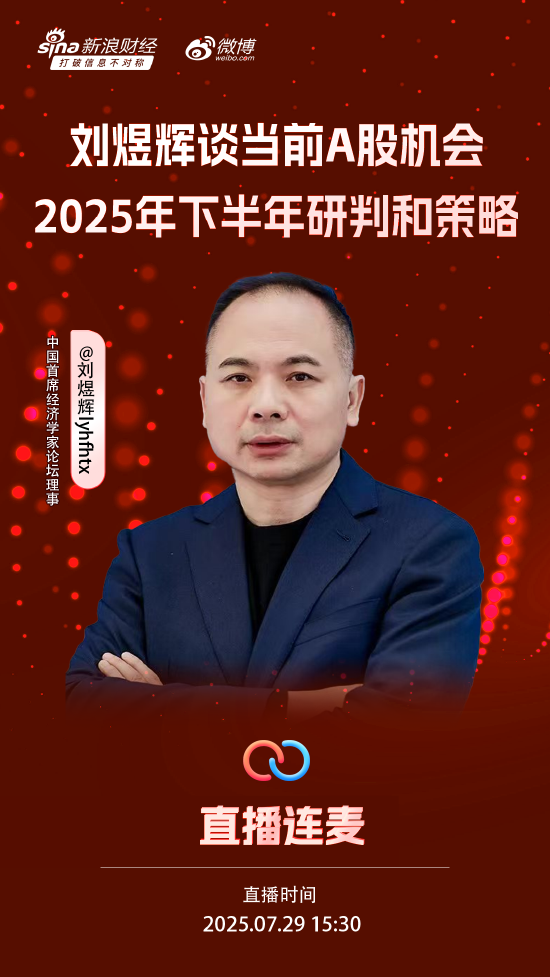
刘煜辉:黄金此轮上涨周期或将远超历史上任何一次牛市
Xin Lang Zheng Quan· 2025-07-29 08:57
在此背景下,黄金不仅是一种避险工具,更具备长期投资价值。他指出,若以10年作为宏观周期刻度, 黄金在大类资产中具备稳定的下行弹性与相对优势,适合作为中长期定投的优质配置标的。 炒股就看金麒麟分析师研报,权威,专业,及时,全面,助您挖掘潜力主题机会! 7月29日,新浪财经连线@刘煜辉lyhfhtx 博士,就A股走势、经济周期、资产配置等关键问题进行分 享。>>视频直播 刘煜辉指出,当前黄金市场的上涨并非由短期流动性因素驱动,而是建立在全球地缘格局深层变动之上 的长期逻辑支撑。 他分析称,黄金此轮上涨周期背后的核心背景是"G2战略竞争"的长期化态势。中美之间的结构性博弈 将成为未来几十年不可逆的战略基调,这一剧本决定了全球市场的不确定性将持续存在,系统性对冲资 产的需求因此长期维持在高位。刘煜辉判断,这种大国缠斗格局一时难解,决定了黄金价格运行周期的 时间尺度将远超历史上任何一次牛市。 直播连麦 直播时间 2025.07.29 15:30 刘煜辉强调,当前市场对黄金的关注不能仅局限于短期波动,而应立足于结构性风险与长期信用体系重 估的背景。在全球宏观失衡常态化的背景下,黄金将持续发挥其稳态锚定功能,为资产组合提供 ...
金融素养越高,被骗风险越大?中国老人养老钱困局
Hu Xiu· 2025-07-29 01:58
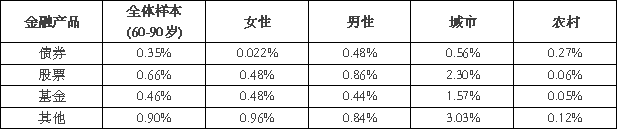
Group 1: Importance of Financial Behavior of the Elderly - The aging population in China is increasing, with 21.1% of the population aged 60 and above by 2024, and life expectancy nearing 80 years. However, the pension replacement rate is below 50%, necessitating reliance on personal savings and asset appreciation to cover 20-30 years of retirement [1][2] - The current asset structure dominated by precautionary savings and over 70% in real estate is inadequate to cope with medical inflation (approximately 8% annual growth) and long-term care costs, leading to a risk of "longevity poverty" [1][2] - The shift in traditional support systems for the elderly, influenced by urbanization and declining birth rates, is creating a more complex network of social capital for elder care [2] Group 2: Financial and Psychological Health - Financial and financial health are closely linked to the psychological well-being of the elderly in China. The life cycle theory suggests that rational decision-making regarding savings and consumption is influenced by expected lifetime income [3][6] - Studies indicate that a higher expenditure-to-income ratio increases the risk of depression among the elderly, while a higher ratio of financial assets provides protective benefits [3][4] - Economic conditions significantly affect the self-worth of older adults, with better financial status correlating with lower feelings of uselessness [3][4] Group 3: Financial Resilience and Emergency Funds - The financial resilience of the elderly needs improvement, as the probability of facing major health issues or loss of independence increases with age. Approximately 32.8% of seniors in China struggle to raise emergency funds within 30 days [6] - This figure, while better than many developing countries, still lags behind developed nations like Norway and Sweden [6] Group 4: Financial Status and Asset Allocation - The financial status of the elderly in China is characterized by a focus on precautionary savings and reliance on pensions and intergenerational transfers. However, participation in financial markets is notably low, with ownership of various financial products below 1% among those aged 60-90 [7][8] - Urban elderly have significantly higher participation rates in risk assets compared to their rural counterparts, highlighting a stark urban-rural divide [7][8] - The asset allocation is heavily concentrated in bank deposits and real estate, which, while providing psychological comfort, poses risks such as low inflation resistance and poor liquidity [9][10] Group 5: Financial Literacy and Fraud Vulnerability - Financial literacy among the elderly in China is significantly lower than in developed countries, with an average score of 0.97 out of 3 for those aged 50-70, compared to 2.16 in the U.S. [12][13] - High financial literacy may paradoxically increase the risk of fraud victimization, as those with basic financial knowledge may become targets without adequate fraud prevention education [14][15] - The phenomenon of overconfidence in financial literacy can lead to susceptibility to scams, emphasizing the need for targeted anti-fraud education alongside financial literacy training [15][16]
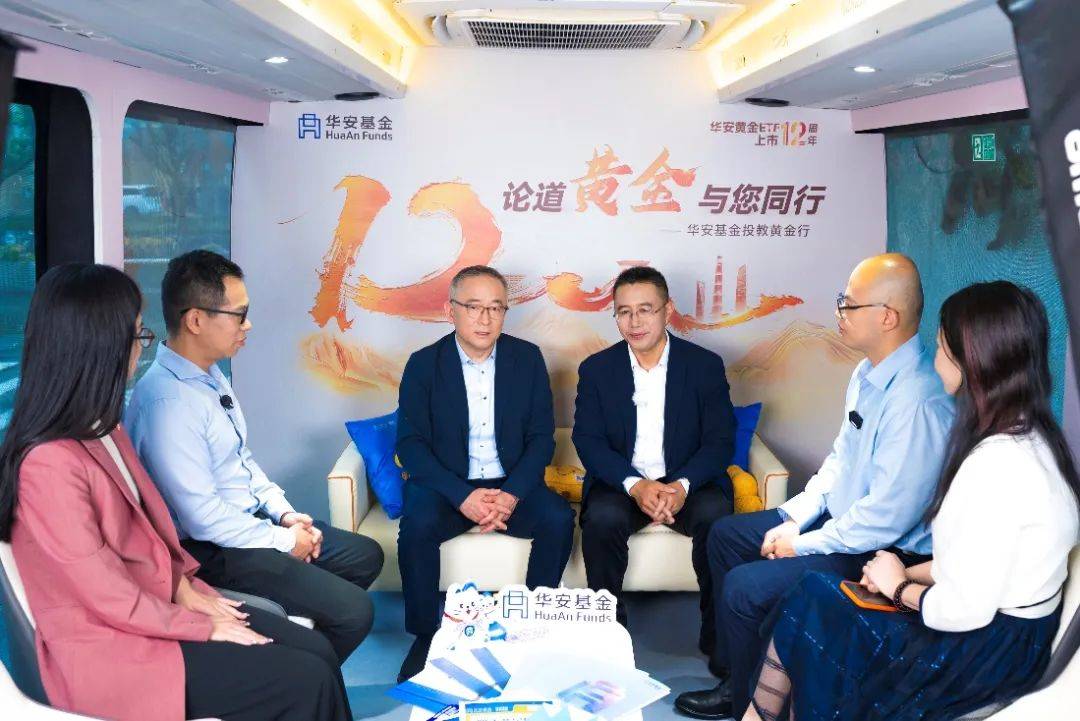
历经一纪的金色信仰:坚持为投资者提供好的投资工具——华安黄金ETF上市十二周年纪事
Sou Hu Cai Jing· 2025-07-28 23:44
Core Viewpoint - The establishment of the first domestic gold ETF by Huaan Fund represents a significant historical mission to promote gold investment among the public, highlighting gold's role as a medium of exchange, value measurement, payment method, and value storage [1][9]. Group 1: Historical Development - The Huaan Gold ETF was launched on July 18, 2013, during a period when gold prices were at a four-year low of $1,200 per ounce, marking a pivotal moment in making gold investment accessible like stock trading [6][8]. - The development of gold ETFs in China began in 2009, with regulatory approval achieved in 2013, allowing for the public sale of gold ETFs [7][9]. - The product has evolved through various phases, including initial challenges, market fluctuations, and significant growth, ultimately becoming a leading gold ETF in China [2][10][12]. Group 2: Market Position and Performance - Over the past twelve years, the Huaan Gold ETF has become a crucial component of asset allocation for investors, particularly during periods of market volatility [2][13]. - The fund's assets surpassed 10 billion yuan, making it the largest gold ETF in Asia by August 2020, driven by increased demand for gold as a safe-haven asset during the pandemic [14][15]. - The fund has successfully navigated various market conditions, including the impact of U.S. interest rate hikes and geopolitical tensions, maintaining a strong position in the market [16][18]. Group 3: Future Outlook and Strategy - The global trend of central banks purchasing gold has shifted market dynamics, with significant purchases recorded in 2022 and 2023, indicating a growing concern over dollar-denominated assets [17][18]. - Huaan Fund anticipates that gold will continue to play a vital role in asset allocation, especially as geopolitical tensions rise and economic conditions evolve [18][22]. - The company emphasizes the importance of investor education and risk management, aiming to enhance investor awareness and reduce the impact of short-term market fluctuations on the gold market [21][22].