
中国宏观经济

Search documents
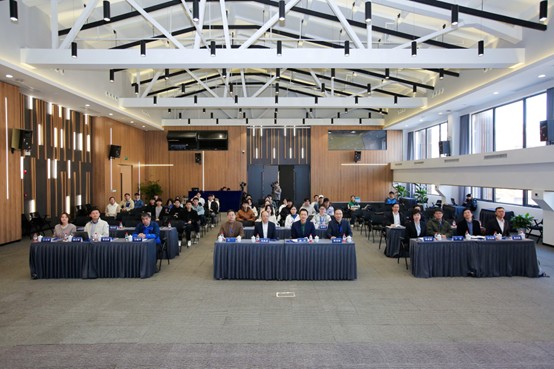
上财报告:我国宏观经济基础仍然坚韧
Xin Hua Cai Jing· 2025-11-29 13:56
Group 1 - The core theme of the forum is "The 14th Five-Year Plan and the 15th Five-Year Plan: Innovation-Driven Growth Across Cycles," emphasizing the resilience of China's macroeconomic foundation with strong household demand, corporate motivation, and government capacity [1][3] - The report suggests that China can reshape its growth momentum through institutional innovation and structural optimization, transitioning from debt-driven to innovation-driven growth [1][3] - The "three 'has'" of China's macroeconomy—household demand, corporate motivation, and government capacity—form an internal logic chain for future economic recovery and transformation [3] Group 2 - Short-term policies should be stable and flexible to stabilize the real estate market and consumer confidence, while long-term growth relies on innovation to achieve economic rebalancing [3] - The current economic phase is characterized by a transition from the 14th to the 15th Five-Year Plan, facing global economic adjustments and domestic structural challenges [3] - A new development stage for China's economy is emerging, focusing on manufacturing and independent innovation, with national strategic security as a foundation [3][4] Group 3 - A comprehensive financial support system for technological innovation involves six stages, starting from fiscal funding and policy finance to guiding long-term capital investments [4] - The establishment of green channels for mature technologies will facilitate efficient exits for investments, promoting a virtuous cycle of early investment and reinvestment in innovation [4] - The Chinese capital market is expected to enter a phase of systematic valuation improvement, transforming high savings into innovation-driven growth, thereby supporting the construction of a modern industrial system [4]

格林大华期货中国宏观经济三季报:8月经济数据有所回落,期待更多政策
Ge Lin Qi Huo· 2025-09-30 08:48
Report Industry Investment Rating No relevant content provided. Core Viewpoints - In the first eight months of 2025, China's economic performance was mixed, with some indicators falling short of market expectations. The economy needs continuous domestic demand to maintain rapid growth, and more counter - cyclical adjustment policies are expected in the fourth quarter [68]. Summary by Categories Investment - From January to August, national fixed - asset investment increased by 0.5% year - on - year, lower than the market expectation of 1.3% and the 1.6% growth in January - July. General infrastructure investment (including electricity) increased by 5.4%, narrow infrastructure investment (excluding electricity) increased by 2.0%, and manufacturing investment increased by 5.1%. Real estate development investment decreased by 12.9% [4]. Real Estate - From January to August, the sales area of new commercial housing decreased by 4.7% year - on - year, and the sales volume decreased by 7.3%. In August, the sales of new commercial housing accelerated their decline. In September, the year - on - year growth of commercial housing transactions in 30 large - and medium - sized cities was due to a low base last year, and the year - on - year growth rate in the fourth quarter will face challenges. In August, the prices of second - hand residential properties in first, second, and third - tier cities continued to decline [6][9][11]. Consumption - In August, the total retail sales of social consumer goods increased by 3.4% year - on - year, lower than the market expectation of 3.8%. From January to August, the total retail sales of social consumer goods increased by 4.6%. The growth rate of some categories related to the trade - in policy slowed down in August, while the growth of improved consumption accelerated. From January to August, service retail sales increased by 5.1% [13][15][18]. Industry - In August, the added value of industrial enterprises above designated size increased by 5.2% year - on - year, lower than the market expectation of 5.8%. The product sales rate of industrial enterprises above designated size was 96.6%, a year - on - year decrease of 0.1 percentage point. From January to August, the profits of industrial enterprises above designated size increased by 0.9% year - on - year, turning positive from a 1.7% decline in January - July [22][24][62]. Employment - In August, the national urban surveyed unemployment rate was 5.3%, up 0.1 percentage point from the previous month. The unemployment rate of 16 - 24 - year - old labor force (excluding students) in urban areas was 18.9%, higher than the same period last year [28][30]. Foreign Trade - In August, China's exports denominated in US dollars increased by 4.4% year - on - year, and imports increased by 1.3% year - on - year. Exports to ASEAN and the EU increased, while exports to the US decreased. Exports to regions other than the top five export destinations maintained high - speed growth [32][34][37]. Prices - In August, the CPI decreased by 0.4% year - on - year, mainly due to the high base of comparison in the same period last year and lower - than - seasonal food prices. The PPI decreased by 2.9% year - on - year, and the month - on - month decline ended [39][48]. Finance - In August, the social financing scale increased by 2.57 trillion yuan, less than the same period last year. The balance of M2 increased by 8.8% year - on - year, and the balance of M1 increased by 6% year - on - year. The stock of social financing scale increased by 8.8% year - on - year, and the balance of RMB loans increased by 6.8% year - on - year [52][56][59].
中国宏观周报(2025年9月第3周)-20250922
Ping An Securities· 2025-09-22 07:06
Industrial Sector - Daily average pig iron production increased, and Shandong's independent refineries' operating rates improved[2] - Cement clinker capacity utilization rate and petroleum asphalt operating rates showed marginal declines[2] - Polyester operating rates remained stable, while tire production rates for both radial and semi-radial tires increased[2] Real Estate - New home sales in 30 major cities increased by 37.6% year-on-year as of September 19, 2025, significantly up from the previous week[2] - The average selling price index for second-hand homes decreased by 0.69% in the last four weeks as of September 8, 2025[2] Domestic Demand - Movie box office revenue averaged 118.63 million yuan per day, up 58.6% year-on-year as of September 19, 2025[2] - Retail sales of major home appliances grew by 5.3% year-on-year, an increase of 0.7 percentage points from the previous week[2] - Domestic flight operations increased by 5.6% year-on-year, with a notable rise in execution rates[2] External Demand - Port cargo throughput increased by 7.3% year-on-year, while container throughput rose by 10.9% as of September 14, 2025[2] - South Korea's export value grew by 3.8% year-on-year in the first ten days of September, up 2.5 percentage points from August[2] Price Trends - The Nanhua Industrial Price Index rose by 1.0%, with the black raw materials index increasing by 3.1%[2] - Rebar futures closed up 1.4%, while spot prices increased by 0.7%[2] - Coking coal futures rose by 7.6%, with Shanxi coking coal spot prices up by 2.8%[2]
中国宏观周报(2025年8月第3周)-20250825
Ping An Securities· 2025-08-25 05:31
Group 1: Industrial Production - Overall industrial production in China remains stable, with daily pig iron output and steel plate production increasing week-on-week[1] - The operating rate of some chemical products has improved, while the operating rate of float glass remains stable compared to last week[1] - The operating rates for polyester in textiles and weaving industries have shown seasonal recovery[1] Group 2: Real Estate - New home sales in 30 major cities decreased by 12.5% year-on-year as of August 22, 2025, but improved by 6.1 percentage points compared to the previous month[1] - The second-hand housing listing price index fell by 0.37% week-on-week as of August 11, 2025[1] Group 3: Domestic Demand - Movie box office revenue averaged 176.7 million yuan per day, up 14.9% year-on-year as of August 22, 2025[1] - Retail sales of automobiles increased by 2% year-on-year from August 1-17, 2025, compared to a 7% increase in July[1] - The volume of postal express deliveries grew by 13.5% year-on-year as of August 17, 2025, although it has slightly declined from the previous week[1] Group 4: External Demand - Port cargo throughput increased by 5.4% year-on-year as of August 17, 2025, while container throughput rose by 5.0%[1] - The export container freight rate index decreased by 1.5% week-on-week, indicating a downward trend in shipping costs[1] Group 5: Price Trends - The Nanhua Industrial Index fell by 0.7%, with the black raw materials index dropping by 2.0% this week[1] - Futures prices for rebar decreased by 2.2%, while spot prices fell by 1.5%[1] - Coking coal futures prices dropped by 5.5%, although spot prices in Shanxi rose by 0.3%[1]
中国宏观周报(2025年8月第2周):新房成交同比初步企稳-20250818
Ping An Securities· 2025-08-18 03:43
Group 1: Industrial Production - China's industrial production remains stable, with daily average pig iron output and steel plate production increasing week-on-week[1] - The operating rate of oil asphalt and some chemical products has improved, while cement clinker capacity utilization has slightly adjusted[1] - Polyester weaving and automotive tire production rates have rebounded, indicating a recovery in downstream industries[1] Group 2: Real Estate - New home sales in 30 major cities decreased by 8.9% year-on-year, but the decline rate improved by 6.2 percentage points compared to the previous week[1] - Year-to-date, new home sales have dropped by 14.2%, a 5.0 percentage point improvement from the previous month[1] - The index for second-hand home listing prices fell by 0.42% week-on-week as of August 4[1] Group 3: Domestic Demand - Movie box office revenue averaged 206.74 million yuan per day, showing a year-on-year increase of 46.2%[1] - Domestic flight operations increased by 1.6% year-on-year, with the Baidu migration index rising by 17.7%[1] - Retail sales of major home appliances grew by 10.5% year-on-year as of August 1[1] Group 4: External Demand - Port cargo throughput increased by 6.8% year-on-year, while container throughput rose by 4.1%[1] - South Korea's export value decreased by 4.3% year-on-year, a decline of 10.2 percentage points from July[1] - The Chinese export container freight index fell by 0.6% week-on-week, indicating a downward adjustment in shipping rates[1] Group 5: Price Trends - The South China industrial product index rose by 0.4%, while the black raw material index remained stable[1] - Rebar futures prices dropped by 0.8%, and spot prices fell by 0.3%[1] - Coking coal futures prices increased by 0.2%, but spot prices in Shanxi decreased by 0.6%[1]
中国宏观周报(2025年7月第5周)-20250804
Ping An Securities· 2025-08-04 07:14
Group 1: Industrial Production - Industrial production in China shows divergence, with raw material production demonstrating relative resilience[1] - Daily pig iron output is higher than the same period last year, while steel and construction material production and apparent demand have marginally declined[1] - The operating rates for petroleum asphalt and some chemical products have recovered, while cement clinker capacity utilization remains stable compared to last week[1] Group 2: Real Estate - New home sales in 30 major cities decreased by 18.4% year-on-year as of August 1, 2025, with a 19.3% decline in July compared to the previous month[1] - The second-hand housing listing price index decreased by 0.48% month-on-month as of July 21, 2025[1] Group 3: Domestic Demand - National retail sales of passenger cars from July 1-27, 2025, reached 1.445 million units, a 9% increase year-on-year, while the total market for July is estimated at around 1.85 million units, up 7.6% year-on-year[1] - Major home appliance retail sales increased by 18.5% year-on-year as of July 25, 2025[1] - Daily movie box office revenue averaged 230 million yuan, a 27.9% increase year-on-year, with a government subsidy program in Beijing to encourage attendance[1] Group 4: External Demand - Port cargo throughput increased by 10.9% year-on-year as of July 27, 2025, with container throughput up by 5.6%[1] - South Korea's export value grew by 5.9% year-on-year in July, an increase of 1.6 percentage points from June[1] Group 5: Price Trends - The South China industrial product index fell by 3.8%, with the black raw materials index down by 5.6%[1] - Rebar futures prices dropped by 4.6%, while spot prices decreased by 2.3%; coking coal futures fell by 13.2%, but spot prices rose by 1.2%[1]
全球市场导读刊物
2025-08-18 01:00
Summary of Key Points from Conference Call Industry Overview - **Industry**: Chinese Macro Economy and Real Estate Market - **Company**: Goldman Sachs (GS) Core Insights and Arguments 1. **Mixed Economic Data for May**: - Fixed asset investment growth was only 3.7%, below the expected 4.0% - Industrial value-added growth was 5.8%, slightly below the expected 6.0% - Retail sales of consumer goods grew strongly by 6.4%, exceeding the market expectation of 4.9% [2][3] 2. **Decline in Urban Housing Demand**: - GS revised the forecast for urban housing demand, estimating it will remain below 5 million units annually, a 75% decrease from the peak of 20 million units in 2017 - Current housing prices are still declining, indicating the real estate market has not yet bottomed out [3][4] 3. **Limited Impact of Export Front-Loading**: - Anticipated "reciprocal" tariffs led to front-loading of exports, with an estimated 5% increase in overall exports in March - The impact on exports for the second half of the year is expected to be limited to 1 percentage point, suggesting that trade surpluses will remain strong [5][4] 4. **Fiscal Policy and Economic Growth**: - May saw a slowdown in fiscal operations, with budgetary income growth at only 0.1%, significantly lower than April's 1.9% - Fiscal expenditure growth decreased from 5.8% in April to 2.6%, indicating that fiscal stimulus has not significantly strengthened [11][12] 5. **Real Estate Revenue Weakness**: - Land transfer revenue fell by 14.2% year-on-year, a stark contrast to April's growth of 3.9% - Budgetary real estate-related tax revenue decreased by 8.6%, reflecting ongoing weakness in the real estate market [11][12] 6. **Geopolitical Tensions and Energy Prices**: - Brent crude oil prices rose to nearly $80 per barrel due to escalating tensions in Iran, with a geopolitical risk premium of about $12 - Two scenarios for oil price increases were outlined, with potential peaks of $90 and $110 per barrel under different supply disruption scenarios [26][28] 7. **Copper Demand Driven by AI**: - AI-driven data center expansion is expected to become a new growth driver for copper demand, particularly in power distribution and cooling systems - Strong capital expenditure expectations for AI-related investments are anticipated to sustain demand for copper-intensive components [32][34] 8. **Modern Dairy Industry Forecast**: - Modern Dairy, a joint venture of Mengniu, expects a net loss of RMB 800-1,000 million in the first half of 2025, significantly higher than last year's loss of RMB 207 million - The core operations remain resilient, with EBITDA expected to remain stable due to lower raw milk sales costs [38][39] Other Important but Possibly Overlooked Content - **Fiscal Space for Expansion**: Despite current economic growth exceeding expectations, GS anticipates further fiscal expansion in the second half of the year to counter deflationary pressures and boost confidence [16][18] - **Market Sentiment and Currency Dynamics**: The report highlights a divergence in safe-haven currencies, with the dollar and Swiss franc performing strongly while Asian low-yield currencies face pressure [16][18] - **Potential for Future Trade Weakness**: High-frequency transport data indicates a potential weakening of Chinese exports to the U.S., particularly in container traffic, which may reflect the impact of new tariffs [35][37]
上财报告:中国经济在多重挑战中实现稳定增长
Xin Hua Cai Jing· 2025-07-07 08:49
Group 1 - The report from Shanghai University of Finance and Economics predicts stable growth for China's economy in 2025 despite external uncertainties and internal transformation challenges [1] - On the supply side, industrial transformation continues, with new industries like new energy and new materials becoming new growth drivers, while traditional industries face overcapacity and profit shrinkage [1] - The demand side is slowly recovering but remains fragile, with households preferring to save more and reduce debt, which could have long-term implications for macroeconomic demand [1] Group 2 - The report suggests balancing short-term demand stabilization with long-term reforms, including targeted easing to alleviate debt pressure and support high-end manufacturing [2] - There is a need to break market segmentation and accelerate the construction of a unified national market to enhance market confidence and stimulate consumption and investment [2] - The current macroeconomic concern is persistently low price levels, with industries experiencing faster profit declines than cost reductions, necessitating a shift to a new governance model led by the government [2]
刘元春、张军、连平、陆挺最新发声!
证券时报· 2025-07-06 07:26
Core Viewpoint - The 2025 China Macroeconomic Mid-Year Forum emphasizes the need for a balance between short-term demand stabilization and long-term reforms to address the prominent supply-demand imbalance in the economy [1] Group 1: Economic Challenges and Recommendations - The report highlights that despite the resilience of China's economy, the supply-demand imbalance remains a significant issue, necessitating policy adjustments [1] - Experts suggest accelerating the construction of a unified national market to foster a competitive environment and avoid resource wastage [1] - Liu Yuanchun advocates for a shift in macroeconomic governance to focus on micro-level management and address "involution" in competition as a policy priority [5][7] Group 2: Domestic Demand and Structural Reforms - Zhang Jun stresses the importance of enhancing domestic demand as both an immediate necessity and a long-term strategy, emphasizing the need for stable market expectations and investment [8][11] - Recommendations include improving local government debt management and reforming income distribution mechanisms to ensure steady growth in disposable income [11][12] - Continuous supply-side structural reforms are necessary to improve supply quality and facilitate economic circulation [12] Group 3: External Environment and Economic Outlook - Lian Ping notes that the external environment presents both structural opportunities and challenges, with complex interactions affecting global capital flows and trade patterns [13][14] - The outlook for the second half of the year indicates significant downward pressure on economic growth, particularly in exports and the real estate sector [19][21] - Policy measures are recommended to address these challenges, including reforms in the real estate market and social security systems to support consumption [21][18]

美银上海之行纪要:中国宏观经济进入平静期,资管与保险公司正提升股票投资占比
Zhi Tong Cai Jing· 2025-07-03 11:54
Group 1: Macroeconomic Outlook - Clients believe that China's growth target of around 5% is likely to be achieved due to resilient export demand, although concerns exist about a significant slowdown in exports after the summer [1] - There is a prevailing pessimism regarding the real estate market, with expectations of continued declines in housing prices and a contraction in real estate investment extending into next year [1] - Many clients anticipate that the Consumer Price Index (CPI) inflation may remain negative for the year, and there is little hope for additional policy stimulus unless economic data deteriorates rapidly [1] Group 2: Trade Relations - Clients express concerns about potential escalation in trade tensions as the July 9 deadline approaches, but most believe that the peak of uncertainty has passed [2] - Despite trade uncertainties, some international clients are increasing investments in Chinese production infrastructure due to cost efficiency and product quality advantages [2] - Investors expect the USD/CNY exchange rate to remain stable, although there are notable downside risks, with many anticipating a further weakening of the dollar in the medium term [2] Group 3: Investment Strategies - In a low-yield and low-volatility environment, investors are seeking alternative investment opportunities, with some asset management firms increasing their equity allocations for better returns [3] - The upcoming QDII quota issuance allows qualified investors to expand their investments in overseas securities, with attention on potential improvements to the interconnectivity mechanism during the upcoming Bond Connect anniversary summit [3] Group 4: Views on U.S. Interest Rates - There is a divergence in client views regarding U.S. fiscal risks, with some preferring tactical trading in the middle of the yield curve while others are increasing holdings in U.S. Treasury bonds, particularly the 20-year bonds, due to attractive yields [5] - Clients are considering hedging duration risk as the 10-year U.S. Treasury yield remains below 4.3% [5]