
兼并重组

Search documents
光伏高管们的话,说给汽车高管们听
第一财经· 2025-06-15 03:21
Core Viewpoint - The current state of the new energy vehicle (NEV) industry mirrors that of the photovoltaic (PV) industry, with both sectors facing challenges from price wars and cost-cutting measures that threaten innovation and overall profitability [1][2]. Group 1: Industry Challenges - The price war in the PV sector has led to a significant decline in prices across the supply chain, with prices for polysilicon and components dropping nearly 30%, despite a 28.3% year-on-year increase in new installations [2]. - Major PV companies, including Longi Green Energy and Tongwei Co., have reported substantial revenue declines and losses, indicating that the aggressive pricing strategies are unsustainable [2][3]. - The NEV industry is experiencing similar pressures, with some companies facing increasing losses and cash flow issues, highlighting the risks of relying solely on price competition [2][3]. Group 2: Capacity Expansion and Market Dynamics - The PV industry has seen severe overcapacity, driven by both market competition and local government incentives, which has historically led to inefficiencies and market saturation [4]. - The NEV sector is beginning to echo these patterns, with calls from industry leaders for a halt to new factory constructions in favor of utilizing existing overcapacity [4][5]. - Mergers and acquisitions are being encouraged in both industries as a means to consolidate and eliminate low-quality capacity, supported by recent regulatory changes [4][5]. Group 3: Innovation and Intellectual Property - The lack of intellectual property protection has hindered innovation in the PV sector, where new technologies quickly become widely adopted without adequate rewards for the original innovators [6][7]. - The NEV industry must prioritize protecting innovation and fostering a supportive environment for technological advancements to avoid repeating the mistakes of the PV sector [6][7]. - A collaborative approach involving policy support is essential for creating a market environment that encourages and protects innovation across both industries [7][8].




光伏高管们的话,说给汽车高管们听 | 海斌访谈
Di Yi Cai Jing· 2025-06-14 14:52
Core Viewpoint - The current challenges faced by the Chinese photovoltaic (PV) industry, particularly regarding price wars and overcapacity, serve as a cautionary tale for the automotive industry, which is experiencing similar pressures in its transition to electric and smart vehicles [1][2][3]. Group 1: Industry Challenges - The PV industry has seen a significant increase in production, with polysilicon, battery cells, and modules all growing over 10% year-on-year in 2024, while new installations reached 277.57 GW, a 28.3% increase [2]. - Despite the growth in production and demand, prices for key components in the PV supply chain have dropped nearly 30%, leading to a decline in overall industry revenue [2]. - Major PV companies, including Longi Green Energy and Tongwei Co., have reported substantial revenue declines and losses, indicating a troubling trend in profitability [2][3]. Group 2: Price Wars and Competition - The automotive industry is currently engaged in aggressive price competition, which has not yet resulted in the same level of industry-wide losses seen in the PV sector, but poses risks as many companies struggle to differentiate their products [2][3]. - The phenomenon of price wars is often accompanied by homogeneous capacity expansion, which can lead to inefficiencies and market saturation [3][4]. Group 3: Innovation and Intellectual Property - The lack of intellectual property protection for innovators in the PV sector has hindered the ability of pioneering companies to capitalize on their technological advancements, leading to rapid diffusion of innovations across competitors [6][7]. - The automotive industry must prioritize both research and development and the protection of innovative outcomes to avoid repeating the mistakes of the PV sector [6][7]. Group 4: Future Directions - Both the PV and automotive industries are encouraged to pursue mergers and acquisitions to eliminate low-quality capacity and enhance market efficiency, supported by policy initiatives [4][5]. - A conducive market environment that fosters and protects innovation is essential for the sustainable growth of both industries, allowing them to leverage China's manufacturing advantages on a global scale [7].
新势力的规模坎
Zhong Guo Qi Che Bao Wang· 2025-06-13 01:29
Group 1 - The competitive landscape among new car manufacturers is evolving, with traditional leaders like "Wei Xiaoli" facing challenges, while competitors like Leap Motor are performing well in terminal sales [2] - There is a call within the industry for new car manufacturers to consider mergers and acquisitions due to financial pressures and operational challenges [2][3] - The survival of car manufacturers is increasingly dependent on their ability to achieve scale, with a critical sales threshold of 2 million units per year identified as necessary for self-sustainability [3][4] Group 2 - New car manufacturers are experiencing significant financial losses, with NIO reporting cumulative losses of 109.29 billion yuan from 2018 to 2024 [4] - Despite the financial challenges, some companies like XPeng and NIO are optimistic about achieving profitability in the fourth quarter, indicating a potential shift in their financial outlook [5] - The automotive industry is witnessing a trend where many brands may face shutdowns or restructuring, with predictions that up to 80% of fuel vehicle brands could be affected in the next 3 to 5 years [7] Group 3 - The concept of mergers and acquisitions is seen as a less detrimental option compared to business failures, with industry leaders advocating for a structured approach to facilitate these processes [8] - The value of new car manufacturers for traditional automakers in terms of mergers and acquisitions is questioned, as their innovations may not be sufficient to attract interest [8] - New car manufacturers are exploring partnerships and collaborations as an alternative to mergers, leveraging the scale and cost advantages of established players like Huawei [11][12]


山城激辩火药味渐起 中国汽车打响新一轮“反内卷”发令枪
Zhong Guo Qing Nian Bao· 2025-06-11 22:49
Core Viewpoint - The automotive industry in China is experiencing intense price wars and restructuring due to mergers and acquisitions, which are reshaping the market landscape [2][3] Group 1: Industry Challenges - The price war has escalated, with over 200 models experiencing price cuts in 2024 and more than 60 models in the first four months of 2025, leading to industry profits dropping below 4% [2][3] - The competition is characterized by excessive price reductions and blind technological advancements, which threaten reasonable profit margins and product/service quality [3][5] - The Chinese government has initiated measures to prevent "involution-style" competition, with various departments deploying strategies to stabilize the supply chain and promote high-quality development in the automotive sector [5][6] Group 2: Recommendations for Companies - Companies are urged to adhere to three bottom lines: maintaining quality and safety standards, practicing integrity and contract spirit, and committing to long-termism through technological innovation [3][8] - The automotive industry must focus on innovation, green transformation, and enhancing collaboration across the supply chain to navigate the current challenges [4][5] Group 3: International Expansion and Opportunities - The automotive sector is encouraged to explore overseas markets as a key strategy to alleviate domestic competition pressures, with significant growth in exports noted [7][8] - The total number of cars exported from China reached 695,000 in May 2025, with a cumulative export of 2.853 million units from January to May, marking a 16.8% year-on-year increase [7] - Companies are advised to strengthen partnerships with global firms and enhance local market strategies to overcome challenges such as tariffs and technology restrictions [9]
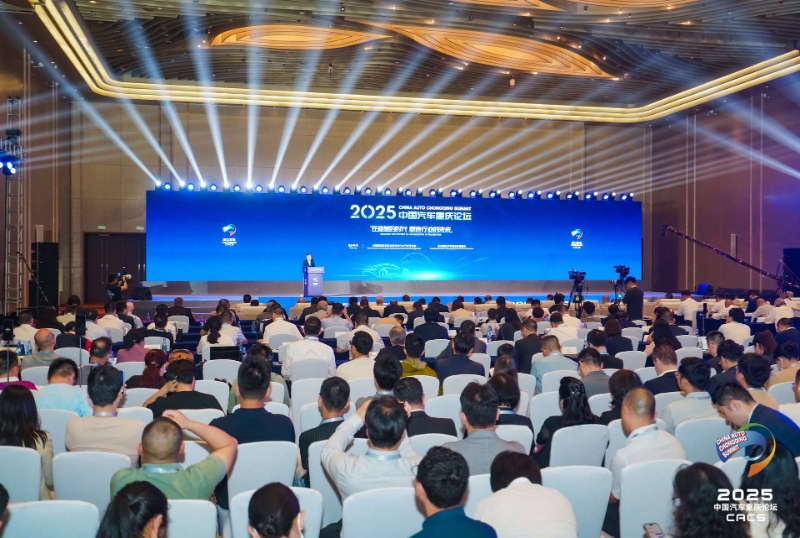
“在变革时代共塑未来”2025中国汽车重庆论坛盛大开幕
Xin Hua Wang· 2025-06-09 07:41
Core Insights - The 2025 China Automotive Chongqing Forum emphasizes shaping the future of the industry in a transformative era [1][3] - The forum serves as a platform for discussing cutting-edge trends and strategies for industry development, involving representatives from government, automotive manufacturers, and supply chain enterprises [3] Industry Challenges and Opportunities - The automotive industry is experiencing intense competition characterized by price wars and restructuring through mergers and acquisitions, which are seen as necessary for enhancing competitiveness [5] - The current market landscape shows that strong automotive groups hold nearly 90% of market share, indicating that consolidation will not hinder overall industry growth but may enhance the global competitiveness of leading firms [5] Policy and Governance - Effective governance is crucial for addressing industry challenges such as internal competition and mergers, requiring comprehensive regulatory guidance from the government [5] - The resilience of the Chinese economy, particularly in the automotive sector, is supported by targeted national policies that create significant market and growth opportunities [6] Future Directions - Key strategies for shaping the future of the automotive industry include promoting innovation, enhancing green transformation, fostering a conducive environment for industry order, and strengthening collaboration across sectors [6] - Experts suggest that the restructuring of global supply chains and ongoing technological revolutions present substantial development opportunities for the industry [6] Regional Development Initiatives - Chongqing is positioning itself as a major manufacturing hub and automotive center, focusing on the development of smart connected and new energy vehicles [7] - The city is investing in R&D, infrastructure, and digital transformation to elevate its automotive industry towards higher-end development and improve operational efficiency [8]
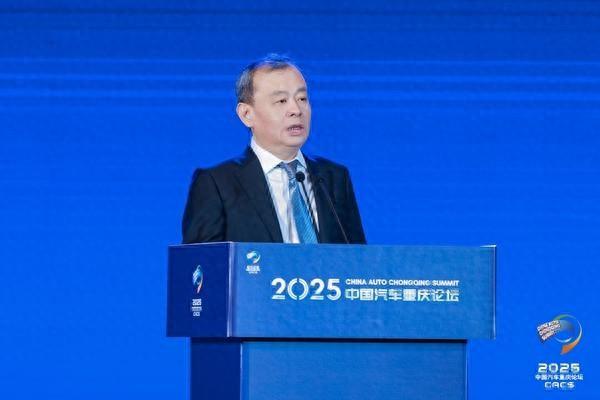
王侠:车企竞争应坚持三条底线 兼并重组可提升全球竞争力
Zhong Guo Jing Ji Wang· 2025-06-06 12:29
Group 1 - The automotive industry is experiencing intense price wars, with over 200 models having price reductions in 2024 and more than 60 models in the first four months of this year, leading to industry profits dropping below 4% [2] - The competition in technology is seen as more positive, with advancements in solid-state batteries, AI integration, and smart driving, but safety must remain a priority amid these innovations [2] - Companies are urged to adhere to three fundamental principles: maintaining quality and safety standards, upholding integrity and ethical business practices, and committing to long-term sustainable development through innovation [2] Group 2 - Mergers and acquisitions are viewed as a necessary phase for the automotive industry to mature, driven by market stagnation, declining profits, and increasing market concentration [3] - The restructuring of the automotive industry may occur through various methods, including internal consolidation by large automotive groups and the integration of weaker companies by stronger ones [3] - Current examples of internal consolidation include Geely's integration of Zeekr and Lynk & Co, as well as GAC's and SAIC's strategic initiatives aimed at enhancing competitiveness [3] Group 3 - The integration of different automotive companies will coincide with the exit of weaker firms, further reshaping the competitive landscape of the automotive industry [4] - With strong automotive groups holding nearly 90% of the market share, mergers and acquisitions are expected to enhance the global competitiveness of these leading companies without negatively impacting the overall development of the Chinese automotive industry [4]
2025中国汽车重庆论坛热议整治“内卷式”竞争 兼并重组将成为趋势
Zheng Quan Shi Bao Wang· 2025-06-06 11:23
王侠透露道,在刚刚过去的5月,汽车价格战的情况进一步加剧。在头部车企大范围、大幅度降价带动 下,多家车企跟进效仿,降价车型达百余款之多,降价幅度最高超5万元。降价带来销量增长的同时, 也导致行业利润进一步下探至4%以下的极低水平。 王侠认为,适度的降价、有序的竞争本是市场经济的正常现象,也是行业从稚嫩走向成熟的必经阶段, 但无底线的价格战和盲目的技术狂飙势必挤压企业合理的利润空间,进而影响产品和服务质量,长远来 看,对企业、对消费者都是不利的。 "2025年,两个方面的事情最牵动全行业的敏感神经。一个是以价格战为主要体现方式的行业内卷,另 一个是由兼并重组带来的产业格局重塑。"6月6日,在由中国国际贸易促进委员会汽车行业委员会主办 的"2025中国汽车重庆论坛"上,中国国际贸易促进委员会汽车行业委员会会长、中国国际商会汽车行业 商会会长王侠在论坛开场就点名了当前汽车产业的竞争趋势。 王侠认为,"内卷"是变革不可避免的阵痛,也是可持续发展的杀手。 据不完全统计,2024年国内车市降价车型多达200余款,2025年前4个月降价车型已达60多款。 中国机械工业联合会党委书记、会长徐念沙也强调,规范汽车行业发展秩序, ...
年内超40家银行“消失”!
券商中国· 2025-05-14 06:03
Core Viewpoint - The recent announcements from multiple listed banks and local rural commercial banks regarding the acquisition of village banks indicate a significant trend towards consolidation in the banking sector, particularly among village banks, as they face increasing pressure to merge or dissolve [1][2]. Summary by Sections Village Bank Consolidation - Nearly 100 village banks are expected to dissolve in 2024, with over 40 banks already exiting the market in the first quarter of 2025, highlighting a rapid acceleration in this trend [2]. - The financial regulatory authorities have prioritized the reform of small and medium-sized financial institutions, emphasizing "mergers and restructuring" as a key strategy for improving quality while reducing quantity [2][6]. Recent Mergers and Acquisitions - Shunde Rural Commercial Bank announced plans to absorb and merge several village banks, including Shenzhen Longhua Xinhua Village Bank, with a focus on converting them into branches of the bank [3]. - Jiangmen Rural Commercial Bank is also moving forward with similar plans to absorb village banks, indicating a broader trend among banks in Guangdong province [3][4]. - Jiangsu Bank and Shengjing Bank have both announced intentions to acquire village banks and convert them into branches, further illustrating the ongoing consolidation efforts in the sector [4]. Impact on the Banking Landscape - As of March 2025, the number of banks participating in deposit insurance has decreased by 48 compared to the end of 2024, with village banks being the most affected [5]. - The number of rural financial institutions, including village banks, has significantly declined, with village banks seeing the largest reduction [5]. - The regulatory focus on risk management and the restructuring of small financial institutions is expected to lead to a period of consolidation, where weaker institutions may be eliminated from the market [6][7]. Structural Reforms and Challenges - Various structural reform methods are being implemented, including the merger of multiple village banks into one, direct dissolution, and strengthening management of village banks while maintaining their independent operations [8]. - The process of merging village banks into larger institutions is complex and may face operational challenges due to differences in establishment models, equity arrangements, and integration processes [8].

【投资视角】启示2025:中国水泥行业投融资及兼并重组分析(附投融资事件汇总和兼并重组等)
Qian Zhan Wang· 2025-05-13 07:17
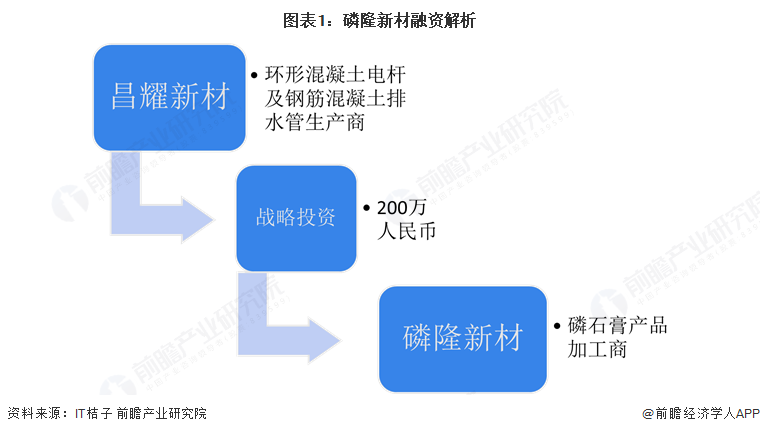
Group 1 - The core viewpoint of the article highlights the recent trends in financing and mergers in the Chinese cement industry, focusing on green development and international expansion [10][25]. - Since 2021, there have been limited financing events in the domestic cement industry, with three notable cases involving companies like Hubei Phosphor Long New Materials and Zhejiang Tianzao Environmental Protection Technology [1][4][5]. - The financing events reflect a growing emphasis on green technologies and recycling within the cement sector, driven by stricter environmental regulations and the need for sustainable practices [2][10]. Group 2 - The article outlines a trend towards increased internationalization in the cement industry, with companies like Jidong Cement making strategic acquisitions to expand into overseas markets, particularly in Africa [7][10]. - The average merger and acquisition (M&A) transaction value in the cement industry ranges from 200 million to 2 billion yuan, with significant deals like Tianshan Materials' acquisition of China United Cement Group for 98.142 billion yuan [14][20]. - The frequency of mergers and acquisitions has increased, with Jidong Cement being the most active participant in the sector, indicating a consolidation trend aimed at enhancing market competitiveness [20][23]. Group 3 - The financing and M&A activities in the cement industry are characterized by a focus on green and low-carbon initiatives, as well as a recovery of investor confidence despite market challenges [10][25]. - The article notes that the number of overseas M&A events has been limited but is showing signs of growth, with two notable transactions expected in 2024 [18][20]. - The overall trend indicates that the cement industry is maturing, with a shift towards horizontal acquisitions to expand scale and improve operational efficiency [25].

年内超40家银行“消失”中小金融机构改革化险步履不停
Zheng Quan Shi Bao· 2025-05-12 18:00
Core Viewpoint - The recent announcements from multiple listed banks and local rural commercial banks regarding the acquisition of village banks indicate a significant trend towards consolidation in the banking sector, particularly among rural financial institutions [1][4]. Group 1: Industry Trends - Nearly 100 village banks are expected to dissolve in 2024, with over 40 banks already exiting the market in the first quarter of 2025, highlighting a rapid decline in the number of village banks [1][3]. - The financial regulatory authorities have prioritized the reform and risk management of small and medium-sized financial institutions, emphasizing "mergers and restructuring" as a key strategy for improving the quality and reducing the quantity of these institutions [1][4]. Group 2: Specific Bank Activities - Shunde Rural Commercial Bank plans to hold a shareholder meeting on May 20 to discuss the absorption and merger of Shenzhen Longhua Xinhua Village Bank, following its previous merger with Foshan Gaoming Shunyin Village Bank [1][2]. - Jiangmen Rural Commercial Bank announced a shareholder meeting on May 13 to review the absorption and merger of Longchuan Ronghe Village Bank and Raoping Ronghe Village Bank [2]. - Jiangsu Bank has received regulatory approval to acquire Jiangsu Danyang Suyin Village Bank and establish several branches, continuing its "village reform branch" initiative [2]. Group 3: Regulatory and Structural Changes - The number of banks participating in deposit insurance has decreased by 48 from the end of 2024, primarily due to the absorption and merger of rural financial institutions, with village banks being the most affected [3]. - The National Financial Supervision Administration has emphasized the need for market-oriented and legal principles in the reform of local small and medium-sized financial institutions, including risk resolution and transformation [4][5]. - Various structural reorganization methods are being explored, including merging multiple village banks into one, direct dissolution, and increasing stakes in village banks while maintaining their independent operations [6].