
利率周期

Search documents
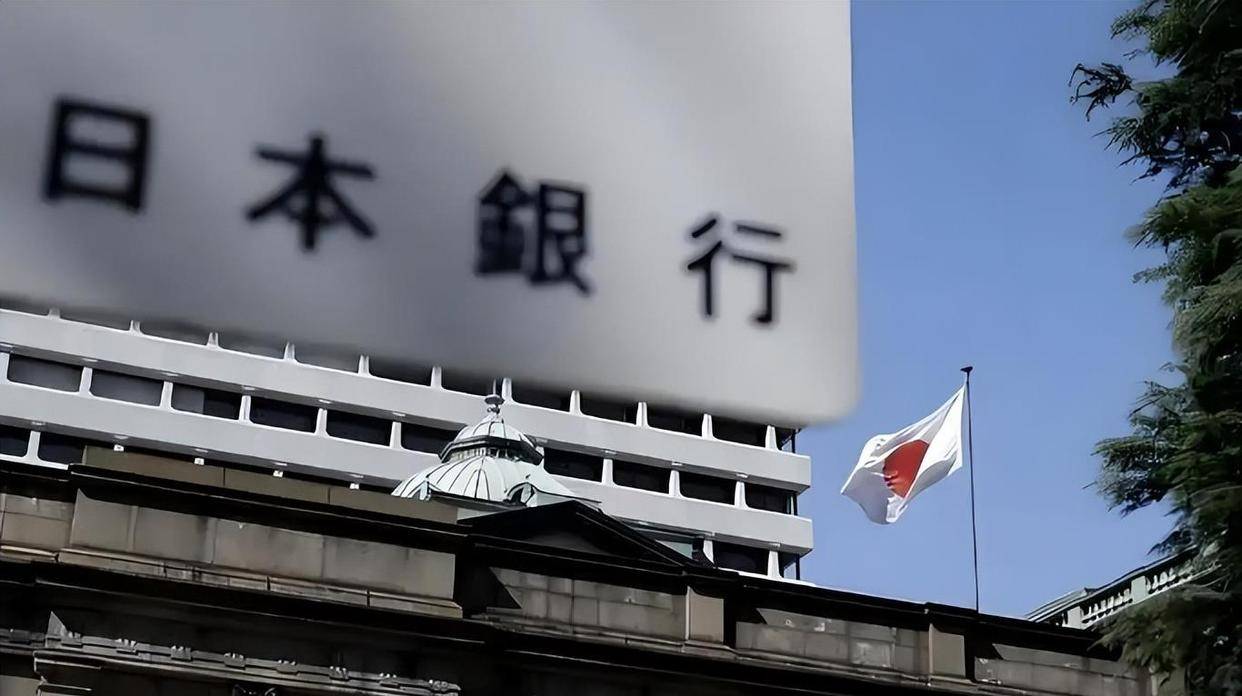
日本加息炸翻全球!21万亿资金大撤退,普通人该如何守住钱袋子?
Sou Hu Cai Jing· 2025-12-05 23:37
Group 1 - The core point of the article is that the market is more afraid of the collapse of "certainty" than bad news, as indicated by the unexpected market reactions following the Bank of Japan's hint at interest rate hikes [1][15] - Japan's bond market has become heavily manipulated by the central bank, leading to a situation where any sign of policy change results in a sharp rise in bond yields, reflecting market pressure on the central bank [2][5] - Japan's government debt is the highest among major economies, with rising interest payments and risks associated with currency depreciation, leading to a loss of investor confidence and necessitating the interest rate hike [5][7] Group 2 - The global market reacts strongly to Japan's actions due to the significant amount of carry trade, where investors borrow in low-yielding yen to invest in higher-yielding assets, causing a ripple effect across various asset classes [7][8] - The first wave of impact is felt in the U.S. tech stocks, which are particularly sensitive to rising interest rate expectations, leading to a sell-off in these high-valuation assets [7][10] - Japan's status as a major holder of U.S. Treasuries means that a return of funds to Japan could weaken demand for U.S. debt, resulting in rising yields and a revaluation of global asset prices [10] Group 3 - Ordinary investors are advised to avoid emotional trading during systemic volatility and focus on maintaining liquidity while identifying fundamentally strong assets that may have been unjustly sold off [11][15] - The article suggests that the era of ultra-low interest rates is coming to an end, leading to a pressure test for asset bubbles built on cheap capital, emphasizing the need for investors to understand the underlying logic of capital flows and interest rate cycles [15]

倒计时2天!第二十届21世纪金融年会即将重磅启幕
2 1 Shi Ji Jing Ji Bao Dao· 2025-11-20 01:17
Core Insights - The "21st Century Financial Annual Conference" will be held on November 22, 2025, in Beijing, focusing on the theme "Reshaping Financial Resilience Across Interest Rate Cycles" [1][2] - The conference aims to gather representatives from regulatory bodies, leading financial institutions, and authoritative experts to analyze cyclical trends and explore solutions for the financial industry's future [1][2] Group 1 - The conference has been held annually since 2006 and has become a significant event in China's financial sector, recognized for its insightful topics and influential guest lineup [1] - This year's event will feature nearly fifty prominent guests participating in keynote speeches, parallel forums, and roundtable discussions [1][2] Group 2 - Special thematic forums will address key industry concerns, including "Financial Support for High-Level Technological Self-Reliance" and "Wealth Management Challenges in a Low-Interest Rate Environment" [2] - The 21st Century Financial Research Institute will release the "2025 China Banking Industry Competitiveness Research Report" and the "2025 China Insurance Industry Competitiveness Research Report" during the conference [2]
倒计时3天!第二十届21世纪金融年会来了,行业共话金融未来
2 1 Shi Ji Jing Ji Bao Dao· 2025-11-19 02:49
Group 1 - The 20th Century Financial Annual Conference will be held on November 22, 2025, in Beijing, focusing on the theme "Reshaping Financial Resilience and Navigating Interest Rate Cycles" [1][2] - The conference aims to gather representatives from regulatory bodies, leading financial institutions, and authoritative experts to discuss industry trends and future pathways [1][2] - The event has been successfully held for 19 years, becoming one of the most authoritative and influential annual events in China's financial sector [1] Group 2 - Special forums will address key industry concerns, including "Financial Support for High-Level Technological Self-Reliance" and "The Low-Interest Rate Challenge in Wealth Management" [2] - The 21st Century Financial Research Institute will release the "2025 China Banking Industry Competitiveness Research Report" and the "2025 China Insurance Industry Competitiveness Research Report" during the conference [2] - The conference will also unveil the "2025 Annual 21st Century Financial Competitiveness Excellent Cases" and "2025 Nanfang Digital Finance 'Pioneer' Cases" to provide valuable practical references for the industry [2]

国际巨头发声!资金流向股债市场
Zhong Guo Zheng Quan Bao· 2025-11-04 04:59
Core Insights - The macroeconomic environment shows resilience, with varying growth drivers across regions, including technology and AI in the US, inventory replenishment in Europe, and fiscal spending in China [3] - The global monetary policy easing cycle has commenced, with major central banks starting to cut interest rates in 2023, although the pace may be slower than market expectations [4] - A significant shift of funds from cash to fixed income and equity markets is occurring, driven by declining risk-free rates and the diminishing advantages of holding cash [5] Economic Growth and Policy - Policy support for economic growth is increasing, with a notable decline in leverage ratios across both developed and emerging markets, although disparities exist among sectors [2] - The US economy's growth is primarily supported by capital investments in technology and AI, while Europe benefits from trade uncertainties leading to inventory restocking [3] Investment Opportunities - The global high-yield bond market is maturing, with improved issuer quality and reduced average duration, making it an attractive investment option [6] - Investment-grade bonds remain appealing due to strong fundamentals and yields above historical averages, particularly in the US and Europe [6] - Emerging market bonds, especially local currency bonds, are gaining attention as they can enhance portfolio returns while reducing overall risk [6][7] Market Trends - The "cash migration" phenomenon is evident, with a significant increase in money market fund sizes since 2022, indicating a shift towards fixed income investments [5] - The expectation of a weaker US dollar in the medium to long term suggests that emerging market bonds may perform well during this period [7]
GTC泽汇资本:金价创新高后的技术隐忧
Xin Lang Cai Jing· 2025-10-02 09:32
Core Viewpoint - The precious metals market continues to show resilience amid weak employment data and rising demand for safe-haven assets, reflecting deeper considerations regarding interest rate cycles, asset allocation, and long-term inflation expectations [1][3] Employment Data - The latest ADP employment report indicates a loss of 32,000 jobs in the private sector for September, contrary to market expectations of a gain of 50,000. This marks the first consecutive month of job losses since 2020 and the largest decline since March 2023 [1] - Weakness in the labor market diminishes confidence in economic recovery and strengthens expectations for the Federal Reserve to maintain a rate-cutting path [1] Precious Metals Performance - In a "dollar-neutral" environment, the focus shifts to fundamental and sentiment-driven factors, with gold prices reaching a historical high of $3,922.70 before closing at $3,892.60 [2] - The upward trend has formed a "shooting star" pattern, suggesting a potential short-term market adjustment, but not necessarily a complete trend reversal [2] Investment Strategies - Institutional investors are advised to consider both macroeconomic policies and technical signals when investing in precious metals, utilizing a combination of ETFs and futures to capture price increases while hedging against short-term volatility [3] - The core variables for the precious metals market remain interest rate trends and risk aversion, with a solid long-term upward logic for prices if weak employment data and loose monetary policy persist [3]

Buy High Visibility Cash Flows For The Rate Cut Cycle
Seeking Alpha· 2025-09-30 21:46
Core Viewpoint - The upcoming cycle of interest rate cuts is expected to correct mispricing in securities, particularly benefiting those with high visibility and certainty of cash flows, while those with low certainty may remain mispriced [1][2]. Group 1: Discounting and Cash Flow Visibility - The article discusses the application of discounting math to both bonds and equities, highlighting that securities with high visibility of cash flows are better positioned as interest rates decrease [2]. - Bonds have perfect visibility of cash flows, allowing precise discounting calculations, while equities exhibit more complexity due to varying cash flow visibility [3][9]. - Value stocks, characterized by lower duration due to high earnings relative to price, should theoretically outperform growth stocks during rate hikes, but this has not been observed in practice [10][11]. Group 2: Mispricing Observations - Despite the expectation that growth stocks would suffer more during rate hikes due to their higher duration, they have outperformed value stocks, indicating a significant mispricing in the market [11][13]. - The observed phenomenon shows that value stocks with visible cash flows were more punished during interest rate increases, contrary to mathematical expectations [22]. - REITs and utilities, which have high cash flow visibility and shorter durations, were expected to be more resilient but also faced mispricing during the rate hike cycle [23][24]. Group 3: Future Expectations and Sector Performance - As interest rates are anticipated to decrease, sectors with high cash flow visibility, such as REITs and utilities, are expected to benefit significantly from the rate cuts [26][28]. - The long-duration sectors are projected to be the biggest beneficiaries of rate cuts, with specific subsectors like triple net, retail, and industrial REITs expected to outperform due to their long rental contracts [32]. - The current valuation and fundamental strength in these subsectors support the expectation of outperformance during the upcoming rate cut cycle [33].

加拿大央行超前降息施压加元 短期利空美元指数
Jin Tou Wang· 2025-09-26 03:54
Core Viewpoint - The Canadian central bank has initiated a 25 basis point interest rate cut, aligning with the Federal Reserve's easing cycle, but with a more proactive approach, creating a distinct policy stance compared to the Fed [1] Group 1: Currency Dynamics - The USD/CAD exchange rate is currently at 1.3939, reflecting a slight increase of 0.03% from the opening price of 1.3935 [1] - The early rate cut by the Bank of Canada typically puts downward pressure on the Canadian dollar, which, due to its weight in the USD index, can support a rebound in the dollar index [1] Group 2: Interest Rate Outlook - The Bank of Canada's earlier entry into the rate cut cycle has limited its future policy space, while the Federal Reserve is expected to gradually shift towards rate cuts [1] - As the interest rate differential between Canada and the U.S. narrows, this trend may provide fundamental support for the Canadian dollar in the long term, potentially weakening the upward momentum of the dollar index [1] Group 3: Technical Analysis - The USD/CAD pair remains above the 9-day Exponential Moving Average (EMA) currently at 1.3838, indicating strong short-term price momentum [2] - The pair has surpassed the four-month high of 1.3924 set on August 22, with potential to challenge the five-month high of 1.4016 reached on May 13 [2]
美联储如果降息,对我们投资有什么影响?|投资小知识
银行螺丝钉· 2025-09-15 14:07
Group 1 - The core viewpoint is that the expectation of a decline in USD interest rates is influencing market behavior, with potential implications for investment strategies [2][3] - A decline in USD interest rates is generally beneficial for the global stock market, akin to gravitational pull on assets [4] - The anticipated decline in USD interest rates is particularly advantageous for non-USD assets, with significant gains observed in A-shares and Hong Kong stocks since the Fed's first rate cut in September 2024 [5] Group 2 - If the yield on 10-year USD Treasury bonds falls to a normal range of 2%-3%, caution is advised as it may signal the start of a new rate hike cycle, negatively impacting non-USD assets [6][7] - Interest rates exhibit cyclical behavior rather than a one-way trend, having experienced multiple cycles of increases and decreases over the past 10-20 years [7] - Interest rates are not a long-term market driver but can create short-term opportunities for undervalued buying and overvalued selling [8]

谈谈银行业绩周期的几个阶段
雪球· 2025-09-14 06:37
Group 1: Interest Rate Cycle - The current economic adjustment phase is characterized by a rate cut cycle aimed at stimulating the economy, which is a typical response during such periods [3] - In the early to mid-stage of the rate cut cycle, both LPR and deposit rates decrease, leading to pressure on bank performance as asset re-pricing occurs faster than liabilities, resulting in challenges such as increased asset quality control [3][4] - Towards the end of the rate cut cycle, the reduction in LPR slows down, allowing banks to enter a more comfortable performance zone as net interest margins begin to recover [3] Group 2: Stable Interest Rate Period - After the rate cut cycle, a stable interest rate period is expected, where banks benefit from lower liability costs and improved asset quality, leading to increased net interest income and reduced credit impairment losses [5][6] - In the later stage of the stable period, while asset quality continues to improve, the cost of liabilities remains stable, allowing banks to maintain comfortable performance levels [6][7] Group 3: Interest Rate Hike Cycle - An interest rate hike cycle occurs when the economy overheats, with both LPR and deposit rates increasing, leading to a faster re-pricing of assets compared to liabilities, which enhances net interest margins [8][9] - In the later stage of the hike cycle, the impact of rising deposit rates becomes evident, but the increase in asset yields slows down, which may suppress net interest margins and return on equity [9][10] Group 4: Overall Economic Cycle Understanding - The cyclical nature of bank performance is crucial for long-term investors, as banks typically reserve profits during prosperous years and release provisions during challenging times, reflecting a normal phenomenon in banking operations [11] - The discussion around declining ROE during this period lacks significance without recognizing the cyclical nature of bank performance, which can lead to linear extrapolation errors [11]

东吴证券晨会纪要-20250908
Soochow Securities· 2025-09-07 23:30
Macro Strategy - The report highlights the need to monitor domestic economic policy changes due to the upcoming Fourth Plenary Session and the focus on countering "involution" [1] Fixed Income - The report discusses why domestic commercial banks are unlikely to reduce their balance sheets, citing factors such as the need to support the economy during a slowdown, the current accommodative monetary policy, and the role of state-owned capital in maintaining financial services to the real economy [2][22] - It emphasizes that the probability of a sector-wide balance sheet reduction is low, despite some smaller banks potentially facing this situation [22] Industry Analysis - The environmental industry report indicates that the waste incineration sector saw a revenue increase of 1% year-on-year in H1 2025, with net profit rising by 8% and an improvement in cash flow [4][6] - The report notes that operational efficiency improvements and reduced financial costs are driving performance growth, with a significant increase in return on equity (ROE) for pure waste operation companies [4][6] - It highlights the importance of enhancing operational efficiency and expanding both B-end and C-end markets to boost profitability and cash flow [6] Food and Beverage Industry - The beer industry report suggests that the sector is expected to benefit from a recovery in consumption, particularly in dining and retail scenarios, with a focus on high-growth companies like Yanjing Beer and Qingdao Beer [7] - The health supplement sector is noted for its potential valuation reconstruction, with a focus on quality stocks [8] Company-Specific Insights - The report on Yingke Recycling indicates strong growth in the decorative building materials business, with a focus on expanding its recycling capabilities and global presence [9] - The analysis of Magmi Te highlights a revenue increase of 16.5% year-on-year in H1 2025, despite a significant drop in net profit due to increased strategic investments [10][11] - The report on Weirgao emphasizes its leadership in the power PCB sector, projecting significant revenue growth driven by AI server demand and production capacity expansion [12] - The analysis of Dacilin shows a revenue increase of 1.33% year-on-year in H1 2025, with a notable profit growth of 21.38% [13] - The report on Dazhu CNC highlights its position as a leader in PCB equipment, benefiting from the demand for high-layer PCB devices driven by AI server needs [14]