
央行政策分化

Search documents
英行降息大考来袭多空博弈曝光
Jin Tou Wang· 2025-12-18 02:47
Group 1 - The core focus of the market is on the Bank of England's interest rate decision, with a 90% probability of a 25 basis point cut to 3.75% due to weak economic indicators [1] - The UK economy shows signs of weakness, with rising unemployment and slowing wage growth, which supports the expectation of monetary easing [1] - The recent PMI data provided short-term support for the pound, but most institutions believe it will not alter the rate cut trajectory [1] Group 2 - The UK autumn budget introduced a £22 billion fiscal buffer, which helped reduce short positions on the pound and pushed the exchange rate above 1.335 [2] - The tightening policies in the budget may constrain economic growth, and the inflation rate remains significantly above the Bank of England's target [2] - There is a divergence in institutional forecasts for the pound, with some predicting a slight decline due to economic pressures and rate cuts, while others see potential for a short-term rebound if rate cuts are less than expected [2] Group 3 - The exchange rate is currently balanced, with short-term fluctuations expected between 1.3350 and 1.3380, with key support at 1.3350 and resistance at 1.3400 [2] - The long-term outlook for the pound depends on the divergence in monetary policy between the UK and the US, as well as the recovery of the UK economy and fiscal conditions [2] - Global capital flows and other variables are also important factors to consider in the pound's valuation [2]
澳元央行政策分化成核心推手
Jin Tou Wang· 2025-12-15 02:57
Group 1 - The Australian dollar (AUD) has been recovering against the US dollar (USD) since December 2025, with a reported exchange rate of 0.6647 as of December 15, reflecting a slight increase of 0.0007 from the previous trading day [1] - The core driver of the AUD's strength is the policy divergence between the Reserve Bank of Australia (RBA) and the Federal Reserve (Fed), with the RBA maintaining its benchmark interest rate and signaling a potential rate hike if inflation remains stubborn [1][2] - Following the RBA's hawkish stance on December 9, the AUD gained 0.3% to 0.6645, while the 3-year Australian government bond yield surged by 11 basis points to 4.152% [1] Group 2 - Australia's inflation rate reached 3.8% year-on-year in October, prompting the RBA to raise its medium-term inflation expectations and support its decision to rule out rate cuts [2] - The Australian economy is experiencing a dichotomy of high inflation and weak growth, with a projected budget deficit of AUD 14.39 billion over the next four years, while the labor market remains tight [2] - The technical analysis indicates that the AUD/USD has risen nearly 0.8% since the low on December 9, breaking through several short-term resistance levels, with 0.6650 becoming a key level to watch [2] Group 3 - The future trajectory of the AUD/USD exchange rate is highly dependent on the policy directions of both the RBA and the Fed, as well as global risk sentiment and commodity price fluctuations [3] - Investors should closely monitor the Fed's future rate cut pace, RBA communications, and changes in inflation and labor data to gauge the sustainability of the RBA's hawkish stance [3]
GBP/JPY政策分化下高位震荡 聚焦央行关键决策
Jin Tou Wang· 2025-12-12 07:27
Core Viewpoint - GBP/JPY is experiencing fluctuations influenced by upcoming UK economic data and the Bank of Japan's monetary policy meeting, with a focus on the divergence in policy expectations between the UK and Japan [1] Economic Data Impact - The sensitivity to UK economic data has increased significantly, with recent figures showing a mere 0.1% quarter-on-quarter GDP growth for Q3 2025, down from 0.3% in Q2, highlighting a weak recovery [1] - Upcoming monthly GDP and industrial production data will further reveal recovery momentum, with potential underperformance likely to strengthen rate cut bets for the Bank of England, putting pressure on the GBP [1] Monetary Policy Divergence - The core driving force for GBP/JPY remains the depreciation pressure on the yen, exacerbated by Japan's Prime Minister Fumio Kishida's 21.3 trillion yen stimulus plan, raising concerns over fiscal stability [1] - The global risk appetite remains high, suppressing the yen and providing support for GBP/JPY, despite the anticipated interest rate hike from the Bank of Japan [1] Market Expectations - The market widely expects the Bank of Japan to raise interest rates at the December 18-19 meeting, with probabilities nearing 80%, potentially increasing the policy rate from 0.5% to 0.75% [1] - This contrasts sharply with the Bank of England's 82% probability of a rate cut in December, which, while supporting GBP/JPY, significantly limits its upward momentum [1] Technical Analysis - Technically, GBP/JPY is in a strong oscillating pattern, with effective support in the 196-198 range and a well-maintained upward channel for the month [2] - A solid breakthrough above the 199.00 level could signal a move towards the 200.00 resistance, while a drop below the 197.00 support may trigger deeper corrections towards 196.00 and 195.50 [2]
央行政策分化成核心推手 加元获鹰派立场支撑
Jin Tou Wang· 2025-12-12 02:40
Core Viewpoint - The divergence in monetary policy between the Federal Reserve and the Bank of Canada has led to increased volatility in the USD/CAD exchange rate, influenced by economic data and trade uncertainties [1][2]. Group 1: Monetary Policy Divergence - The Bank of Canada maintained its overnight rate at 2.25%, indicating a hawkish stance and suggesting the end of the rate-cutting cycle, supported by strong economic data such as a 53,000 increase in employment and a GDP growth of 2.6% in Q3 [1]. - The Federal Reserve cut its rate by 25 basis points to 3.6%, the lowest in nearly three years, with indications of potential further cuts in 2026, raising concerns about economic slowdown and diminishing the dollar's attractiveness [1]. Group 2: Economic Indicators - Canada's unemployment rate fell to 6.5%, and residential construction grew by 6.7%, showcasing economic resilience despite concerns over household consumption [1]. - Oil prices have dropped by 15.2% in 2025, impacting Canada's crude oil export revenues and weakening support for the Canadian dollar [2]. Group 3: Trade and Investment Uncertainties - The U.S. tariffs on Canadian steel and aluminum products have negatively affected related industries, contributing to investment uncertainties in Canada [2]. - The review of the USMCA (United States-Mexico-Canada Agreement) adds further uncertainty to trade dynamics, particularly affecting Canadian exports to the U.S. [2]. Group 4: Technical Analysis and Predictions - The USD/CAD exchange rate is currently experiencing a weak oscillation around the 1.3800 mark, with technical indicators suggesting potential downward movement [2]. - Short-term predictions for the USD/CAD exchange rate are set between 1.3740 and 1.3830, with key resistance at 1.3890 and support levels at 1.3740 and 1.3680 [2].
英国央行政策动向成汇率核心
Jin Tou Wang· 2025-12-12 02:39
Core Viewpoint - The GBP/USD exchange rate is influenced by the upcoming monetary policy decisions from the Federal Reserve and the Bank of England, with market participants exhibiting a cautious outlook [1] Group 1: Economic Indicators - The GBP/USD has shown resilience, with a 0.63% increase in November and maintaining a strong performance in December, supported by expectations of a Fed rate cut and a £26 billion tax adjustment plan in the UK [1] - UK inflation remains above target, with October CPI at 3.6% and core inflation at 3.4%, limiting the Bank of England's ability to cut rates [1] - The US economy shows signs of cooling, but remains resilient, with stable employment and weak consumer and manufacturing sectors, reinforcing expectations for Fed easing [1] Group 2: Market Expectations - There is a significant divergence in market expectations for the two central banks, with an 87% probability of a 25 basis point rate cut by the Fed in December, and predictions of multiple cuts in 2026 [1] - The market anticipates a 25 basis point rate cut by the Bank of England on December 18, but there are internal disagreements regarding inflation risks [1] Group 3: Technical Analysis - The GBP/USD has been trending upwards along short-term moving averages, with effective support at the 10-day moving average [2] - The exchange rate has broken above the 200-day moving average at 1.3326 but faces resistance at the 100-day moving average of 1.3365; a breakout above 1.3370 could target 1.3420-1.3450 [2] - Long-term forecasts suggest a trading range of 1.31-1.37 for GBP/USD by 2026, with UBS predicting a rise to 1.40 by September and JPMorgan forecasting 1.39 by March [2] Group 4: Upcoming Events - Key upcoming events include the Federal Reserve's meeting and the Bank of England's decision on December 18, which could significantly impact the GBP/USD exchange rate [2]
德银:全球再通胀已回归,各国央行政策与美联储出现分化
Sou Hu Cai Jing· 2025-12-11 16:49
Core Viewpoint - The recent interest rate decisions by the Federal Reserve and the Swiss National Bank indicate a divergence in monetary policy among global central banks, with a notable focus on the investment outlook outside the United States being deemed "much more interesting" by analysts at Deutsche Bank [1]. Group 1 - The interest rate decisions from the Federal Reserve and the Swiss National Bank have been announced, while the decisions from the Bank of England, European Central Bank, and Bank of Japan are expected next week [1]. - There is a trend showing a divergence in policies between global central banks and the Federal Reserve [1]. - Deutsche Bank analysts assert that "global re-inflation has returned," suggesting a more favorable investment outlook in regions outside the United States [1].
澳元走高澳洲联储 政策立场成关键
Jin Tou Wang· 2025-12-11 02:53
Core Viewpoint - The Australian dollar (AUD) is experiencing fluctuations against the US dollar (USD) due to divergent monetary policies between the Federal Reserve and the Reserve Bank of Australia, alongside domestic inflation data and China's economic recovery [1][2][3] Group 1: Monetary Policy Divergence - The Federal Reserve announced a 25 basis point rate cut on December 11, lowering the federal funds rate target range to 3.50%-3.75%, marking the third consecutive cut this year [2] - In contrast, the Reserve Bank of Australia maintained its cash rate at 3.6% during its recent meeting, indicating a potential shift towards a more hawkish stance [2] - This "loose US, stable Australia" policy divergence has been a significant driver for the strengthening of the AUD against the USD [2] Group 2: Domestic Economic Indicators - Australia's consumer price index (CPI) rose by 3.8% year-on-year in October, marking the fourth consecutive month of increases, which is above the RBA's target range of 2-3% [2] - Analysts suggest that this inflation data nearly eliminates the possibility of a rate cut by the RBA in December, with some predicting a rate hike could occur as early as Q4 2026 [2] - There are signs of economic recovery in Australia, with consumer sentiment regarding future economic conditions showing significant improvement [2] Group 3: External Economic Factors - China's steady economic growth is providing potential support for the AUD, as Australia relies heavily on exports of commodities like iron ore to China [3] - The current global market sentiment is relatively stable, reducing the appeal of the USD as a safe haven, which offers slight upward movement for the AUD [3] - However, Australia faces challenges such as an expanding budget deficit and rising net debt, with projections indicating a decline in commodity exports exceeding 100 billion AUD over the next four years, which may constrain the AUD's long-term performance [3] Group 4: Future Outlook - Investors should monitor three key signals: the RBA's future policy statements, the Federal Reserve's anticipated policy path for 2026, and ongoing inflation data from Australia alongside China's economic recovery [3] - Changes in global trade dynamics and fluctuations in commodity demand could also lead to significant movements in the AUD/USD exchange rate, necessitating risk management strategies [3]
英镑日内窄幅震荡 央行政策分化成关键指引
Jin Tou Wang· 2025-12-10 02:27
Core Viewpoint - The GBP/USD exchange rate is experiencing a narrow fluctuation, influenced by rising expectations of a rate cut by the Federal Reserve, which has led to a decline in the dollar index and provided passive support for the pound [1] Group 1: Economic Indicators - The CME FedWatch tool indicates an approximately 89% probability of a 25 basis point rate cut to 3.50%-3.75%, a significant increase from 63% a month ago, reflecting market sentiment towards monetary easing [1] - The OECD has raised its growth forecast for the UK, enhancing confidence in the medium-term resilience of the UK economy [1] - The UK Chancellor announced a tax adjustment plan of approximately £26 billion per year, which addresses the fiscal gap and provides a risk buffer, improving market confidence [1] Group 2: Inflation and Monetary Policy - The UK's October CPI data decreased from 3.8% to 3.6%, leading to increased market expectations that the Bank of England may initiate a rate cut cycle next week, which limits the upward potential of the pound [1] - The market is currently cautious, awaiting key employment-related data such as the US ADP employment change and JOLTS job openings, which are expected to drive new trading momentum [1] Group 3: Technical Analysis - The GBP/USD has rebounded from the psychological level of 1.3000 and is currently above the 100-day moving average (1.3300), with the moving average system providing support [2] - Resistance is noted in the range of 1.3348 (Bollinger Band upper limit) to 1.3400, while key support levels are at 1.3300 and 1.3260, with a potential decline to 1.3180 if 1.3260 is breached [2] - The short-term outlook for GBP/USD will revolve around the policy differences between the US and UK central banks, with potential for high-level fluctuations or expanded upward movement if the Fed signals a dovish stance [2]
美日政策预期分化,美股期货下挫,金银回落,加密货币止跌反弹,拍卖需求强劲推高日债
Hua Er Jie Jian Wen· 2025-12-02 08:25
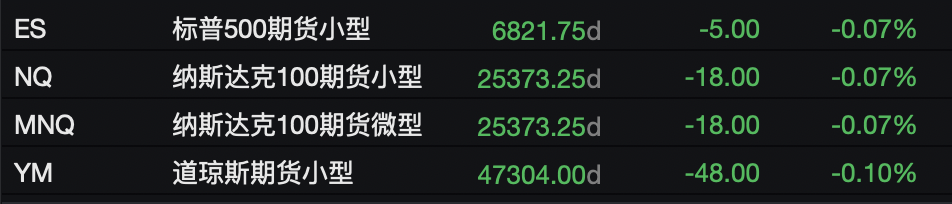
Core Insights - Global markets are currently experiencing a short-term oscillation and a complex interplay of major central bank policies, with expectations of a Federal Reserve rate cut and a rising probability of a Bank of Japan rate hike [1][2] Group 1: Central Bank Policies - The Federal Reserve is set to hold a meeting on December 12-13, while the Bank of Japan will announce its interest rate decision on December 19 [2] - Kristina Hooper from Man Group highlights that the rising yield of Japanese government bonds could increase borrowing costs for governments already facing challenges [2] Group 2: Market Performance - U.S. stock index futures are collectively declining, with the S&P 500 futures down 0.07%, Nasdaq 100 futures down 0.07%, and Dow futures down 0.10% [3][4] - The Japanese 10-year government bond yield fell by 2 basis points to 1.855% following strong auction demand [3][4] - The U.S. 10-year Treasury yield remains stable at 4.08% [4] Group 3: Economic Indicators - U.S. manufacturing activity contracted for the fourth consecutive month in November, with the largest decline in four months due to weak orders [2] - Upcoming economic reports, including the November ADP private sector employment report and the preliminary consumer confidence index for December, are expected to provide further insights into the labor market and inflation [2] Group 4: Commodity and Cryptocurrency Trends - Gold prices fell by 0.6% to $4206.48 per ounce, while silver dropped over 1.2% to $57.27 per ounce [4][9] - Bitcoin rebounded by 0.7% to $87053.6, following a significant sell-off that led to nearly $1 billion in leveraged positions being liquidated [4][13]

瑞士法郎避险情绪 政策分化主导震荡
Jin Tou Wang· 2025-11-26 02:54
Core Viewpoint - The USD/CHF exchange rate is experiencing a slight decline, currently quoted at 0.8064, reflecting a 0.06% drop from the previous trading day, continuing a low-level oscillation trend over the past two weeks [1] Group 1: Market Dynamics - The USD/CHF pair has seen a significant pullback since its peak in October, currently situated in a low-level oscillation range, with ongoing tug-of-war between bulls and bears [1] - Geopolitical tensions in the Middle East are increasing, providing support for the Swiss Franc as a safe-haven currency, while a rebound in the US stock market has somewhat suppressed its safe-haven appeal [1] Group 2: Central Bank Policies - Divergence in central bank policies remains a key driver, with high expectations for a Federal Reserve rate cut in December putting pressure on the USD index and limiting its upward potential [1] - The Swiss National Bank maintains a neutral stance, having paused interest rate hikes but remains cautious of excessive appreciation of the Swiss Franc, with a high threshold for reintroducing negative interest rates, which supports the Franc [1] - Switzerland's trade surplus expanded to 3.2 billion Swiss Francs in October, contributing to the underlying strength of the Swiss Franc [1] Group 3: Technical Analysis - Short-term market expectations are focused on consolidation, with key technical support around the 0.8060 range and the psychological barrier at 0.8000 seen as a potential intervention point for the Swiss National Bank [2] - Resistance is concentrated in the 0.8086-0.8090 range, which needs to be breached to open up upward movement [2] - Future tracking of US non-farm payrolls, inflation data, and geopolitical developments will be crucial as these factors may catalyze a breakout from the current oscillation range, with investors advised to be cautious of short-term volatility risks following data releases [2]