
小盘成长风格

Search documents
深V反转?中证2000增强ETF(159552)盘中再放巨量暴露资金分歧
Sou Hu Cai Jing· 2025-08-14 05:55
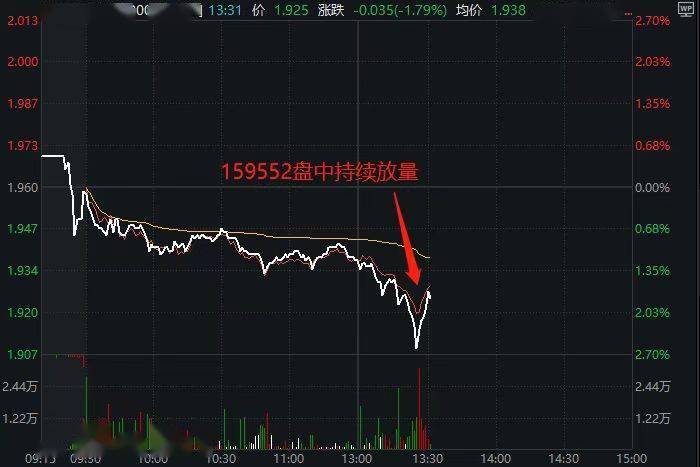
Core Insights - The market experienced fluctuations on August 14, with the CSI 2000 Enhanced ETF (159552) showing a significant intraday drop of 2.70% before recovering to a decline of 1.43% by 1:36 PM, while still leading the broad index ETFs with a year-to-date increase of 48.27% [1] - The fund saw a net inflow of over 12 million during the trading session, marking its ninth consecutive day of net inflows, and its total assets have surged by 6828.12% this year, reaching a historic high of over 1.1 billion [1] - Huachuang Securities suggests that if liquidity remains ample, the "water buffalo logic" may strengthen, leading to increased investments in small-cap growth stocks through ETFs and margin trading [1] Market Dynamics - The current market environment is characterized by strong investor interest, as indicated by the substantial net inflows into the CSI 2000 Enhanced ETF [1] - The potential for further growth in small-cap stocks is supported by the anticipated interest rate cuts by the Federal Reserve in the third quarter, which may favor growth styles [1] - However, industry experts caution that despite the positive outlook, the uncertainties in the external environment and the already high short-term gains in small-cap stocks warrant vigilance against potential pullbacks [1]

首支年内涨幅50%的宽指ETF盘中诞生!中证2000增强ETF(159552)节节攀升再创史高
Sou Hu Cai Jing· 2025-08-13 05:30
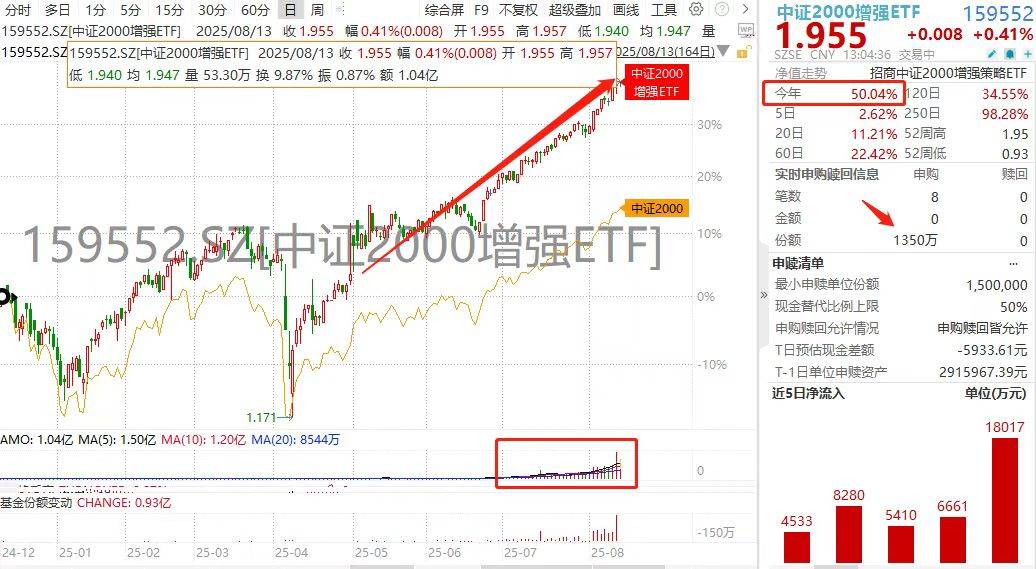
Core Viewpoint - The small-cap stocks are experiencing a resurgence, with the CSI 2000 Enhanced ETF (159552) rising by 0.4% during trading on August 13, marking a cumulative increase of 50% year-to-date, and reaching a new high for the 40th time this year [1] Group 1: Market Performance - The CSI 2000 Enhanced ETF has seen a significant increase in trading volume, with a net inflow exceeding 23 million during the session [1] - The fund's scale has grown by 6463.20% this year, setting a historical record [1] Group 2: Economic Indicators - Economic and profit recovery trends are evident, supported by ongoing growth policies that have led to high levels of infrastructure, manufacturing investment, and consumption growth [1] - July exports continued to maintain a high year-on-year growth rate [1] Group 3: Future Outlook - Analysts suggest that if liquidity remains abundant, the "water buffalo logic" may strengthen, leading to increased investment in small-cap growth stocks through ETFs and margin trading [1] - While potential interest rate cuts by the Federal Reserve in the third quarter may favor growth styles, uncertainties in the external environment and the already high short-term gains in small-cap stocks warrant caution among investors [1]
两融十年“破茧”,杠杆水温未沸,小盘指增正当时
Sou Hu Cai Jing· 2025-08-12 02:53
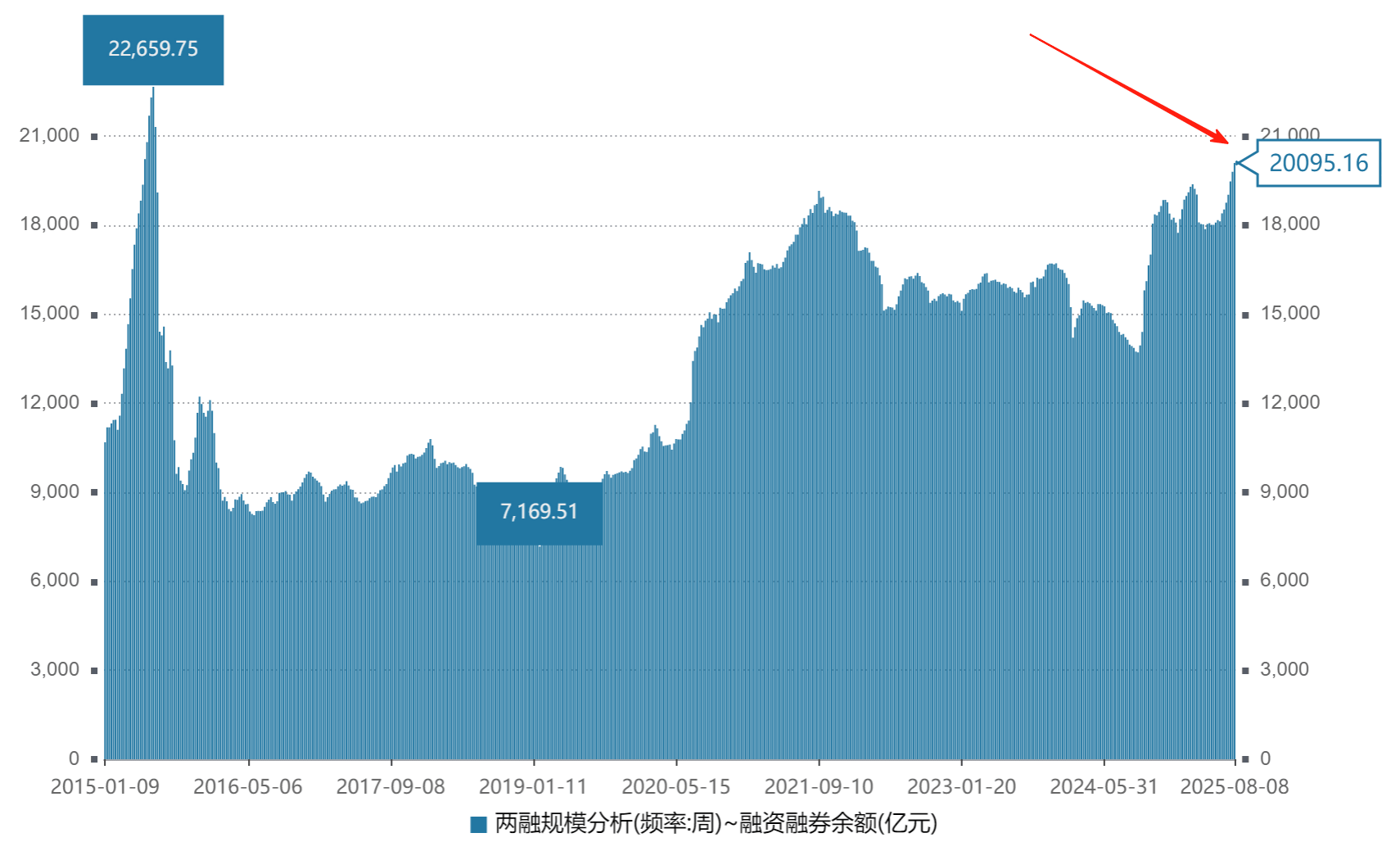
Core Viewpoint - The market is experiencing a significant increase in risk appetite, with a notable rise in small-cap growth stocks, supported by a high level of margin financing that has returned to over 2 trillion yuan for the first time since 2015, although its market share has decreased [1][3][5]. Group 1: Market Performance - The three major indices opened higher on August 12, with the Shanghai Composite Index continuing to strengthen after reaching a new high since 2022 [1]. - As of August 11, the margin financing balance has remained above 2 trillion yuan for four consecutive trading days, marking a significant return to this level [1][3]. Group 2: Margin Financing Insights - Despite the high absolute value of margin financing, its proportion of the A-share market's circulating market value is only 2.30%, less than half of the 4.73% seen in April 2015, indicating a healthier leverage structure [3]. - This situation suggests that there may still be marginal incremental capital supporting the market, with leverage levels not yet reaching alarm thresholds [3]. Group 3: Investment Strategy - The current market dynamics favor small-cap growth stocks, which are particularly sensitive to changes in liquidity and risk appetite, as evidenced by the performance of the CSI 1000 index, which has risen 16.55% year-to-date compared to the 8.82% increase of the Shanghai Composite Index [5]. - The 1000 ETF Enhanced (159680) has seen a year-to-date net value increase of 25.25%, significantly outperforming its benchmark, with a substantial inflow of 213 million shares over the year [8]. - The strategy of using index enhancement may be beneficial for investors looking to balance their portfolios while capturing both beta and alpha returns in the small-cap sector [10]. Group 4: Future Considerations - The market's increasing heat and the gains across various sectors suggest that a refined approach to portfolio rebalancing may be prudent, particularly through low-cost dollar-cost averaging or phased entry strategies [11].
在小盘成长风格领涨下,百亿量化私募年内均实现正收益
Ge Long Hui· 2025-08-11 08:23
Core Viewpoint - The A-share market has seen a significant influx of funds, with small-cap growth stocks leading the performance, and quantitative private equity funds achieving positive returns this year [1][5][7]. Group 1: Market Activity - Leverage funds have accelerated entry into the market, with the margin trading balance surpassing 2 trillion yuan for the first time since July 2015 [2]. - In July, the number of new A-share accounts reached 1.96 million, a year-on-year increase of 71% [3]. - The market has been active, with the average daily trading volume in July reaching 16,336 billion yuan, a month-on-month increase of 22.3% and a year-on-year increase of 149.1% [4]. Group 2: Stock Performance - As of August 11, small-cap growth stocks have shown strong performance, with the micro-cap index rising over 67% year-to-date, while major blue-chip indices have seen gains of less than 5% [5]. - The number of low-priced stocks (below 2 yuan) has significantly decreased, dropping to 37 from over 170 since last September [6]. Group 3: Private Equity Performance - All quantitative private equity funds with over 10 billion yuan in assets have achieved positive returns this year, with an average return of 21.58% from January to July [7]. - The number of quantitative private equity firms has increased to 44, making up nearly half of the 90 billion private equity firms, while subjective private equity firms have decreased to 39 [8]. Group 4: Market Outlook - Analysts suggest that the current small-cap market may face challenges as it relies heavily on liquidity for growth, and the structural profit growth is not as robust as in 2015 [9]. - There is a concern that the current market frenzy may ultimately lead to negative outcomes for investors who are not aligned with long-term investment principles [9].
基金市场一周观察(20250804-20250808):股债齐涨,小盘成长风格占优
CMS· 2025-08-09 15:38
1. Report Industry Investment Rating No relevant content provided. 2. Core Viewpoints of the Report - This week, the equity market closed higher overall, with the CSI 1000 leading the way and the small - cap growth style outperforming. The bond market also trended upward, and the convertible bond market rose [1][2][6]. - Among the industries, non - ferrous metals, machinery, and national defense and military industries led the gains, while pharmaceuticals and consumer services declined [2][6][9]. - Active equity funds had an average return of 1.80%. For bond - type funds, short - term bond funds had an average return of 0.06%, medium - and long - term bond funds had an average return of 0.08%, and convertible bond funds and bond funds with equity exposure achieved positive average returns [1][2]. - This week, there were 3 new stocks listed, and no new stocks broke their issue prices on the first day of listing. The average return of sample new - stock subscription funds was 0.59%, and the new - stock subscription yield of an 800 - million - yuan account was 0.023% [2][37]. - As of August 6, 2025, the average returns of low - risk, medium - risk, and high - risk FOF funds in the sample in the past week were 0.22%, 0.37%, and 0.47% respectively [2]. - During the statistical period, equity - biased QDII and bond - type QDII funds rose by 0.34% and 0.52% on average, while index - type and other - type QDII funds fell by 0.30% and 0.45% on average. REITs funds fell by 0.31% on average this week [2]. 3. Summary by Directory 3.1 Market Review - The equity market closed higher overall this week, with the CSI 1000 leading the gains and the small - cap growth style outperforming. As of the close, the Shanghai - Shenzhen 300 Index closed at 4105 points, up 1.23%; the Shanghai Composite Index closed at 3635 points, up 2.11%; the Shenzhen Component Index closed at 11129 points, up 1.25%; and the ChiNext Index closed at 2334 points, up 0.49%. In the Hong Kong stock market, the Hang Seng Index rose 1.43%, and the Hang Seng Tech Index rose 1.17% [6]. - In terms of industry performance, non - ferrous metals, machinery, and national defense and military industries led the gains, with increases of over 5%, while pharmaceuticals and consumer services declined [9]. - As of August 8, 2025, among the 5422 stocks in the A - share market, 4041 stocks rose this week. The number of rising stocks on the Beijing Stock Exchange, ChiNext, Science and Technology Innovation Board, and Main Board were 140, 1035, 421, and 2445 respectively [12]. 3.2 Key Fund Tracking 3.2.1 Active Equity - **Fund Performance**: The average return of the full - market funds in the sample this week was 1.80%. Funds with better performance were heavily invested in industries such as automobiles and machinery. For industry - themed funds, funds in the cyclical and mid - stream manufacturing sectors had leading average returns, while those in the pharmaceutical sector lagged behind [18][20]. - **Position Estimation**: This week, the positions of ordinary stock - type and partial - stock hybrid funds both increased. Compared with the previous week, the position of ordinary stock - type funds rose by 1.06 percentage points, and that of partial - stock hybrid funds rose by 2.19 percentage points. Actively managed partial - stock funds increased their allocations to cyclical, consumer, growth, and financial sectors and reduced their allocations to stable sectors. In terms of sub - industries, the allocations to household appliances, communications, and computers increased, while those to automobiles, electronics, and petroleum and petrochemicals decreased [23]. 3.2.2 Bond - type Funds - **Bond Market Performance**: This week, the bond market trended upward. The ChinaBond Total Wealth Index closed at 246.91, up 0.1% from last week; the ChinaBond Treasury Bond Index closed at 247.9, up 0.13%; and the ChinaBond Credit Bond Index closed at 224.18, up 0.09%. The CSI Non - Pure Bond Fund Index closed at 2229.59 on Thursday, up 0.45% from last Thursday. The CSI Convertible Bond Index closed at 467.77, with a weekly increase of 2.31%, and the trading volume was 422.4 billion yuan, a change of 36.293 billion yuan from last week [25][27]. - **Fund Performance Overview**: This week, the average return of short - term bond funds was 0.06%, and the median was 0.06%; the average return of medium - and long - term bond funds was 0.08%, and the median was 0.08%. The average return of first - tier bond funds was 0.29%, and the median was 0.16%; the average return of second - tier bond funds was 0.57%, and the median was 0.44%. The average return of partial - bond hybrid funds was 0.62%, and the median was 0.53%; the average return of low - position flexible allocation funds was 0.53%, and the median was 0.38%. The average return of convertible bond funds was 2.59%, and the median was 2.52% [31][33][34][36]. 3.2.3 New - stock Subscription Funds - **New - stock Overview**: This week, 3 new stocks were listed, and 2 had inquiry and offline placement details, with a total raised capital of 1.877 billion yuan. There were no break - even stocks on the first day of listing, and the total expected入围 income was 182,500 yuan [37]. - **New - stock Subscription Yield Calculation**: Assuming participation in the offline new - stock subscription of new stocks every week and being入围, the weekly new - stock subscription yield sequence of an 800 - million - yuan account was calculated based on the winning rate of Class A investors [38]. - **Fund Company New - stock Subscription Overview**: Six fund companies with more than 2 new - stock subscription funds were selected. The weekly new - stock subscription yield of an 800 - million - yuan account this week was 0.023%. The optimal scale for weekly and annual new - stock subscription was 400 million yuan [40]. - **New - stock Subscription Fund Performance**: According to the screening method, 38 new - stock subscription funds were selected. The average return of the new - stock subscription funds in the sample this week was 0.59% [43]. 3.2.4 FOF Funds - The average returns of low - risk, medium - risk, and high - risk FOF funds in the sample in the past week were 0.22%, 0.37%, and 0.47% respectively [44]. 3.2.5 QDII Funds - During the statistical period, equity - biased QDII funds rose by 0.34% on average, and index - type QDII funds fell by 0.30% on average. Other - type QDII funds fell by 0.45% on average, and bond - type QDII funds rose by 0.52% on average [45][46]. 3.2.6 REITs Funds - This week, REITs funds fell by 0.31% on average. Among them, Huatai Zijin Baowan Logistics Warehouse REIT led the gains, rising 4.31% in the past week. Huaxia Huadian Clean Energy REIT had the highest liquidity, with a trading volume of 214.361 million yuan in the past week [47].
小盘股板块午后上行,2000ETF(561370)涨超1%,机构表示小盘成长风格或占优
Mei Ri Jing Ji Xin Wen· 2025-08-06 05:54
Group 1 - The core viewpoint of the article emphasizes that changes in market risk appetite dominate market rhythm in the context of a weak but stable economic recovery [1] - The Politburo meeting in July highlighted the importance of policy continuity, stability, flexibility, and predictability, indicating that macro liquidity will remain loose [1] - There is a significant probability of a Federal Reserve rate cut in September, which is expected to lead to a decline in the US dollar index and US Treasury yields, although various factors may cause fluctuations in expectations [1] Group 2 - Current active funding sources include financing funds, private equity funds, and industry/theme ETFs, which are expected to continue leading the market until other types of off-market funds enter [1] - The 2000 ETF (561370) tracks the CSI 2000 Index, which selects 2000 smaller-cap stocks with good liquidity, covering multiple industries such as machinery, electronics, and computers, effectively capturing the growth potential of small-cap stocks [1] - Investors are encouraged to pay attention to the subsequent elasticity expectations of the small-cap stock sector [1]

中金公司 小盘优势能否延续
中金· 2025-08-05 03:16
Investment Rating - The report maintains a neutral stance on the stock market, cautious on bonds, and optimistic on commodities [2][4]. Core Insights - The report highlights that the PPI was below expectations while social financing and CPI exceeded expectations, leading to a neutral outlook for the stock market. GDP growth was above expectations, putting pressure on the bond market, while the commodity market outlook remains optimistic [1][2]. - The industry rotation model for August recommends sectors such as comprehensive, comprehensive finance, media, agriculture, forestry, animal husbandry, fishery, telecommunications, and light industry manufacturing, indicating a shift from real estate and consumer services [4][12]. - The small-cap growth style is expected to continue its dominance, supported by macroeconomic indicators and investor sentiment [5][6]. Summary by Sections Economic Indicators - As of the end of July, PPI was below expectations, while social financing and CPI were above expectations, leading to a neutral view on the stock market. GDP growth was consistently above expectations, negatively impacting the bond market [2][4]. Industry Recommendations - The August industry rotation model recommends comprehensive, comprehensive finance, media, agriculture, forestry, animal husbandry, fishery, telecommunications, and light industry manufacturing, while excluding real estate and consumer services [4][12]. Investment Strategies - The best-performing strategy in July was the new stock strategy, achieving a monthly return of 11.3%, significantly outperforming major small-cap indices [8]. - The growth trend resonance stock selection strategy yielded a return of 7.9%, while the XG Boost growth selection strategy achieved a return of 5.8% [9]. - For August, the report suggests focusing on small-cap combinations and dividend/valued selections, while not recommending growth strategies due to ongoing valuation declines [11][12]. Quantitative Models - The report discusses advancements in quantitative models, particularly deep learning models that have outperformed benchmarks significantly [13][14].

量化择时周报:模型提示行业交易拥挤度上升,市场情绪逐渐修复-20250714
Shenwan Hongyuan Securities· 2025-07-14 08:42
Group 1 - Market sentiment indicators have improved, with the sentiment score rising from -0.9 to -0.25, indicating a shift towards a more bullish outlook [9][13][18] - The increase in industry trading congestion and the positive shift in the PCR combined with the VIX index reflect a recovery in market sentiment [13][18] - The total trading volume in the A-share market has shown a significant increase, with the highest daily trading volume reaching 1,736.61 billion RMB [18][19] Group 2 - The construction materials sector has shown a significant upward trend, with a short-term trend score increase of 21.05% [32][33] - The model indicates that small-cap growth stocks are currently favored, with a strong signal for small-cap stocks and a rapid increase in the 5-day RSI relative to the 20-day RSI [32][37] - The sectors with the strongest short-term trends include defense, media, communication, and computer industries [32][33]
中金公司 风格偏向小盘成长
中金· 2025-07-02 15:49
Investment Rating - The report indicates a positive outlook for small-cap growth style in July, with a recommendation for sectors such as consumer services, real estate, and textiles to perform well in the short term [1][5][10] Core Insights - The macroeconomic indicators show a mixed impact on different asset classes, with PPI underperforming and CPI exceeding expectations negatively affecting the stock market, while industrial value-added and PMI exceeding expectations positively influence the commodity market [1][3] - The report highlights a bullish signal for the stock market based on timing indicators, suggesting a potential upward trend, while the bond market shows signs of overheating risk [1][4] - The report emphasizes the importance of sector rotation strategies, recommending industries that may outperform in the current fast rotation environment [1][5] Summary by Sections Macroeconomic Analysis - The report notes that the latest PPI data was below expectations, while CPI has exceeded expectations for two consecutive months, leading to a negative impact on the stock market [3] - Industrial value-added has exceeded expectations for three consecutive months, along with a favorable exchange rate and PMI, positively impacting the commodity market [3] Timing Indicators - Three indicators triggered bullish signals for the stock market, while three bearish signals were noted for the bond market, indicating potential upward movement for stocks and caution for bonds [3][4] Sector Rotation Strategy - Recommended sectors for July include comprehensive, light manufacturing, real estate, building materials, consumer services, and textiles, which are expected to perform well in the short term [1][5] Style Analysis - The report indicates that small-cap growth style is expected to outperform in July, with a notable shift towards growth style over value style [6][7] - The report highlights that the sentiment and market conditions favor growth style, with a total score of 1.32 indicating a strong preference for growth [7] Quantitative Strategy Performance - The report details that small-cap strategies have outperformed major small-cap indices, with specific strategies yielding returns of 11.4% and 9.6% [8][9] - The growth-oriented strategies have shown significant returns, with one strategy yielding 9.4% in June and over 22% in the first half of the year [9] Market Outlook for July - The report maintains a positive outlook for July, suggesting that both growth-oriented and small-cap strategies still present opportunities despite some valuation concerns [10]
量化观市:多方利好共振,小盘成长风格演绎持续
SINOLINK SECURITIES· 2025-06-30 13:47
- The macro timing strategy model suggests a recommended equity position of 45% for June, with signal strengths of 50% for economic growth and 40% for monetary liquidity[3][26][27] - The micro-cap stock rotation and timing signals remain strong, with the micro-cap/Chow index relative net value rising to 1.93 times, above its 243-day moving average of 1.41 times[4][29] - The micro-cap stock's 20-day price slope is 0.00257, indicating stronger upward momentum compared to the Chow index's -0.00019[4][29] - The risk warning has been lifted, with volatility congestion at -0.415%, well below the warning threshold of 0.55%, and the 10-year government bond yield at -0.27%, below the risk control line of 0.30%[4][29] - The market's recent rise has favored small-cap growth styles, leading to strong performance in market cap, consensus expectations, and growth factors, while technical and low-volatility factors have underperformed[4][40] - The market cap factor had the highest IC in the CSI 300 pool at 0.2241, while the growth factor had a weak signal in the CSI 500 pool with an IC of -0.0305[39] - The market cap factor also performed well in the entire A-share pool with an IC of 0.2347[39] - The weekly performance of multi-factor strategies showed the market cap factor leading with a gain of approximately +2.21% in the CSI 300 pool, while the growth factor rose by about +0.17%[39] - The consensus expectations factor and growth factor are expected to continue performing well, while technical and low-volatility factors may see a rebound as market sentiment slows down[40] - The convertible bond selection factors showed the stock growth factor leading with a gain of about 0.72%, followed by the stock consensus expectations factor with a return of about 0.63%[45] - The stock quality factor fell by about 0.26%, the stock value factor retreated by about 0.66%, and the convertible bond valuation factor had the largest decline of about 1.70%[45] Model Backtest Results - Macro timing strategy model, equity position: 45%[3][26][27] - Micro-cap stock/Chow index relative net value: 1.93 times[4][29] - Micro-cap stock 20-day price slope: 0.00257[4][29] - Volatility congestion: -0.415%[4][29] - 10-year government bond yield: -0.27%[4][29] - Market cap factor IC in CSI 300 pool: 0.2241[39] - Growth factor IC in CSI 500 pool: -0.0305[39] - Market cap factor IC in entire A-share pool: 0.2347[39] - Market cap factor weekly gain in CSI 300 pool: +2.21%[39] - Growth factor weekly gain in CSI 300 pool: +0.17%[39] - Stock growth factor weekly gain: 0.72%[45] - Stock consensus expectations factor weekly return: 0.63%[45] - Stock quality factor weekly decline: -0.26%[45] - Stock value factor weekly decline: -0.66%[45] - Convertible bond valuation factor weekly decline: -1.70%[45]