
情绪价值

Search documents
人文经济激活消费新动能丨“蒜鸟”走红、解压焕新,“为情绪买单”成湖北消费新趋势
Xin Hua Wang· 2026-02-24 03:00
Group 1 - The core trend in Hubei's consumer market is the increasing importance of "emotional value," with consumers willing to spend on products and experiences that enhance their emotional well-being [1][2][3] - The "Garlic Bird" toy has become a cultural phenomenon in Wuhan, selling over 200,000 units, reflecting the local culture and emotional connection [1][2] - Various entertainment and sports venues are thriving by catering to the emotional needs of young consumers, offering experiences that promote exploration, relaxation, and social interaction [2][3] Group 2 - The Hubei provincial government is responding to the demand for practical, emotional, and knowledge-based value by implementing special actions to boost consumption [2] - The transformation of historical sites like the Xian'an Square into multifunctional spaces highlights the trend of creating emotional connections with local culture [3] - Regions in Hubei are leveraging "ticket economy" strategies to attract tourists, enhancing the emotional experience associated with travel and local culture [3]
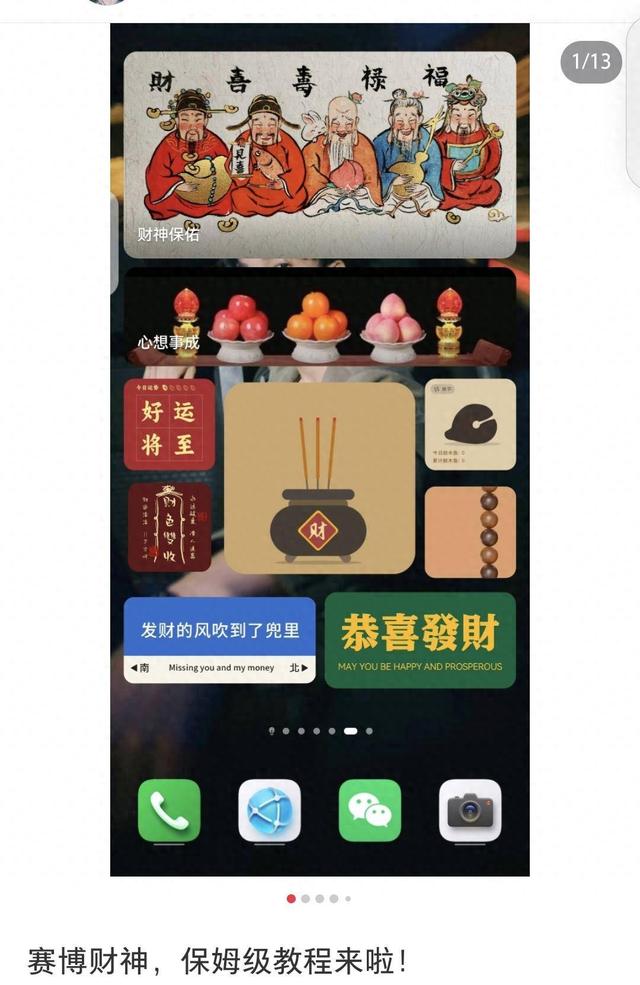
快评|“迎财神”有新方法,赛博迎财神走红网络
Xin Lang Cai Jing· 2026-02-21 06:56
Core Viewpoint - The rise of "Cyber God of Wealth" reflects a digital transformation of traditional Chinese New Year customs, merging cultural practices with modern technology to create new forms of expression and participation in festive rituals [1][5][6]. Group 1: Digital Transformation of Traditions - The traditional practice of praying for wealth has transitioned to online platforms, with people engaging in activities such as leaving wishes on government accounts and using digital images of the God of Wealth [4][5]. - Various online applications have launched activities to celebrate the God of Wealth, allowing users to participate in a modernized way that aligns with contemporary lifestyles [4][5]. Group 2: Emotional and Cultural Significance - The "Cyber God of Wealth" serves as an emotional outlet for young people, providing a sense of comfort and hope amidst modern life pressures, while also representing collective wishes for health, success, and stability [5][6]. - The digital celebration of the God of Wealth exemplifies the successful integration of traditional culture into the digital age, ensuring that the essence of these customs remains relevant and vibrant for younger generations [6].

人民论坛锐评 | 新年“新活儿”,怎能叫人不心动?
Xin Lang Cai Jing· 2026-02-18 08:02
Core Viewpoint - The Chinese government is promoting the integration of culture and tourism to stimulate market growth and enhance consumer experiences, particularly through the "2026 'Shopping New Spring' Spring Festival Special Activity Plan" [1] Group 1: Cultural and Tourism Integration - The integration of culture and tourism is seen as a significant opportunity for high-quality development, with the aim of making it a pillar industry and enhancing people's livelihoods [1] - Various regions are showcasing innovative cultural tourism activities, such as the "Intangible Cultural Heritage New Year Customs" in Foshan and the digital enhancements at Longmen Grottoes [1] - The winter fishing activities at Chagan Lake have led to over 70 million yuan in single-day tourism revenue, highlighting the economic potential of cultural tourism [1] Group 2: Consumer Potential and Experience Innovation - The success of the drama "Taiping Year" has inspired new tourism routes in Hangzhou, allowing visitors to immerse themselves in the essence of Wu-Yue culture [2] - Shandong is focusing on immersive experiences in cultural tourism, moving from sightseeing to experiential engagement, with advanced technologies enhancing visitor experiences [2] - The unique emotional connections formed through deep cultural and tourism integration are key to stimulating consumer willingness [2] Group 3: Technological Empowerment - Artificial intelligence is enhancing the value of cultural tourism, with examples like drone light shows in Chongqing and VR exhibitions in Sichuan that allow for immersive exploration [3] - The integration of technology in cultural tourism is improving the efficiency of traditional cultural resource utilization and fostering intelligent upgrades in the industry [3] Group 4: Evolving Consumer Mindset - The shift in consumer mindset towards self-care and emotional well-being is influencing tourism trends, with experiences like "slow travel" and "pain-free hiking" gaining popularity [3] - The concept of "emotional value" is becoming a driving force for sustainable development in the cultural tourism industry [3] Group 5: Future Outlook - The new year brings opportunities for cultural tourism to flourish, with a focus on enhancing existing offerings and optimizing new consumer pathways [4]
马年春节,新消费品牌如何“重新定义”年货?
Xin Lang Cai Jing· 2026-02-17 11:13
Core Viewpoint - The traditional Chinese New Year goods market is undergoing a transformation as younger generations (post-95s and post-00s) redefine the concept of "nianhuo" (New Year goods) with a focus on aesthetics, value, and culture [1] Group 1: Product Innovation - New consumer brands are creating "social currency" through products that reflect personal aesthetics and cultural significance, moving beyond mere food items to become symbols of social connection [6][7] - Limited edition products, such as the "马年坚果礼盒" (Year of the Horse nut gift box), are designed with clever themes and attractive pricing, appealing to younger consumers [3][6] Group 2: Functional Expansion - The boundaries of "nianhuo" are expanding to include everyday items and even smart technology, indicating a shift in consumer needs and preferences [7] - Brands are responding to diverse consumer demands by expanding product lines and incorporating innovative flavors, such as sweet and spicy variations of traditional snacks [7] Group 3: Emotional Value - Emotional value is becoming a key factor in attracting younger consumers, who seek products that resonate on a personal level and create memorable experiences [8][10] - The focus has shifted from traditional gift-giving to products that embody emotional significance, with consumers willing to pay for items that evoke feelings and connections [10]

2026春节营销趋势洞察报告-慧科讯业Wisers
Sou Hu Cai Jing· 2026-02-15 16:51
Group 1: Core Insights - The report emphasizes that the 2026 Spring Festival marketing will revolve around "emotional value," with successful marketing needing to resonate emotionally with consumers [1][3] - Young consumers are identified as the core group driving Spring Festival consumption and the construction of "new year flavor," with "surprise" becoming a central emotion during the festival [1][11] - The integration of technology, termed "cyber new year," is emerging as a new custom, with AI greetings and virtual celebrations gaining popularity among younger audiences [1][13] Group 2: Consumption Trends - The first trend highlights that young people are shifting traditional new year experiences towards emotional value, with "surprise" being a key element that brands should focus on [1][11] - The second trend indicates that technology-enhanced "cyber new year" practices, such as AI greetings and virtual events, are becoming mainstream, with significant engagement on social media platforms [1][13] - The third trend showcases the combination of intangible cultural heritage and local customs, with traditional cultural elements becoming a vital tool for brands to attract young consumers [1][16] Group 3: Marketing Case Studies - The report reviews classic marketing cases across nine industries, showcasing how brands leverage trends to create diverse marketing strategies [2] - For instance, Mixue Ice City collaborated with a cultural heritage inheritor to bring traditional craftsmanship closer to the public, while PepsiCo's partnership with an animated IP resonated emotionally with consumers [2][20][24] - Other brands, such as Tencent and Baidu, engaged in a "red envelope war," integrating AI technology with traditional customs to meet the demand for "cyber new year" experiences [2][20] Group 4: Conclusion - The core of 2026 Spring Festival marketing lies in creating a sense of "human touch," aligning with the trends led by young consumers and utilizing cultural heritage, emotional IP connections, and technological empowerment [3][1]

新春走基层|今年年货不一般,情绪年货快乐加“马”
Xin Hua Wang· 2026-02-14 05:14
Core Viewpoint - The article highlights a shift in consumer behavior among young people during the 2026 Spring Festival, where "emotional value" is becoming a key factor in their purchasing decisions for New Year gifts, moving from traditional functional items to those that provide emotional comfort and connection [1] Group 1: Consumer Behavior Changes - Young consumers are increasingly prioritizing "emotional value" in their purchases, seeking items that bring happiness, healing, and a sense of belonging [1] - The fast-paced work and fragmented lifestyle of consumers have heightened the need for small comforts that soothe the soul [1] Group 2: Redefining New Year Gifts - The concept of "emotional New Year goods" is redefining the essence of the Spring Festival, transforming it from mere festive products to emotional connectors that convey warmth and sentiment [1] - This year, New Year gifts are not just about the celebration but also about the emotional significance behind each gift, making the festival feel more heartfelt and meaningful [1]
大疆的敌人,为什么忽然变多了?
虎嗅APP· 2026-02-12 10:16
Core Viewpoint - The competitive landscape for DJI is changing as new entrants challenge its dominance in the drone and handheld camera markets, shifting the focus from technical specifications to user experience and emotional value [4][30]. Group 1: Emerging Competitors - Previously, competitors were hesitant to challenge DJI due to its technological superiority, but now companies like Vivo and影石 are directly confronting DJI, indicating a shift in market dynamics [5][6][9]. -影石's approach emphasizes user-friendly features over technical performance, appealing to a broader audience that prioritizes ease of use and social media integration [10][12][15]. Group 2: Market Trends - The global consumer drone market is expanding, with the fastest growth occurring in entry-level products priced around 3,000 yuan, which focus on lightweight design and social sharing [11]. - DJI's traditional focus on high-performance drones may hinder its ability to compete in the consumer market, where users prioritize convenience and aesthetic appeal over technical specifications [15][30]. Group 3: Shifting Consumer Preferences - Consumers are increasingly valuing the emotional and experiential aspects of photography and videography, moving away from a strict focus on hardware specifications [30][31]. - The entry of smartphone manufacturers into the handheld camera market represents a significant threat to DJI, as these companies leverage their advanced imaging algorithms and supply chain capabilities [22][25][27]. Group 4: Challenges for DJI - DJI's historical success is rooted in its engineering excellence, but the current market demands a shift towards more accessible and emotionally resonant products [34][36]. - The challenge for DJI lies in balancing its technical legacy with the evolving expectations of consumers who seek immediate satisfaction and creative expression [30][31].

视频|华熙生物赵燕:不害怕衰老,衰老是能够倍主动干预和控制的过程
Xin Lang Cai Jing· 2026-02-12 04:39
Core Viewpoint - The article discusses a dialogue featuring Zhao Yan, the chairman of Huaxi Biological, focusing on the themes of organizational rejuvenation and long-termism in business amidst challenges like aging organizations and industry saturation [1][2]. Group 1: Company Insights - Zhao Yan emphasizes the importance of addressing organizational aging and leading companies through cycles to achieve renewal [1][2]. - The dialogue highlights the need for companies to learn from younger generations and to redefine concepts such as "self-satisfaction consumption" and emotional value [1][2]. Group 2: Industry Trends - The discussion reflects on the current state of the industry, where concepts are becoming overly saturated, prompting a return to scientific fundamentals [1][2]. - The event is part of a broader initiative by Sina Finance and Weibo to explore significant themes in business and investment through in-depth conversations [1][2].

大疆的敌人,为什么忽然变多了?
3 6 Ke· 2026-02-12 00:08
Core Viewpoint - The competitive landscape for DJI is changing as new players like Vivo and影石 are entering the market, challenging DJI's dominance in the drone and handheld camera sectors. This shift indicates a move from professional-grade equipment to consumer-friendly products that prioritize ease of use and social sharing over technical specifications [1][2][9]. Group 1: Emerging Competitors - Vivo has initiated a Vlog camera project, directly competing with DJI's Pocket series, indicating a shift in strategy among competitors who previously avoided direct confrontation with DJI [2][4]. -影石's founder has openly criticized DJI, reflecting a growing confidence among competitors to challenge DJI's market position [2][4]. - Competitors are now focusing on user experience and fun rather than just technical performance, which has historically been DJI's strength [4][9]. Group 2: Market Trends - The global consumer drone market is expanding, with the fastest growth seen in entry-level products priced around 3,000 yuan, which prioritize lightweight design and social sharing capabilities [6]. - DJI's focus on flight stability and technical excellence may hinder its appeal in a market that increasingly values aesthetic output and user-friendly features [6][9]. - The entry of smartphone manufacturers into the handheld camera market represents a significant threat to DJI, as these companies possess advanced imaging algorithms and supply chain capabilities [13][14]. Group 3: Shifting Consumer Preferences - The consumer market is evolving, with users now prioritizing ease of use and immediate satisfaction over technical specifications, which poses a challenge for DJI's traditional product philosophy [10][18]. - DJI's historical focus on high-performance specifications may not resonate with a new generation of consumers who seek visually appealing content rather than purely technical excellence [18][19]. - The competition is increasingly about emotional value and user experience, contrasting with DJI's previous emphasis on hardware superiority [21][22]. Group 4: Strategic Implications for DJI - DJI must navigate the challenge of maintaining its technological edge while adapting to a market that values user experience and emotional connection over technical specifications [18][19]. - The company faces a dilemma: whether to continue focusing on its established technical strengths or to pivot towards meeting the more nuanced demands of a broader consumer base [18][20]. - The competitive landscape is evolving, and DJI may need to adopt a more consumer-oriented approach to remain relevant in a rapidly changing market [20][22].
哈尔斯20260211
2026-02-11 15:40
Summary of the Conference Call for Ersi Company Industry Overview - The global insulated cup market is transitioning from functional value to emotional value, with consumers increasingly seeking psychological satisfaction and social experiences, leading to a willingness to pay a premium for design [2][9] - The market is expected to reach approximately 70 billion RMB by 2026-2027, with North America, Asia, and Europe each accounting for about one-third of the market share [4][12] Company Overview - Ersi Company has established deep partnerships with top international brands such as Yeti, Stanley, and Osprey, enhancing its overseas production capacity [2][6] - The company acquired SIGG, a high-end Swiss brand, to strengthen its presence in non-English speaking European markets [2][7] Key Points Revenue Growth - Projected revenue for Ersi Company is expected to reach 4.276 billion RMB in 2026, a year-on-year increase of 23.42%, and 5.175 billion RMB in 2027, with a growth rate of 21.01% [3][4] - Expected net profit for 2026 is between 280 million to 290 million RMB, with a forecast of 400 million RMB for 2027 [3][4] Domestic Market Strategy - The company aims to expand its young customer base through collaborations with popular IPs, launching new hit products quarterly, especially during shopping festivals [2][5] - Ersi is focusing on the gift market by enhancing traditional craftsmanship and product quality, targeting adult gifting scenarios [2][5] International Market Performance - Ersi's export business is performing well, with Yeti maintaining over 50% of order share, and Stanley's share expected to increase from 20% to 35% [6][16][17] - Osprey has shown rapid growth, with quarterly increases exceeding 100% [6] Brand Development - The company is consolidating resources into its main brand and developing a product matrix to capture niche markets [7][8] - Ersi's management team has extensive experience, which is driving the company's stable growth [8] Market Trends - The North American market is a mature segment of the insulated cup market, with potential for replication of its growth model in Europe, China, Japan, and South Korea [11] - The trend towards emotional consumption is driving up product prices and sales volumes, with consumers increasingly desiring multiple cups for personal use and gifting [10][13] Online and New Media Influence - The shift towards online sales and new media marketing is expected to contribute to industry growth, aligning with Ersi's strategic direction [15][24] Customer Contributions - Key customers include Bloomage and Taitia, with expected revenues of 245 million RMB and 77.53 million RMB respectively in 2024, indicating potential growth points for Ersi [20] Future Outlook - Overall, Ersi Company is projected to achieve total revenues of 4.276 billion RMB and 5.175 billion RMB in 2026 and 2027 respectively, with net profits of 280 million RMB and close to 400 million RMB [25]
