
新四化

Search documents
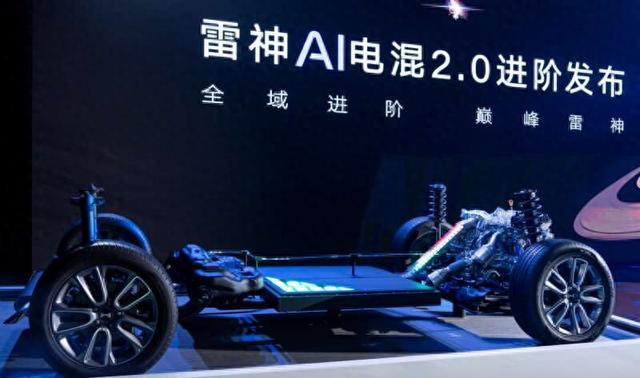
吉利发布雷神AI电混2.0,中国车企引领全球车市“创新潮”
Zhong Guo Qing Nian Bao· 2025-06-15 12:26
Group 1 - The core viewpoint of the article highlights the significant advancements in China's automotive industry, particularly in the fields of electrification, intelligence, connectivity, and sharing, collectively referred to as the "new four modernizations" [2][5] - Geely has launched the industry's first AI scenario engine-based intelligent power domain, named Starry AI Cloud Power 2.0, which enhances the performance, safety, and energy efficiency of its hybrid vehicles [2][4] - Geely's comprehensive AI capabilities in computing power, data, and algorithms have positioned it as a leader among Chinese automakers, with a computing power of 23.5E FLOPS and over 200 million users contributing to a vast data pool [3] Group 2 - The Starry AI Cloud Power 2.0 enables the Geely Thunder Super Hybrid to evolve into the Thunder AI Hybrid 2.0, which includes various technical routes to meet diverse user needs [4] - The Geely Galaxy M9, equipped with the Thunder EM-P AI hybrid, achieves a 0-100 km/h acceleration time of just 4.5 seconds and a fuel consumption of only 4 liters per 100 km, with a total range exceeding 1500 km [4] - The global innovation index report indicates that China has improved its innovation ranking, reflecting the strong momentum and broad prospects of innovation in the automotive sector, with Geely leading in several hybrid technology fields [5]


2025汽车经销商百强榜发布,运营能力两极分化,“剩”者为王时代已来
Zhong Guo Qi Che Bao Wang· 2025-05-30 01:47
Core Insights - Despite an increase in automobile sales, dealers are facing significant challenges, with the industry experiencing a shift from "increasing sales without profit" to "losing money with every sale" [1] - The "2025 China Automotive Circulation Industry Dealer Group Top 100 Ranking" highlights the struggles of traditional dealers, with the top performer, Zhongsheng Group, reporting revenues of 168.12 billion yuan and total sales of 711,500 vehicles [1][5] - The implementation of the "old-for-new" policy in 2024 has helped maintain a 5.5% growth in the passenger car market, with over 3.22 million applications for subsidies by May 11, 2025 [1] Industry Overview - The automotive circulation industry is witnessing a polarization in operational capabilities among dealers, with the future favoring those who can adapt to new market conditions [2] - The average gross profit margin for new cars among struggling traditional brand dealers is negative, leading to an overall pre-tax profit margin of -6.9% [4] - In contrast, strong traditional brand dealers maintain a gross profit margin of 1.5% on new cars and achieve a net profit margin of 2.1% through effective management [4] Financial Performance - The top 100 dealers reported a total revenue of 1.7213 trillion yuan in 2024, a decrease of 2.5% year-on-year, with new car sales down by 0.2% to 6.52 million units [5] - The number of 4S stores increased by 3.5% to 6,003, while the gross profit margin for new cars fell by 22.6%, although the overall gross profit margin rose by 3.2% to 6.7% [5] - Used car sales surged by 19.7% to 1.39 million units, but the gross profit margin for used cars decreased by 3.6% to 6.4% [5] Strategic Responses - To counter declining profit margins, top dealers are reducing operational costs, with employee numbers down by 6.8% and salaries reduced by 8.2% [6] - The number of base customers for top dealers grew by 19.3% to 100.26 million, indicating a focus on customer retention and engagement [6] - The penetration rate of new energy vehicles among top dealers reached 23%, a year-on-year increase of 31.1%, with total sales of new energy vehicles rising by 30.9% to 15.02 million units [7] Future Directions - The "New Four Transformations" strategy for dealers includes diversifying business operations, asset lightening, brand differentiation, and management digitization [7] - Successful examples, such as Chongqing Baishida, demonstrate the effectiveness of value-driven customer engagement and digital tools in enhancing profitability [8] - Digital transformation is seen as a means to not only control costs but also to unlock greater profit potential, as evidenced by various case studies [8]



上汽连续降本,为转型争取时间和空间丨一分钟财报
晚点Auto· 2025-04-30 15:16
Core Viewpoint - SAIC Motor Corporation has shown signs of recovery in Q1 with improved net profit, but challenges remain ahead as the company navigates a competitive market and adjusts its strategies [2][3]. Financial Performance - In Q1, SAIC's vehicle sales reached 944,800 units, a year-on-year increase of 13.27% - Revenue was 140.8 billion yuan, a decline of 1.55% compared to the previous year [3]. - The net profit attributable to shareholders was 3.023 billion yuan, up 11.4% year-on-year, while the net profit excluding non-recurring items was 2.85 billion yuan, an increase of 34.4% [4]. Sales Dynamics - The increase in sales was primarily driven by SAIC-GM-Wuling, which sold 353,000 vehicles, marking a significant year-on-year growth of 57.58% - However, higher-margin joint venture brands experienced declines, with SAIC-GM down 2% and SAIC Volkswagen down 8% [4]. Cost Management - The improvement in profit was largely attributed to cost-cutting measures, with sales, management, and R&D expenses reduced by 5.45%, 7.14%, and 1.76% respectively - The proportion of these expenses relative to revenue was lower than the same period last year [4]. Strategic Initiatives - SAIC has been focusing on its "New Four Modernizations" strategy, which includes electrification and intelligent connectivity, and has established a software center to enhance its self-developed software capabilities [5]. - The new leadership has prioritized cost reduction and efficiency improvements, consolidating various technical and vehicle segments to optimize operations [5]. Collaboration and Future Outlook - The company is emphasizing partnerships, as seen in its collaborations with Huawei and other tech firms to enhance its smart vehicle capabilities - Adjustments in organizational structure and strategy execution are expected to take time, but are crucial for regaining competitiveness in the rapidly evolving automotive market [6].
