春节效应

Search documents
港股恒生指数大涨2.40%,港股良好开局将助力A股“开门红”
Sou Hu Cai Jing· 2026-02-23 03:36
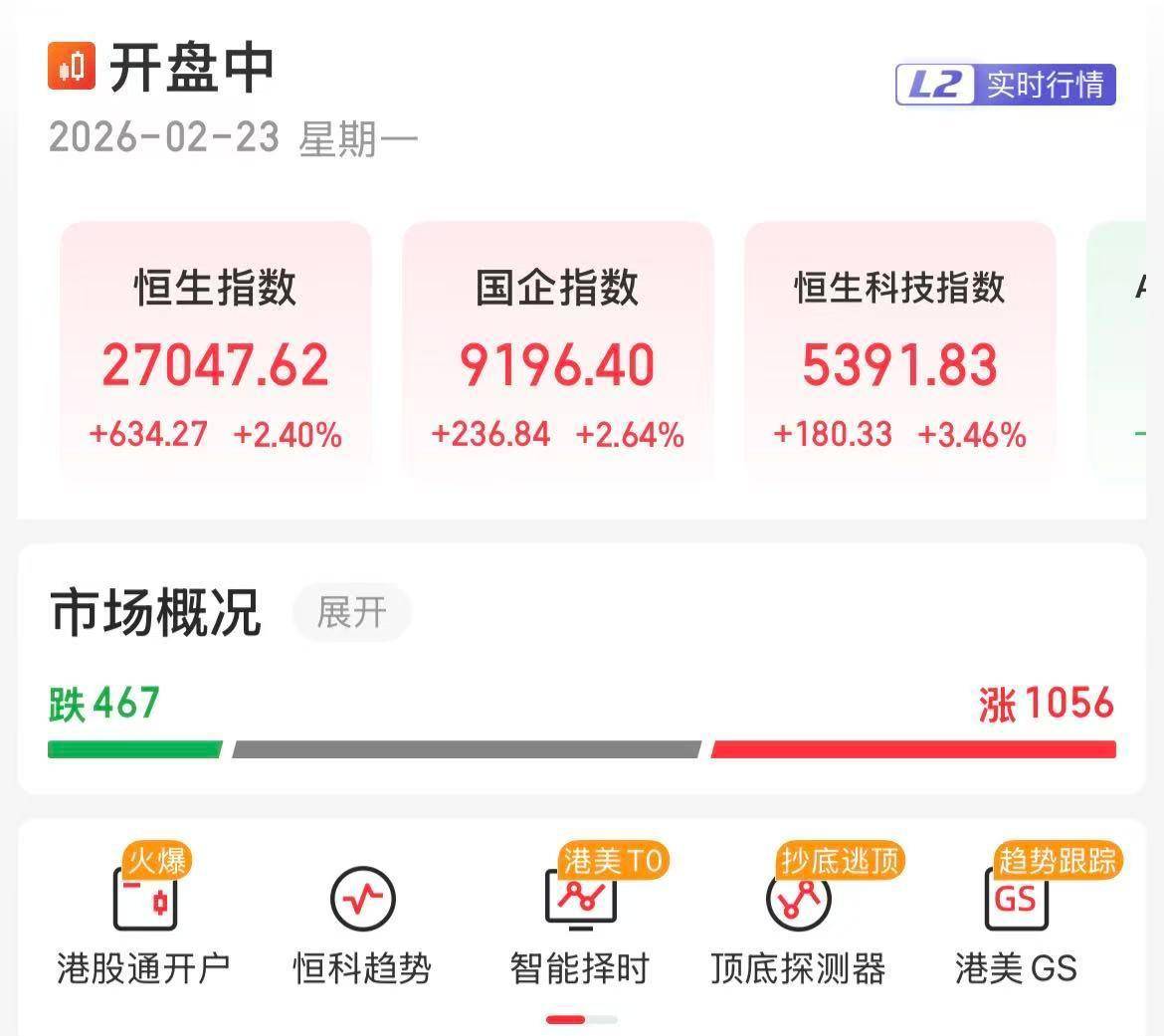
值得一提的是,恒生指数与沪深300指数的相关系数从60%升至80%-90%,2021-2025年港股与A股涨跌同步率超70%,而与美股相关性减弱。 极目新闻记者 吕少峰 2月23日,当大家还继续享受春节超长假期的团聚与松弛感时,港股迎来了周一正常的交易日。恒生指数涨2.40%、恒生科技涨3.46%,个股涨多跌少。与此 同时,富时中国A50指数期货涨幅扩大至1%。在港股与A股的关联性越来越强的今天,港股良好的开局,也给3亿A股股民朋友带来了一份乐观的期待。 港股方面,截至发稿时,恒生指数涨2.40%,国企指数涨2.64%,恒生科技指数大涨3.46%,个股涨多跌少。板块方面,化学制品、汽车、有色、电子竞技、 彩票等板块领涨。黄金继续表现强势,黄金继续走强,开盘一度大涨4.98%,潼关黄金、灵宝黄金、中国黄金国际等领涨。与此同时,科技股也部分走强, 网易涨超4%、京东、快手、美团等涨3%,阿里巴巴、小米集团等涨逾2%。芯片股走强,华虹半导体涨4%,中芯国际涨逾3%。 众所周知,港股与A股存在显著关联,主要通过资金流动、上市公司重叠和市场情绪传导实现联动,近年相关性持续增强。港股与A股的强关联主要体现在 三个方面:其 ...

数据揭示“春节效应”:券商提示节后市场上涨概率高 成长与红利风格有望共舞
Xi Niu Cai Jing· 2026-02-23 01:24
Core Viewpoint - The A-share market is expected to experience a new round of upward momentum after the Spring Festival, driven by improving macroeconomic fundamentals and positive market sentiment [2][3][4]. Group 1: Market Trends and Historical Data - Historical data from 2006 to 2025 shows a significant "Spring Festival effect," with the Shanghai Composite Index having an 80% probability of rising in the first five days and a 75% probability in the following five days after the festival [2]. - Research from multiple brokerages indicates that the market typically sees a surge in risk appetite and a transition from emotional-driven rallies to trend continuation in the weeks following the Spring Festival [3][4]. Group 2: Sector Focus and Investment Opportunities - Brokerages recommend focusing on high-quality blue-chip stocks and low-volatility sectors before the festival, while suggesting a shift towards technology growth, small-cap stocks, and policy beneficiaries (such as TMT and consumer sectors) after the festival [6][7]. - The semiconductor and AI-related sectors are highlighted as key areas of interest, with expectations of continued performance due to favorable industry trends [4][8]. Group 3: Economic Indicators and Policy Impact - The upcoming Two Sessions are expected to catalyze policy changes that will positively impact market performance post-festival [4]. - The first two months of the year are typically a data vacuum period, but current trends indicate a positive outlook for performance improvements in various industries [4][5]. Group 4: Risks and Market Dynamics - While there are short-term risks such as overseas market fluctuations and sector rotation, these are viewed as temporary disturbances that are unlikely to alter the overall positive trend for February [5][6]. - The white liquor sector is anticipated to see a valuation recovery as consumer demand rebounds, supported by favorable policies and improving fundamentals [7][8].




【环球财经】中国春节外溢效应牵动意大利市场
Xin Hua She· 2026-02-22 14:21
新华财经米兰2月22日电(记者刁泽张馨文)随着中国春节影响力持续扩大,中国消费市场的"春节效 应"正在意大利加速扩散。时值马年春节,意大利多个行业围绕中国消费者节庆需求推出定制化产品与 服务,通过设计创新、文化融合和市场联动,积极分享中国超大规模市场释放的消费红利。 近年来,中国春节逐渐成为国际企业观察和布局的重要节点。尤其在高端制造与设计消费品领域,越来 越多海外品牌围绕农历新年推出限定产品,以更贴近中国消费者的方式捕捉节庆消费潜能。 马年春节带动的"洋年货"创新在意大利制造业领域尤为引人关注。意大利摩托车品牌"维斯帕"近期推出 马年主题特别款,将生肖意象与意大利经典工业设计相融合,在色彩搭配、材质选择和细节处理上融入 中国节庆元素。记者在位于米兰市中心的品牌体验店看到,这款深棕色限量款被放置在橱窗中心位置展 示。 该店创新经理卢卡·萨基对记者说,这款摩托车通过材质与细节处理呈现兼具传统意象与现代审美的气 质。负责销售的毛罗·甘迪尼介绍说,围绕农历新年推出的典藏系列受到市场欢迎,吸引全球收藏者关 注。 据记者了解,时装品牌阿玛尼、麦丝玛拉以及香水品牌帕尔马之水等意大利品牌,均围绕农历新年推出 以生肖"马"为 ...
金价暴跌500元!周大福为何死守1550元?内行人悄悄补仓了
Sou Hu Cai Jing· 2026-02-14 07:39
Core Viewpoint - The recent drop in gold prices before the Spring Festival raises questions about purchasing decisions, despite retail prices remaining high at gold stores [1][3]. Group 1: Market Trends - Gold prices fell nearly 3% to $4914 per ounce on the last trading day before the Spring Festival, while domestic gold prices dropped to 1096.99 yuan per gram [1]. - Historical data shows that gold prices often decline in the week leading up to the Spring Festival due to increased cash outflows for year-end expenses [3]. - The expectation of a stronger U.S. economy and delayed interest rate cuts by the Federal Reserve have contributed to a decrease in gold's attractiveness, as the dollar and U.S. Treasury yields rise [3]. Group 2: Investment Strategies - The long-term fundamentals for gold remain intact, with central banks continuing to buy gold and persistent geopolitical tensions sustaining demand for safe-haven assets [5]. - For those looking to invest in gold bars or through regular purchases, a strategy of dollar-cost averaging is recommended to mitigate the impact of market volatility [7]. - Investors should avoid selling immediately after the Spring Festival, as prices may be depressed due to high selling pressure; instead, a staggered selling approach is advised to lock in profits [7]. Group 3: Market Sentiment - The current market is characterized by fluctuating emotions among investors, oscillating between fear of missing out and fear of losses [10]. - Understanding historical patterns and maintaining a rational approach is crucial for navigating the gold market, especially during the typical low periods around the Spring Festival [11]. - The essence of investment in gold is not just about numbers but also about managing emotions and market sentiment effectively [11].

落袋为安?60亿,“跑了”
Xin Lang Cai Jing· 2026-02-13 05:45
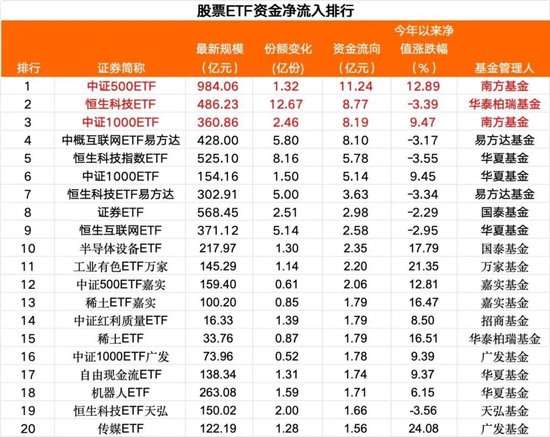
Core Viewpoint - The stock ETF market in China experienced a significant net outflow of approximately 62 billion yuan on February 12, with a total outflow of nearly 200 billion yuan over four consecutive trading days, indicating a trend of capital withdrawal ahead of the upcoming holiday [1][2][3]. Market Overview - On February 12, the total market ETF net outflow reached 56.3 billion yuan, with broad-based ETFs seeing the largest outflows, totaling 60.13 billion yuan [3][12]. - The stock ETF market saw a reduction of 44.33 million shares, reflecting a cautious sentiment among investors as they reposition ahead of the holiday [3][12]. Sector Performance - The ETFs tracking the ChiNext, A500, Sci-Tech 50, and CSI 300 indices, as well as thematic ETFs in green power, securities insurance, and non-ferrous metals, experienced significant net outflows [1][6][10]. - Conversely, ETFs tracking the CSI 500, CSI 1000, and sectors like Hang Seng Technology and internet themes saw notable net inflows, with the CSI 500 ETF, Hang Seng Technology ETF, and CSI 1000 ETF leading the inflows [1][3][12]. Fund Flows - A total of 27 stock ETFs recorded net inflows exceeding 1 billion yuan, with the top three being the CSI 500 ETF (11.24 billion yuan), Hang Seng Technology ETF (8.77 billion yuan), and CSI 1000 ETF (8.19 billion yuan) [5][14]. - The top inflow sectors included the Hang Seng Technology Index (23.8 billion yuan), CSI 1000 Index (15.7 billion yuan), and CSI 500 Index (14.4 billion yuan) [3][12]. Fund Management Insights - E Fund reported a total ETF size of 662.75 billion yuan, with significant inflows into its internet and technology ETFs, indicating strong investor interest in these sectors [8][16]. - Huaxia Fund noted that its Hang Seng Technology Index ETF and CSI 1000 ETF also saw substantial inflows, reflecting a trend towards high-quality assets [8][16]. Market Sentiment - Fund managers suggest that the market may stabilize after recent fluctuations, with a focus on sectors that could benefit from a post-holiday recovery and potential style rotation [9][17]. - The emphasis on domestic demand and the regulatory support for capital markets are seen as positive factors for future market performance [9][17].
持股还是持币过年?2026年春节前市场策略综述
Sou Hu Cai Jing· 2026-02-13 05:10
Group 1 - The core argument of the article discusses the debate on whether to hold stocks or cash during the upcoming Chinese New Year, emphasizing the unique market environment this year due to an extended holiday and various influencing factors [1] - Historical data shows a pattern of "pre-holiday adjustment and post-holiday rebound" in the A-share market, with an average return of -2.20% in the second week before the holiday and a subsequent average return of 3.72% in the three weeks after [2] - The current market environment is characterized by four main features: rising policy expectations, improved liquidity, favorable valuations, and the gradual digestion of risk factors, all supporting the rationale for holding stocks during the holiday [3] Group 2 - Most institutions agree that holding stocks during the holiday is more favorable, but they present different strategies for asset allocation, reflecting a diverse approach to investment [4] - A survey indicates that 62% of private equity firms plan to hold significant positions or be fully invested during the holiday, with expectations for structural opportunities in traditional blue-chip and technology growth sectors [4] - Recommendations for investors include maintaining a cash reserve of 30%-50% to manage potential post-holiday market volatility, focusing on a dual strategy of "technology + consumption" for investment, and setting reasonable stop-loss levels to mitigate risks [6]
AI恐慌与春节效应“双杀”,金属市场“年关”遇冷:锡领跌、铜价重挫1710元/吨
Xin Lang Cai Jing· 2026-02-13 03:52
Core Viewpoint - The metal market is currently facing dual pressures from macroeconomic factors and seasonal demand weakness, leading to widespread price declines across various metals [1][22]. Group 1: Copper - Price performance shows significant declines, with LME copper dropping below $9,500/ton and domestic copper nearing 75,000 yuan/ton [2]. - Macro factors include stronger-than-expected U.S. employment data reinforcing the Fed's high interest rate expectations, leading to a rebound in the dollar index above 96.96, which pressures commodity valuations [3]. - Global visible copper inventories are rising, with LME copper stocks reaching 196,600 tons, a nine-month high, and domestic inventories increasing due to weak pre-holiday consumption [3]. Group 2: Aluminum - Price performance indicates narrow fluctuations around 23,000 yuan/ton for domestic aluminum and a drop to $3,090/ton for LME aluminum [4]. - Supply side shows domestic electrolytic aluminum capacity nearing its limit, with limited incremental growth expected, while overseas production continues to ramp up [5]. - Demand is weak as downstream processing enterprises reduce operating rates significantly, leading to increased social inventories of aluminum [6]. Group 3: Tin - Price performance reveals a significant drop in domestic tin prices, with the last trading day seeing a decline of over 4% [9]. - Macro impacts include intensified selling pressure on tin as a "risk asset" due to the Fed's tightening expectations and tech stock declines [10]. - Supply-demand dynamics show a lack of effective transmission of tightening supply from overseas mines to prices, with social inventories of tin rising amid weak market transactions [11]. Group 4: Nickel - Price performance indicates domestic nickel prices falling below 135,000 yuan/ton, with a year-to-date decline exceeding 15% [12]. - Supply-demand conditions are weak, with stable production from domestic smelters and reduced demand from stainless steel producers [13]. - Macro factors include a strong dollar and rising U.S. Treasury yields, which negatively impact nickel's financial attributes [14]. Group 5: Lead - Price performance shows domestic lead prices weakly fluctuating around 16,600 yuan/ton [16]. - Supply remains stable with consistent primary lead production, while recycled lead production is seasonally reduced [17]. - Demand is weak as downstream battery manufacturers reduce operations ahead of the holiday, leading to a decline in demand for electric bicycles and automotive batteries [18]. Group 6: Zinc - Price performance indicates domestic zinc prices fluctuating around 24,300 yuan/ton [19]. - Macro factors include high interest rate expectations from the Fed and concerns over metal consumption, which pressure zinc valuations [20]. - Basic support exists as domestic zinc inventories rise to 138,100 tons, but spot prices maintain a slight premium, indicating traders' willingness to support prices [21]. Conclusion and Outlook - The metal market is undergoing a dual challenge from macroeconomic pressures and seasonal demand weakness, leading to price declines [1]. - There is a notable differentiation in demand for metals related to new energy, which may present investment opportunities despite short-term adjustments [22]. - Key variables such as Fed policy shifts and domestic growth policies will be critical for post-holiday market direction [22].

盘点近十年数据,沪深300有明显的节后上涨效应
Mei Ri Jing Ji Xin Wen· 2026-02-13 01:36
Core Insights - The article highlights the "Spring Festival Effect" observed in the CSI 300 Index over the past decade, indicating a neutral performance before the festival and a significant upward trend afterward [1] Group 1: Pre-Festival Performance - In the ten years analyzed, the CSI 300 Index experienced an increase in five years and a decrease in five years before the Spring Festival, with an average change of -0.145%, suggesting a relatively neutral performance [1] Group 2: Post-Festival Performance - After the Spring Festival, the CSI 300 Index showed a positive trend, with seven years of increases and three years of decreases, resulting in an average increase of 1.952%, indicating a clear post-festival upward effect [1] Group 3: Future Outlook - The article suggests that the release of selling pressure before the festival in 2026 will facilitate a smoother start after the festival, with upcoming political and economic catalysts such as the National People's Congress and the implementation of the "14th Five-Year Plan" likely to enhance the chances of a strong post-festival performance in the A-share market [1] Group 4: ETF Insights - There are currently 30 ETFs tracking the CSI 300 Index, with the lowest management fee being 0.15% per year for the Huaxia CSI 300 ETF (510330.SH) [1]
节前红利配置价值凸显,高股息ETF(159207)超额收益显著连续“吸金”
Mei Ri Jing Ji Xin Wen· 2026-02-12 08:08
Group 1 - The upcoming Spring Festival holiday is creating a critical window for the A-share market, with investors focusing on whether to "hold cash for the holiday" or "hold high-dividend assets" [1] - High-dividend ETFs have shown resilience in a volatile market, with the high-dividend ETF (159207) achieving a cumulative return of 8.18% as of February 11, and experiencing net inflows for ten consecutive trading days [1] - The index tracked by the high-dividend ETF, the CSI Smart High Dividend Strategy Index, has outperformed similar dividend indices, with a year-to-date increase of over 7% and an annual return of 12.72% for 2025, exceeding peer indices by more than 7 percentage points [1][2] Group 2 - The CSI Smart High Dividend Strategy Index has a differentiated compilation method, enhancing its core advantage over traditional dividend indices by using a "pre-announced dividend yield" selection method, which increases the certainty of dividend yields and reduces the risk of "high-dividend traps" [2] - The index's annualized dividend yield is approximately 7%, significantly higher than similar dividend indices, and its component stocks are well-distributed across industries such as coal, textiles, and machinery, with the top ten stocks accounting for about 30% of the total weight [2] - In the current low-interest-rate environment in China, high-dividend and stable dividend stocks are becoming increasingly attractive, serving as a "ballast" for many funds seeking balanced allocation [2] Group 3 - Multiple brokerages are optimistic about the market's elasticity post-holiday, noting a historical "Spring Festival effect" in A-shares, suggesting that the pre-holiday adjustment may serve as a layout window [3] - As the Two Sessions approach after the Spring Festival, the market style may shift from "high-elasticity trading" to "certainty-based allocation," potentially benefiting high-dividend assets with strong dividend certainty [3]
A股“春节效应”显现 持股还是持币过节?
Guo Ji Jin Rong Bao· 2026-02-11 13:42
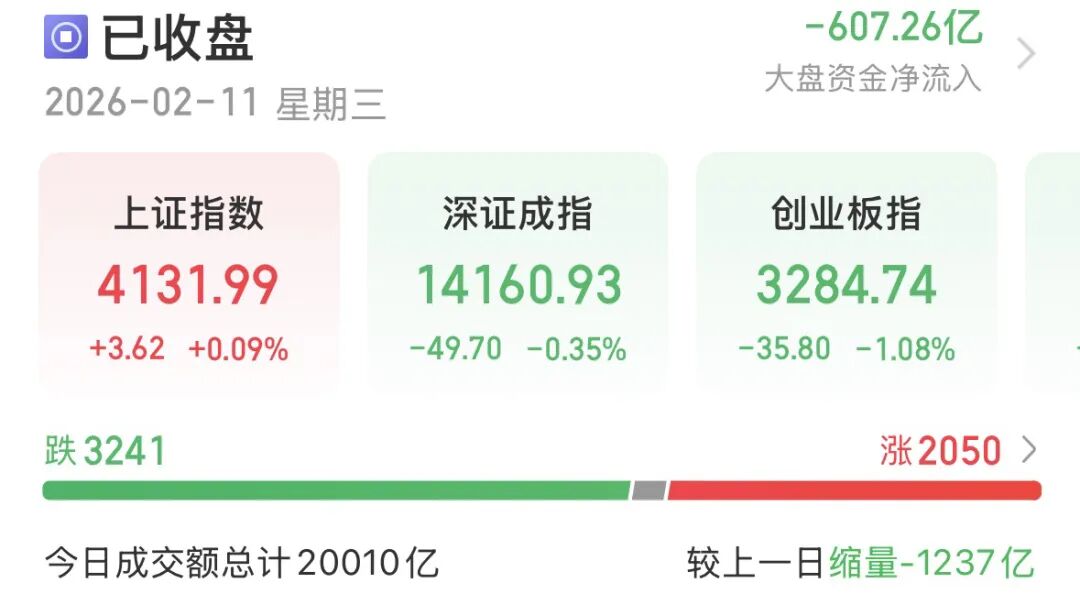
Core Viewpoint - The A-share market continues to experience a shrinking volume and differentiated fluctuations, with a trading volume dropping to 2 trillion yuan, reflecting a cautious sentiment among investors ahead of the holiday [4][12][13]. Market Performance - On February 11, the Shanghai Composite Index rose by 0.09% to 4131.99 points, while the ChiNext Index fell by 1.08% to 3284.74 points, indicating mixed performance across indices [4][5]. - A total of 2050 stocks rose, with the building materials sector leading the gains, while resource stocks such as non-ferrous metals, coal, and chemicals performed well [4][5][9]. Trading Volume and Investor Sentiment - The trading volume across the three markets decreased by 123.7 billion yuan compared to the previous trading day, reaching 2 trillion yuan, as investor trading willingness declined [4][12]. - Margin financing balances in the Shanghai and Shenzhen markets fell to 2.66 trillion yuan, indicating a decrease in leveraged trading activity [4]. Sector Performance - The building materials sector saw a rise of 3.29%, with six stocks hitting the daily limit, while the non-ferrous metals sector increased by 2.39% [9][10]. - The communication sector experienced a decline of 2.08%, reflecting a broader trend of sectoral differentiation [7][8]. Investment Strategy - Analysts recommend maintaining a position of around 70% in stocks during the holiday, focusing on a "high-dividend blue-chip + technology growth" barbell strategy [4][18]. - Suggested sectors for investment include traditional consumption, traditional manufacturing, and high-dividend stocks, which are expected to provide stability during potential market fluctuations [18][19].