智能电动化

Search documents
拟以10亿元至20亿元回购公司股份 长安汽车以坚定信心开启价值重塑新篇章
Zheng Quan Ri Bao Wang· 2026-02-05 07:45
根据最新披露的转型计划,长安汽车明确提出,到2028年实现中国品牌累计销量4000万辆、2030年年产 销目标500万辆,其中新能源占比60%,海外占比35%,并跻身全球汽车品牌TOP10。这一战略蓝图背 后,是其新能源持续突破,2025年销量达110.9万辆,同比增长51.1%;全球化布局提速,未来三年将投 放26款新品,覆盖140余个国家和地区。这种"技术+市场"双轮驱动的模式,为回购行动提供了坚实的业 绩支撑。 本报讯(记者冯雨瑶)2026年2月4日晚间,重庆长安汽车(000625)股份有限公司(以下简称"长安汽车") 正式发布公告,宣布拟以10亿元至20亿元自有资金回购公司股份,其中,A股回购金额不低于7亿元且 不超过14亿元,B股回购金额不低于3亿元且不超过6亿元。此次回购股份将全部用于减少公司注册资 本,彰显了管理层对战略前景的坚定信心与对股东权益的深度守护。 战略底气:新能源转型与全球化布局双轮驱动 市场信号:价值回归与股东利益深度绑定 本次回购发生于全球汽车产业向智能电动化深度转型的关键时期。长安汽车在公告中明确指出,此举是 基于对公司战略发展前景及内在价值的坚定信心,积极维护公司价值及股东权 ...

长城汽车 | 2025年营收稳步增长 战略投入压制利润【国联民生汽车 崔琰团队】
汽车琰究· 2026-02-03 04:59
Event Overview - The company reported its 2025 annual performance, achieving total revenue of 222.79 billion yuan, a year-on-year increase of 10.19%. The net profit attributable to shareholders was 9.91 billion yuan, down 21.71% year-on-year. The net profit excluding non-recurring items was 6.16 billion yuan, down 36.48% year-on-year. Basic earnings per share were 1.16 yuan, down 22.15% year-on-year. As of the end of 2025, total assets were 225.59 billion yuan, up 3.62% year-on-year, and equity attributable to shareholders was 87.93 billion yuan, up 11.32% year-on-year. The total vehicle sales reached 1.32 million units, up 7.33% year-on-year, with new energy vehicle sales at 403,700 units, up 25.44% year-on-year, and overseas sales at 506,000 units, up 11.68% year-on-year, accounting for over 38% of total sales [2]. Revenue and Profit Analysis - Revenue grew steadily, with a 10.19% year-on-year increase, benefiting from sales growth and product structure upgrades. The average revenue per vehicle reached 168,300 yuan, an increase of approximately 4,400 yuan year-on-year, setting a new historical high. However, net profit attributable to shareholders and net profit excluding non-recurring items decreased by 21.71% and 36.48% respectively, primarily due to increased strategic investments in new user channels, new model launches, and brand enhancement, which pressured short-term profits. The total liabilities decreased by 0.76% year-on-year, while equity attributable to shareholders increased by 11.32%, indicating a stable financial condition [3]. Sales and Market Performance - Vehicle sales increased by 7.33% year-on-year, with a well-structured product matrix. The Haval and Ora brands focused on the mainstream price range of 100,000 to 200,000 yuan, while the Tank and Wey brands targeted the mid-to-high-end market, with Tank models above 300,000 yuan accounting for 38.5% of sales. The new energy business became a core growth engine, with global sales up 25.44% and domestic penetration of new energy passenger vehicles reaching 51.5%. The overseas market also saw significant growth of 11.68%, with over 57,000 units sold in December alone. The company is enhancing its global presence with the launch of its Brazil factory and localizing ethanol hybrid models, while the Tank 700 has established a high-value image in the Middle East, with plans to expand into the South American market [4]. Technological Innovation - The company has a strong technological foundation, with its hybrid four-wheel drive intelligent off-road technology awarded a prestigious industry prize. The Super Intelligent HEV is pushing hybrid technology into a new era, achieving a maximum fuel consumption reduction of 14.4%. The world's first native AI all-power platform has been implemented, accommodating various power forms, and high-level intelligent driving will be extended to more models and overseas adaptations. The company emphasizes "testing cars through competitions" to enhance production vehicle quality, laying a solid foundation for long-term high-quality growth [5]. Financial Forecast - The company has adjusted its profit forecast, expecting revenues of 226.78 billion yuan, 289.80 billion yuan, and 318.78 billion yuan for 2025-2027, with net profits attributable to shareholders of 12.67 billion yuan, 17.52 billion yuan, and 19.40 billion yuan for the same period. The corresponding earnings per share are projected to be 1.48 yuan, 2.05 yuan, and 2.27 yuan, with price-to-earnings ratios of 14, 10, and 9 respectively [6][7].



经纬恒润丨2025Q4业绩超预期 商业航天全面布局【国联民生汽车 崔琰团队】
汽车琰究· 2026-01-29 09:40
0 1 事 件 概 述 公司发布 2025 年度业绩预盈公告 ,预计 2025 年归母净利润 0.75 至 1.1 亿元,扣非归母净利润 0.28 至 0.41 亿元,同比扭亏为盈。 0 2 分 析 判 断 ► 2025Q4 业绩超预期 降本增效措施初显成效 2025Q4公司归母净利润0.75至1.10亿元,同比+2.90至3.25亿元,环比+1.38至1.73亿元;扣非归母净利润0.28至0.41亿元,同比+2.95至3.08亿元,环比+1.58至1.72亿元。 公司2025年扭亏为盈,主要原因系:①公司的前期投入和研发成果得到了有效释放,以域控制器产品为代表的新产品阵营收入快速放量,持续升级迭代的原有产品阵营收获 了更多的客户和项目机会,推动公司收入规模进一步扩大;②降本增效措施初显成效。2025年公司将降本增效作为重要经营指引之一,通过AI工具应用、国产替代、智能制 造等方式,使各项成本和费用得到了有效控制,毛利率有所提升,期间费用率显著下降。 0 3 投 资 建 议 公司为国内少数能实现覆盖智能驾驶电子产品、研发服务及解决方案、高级别智能驾驶整体解决方案的企业之一,持续受益智能电动化进程。预计公司20 ...


面对抄袭,保时捷不再那么无所谓了
3 6 Ke· 2026-01-29 08:25
近日,保时捷中国总裁及首席执行官潘励驰在一次媒体沟通中对该事件做出了回应。他表示,保时捷中国已将两家涉事门店移出经销商网络,同时将配合 处理相关善后事宜。已经付清车款的用户将会在本月内拿到车辆合格证;对于交了定金没提车的用户,正在逐一协商解决方案。 这已经不是保时捷经销商第一次暴雷了,前几年也有过类似的事件。尽管每一次保时捷中国都本着对客户负责任的态度进行了善后,但依然很难挽回对品 牌形象和口碑的伤害。 事实上,为了尽量避免类似的情况发生,保时捷已经在主动收缩经销商网络,去年已经把门店数量从150家砍到了114家,今年年内还将进一步缩减至80家 左右。 保时捷已经认清了现实,中国消费者对于豪华的理解和偏好已经发生了巨大的变化,在产品能力跟上之前,盲目扩张等于火上浇油。 但认清现实却不意味着保时捷就此认命。在这次的沟通会上,有媒体提到了中国品牌们对于保时捷的致敬。 潘励驰表示:"保时捷的设计得到大家的认同,我们首先感到自豪,但原创永远是原创,大家看到那么多撞脸的车型之后,最终会认同开创者,珍视真正 拥有深厚历史传承的品牌。" 去年底,东安控股集团旗下的郑州中原和贵阳孟关两家保时捷中心突然关店跑路,员工工资被拖欠 ...

公司深度 | 伯特利: 线控底盘领军者 人形机器人未来的中坚力量【国联民生汽车 崔琰团队】
汽车琰究· 2026-01-26 16:12
Core Viewpoint - The company is a leading player in the domestic automotive brake system market, focusing on the development of intelligent chassis systems, including mechanical brakes, electric control, mechanical steering, and lightweight structural components, aiming for a comprehensive line control chassis solution [2][8]. Product Development - The company has established a comprehensive product layout, transitioning from mechanical components to electronic and intelligent systems, including electronic parking brakes (EPB), electronic stability control (ESC), and line control braking systems (WCBS) [17][26]. - The company has expanded its product offerings to include active suspension systems and has made strategic acquisitions to enhance its capabilities in electric steering systems [3][17]. Client Structure - The client base has evolved from traditional domestic brands like Chery and Geely to include new energy vehicle manufacturers and global partners such as Nissan and Ford, reflecting a shift towards more advanced electric control systems [2][20]. - The company has established a stable client structure with over 50 clients globally, including major players in the automotive industry, and is continuously expanding its international presence [31][34]. Globalization Strategy - The company has implemented a three-pronged internationalization strategy, establishing manufacturing bases in China, Mexico, and Morocco to enhance its global supply chain and reduce costs [36][38]. - The Mexican facility, operational since 2023, aims to produce 4 million parts annually, while plans for a Moroccan facility are set to begin in 2024, targeting the European and North African markets [38][40]. Financial Performance - The company has demonstrated robust revenue growth, with a projected revenue of 128.75 billion yuan in 2025, increasing to 208.31 billion yuan by 2027, alongside a steady rise in net profit [6][40]. - The gross margin is expected to improve as new products scale up, with a focus on enhancing profitability through the integration of advanced technologies [41][44]. Technological Capabilities - The company has built a strong technological foundation, focusing on precision manufacturing, system integration, and the development of advanced electronic control systems, which are critical for the automotive industry's shift towards electrification and automation [46][52]. - Continuous investment in research and development has led to significant advancements in product offerings, including the successful mass production of line control braking systems [65][66]. Future Outlook - The company is positioned to leverage its technological expertise and strategic vision to transition from a domestic leader to a global player in the automotive components sector, particularly in the intelligent chassis and robotics markets [11][14].


BBA正在布一个大局,但有用吗?
Xin Lang Cai Jing· 2026-01-25 03:53
Core Insights - BBA (Benz, BMW, Audi) has experienced a significant decline in sales, with a total drop of 260,000 units in one year, highlighting the fading prestige of traditional luxury brands in the expanding luxury car market [1][21] - The focus for BBA in 2026 is shifting from expansion to stabilizing prices and market share due to increased competition and changing consumer preferences [1][33] Group 1: Sales Performance - In 2025, BBA faced a challenging year with notable declines in the Chinese market: Mercedes-Benz sold 552,000 units (down 19%), BMW 626,000 units (down 12.5%), and Audi 617,000 units (down 4.9%) [2][22] - Global sales for BMW reached 2.464 million units (up 0.5%), while Mercedes-Benz's global sales fell to approximately 1.8 million units (down 9%) and Audi's to 1.6236 million units (down 2.9%) [2][22] - BBA's profits were severely impacted in the first half of 2025, with Mercedes-Benz's net profit down 55.8%, Audi's down 37.5%, and BMW's down 29% [2][22] Group 2: Market Dynamics - The luxury car market is undergoing a transformation, with BBA struggling to keep pace with the rapid growth of the Chinese electric vehicle market, which saw penetration rates rise from under 10% in 2020 to 54% in 2025 [7][26] - BBA's market share in the luxury segment has decreased from a peak of 70% to around 35%, as new energy luxury car sales surged from 220,000 units to 2.88 million units from 2020 to 2024 [9][28] Group 3: Competitive Landscape - Domestic high-end brands like AITO and Li Auto are gaining traction, with AITO selling over 420,000 units in 2025, directly challenging BBA's core models [6][25] - New entrants in the luxury market are expected to capture nearly 60% of the high-end market share by 2025, indicating a significant shift in consumer preferences [6][25] Group 4: Strategic Adjustments - BBA is adjusting its strategies to focus on stabilizing prices and maintaining market share, with experts predicting a more competitive landscape in 2026 [14][33] - The introduction of new models based on advanced platforms is planned for 2026, with BBA aiming to enhance its competitiveness through localized development and technological partnerships [19][39]
2025智驾平权加速-2026智驾-机器人-全球化共振
2026-01-20 01:50
Summary of Key Points from the Conference Call Industry Overview - The automotive industry outlook for 2026 anticipates a continued support for basic demand through vehicle trade-in policies, with wholesale sales expected to grow by 1.0% to 30.3 million units [1][3] - The demand for smart electric components is expected to outperform traditional components, particularly in the field of intelligent robotics, which shows significant growth potential [1] Core Insights and Arguments - Investment strategies are focused on the transformation towards smart electric vehicles and the reshaping of competitive landscapes, with optimism towards domestic brands like Geely and BYD, as well as new players like Huawei and Xiaomi [1] - Chinese automotive parts manufacturers are expected to expand globally, leveraging overseas production capacity and cost advantages, despite facing increased competition from automakers [1][5] - The smart and aftermarket sectors are experiencing significant revenue growth, driven by increased penetration rates and rising demand in Europe and the US [1][8] - Continued subsidy policies are projected to support basic demand and drive positive growth in new energy vehicle wholesale sales [9] Financial Performance - In 2025, domestic wholesale sales are projected to increase by 13.3%, leading to an 8.3% revenue growth in the automotive parts sector, although net profits may see a slight decline due to increased pressure from domestic brands [2] Challenges and Opportunities - The globalization of the automotive parts industry presents challenges such as increased competition from automakers, but also opportunities for new customer acquisition [7][11] - Rising aluminum prices pose cost pressures, while declines in steel and lithium carbonate prices alleviate some cost transmission pressures for automakers [7] Trends in Sub-sectors - The intelligent and aftermarket sectors are seeing significant revenue increases, with the intelligent sector benefiting from rising penetration rates and the aftermarket driven by demand growth in Europe and the US [8] - The tire industry is negatively impacted by tariffs, but other sub-sectors are achieving positive profit growth [8] Policy Impacts - Ongoing subsidy policies are expected to support basic demand and drive approximately 13% growth in new energy vehicle wholesale sales [9] - The US has imposed a 25% tariff on tire exports from China, negatively affecting profits in that sector, while other sectors remain less impacted [9] Future Growth Potential - The single vehicle value metric is crucial for assessing the automotive parts sector, with revenue driven by sales volume and pricing, and industry valuations typically ranging from 15 to 20 times earnings, potentially exceeding 30 times in high-growth scenarios [10] Key Players and Recommendations - Recommended domestic brands include Geely and BYD, along with new players like Huawei and Xiaomi [5] - Notable companies in the intelligent driving sector include Berteli, Horizon Robotics, and Desay SV [6] Robotics Sector Developments - The robotics sector is expected to enter a mass production phase in 2026, with Tesla's Optimus V3 anticipated to significantly impact the market [16] - The integration of VLA technology in autonomous driving is seen as a core improvement, enhancing system intelligence through the incorporation of large language models [17] Conclusion - The automotive parts industry is poised for growth driven by technological advancements, supportive policies, and strategic global expansions, while also facing challenges from competition and cost pressures.

特朗普“让中国进来”后,中国汽车产业将如何走向美国
Guan Cha Zhe Wang· 2026-01-19 10:19
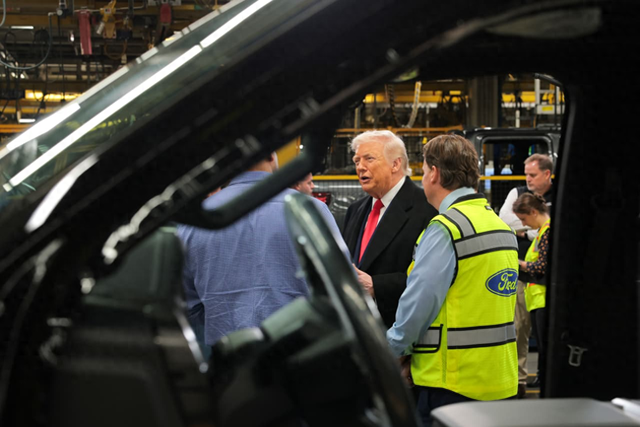
Core Viewpoint - The recent decline in stock prices of major U.S. automakers is linked to Trump's statements regarding support for American auto workers and a shift in attitude towards Chinese automakers, raising concerns about the profitability and market conditions for U.S. companies [3][4][6]. Group 1: Stock Market Reaction - Major U.S. automakers saw significant stock price declines, with General Motors down approximately 3%, Ford down about 4%, and Stellantis down around 11% [1]. - The market's reaction indicates a focus on uncertainties regarding corporate profitability, trade barriers, and industry direction, despite Trump's seemingly welcoming remarks towards Chinese automakers [3][4]. Group 2: Trade and Regulatory Environment - Trump's welcoming remarks for Chinese automakers are made against the backdrop of high tariffs on Chinese imports, which remain a significant barrier to entry for Chinese vehicles in the U.S. market [4][6]. - U.S. Trade Representative stated that tariffs are in place to protect American workers from foreign vehicles, highlighting the ongoing regulatory challenges for Chinese automakers [6]. Group 3: Globalization Trends - Despite the challenges, there is a growing trend of easing restrictions on Chinese electric vehicles in other markets, with Canada recently removing punitive tariffs and the EU adjusting tax rates [7][9]. - Chinese automakers, such as BYD, have shown strong growth in international markets, with a reported 276% increase in deliveries to Europe [9]. Group 4: Potential Pathways for Chinese Automakers - Three potential pathways for Chinese automakers to enter the U.S. market include: 1. Embedding within the U.S. supply chain without direct competition as a brand [11][12]. 2. Local manufacturing in the U.S. to mitigate political resistance, although this comes with its own set of challenges [16][18]. 3. Establishing production bases in nearby regions like Mexico or Brazil to create an indirect entry into the U.S. market [19][21]. Group 5: Strategic Implications - The overarching strategy for Chinese automakers is not merely to sell vehicles in the U.S. but to navigate the complex political and regulatory landscape to establish a presence [23]. - The shift from exporting vehicles to becoming participants in a global automotive ecosystem reflects a broader trend in the industry, with the U.S. market being one of many avenues for growth [23].


汽车零部件2026 | 2025智驾平权加速 2026智驾&机器人&全球化共振
汽车琰究· 2026-01-17 11:53
Core Viewpoint - The automotive parts industry is expected to experience significant growth driven by the acceleration of smart and global trends, with humanoid robots entering a phase of mass production by 2026 [2][7]. Group 1: Industry Overview - In 2025, domestic wholesale vehicle sales reached 21.16 million units, a year-on-year increase of 13.3%, leading to an 8.3% increase in automotive parts revenue [2][20]. - For 2026, the wholesale vehicle sales are projected to reach 30.3 million units, a 1.0% year-on-year increase, supported by the continuation of vehicle replacement policies [2][46]. - The automotive parts sector is expected to benefit from the increasing share of domestic brands and the pressure of annual declines on profit margins, which decreased by 0.5 percentage points year-on-year [2][43]. Group 2: Investment Strategy - The investment strategy emphasizes the importance of high-quality customers, with domestic brands being prioritized over new forces and joint ventures [3][9]. - The focus is on high-growth clients such as Geely and BYD in the domestic market, and the expansion of overseas production capacity is expected to enhance revenue and profit [3][8]. - The global expansion of Chinese automotive parts is anticipated to continue, particularly in North America and Europe, driven by the increasing electrification rate [3][9]. Group 3: Product Dimensions - The smart driving sector is expected to see accelerated growth, with a projected increase in penetration rates as advanced driving technologies become more accessible to the mass market [4][39]. - Humanoid robots are entering a mass production phase in 2026, with significant advancements in AI and robotics technology expected to drive long-term growth [4][54]. - Key investment opportunities are identified in high-performance driving chips and smart cockpit controllers, which are expected to experience substantial growth [4][53]. Group 4: Financial Performance - The automotive parts sector's revenue growth is closely tied to passenger vehicle sales, with a noted increase in average selling prices (ASP) [15][20]. - The gross profit margin for the automotive parts sector was 19.4% in 2025, reflecting a slight decline due to increased pressure from OEMs [26][33]. - The net profit growth for the automotive parts sector was only 4.2% year-on-year, indicating that profit growth is lagging behind revenue growth due to pressures from OEMs [33][39]. Group 5: Future Outlook - The automotive parts industry is expected to see a shift towards smart and electric components, with a focus on intelligent driving and humanoid robots as key growth areas [2][53]. - The five-force model indicates that the industry will favor smart electric components over traditional parts, with significant growth potential in humanoid robots and low-altitude applications [53][54]. - The overall industry space is defined by the value per vehicle, vehicle sales, and product penetration rates, with a strong emphasis on high-quality customers and favorable market conditions [54].



盘点CES亮相的企业TOP 10:中国技术如何影响世界?
Xin Lang Cai Jing· 2026-01-12 12:30
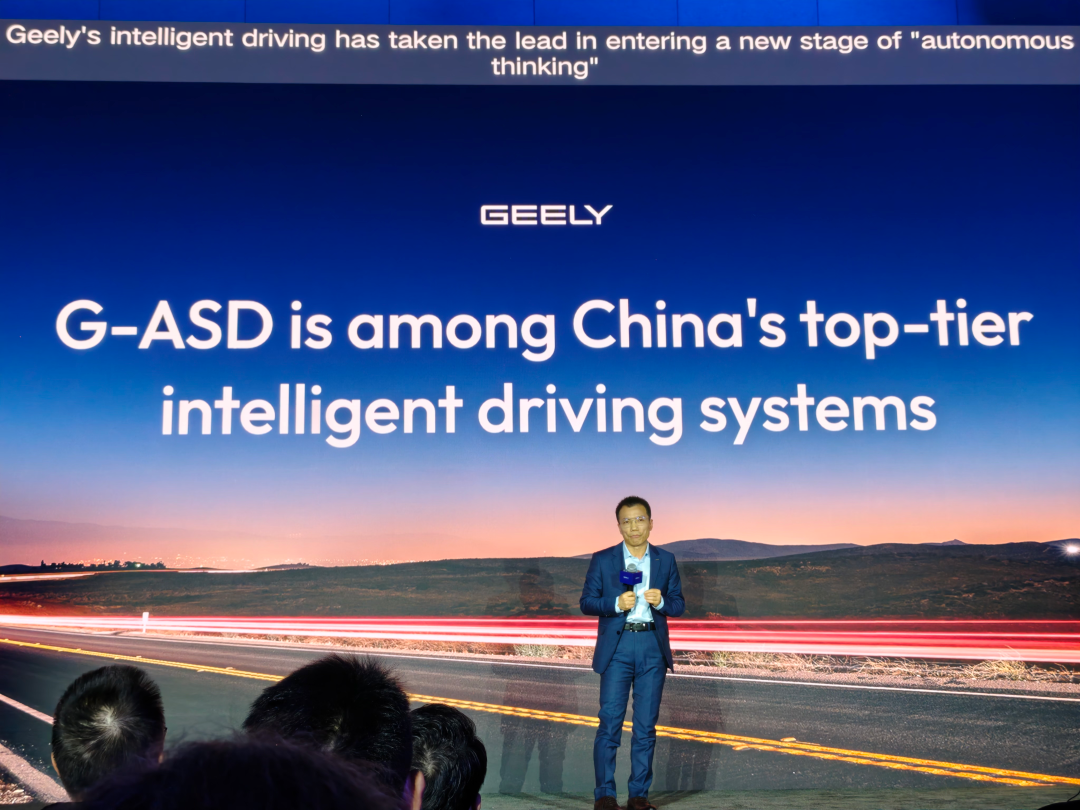
Group 1 - Chinese technology companies are redefining global consumer electronics trends through hard-core technology innovations showcased at CES [1][29] - The focus is on AI revolution, robotics, smart mobility, and IoT, highlighting the shift from low-cost manufacturing to technology-driven solutions [1][29] Group 2 - Geely Auto showcased a comprehensive technology solution for smart electric mobility, emphasizing its vertical integration capabilities in battery and electric drive technology [4][31] - The company aims to drive the global automotive industry's transition towards electrification and intelligence, enhancing its global competitiveness [4][31] Group 3 - Lenovo introduced the world's first AI PC series, featuring a dedicated neural network chip for localized large model operations and privacy-protecting AI applications [6][33] - The company is transitioning from a hardware manufacturer to an AI solution provider, integrating AI with personalized computing to lead the global PC industry into a new intelligent evolution [6][33] Group 4 - TCL demonstrated its leadership in display technology with the launch of quantum dot Mini-LED TVs and flexible OLED screens, integrating top-tier display technology with smart home solutions [11][38] - The company's strategy aims to create a comprehensive smart experience across various scenarios, redefining global consumer electronics visual standards [11][38] Group 5 - Tricky Technology unveiled its bionic quadruped robot Eame One, showcasing advanced AI environmental perception systems for complex tasks [14][41] - The introduction of the X40 series cleaning robots with robotic arm technology signifies rapid advancements in consumer robotics [14][41] Group 6 - Qianli presented an L4-level autonomous driving solution for urban environments, utilizing a self-developed multi-sensor fusion perception system for high-precision positioning [16][43] - The solution has been implemented in various global ports and mines, demonstrating the company's capability in commercializing autonomous driving [16][43] Group 7 - iFlytek showcased its AI translation device capable of real-time transcription in 83 languages, including dialects and ancient English [18][45] - The company is leveraging its voice interaction and multi-modal cognitive technology to break language and cultural barriers, positioning itself as a key player in global digital transformation [18][45] Group 8 - Tuya Smart displayed its IoT cloud platform connecting over 1 million device SKUs, promoting an open ecosystem for smart home solutions [21][48] - The introduction of an AIoT chip and support for the Matter protocol aims to facilitate rapid product intelligence for overseas brands [21][48] Group 9 - SenseTime highlighted its "SenseNova" large model system, showcasing AI applications in urban governance and smart city construction [24][51] - The integration of large models with robotics aims to enhance the application of computer vision technology in complex urban scenarios [24][51] Group 10 - Yushun Technology launched its new generation humanoid robot H1, achieving industry records in joint torque and dynamic walking speed [26][53] - The company is pioneering the commercialization of consumer-grade quadruped robots, marking a significant advancement in the robotics sector [26][53] Group 11 - Qingxian Smart Chair introduced an intelligent office chair with a multi-modal perception system for real-time health monitoring and AI-driven adjustments [28][55] - This innovation aims to transform traditional seating into a proactive health management tool, reflecting deep insights into future office environments [28][55]