
流动性充裕

Search documents
策略周报:行稳致远,市场节奏如何把握?-20260125
HWABAO SECURITIES· 2026-01-25 13:26
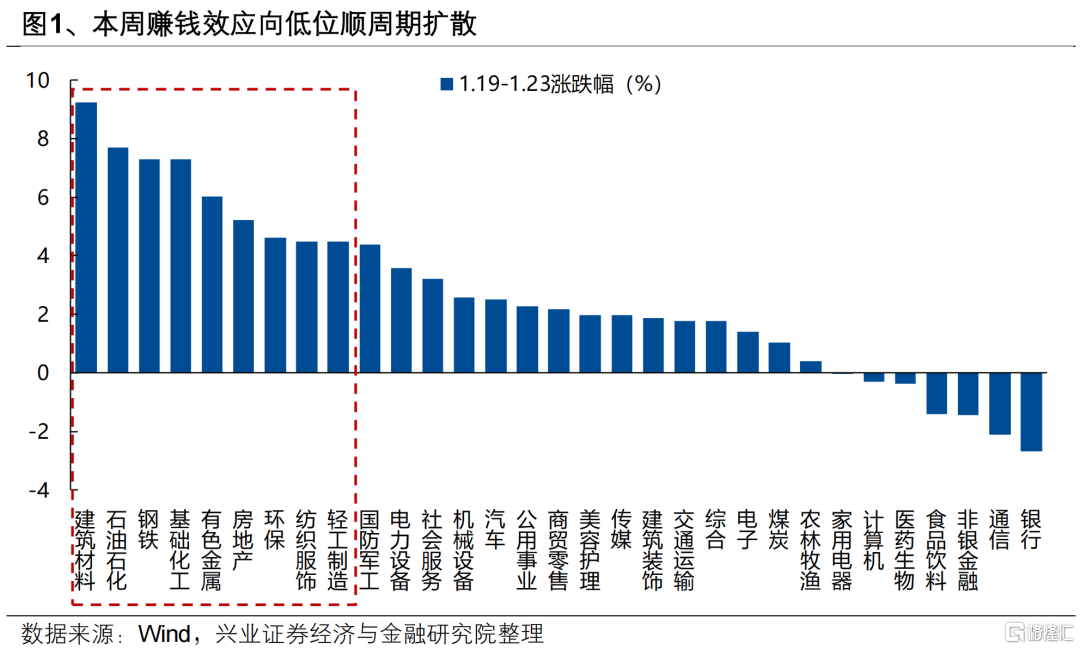
Group 1 - The report indicates that the bond market remains buoyant with ample liquidity, supported by a recent 900 billion yuan MLF operation by the central bank, signaling a commitment to maintain liquidity levels [11][15][16] - The 10-year government bond yield is stabilizing in the range of 1.8%-1.9%, suggesting a decrease in the attractiveness of chasing higher yields as rates approach the lower end of this range [15][16] - The stock market is expected to maintain a steady and healthy slow bull pattern, with structural opportunities remaining abundant despite potential pressure from mid-to-long-term fund position adjustments [3][11][16] Group 2 - The report highlights that the A-share market is experiencing a shift towards high-dividend, low-volatility sectors, such as banks and state-owned enterprises, as investors adjust their strategies ahead of the Spring Festival [3][16] - The report notes that the overall market sentiment remains high, with significant capital inflows into mid-cap stocks, particularly the CSI 500 and CSI 1000 indices, which have outperformed during the week [11][16] - The report emphasizes the importance of monitoring macroeconomic indicators and corporate earnings as key drivers for market performance in the upcoming weeks [11][16]
流动性充裕的环境下,后续还有哪些催化值得期待?
Xin Lang Cai Jing· 2026-01-25 09:58
Core Viewpoint - The current liquidity-rich environment continues to support the upward trend of the spring market, with expectations for further catalysts in the near future [1] Group 1: Liquidity and Market Dynamics - The abundant liquidity is a core driver for the current spring market rally, supported by strong insurance premium inflows and the maturity of resident deposits, alongside the appreciation of the RMB attracting foreign capital [5][7] - Insurance companies have reported significant growth in individual insurance premiums, with many companies exceeding a 30% growth rate, contributing to a substantial influx of new capital into the market [5] - The peak maturity of resident deposits is expected in the first half of the year, providing an opportunity for residents to increase their allocation to equity assets, particularly in the first quarter [5] Group 2: Performance Expectations and Earnings Reports - The upcoming earnings reports from North American tech giants are anticipated to influence the domestic market, particularly in sectors related to AI and computing power [10][12] - As of January 23, 2025, 889 A-share companies have released earnings forecasts, with 304 companies expecting a net profit growth rate exceeding 50%, primarily in sectors such as computing power, chemicals, new energy, and pharmaceuticals [15][18] - The current earnings forecasts indicate that sectors with high growth and exceeding expectations include storage, battery storage, grid equipment, chemicals, and innovative pharmaceuticals [18] Group 3: Sector Focus and Investment Opportunities - Industries with high growth potential and relatively low price increases include AI hardware, batteries, and pharmaceuticals, which are expected to attract investor attention [22][25] - The sectors with significant upward revisions in profit forecasts since November include pharmaceuticals, steel, and non-bank financials, indicating a positive trend for these industries [25][26] - February is projected to be a key period for market activity, with a focus on high-growth sectors such as AI applications, commercial aerospace, and energy narratives, suggesting renewed interest in these themes [29][32]

下周美联储决议前瞻:“暂停”是确定,不确定的是“鹰派还是鸽派暂停”
Sou Hu Cai Jing· 2026-01-25 09:09
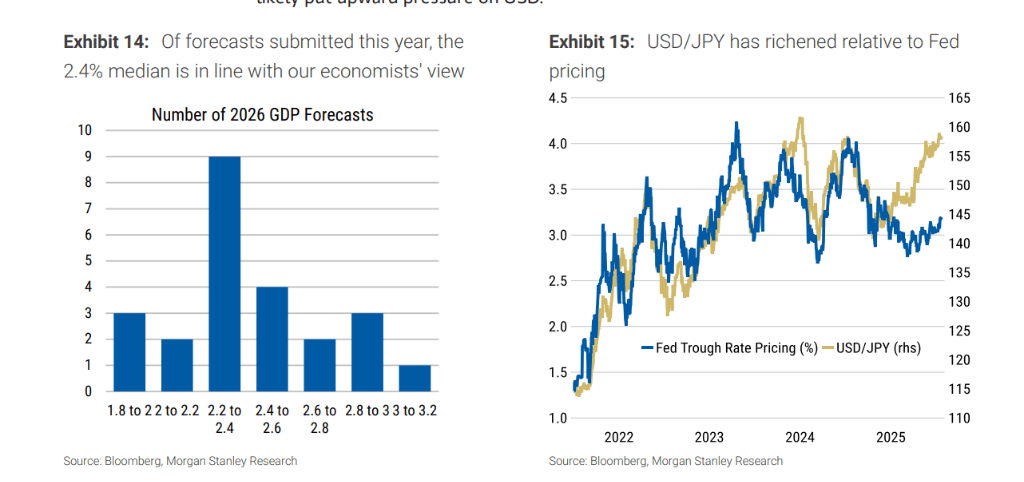
Group 1 - The core viewpoint is that Morgan Stanley anticipates the Federal Reserve will maintain interest rates during the upcoming January FOMC meeting, with a focus on the tone of the statement indicating a dovish pause to soothe the market [1][2] - The Federal Reserve is expected to keep the federal funds rate target range unchanged at 3.50%-3.75%, which is seen as a tactical adjustment rather than a return to a tightening cycle [1][2] - The key for investors lies in the forward guidance, with expectations that the Fed will retain language suggesting consideration for further adjustments, indicating a continued dovish stance [2][9] Group 2 - Jerome Powell is expected to justify the pause by referencing recent strong growth data, stable hiring, and a decrease in the unemployment rate to 4.375% [3] - Despite the Fed's pause on rate cuts, the short-term financing market remains loose, with repo rates normalizing below the interest on reserve balances (IORB), indicating an excess of cash in the system [4] - Morgan Stanley has revised its outlook on the foreign exchange market, now projecting a stronger U.S. economy with an upward adjustment of GDP growth to 2.4% for 2026, while delaying the anticipated rate cuts [5] Group 3 - In the mortgage-backed securities (MBS) sector, the announcement of a $200 billion purchase plan by government-sponsored enterprises (GSEs) has led to a significant narrowing of MBS spreads, prompting a neutral stance from Morgan Stanley [8] - The FOMC statement is expected to upgrade the assessment of economic growth from "moderate" to "robust" and remove references to increased risks in the labor market, reflecting a more positive outlook [9] - The Federal Reserve is projected to maintain a monthly purchase of $40 billion in Treasury bills to manage reserve levels, with expectations that the SOMA account will exceed $600 billion by the end of 2026 [9]
央行预告,明日9000亿元
Zhong Guo Zheng Quan Bao· 2026-01-14 11:47
Core Viewpoint - The People's Bank of China (PBOC) is implementing a 900 billion yuan reverse repo operation to maintain liquidity in the banking system, marking the fifth consecutive month of increased reverse repo operations [1][2]. Group 1: Reverse Repo Operations - On January 15, the PBOC will conduct a 900 billion yuan reverse repo operation with a six-month term, which is an increase of 300 billion yuan compared to the previous month [2]. - This operation follows the maturity of 600 billion yuan in six-month reverse repos in January, indicating a net liquidity injection of 300 billion yuan for the month [2]. - The increase in reverse repo operations aligns with market expectations and is aimed at ensuring sufficient liquidity during a month characterized by high bank credit issuance and tax payments [2][4]. Group 2: Market Liquidity and Future Expectations - Experts anticipate that the PBOC will also conduct a 200 billion yuan Medium-term Lending Facility (MLF) operation around January 25, likely maintaining or slightly increasing the amount [3][4]. - The PBOC's approach to liquidity management is expected to continue, utilizing various tools such as reverse repos and MLF to ensure a stable liquidity environment, reflecting a monetary policy stance of "moderate easing" through 2026 [4]. - The recent central bank meeting emphasized the need for flexible and efficient use of monetary policy tools to maintain ample liquidity and support balanced credit growth in line with economic and price level expectations [4].

螺矿产业链周度报告-20260109
Zhong Hang Qi Huo· 2026-01-09 11:51
Group 1: Report Summary - Market focus includes China's central bank continuing a moderately loose monetary policy, the US GDP growth accelerating in 2026, the EU carbon tariff implementation increasing steel export costs, and no substantial impact on coal mines from market rumors [6] - Key data shows an increase in US initial jobless claims, a decline in Chinese steel mills' crude steel output and inventory in late December, and a rise in Tangshan billet prices [7] - In the first week of 2026, the steel price reached the upper limit of the range with limited further upside, and the iron ore price is expected to be strong and volatile [8] Group 2: Bull - Bear Focus Bull - bear factors for rebar - Bullish factors are the improvement in December's manufacturing sentiment, the central bank's loose monetary policy, and enhanced cost support [11] - Bearish factors include seasonal decline in steel demand, inventory accumulation, increased steel production, and uncertain impact of export licenses [11] Bull - bear factors for iron ore - Bullish factors are the Fed's interest - rate cut, positive domestic policies, an expanded CPI increase in November, and low steel mill inventories with restocking expectations [12] - Bearish factors are the continuous accumulation of port inventories, seasonal decline in hot metal production, and increased shipments in the current week [12] Group 3: Data Analysis Macroeconomic data - China's December manufacturing PMI rose to 50.1%, and non - manufacturing business activity index returned to the expansion range [13] - China's CPI increase continued to expand in December, and PPI's year - on - year decline narrowed [17] - In the US, the manufacturing sentiment declined in December 2025, while the service industry was strong. Attention should be paid to the December non - farm payroll data [19] Rebar data - Rebar spot prices were stable, and the basis narrowed [21] - Steel mill profitability decreased slightly, with the profitability rate dropping to 37.66% [23] - The blast furnace and electric furnace operating rates increased, with the blast furnace rate rising to 79.31% and the electric furnace rate to 72.97% [25] - Steel output continued to rise, with five types of building materials reaching 818.59 (+3.41) million tons [29] - Steel apparent demand was in a seasonal decline, with five types of building materials at 796.82 (-44.2) million tons [30] - Rebar inventory accumulated, with the total inventory reaching 438.11 (+16.08) million tons [34] Iron ore data - Iron ore spot prices rose, and the basis fluctuated narrowly [35] - In November, China's iron ore imports decreased, and the initial 2026 shipments also declined [39] - Iron ore arrivals increased in the week from December 29, 2025, to January 4, 2026 [40] - Hot metal production remained resilient, with an average daily output of 229.5 million tons [42] - Port inventories continued to accumulate as the port clearance volume decreased [46] - Steel mills' iron ore consumption and inventory increased simultaneously, with the inventory reaching 8989.59 million tons [48] Group 4: Market Outlook - For steel, the upward space is limited, and it will continue to operate within the range. Attention should be paid to the inventory accumulation during the Spring Festival and the impact of export licenses [51] - For iron ore, the short - term drivers are mostly positive, and it is expected to be in a strong and volatile state [53]
专家预计1月资金面将延续宽松态势
Sou Hu Cai Jing· 2026-01-08 23:35
Core Viewpoint - The People's Bank of China (PBOC) conducted a 99 billion yuan reverse repurchase operation with a fixed rate of 1.4%, indicating a strategy to maintain liquidity in the financial system [1] Group 1: Monetary Policy Actions - The PBOC executed a 99 billion yuan 7-day reverse repurchase operation on January 8, with an interest rate set at 1.4% [1] - There were no 7-day reverse repos maturing on that day, but 1.1 trillion yuan of 3-month reverse repos were set to mature, leading to a net injection of 99 billion yuan [1] Group 2: Market Implications - Experts suggest that various factors, including fiscal deposits and credit issuance, will influence liquidity in January [1] - The central bank is expected to continue using various policy tools, such as government bond transactions and Medium-term Lending Facility (MLF), to ensure ample liquidity [1] - It is anticipated that the funding environment will remain loose in the near term [1]
11000亿元!央行今日开展操作→
Sou Hu Cai Jing· 2026-01-08 01:19
Core Viewpoint - The People's Bank of China (PBOC) is set to conduct a 1.1 trillion yuan reverse repo operation on January 8, 2026, to maintain ample liquidity in the banking system, marking the third consecutive month of equal-scale operations [2] Group 1: Reverse Repo Operations - On January 8, 2026, the PBOC will conduct a fixed-quantity, interest-rate tender, multi-price reverse repo operation amounting to 1.1 trillion yuan with a term of 3 months (90 days) [2] - The operation on January 8 will match the maturity of 1.1 trillion yuan of 3-month reverse repos, indicating a continuation of the same scale for the third month [2] - Additionally, there is an expectation of another 600 billion yuan 6-month reverse repo operation in January, with a likelihood of an increased amount [2] Group 2: Monetary Policy Outlook - Analysts anticipate that the PBOC will utilize both reverse repos and Medium-term Lending Facility (MLF) tools to inject medium-term liquidity into the market throughout January [2] - The overall monetary policy for January reflects a continuation of a "moderately accommodative" stance, aimed at ensuring sufficient liquidity [2] - There is also a potential for an additional 200 billion yuan MLF operation due to upcoming maturities [2]

央行定调“保持流动性充裕”,业界预计今年或降息2次
Xin Lang Cai Jing· 2026-01-08 00:25
Core Viewpoint - The People's Bank of China (PBOC) is expected to implement flexible monetary policies, including interest rate cuts and reserve requirement ratio (RRR) reductions, to maintain ample liquidity in 2026 [1] Monetary Policy Expectations - The PBOC is anticipated to cut interest rates twice in 2026, with each cut ranging from 20 to 30 basis points (0.2% to 0.3%) [1] - The first and second cuts are preliminarily expected to occur in the first half and second half of the year, respectively [1] - There is a possibility of targeted interest rate reductions for residential mortgages through significant downward adjustments to the 5-year LPR (Loan Prime Rate) to stabilize the real estate market [1] Reserve Requirement Ratio Adjustments - The PBOC is projected to reduce the reserve requirement ratio 1 to 2 times in 2026, with a reduction magnitude of 0.5% to 1% [1] - Attention is drawn to the potential implementation of an RRR cut before the Spring Festival [1]
央行定调“保持流动性充裕” 业界预计今年或降息2次
Zheng Quan Ri Bao· 2026-01-07 17:25
Core Viewpoint - The People's Bank of China (PBOC) emphasizes the implementation of a moderately loose monetary policy in 2026, focusing on promoting high-quality economic development and reasonable price recovery as key considerations for monetary policy [1][2]. Group 1: Monetary Policy Implementation - The PBOC plans to utilize various monetary policy tools, including interest rate cuts and reserve requirement ratio (RRR) reductions, to maintain ample liquidity in the market [1]. - The focus is on ensuring that the social comprehensive financing cost remains at a low level, with an emphasis on the transmission mechanism of monetary policy [1][2]. Group 2: Interest Rate Adjustments - It is expected that the PBOC will lower policy interest rates, including those for personal housing provident fund loans, which will lead to a decrease in residential mortgage rates, consumer loan rates, and business loan rates [2]. - The anticipated interest rate cuts are projected to be between 20 to 30 basis points, with two cuts expected in 2026, one in the first half and another in the second half of the year [2]. Group 3: Liquidity Management - The PBOC will primarily rely on Medium-term Lending Facility (MLF) and reverse repos to inject medium-term liquidity into the market, while also utilizing open market operations to ensure long-term liquidity [3]. - This approach aims to keep market liquidity abundant and facilitate the smooth issuance of government bonds, encouraging financial institutions to increase credit supply [3].
等量续作,央行明日开展3个月期11000亿元买断式逆回购操作|快讯
Sou Hu Cai Jing· 2026-01-07 15:45
Core Viewpoint - The People's Bank of China (PBOC) is set to conduct a 1.1 trillion yuan reverse repo operation on January 8, 2026, to maintain ample liquidity in the banking system, marking the third consecutive month of equal-scale operations [1] Group 1: Reverse Repo Operations - On January 8, 2026, the PBOC will conduct a fixed-quantity, interest-rate tender, multi-price reverse repo operation amounting to 1.1 trillion yuan with a term of 3 months (90 days) [1] - The operation on January 8 will match the 1.1 trillion yuan of 3-month reverse repos maturing on the same day, indicating a continuation of the same scale of operations [1] - In January, an additional 600 billion yuan of 6-month reverse repos is set to mature, with expectations for another 6-month operation, likely with an increased amount [1] Group 2: Monetary Policy Outlook - Analysts anticipate that the PBOC will also consider the 200 billion yuan of Medium-term Lending Facility (MLF) maturing in January, potentially leading to an increased operation [1] - Overall, the PBOC is expected to utilize both reverse repos and MLF tools to inject medium-term liquidity into the market, reflecting a continuation of a moderately accommodative monetary policy stance in 2026 [1]