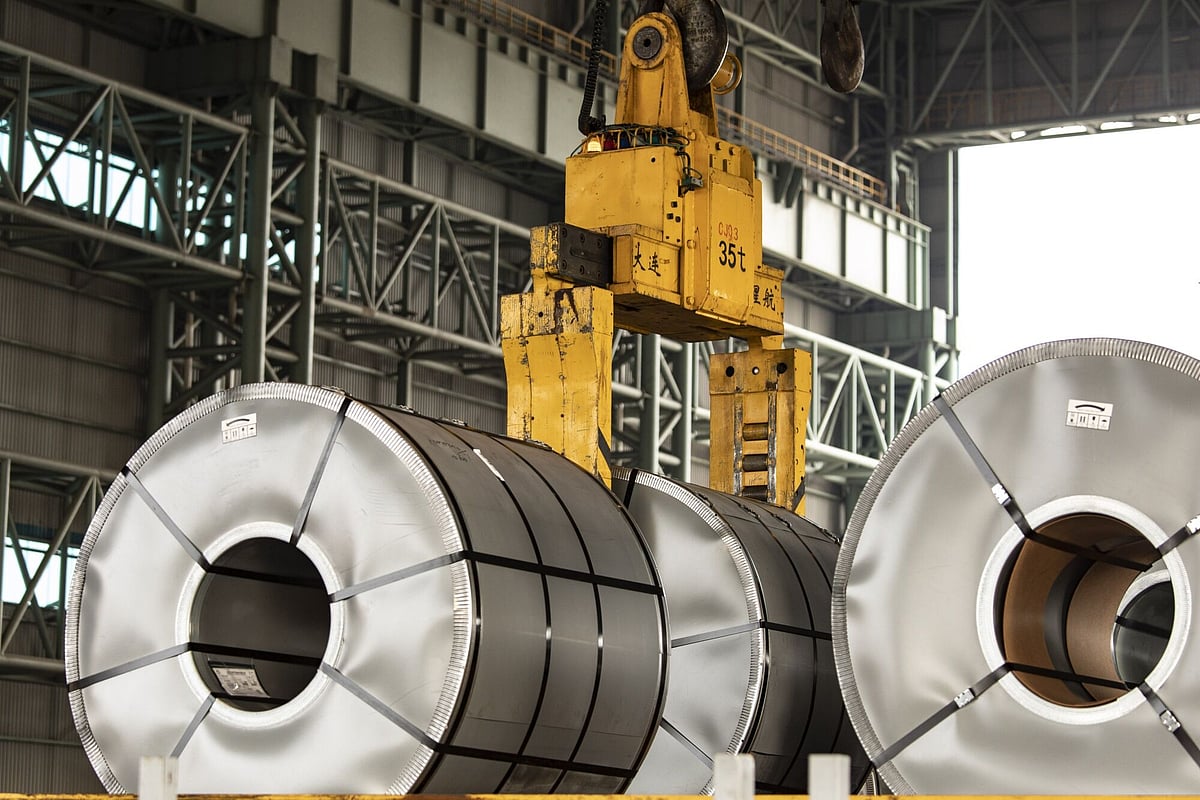
经济刺激

Search documents
Trump Promises New Stimulus Checks — Could SPY, AAPL, NVDA And TSLA Be Big Winners Again?
Benzinga· 2025-11-19 20:31
Core Points - President Trump has proposed potential stimulus checks of $2,000 or more, referred to as "tariff dividend" checks, aimed at providing relief amid rising prices and economic uncertainty [1][2] - The checks are expected to be funded by tariff revenues, but there are concerns regarding the financial implications, with estimates suggesting a cost of around $600 billion, which exceeds projected tariff income [4] - Congressional approval is required for these payments, similar to previous stimulus checks issued during the COVID-19 pandemic [5] Summary by Category Proposed Stimulus Checks - Trump indicated that the checks could be distributed by mid-2026, targeting "moderate income, middle income" Americans [2][3] - Treasury Secretary Scott Bessent mentioned that eligibility will be income-based, potentially including tax relief instead of direct payments [3] Economic Context - The proposed checks are seen as a response to macroeconomic challenges, including inflation and uncertainty in the market [1] - Previous stimulus payments during the pandemic were utilized by consumers for various purposes, including investing in stocks and cryptocurrencies [6] Historical Investment Performance - The article reviews the performance of investments made with previous stimulus checks: - Investing $3,200 in the SPDR S&P 500 ETF Trust would have grown to approximately $6,292.57 [10] - An investment in Apple stock would have increased to about $9,151.66 [11] - Nvidia stock would have yielded a value of around $62,880.50 [12] - Tesla stock would have reached approximately $15,761.04 [13] Detailed Investment Returns - Specific returns from previous stimulus checks are highlighted: - SPDR S&P 500 ETF Trust: - $1,200 check: worth $2,865.07 (+138.8%) - $600 check: worth $1,058.69 (+76.4%) - $1,400 check: worth $2,368.81 (+69.2%) [14] - Apple: - $1,200 check: worth $4,849.62 (+304.1%) - $600 check: worth $1,171.07 (+95.2%) - $1,400 check: worth $3,130.97 (+123.6%) [15] - Nvidia: - $1,200 check: worth $34,206.12 (+2,750.5%) - $600 check: worth $8,519.52 (+1,319.9%) - $1,400 check: worth $20,154.76 (+1,339.6%) [16] - Tesla: - $1,200 check: worth $12,253.68 (+921.1%) - $600 check: worth $1,080.73 (+80.1%) - $1,400 check: worth $2,426.63 (+73.3%) [17]



日本经济踩下刹车,三个轮胎漏了气
Sou Hu Cai Jing· 2025-11-18 15:45
Core Viewpoint - Japan's economy has experienced a downturn after five consecutive quarters of growth, with a 1.8% year-on-year decline in GDP for Q3 2025, marking the first negative growth in six quarters [1][10]. Group 1: Economic Performance - The GDP decreased by 0.4% on a quarter-on-quarter basis, slightly better than the market expectation of a 0.6% decline, indicating a loss of growth momentum for the world's fourth-largest economy [1]. - The decline in Japan's economy is attributed to simultaneous downturns in exports, housing investment, and private consumption, which are considered the three main drivers of economic growth [3]. Group 2: Export and Trade Impact - Japan's goods and services exports fell by 1.2% quarter-on-quarter, significantly impacted by U.S. tariff increases, particularly affecting the automotive sector, which saw a substantial drop in export volumes [4][6]. - The contribution of external demand to GDP growth was negative by 0.2 percentage points due to the decline in exports, which account for 20% of Japan's total exports [7]. Group 3: Domestic Consumption and Investment - Private consumption, which constitutes over half of Japan's economy, showed minimal growth of only 0.1% quarter-on-quarter, a slowdown from 0.4% in the previous quarter [5]. - Housing investment experienced a dramatic decline of 9.4% quarter-on-quarter, linked to stricter energy efficiency regulations introduced in April [4]. Group 4: Policy Response and Future Outlook - In response to economic contraction, the Japanese government is accelerating fiscal measures, with an economic stimulus plan exceeding 17 trillion yen (approximately $109.9 billion) aimed at alleviating the impact of rising living costs and boosting investment in growth sectors like AI and semiconductors [9]. - Economists generally view the current economic data as a temporary setback rather than the beginning of a recession, with expectations of gradual recovery over the next one to two years despite underlying issues such as stagnant real wages and rising food costs [11].
国际金融市场早知道:11月17日
Xin Hua Cai Jing· 2025-11-16 23:27
Group 1: Trade Policies and Agreements - The U.S. President Trump signed an executive order on November 14, exempting certain agricultural products from the "reciprocal tariffs" list, effective from November 13 [1] - The U.S. announced the removal of tariffs on certain food imports from Argentina, Ecuador, Guatemala, and El Salvador, including coffee and bananas, in response to public concerns over rising prices [1] - The U.S. and Switzerland have "basically" reached a trade agreement, reducing Swiss goods tariffs from 39% to 15%, with Switzerland committing to invest $200 billion in the U.S. [1] - The U.S. and South Korea reached a comprehensive agreement on tariffs and defense, with South Korea committing to invest $350 billion in the U.S. [1] Group 2: Economic Indicators and Monetary Policy - Kansas City Fed President Schmidt stated that further rate cuts could exacerbate inflation rather than boost employment, indicating that current rates are "just right" for the economy [2] - The European Council announced the cancellation of tax exemptions for imported goods valued under €150, requiring all incoming goods to pay corresponding tariffs [2] - The U.S. Commerce Department is set to release the revised Q3 GDP and October personal income and PCE data on November 26 [2] - Japan's Finance Minister revealed a new economic stimulus package exceeding ¥17 trillion (approximately $110 billion) to boost the sluggish economy [2] Group 3: Market Dynamics - The Dow Jones Industrial Average fell by 0.65% to 47,147.48 points, while the S&P 500 decreased by 0.05% to 6,734.11 points, and the Nasdaq Composite rose by 0.13% to 22,900.59 points [3] - COMEX gold futures dropped by 2.62% to $4,084.4 per ounce, and silver futures fell by 5.21% to $50.4 per ounce [4] - U.S. oil futures increased by 2.15% to $59.95 per barrel, while Brent crude rose by 1.97% to $64.25 per barrel [4]
取消年度预算目标 日本财政政策转向
Bei Jing Shang Bao· 2025-11-13 15:45
Core Viewpoint - Japan's new Prime Minister, Sanae Takaichi, plans to establish a multi-year fiscal target to allow for more flexible spending, signaling a shift away from strict fiscal discipline amid rising public debt and economic challenges [1][2] Group 1: Fiscal Policy Changes - Takaichi will abandon the annual primary balance surplus target, which previously aimed to measure fiscal health without relying on debt, in favor of a multi-year approach [1][2] - Japan's public debt is now twice its economic size, the highest among major economies, raising concerns about the financing costs due to the Bank of Japan's interest rate hikes and reduced government bond purchases [2] Group 2: Economic Stimulus Measures - The government is drafting an economic strategy focused on supporting local governments and small businesses affected by rising prices, with a potential budget exceeding 13.9 trillion yen (approximately 641.72 billion RMB) for the 2024 fiscal year [2][3] - Takaichi's economic strategy will prioritize living security, crisis management investments, and strengthening defense and diplomatic capabilities [2] Group 3: Market Reactions - Following Takaichi's announcement of stimulus policies, the Nikkei 225 index has seen significant gains, with U.S. capital inflows reaching the highest levels since "Abenomics" [4] - However, concerns have been raised about the overheating of Japanese tech stocks, which have outperformed U.S. tech giants in valuation without corresponding profit support, indicating potential market corrections [4][5]
国际金融市场早知道:11月13日
Xin Hua Cai Jing· 2025-11-12 23:51
Market Insights - Russia plans to issue its first sovereign bonds denominated in RMB, with the issuance scale and coupon rate to be determined based on subscription results on December 2, and technical allocation scheduled for December 8 [1] - The U.S. Treasury Secretary revealed that the Trump administration will announce "substantive" new tariff measures in the coming days, including tariff reductions on coffee and bananas, and discussions on providing a $2,000 "tariff rebate" to households earning less than $100,000 [1] - The issuance of U.S. investment-grade bonds in 2025 has surpassed last year's $1.496 trillion, although it remains below the historical peak of $1.75 trillion in 2020. The global bond issuance in 2025 has exceeded $6 trillion, setting a new record [1] - The U.S. Treasury Secretary stated that the auction scale of U.S. Treasury bonds will remain unchanged in the coming quarters, while closely monitoring potential long-term changes in demand for specific U.S. government bonds [1] Economic Policy and Federal Reserve - The White House National Economic Council Director expressed willingness to accept a nomination to replace Powell as Fed Chair, advocating for a significant rate cut of 50 basis points in December [2] - Due to the government shutdown, the October employment report and CPI data may not be released, potentially marking the first time in history that these key economic indicators are missing [2] - The Atlanta Fed President unexpectedly announced retirement at the end of his term in February 2026, which is seen as a move to avoid potential reappointment controversies [2] - The Boston Fed President indicated that the threshold for further rate cuts in the short term is relatively high due to persistent inflation, emphasizing caution in the current uncertain policy environment [2] Energy Market - The International Energy Agency's World Energy Outlook report suggests that global oil and gas demand may continue to grow until 2050, with LNG supply expected to increase by 50% by 2030 [3] - OPEC's latest monthly report predicts a balanced oil market by 2026, maintaining its global oil demand growth forecast at 1.38 million barrels per day for 2026 [3]
Peter Schiff Slams Trump's $2,000 'Dividend' Checks: '...Defeats The Very Purpose Of The Tariffs' - Apple (NASDAQ:AAPL), Qualcomm (NASDAQ:QCOM)
Benzinga· 2025-11-10 11:18
Core Viewpoint - Economist Peter Schiff warns that President Trump's proposal for a "$2,000-per-person tariff dividend" is economically self-defeating and would undermine the purpose of tariffs [1][2]. Group 1: Economic Implications - Schiff argues that the total cost of the proposed dividends would exceed the revenue generated from tariffs, potentially leading to an increased trade deficit [1]. - He believes that consumers will use the extra income from the dividends to purchase more expensive imports, further exacerbating the trade deficit [2]. Group 2: Market Reactions - The proposal has elicited mixed reactions from financial commentators, with some viewing it as a market-boosting stimulus, while others share Schiff's concerns about its inflationary potential [3]. - Anthony Pompliano noted that stocks and bitcoin tend to rise in response to stimulus measures, while Otavio Costa warned against using monetary payouts to combat inflation [3]. Group 3: Alternative Interpretations - Treasury Secretary Scott Bessent suggested that the "$2,000 dividend" might not be a direct payment but could take various forms, such as tax deductions, indicating that the figure may represent cumulative tax-cut proposals [4].
政府“停摆”一个月 美国错过了多少“截止日期”?
Yang Shi Xin Wen· 2025-10-31 23:12
Core Points - The U.S. government shutdown has lasted for a month, significantly impacting federal agencies and public services [1] - The shutdown has led to missed deadlines and a lack of critical economic data, complicating the Federal Reserve's ability to assess the economy [5][8] - The ongoing situation has resulted in substantial financial losses for businesses and potential long-term economic damage if it continues [17] Group 1: Impact on Federal Operations - The shutdown began on October 1, with approximately 750,000 federal employees furloughed, causing various public services to halt [3] - Key statistical reports, such as the monthly employment data and the Consumer Price Index (CPI), have been delayed, affecting economic assessments [5][8] - The federal court system has also been severely affected, with 33,000 staff members facing unpaid leave due to funding depletion [10] Group 2: Economic Consequences - The U.S. Chamber of Commerce reported that businesses contracted with the federal government have lost approximately $12 billion in the first four weeks of the shutdown [17] - Small businesses are losing about $3 billion weekly, indicating a significant strain on the economy [17] - The Congressional Budget Office warned that prolonged shutdown could result in economic losses ranging from $7 billion to $14 billion [17] Group 3: Future Implications - The shutdown is set to extend beyond November 1, risking the longest shutdown in U.S. history if a temporary funding bill is not passed by November 5 [21] - The Agriculture Department has suspended its Supplemental Nutrition Assistance Program, affecting around 42 million people [20] - The potential for increased flight delays and security issues during the Thanksgiving travel season raises concerns about public safety and operational efficiency [22]
越秀证券每日晨报-20251023
越秀证券· 2025-10-23 06:11
Market Performance - The Hang Seng Index closed at 25,781, down 0.94% from the previous trading day, with a year-to-date increase of 28.52% [1] - The Hang Seng Tech Index fell by 1.41% to 5,923, with a year-to-date increase of 32.56% [1] - The CSI 300 Index decreased by 0.33% to 4,592, with a year-to-date increase of 16.71% [1] - The Dow Jones Index closed at 46,590, down 0.71%, with a year-to-date increase of 9.51% [1] Currency and Commodity Trends - The RMB Index is at 97.080, showing a 1-month increase of 0.50% but a 6-month decrease of 0.28% [2] - Brent crude oil price is at $62.34 per barrel, down 5.52% over the past month and down 3.45% over the past six months [2] - Gold price is at $4,083.89 per ounce, with a 1-month increase of 9.02% and a 6-month increase of 20.82% [2] Company News - Xinda Biopharmaceuticals (01801.HK) has formed a global strategic partnership with Takeda Pharmaceutical, focusing on three research projects in tumor immunotherapy [20] - China Resources Pharmaceutical (03320.HK) successfully issued 1.1 billion RMB in its first phase of technology innovation corporate bonds for 2025, with a record low interest rate of 1.82% [21] - Cainiao reported a significant increase in daily average order volume in Latin America, with a three-digit growth quarter-on-quarter [22] Economic Indicators - The youth unemployment rate in mainland China decreased to 17.7% in September, down 0.6 percentage points from the previous month [19] - The UK’s CPI for September rose by 3.8% year-on-year, lower than market expectations [15][16] Stock Market Overview - The Hong Kong stock market saw a decline, with the Hang Seng Index dropping below 26,000 points, closing at 25,781 [4] - Major sectors such as technology, real estate, and industrials fell over 1%, while oil stocks rose against the trend [4] - In the A-share market, the Shanghai Composite Index closed at 3,913, down 0.07% [5] IPO Information - Recent IPOs include Guanghe Tong, which closed at 18.98 HKD, down 11.72% from its listing price [30] - Upcoming IPOs include Dipu Technology, with a listing date set for October 28, 2025 [30]
印尼推出16万亿印尼盾经济刺激计划
Zhong Guo Xin Wen Wang· 2025-09-15 14:03
Core Points - The Indonesian government announced an economic stimulus package totaling 16.23 trillion Indonesian Rupiah (approximately 1 billion USD) aimed at boosting consumption, reducing business costs, and expanding employment opportunities [1][2] - The plan, referred to as the "8+4+5" scheme, includes 8 projects to be implemented by 2025, 4 policies extending to 2026, and 5 long-term employment initiatives focusing on education, taxation, and housing [1][2] - The government aims to achieve a full-year economic growth target of 5.2% for 2025, following a year-on-year growth of 4.87% in Q1 and 5.12% in Q2 of this year [1] Short-term Measures - The government will provide paid internships for 20,000 university graduates for six months and expand personal income tax subsidies to include the hotel and restaurant sectors [1][2] - Food assistance will be provided to low-income families, with each household receiving 10 kilograms of rice from October to November [1] Support for Specific Groups - A 50% subsidy on insurance contributions for flexible employment groups (e.g., ride-hailing drivers, couriers) will be offered for six months [2] - The government plans to provide 1,050 subsidized housing units and lower the maximum interest rate on housing loans [2] Long-term Initiatives - The government will continue tax reductions for small and micro enterprises until 2026 and promote five employment initiatives, including cooperative operations in villages, development of fishing villages, and fish pond restoration [2]
China’s Economy Suffers Another Setback As Investment Slumps
NDTV Profit· 2025-09-15 04:37
Economic Activity - China's economic activity experienced a more significant slowdown than anticipated in August, particularly in investment, increasing the likelihood of additional stimulus measures from policymakers to maintain growth towards the official target [1] Industrial Output and Consumption - Industrial output and consumption faced their worst month of the year in August, with factory and mine production growing by only 5.2% year-on-year, marking the smallest increase since August 2024 [2] Retail Sales and Investment - Retail sales rose by 3.4% year-on-year in August, falling short of the expected 3.8% increase and down from 3.7% in July. Fixed-asset investment growth for the first eight months of the year decelerated sharply to 0.5%, the lowest reading for this period since 2020 [3] Bond Yields and Equity Market - The yield on China's 30-year government bonds decreased by two basis points to 2.16%, likely reflecting expectations that the central bank may need to ease monetary policy due to slowing growth. Meanwhile, Chinese equities maintained earlier gains, with the CSI 300 Index up by 0.7% [4]