财政赤字货币化

Search documents
黄金股票ETF(517400)领涨超1.7%,美联储FOMC会议超预期
Sou Hu Cai Jing· 2025-12-11 02:22
Core Viewpoint - The Federal Reserve decided to cut interest rates by 25 basis points to a range of 3.50% to 3.75%, with a voting outcome of 9 in favor and 3 against, which exceeded market expectations for a "hawkish cut" [1] Group 1: Federal Reserve Actions - The interest rate decision and subsequent statements were overall more hawkish than anticipated, despite a dovish tone in Powell's speech and an unexpected asset purchase plan that energized the market [1] - The dot plot indicates a hawkish stance, but the market reacted positively to the dovish comments and the asset purchase plan [1] Group 2: Future Monetary Policy Outlook - The monetary policy outlook for 2026 is expected to shift from hawkish to dovish, with continued expansion of macro liquidity [1] - Long-term concerns about the dollar credit system are rising due to excessive money supply and monetization of fiscal deficits [1] Group 3: Gold and Investment Opportunities - The demand for gold as a safe asset is increasing due to global geopolitical instability and the trend of "de-dollarization" [1] - Gold is anticipated to become a new pricing anchor, providing upward momentum for precious metals [1] - Investors are encouraged to consider direct investments in physical gold, tax-exempt gold ETFs (518800), and gold stock ETFs covering the entire gold industry chain (517400) [1]
中国运回大批黄金,特朗普准备换将,没时间了,美债恐出现抛售潮
Sou Hu Cai Jing· 2025-12-09 09:25
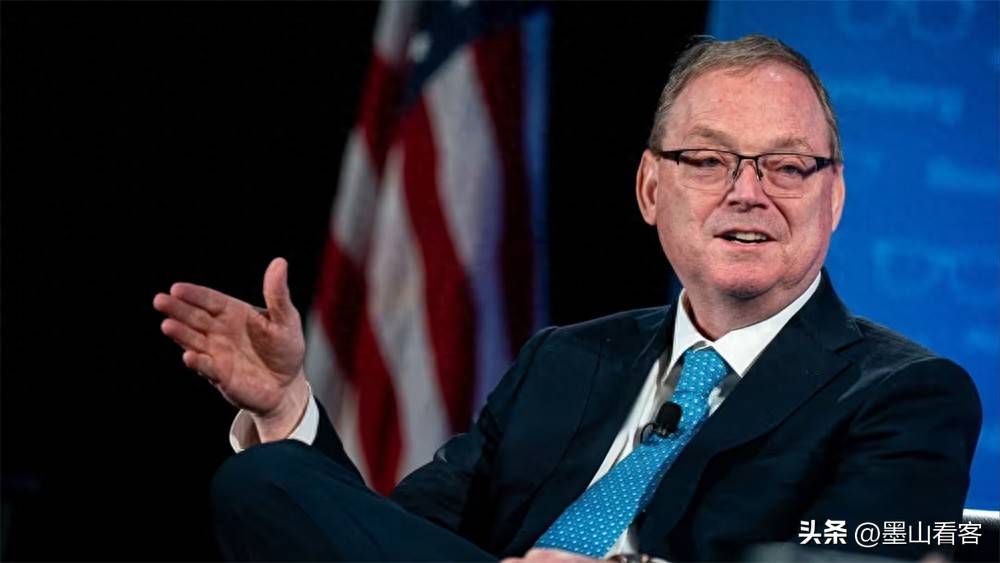
Group 1 - Trump announced plans to replace the Federal Reserve Chairman in early 2026, with Kevin Hassett as a leading candidate, indicating a desire to remove current Chairman Powell [1][7] - Hassett, previously an economic advisor to Trump, is known for advocating immediate interest rate cuts if appointed, which raises concerns about the independence of the Federal Reserve [9][11] - The market reacted negatively to Trump's comments, with the dollar index dropping and gold and silver prices rising, reflecting investor anxiety over potential political interference in monetary policy [9][11] Group 2 - Concurrently, China has been repatriating gold reserves, increasing its holdings by $3 billion in November alone, marking the 13th consecutive month of gold accumulation [15][17] - Since 2022, China has sold nearly $300 billion in U.S. Treasury bonds, suggesting a strategic shift away from U.S. debt and towards gold as a financial security measure [17][21] - China's actions indicate a preparation for a potential "dollar credit crisis," as it seeks to establish a "non-dollar anchor" in its asset allocation strategy [21][30] Group 3 - The U.S. national debt has surpassed $38 trillion, with annual interest payments exceeding $1.5 trillion, creating a cycle of fiscal dependency on monetary policy [25][29] - Concerns are growing that if the Federal Reserve becomes politicized, it could lead to a loss of trust in U.S. debt, prompting other countries to reduce their holdings of U.S. Treasuries [27][29] - The global financial system may be transitioning from a "dollar-centric" model to a "multi-anchor" approach, with gold potentially playing a central role in international payments [21][30]

美联储被打懵了!中国发行美元美债,美国以后别想收割世界了
Sou Hu Cai Jing· 2025-11-05 11:44
Core Viewpoint - The recent monetary policy adjustments by the Federal Reserve and the People's Bank of China (PBOC) indicate a shift towards more flexible monetary tools, aiming to stabilize the economy without resorting to extreme measures like "massive money printing" [1][4][20]. Group 1: Central Bank Actions - The Federal Reserve has lowered interest rates by 25 basis points, from 3.75% to 4% [1]. - The PBOC announced a resumption of purchasing government bonds in the secondary market, which is a conventional tool for liquidity management rather than a sign of "money printing" [3][4]. - In 2024, the PBOC net purchased 1 trillion yuan in government bonds to stabilize the bond market during fluctuations [5]. Group 2: Legal Framework and Monetary Policy - The PBOC is legally restricted from purchasing government bonds directly from the primary market, preventing "monetary financing of fiscal deficits" [3][4]. - The shift in monetary policy reflects a transition from reliance on foreign currency reserves to a more autonomous domestic credit system based on government bonds [13][20]. Group 3: Economic Context and Implications - The historical reliance on foreign exchange reserves for currency issuance has become less viable due to changing global trade dynamics and the need for a more internally driven economic model [11][13]. - The issuance of $4 billion in government bonds in Hong Kong by the Ministry of Finance complements the PBOC's actions, reinforcing the strategy of maintaining international market presence while transitioning to a more self-sufficient economic framework [15][16]. Group 4: Market Reactions and Future Outlook - Following the PBOC's bond purchases, the Shanghai Composite Index surpassed 4000 points, indicating positive market sentiment without overheating [18]. - The adjustments in monetary policy are expected to enhance the pricing benchmark for government bonds, leading to more accurate asset valuations in the real estate and equity markets [20][22]. - The ongoing transformation in monetary mechanisms is anticipated to create a more resilient financial market, ultimately benefiting the broader economy [22].
美债已成无底洞,中国随时可能打出这张牌,让特朗普不得不防
Sou Hu Cai Jing· 2025-10-30 12:31
Group 1 - The Federal Reserve announced a further interest rate cut of 25 basis points, marking the fifth cut since September 2022 [1] - As of October 2025, the total U.S. federal government debt is projected to exceed $36.8 trillion, a $1.9 trillion increase from the same period in 2024, representing 132% of GDP, a historical high [3] - The U.S. has experienced a persistent fiscal deficit, with the deficit expected to reach $1.4 trillion in fiscal year 2025, accounting for 5.2% of GDP, significantly above the international warning threshold of 3% [3] Group 2 - The structure of U.S. debt includes approximately 70% in tradable securities, amounting to $25.8 trillion, primarily held by foreign investors, domestic institutions, and the Federal Reserve [5] - In October 2025 alone, the U.S. issued $580 billion in short-term and $320 billion in long-term debt, averaging over $200 billion in weekly issuances [5] - To attract investors, the U.S. has had to continuously raise bond yields, with the current 10-year Treasury yield at 4.8%, a 1.2 percentage point increase since early 2024 [7] Group 3 - The "snowball" effect of U.S. debt is becoming evident, with over $7 trillion in Treasury securities maturing between 2025 and 2026, representing 19% of the current debt total [8] - China's holdings of U.S. Treasuries as of September 2025 stand at $870 billion, making it the second-largest foreign holder after Japan [10] - China's strategy regarding U.S. Treasuries has shifted towards "dynamic adjustment," having reduced its holdings by $120 billion since 2024 while increasing investments in gold and other currencies [14] Group 4 - The ongoing U.S.-China strategic competition has made China's Treasury holdings a significant lever in economic relations, with potential impacts on U.S. economic stability [16] - The Trump administration faces a dilemma in maintaining Treasury market stability while managing the growing debt and pressures from China [16] - The U.S. Treasury has engaged in informal discussions with the Chinese central bank to stabilize Chinese holdings of U.S. debt [16] Group 5 - The U.S. government's economic policies have led to an increase in debt, with a projected $1.2 trillion infrastructure bill and corporate tax cuts expected to add $2.3 trillion to the deficit over the next decade [19] - The U.S. plans to increase defense spending to $860 billion in fiscal year 2026, further exacerbating debt pressures [21] - Global central banks have collectively reduced their U.S. Treasury holdings by $380 billion since 2025, reflecting a trend towards "de-dollarization" [25] Group 6 - Investor confidence in U.S. Treasuries is declining, with the bid-to-cover ratio for Treasury auctions dropping from 2.5 in 2024 to 2.1 in 2025, leading to higher issuance rates [27] - The IMF has warned that failure to control U.S. debt levels could lead to global financial market turmoil, particularly affecting emerging markets [27] - China's central bank has stated its intention to flexibly adjust its foreign reserve asset structure while maintaining asset safety and value appreciation [29]
黄金基金ETF(518800)大跌超5%,连续5日净流入超50亿元,规模近300亿元
Sou Hu Cai Jing· 2025-10-22 03:00
Group 1 - The core viewpoint of the news is the unified support from European leaders for a just and lasting peace, endorsing President Trump's proposal for an immediate ceasefire and using the current contact line as a starting point for negotiations [1] - The statement emphasizes that international borders should not be changed by force and highlights the commitment to continue strengthening sanctions and pressure on the Russian economy and defense industry [1] - Following the statement, gold experienced a short-term drop, with the gold ETF (518800) falling over 5%, and a net inflow exceeding 5 billion yuan over five consecutive days, bringing its total scale close to 30 billion yuan [1] Group 2 - In the medium to long term, the demand for gold as a safe asset is expected to rise due to challenges to the US dollar credit system amid excessive monetary issuance and fiscal deficit monetization, along with increasing global geopolitical instability [1] - The combination of a potential Federal Reserve interest rate cut cycle, heightened uncertainty in overseas macro policies, and a global trend towards de-dollarization is likely to provide support for gold prices [1] - Investors are advised to be cautious of short-term volatility in gold prices and to focus on long-term investment value, particularly in gold ETFs (518800) that directly invest in physical gold and gold stock ETFs (517400) that cover the entire gold industry chain [1]
黄金的“疯狂上涨”,预示着“更大的事情”正在发生
Hu Xiu· 2025-10-17 05:54
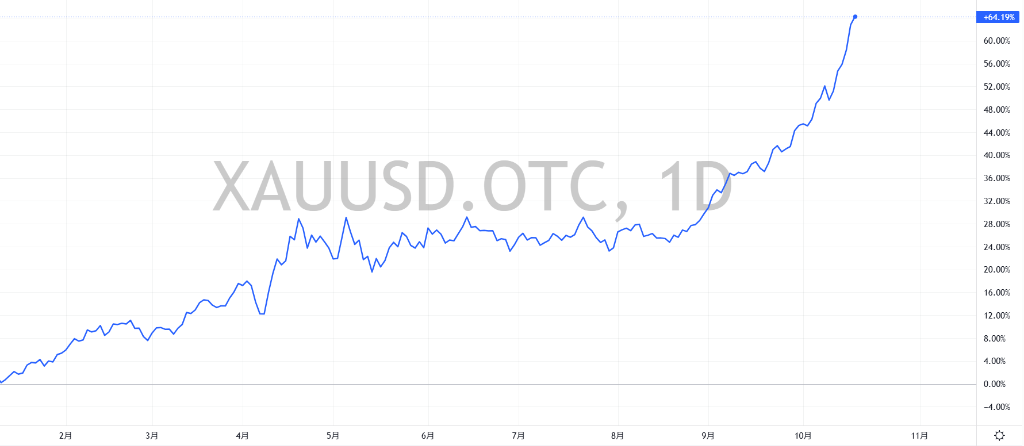
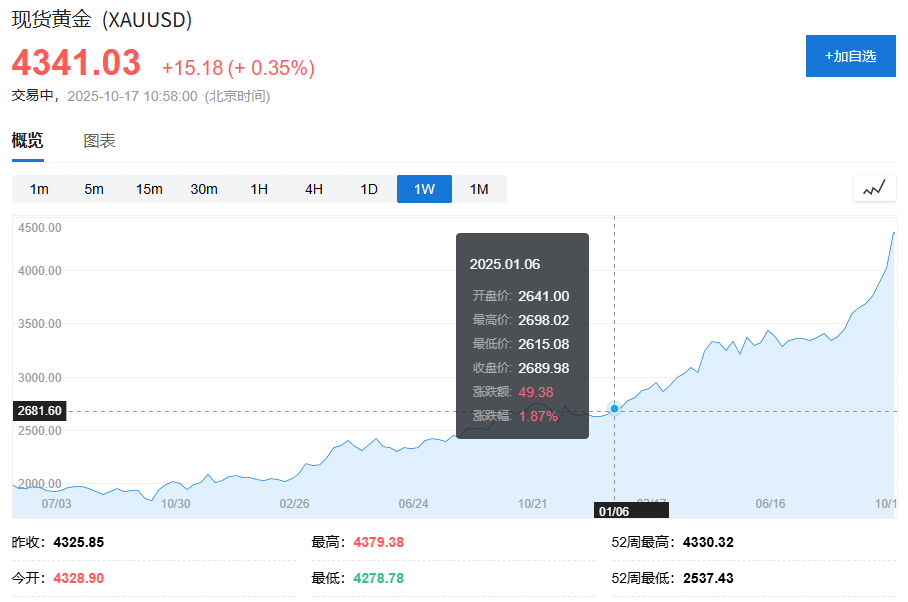
Group 1 - The core point of the article is that the historic rise in gold prices indicates fundamental changes beyond mere inflation or deflation are brewing [1] - As of October 16, gold prices have reached a historic high, surpassing $4,300 for the first time, with a year-to-date increase of over 60% [2][3] - Simon White, a Bloomberg macro strategist, emphasizes that gold serves as a hedge not only against currency devaluation but also against the entire financial system, including severe credit recessions and large-scale fiscal deficit monetization [4][5] Group 2 - The misconception that gold is merely an inflation hedge is addressed, with historical data showing that gold performs well in both low and high inflation environments [7][8] - The current market is facing risks of a significant credit recession, as indicated by Russell Napier from Orlock Advisors, who links rising gold prices to an impending credit crisis [14][15] - The rising government debt and fiscal deficits are major sources of market anxiety, with concerns that large-scale fiscal deficits will eventually be monetized, further driving demand for gold [24][26] Group 3 - The article discusses the implications of potential inflationary or deflationary shocks, stating that gold will be sought after regardless of the economic scenario [31][32] - In a credit recession, non-government debt will be severely impacted, but government debt will also face challenges, leading to the inevitable monetization of sovereign debt [33]
黄金“疯狂上涨”,预示“更大事情”正在发生
Hua Er Jie Jian Wen· 2025-10-17 04:27
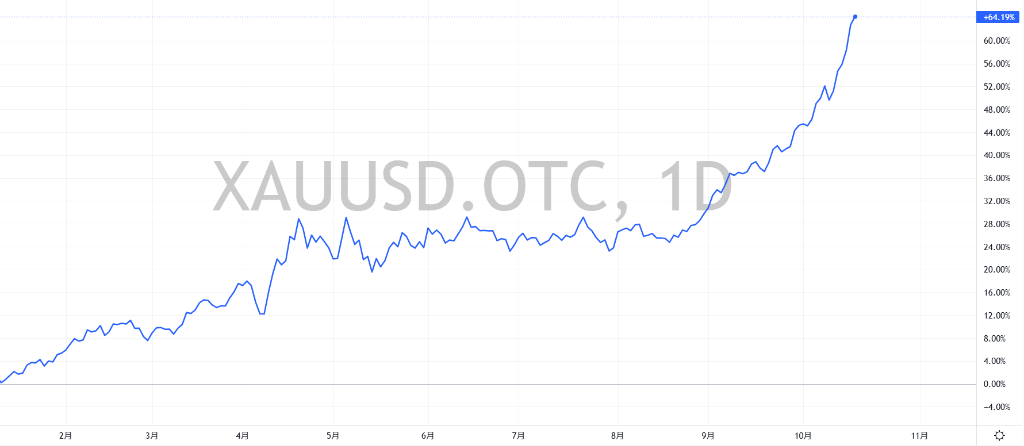
Core Insights - The historic rise in gold prices indicates fundamental changes beyond inflation or deflation are brewing [1][4] - As of October 17, gold prices have surged 64% this year, breaking the $4300 mark and nearing $4380 [1][4] Group 1: Gold as a Hedge - Gold is not merely an inflation hedge but also a safeguard against systemic financial risks, including severe credit recessions and large-scale fiscal deficits [4][10] - Holding physical gold is seen as the ultimate collateral since it is not a liability of any entity, making it a preferred asset in times of increasing government and credit risks [4][10] Group 2: Misconceptions about Gold - The market often misunderstands gold as solely an inflation hedge; however, historical data shows gold performs well in both low and high inflation environments [5][6] - If gold were only an inflation hedge, its returns would correlate with rising inflation rates, which is not the case [6][9] Group 3: Credit Market Concerns - Analysts warn of an impending credit crisis, with rising credit spreads indicating increased borrowing costs and risks in the private market [10][11] - Recent events, such as the bankruptcy of First Brands and rising credit spreads, suggest a tightening credit environment [14] Group 4: Government Debt Risks - Governments face unprecedented fiscal deficits, raising concerns about the potential monetization of these debts, which could erode the real value of fiat currencies [17][20] - The market's waning confidence in government collateral is reflected in rising term premiums, contributing to increased yields in developed markets [17][20] Group 5: Future Implications for Gold - Regardless of whether the future shock is inflationary or deflationary, gold is expected to be in high demand [20] - In a credit recession, the need for high-quality collateral will intensify, making gold a valuable asset as traditional collateral may lose value [20]
黄金“疯狂上涨”,预示“更大事情”正在发生
华尔街见闻· 2025-10-17 04:15
Core Viewpoint - The historic rise in gold prices indicates fundamental changes beyond mere inflation or deflation concerns [1] Group 1: Gold Price Movement - On October 16, gold prices continued to rise, reaching a historic high of over $4,300 for the first time, and nearly $4,380 on October 17 [2] - Gold has increased by 64% year-to-date as of October 17 [3] Group 2: Gold as a Hedge - Simon White, a Bloomberg macro strategist, emphasizes that gold serves not only as an inflation hedge but also as a safeguard against systemic financial risks, including severe credit recessions and large-scale fiscal deficits [3][4] - The demand for gold is expected to remain high regardless of whether the market faces inflationary or deflationary pressures [5] Group 3: Misconceptions about Gold - The common misconception is that gold is merely an inflation hedge; however, historical data shows that gold performs well in both low and high inflation environments [6] - Gold's returns do not solely correlate with rising inflation rates, as evidenced by its performance during the severe deflation of the 1930s [7][8] Group 4: Credit Market Risks - Analysts warn of an impending credit crisis, with rising credit spreads indicating increased borrowing costs and risks in the private market [11][14] - Recent events, such as the bankruptcy of First Brands and rising credit spreads, suggest a tightening credit environment [18] Group 5: Government Debt Concerns - Governments are facing unprecedented fiscal deficits, raising concerns about the potential for these deficits to be monetized, which could erode the real value of fiat currencies [23][24] - The market's diminishing confidence in government debt is reflected in rising term premiums, which have driven up yields in major developed markets [26] Group 6: Future Implications for Gold - Regardless of whether future shocks are inflationary or deflationary, gold is expected to be in high demand [30] - In a scenario of debt monetization, while nominal values of government debt may be preserved, their real value could be destroyed, benefiting gold as a non-financial asset [31][32][33]

黄金的“疯狂上涨”预示着“更大的事情”正在发生
美股IPO· 2025-10-17 02:08
Core Viewpoint - Gold serves as a hedge not only against currency devaluation but also against the entire financial system, including severe credit recessions and large-scale fiscal deficit monetization [1][4][5] Group 1: Gold's Performance and Demand - Gold prices have reached a historic high, surpassing $4,300 for the first time, with a year-to-date increase of over 60% [2][3] - The demand for gold is expected to remain high regardless of whether the market faces inflationary or deflationary shocks [6][11] Group 2: Misconceptions about Gold - The market often misunderstands gold as merely an inflation hedge; however, historical data shows that gold performs well in both low and high inflation scenarios [7][8] - Gold's returns do not solely correlate with rising inflation rates, as evidenced by its performance during the severe deflation of the 1930s [8] Group 3: Credit Market Risks - There is a significant risk of a major credit recession, with analysts suggesting that rising gold prices indicate an impending credit crisis [12][17] - The cost of borrowing in the private market has increased, indicating higher risks associated with lending [14][16] Group 4: Government Debt Concerns - Governments are facing unprecedented fiscal deficits, raising concerns about their ability to manage debt without resorting to currency printing [18][19] - The expectation that large fiscal deficits will eventually be monetized contributes to the rising demand for gold, as this action erodes the real value of fiat currency [19][20] Group 5: Future Implications for Gold - Regardless of whether the future economic shocks are inflationary or deflationary, gold is positioned to be a favored asset [23] - In the event of a credit crisis, the demand for high-quality collateral will increase, making gold a viable hedge against the potential devaluation of government debt [23][25]

黄金的“疯狂上涨”预示着“更大的事情”正在发生
Hua Er Jie Jian Wen· 2025-10-17 01:22
Core Insights - The historic rise in gold prices indicates fundamental changes beyond inflation or deflation are brewing [1][3] - Gold has surged over 60% since the beginning of the year, reaching a record high of over $4,300 [1][2] Group 1: Gold as a Hedge - Gold is not only a tool for hedging against currency devaluation but also serves as a hedge against the entire financial system, including severe credit recessions and large-scale fiscal deficits [3] - The misconception that gold is merely an inflation hedge is challenged by historical data showing its strong performance during both low and high inflation periods [4][8] Group 2: Credit Market Risks - Analysts warn of an impending credit crisis, with rising credit spreads indicating increased borrowing costs and risks in the private market [9][12] - The recent bankruptcy of a heavily indebted company and rising credit spreads suggest a tightening credit environment [12] Group 3: Government Debt Concerns - Governments are facing unprecedented fiscal deficits, raising concerns about the potential monetization of these debts, which could erode the real value of fiat currencies [13] - The market's diminishing confidence in government debt is reflected in rising term premiums, contributing to increased yields in major developed markets [13][17] Group 4: Future Implications for Gold - Regardless of whether future shocks are inflationary or deflationary, gold is expected to be in high demand as a quality collateral asset [17][19] - In a scenario of debt monetization, while nominal values of government debt may be preserved, their real value could be destroyed, further enhancing gold's appeal as a stable asset [18][19]