
贸易紧张局势

Search documents
7 ETF Themes To Watch As Fear & Greed Index Slips Toward Caution - SPDR Gold Shares (ARCA:GLD), iShares Gold Trust Shares (ARCA:IAU)
Benzinga· 2026-01-21 15:21
Core Viewpoint - U.S. equities experienced a significant decline as investor sentiment weakened due to renewed trade tensions between the U.S. and Europe, with the CNN Business Fear & Greed Index dropping to 48.3 from 55.3, indicating a shift to a "Neutral" zone [1]. Group 1: Market Reaction to Trade Tensions - President Trump threatened additional tariffs of up to 10% on several European countries starting February 1, potentially increasing to 25% by June if negotiations over Greenland control fail [2]. - European officials warned of possible retaliation that could affect up to 25% of U.S. exports, including services, and mentioned the possibility of reducing U.S. Treasury holdings [2]. Group 2: Sector Performance and Investment Strategies - Most S&P 500 sectors closed lower, prompting investors to rotate into defensive sectors, particularly consumer staples, which were among the few to close higher [3][4]. - ETFs focused on consumer staples are gaining attention as they provide exposure to companies with stable demand during economic and geopolitical uncertainties [4]. - Minimum volatility ETFs are attracting interest as investors seek to reduce risk while remaining in equities, focusing on stocks with historically lower price fluctuations [5]. - Quality factor ETFs are in demand as concerns over tariffs and earnings sustainability rise, with investors prioritizing companies with strong balance sheets [6]. - Gold ETFs are seeing renewed interest due to escalating trade tensions and discussions about reducing U.S. Treasury exposure [7]. - Volatility ETFs are becoming popular among short-term traders due to choppy markets and sharp intraday swings [11]. - Dividend ETFs are gaining appeal as investors seek stability and income during risk-off phases, particularly as growth-oriented sectors underperform [12]. - Healthcare ETFs are drawing attention ahead of key earnings reports from major players, as the sector is viewed as a safe haven during market stress [13]. Group 3: Notable ETFs - Key ETFs in focus include: - Consumer Staples Select Sector SPDR Fund (NYSE:XLP) and Vanguard Consumer Staples ETF (NYSE:VDC) for consumer staples [7]. - iShares MSCI USA Min Vol Factor ETF (BATS:USMV) and Invesco S&P 500 Low Volatility ETF (NYSE:SPLV) for minimum volatility [8]. - iShares MSCI USA Quality Factor ETF (BATS:QUAL) and Invesco S&P 500 Quality ETF (NYSE:SPHQ) for quality factors [9]. - SPDR Gold Shares (NYSE:GLD) and iShares Gold Trust (NYSE:IAU) for gold investments [14]. - Schwab U.S. Dividend Equity ETF (NYSE:SCHD) and Vanguard High Dividend Yield ETF (NYSE:VYM) for dividend strategies [16]. - Health Care Select Sector SPDR Fund (NYSE:XLV) and Vanguard Health Care ETF (NYSE:VHT) for healthcare exposure [17].

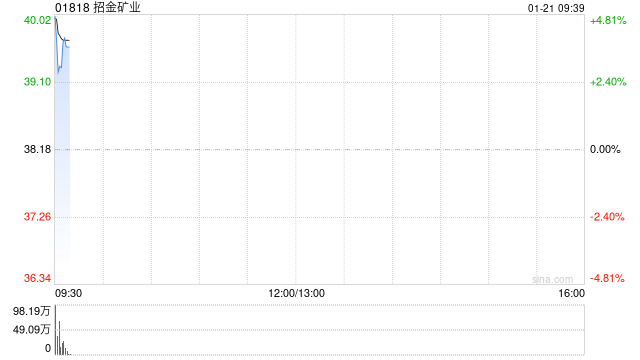
现货黄金站上4800美元/盎司!港股贵金属板块高开,招金矿业涨4%,山东黄金、赤峰黄金涨超3%,紫金矿业涨1%
Ge Long Hui· 2026-01-21 02:01
Group 1 - The gold and silver markets have reached historical highs, with spot gold surpassing $4800 per ounce for the first time, reflecting a monthly increase of over 10% and a rise of more than $480 [1] - The precious metals sector in the Hong Kong stock market opened high, with notable gains from companies such as Zhaojin Mining, Shandong Gold, and Zijin Mining, all experiencing increases of over 3% [3] Group 2 - Concerns over global trade and geopolitical outlook have intensified due to Trump's threats of new tariffs on European allies, leading investors to turn to hard assets like gold [2] - Ray Dalio suggests that the escalating trade tensions and increasing fiscal deficits may undermine confidence in U.S. debt, recommending investors allocate 5% to 15% of their portfolios to gold as a key hedge [2]

Mhmarkets迈汇:风险重估助力黄金冲击5000美元
Xin Lang Cai Jing· 2026-01-20 15:18
Core Viewpoint - The current surge in gold prices is a direct response to global geopolitical and economic risks, with geopolitical conflicts now ranked as the top annual risk according to the World Economic Forum's 2026 Global Risk Report [1][2][3] Geopolitical and Economic Context - The escalation of trade tensions has significantly heightened market risk aversion, with threats of tariffs on multiple countries and the freezing of trade agreements indicating a prolonged period of uncertainty in the global trade environment [2][3] - Approximately 50% of industry experts anticipate increased global turmoil over the next two years, a notable rise from previous years, suggesting a shift in market dynamics where traditional assets face greater risk exposure [3] Valuation and Investment Perspective - Despite gold prices being at historical highs, gold retains high allocation value compared to the expanding equity markets and potential liquidity risks [4] - The current spot gold price has shown resilience above $4,670, with a 1.6% daily increase indicating a shift from speculative buying to strategic asset reallocation [4] - There is sufficient momentum for gold prices to potentially reach the $5,000 mark in the first half of the year, driven by ongoing concerns over fiat currency confidence and unpredictable policy actions [4] - The current gold premium is viewed as a reasonable pricing in the context of the global financial framework's credit restructuring, with any short-term technical corrections likely to be a rebalancing of positions rather than a reversal of trend [4]

Tech index futures, crypto stocks drop as U.S.-Europe trade tensions rise, bitcoin falls
Yahoo Finance· 2026-01-20 10:31
Group 1: Market Reactions - U.S. tech index futures are under pressure due to concerns over President Trump's failed attempt to acquire Greenland and potential mutual tariffs with European nations, leading to a 2% decline in the Invesco QQQ Trust Series in pre-market trading [1] - Bitcoin has fallen to $90,000, down 8% from its recent high, negatively impacting crypto-related equities such as Strategy (MSTR), Galaxy Digital (GLXY), and IREN (IREN), which are down 6% to $164, 8% to $32, and 8% to $53 respectively [3] - The DXY index, which measures dollar strength against major currencies, has decreased by 0.5% to 98.5 [5] Group 2: Commodity Performance - Gold is trading above $4,700 per ounce, reflecting a 9% increase year to date, while silver has surpassed $95 per ounce, showing a 32% rise in the same period [4] Group 3: Bond Market Dynamics - U.S. Treasury yields have risen, and Japanese long-dated bonds are under pressure, with yields on Japan's 30-year government bonds surging close to 4%, indicating stress in the global bond market [4]




世界银行报告指出:全球经济韧性仍超预期
Jing Ji Ri Bao· 2026-01-20 00:43
Global Economic Outlook - The World Bank's January 2026 Global Economic Outlook report indicates that despite ongoing trade tensions and policy uncertainties, global economic resilience exceeds expectations. The global growth rate is projected to slightly decline to 2.6% in 2026, with a rebound to 2.7% in 2027, highlighting a weakening growth momentum [1][2]. Economic Recovery Disparities - In 2025, global per capita GDP is expected to be approximately 10% higher than in 2019. However, the recovery is highly uneven, with nearly 90% of developed economies returning to pre-pandemic income levels, while over a quarter of emerging markets and developing economies, particularly low-income and conflict-affected countries, still lag behind [2][3]. Trade Dynamics - Global trade growth in 2025 is primarily driven by companies preemptively importing and exporting to avoid tariff risks. However, starting in 2026, trade growth is expected to slow significantly due to inventory reductions and the impact of tariffs, with trade policy uncertainties dampening business investment and confidence [2][3]. Inflation Trends - Global inflation is generally on a downward trend, with most countries' inflation rates nearing central bank targets. The impact of U.S. tariffs on goods inflation has been partially offset by inventory accumulation and supply chain adjustments, although financial market volatility remains a significant risk [3][4]. Employment Challenges - Employment remains a core challenge for developing economies, which struggle to create sufficient job opportunities for a rapidly growing young population. By 2035, approximately 1.2 billion young people are expected to enter the labor market, while many countries still have per capita incomes below pre-pandemic levels [4][5]. Policy Recommendations - The report emphasizes the need for a coordinated global response to address trade, debt, climate, and financial risks. Key recommendations include maintaining and improving the multilateral trade system, supporting financing and debt relief for developing economies, enhancing global cooperation on climate risks, and ensuring financial stability through coordinated macroeconomic policies [5].
美股盘前跳水,欧股重挫,黄金白银迎新里程碑
第一财经· 2026-01-20 00:14
2026.01. 20 本文字数:1996,阅读时长大约3分钟 作者 | 第一财经 樊志菁 受美国总统特朗普上周末威胁对丹麦、挪威、瑞典、法国、德国、荷兰、芬兰和英国八个欧洲盟国加征关税影响,全球市场本周首个交易日迎来巨震。 欧洲股市全线下挫,因假日休市,美股期指盘前跌逾1%。 在地缘政治与经济前景动荡的背景下,投资者纷纷涌入避险资产,推动黄金与白银价格在时隔数日后再度飙升至新高点。 关税威胁又来了 特朗普在社交媒体明确表示,若未能就全面收购格陵兰岛达成协议,自6月1日起,对上述所有国家的关税税率将提升至25%。这些国家均为北约成员 国,且在丹麦拒绝出售格陵兰岛一事上,一致选择支持丹麦的立场。 预测市场正将格陵兰岛相关风险纳入定价模型。在Polymarket预测市场上,交易员目前认为,与格陵兰岛相关的部分关税在2月1日前生效的概率为 39%;分国家来看,丹麦和挪威面临关税的概率分别为36%和35%,德国则为25%。长期预测显示,美国在2026年取得格陵兰岛部分地区控制权的概率 为25%,而美国对格陵兰岛发动军事入侵的概率相对较低,仅为11%。 受马丁路德金纪念日影响,美国股市与债市周一休市,因此此次关税威胁的 ...

经济韧性超预期!世界银行上调全球增长预期至2.6%,美国经济表现强劲
Zhi Tong Cai Jing· 2026-01-14 00:19
Group 1 - The World Bank has raised its global growth forecast for 2026 to 2.6%, up from the previous estimate of 2.4% made in June [1] - The U.S. economic growth forecast for this year has been significantly increased from 1.6% to 2.2% [1] - The global growth forecast for 2025 is estimated at 2.7%, driven by three main factors: preemptive stockpiling by businesses and households before the implementation of tariffs, the actual economic suppression effect of high tariffs being weaker than expected, and sustained spending in the information and technology sectors providing structural support for growth [1] Group 2 - The World Bank's Deputy Chief Economist, Ayhan Kose, noted that global growth is trapped within a specific range, showing resilience but failing to accelerate [2] - Since 2023, actual GDP growth has fluctuated between 2.6% and 2.8%, contrasting sharply with the average growth rate of 3.2% during the decade before the pandemic (2010-2019) [2] - The World Bank's report indicates that global inflation is expected to slightly decrease to 2.6% in 2026, which is 0.3 percentage points lower than previous expectations [2] Group 3 - Brent crude oil prices are projected to decline from an average of $69 per barrel in 2025 to $60 per barrel in 2026 [3] Group 4 - In the next decade, 1.2 billion young people in emerging markets will reach working age, making job creation a pressing priority [4]
经济韧性超预期!世界银行上调全球增长预期至2.6%,美国经济表现强劲
Zhi Tong Cai Jing· 2026-01-13 23:45
Group 1 - The World Bank has raised its global growth forecast for 2026 to 2.6%, up from the previous estimate of 2.4% made in June, highlighting unexpected resilience despite escalating trade tensions [1] - The U.S. economic growth forecast for this year has been significantly increased from 1.6% to 2.2%, indicating a strong recovery [1] - The global growth forecast for 2025 is estimated at 2.7%, driven by three main factors: preemptive stockpiling by businesses and households before the implementation of tariffs, the actual economic suppression effect of high tariffs being weaker than expected, and sustained spending in the information and technology sectors providing structural support [1] Group 2 - The World Bank's Deputy Chief Economist, Ayhan Kose, noted that global growth is trapped in a specific range, with actual GDP growth fluctuating between 2.6% and 2.8% since 2023, contrasting sharply with the pre-pandemic average growth rate of 3.2% from 2010 to 2019 [2] - The World Bank has followed the International Monetary Fund (IMF) in raising its growth forecast for 2025, with the IMF also warning of potential downward pressures on future growth [2] - The report indicates that while global economic resilience is significant, risks remain tilted towards the downside, particularly due to the potential for renewed trade tensions and higher tariffs redirecting exports [2] Group 3 - China's economic growth forecast for 2025 has been raised to 4.9% and to 4.4% for 2026, reflecting an upward revision from previous estimates [2] - The global inflation rate is expected to slightly decrease to 2.6% in 2026, which is 0.3 percentage points lower than previous expectations [3] - Brent crude oil prices are projected to decline from an average of $69 per barrel in 2025 to $60 in 2026 [4] Group 4 - In the next decade, 1.2 billion young people in emerging markets will reach working age, making job creation a pressing priority [5]
世界银行因经济韧性“显著”,上调 2026 年经济展望
Hua Er Jie Jian Wen· 2026-01-13 14:34
Core Insights - The World Bank has raised its global economic growth forecast for the year, highlighting unexpected resilience in the global economy despite a "historic" escalation in global trade tensions [1] - The institution noted that the resilience of the world economy is "significant," but risks remain skewed to the downside, with a substantial risk of renewed trade tensions [1] Economic Predictions - The report includes forecasts for Brent crude oil prices through 2026 [1]
【环球财经】联合国报告预测2026年世界经济将增长2.7%
Xin Hua She· 2026-01-09 06:09
Group 1 - The core viewpoint of the report is that the global economy is projected to grow by 2.7% in 2026, slightly lower than the 2.8% forecast for 2025 [1] - Despite a significant increase in tariffs by the United States in 2025, global economic performance showed unexpected resilience supported by robust consumer spending and a decline in inflation [1] - The report highlights persistent vulnerabilities, including low investment and limited fiscal space, which are dragging down economic activity and increasing the risk of prolonged low growth globally [1] Group 2 - The report indicates that the initial easing of trade tensions has helped mitigate the impact on international trade, but higher tariff levels combined with rising macroeconomic uncertainty are expected to have more pronounced effects in 2026 [1] - Global trade growth is forecasted to decline to 2.2% in 2026, down from 3.8% in 2025 [1] - The report predicts that the U.S. economy will maintain a growth rate of around 2.0% in 2026, while the EU's growth will slow to 1.3% due to increased tariffs and ongoing geopolitical uncertainties affecting exports [1] Group 3 - Japan's economic growth is expected to be approximately 0.9% in 2026, influenced by a weakening external environment [1] - Economic growth projections for various regions in 2026 include East Asia at 4.4%, South Asia at 5.6%, Africa at 4.0%, Latin America and the Caribbean at 2.3%, and the Commonwealth of Independent States and Georgia at 2.1% [1] - The report calls for countries to strengthen global coordination and collective action in response to heightened geopolitical tensions, trade pattern adjustments, price pressures, and climate impacts [2]