
资产负债表管理

Search documents
What to Expect From Fed Decision on Wednesday
Youtube· 2025-12-09 14:39
分组1 - The Federal Reserve is expected to support a 25 basis point rate cut, with few changes to the DOT plot and median policy assumptions [1][2] - Chair Powell's communication will focus on assessing risks and the outlook for future cuts, balancing weak labor market signals against inflation concerns [2][4] - Historical context shows that dissents within the FOMC are not unusual, and the current environment may lead to fewer than four dissents [6][8] 分组2 - The potential next Fed chair, Kevin Hassett, is noted for his academic credentials, data expertise, and collegiality, which could enhance his effectiveness [11][12] - Discussions around Fed policy include not just rate cuts but also balance sheet management and quantitative easing, with expectations of expanding securities holdings starting in January [13][15] - The Fed may need to add liquidity to address tightening reserve balances, with potential purchases of T-bills starting at $40 billion a month [15][16] 分组3 - Forward inflation indicators are showing positive trends, which may alleviate concerns about the Fed's credibility and its approach to managing rates [21][23] - The labor market is facing challenges, with mixed consumer spending and weak investment, which could lead to a contraction if not addressed [25][26] - The Fed's approach to managing inflation and the labor market will be critical, especially if unemployment continues to rise [26][27]


布米普特拉北京投资基金管理有限公司:美联储降息在即,市场却开始担忧明年“无息可降”
Sou Hu Cai Jing· 2025-12-09 10:06
Group 1 - The market widely anticipates a 25 basis point rate cut by the Federal Reserve in the upcoming meeting, but the focus has shifted to the long-term policy intentions revealed in the updated dot plot and Powell's statements during the press conference [4][6] - Recent market sentiment has changed, with traders now predicting only two additional rate cuts of 25 basis points each by the end of 2026, a more conservative outlook compared to previous expectations of over three cuts [4][6] - The uncertainty in monetary policy stems from increasing internal disagreements within the Federal Reserve and an unclear economic outlook, with a potential rise in the number of dissenting voices against rate cuts in the upcoming meeting [6][8] Group 2 - The Federal Reserve's dual mandate requires careful consideration of data, as the labor market shows signs of weakness while inflation remains sticky above the 2% target [6] - Analysts predict that the Federal Reserve may announce a plan to expand its balance sheet starting in January 2026, primarily through purchasing short-term Treasury securities to increase bank reserves, which aims to stabilize short-term interest rate fluctuations [6][8] - The potential changes in Federal Reserve leadership could significantly influence future monetary policy and asset management, leading to a cautious approach in rate policy until new appointments are clarified in early 2026 [8]
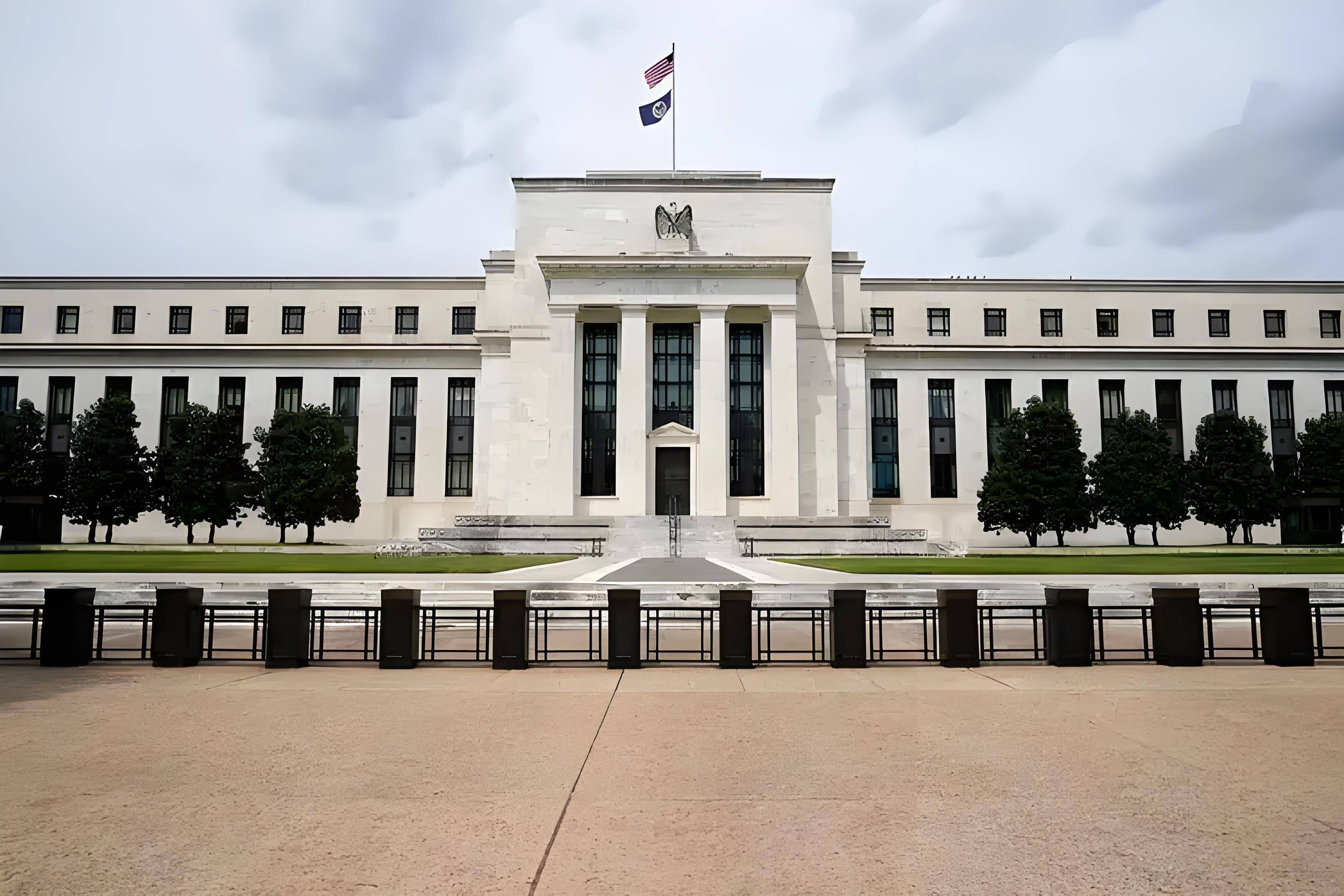
美联储年终大戏即将上演 一文解密四大看点
Di Yi Cai Jing· 2025-12-09 00:28
Core Viewpoint - The Federal Reserve is widely expected to lower interest rates for the third consecutive time due to alarming signals from the U.S. labor market, with significant attention on the potential for dissenting votes during the meeting and the implications for future monetary policy [1][2]. Group 1: Federal Reserve's Decision-Making Dynamics - Disagreements among Federal Reserve policymakers have become apparent since summer, with inflation and employment growth conflicting with the dual mandate of 2% inflation and full employment [2]. - The New York Fed President, John Williams, indicated that the U.S. could lower rates without jeopardizing inflation targets, suggesting room for further adjustments to the federal funds rate [2]. - Kansas City Fed President, Esther George, expressed concerns about high inflation and the risks of further rate cuts, while Boston Fed President, Susan Collins, showed hesitation towards additional cuts, citing the current policy as appropriate [3]. Group 2: Economic Outlook and Employment Trends - The latest economic outlook suggests moderate growth for the U.S. economy in 2026, with job creation expected to remain weak and inflation risks persisting [5]. - The median forecast for U.S. economic growth in 2026 is 2%, an increase from previous estimates, supported by stronger consumer spending and business investment [5]. - Inflation is projected to slightly decrease to 2.6% in 2026, with job growth remaining weak and the unemployment rate expected to rise to 4.5% [6]. Group 3: Interest Rate Predictions and Market Reactions - Market expectations indicate a potential for approximately 52 basis points of rate cuts by 2026, with predictions of two rate cuts occurring in the first three quarters of the year [9]. - Institutions like Morgan Stanley and Bank of America anticipate a 25 basis point cut in December, aligning with a more dovish outlook from Fed officials [9]. - The Fed's decision-making may be influenced by upcoming leadership changes, with a potential shift in policy direction depending on new appointments [9]. Group 4: Asset and Balance Sheet Management - The future trajectory of the Fed's balance sheet is considered as crucial as interest rate decisions, especially in light of recent pressures in the overnight funding market [12]. - The Fed has halted its balance sheet reduction process to avoid a repeat of past market crises, indicating a need for careful liquidity management [12]. - Analysts suggest that the Fed may initiate Treasury purchases to manage reserves, with expectations of monthly purchases starting in early 2024 [13].
美联储年终大戏即将上演,一文解密四大看点
Di Yi Cai Jing Zi Xun· 2025-12-09 00:24
Core Viewpoint - The Federal Reserve is widely expected to lower interest rates for the third consecutive time due to warning signals from the U.S. job market, with significant attention on the potential for dissenting votes during the meeting and the implications for future economic forecasts [1][3]. Group 1: Divergence Among Policymakers - Since summer, divisions among Federal Reserve policymakers have become apparent, particularly as inflation relief has stalled and job growth has slowed, creating a conflict between the goals of 2% inflation and full employment [3]. - The government shutdown has complicated the situation, delaying key economic data releases and solidifying differing stances on whether further rate cuts are necessary to boost the job market [3]. - New York Fed President John Williams indicated that the U.S. could lower rates without jeopardizing inflation targets, suggesting that current monetary policy is moderately restrictive and that there is room for adjustment [3]. Group 2: Economic Resilience and Rate Cut Hesitance - Boston Fed President Susan Collins expressed hesitance towards further rate cuts, believing current policy is appropriately restrictive and can maintain downward pressure on inflation [4]. - Despite some sectors showing weakness, the overall economy remains resilient, with consumer spending and business investment expected to support growth, although inflation risks persist [6]. - The Federal Open Market Committee (FOMC) may see multiple dissenting votes, with five policymakers previously expressing opposition or skepticism towards further rate cuts [5]. Group 3: Economic Outlook and Inflation - The latest economic outlook suggests moderate growth for the U.S. economy, with a median growth forecast of 2% for 2026, up from previous estimates, but job creation is expected to remain weak [6]. - Inflation is projected to slightly decrease to 2.6% by 2026, with tariffs identified as a significant factor driving prices higher [6]. - The labor market is anticipated to remain weak, with the unemployment rate expected to rise to 4.5% in early 2026, consistent with previous Fed forecasts [6]. Group 4: Future Rate Cut Predictions - Regardless of the December decision, internal resistance within the Fed is expected to be greater than at any time in the past eight years, with divisions likely to persist into the next year [8]. - Market expectations indicate a potential for approximately 52 basis points of rate cuts by 2026, equivalent to two rate cuts [8]. - Institutions predict that the Fed will complete two rate cuts in the first three quarters of the year, with varying timelines for implementation [8]. Group 5: Asset Management and Liquidity - The future direction of the Fed's balance sheet is considered equally important as interest rate decisions, especially in light of recent pressures in the overnight funding market [11]. - The Fed has halted its balance sheet reduction process to avoid a repeat of past market crises, indicating a focus on maintaining liquidity [11]. - Analysts suggest that the Fed may need to conduct regular Treasury purchases to manage reserves effectively, with expectations for monthly purchases starting in early 2024 [12][13].
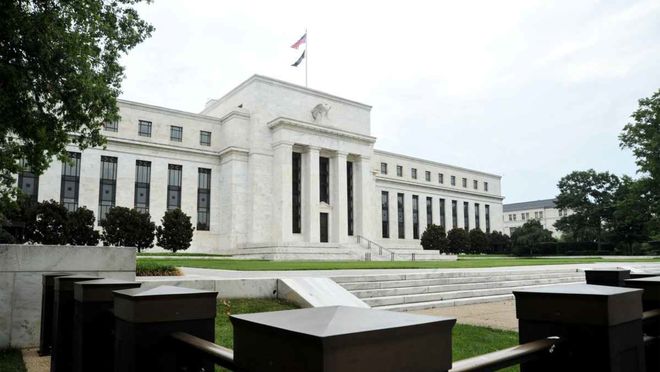
刚刚,QT正式结束,回购设施使用激增,这对整体流动性意味着什么?
Hua Er Jie Jian Wen· 2025-12-02 04:22
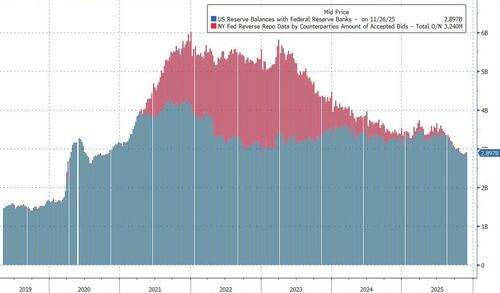
Core Viewpoint - The end of the Federal Reserve's quantitative tightening (QT) marks a transition to a new phase, with ongoing liquidity pressures in the short-term funding markets despite the cessation of QT [1][3][5]. Group 1: Federal Reserve's Actions - The QT process officially ended on December 1, 2023, after significantly reducing the reserve levels in the banking system [1][3]. - The Federal Reserve plans to maintain its balance sheet at approximately $6.1 trillion, allowing agency debt and MBS to mature and using the proceeds to purchase Treasury securities [6]. - Goldman Sachs predicts that the Federal Reserve will initiate a "reserve management purchase" program in January 2026, involving monthly purchases of about $20 billion in Treasury securities and reinvesting $20 billion in MBS [9]. Group 2: Market Dynamics - The end of QT has shifted market focus to the Federal Reserve's future balance sheet management strategies, with expectations of potential asset purchases to stabilize the financial system [3][4]. - The Treasury is expected to net issue $870 billion in Treasury securities in 2026, with the Federal Reserve purchasing approximately $480 billion, leading to a reduced net supply for non-Federal Reserve buyers [12]. - The mortgage-backed securities (MBS) market is anticipated to face significant supply pressure as approximately $2.05 trillion in agency debt and MBS mature and enter the market [14]. Group 3: Funding Market Conditions - Despite the end of QT, liquidity tensions in the funding markets remain acute, with the usage of the Federal Reserve's Standing Repo Facility (SRF) reaching $26 billion, the second-highest level since 2020 [5][15]. - Recent data indicates that repo rates have been trading about 6 basis points above their fair value, reflecting structural shifts in reserve demand [15][18]. - The market is divided on the interpretation of these funding pressures, with some analysts suggesting that more aggressive measures may be needed from the Federal Reserve to stabilize short-term funding costs [18][19].

美联储理事米兰:需要大幅降息,当前货币政策阻碍经济发展
Hua Er Jie Jian Wen· 2025-11-25 23:05
Core Viewpoint - Federal Reserve Governor Stephen Miran advocates for significant interest rate cuts to support the U.S. labor market, arguing that current monetary policy is too tight and is contributing to rising unemployment [1][2]. Group 1: Labor Market Concerns - Miran directly attributes the rising unemployment rate to overly tight monetary policy, stating that the increase in unemployment is a direct result of this [2]. - Recent data shows that the unemployment rate rose from 4.3% in August to 4.4% in September, highlighting the urgency for the Fed to act quickly to avoid stifling economic recovery [3]. - Miran warns that without continued rapid interest rate cuts, monetary policy will "choke off all positive developments," preventing the labor market from recovering as needed [3][4]. Group 2: Inflation Perspectives - Miran expresses a notably optimistic view on inflation, suggesting that the current high inflation levels are largely a statistical illusion [5][6]. - He explains that most inflationary pressures are due to imbalances in the housing market and the lagging effects of monetary policy, which supports his argument for aggressive rate cuts [6]. - Miran emphasizes the need to lower mortgage rates to alleviate pressures in the housing market, asserting that housing is the key conduit through which financial conditions affect the real economy [6]. Group 3: Asset and Liability Management - Miran advocates for a more conservative approach to the Fed's balance sheet management, suggesting an increase in short-term Treasury holdings while reducing exposure to mortgages, medium-term notes, and long-term bonds [7][8]. - This stance indicates a preference for less direct intervention in specific markets, encouraging the Fed to adopt a forward-looking policy framework [8].
美联储主席选拔进入最后阶段 贝森特称特朗普可能圣诞前定人选
智通财经网· 2025-11-25 15:05
Core Viewpoint - The U.S. Treasury Secretary Mnuchin indicated that President Trump is expected to decide on the next Federal Reserve Chair before Christmas, with a key second-round interview taking place soon [1] Group 1: Federal Reserve Chair Selection - The final candidate list for the next Federal Reserve Chair includes current Fed governors Waller and Bowman, former Fed governor Warsh, NEC Director Hassett, and BlackRock executive Riedel [1] - Mnuchin emphasized the importance of simplifying the Federal Reserve's operations during the candidate selection process, noting the complexity of the current institution [1][2] Group 2: Federal Reserve Operations - The Federal Reserve announced it will stop reducing its balance sheet starting December 1 to ensure sufficient liquidity and prevent excessive tightening of system reserves [2] - The usage of the standing repo facility has significantly increased, reaching $50.4 billion on October 31, the highest since its establishment in 2021 [2] - Mnuchin pointed out the need to clarify the relationships between monetary policy, balance sheet management, and regulatory policies, which have become overly complex [2] Group 3: Future of the Federal Reserve - Mnuchin expressed a desire for the Federal Reserve to take a less prominent role, suggesting it should return to a background position to stabilize the market and serve the American people [3] - He criticized the frequency of public speeches by Federal Reserve officials, advocating for a reduction in repetitive communications [3]
美联储即将退出“疫情救市模式”,9万亿缩表工程如何软着陆?
美股研究社· 2025-10-29 10:34
Core Viewpoint - The Federal Reserve is set to conclude its quantitative tightening program, marking the end of large-scale financial market interventions initiated in March 2020 due to the COVID-19 pandemic. The Fed aims for the market to operate independently while returning to traditional interest rate tools to stimulate or cool the economy [5][6]. Summary by Sections Quantitative Easing and Tightening - To counter the economic impact of the pandemic, the Federal Reserve implemented quantitative easing, purchasing trillions of dollars in securities to maintain low long-term interest rates, which expanded its balance sheet to nearly $9 trillion. Since 2022, the Fed has reversed these measures through quantitative tightening, reducing its balance sheet by $2.2 trillion [6]. Bank Reserves and Economic Signals - The Fed intends to reduce bank reserves from "ample" to "adequate," but determining the end point for quantitative tightening remains challenging. Currently, bank reserves account for about 10% of nominal GDP. The Fed is cautious to avoid a repeat of the 2007-2009 financial crisis, where a significant drop in bank reserves led to market volatility [7]. Market Reactions and Future Expectations - Experts suggest that the end of quantitative tightening may be interpreted by the market as a sign of the Fed's intention to boost the economy. Some traders might view this as another economic stimulus measure [7][8]. Concerns Over Liquidity - There are warnings that the current state of the money market indicates the Fed may be repeating past mistakes of excessive liquidity withdrawal. Some analysts argue that the Fed has allowed too much reserve to dissipate and should resume purchasing Treasury securities to replenish market liquidity [8]. Future Monetary Policy - The Fed has indicated that it does not currently see the need to increase its securities purchases, with predictions that it will not expand its balance sheet before the end of 2026. However, it will monitor year-end financing costs closely to respond to market pressures if necessary [8][9]. Caution in Future Interventions - The Fed's experience with previous rounds of bond purchases has made it more cautious about using quantitative easing as a monetary policy tool. Critics argue that such interventions leave a significant footprint in financial markets. The Fed is unlikely to face a situation requiring a return to quantitative easing in the foreseeable future, as current economic conditions are more likely to present inflationary pressures rather than deflationary ones [9].

释放鸽派信号!美联储鲍曼:就业市场“脆弱”需要果断降息
Sou Hu Cai Jing· 2025-09-27 02:43
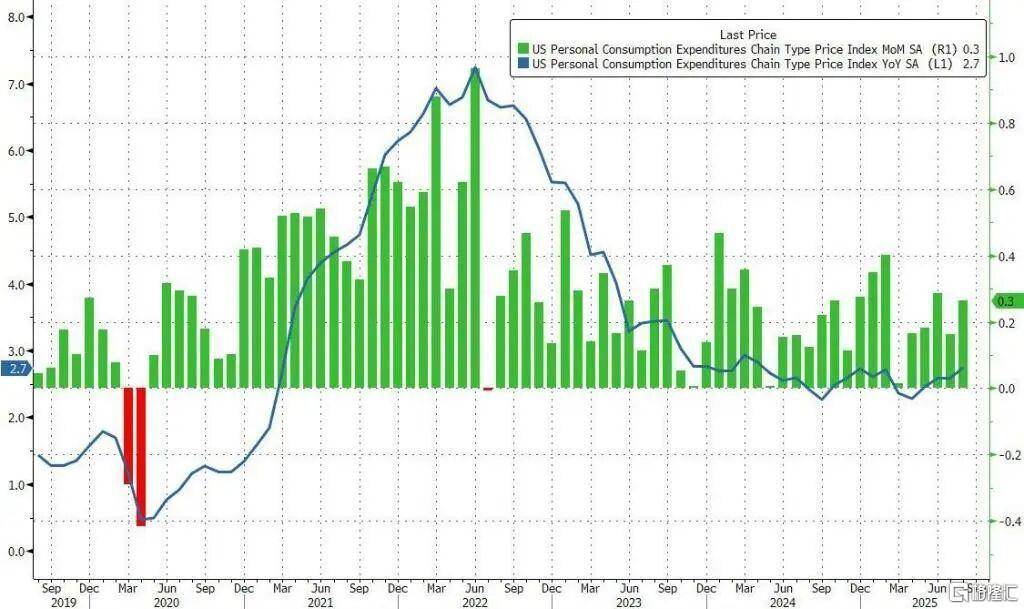
Core Viewpoint - The Federal Reserve, represented by Vice Chair Michelle Bowman, emphasizes the need for decisive interest rate cuts due to a "fragile" labor market and inflation nearing target levels, while also advocating for a smaller balance sheet and reforms in monetary policy execution [1][4]. Group 1: Interest Rate Policy - Bowman calls for immediate action to lower interest rates to prevent further deterioration of the labor market, suggesting that the Fed should aim for three rate cuts by 2025, with the first cut starting in September [4][6]. - The latest data indicates significant vulnerabilities in the labor market, and inflation, excluding tariff impacts, is close to the Fed's target [4][5]. Group 2: Balance Sheet Management - Bowman expresses a preference for maintaining the Fed's balance sheet at a minimal size, advocating for a return to a framework where the Fed actively manages its balance sheet to better gauge market pressures [3][4]. - She criticizes the over-reliance on data, which may lead to delayed policy responses, and supports a more forward-looking decision-making approach based on economic forecasts [5][7]. Group 3: Economic Indicators - The U.S. Personal Consumption Expenditures (PCE) index rose by 0.3% in August, with an annual inflation rate of 2.7%, indicating a moderate inflation environment [9][11]. - Core PCE, which excludes food and energy, increased by 0.2%, maintaining an annual rate of 2.9%, suggesting that inflation is rising at a moderate pace and remains below the Fed's long-term target of 2% [11][12]. - Consumer spending grew by 0.6%, surpassing expectations, which supports a robust economic outlook despite a slowdown in the labor market [12].
美联储理事鲍曼力挺仅持国债 改革货币政策机制
Sou Hu Cai Jing· 2025-09-26 17:35
Core Viewpoint - The Federal Reserve should aim for a smaller balance sheet and reform its monetary policy implementation mechanisms [1] Group 1: Balance Sheet Management - The Federal Reserve should maintain a balance sheet that keeps reserve balances close to scarcity levels rather than abundant levels [1] - Returning to an actively managed balance sheet will better reflect market pressures and operational issues [1] Group 2: Market Volatility - Allowing moderate fluctuations in the money market can enhance understanding of market clearing points [1] Group 3: Asset Composition - The Federal Reserve should hold only Treasury securities on its balance sheet, with a slight preference for short-term securities over aligning completely with the overall market's maturity structure [1] - This approach would provide greater flexibility for the Federal Reserve [1] Group 4: Mortgage-Backed Securities - The Federal Reserve should consider actively selling its holdings of mortgage-backed securities (MBS) [1]