
超级入口

Search documents
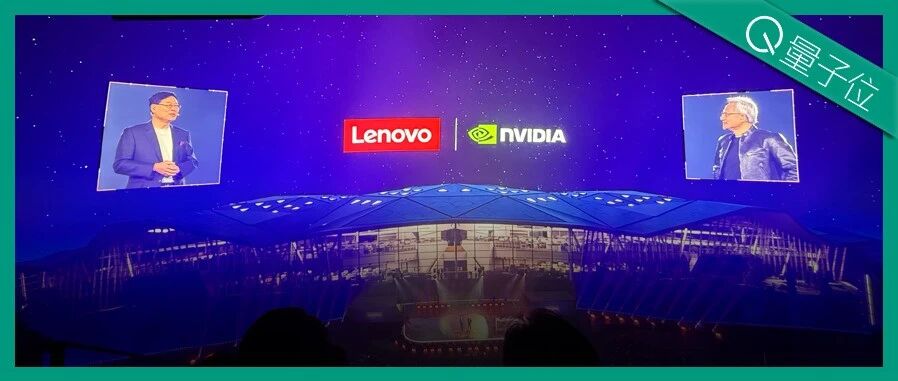
一口气集齐老黄苏妈英特尔,还得是AI,还得是联想
量子位· 2026-01-09 04:09
Core Viewpoint - The article discusses the emerging trend of AI hardware and the concept of "super entrance" in the tech industry, emphasizing that all devices will evolve into AI devices, marking a significant shift in technology at CES 2026 [1][6]. Group 1: AI Hardware Evolution - The CES 2026 showcased a consensus among manufacturers that all devices, including traditional smartphones and PCs, will adopt more intelligent forms [1]. - The emergence of new intelligent hardware species is increasingly diverse, indicating a shift in how AI is integrated into everyday devices [3]. Group 2: Super Entrance Concept - The "super entrance" concept refers to platforms that aggregate user traffic and connect various digital scenarios, similar to the role of super apps in the mobile internet era [7]. - The competition for "super entrance" is shifting from foundational technology to application layers and broader ecosystems, as seen in the AI landscape [9]. Group 3: Hybrid AI as the Ultimate Path - Lenovo's CEO proposed that integrating personal, enterprise, and public intelligence into a hybrid AI model is essential for creating personalized and diverse AI solutions [14][17]. - The hybrid AI model emphasizes the deep integration of cloud-based large models with localized customized small models to better meet user needs [18]. Group 4: Lenovo's Innovations - Lenovo introduced the world's first personal AI super intelligent agent, Lenovo Qira, which connects various devices and enhances task execution through cross-platform capabilities [20]. - The Qira agent can remember user preferences and interact in a personalized manner while ensuring privacy protection [22]. Group 5: Enterprise AI Solutions - Lenovo launched a series of AI inference servers aimed at improving efficiency and reducing operational costs for enterprises, adapting to diverse AI deployment needs [24]. - The collaboration with NVIDIA to establish an AI cloud super factory aims to expedite AI deployment for cloud service providers [25]. Group 6: Market Position and Future Outlook - Lenovo's AI-related business accounted for 30% of its total revenue, showing a 13% year-on-year growth, indicating a strong market position in both consumer and enterprise segments [34][35]. - The company aims to quadruple its business cooperation scale with NVIDIA over the next 3-4 years, highlighting its commitment to expanding its AI ecosystem [38].


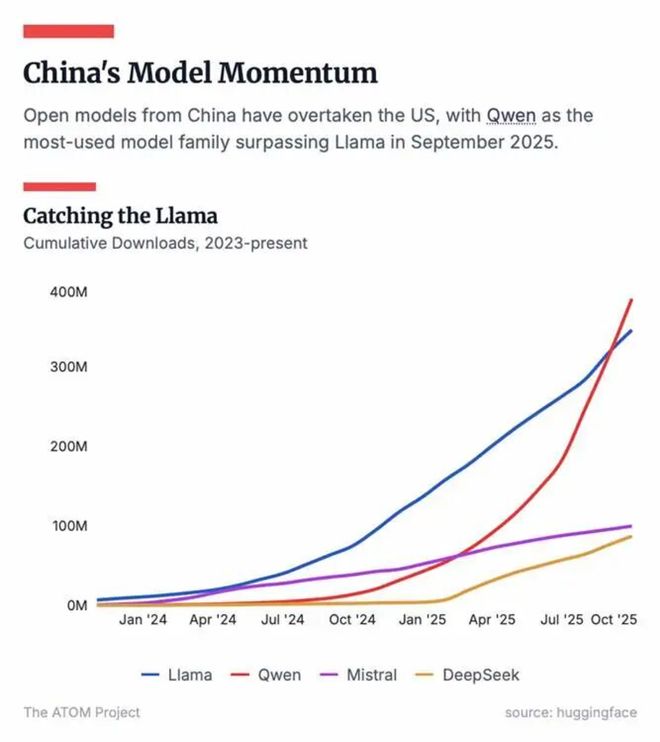
阿里为什么非要打千问这场仗?
Tai Mei Ti A P P· 2026-01-08 04:45
Core Insights - Alibaba's Qianwen App achieved over 30 million monthly active users (MAU) within 23 days of its launch, setting a global record for AI application growth, reflecting the company's urgency to secure its future in the AI landscape [1] - The C-end market for AI technology has fully penetrated, with 515 million users in China by June 2025, and over one-third of internet users having engaged with AI applications, showing a preference for domestic models [2] - Alibaba's CEO emphasized the dual focus on AI to B and AI to C strategies, aiming to create an "AI-native super application" [3] Group 1: Competitive Landscape - Alibaba's obsession with maintaining its "entry point" stems from past experiences of being challenged in the internet space, particularly during the rise of third-party platforms that impacted its e-commerce ecosystem [4][5] - The shift to mobile internet intensified Alibaba's need for high-frequency entry points, leading to strategic failures in social media attempts, which resulted in costly and passive user acquisition [6] - Competitors like ByteDance and Tencent have successfully captured significant user engagement, with ByteDance's AI assistant surpassing 100 million daily active users (DAU) and Tencent's product ranking among the top three in the domestic market [6] Group 2: Strategic Initiatives - In December, Alibaba established the Qianwen C-end business group to consolidate its AI efforts, with a clear mandate to position Qianwen as the "super app" of the AI era [7] - The company is shifting its focus from a tool-based approach to an AI-native strategy, as evidenced by the appointment of a young technical expert to lead product development [8] - Alibaba is rebranding its "Tongyi" app to "Qianwen" to unify its technology and product branding, aiming to create a strong association between Alibaba AI and Qianwen in users' minds [9] Group 3: Ecosystem Integration - Qianwen is positioned as a core component of Alibaba's AI capabilities, integrating various services like food delivery, ticket booking, and shopping to become a daily life super entry point [12] - The app's integration with Gaode Map is just the beginning, with plans for deeper collaboration with platforms like Taobao and Alipay to streamline user experiences across services [17] - The complexity of integrating these systems poses challenges, especially in a tightening cash flow environment, but successful implementation is crucial for Alibaba's strategic objectives [17] Group 4: Market Dynamics - Alibaba's cash reserves have been surpassed by Pinduoduo for the first time, highlighting a significant shift in the competitive landscape and the urgency for Alibaba to focus its resources on AI [8] - The public cloud market for large models is rapidly evolving, with a projected 400% growth in model usage in the first half of 2025, emphasizing the need for cloud providers to control their models to avoid becoming mere service providers [20] - Alibaba's strategy involves using the C-end entry point to drive B-end growth, showcasing its AI capabilities to attract enterprise clients and maintain pricing power in the cloud market [18][21]

2025中国科技新风向:大厂千亿重注AI,竞逐超级入口
2 1 Shi Ji Jing Ji Bao Dao· 2025-12-29 11:13
Core Insights - AI has become the central theme in China's technology industry throughout 2025, viewed as a key driver for the next productivity revolution and business model iteration [1] - Major internet companies like Tencent, Alibaba, and ByteDance are intensifying their focus on AI, with significant investments and strategic moves to secure their positions in the market [1][3] Investment Trends - Alibaba announced a substantial investment of 380 billion yuan over three years for cloud and AI hardware infrastructure, which is more than its total investment in the past decade [3] - ByteDance plans to increase its capital expenditure to 150 billion yuan in 2025, marking an 88% year-on-year growth, with expectations to further raise it to 160 billion yuan in 2026 [3] - Tencent's capital expenditure surged by 386% to 36.58 billion yuan in Q4 2024, with projections for 2025 to reach around 100 billion yuan [4] Financial Performance - Alibaba's cloud revenue grew by 34% year-on-year in Q3 2025, with AI-related product revenue maintaining triple-digit growth for nine consecutive quarters [4] - Tencent's marketing services revenue increased by 21% in Q3 2025, driven by improvements from AI-driven advertising platforms [4][7] - Baidu's AI business revenue grew over 50% year-on-year, becoming a core growth engine despite a decline in overall revenue [4] AI Integration in Business - Major companies are embedding AI into their core business lines to enhance operational efficiency and create new growth avenues [6] - Alibaba's AI tools improved operational efficiency for 500,000 merchants during the "Double 11" shopping festival, with average efficiency gains of 1.5 times [7] - Tencent's advertising revenue growth is attributed to AI-driven precision targeting, enhancing the effectiveness of ad placements [9] New Market Opportunities - The competition for AI-native applications is intensifying, with companies vying to establish new "super entry points" in the AI era [10] - The market has seen the emergence of leading AI applications, with ByteDance's Doubao and Tencent's Yuanbao gaining significant user bases [10] - The hardware sector is also evolving, with AI smart glasses and phones being developed to serve as new interaction points for users [12] Future Outlook - The AI landscape is still in its early stages, with ongoing competition among companies to validate user engagement and commercial viability [13] - The integration of AI into both enterprise and consumer applications is expected to blur the lines between the two, driving further innovation and growth [11]


豆包的朋友又多了一个?
Hua Er Jie Jian Wen· 2025-12-27 11:27
Core Insights - ByteDance and ZTE launched the "Doubao Phone," intensifying competition for the next-generation super entry point in the industry [2] - Lenovo plans to unveil its first global "AI Super Intelligent Body" at CES, directly competing with Doubao Phone Assistant, focusing on cross-device connectivity [2][3] - Lenovo's strategy emphasizes a hybrid AI approach, integrating personal, enterprise, and public intelligence over the next decade [6] Group 1 - Lenovo is collaborating closely with ByteDance's Doubao and Volcano Engine, indicating a partnership despite potential competition with the new AI Super Intelligent Body [4][5] - The smartphone market is experiencing a "Matthew Effect," where Lenovo must leverage AI opportunities to enhance Motorola's global market position [8] - ByteDance's strategy involves pre-installing AIGC plugins on partner devices, empowering more hardware terminals with Doubao Phone Assistant's capabilities [9] Group 2 - Vivo and ByteDance are reportedly in discussions for collaboration, while Meizu has expressed interest in working with Doubao [10] - OPPO has denied rejecting collaboration with ByteDance, emphasizing an open approach to partnerships based on user experience [10][11] - The competition for AI super entry points is just beginning, with hardware manufacturers concerned about becoming mere hardware providers if they overly rely on ByteDance's Doubao Assistant [13]

2026 AI 商业中场:从原生多模态到超级入口
晚点LatePost· 2025-12-22 13:39
Core Insights - The article discusses the evolution of AI technology and its commercialization potential, emphasizing the shift from text-based models to native multimodal models that can understand and process various types of data simultaneously [5][8][14]. Group 1: AI Technology Evolution - AI technology has faced challenges in finding practical applications, but advancements in models like DeepSeek and OpenAI's GPT-4o are reshaping user perceptions of AI's value [6][7]. - The introduction of native multimodal models, such as Baidu's Wenxin 5.0 and Google's Gemini 3, is expected to enhance AI's understanding of images, videos, and audio, thereby improving its commercial viability [12][14]. Group 2: Commercialization Challenges - The high cost of reasoning in AI models has been a barrier to widespread adoption, with predictions that reasoning tasks will consume over 50% of token usage by 2025 [17]. - Companies are focusing on reducing reasoning costs through full-stack optimization, which includes advancements in algorithms, architectures, and hardware [20][21]. Group 3: Competitive Landscape - The competition in the AI industry is evolving from merely scaling models to providing deeper intelligence at lower costs, with companies like Baidu and Google leading the charge [21][24]. - The concept of a "super entrance" is emerging, where companies are transitioning from traditional app-based platforms to intelligent multimodal assistants that can interact with users in more sophisticated ways [22][23]. Group 4: Strategic Developments - Baidu is leveraging its technological foundation to create a comprehensive ecosystem that integrates its AI capabilities with various applications, positioning itself as a leading player in the AI landscape [24]. - Tencent is also ramping up its AI efforts by establishing new departments and recruiting top talent to enhance its research and development capabilities [26].

豆包手机被“封杀” AI超级入口之争?不追风口却成功挖掘具身智能万亿吸金赛道 | 投资人说
Di Yi Cai Jing Zi Xun· 2025-12-20 10:10
Group 1 - The core viewpoint is that the price of embodied intelligence technology, particularly robots, has significantly decreased over the past decade, from 10 million RMB to several thousand RMB, indicating a trend towards more affordable robotics solutions [2][3] - The industry is witnessing a rapid iteration of robots, with various application scenarios emerging, such as hotel reception robots that can generate monthly revenues of 2,000 to 3,000 USD, making the economic model viable for companies [3][4] - The competition in the humanoid robot sector has intensified, with over 150 companies in China, leading to price reductions that may not negatively impact the industry but rather drive supply chain improvements [4][5] Group 2 - The distinction between financial investors and corporate venture capital (CVC) investors is highlighted, with financial investors focusing on broader applications while CVCs leverage their industry expertise to validate technologies within specific sectors [6][7] - The new generation of Chinese tech entrepreneurs is characterized by a global perspective, seeking opportunities in both domestic and international markets without a sequential approach, which marks a shift from previous strategies [8][9] - The recent incident involving Doubao phone being banned by major platforms illustrates the competitive dynamics in the AI sector, where established giants protect their market share against new entrants [10][11] Group 3 - The potential for Tesla to become a "super entrance" is discussed, but challenges remain due to the need for diverse service providers behind such an entrance, complicating the competitive landscape [11][12] - The idea of forming a joint venture among major players to create a collaborative ecosystem is considered feasible, as seen in the ride-hailing industry where smaller companies have consolidated under larger platforms [12][13] - The importance of user experience is emphasized, suggesting that small companies can excel by focusing on niche markets and delivering exceptional user satisfaction, which can lead to customer loyalty [14][15] Group 4 - The investment philosophy of focusing on underlying technology rather than market trends is stressed, with a preference for assessing the maturity of technology in relation to real-world application needs [15][16] - The approach of avoiding discussions about market trends or "hot sectors" within investment teams is advocated, promoting a deeper understanding of industries and technologies for long-term returns [16]
对话金沙江创投朱啸虎:直面AI浪潮下的激流与暗礁
Xin Lang Cai Jing· 2025-12-09 02:41
专题:未竟之约:张小珺访谈录 由新浪财经 、微博着力打造,微博财经 × 语言即世界工作室联合出品的泛财经人文对话栏目《未竟之 约》首期深度访谈即将上线。主持人张小珺对话金沙江创投主管合伙人朱啸虎,直面AI浪潮下的激流 与暗礁。 以下为对话实录: 张小珺:Hello,大家好,我是小珺。欢迎来到微博财经与语言及世界工作室联合出品的高端人物访谈 节目《未尽之约》,我们希望和还未完成愿望的人一起去抵达还未完成的旅途。 2024年3月,我曾经发表过一篇报道,叫作《朱啸虎讲了一个中国现实主义AIGC故事》,那使他以犀利 的观点为人所熟识。那么今天,我们将继续记录他在这波全球AIGC浪潮中的新鲜的辛辣的观。 辛辣的观察。 新鲜的辛辣的观察。 今天,我们将继续记录他在这波全球AIGC浪潮中的新鲜的、辛辣的观察。 哈喽Allen,先给观众朋友们打个招呼。 朱总:大家好。 张小珺:这是我们近两年的第三次聊天,也是《朱哮虎讲了一个中国现实主义AIGC故事的第三次连 载》,我们想持续记录你在这波AI浪潮中的观察笔记。 朱啸虎:chatGPT会成为一个超级入口,对META构成威胁 张小珺:ChatGPT会成为一个新的超级入口吗? 那从 ...
中美顶尖科技巨头,争夺AI世界入口
Jing Ji Guan Cha Bao· 2025-11-18 13:11
Core Insights - The global race for a "super application" in the AI field is intensifying, with significant investments focused not on the technology itself but on identifying the "super entry point" [1][2] - Alibaba's launch of the "Qianwen" project marks its entry into the AI to C (consumer-facing AI) market, positioning it as a competitor to ChatGPT [1][3] - The competition is characterized by two main fronts: the "engine war" focusing on the capabilities of large models, and the "entry war" which emphasizes the importance of productizing AI capabilities into indispensable tools [3][4] Industry Dynamics - The emergence of AI applications is creating strong ecological barriers, making them essential bridges between users and the digital world [2][4] - The uncertainty surrounding the form of the "super entry point" fuels a competitive arms race among AI players, with various potential forms such as advanced chatbots or integrated assistants [2][5] - The future of AI applications is expected to revolve around creating an "AI Agent" that not only provides information but also executes tasks, thus enhancing user experience [4][5] Competitive Landscape - Major players like OpenAI and Google are actively developing their ecosystems, with OpenAI introducing APIs and collaborative features, while Google integrates its AI models into existing platforms [4][5] - Alibaba aims to leverage its existing e-commerce, life services, and cloud computing ecosystems to create a comprehensive integration path with its "Qianwen" project [4][5] - The competition for the "super entry point" is critical, as it will determine the allocation of trillion-dollar market values and shape the global technology landscape for the next decade [5]
从“造车”到“卖车”,从“炫技”到“服务” 互联网巨头开打“车轮大战”
Shen Zhen Shang Bao· 2025-10-20 22:57
Core Insights - The competition among internet giants in the automotive sector is intensifying, with JD.com announcing a collaboration with GAC and CATL to launch the "National Good Car" during the Double 11 shopping festival, marking a significant entry into the automotive market [1][2] Group 1: JD.com's Strategy - JD.com is positioning itself not as a car manufacturer but as a seller, focusing on understanding consumer preferences and acting as an exclusive 4S store [2][3] - The collaboration with GAC and CATL reflects a clear division of responsibilities: GAC manufactures the vehicle, CATL provides battery technology, and JD.com handles sales and customer insights [2][3] - JD.com has been gradually building its automotive business since 2015, with significant milestones including the establishment of an automotive division and the expansion of its car maintenance services [3] Group 2: Competitive Landscape - The current strategies of internet giants in the automotive sector can be categorized into three types: direct manufacturing (like Xiaomi), providing technology solutions (like Huawei), and offering data and algorithm support (like Alibaba) [2] - JD.com’s approach emphasizes service and supply chain capabilities rather than manufacturing, leveraging its extensive resources to provide a full range of automotive services [4] Group 3: Future Outlook - The competition in the electric vehicle market is shifting from technology to ecosystem battles, focusing on comprehensive service offerings throughout the vehicle lifecycle [4] - JD.com is also exploring autonomous driving technologies, having registered a trademark for "Joyrobotaxi" and developed logistics vehicles with advanced autonomous capabilities [4] - The automotive sector is seen as the next "super entry point" for internet companies, with the potential to reshape consumer engagement and ecosystem integration [5] Group 4: Challenges Ahead - Despite the opportunities, JD.com faces challenges such as brand commitment risks, where any issues with the vehicle could reflect poorly on JD.com despite its non-manufacturing role [6] - The automotive industry requires significant investment and has long return cycles, posing a challenge for internet companies accustomed to lighter asset models [6] - The competitive landscape is crowded, with established players like Huawei and Tesla creating significant barriers in technology and data [6]

Sora App海外出圈,AI应用迎来关键时刻
2025-10-09 14:47
Summary of Key Points from Conference Call Records Industry and Company Overview - **Industry**: AI Applications and Social Media - **Company**: Sora App and its impact on traditional social media and short video platforms Core Insights and Arguments 1. **Sora 2's Technological Advancements**: Sora 2 enhances AI video realism by simulating physical world laws and synchronizing audio and video output, lowering the barrier for user-generated AI videos [1][2][4] 2. **Impact on Traditional Platforms**: Sora 2 may significantly affect traditional social media and short video platforms by attracting users with its low content creation threshold and innovative social features, potentially threatening platforms like Douyin and Kuaishou [4][10] 3. **AI Integration in Daily Tools**: The integration of ChatGPT with third-party applications signifies a deeper embedding of AI technology into everyday tools, prompting domestic companies to accelerate their AI ecosystem development [5][6] 4. **Chinese Internet Companies' Growth**: Chinese internet companies excel in scaling products, with e-commerce retail size three times that of the U.S. and mobile gaming contributing nearly 40% of the global market share [7] 5. **Domestic AI Developments**: Domestic companies have made significant strides in AI-generated images and videos, with Douyin's trending topic generating over 14 million views [8][9] 6. **Sora's Market Position**: Sora's rapid popularity has helped cultivate user habits for AI video consumption, serving as an incremental growth factor rather than a disruptive force for existing platforms [10] 7. **OpenAI's Shift to Monetization**: OpenAI is transitioning from model advancement to productization and monetization, with expectations that revenue from subscriptions will decrease while income from API calls will rise [11] 8. **Potential for Super Apps in China**: Major Chinese companies like Tencent, Alibaba, and ByteDance have the potential to create super apps that could rival the complete mobile application ecosystem [12] 9. **IP Revenue Sharing**: The use of classic anime IPs in AI-generated content raises copyright issues, with potential revenue-sharing agreements between OpenAI and IP holders [13] 10. **Kuaishou's Recovery**: Kuaishou's C-end app revenue has stabilized and is slowly recovering, with a new model reducing costs by 30% and achieving global leadership in image-to-video capabilities [14][15] Additional Important Insights 1. **Keling's Competitive Edge**: Keling's traditional DIT architecture offers unique advantages in video modeling, with a market potential of $140 billion, where AI could penetrate $50 billion in the short term [16] 2. **Sora's Limitations**: Sora's lack of detail control makes it less suitable for artistic creators compared to Keling, which supports collaborative workflows [17] 3. **Keling's Growth Prospects**: Keling's revenue is expected to grow significantly, with a forecasted annual revenue of 2 billion RMB, driven by overseas market expansion [18] 4. **Kuaishou's Advertising Growth**: Kuaishou's advertising business is projected to grow steadily, with a target market value of 500 billion RMB by 2026 [19] 5. **Bilibili's AI Integration**: Bilibili is testing a new AI tool that helps creators generate videos quickly, potentially increasing active creator numbers significantly [20][21] 6. **Bilibili's Game Development**: Bilibili's upcoming game "Three Kingdoms Hundred Generals" is expected to become a major revenue driver, with a projected annual revenue of 1 to 2 billion RMB [23] 7. **Meitu's Overseas Strategy**: Meitu's overseas revenue has grown significantly, with a 56% year-on-year increase, driven by its core products [29] 8. **Focus on AI in E-commerce**: Worth Buying is enhancing its AI capabilities, including a new shopping assistant app, which is expected to improve user experience and drive revenue growth [36][37] 9. **Wondershare's AI Revenue**: Wondershare's AI revenue is projected to double this year, driven by updates to existing applications and a growing mobile user base [38] 10. **Guangyun Technology's Growth**: Guangyun Technology's core agent products are experiencing rapid growth, with a focus on e-commerce platforms and a positive outlook for profitability [39][41]
