
情绪经济

Search documents
盛世奇观:6亿人为情绪消费买单
Sou Hu Cai Jing· 2025-10-15 02:14
Core Insights - The article discusses the unique economic phenomenon in China where seemingly useless items are sold at high prices, indicating a shift in consumer behavior towards emotional spending rather than traditional necessities [2][4]. Group 1: Demographics and Consumer Behavior - The single population in China has reached 240 million, expected to exceed 300 million next year, while the population aged 60 and above has surpassed 310 million, together accounting for nearly half of the country's population [2]. - These demographics represent a significant shift in consumer behavior, as they are the first generation in China with disposable income that can be spent on personal desires rather than family obligations [2][4]. Group 2: Economic and Social Changes - The rise of the single population is attributed to changes in production methods and women's economic independence, leading to a transformation in marriage and family structures [4]. - The emotional consumption trend has emerged, where individuals are willing to spend significantly on non-essential items that provide emotional satisfaction, such as collectibles and pet products [4][5]. Group 3: Market Trends - The pet economy has reached 279.3 billion, projected to exceed 360 billion next year, reflecting the growing trend of emotional spending [5]. - The "one-person economy" is thriving, with products and services tailored to individual lifestyles, indicating a shift in consumption patterns [5]. Group 4: Emotional Value as a New Consumption Trend - Emotional value is identified as a new consumption trend, where products provide psychological satisfaction rather than just material utility [8]. - The emergence of a third type of value, "emotional value," is reshaping the market, driven by changes in economic conditions, consumer independence, and technological advancements [8][9]. Group 5: Implications of Social Change - The silver economy is projected to surpass 12 trillion, with expectations to reach 50 trillion, indicating a significant market opportunity in catering to the elderly population [9]. - The article highlights the societal transformation resulting from the liberation from traditional structures, leading to increased individualism and, consequently, loneliness [9][11]. Group 6: Future Outlook - The article suggests that the future of consumption will focus on emotional products, as the need for emotional fulfillment becomes a primary driver of spending [11]. - The market is adapting to meet the emotional needs of consumers, indicating a shift in the economic landscape towards providing emotional support and companionship [11].


沙特人的情绪生意,中国公司给玩明白了
创业邦· 2025-10-11 03:19
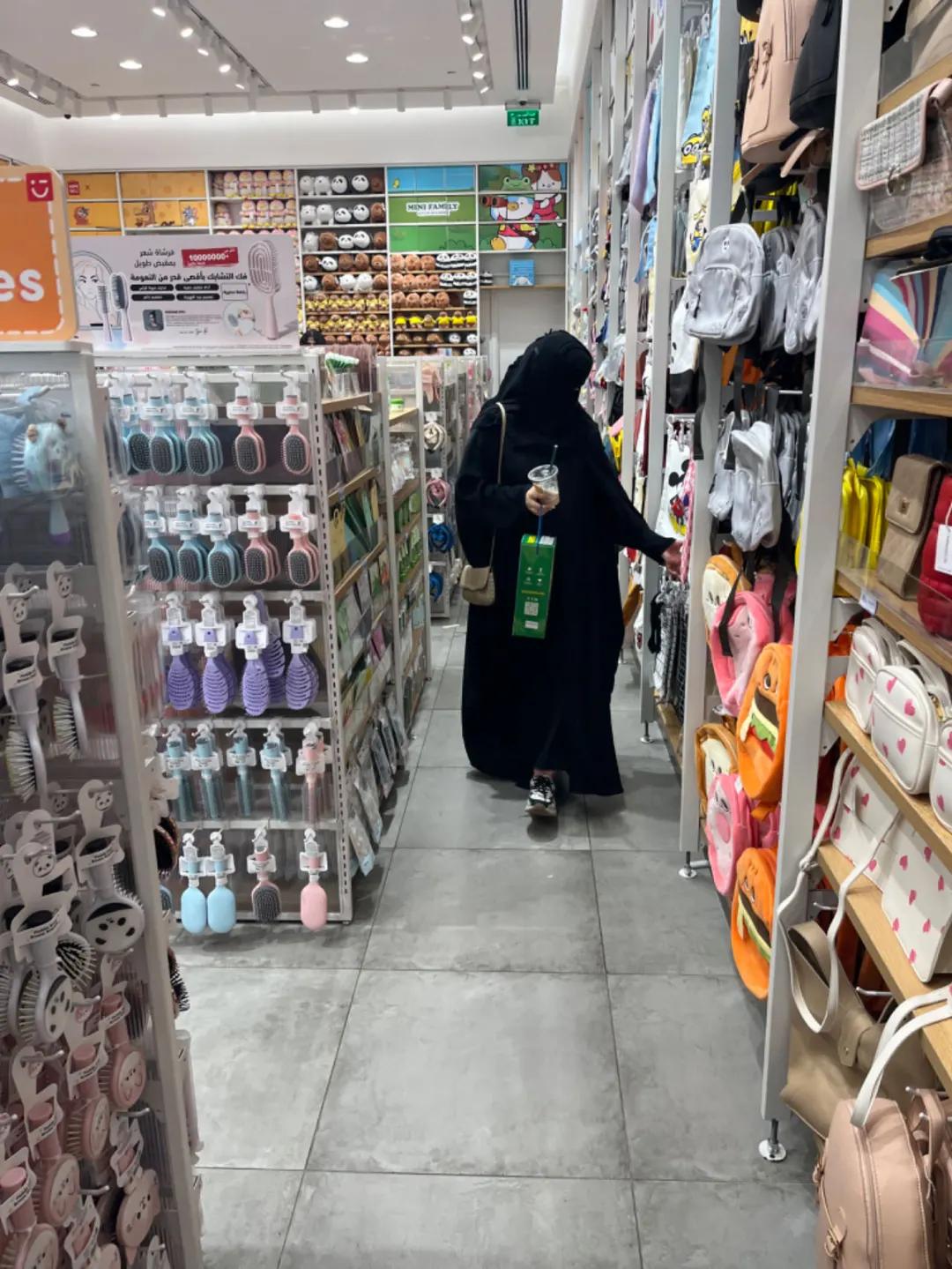
Core Insights - The article discusses the success of the Chinese tea brand WHOA TEA in Saudi Arabia, highlighting its innovative approach to local consumer preferences and emotional engagement [4][5][6]. Group 1: WHOA TEA's Market Strategy - WHOA TEA has rapidly gained popularity in Saudi Arabia, selling tens of thousands of Labubu toys, surpassing local competitors like MINISO [4][5]. - The brand's success is attributed to creating a social space for young people, rather than merely changing local tastes [5][6]. - WHOA TEA's founders recognized the limited initial customer base for Chinese milk tea and adapted their offerings to meet local entertainment and social needs [7][10]. Group 2: Cultural Adaptation and Themes - The brand incorporates popular themes such as trendy toys and board games to attract customers, creating a unique social experience [10][11]. - WHOA TEA has also tapped into the Korean Wave, appealing to young Saudi women by hosting events related to K-Pop and integrating Korean cultural elements into their stores [13][14]. - The introduction of a keychain inspired by Labubu, named "Lanunu," led to viral marketing success, significantly boosting sales and local engagement [18][19]. Group 3: Emotional Economy and Consumer Behavior - The article emphasizes the importance of emotional engagement in driving consumer behavior in Saudi Arabia, where social connections and identity are crucial [31][35]. - WHOA TEA's approach aligns with the broader trend of emotional economy, where brands create experiences that resonate with local cultural identities [31][38]. - The success of WHOA TEA reflects a growing demand for entertainment and social spaces in Saudi Arabia, driven by the country's Vision 2030 initiative [35][38]. Group 4: Online and Offline Integration - The rise of online platforms like TopTop illustrates the blending of social interaction and entertainment, catering to the emotional needs of Saudi consumers [20][21]. - TopTop's model of community engagement mirrors WHOA TEA's offline strategies, highlighting the significance of emotional connections in both online and offline settings [20][30]. - The article suggests that successful brands in Saudi Arabia must continuously innovate and adapt to local cultural dynamics to maintain consumer interest and loyalty [35][38].
京东双11开启;传疯狂小杨哥将复播;东鹏饮料递表港交所
Sou Hu Cai Jing· 2025-10-09 16:43
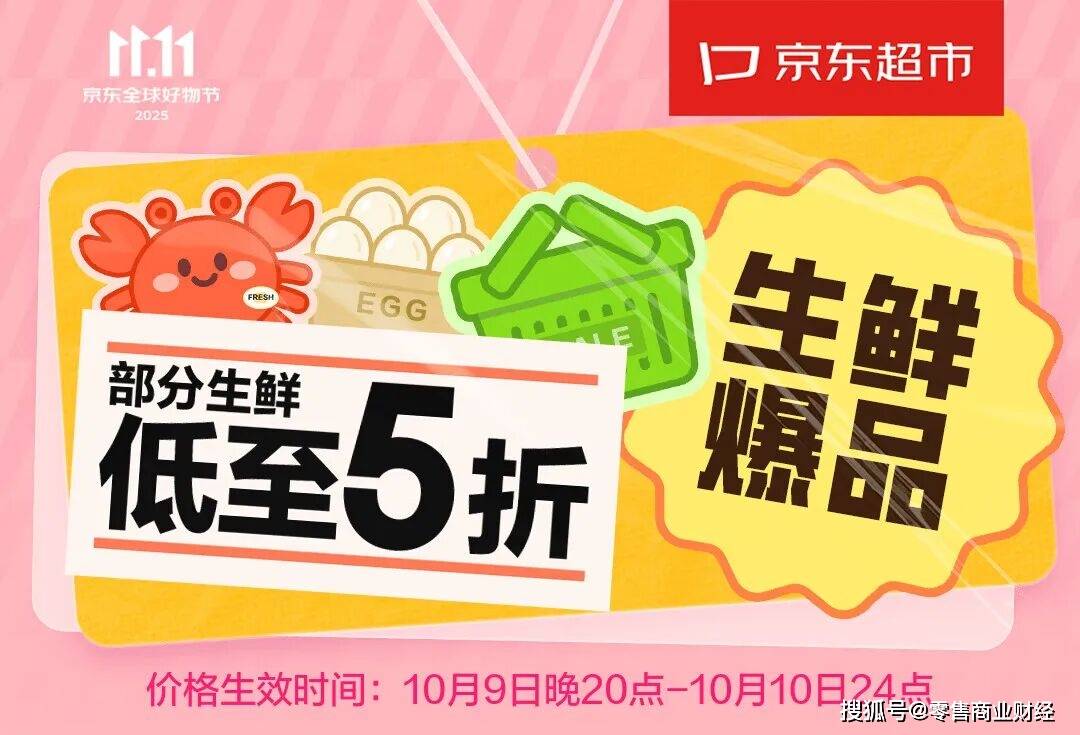
Group 1: E-commerce Events - JD.com will officially launch its Double 11 shopping festival tonight at 8 PM, featuring significant discounts and a new "surprise day" format with eight themed days to enhance consumer engagement [1] - Taobao Live is set to distribute 3 billion yuan in deposit red envelopes for the Double 11 event, allowing users to claim over 2000 yuan daily [6] Group 2: Consumer Trends - Hema reported a 150% year-on-year increase in sales of hairy crabs during the National Day holiday, indicating a strong demand for high-quality products across various regions [3] - The trend of high-quality food consumption is evident, with significant sales growth in traditional seafood areas, reflecting a shift from festive gifts to everyday dining [3] Group 3: Corporate Developments - Monster Charging has rejected a high-priced privatization offer from Hillhouse Capital, opting to proceed with its existing privatization plan with a consortium led by CITIC Capital [5] - Dongpeng Beverage has submitted a listing application to the Hong Kong Stock Exchange, marking its second attempt after a previous application in April 2025 [13] Group 4: Market Insights - WeChat's report highlighted that Chongqing led the nation in both consumption amount and transaction volume during the recent holiday, surpassing major cities like Beijing and Shanghai [7] - Haidilao reported an average daily consumption of over 35 tons of fresh beef during the holiday period, with a customer influx of over 1.8 million [17]


沙特人的情绪生意,中国公司给玩明白了
3 6 Ke· 2025-10-09 11:44
Core Insights - The rise of WHOA TEA, a Chinese bubble tea brand, in Saudi Arabia is attributed to its ability to create a social space for young people rather than just altering local taste preferences [1][2][25] - The brand has successfully tapped into the emotional needs of Saudi consumers, particularly the youth, by offering a unique environment for socializing and entertainment [2][23] Company Overview - WHOA TEA was founded by three Chinese partners and has quickly established itself as a leading tea brand in Saudi Arabia, with over 12 stores in Riyadh within two years [1][4] - The brand's sales of Labubu toys have surpassed those of local competitors, indicating strong market penetration [1] - The store's design and themes cater to local preferences, creating an inviting atmosphere for young consumers [4][6] Marketing Strategy - WHOA TEA's marketing strategy focuses on creating themed experiences, such as incorporating popular culture elements like K-Pop and anime, to attract customers [6][7][10] - The introduction of the "Lanunu" keychain, inspired by Labubu, led to viral marketing success, significantly boosting sales and brand visibility [13][27] - The brand's approach aligns with the broader trend of emotional marketing, where consumer engagement is driven by social and emotional connections rather than just product offerings [23][30] Industry Context - The emotional economy in Saudi Arabia is characterized by a strong demand for social interaction and identity recognition, particularly among the youth [23][27] - The rapid growth of online entertainment and social media usage in Saudi Arabia has created opportunities for brands like WHOA TEA to engage consumers in both online and offline settings [25][30] - The Saudi government's focus on entertainment and cultural initiatives as part of the "Vision 2030" plan further supports the growth of businesses that cater to emotional and social needs [30]
李佳琦直播间成就年轻人“情绪经济”
Bei Jing Shang Bao· 2025-10-09 06:57
Core Insights - The popularity of hand bracelets, once considered exclusive to the "cultural and artistic" circle, has surged among young consumers, becoming a staple in daily fashion [1][2] - Li Jiaqi's beauty assistant team has effectively captured the emotional sentiments of young consumers, expanding their influence beyond beauty to fashion and lifestyle [2][6] Group 1: Consumer Behavior - Young consumers are increasingly drawn to hand bracelets for their aesthetic appeal and emotional significance, with many actively seeking similar styles on social media [3][6] - The trend has led to a significant increase in searches for "crystal" on e-commerce platforms, with over 5 million searches reported this year [6] - The sales of new-style hand bracelets have exceeded 10 million units in the past year, with over 40% of sellers being aged 25-30 [6] Group 2: Market Dynamics - Li Jiaqi's live streaming sessions have become a key driver of this trend, with an average of one hand bracelet broadcast every three days [6][9] - The team utilizes big data and social media insights to anticipate consumer demand for personalized accessories, effectively creating market needs [6][8] - Various materials such as crystal, obsidian, and gold are experiencing high sales, with some styles frequently sold out, indicating strong consumer interest [6][8] Group 3: Emotional and Cultural Significance - Hand bracelets are evolving from mere decorative items to "emotional assets" that help young people cope with stress and anxiety [6][7] - The cultural and symbolic significance of jewelry is becoming increasingly important, with consumers valuing products that resonate with their personal values and lifestyles [7][8] - The rise of the "self-care economy" is reflected in the market's growth, which is projected to exceed one trillion in scale [8][9] Group 4: Influencer Impact - Li Jiaqi's live streaming platform is recognized as a significant trendsetter, influencing not only hand bracelets but also a wide range of fashion items [8][9] - The unique styles of the hosts contribute to the diverse appeal of products, leading to high consumer engagement and sales [9][12] - The platform has successfully expanded its non-beauty categories, indicating a successful crossover into broader fashion influence [9][12]

“鸡排哥”爆火背后:6元鸡排如何卖出600元情绪价值?
Xin Lang Cai Jing· 2025-10-09 04:32
Core Insights - The phenomenon of "Chicken Brother" in Jiangxi Jingdezhen highlights the power of emotional value in consumer behavior, where a 6 yuan chicken fillet is perceived to have a 600 yuan emotional value, showcasing the new flow of the digital age [2] Group 1: Emotional Economy and Consumer Behavior - The "Chicken Brother" case exemplifies the emotional economy, where consumers are willing to pay a premium for experiences that provide joy and emotional resonance, as evidenced by an 11.1% increase in restaurant revenue during the National Day holiday, surpassing the growth rate of product sales [4] - The success of "Chicken Brother" is attributed to three underlying logics: the contrast of urban and artisanal scenes, emotional resonance with customers, and the creation of social currency through shareable content [3] Group 2: Localized Business Strategies - "Chicken Brother" has effectively utilized localized social engagement by consistently operating at the same school for five years, fostering a sense of community and regional pride [5] - The ability to transform everyday experiences into replicable content symbols, such as humorous interactions and relatable gestures, has made "Chicken Brother" a perfect fit for the short video era [5]
“鸡排哥”黄金周流量变“留量”,情绪经济是下一个万亿赛道?
3 6 Ke· 2025-10-08 23:48
Core Insights - The rise of "Chicken Chop Brother" as a tourism ambassador for Jingdezhen highlights a shift in the tourism industry from hardware competition to emotional economy [1][9] - The National Day holiday saw a significant increase in tourism, with over 330 million trips taken, reflecting a strong recovery in consumer confidence [3][9] - The emotional connection and unique experiences provided by local figures like "Chicken Chop Brother" are becoming key drivers of tourism growth [9][14] Group 1: Impact of "Chicken Chop Brother" - "Chicken Chop Brother" has transformed from a traditional vendor to a cultural icon, attracting visitors not just for food but for the emotional experience [1][5] - His popularity led to a 60% increase in orders for Jingdezhen during the National Day holiday compared to the previous year [7] - The emotional value he provides has turned casual visitors into repeat customers, contributing to a new growth space for local tourism [8][18] Group 2: Emotional Economy in Tourism - The concept of emotional value is becoming a critical factor in tourism decision-making, as consumers seek emotional connections during their travels [14][21] - Similar cases, such as the popularity of Zibo barbecue and Harbin Ice Festival, demonstrate how emotional experiences can drive significant economic growth in tourism [9][12] - Social media plays a crucial role in amplifying emotional value, with platforms like Douyin and Xiaohongshu facilitating the rapid spread of engaging content [14][15][17] Group 3: Future of Tourism - Experts predict that the future of tourism will focus on emotional experiences, with destinations that understand and meet emotional needs likely to dominate the market [21] - The success of "Chicken Chop Brother" illustrates the market's demand for authenticity and genuine emotional engagement over traditional marketing strategies [17][21] - The emotional consumption market is projected to grow significantly, indicating a shift in how tourism experiences are valued [14][15]
鸡排哥、尧仔同日“歇火、熄锅”,当流量拒绝变现焕发新价值
Xin Lang Cai Jing· 2025-10-08 04:16
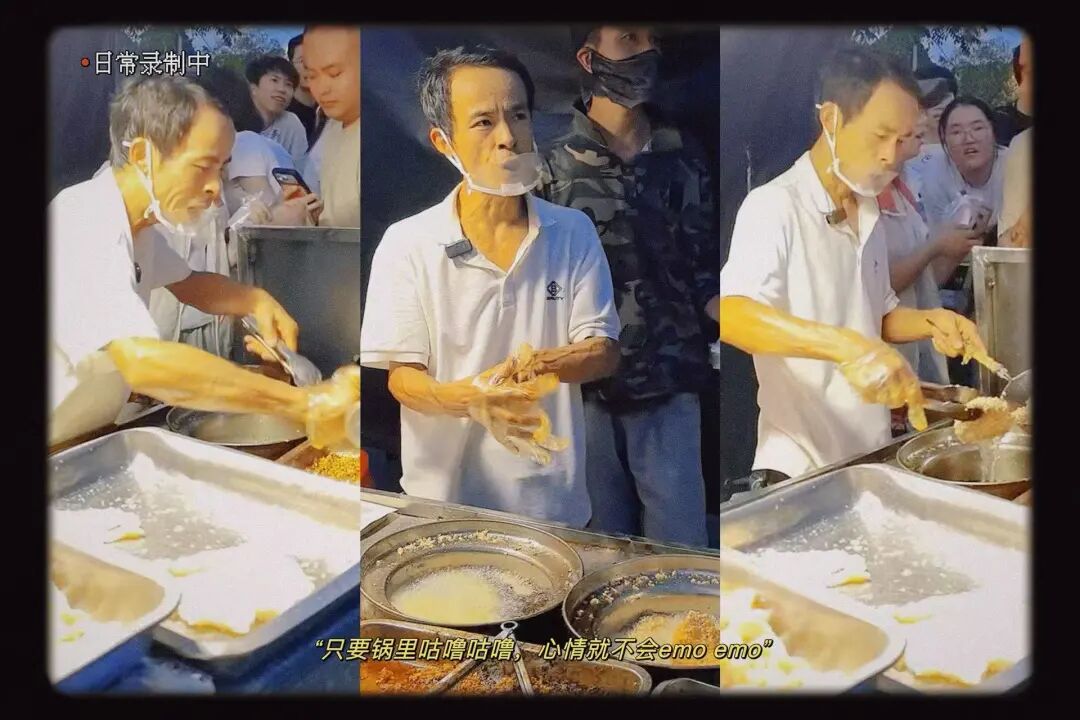
Core Insights - The article discusses the phenomenon of individual vendors, specifically "Chicken Chop Brother" and "Yaozi Fried Noodles," gaining immense popularity during the National Day holiday, highlighting the emotional value they provide to customers [7][12][15]. Group 1: Emotional Value as a Flow Password - The success of these vendors is attributed to their ability to create emotional connections with customers, transforming simple food purchases into memorable experiences [9][11]. - "Chicken Chop Brother" offers a unique blend of humor and warmth, exemplified by his famous quotes that resonate with customers, creating a sense of community [8][10]. - "Yaozi Fried Noodles" gained traction through a heartfelt video showcasing the vendor's dedication to a friend's request, emphasizing the importance of friendship and emotional bonds in consumer behavior [14][16]. Group 2: Individual Impact on Local Tourism - The rise of these vendors illustrates a broader trend where individual stories and emotional engagement can significantly boost local tourism and economy [15][17]. - The article notes that modern tourists seek not just sights but also emotional experiences, making these vendors new symbols of their cities [15][17]. - The narrative of "one person igniting a city" is reinforced by previous examples of local figures who have similarly impacted their communities [16][32]. Group 3: Managing Flow and Individuality - Both vendors exhibit a careful approach to managing their newfound popularity, with "Chicken Chop Brother" embracing the attention while maintaining his core values and service quality [18][20]. - In contrast, "Yaozi" adopts a more laid-back approach, prioritizing personal comfort over commercial pressure, reflecting different strategies in handling sudden fame [21][24]. - The article emphasizes the importance of respecting individual choices in the face of overwhelming attention, showcasing how local governments can support vendors in maintaining their identities [33][34]. Group 4: Future Considerations - The article raises questions about the sustainability of such popularity and the potential for these vendors to remain relevant post-viral fame [17][38]. - It suggests that while emotional connections can drive initial success, long-term viability will depend on how these individuals navigate their roles within the community and the tourism landscape [38].
“情绪价值”成假日文旅新密码
Zhong Guo Xin Wen Wang· 2025-10-08 04:09
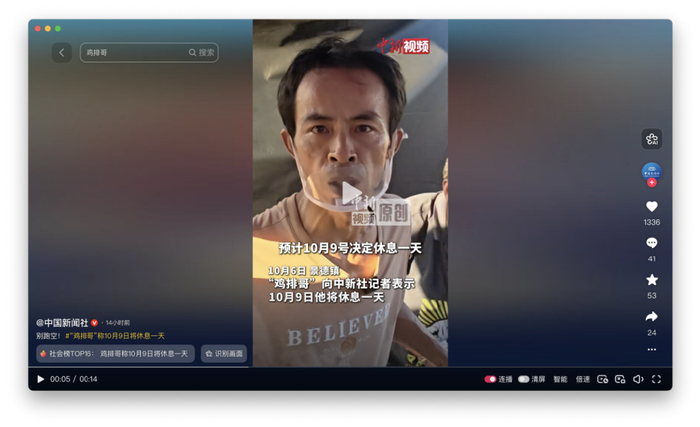
Core Insights - The rise of "Chicken Chop Brother" and "Fried Noodle Brother" reflects a new trend in cultural tourism consumption, emphasizing emotional value and personal connection in the market [1][6][8] Group 1: "Chicken Chop Brother" - "Chicken Chop Brother" gained popularity due to his unique marketing approach, offering free chicken while charging for plastic bags, and engaging customers with humorous phrases [2][3] - The stall became a hotspot during the National Day holiday, with long queues forming daily, leading to a significant increase in local tourism and related business sales [2][4] - The emotional connection created by "Chicken Chop Brother" is highlighted by his dedication to quality and customer service, which resonates more with customers than the product itself [3][5] Group 2: "Fried Noodle Brother" - "Fried Noodle Brother" became famous through a heartfelt video where he delivered fried noodles to a friend recovering from an accident, showcasing genuine care and connection [4][5] - The video went viral, accumulating nearly 3.5 million likes and leading to long queues at his stall, indicating a strong emotional response from the public [4][6] - The character of "Fried Noodle Brother" is portrayed as relatable and sincere, which enhances his appeal and fosters a sense of community [4][6] Group 3: Emotional Economy in Cultural Tourism - The stories of "Chicken Chop Brother" and "Fried Noodle Brother" illustrate the shift towards an emotional economy in cultural tourism, where personal stories and connections drive consumer interest [5][6] - The trend indicates that modern travelers are seeking personalized and meaningful experiences rather than traditional sightseeing [7][8] - The success of these individuals highlights the potential for ordinary people to become significant cultural icons, contributing to the local tourism narrative [6][8]
从潮玩游戏到黑科技产品 新“中国范儿”正在风靡全球
Yang Shi Xin Wen Ke Hu Duan· 2025-10-06 11:35
Group 1: CPOP and Cultural Export - The rise of CPOP represents a shift from "product export" to "brand export," encompassing various fields of Chinese pop culture, including technology, toys, games, film, and literature [1] - The "Chinese style" is gaining global traction, showcasing cultural depth and trendiness [1] Group 2: Success of "Labubu" Toy - The "Labubu" toy has become a global sensation, with significant sales spikes in various regions: Asia-Pacific revenue reached 2.85 billion yuan, up 257.8%; Americas revenue was 2.26 billion yuan, up 1142.3%; and Europe and other regions saw 480 million yuan, up 729.2% [2] - The brand has opened physical stores in over 20 countries and regions, including notable locations like the Louvre in France and Oxford Street in the UK [2] Group 3: Cultural Fusion Strategy - Unlike many Chinese brands focusing solely on cultural output, the company employs a "cultural fusion" strategy by collaborating with over 200 artists worldwide to bridge cultural gaps [3] - The popularity of "Labubu" reflects the rise of the "emotional economy," where its unique image serves as an outlet for young people to relieve stress and engage in creative expression [3] Group 4: "Black Myth: Wukong" Game Launch - The game "Black Myth: Wukong," based on "Journey to the West," generated significant global interest upon its release on August 20, 2024, selling over 10 million copies within three days [4][5] - The game has sparked foreign players' curiosity to explore Chinese culture, leading to increased interest in various adaptations of "Journey to the West" [5] Group 5: Recognition and Awards - "Black Myth: Wukong" received multiple nominations at the 2024 Game Awards, winning "Best Action Game" and "Player's Voice," highlighting its impact on the gaming industry [6] - The success of both "Labubu" and "Black Myth: Wukong" is seen as a testament to China's growing soft power, with the country rising to second place in the global soft power index [6] Group 6: Technological Advancements - Chinese brands are transitioning from "technology followers" to "innovation leaders," exemplified by the strong market performance of the Insta360 X5 camera, which topped sales charts in multiple countries [7] - In 2024, China exported 5.859 million vehicles, maintaining the top position globally, with electric vehicle exports, particularly by BYD, showing remarkable growth [7][8] Group 7: Global Recognition of Chinese Brands - The performance of brands like "Labubu," "Black Myth: Wukong," Insta360, and BYD illustrates the emergence of a new "Chinese style" that is gaining global recognition [9]