
慢牛行情

Search documents
A股时隔十年再破4000点,慢牛能否继续从容前行
Hua Xia Shi Bao· 2025-10-28 11:53
Core Viewpoint - The A-share market experienced a significant moment on October 28, 2025, when the Shanghai Composite Index briefly surpassed the 4000-point mark, reaching a high of 4010 points, marking a ten-year high since August 2015. However, it closed at 3988 points, indicating a cautious sentiment among investors despite the milestone [2][3]. Market Performance - On October 28, the A-share market saw the Shanghai Composite Index open lower but rise to 4010 points before retreating to close at 3988. The Shenzhen Component Index fell by 0.44% to 13430.1 points, while the ChiNext Index decreased by 0.15% to 3229.58 points. The total trading volume across the Shanghai, Shenzhen, and Beijing markets was approximately 2.17 trillion yuan, a decrease of 190 billion yuan from the previous day [3][4]. - The market showed mixed performance across sectors, with military equipment, port shipping, and non-metallic materials leading in gains, while precious metals and wind power equipment faced declines [3]. Capital Flow - The sectors with the highest net inflows included biopharmaceuticals, cultural media, and glass fiber, with net inflows of 1.589 billion yuan, 643 million yuan, and 552 million yuan, respectively. Conversely, the semiconductor, non-ferrous metals, and small metals sectors experienced significant net outflows [4]. Investor Sentiment - Market sentiment remains cautious, with analysts noting that the willingness of new capital to enter the market is low. Key factors include the valuation of certain sectors being above reasonable levels, a lack of strong economic recovery signals, and ongoing uncertainties in the international environment [5][6]. - Despite the cautious sentiment, analysts express optimism for the future, citing a likely continuation of a "slow bull" market due to favorable domestic and international conditions, including potential interest rate cuts by the Federal Reserve [6][7]. Future Outlook - Analysts predict that the A-share market will continue to experience a "slow bull" trend, supported by the "14th Five-Year Plan" and potential benefits from easing U.S.-China relations. They expect the market to maintain a wide range of fluctuations and gradual upward movement in November [7][9]. - The market is anticipated to face short-term volatility around the 4000-point level, requiring new driving forces and consensus among investors to establish a stable breakthrough above this threshold [8].


A股突破4000点,十年沉寂终迎爆发,科技主线重塑市场,“慢牛”新格局开启
3 6 Ke· 2025-10-28 03:44
Group 1 - The Shanghai Composite Index (SHCI) has officially surpassed the 4000-point mark for the first time in a decade, marking its third historical breakthrough of this key level [1][2] - The significance of this breakthrough is highlighted by economists, indicating a shift in market confidence and the effectiveness of policy reforms [1][2] - The current market trend is characterized as a "technology bull market," with strong performance in sectors such as AI, lithium batteries, and innovative pharmaceuticals [1][14] Group 2 - Analysts suggest that the SHCI's rise above 4000 points is driven by a shift from short-term policy stimulus to a long-term focus on stable growth and low volatility [2] - The market is expected to attract more retail investors, leading to increased optimism and potential for further gains [2][3] - Historical data shows that once the SHCI breaks through 4000 points, it tends to maintain a strong upward trend for several months [10][18] Group 3 - The current market dynamics differ from previous bull markets, with traditional sectors like non-bank financials and real estate underperforming compared to technology sectors [15][16] - The communication sector has seen a significant increase of 77.5% in the past year, driven by AI-related demand, contrasting with the performance of traditional industries [15][16] - Institutions are optimistic about the long-term outlook for the A-share market, with expectations of continued growth and potential new highs [13][22] Group 4 - Foreign investors are increasingly interested in Chinese stocks, with firms like Goldman Sachs and JPMorgan expressing positive long-term outlooks for the market [22][24] - Goldman Sachs predicts a 30% increase in major indices by the end of 2027, while JPMorgan estimates a 24% rise in the CSI 300 index by the end of 2026 [22][24] - The focus of foreign investors is shifting towards technology and sectors benefiting from China's economic transformation [24]
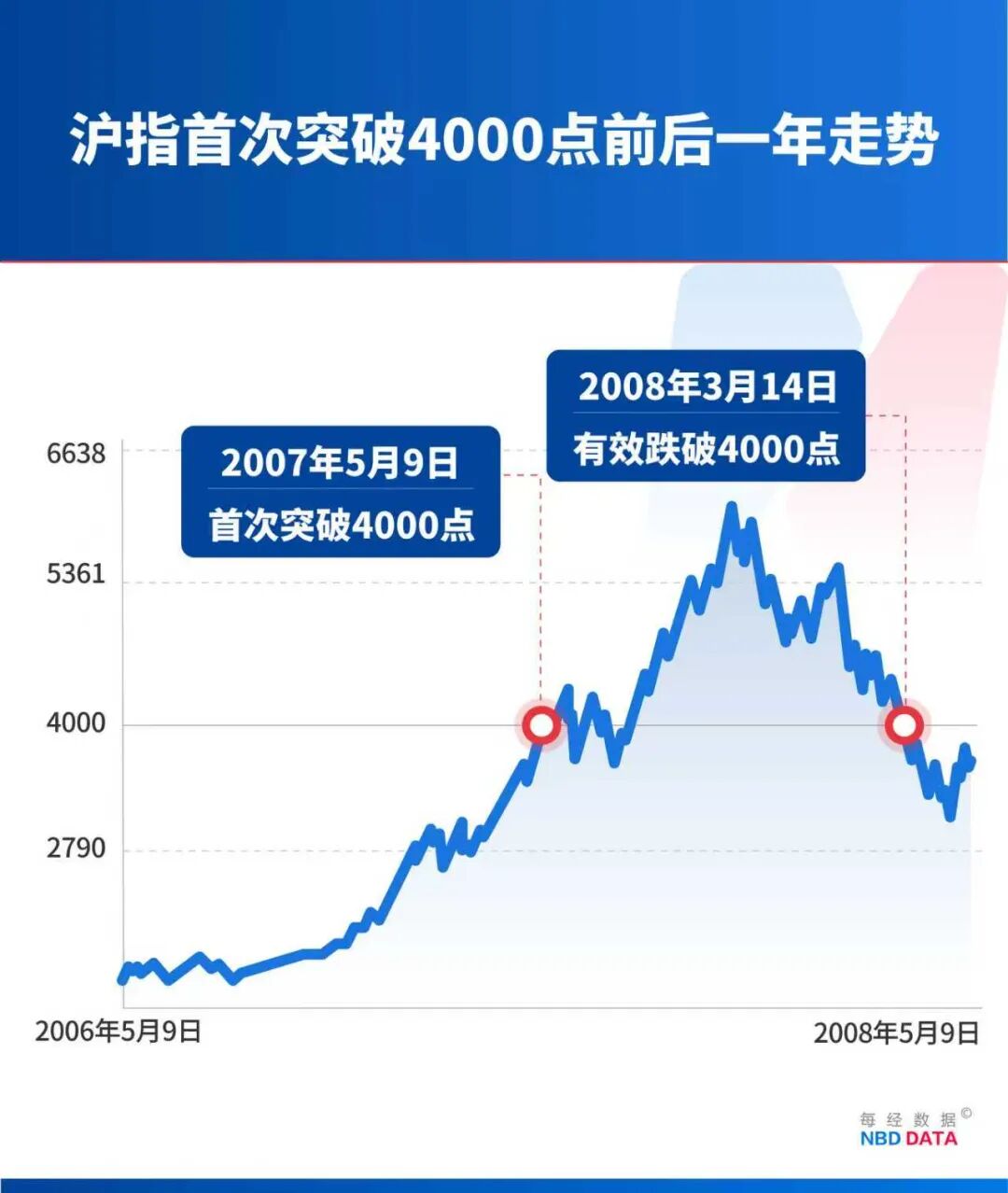
A股突破4000点,十年沉寂终迎爆发,“慢牛”新格局开启
Mei Ri Jing Ji Xin Wen· 2025-10-28 03:35
Core Viewpoint - The Shanghai Composite Index has officially surpassed the 4000-point mark for the first time in a decade, marking its third historical breakthrough of this key level, which is seen as a significant signal of market confidence and the effectiveness of policy reforms [2][4][6]. Market Dynamics - The current market rally is characterized by a "technology bull" trend, with technology sectors leading the charge, contrasting with previous bull markets where traditional sectors like non-bank financials and real estate were dominant [4][20]. - Historical data indicates that once the Shanghai Composite Index breaks through 4000 points, a strong upward trend typically persists for several months [8][15]. Institutional Perspectives - Analysts from various institutions express optimism about the market's future, suggesting that the index's stability above 4000 points could attract more retail investment and enhance market sentiment [6][24]. - There is a consensus among institutions that the current bull market is driven by a combination of strategic confidence in technology advancements and supportive policy measures [4][18]. Sector Performance - The technology sector, particularly the AI industry, has shown remarkable performance, with the communication industry leading with a 77.5% increase over the past year, while traditional sectors lag behind [21][22]. - The current market structure is expected to evolve, with potential shifts in focus towards advanced manufacturing and green industries as the bull market progresses [28]. Foreign Investment Interest - Foreign investors are increasingly interested in Chinese stocks, with firms like Goldman Sachs and JPMorgan expressing bullish outlooks on the Chinese market, predicting significant upside potential for major indices [29][31]. - Recent communications with foreign investors reveal a growing optimism about the Chinese market, particularly in technology and AI sectors, indicating a potential influx of foreign capital [33].
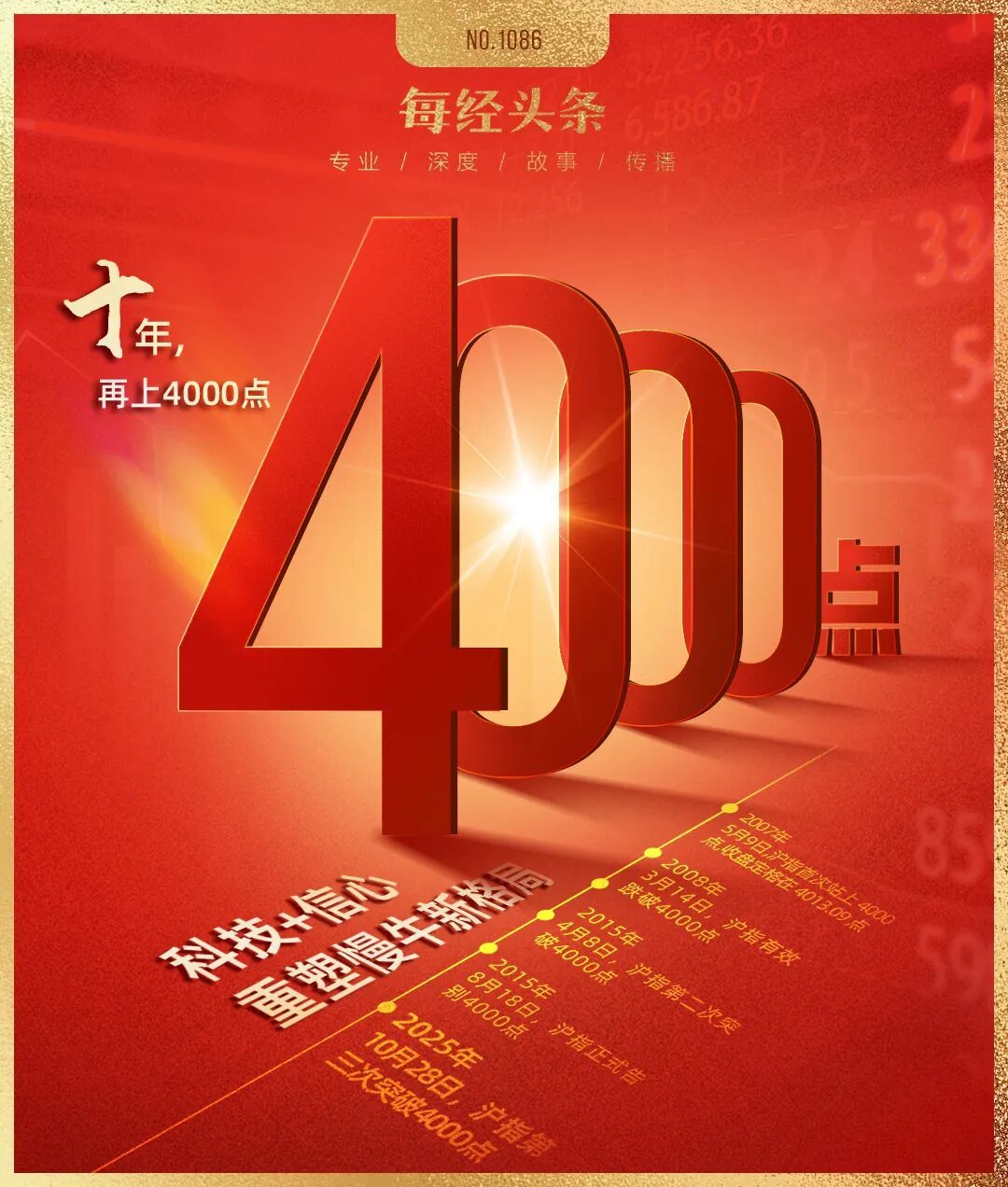
3724天,你好,4000点,好久不见
凤凰网财经· 2025-10-28 02:52
Core Insights - The A-share index has shown significant strength, with the Shanghai Composite Index surpassing 4000 points for the first time in ten years, marking a 45% increase since the "924" market rally began last year [1][3] - The A-share market has undergone substantial changes over the past decade, with total market capitalization rising from 52 trillion yuan to 107 trillion yuan, and the number of stocks increasing from 2,662 to 5,440 [3] Group 1: Market Performance - The Shanghai Composite Index last reached 4000 points on August 18, 2015, and it has been 3,724 days since then [1] - The Shenzhen Component Index has increased over 66%, while the ChiNext Index has surged more than 110% since the "924" rally began [1] - The total number of retail investors has grown from approximately 93 million to over 240 million, indicating a significant increase in market participation [3] Group 2: Institutional Outlook - Foreign institutions are optimistic about the Chinese stock market, with Goldman Sachs indicating that the market is entering a slow bull phase, suggesting a shift in investor strategy from "selling high" to "buying low" [4] - JPMorgan's China equity strategy team maintains a positive outlook for the A-share market, citing a gradual shift in asset allocation towards equities as a key support for the market [5] - UBS analysts also agree on the mid-term positive outlook for the stock market, emphasizing that growth styles will remain the main investment theme despite recent market fluctuations [5] Group 3: Focus Areas - Foreign institutions are particularly focused on the "14th Five-Year Plan" expectations, which are anticipated to create new investment opportunities in the A-share market [6] - JPMorgan highlights that the plan will prioritize the development of new productive forces and address high-tech bottlenecks, while also emphasizing domestic consumption expansion [6] - UBS economists predict that promoting "high-quality growth" and developing "new productive forces" will be key tasks in the coming years, with a focus on innovation and overall productivity growth [6]

4000点仅一步之遥!科技主线强势拉升
Mei Ri Jing Ji Xin Wen· 2025-10-27 05:48
Group 1: A-Share Market Performance - The Shanghai Composite Index rose by 1.04%, the Shenzhen Component Index increased by 1.26%, and the ChiNext Index gained 1.54% during the midday session [1] - The total trading volume in the Shanghai and Shenzhen markets reached 15,760 billion yuan, an increase of 3,367 billion yuan compared to the previous day [1] - Nearly 3,600 stocks in the market experienced gains, indicating a broad-based rally, with coal and banking sectors performing well alongside AI hardware in the technology sector [1] Group 2: Market Outlook and Sentiment - CITIC Securities believes that after the National Day and Mid-Autumn Festival holidays, the A-share market experienced significant volatility, particularly in growth sectors represented by the ChiNext Index and the Sci-Tech Innovation 50 Index, which saw adjustments of around 10% [1] - Recent market sentiment has cooled, with a slowdown in the inflow of incremental funds; however, the overall market has not lost momentum, and sentiment has stabilized in the past two days [1] - Huaxi Securities reports a return to a "slow bull" trend, with a global tech AI market rally expected to boost short-term risk appetite, indicating that the "slow bull" market in A-shares will continue [1] Group 3: Hong Kong Stock Market Valuation - The technology sector in the Hong Kong stock market exhibits significant valuation attractiveness, characterized as a "valuation pit" [2] - The price-to-earnings (P/E) ratio of the Hong Kong Stock Connect Technology Index is approximately 25.71 times, compared to 41.94 times for the ChiNext Index, indicating a valuation discount of over 40% for Hong Kong tech stocks [2] - When compared globally, the valuation levels of Hong Kong tech-related indices are significantly lower than those of the US S&P 500 and Nasdaq indices, providing a higher margin of safety and potential return despite benefiting from the AI industry trend [2] Group 4: Hong Kong Technology ETFs - The Hong Kong Stock Connect Technology ETF (159101) covers the entire technology industry chain [3] - The Hang Seng Internet ETF (513330) focuses on leading internet companies [3]
A股分析师前瞻:科技成长景气主线这一趋势有望强化
Xuan Gu Bao· 2025-10-26 13:18
Core Viewpoint - The overall sentiment among brokerage strategy analysts is optimistic about the market outlook, with a particular focus on the technology sector as a main investment theme [1][2][3]. Group 1: Market Trends and Drivers - The upcoming trade negotiations between China and the U.S., along with expectations of interest rate cuts from the Federal Reserve, are expected to strengthen the technology growth trend [1][2]. - The market has shifted back to a performance-driven structure, with two emerging themes: supply chain security and the expansion of AI from cloud to edge computing [1][3]. - The "Fifteen Five" plan marks a strategic shift from a defensive to an offensive approach, emphasizing proactive economic development and high-level technological self-reliance [1][3][4]. Group 2: Sector Focus and Investment Opportunities - The technology sector remains a long-term focus, with significant attention on AI and its applications, particularly as major tech companies prepare to release earnings reports [2][3]. - Analysts highlight the potential for manufacturing companies to benefit from China's competitive advantages and the high costs of resetting overseas production capacities [1][3]. - The "Fifteen Five" plan is expected to enhance the strategic position of technology development, creating new opportunities for investment in sectors such as AI, quantum technology, and advanced manufacturing [4][5]. Group 3: Policy Implications - The recent policy statements from the Fourth Plenary Session are seen as reducing the likelihood of contractionary policies, which could support a bull market extending into 2026 [1][4]. - The focus on domestic consumption and supply chain security is expected to lead to more structured and sustained consumption stimulus policies [4][5]. - The overall policy environment is perceived as favorable for the A-share market, particularly in technology, manufacturing, and consumer sectors [4][5].
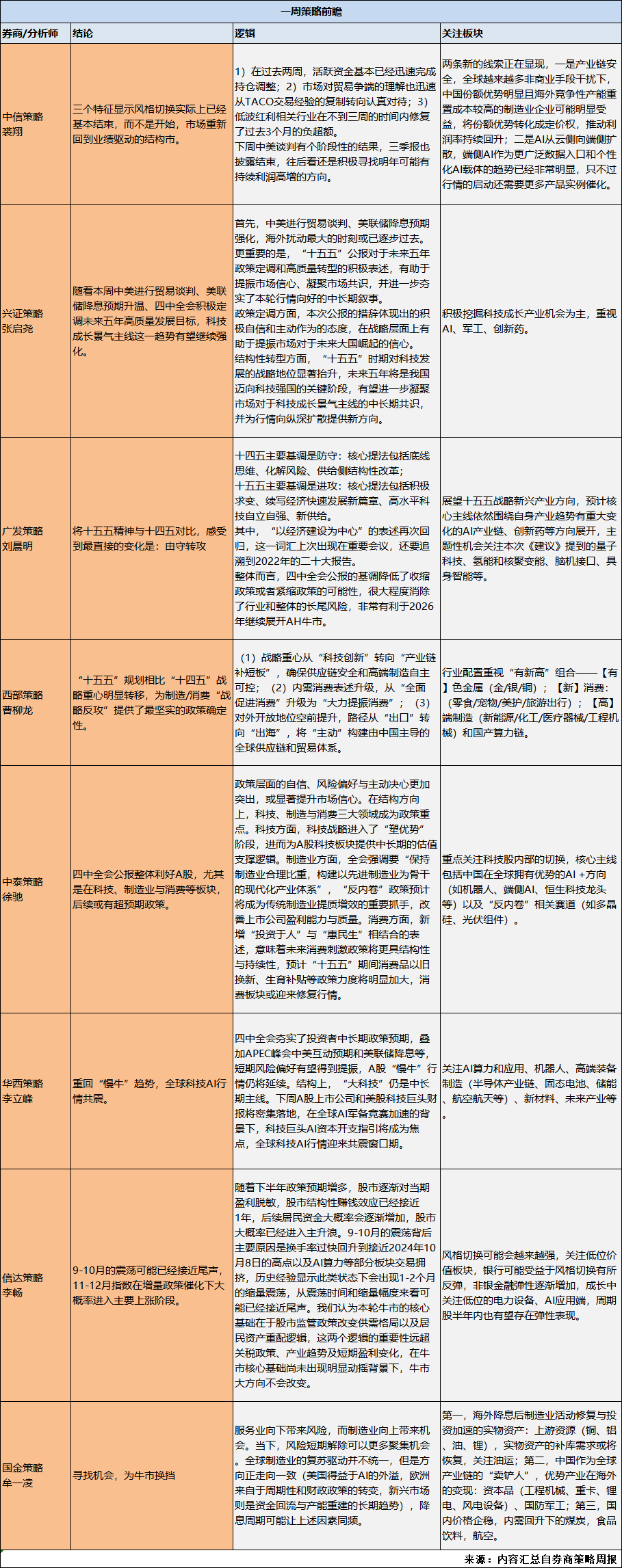
A股,4000点来了,策略也该变了
Sou Hu Cai Jing· 2025-10-26 11:29
Core Viewpoint - The A-share market is experiencing a significant phenomenon with shrinking trading volume, indicating a potential shift from an upward trend to a downward breakout, particularly if daily trading volume falls below 1.5 trillion yuan [1] Group 1: Market Trends - Early in the week, the market's trading volume dropped below 2 trillion yuan, raising concerns about the sustainability of the upward trend [1] - Despite initial fears of a downward breakout, a small upward movement on Friday suggests a possible shift in market dynamics, indicating that important forces are supporting the market [1] - There are expectations that the market may break through the 4000-point level, but this does not necessarily imply an accelerated upward trend [1][2] Group 2: Investor Sentiment - The market's behavior indicates that when most investors become overly enthusiastic, caution is warranted, while pessimism may present buying opportunities [2] - A Goldman Sachs report suggests a potential 30% upside for A-shares over the next two years, advocating for a "buy on dips" strategy [2] Group 3: Structural Changes - The market structure is expected to evolve, with a shift from broad-based rallies to a focus on technological innovation and performance-driven stocks post-4000 points [4] - The concentration of market funds is likely to favor a small number of leading stocks, similar to the current state of the U.S. stock market [4] Group 4: Investment Strategy - Future investment strategies may shift from balanced quantitative funds to focusing on core leaders in technology and energy storage sectors [5] - The company plans to gradually adjust its investment approach based on market developments, starting with a partial allocation during market corrections [5]
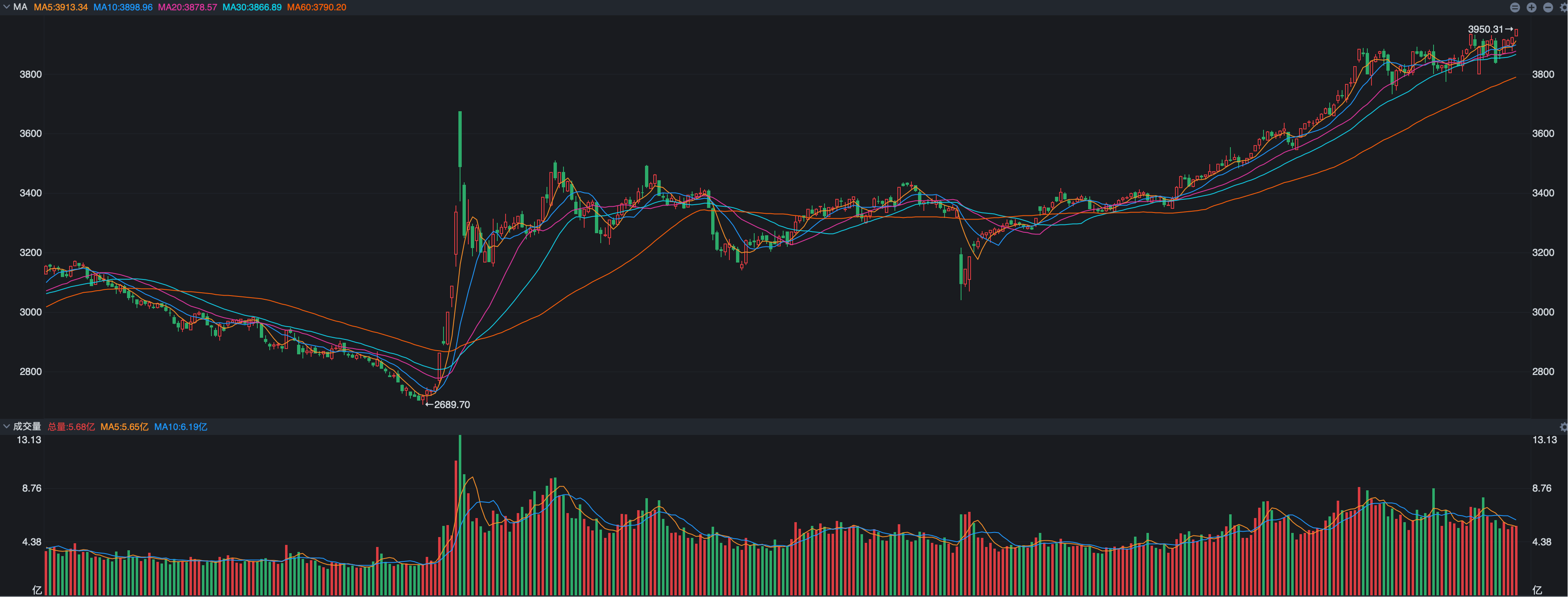
新发基金频频提前结募!公募基金:“慢牛”将继续演绎
天天基金网· 2025-10-26 08:09
Core Insights - The recent market recovery has led to a surge in demand for newly launched mutual funds, with several funds completing their fundraising targets in record time, indicating strong investor confidence [3][5][8] - The introduction of floating fee rate products has shown promising initial performance, with average returns exceeding 12.47% for the first batch, which is expected to positively influence subsequent fund launches [4][7] Fundraising Trends - On October 24, 2023, the Jiashi Growth Sharing Mixed Fund completed its fundraising of approximately 30 billion yuan in just five days, ahead of its scheduled end date [3][5] - Other funds, such as the China Europe Value Navigation Fund and Penghua Manufacturing Upgrade Fund, also completed their fundraising quickly, with the former reaching 20 billion yuan in one day [5][6] - The trend of early fundraising closures is not limited to equity funds but also includes FOFs, ETFs, and QDII funds, reflecting a broader market enthusiasm [5][6] Performance of Floating Fee Rate Products - The first batch of floating fee rate products has delivered strong performance, with some funds achieving over 40% returns within three months of their launch [4][7] - The success of these products is attributed to their innovative fee structure and the overall positive market sentiment, which is expected to encourage further adoption of this model [7] Market Outlook - Multiple asset management firms maintain an optimistic outlook for the market, predicting a "slow bull" trend driven by improving macroeconomic conditions and corporate earnings recovery [8][9] - The ongoing shift in investor sentiment towards more established fund managers and the importance of sales capabilities in fund distribution are also highlighted as key factors influencing fundraising success [6][8]

从基金发行火爆说开去,这次大不同
Zheng Quan Shi Bao· 2025-10-24 17:37
Core Insights - The public fund issuance has peaked in October, with over 70 funds currently in the issuance phase and expected total fundraising to reach 100 billion yuan [1] - The majority of the funds being issued are equity funds, particularly actively managed sector and style funds, contrasting with previous trends dominated by bond funds and passive ETFs [1] - Fund sales have significantly increased, with some fund companies shortening issuance periods and setting high fundraising caps [1] Fund Issuance Trends - Historically, fund subscriptions tend to rise after a few months of market uptrend, but this time, the sales have picked up after nearly a year of market activity, indicating a shift in investor behavior [2] - The current market is characterized by a "slow bull" trend, with a structural market where many stocks remain stagnant while tech stocks are performing well [2] - The active management of equity funds has seen a notable increase, although the scale is still below historical peaks [2] Market Reactions - Recent market fluctuations have not significantly impacted fund sales; some investors are even increasing their investments in funds due to market corrections [3] - The current market adjustment is seen as beneficial, allowing new capital to enter the market more comfortably [3] - The unique phenomenon of fund issuance being both easy to sell and potentially easy to operate may not be repeated this time [3]
A股高开高走 沪指再创十年新高!
Qi Huo Ri Bao Wang· 2025-10-24 10:09
Group 1: A-Share Market Performance - The A-share market saw significant gains with the Shanghai Composite Index reaching a 10-year high, closing up 0.71% at 3950.31 points, while the Shenzhen Component Index rose 2.02% to 13289.18 points, and the ChiNext Index increased by 3.57% to 3171.57 points [1] - The total trading volume in the Shanghai and Shenzhen markets was 1.97 trillion yuan, showing a substantial increase compared to the previous trading day [1] Group 2: Sector Performance - The electronics, semiconductor, and computer hardware sectors led the market gains, particularly in computing hardware, with CPO concept stocks performing strongly [1] - Major players in the optical module sector saw significant increases, with Zhongji Xuchuang rising over 12% to reach a historical high, and Huylv Ecological achieving three consecutive trading limits [1] - Storage chip stocks also performed well, with both Shannon Chip and Purang Co. hitting the daily limit of 20% and reaching new highs [1] - The commercial aerospace sector experienced a surge, with over ten stocks hitting the daily limit [1] - Conversely, coal stocks faced collective adjustments, with Antai Group hitting the daily limit down [1] Group 3: Industry Insights - According to Guojin Securities, cryptocurrency mining companies are emerging as new entrants in the AI data center space due to their low electricity costs and substantial approved power quotas [1] - Most cryptocurrency mining companies are preparing to transition to AI data centers, although their strategies and progress vary [1] - It is recommended to focus on companies that are aggressively transitioning to AI data centers, have clear plans for AI computing power expansion, and possess a favorable valuation compared to their current stock price [1] Group 4: Coal Market Outlook - CITIC Securities reports that the supply and demand dynamics for thermal coal are favorable, with prices expected to continue rising due to recent weather impacts and maintenance affecting production and transportation [2] - As the northern regions enter the heating season, demand from non-electric industries such as chemicals and metallurgy is increasing, leading to heightened market activity and bullish sentiment [2] Group 5: Market Sentiment and Future Outlook - According to Caixin Securities, there is a weak willingness for new capital to enter the market, resulting in insufficient momentum for market advances [2] - The market is currently awaiting the outcome of significant macroeconomic events to clarify investment directions and restore confidence [2] - Despite short-term caution, the foundation for a "slow bull" market remains intact, supported by ongoing global tech investment enthusiasm and other favorable factors, suggesting potential for continued strength in A-share indices in the fourth quarter [2]