新旧动能转换

Search documents
巩固“稳”的基底 开拓“进”的新局——聚焦省委经济工作会议①
Da Zhong Ri Bao· 2025-12-24 01:15
Group 1 - The core viewpoint emphasizes the steady growth and positive trajectory of Shandong's economy, with key indicators showing resilience and improvement [1][2] - In the first eleven months, the province's industrial added value increased by 7.7%, retail sales of consumer goods grew by 5.2%, and foreign trade rose by 4.6% [1] - Shandong is set to become the third province in China and the first in the north to surpass a GDP of 10 trillion yuan, marking significant economic milestones [1] Group 2 - The "six musts" outlined in the Central Economic Work Conference are crucial for guiding Shandong's economic development, focusing on policy support, innovation, and leveraging local advantages [2][3] - The province aims to enhance its economic structure by addressing long-standing issues while also adapting to new challenges, indicating a dual focus on stability and progress [3][4] - The emphasis on "stability" includes maintaining employment, businesses, markets, and expectations, while "progress" involves implementing key industrial projects and fostering new growth drivers [4][5] Group 3 - The service sector is identified as a key engine for economic growth and job creation, with a reported 5.3% increase in revenue from the service industry in the first ten months of the year [5][6] - Despite the growth in the service sector, challenges remain regarding its overall size and quality, prompting calls for targeted strategies to enhance its development [6] - The focus on specific industries, such as wholesale and retail, finance, and transportation, highlights the need for tailored policies to boost service sector performance [6]
因地制宜发展新质生产力 为高质量发展提供强大动能
Jing Ji Ri Bao· 2025-12-23 22:13
高质量发展是全面建设社会主义现代化国家的首要任务,是我国经济社会发展必须长期坚持的鲜明主 题。发展新质生产力是推动高质量发展的内在要求和重要着力点,是推进中国式现代化的重大战略举 措。《习近平谈治国理政》第五卷设置专题,收录了习近平总书记2022年12月至2024年12月期间关 于"因地制宜发展新质生产力,实现高质量发展"的重要论述,深刻回答了"什么是新质生产力、为什么 要发展新质生产力、怎样发展新质生产力"等重大理论和实践问题,为发展新质生产力、更好推动高质 量发展指明前进方向、提供根本遵循。 新质生产力理论是指导高质量发展的新的生产力理论 新质生产力理论深刻揭示了新时代社会生产力发展特征和规律,是马克思主义生产力理论中国化时代化 的最新成果,进一步丰富和发展了习近平经济思想。习近平总书记围绕发展新质生产力发表了一系列重 要论述,其中许多都收录在《习近平谈治国理政》第五卷中。 鲜明提出高质量发展需要新的生产力理论来指导,明确了发展新质生产力的重大意义。解放和发展社会 生产力是社会主义的本质要求和根本任务。新时代以来,以习近平同志为核心的党中央牢牢把握高质量 发展这个首要任务,抢抓新一轮科技革命和产业变革机遇 ...
站在3个3000万辆新起点
Xin Lang Cai Jing· 2025-12-23 12:14
Group 1 - The Chinese automotive industry has achieved significant milestones, with major manufacturers like FAW-Volkswagen and Changan Automobile reaching their 30 millionth vehicle production mark, contributing to a total production and sales exceeding 31 million units, both up over 10% year-on-year [2][7] - Technological innovations are advancing rapidly, particularly in solid-state battery development and intelligent connected vehicles, with 64% of new passenger cars featuring combined driving assistance functions [2][7] - Despite growth, the industry faces challenges such as irrational competition leading to price wars and declining profit margins, alongside persistent issues of "involution" that threaten long-term brand value and sustainable development [2][7] Group 2 - The recent Central Economic Work Conference outlined eight key tasks, six of which are directly related to the automotive industry, emphasizing the need for a demand-driven approach, innovation, reform, and international openness [3][8] - Policies aimed at stimulating domestic demand have been effective, with over 11.2 million applications for vehicle trade-ins from January to November, and projections indicating that the trade-in market could exceed 180 billion yuan by 2025 [3][8] - The focus on addressing "involution" competition is set to intensify, with new guidelines for pricing behavior expected to shift competition from price to value, encouraging investment in technology and brand development [4][9] Group 3 - The establishment of the Hainan Free Trade Port is expected to enhance trade relations and provide opportunities for the automotive industry to explore cross-border data and vehicle modification [5][10] - By 2026, the automotive industry is anticipated to transition from growth based on scale to one focused on quality and efficiency, driven by domestic demand activation, competition regulation, and innovation [5][10]


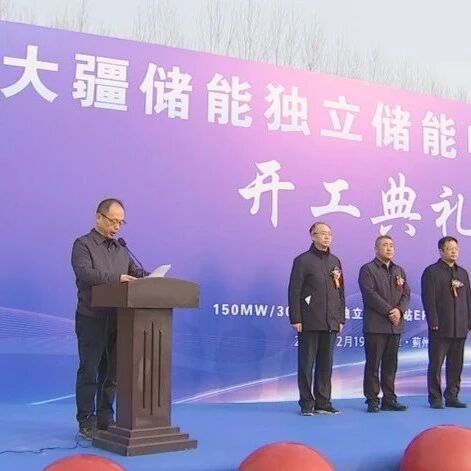
480MW/960MWh!天津蓟州侯家营镇共享储能电站项目开工
中关村储能产业技术联盟· 2025-12-23 02:11
Core Viewpoint - The project of the shared energy storage station in Houjiaying Town represents an innovative practice in promoting the transformation of energy and achieving carbon neutrality goals, with a total investment of 1.637 billion yuan [2][5]. Group 1: Project Overview - The shared energy storage station project has a capacity of 480MW/960MWh and is being implemented by Tianjin Dajiang Energy Storage Technology Co., Ltd. [2] - The project includes the construction of a lithium iron phosphate battery energy storage station and a 220kV booster substation, covering an area of 44.74 acres with a building area of 26,820 square meters [2]. - The first phase of the project will have a construction scale of 150MW/300MWh, with an investment of 519 million yuan [2]. Group 2: Environmental and Economic Impact - Once completed, the project is expected to provide nearly 800,000 MWh of clean electricity to the grid annually, saving 230,000 tons of standard coal compared to coal-fired power plants, and significantly reducing harmful gas emissions [4]. - During the construction phase, the project will create over 200 local job opportunities, and after completion, it will provide 30 permanent jobs [5]. Group 3: Strategic Importance - The project aligns with national planning and industrial policies, contributing to the rapid development of related industries and demonstrating a comprehensive effect of one-time investment with long-term benefits [4]. - The energy storage station will enhance the regional grid's frequency modulation, voltage regulation, and black start services, ensuring the safe and stable operation of the grid and facilitating the absorption of renewable energy [5].
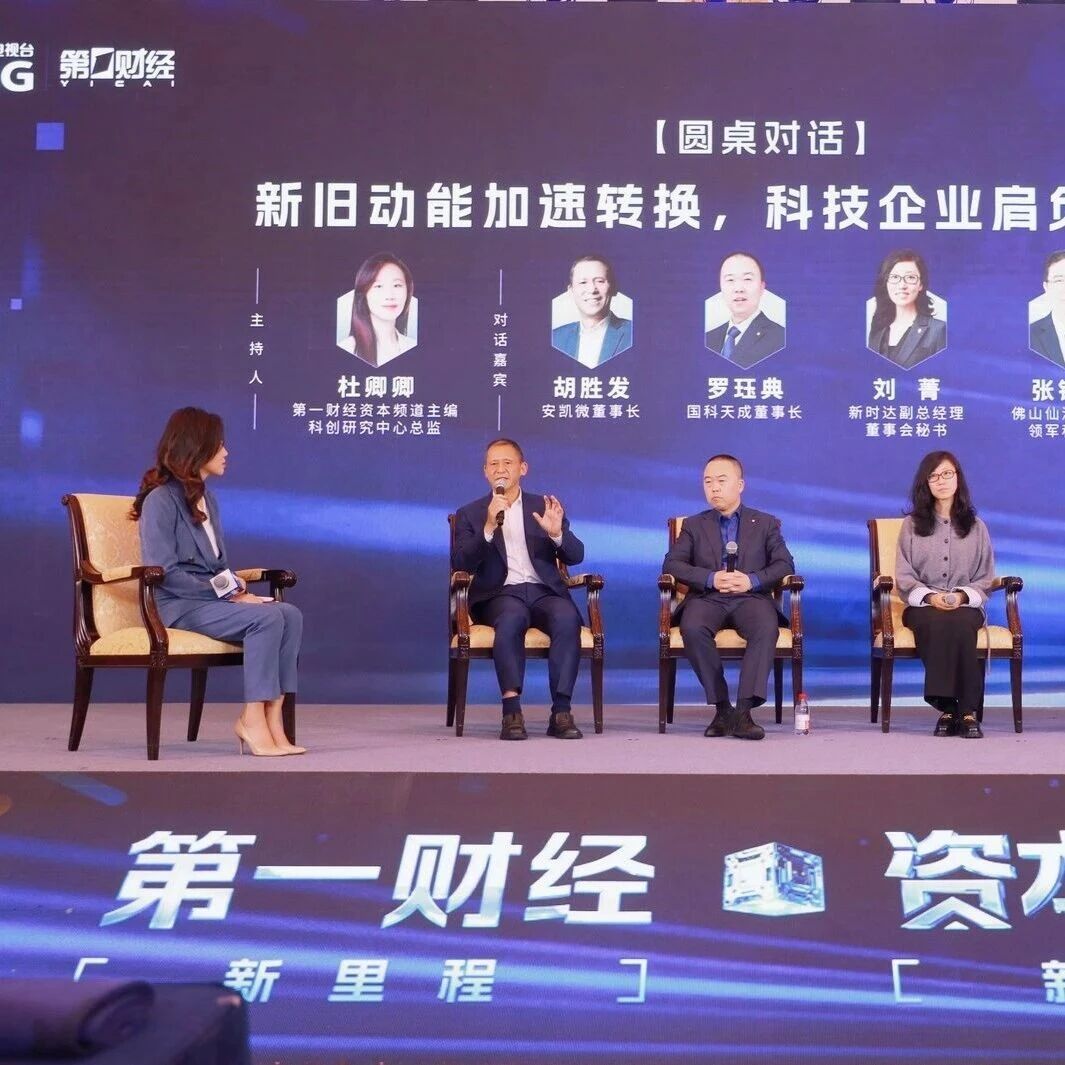
新旧动能加速转换,科技企业如何拥抱AI时代
第一财经· 2025-12-22 10:12
Core Viewpoint - Innovation is the lifeline for technology companies and a new mission to serve national strategies, with a focus on fostering new momentum in line with national policies [1] Group 1: Opportunities in Technology Innovation - The current era presents unprecedented policy opportunities for technology companies, emphasizing the need for innovation and investment [5] - Three major opportunities for technology companies include: 1. Transitioning from domestic substitution to leading internationally, with nearly 600 companies listed on the Sci-Tech Innovation Board [6] 2. The rise of local technology talent due to ongoing reforms and investments in the tech sector [6] 3. Increased policy support for companies going global, whether through business expansion or overseas listings [6] Group 2: Perspectives on AI and Market Dynamics - There is a debate on whether AI has a bubble; however, some experts believe that AI is just beginning, with potential for significant growth in the future [3][13] - The importance of distinguishing between large and small AI models is highlighted, with small models showing clear benefits in industrial efficiency [15] - The AI industry is expected to follow a cycle of volatility, consolidation, and resurgence, similar to trends seen in the electric vehicle market [16] Group 3: Capital and Investment Strategies - Continuous innovation requires both policy and capital support, with a focus on long-term investment strategies from both entrepreneurs and investors [10] - Companies need to build a systematic risk management and value expression framework to gain capital recognition, referred to as the "capital strategy diamond model" [12] - The current market offers many innovative startups with strong potential for mergers and acquisitions, presenting opportunities for strategic partnerships [11]
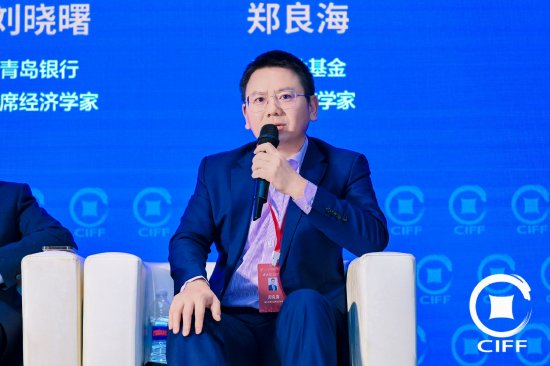
富安达基金郑良海:2026年创业板和上证一定有春季躁动
Xin Lang Cai Jing· 2025-12-22 09:49
新浪声明:所有会议实录均为现场速记整理,未经演讲者审阅,新浪网登载此文出于传递更多信息之目 的,并不意味着赞同其观点或证实其描述。 责任编辑:李昂 专题:第二十二届中国国际金融论坛 12月19日-20日,"第二十二届中国国际金融论坛"在上海举行,主题为:数字经济时代的智能金融生态 构建。富安达基金首席经济学家郑良海出席并演讲。 郑良海谈到,AI对基金行业的赋能未来是方兴未艾,是流程再造。未来对公募基金的前台、中台和后 台都有流程再造,眼下对AI对金融包括公募账户管理上最大的帮助体现两个方面:一方面是投研,另 一方面是投资。 他指出,过去的投资模式,不管量化还是指数,都是从主动投资到被动指数,再到量化的初级阶段,多 因子选股再到指数增强,再到完全基于AI减少人性。"我们经常说投资是反人性的,但是在投资中只要 借助主观因素,肯定很难克服性格缺陷,以及知识储备不足。你在做的过程当中会发现老是追涨杀跌, 或者是有时候涨势过程当中回撤有点大,业绩上涨的时候表现很好,但是回撤的时候又很大。" "未来,基于大模型,其投资效率和稳健性比传统的相对科学稳健一些。" 谈及对2026年的展望,郑良海表示,首先,中国现在的新旧动能转 ...

AI行情再审视:2020年以来A股结构性行情深度镜鉴
ZHONGTAI SECURITIES· 2025-12-22 06:31
Group 1: Macro Narrative and Market Ecology - Since 2020, the A-share market has transitioned from a total-driven model to a structural market characterized by macro momentum shifts, changes in funding behavior, and iterative industrial logic [8][9] - The macro background indicates a fundamental shift from a traditional growth model driven by real estate and infrastructure to a new paradigm centered on technology and manufacturing [8][9] - The structural opportunities for excess returns are concentrated in sectors aligned with industrial upgrades and national strategic directions [8][9] Group 2: Changes in Funding Behavior - The public fund industry experienced significant expansion from 2020 to mid-2021, with a notable influx of retail savings into the capital market through actively managed equity funds [10][13] - From 2022 to 2024, the trend shifted towards passive investment, with ETF inflows significantly outpacing actively managed funds, indicating a move from individual stock alpha to industry or style beta opportunities [13][16] - By 2023, institutional funding behavior underwent a strategic transformation, reducing reliance on retail trading sentiment and emphasizing long-term performance based on fundamental trends [16][17] Group 3: Deep Review of Structural Markets Post-2020 Consumer and Pharmaceutical Sector - The consumer and pharmaceutical sectors gained significant valuation premiums during the pandemic due to their demand rigidity and stable cash flows, becoming ideal defensive assets [20][21] - The market's focus on these sectors was driven by high visibility of earnings and a favorable macro environment, leading to a systematic concentration of funds [20][21] New Energy Sector - The new energy sector emerged as a dominant theme from mid-2021 to 2022, driven by the "dual carbon" goals and rapid performance growth across the industry [43][46] - The sector's growth was characterized by a "Davis double play," where strong earnings growth supported stock price increases without excessive valuation expansion [46][49] - By late 2021, the new energy market experienced a supply-demand gap, with significant price increases in upstream resources indicating robust downstream demand [53][54] General AI Sector - The current AI market is driven by a narrative of technological revolution and productivity enhancement, contrasting with historical tech bubbles due to more rational funding choices and unique geopolitical dynamics [8][9] - The AI sector's long-term potential is supported by solid earnings from tech giants and a strategic focus on capital expenditures that align with defensive growth strategies [8][9]
2025投资复盘:在“白月光”与“朱砂痣”间选择A500
Sou Hu Cai Jing· 2025-12-22 01:39
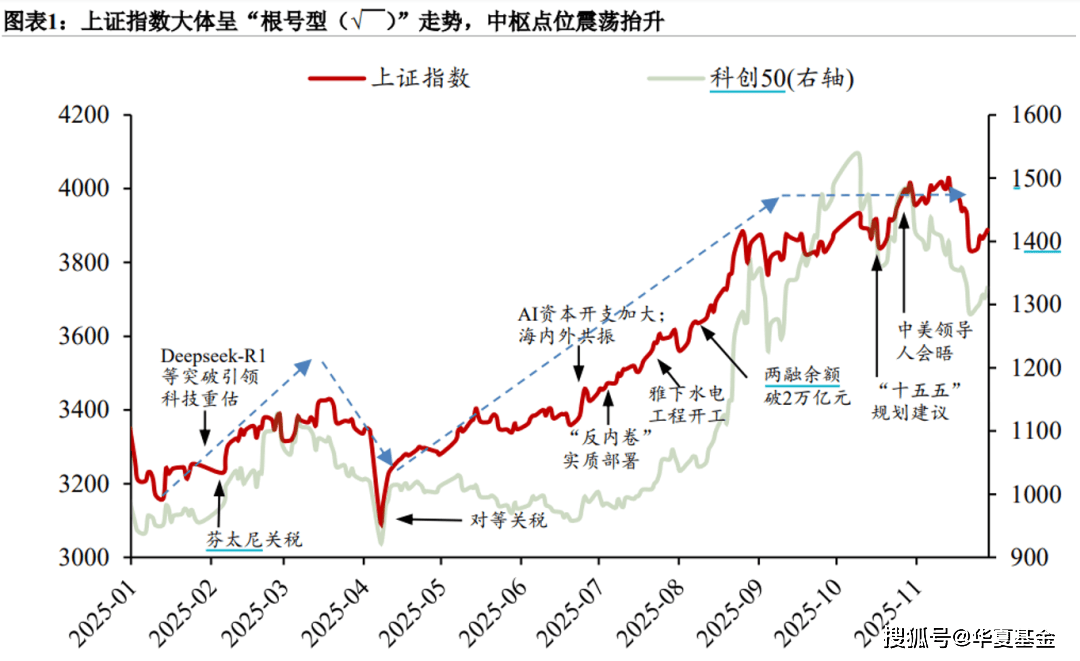
还有一周,2025年就要过去了。此时此刻,各类年度报告正在紧锣密鼓的做最后的筹备,飞行航线、消费记录、理财战绩、听歌时长、书影音评分排行、 外卖最晚的点单… AI以前所未有之势嵌入各行各业的年代,算法极尽精微,从数据汪洋里为每个人捕捉生活的痕迹,投资作为我们生活的重要组成部分,也需要一份年度 复盘报告。 你会如何回望2025年的A股投资?过去一年,A股市场在分化中演进:有人看到指数新高,有人感受结构变迁;有人猫冬保住收益,有人已在布局来年。 #√ ̄型走势下 在哪里赚过、在哪里错过 2025年,在中国科技叙事引领下,A股走出了资产大年。上证指数大体呈"根号型(√ ̄)"走势,拾级而上,中枢点位从年初 3200 点抬升至 3900 点左 右。 (来源:Wind,粤开证券研究所) 一季度,以 DeepSeek 为代表的科技突破,重塑了中国叙事,提振了社会预期,引发了市场对科技股乃至中国资产的重估热潮。上证指数于 1-3 月期间持 续走强,区间最高涨幅达 8.5%。 (来源:Wind) 二季度,关税战一度引发市场恐慌,砸出"黄金坑",但由于我国完备工业体系给予的底气、稳市资金入市带来的信心以及宏观政策的有力支撑,市场情 ...
资金扫货宽基ETF!中证A500ETF本周净流入资金326亿元
Ge Long Hui· 2025-12-21 07:00
Core Insights - The article highlights a significant inflow of funds into the China Securities A500 ETF, with a net inflow of 32.6 billion yuan this week, accounting for nearly 70% of the total net inflow into stock ETFs during the same period [1]. Group 1: Fund Inflows and ETF Growth - The total market size of the A500 ETF has reached 243.8 billion yuan, with the Huatai-PineBridge A500 ETF surpassing 41.2 billion yuan, becoming the first A500 ETF to exceed 40 billion yuan in size within just one week [2]. - The Southern A500 ETF has also seen a net inflow of over 10 billion yuan in a single week, bringing its total size to 35.684 billion yuan [3]. - Other A500 ETFs from Huaxia, Guotai, and E Fund have all surpassed 26 billion yuan in size, indicating a strong trend in the A500 ETF market [4]. Group 2: Institutional Investment and Policy Support - The recent surge in A500 ETF inflows is likely driven by institutional investors, particularly insurance funds, following regulatory adjustments that lowered the capital occupation costs for insurance companies investing in stocks [4]. - The regulatory changes involve a reduction in risk factors for long-term holdings in the CSI 300 index and the STAR Market, potentially releasing around 19.8 billion yuan in capital, with a possible total incremental fund size of 72.6 billion yuan if fully allocated to stock investments [4]. Group 3: Market Environment and Investment Trends - The current market environment, characterized by declining interest rates and a shrinking pool of compliant and safe assets, is pushing institutional investors to increase their allocation to equity assets [5][6]. - Data shows that insurance funds have reached record high allocations in both bonds and stocks, with direct stock investment exceeding 3 trillion yuan for the first time [7]. - The advantages of ETFs, such as high liquidity, relatively controlled volatility, low costs, and strong transparency, are making them an important tool for insurance funds in equity allocation [7]. Group 4: A500 ETF as a Key Investment Vehicle - The A500 ETF is gaining recognition as a key vehicle for mainstream long-term funds to share in the benefits of China's economic transformation, supported by substantial capital inflows [8]. - The significant increase in holdings of the A500 ETF not only provides solid support for related assets but also indicates a re-evaluation and re-pricing of its investment value in the market [8].
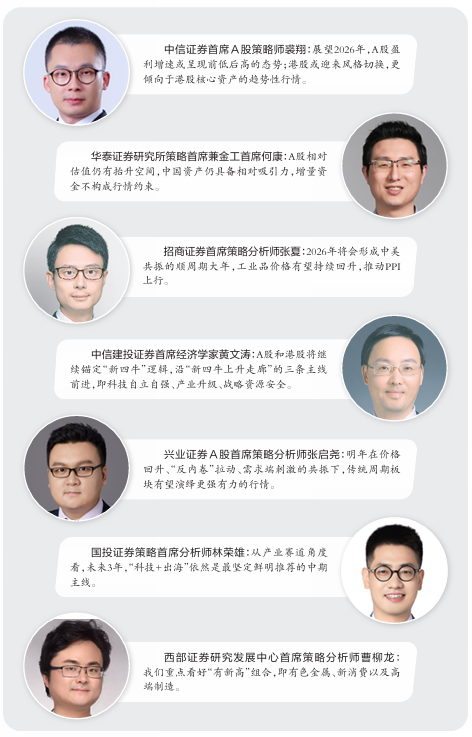
七位券商首席研判2026年市场:A股、港股大概率继续上行 “科技+出海”仍是主线
Zhong Guo Ji Jin Bao· 2025-12-21 06:10
Core Viewpoint - The Chinese stock market is expected to experience a structural bull market in 2026, driven by factors such as policy support, domestic demand stabilization, and industrial upgrades [4][8][11]. Group 1: Market Performance in 2025 - The A-share market showed a volatile upward trend in 2025, with significant contributions from the technology sector and companies expanding overseas [4][5]. - Key sectors that exceeded expectations included Chinese companies going global and the commercialization of AI, with notable growth in overseas AI demand [4][5]. - The overall market sentiment was influenced by improved liquidity and a shift in policy, leading to a bullish outlook for the A-share market [5][6]. Group 2: Outlook for 2026 - A-share earnings growth is anticipated to show a pattern of low-to-high progression, while the Hong Kong market may see a style shift towards core assets [8][11]. - The "New Four Bulls" logic is expected to drive the market, focusing on capital inflows, technological innovation, institutional reforms, and consumption upgrades [8][11]. - The overall economic growth is projected to remain within a reasonable range, with a gradual reduction in the negative impact of real estate on the economy [11][12]. Group 3: Investment Opportunities - The primary investment themes for 2026 include "Technology + Going Global," with a focus on AI applications and companies expanding overseas [12][13]. - Key sectors to watch include high-end manufacturing, new energy, and industries benefiting from global market growth, such as machinery and electronics [13][14]. - The market is expected to transition from a liquidity-driven bull market to one driven by earnings improvement, with a more balanced sector performance anticipated [19][20]. Group 4: Market Dynamics and Trends - The market is likely to see a convergence of performance across sectors, moving from a phase of significant differentiation to a more balanced approach [18][19]. - The focus will shift towards sectors with high growth potential, as the market transitions from a "淘汰赛" (elimination race) to a "竞速赛" (speed race) [18][19]. - The structural characteristics of the market will continue to be influenced by technological advancements and policy support, with a gradual reduction in the impact of traditional sectors [19][20].