高端化

Search documents
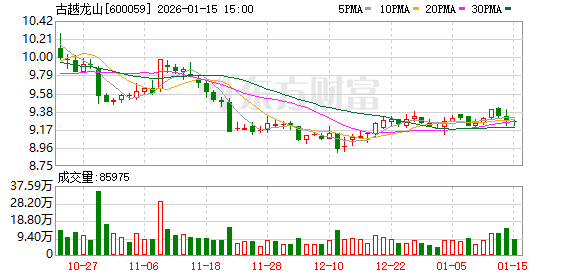
古越龙山:公司管理层始终对公司产品及黄酒产业发展充满坚定信心
Zheng Quan Ri Bao· 2026-01-15 11:42
Core Viewpoint - Guyue Longshan's innovative product "No High Low" Huangjiu has won the Excellent New Product Award in Zhejiang Province, marking a significant step in the company's strategy of "high-end and youth-oriented" development [2] Group 1: Product Innovation and Strategy - The company is committed to focusing on demand exploration and quality enhancement to drive market expansion for potential single products [2] - The management expresses strong confidence in the development of the company's products and the Huangjiu industry [2] Group 2: Smart Manufacturing - The company's smart factory is the first large-scale intelligent production base in the Huangjiu industry, prepared for potential explosive growth in product demand [2] - The factory features sufficient design capacity, efficient response through automation, and a complete dynamic adjustment and expansion mechanism [2] - The company ensures quality stability during the capacity release process through intelligent detection equipment [2]


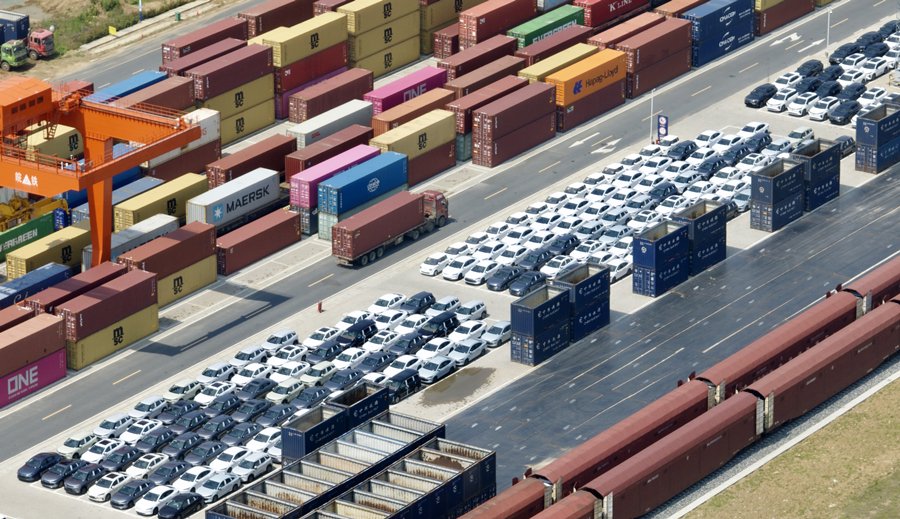
安徽省进出口总值首次突破万亿大关
Xin Hua Wang· 2026-01-15 10:09
Core Insights - In 2025, Anhui's foreign trade demonstrated strong resilience amid multiple pressures, achieving a record total import and export value of 10,135.6 billion RMB, marking a year-on-year growth of 17.3% [1] Group 1: Trade Performance - The total import and export value reached 10,135.6 billion RMB, with exports at 6,823.1 billion RMB (up 17.8%) and imports at 3,312.5 billion RMB (up 16.2%) [1] - Anhui ranked 9th nationally and 1st in Central China for total import and export value, with growth rates for imports and exports significantly exceeding national averages [1] - In December alone, the import and export value hit 1,118.4 billion RMB, reflecting a 35.9% increase and setting a new monthly record [1] Group 2: Export Structure - The export structure is increasingly shifting towards high-end, intelligent, and green products, with high-tech product exports reaching 1,598.2 billion RMB, a growth of 16.6% [2] - Exports of self-owned brands totaled 3,483.2 billion RMB, growing by 13.2% [2] - Anhui became the first province in China to export over one million vehicles in a year, with 1,228,000 vehicles exported, marking a 28.7% increase [2] Group 3: Trade Partnerships - Anhui's trade saw positive growth with 189 countries and regions globally, with ASEAN being the largest trading partner, accounting for 1,415 billion RMB in trade, a growth of 38.3% [2] - The "14th Five-Year Plan" period saw Anhui's foreign trade scale cross five thresholds, rising from 5,451.5 billion RMB at the end of the "13th Five-Year Plan" to over one trillion RMB in 2025 [2]
制造型外企扎根辽宁沈阳——“我们始终看好中国市场前景”
Xin Hua Wang· 2026-01-14 23:37
Group 1: Investment and Development in Shenyang - German companies are increasingly investing in Shenyang, with projects becoming industry benchmarks, including Michelin, BeKaert, and BMW [2][7][11] - Michelin's Shenyang factory has an annual production capacity of 17.1 million passenger car tires and has produced a cumulative total of 100 million tires since its establishment [7] - BeKaert's Shenyang factory has implemented a full industrial chain and benefits from local vocational schools producing skilled workers, enhancing its operational efficiency [8][9] Group 2: Technological Advancements and Production Efficiency - BMW's Shenyang plant has integrated approximately 200 AI applications, significantly improving production efficiency [10] - The introduction of advanced production lines and automation in factories is a common trend among foreign enterprises in Shenyang, aligning with China's push for high-tech and sustainable manufacturing [10][12] - The establishment of a local R&D capability has allowed companies like Austrian Voestalpine to reduce procurement costs and enhance profitability [9] Group 3: Government Support and Business Environment - Shenyang has implemented positive incentive mechanisms to attract foreign investment, including measures to optimize the investment environment [9][14] - The city has established a business service system for key foreign-invested enterprises, enhancing the efficiency of administrative processes [14] - Continuous improvements in infrastructure and a stable policy environment have made Shenyang an attractive destination for foreign companies [12][13]
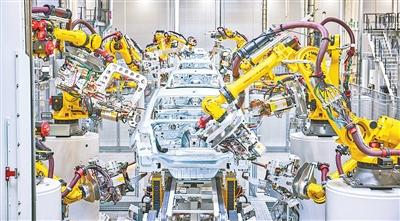
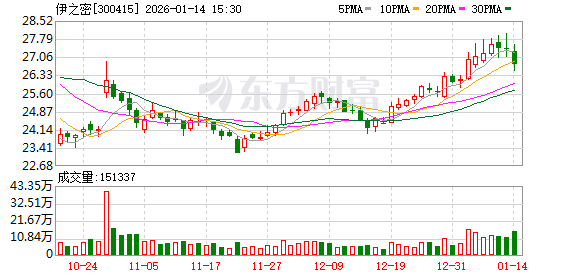
伊之密:2026年公司将继续专注主业,推动产品向高端化、智能化、绿色化继续演进
Zheng Quan Ri Bao· 2026-01-14 11:09
证券日报网讯 1月14日,伊之密在互动平台回答投资者提问时表示,展望2026年,公司将继续专注主 业,推动产品向高端化、智能化、绿色化继续演进。同时,公司将持续深化技术创新与产品升级,加快 全球化布局与本地化服务体系建设,提升运营效率和客户黏性。在稳健经营与风险管控并重的基础上, 公司将坚持长期主义,通过持续提升核心竞争力和盈利质量,力争在稳健经营基础上实现高质量的增 长。 (文章来源:证券日报) ...

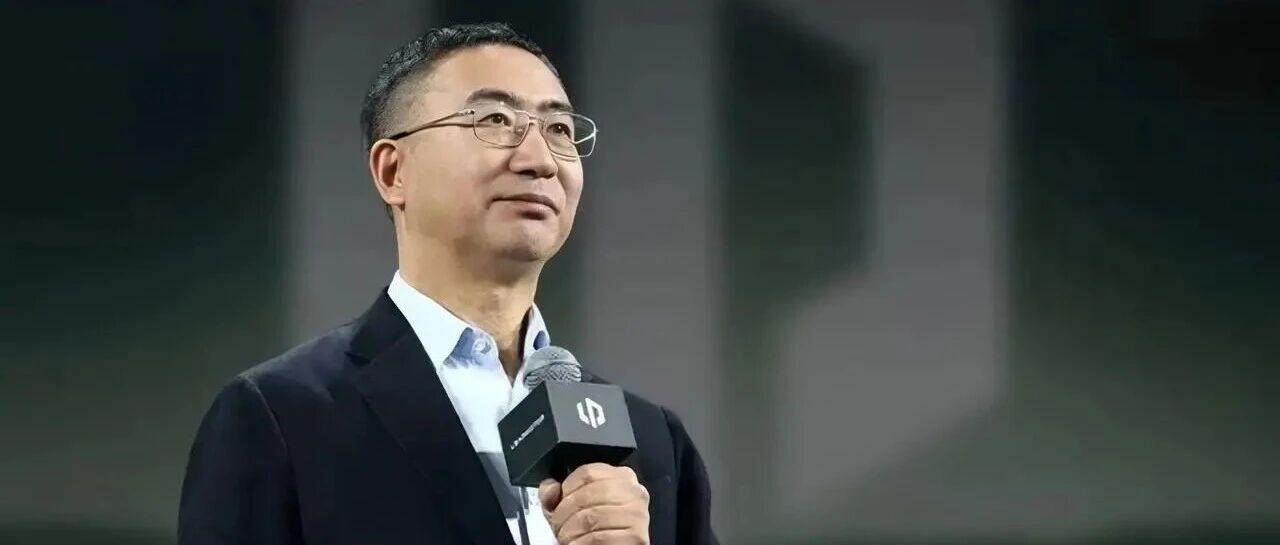
零跑汽车的新命题:冲击高端化、成为下一个「比亚迪」
雷峰网· 2026-01-14 04:22
Core Viewpoint - The article discusses the ambitious goals of Leap Motor, aiming to achieve annual sales of 4 million vehicles in the next decade and establish itself as a world-class automotive company [1][11]. Group 1: Leap Motor's Journey - Leap Motor was founded by Zhu Jiangming, who was nearly fifty at the time, making him the oldest founder among new car-making forces [2][3]. - The company set a lofty goal to become a world-class smart electric vehicle manufacturer shortly after its establishment in 2015 [4]. - Despite initial struggles, including low sales of its first models, Leap Motor has grown to nearly 600,000 annual sales and over 1 million cumulative deliveries [5][7]. - The company celebrated its tenth anniversary with a mindset of starting anew, as indicated by the book titled "Starting with the End" distributed at the event [5][11]. Group 2: Sales and Product Strategy - Leap Motor's sales strategy has focused on offering high-value vehicles, with the C series SUVs accounting for over 70% of sales [9][10]. - The company has successfully positioned itself as a "half-price Li Auto," leveraging competitive pricing and features to attract consumers [10]. - Leap Motor has achieved significant cost reductions through self-research and development, with over 65% of core components produced in-house, leading to a 10% cost reduction compared to outsourcing [10][11]. Group 3: Future Goals and Challenges - Zhu Jiangming has set a pragmatic target of reaching 1 million sales next year and 4 million in the next decade, emphasizing the need for Leap Motor to evolve beyond being labeled as a "new force" [11][12]. - The company plans to collaborate with FAW to enhance its manufacturing capabilities and fill gaps in traditional automotive expertise [14]. - Leap Motor is launching high-end models, including the D19 SUV and D99 MPV, to diversify its product offerings and target the premium market [15][16]. Group 4: Channel Strategy and Market Positioning - Leap Motor's initial rapid expansion through small dealers has led to challenges in maintaining brand standards and service quality, necessitating a shift towards larger, more capable dealers [18][21]. - The company has faced difficulties with its direct sales model, which has resulted in significant losses, prompting a reevaluation of its dealership strategy [20][21]. - Leap Motor aims to refine its dealer network by assessing dealer capabilities and potentially closing underperforming locations [20][21]. Group 5: Comparison with BYD - Leap Motor aspires to emulate BYD's success, which achieved sales of 4.27 million vehicles in 2024, highlighting the need for Leap Motor to enhance its self-research capabilities and market presence [23][27]. - Both companies share a focus on cost control and supply chain efficiency, with Leap Motor currently achieving 65% self-research compared to BYD's 75% [25][26]. - Leap Motor's international sales strategy is still developing, with a reliance on Stellantis for overseas distribution, which may limit brand visibility and service consistency [28][29].
红星发展(600367.SH)子公司拟6.23亿元投建天柱县钡盐精细化工产品项目
智通财经网· 2026-01-12 12:01
Core Viewpoint - Hongxing Development (600367.SH) is responding to national initiatives for the chemical industry to evolve towards high-end, intelligent, and green development, as well as the "dual carbon" strategy by enhancing its barium salt business strategy and developing various specifications and applications of barium salt products [1] Group 1: Project Overview - The company’s wholly-owned subsidiary, Guizhou Tianzhu Hongxing Development New Materials Co., Ltd., plans to initiate the "Tianzhu County Barium Salt Fine Chemical Products Project" with a total investment of approximately 623 million yuan [1] - The project will be located in the Tianzhu Chemical Park in Qiandongnan Prefecture, Guizhou Province [1] Group 2: Strategic Goals - The new barium salt production base aims to leverage the resource advantages of barite in Tianzhu County, Guizhou Province, through large-scale and intelligent production [1] - The project is designed to enhance the company's logistics cost advantages and meet downstream customers' diverse needs for stable supply and differentiated products, thereby continuously improving the company's product competitiveness and supply assurance capabilities [1]

比亚迪(002594):2025年12月销量点评:出海销量达13万辆再创新高,全年出海销量超100万辆
Changjiang Securities· 2026-01-12 11:12
Investment Rating - The investment rating for BYD is "Buy" and is maintained [7] Core Insights - In December, BYD's overseas sales reached a record high of 133,000 units, with total sales of 420,000 units, reflecting a year-on-year decline of 18.3% and a month-on-month decline of 12.5% [2][12] - The cumulative sales for 2025 reached 4.602 million units, a year-on-year increase of 7.7%, while cumulative overseas sales reached 1.05 million units, a year-on-year increase of 145% [12] - The company is focusing on expanding its overseas market presence and enhancing its high-end product offerings, with new factories established in Thailand, Uzbekistan, Brazil, and Hungary, and new entries into Vietnam, Pakistan, and Tunisia [12] Summary by Sections Sales Performance - December total sales were 420,000 units, with passenger vehicle sales at 415,000 units, showing a year-on-year decline of 18.6% and a month-on-month decline of 12.7% [5][12] - High-end brands performed well, with sales for Ocean King, Equation Leopard, and Tengshi at 344, 51, and 18 thousand units respectively, showing year-on-year changes of -29.5%, +345.5%, and +20.5% [12] Overseas Expansion - December export sales were 133,000 units, a year-on-year increase of 132.4% and a month-on-month increase of 0.9% [12] - The company aims to enhance its overseas sales through a diversified product matrix and the launch of plug-in hybrid models [12] Financial Projections - BYD's projected net profit for 2025 is 35 billion yuan, corresponding to a PE ratio of 25X [12] - The company is expected to benefit from economies of scale as overseas and high-end sales volumes increase, leading to improved profitability in the second half of the year [12]

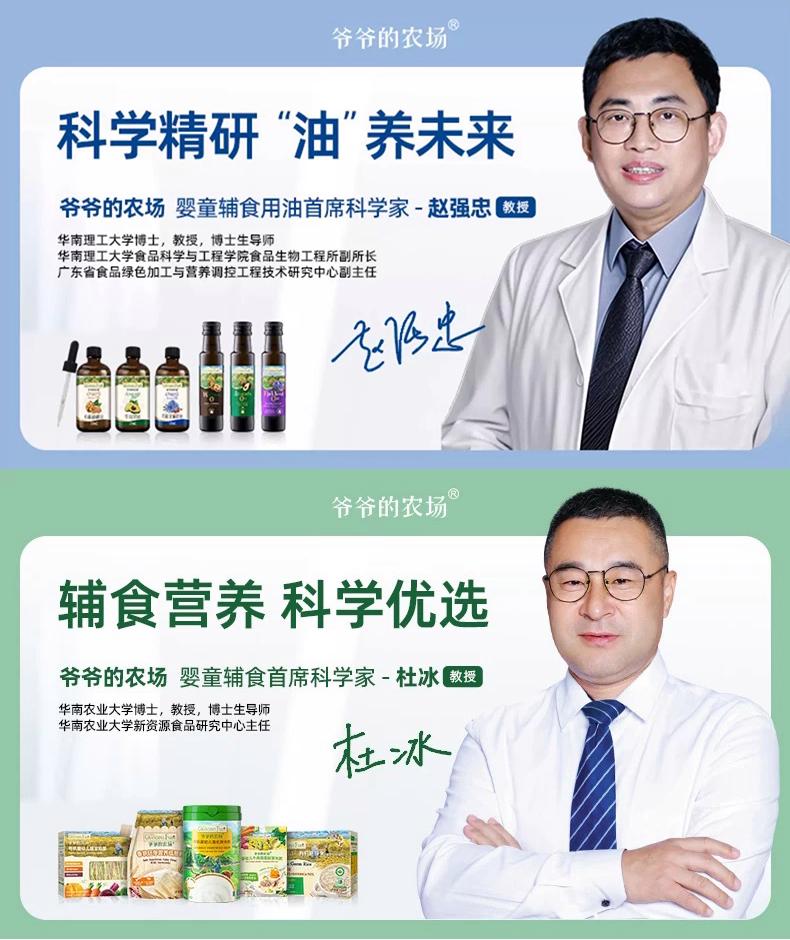
爷爷的农场冲刺港股IPO“大拆解”:有机细分赛道一哥,强化供应链安全
Xin Lang Cai Jing· 2026-01-12 08:44
Core Viewpoint - The company "爷爷的农场" is preparing for an IPO on the Hong Kong Stock Exchange, emphasizing its commitment to high-quality organic baby food products and its leading market position in China for organic baby food sales in 2024 [1]. Group 1: Market Position and Growth Potential - The company ranks first in the Chinese organic baby food market by transaction volume for 2024, indicating strong market leadership [1]. - The penetration rate of organic baby food in China is low compared to Western markets, suggesting significant growth potential as consumer preferences shift towards high-end and organic products [1]. - The company has maintained steady revenue and profit growth over the past two years, supported by a robust product development system and unique supply chain management [1]. Group 2: Supply Chain and Production Strategy - The company employs a dual-track supply chain model, integrating global top-tier raw materials and production processes while maintaining strict quality control [8][10]. - It has established partnerships with 62 OEM manufacturers, including 13 overseas partners from countries like Spain, France, Australia, and Italy, to ensure high-quality production [3]. - The company is building its own production capacity with a new facility in Guangzhou, set to enhance its ability to respond to market demands and maintain supply chain flexibility [10]. Group 3: Research and Development - The company prioritizes R&D, collaborating with universities and research institutions to develop product formulas and industry standards, thereby enhancing its competitive edge [4]. - R&D expenditures increased by 60.3% from 0.18 billion to 0.28 billion, with a corresponding rise in R&D expense ratio from 2.8% to 3.2%, surpassing the average of comparable companies [7]. - A high-standard infant dietary research laboratory has been established to ensure precise nutritional analysis and quality control throughout the product lifecycle [7]. Group 4: Quality Control Measures - The company implements a rigorous quality control system, including a three-tier verification process for all products, ensuring compliance with high-quality standards [11]. - It conducts over 10,000 product inspections since 2020, with a total testing expenditure exceeding 15 million yuan, reflecting its commitment to quality assurance [12]. - The company’s approach to quality control redefines traditional outsourcing relationships, emphasizing deep involvement and stringent standards throughout the supply chain [13].
LVMH管理层再洗牌;Alo挖角前Dior总经理
2 1 Shi Ji Jing Ji Bao Dao· 2026-01-12 05:07
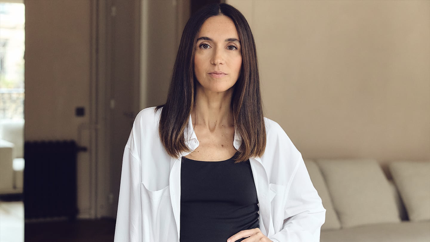
Group 1: Luxury Goods Sector - The luxury goods sector is undergoing significant management changes, with brands like Givenchy, Dior, and Hermès initiating leadership transitions to enhance brand competitiveness and adapt to market demands [1][3] - Alo has appointed Benedetta Petruzzo, a former Dior executive, as CEO of international business, aiming to strengthen its high-end brand positioning and expand globally [1][2] - LVMH continues its management reshuffle, appointing Amandine Ohayon as CEO of Givenchy and promoting Alessandro Valenti to a key role at Dior, reflecting a strategy focused on internal talent development [3][6][7] Group 2: Sportswear Industry - Anta Sports is reportedly seeking to acquire a 29% stake in Puma, which would make it the largest single shareholder, amidst Puma's declining sales and strategic challenges [4][5] - Puma has appointed Nadia Kokni as Vice President of Global Brand Marketing to lead its marketing strategy during a critical phase of brand restructuring [9][10] Group 3: Beauty Industry - Estée Lauder is considering selling three brands, including Too Faced and Smashbox, for an estimated $300-500 million, significantly lower than the $2.5 billion spent on their acquisition, as part of a strategy to focus on high-end beauty [11][12] - L'Oréal plans to launch over 20 new products in 2026, leveraging multi-channel strategies to drive growth, following a strong performance in the previous year [17][18] Group 4: Domestic Market Trends - The Shanghai New World Daimaru Center has ended its partnership with Japanese retail and will operate independently, marking a significant shift towards local business autonomy [15][17] - The family behind the Chinese beauty brand Mao Geping plans to reduce their stake, raising concerns about the impact on the company's future despite its current growth trajectory [13][14] Group 5: Investment Movements - Fairfax Financial Holdings has increased its stake in Under Armour to 22%, betting on the brand's potential for recovery and transformation amid ongoing challenges [19][20] - The management changes at Hermès Japan, with Shigeru Takagaki taking over, are expected to enhance operational efficiency in the Japanese market [21][22]
LVMH管理层再洗牌;Alo挖角前Dior总经理|二姨看时尚
2 1 Shi Ji Jing Ji Bao Dao· 2026-01-12 05:01
Group 1: Luxury Goods Industry - The luxury goods sector is undergoing significant adjustments with management changes, capital maneuvers, and strategic optimizations as core themes, reshaping the industry landscape [1] - Givenchy and Dior have initiated management changes to enhance brand competitiveness, while Alo has hired a former Dior executive to accelerate its high-end lifestyle transformation [1][2] - LVMH continues its management reshuffle, appointing Amandine Ohayon as CEO of Givenchy and promoting Alessandro Valenti to a key role at Dior, reflecting a strategy focused on internal talent development [6][8][9] Group 2: Sportswear Industry - Anta Sports has made a bid to acquire a 29% stake in Puma, which would make it the largest single shareholder, amidst Puma's declining sales and restructuring efforts [4][5] - Puma has appointed Nadia Kokni as Global Brand Marketing Vice President to lead its marketing strategy during a critical phase of brand restructuring [10] Group 3: Beauty Industry - Estée Lauder is considering selling three brands for $300-500 million, significantly less than the $2.5 billion spent on their acquisition, as part of a strategy to focus on high-end beauty [11][12] - L'Oréal plans to launch over 20 new products in 2026, leveraging multi-channel strategies to capture market growth, following strong performance in recent years [17][18] Group 4: Market Trends - The beauty industry is shifting from incremental to stock market pressures, with high-end positioning becoming increasingly important [1] - The trend of local business autonomy is highlighted by the Shanghai New World New Maru Center ending its partnership with Japanese firms to operate independently, showcasing resilience in local commerce [1][16] Group 5: Company-Specific Developments - Alo has launched a high-end custom series and plans to expand its international presence, including a flagship store on the Champs-Élysées by 2026 [3] - The family behind the Chinese beauty brand Mao Geping plans to sell shares worth up to 1.41 billion HKD, raising concerns about the impact on the company's future despite its current growth [14][15]