中美贸易

Search documents
“美国解除对华C919发动机出口禁令”
Guan Cha Zhe Wang· 2025-07-04 00:20
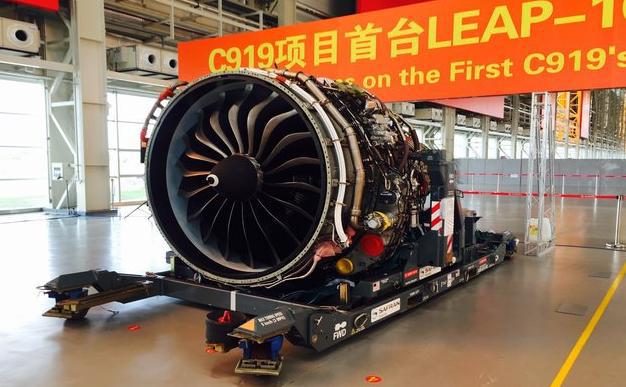
Group 1 - The U.S. government has notified General Electric Aviation that it can resume exporting jet engines to the Commercial Aircraft Corporation of China (COMAC), indicating a thaw in U.S.-China trade tensions [1][2] - The restored export licenses include the LEAP-1C engine for the COMAC C919 single-aisle passenger aircraft and the CF34 engine for the C909 regional aircraft [2][4] - Other aerospace companies, such as Honeywell Aerospace and Collins Aerospace, also had their export restrictions lifted, allowing them to supply components for the C919 [4][10] Group 2 - The lifting of the export ban was anticipated, reflecting the unpredictable nature of the current U.S. administration and the ongoing trade negotiations between the two countries [1][6] - Despite the lifting of the ban, the domestic production process for the C919 will continue to advance, with a focus on developing domestic engines [8][10] - The Chinese aviation industry has made significant progress in recent years, with domestic systems like flight control and avionics being developed to meet international standards [8][9]


涉芯片技术、乙烷,美取消两项对华出口限制,专家解读
Huan Qiu Shi Bao· 2025-07-03 22:54
Group 1 - The U.S. has lifted export restrictions on three chip design software suppliers, allowing them to resume exports to China, signaling a potential easing of trade tensions [1] - The companies affected include Synopsys, Siemens, and Cadence, which collectively hold over 70% of the global EDA market share [1] - Following the announcement, shares of U.S. chip design software companies rose, with Synopsys increasing by over 6% and Cadence by 5.5% [1] Group 2 - The U.S. also lifted licensing requirements for two ethane producers, Enterprise Products Partners and Energy Transfer, allowing them to resume exports to China [2] - Prior to this, U.S. ethane exports to China had significantly declined due to the implementation of licensing measures, with many vessels stalled [2] - Analysts suggest that these actions indicate a planned progression towards a "trade truce" between the U.S. and China [2] Group 3 - Experts view these moves as a positive signal for U.S.-China trade negotiations, potentially fostering further trust and cooperation [3] - However, there are still fundamental issues to address, such as increasing Chinese purchases of U.S. goods and allowing more U.S. companies access to the Chinese market [3]
刚刚,大幅拉升!中美,突传重磅!
券商中国· 2025-07-03 12:12
Group 1: U.S.-China Trade Developments - The U.S. government has lifted restrictions on ethane exports to China, signaling a potential truce in the ongoing trade war [1][3][4] - Eight ships have already set sail for China following the removal of these restrictions, which had previously caused delays [4] - The U.S. Department of Commerce has notified companies that they can now load ethane onto ships bound for China without needing separate authorization for unloading [3][4] Group 2: Semiconductor Design Software Export Restrictions - The U.S. has also lifted export restrictions on three major semiconductor design software suppliers: Synopsys, Cadence, and Siemens [2][5] - Siemens confirmed that the previous requirement for government licensing for their business in China has been revoked, allowing them to resume sales and technical support [5][6] - Synopsys announced that it is restoring access to affected products in the Chinese market and expects to complete system updates within three business days [6][7] - These three companies collectively held approximately 82% of the EDA software market in China last year [7]



特朗普为何想来中国?美国“脱钩派”被打回原形,中美贸易转向?
Sou Hu Cai Jing· 2025-07-02 03:48
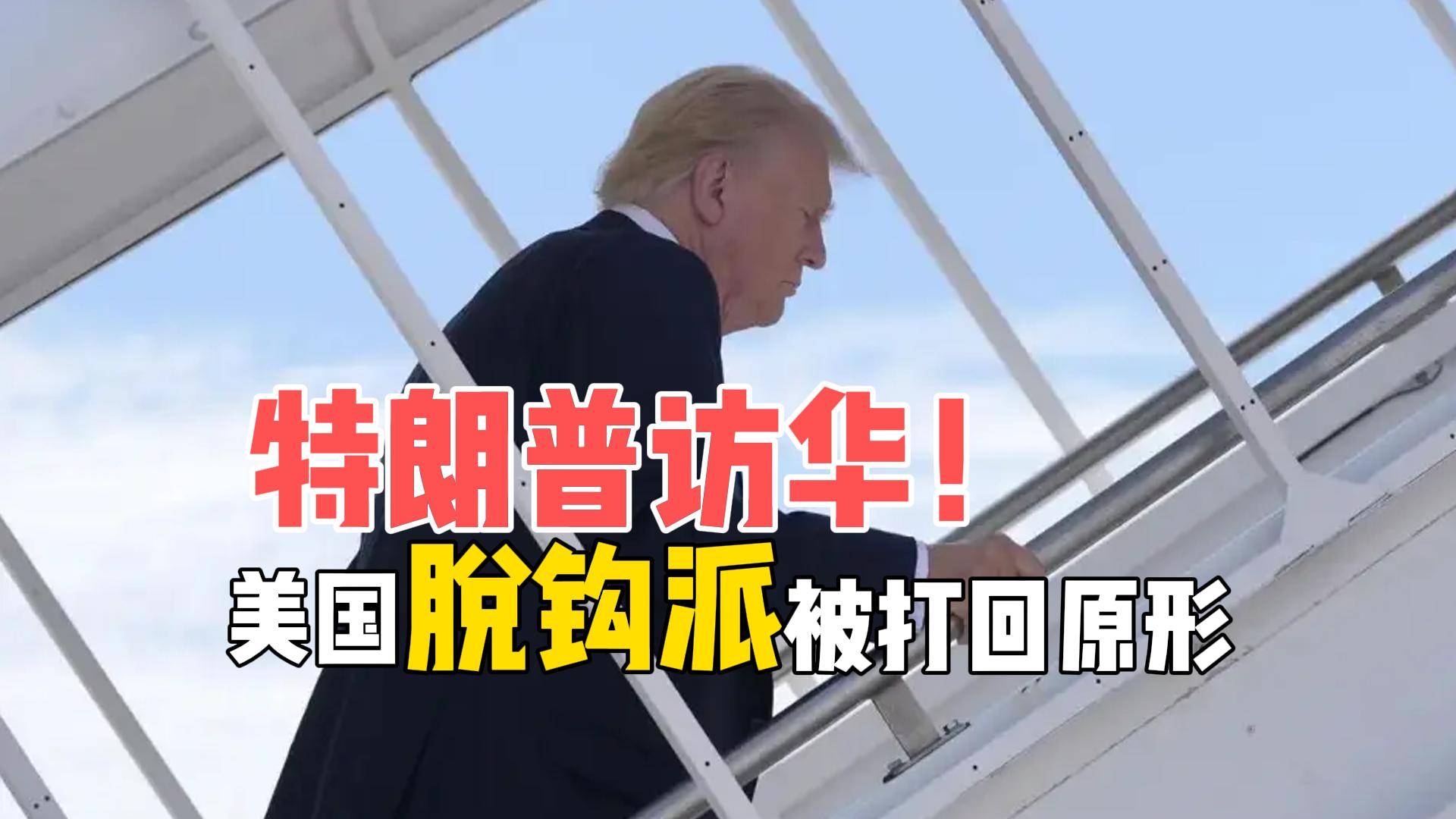
你说怪不怪?特朗普居然在筹备来华。 前两个月还打的不可开交,转头就想来中国做客,特朗普又一次表演了大变脸。 其实,特朗普之所以有这种变化,关键还是因为美国的政治生态发生了变化,中美贸易的风向已经彻底变了。 特朗普的团队成员里,按对华主张可以分为两派,一派是强硬的脱钩派,另一派是温和一些的接触派。 我们先说脱钩派。 特朗普这次当选美国总统以后,组建的内阁被称为一个草台班子,里面大多数人都是MAGA党的核心成员,这些人都非常极端,也主要都是脱钩派。 这些人就像公司里的那些马屁精,工作能力基本为0,整天就喜欢围绕在领导周围奉承拍马,但领导最喜欢的往往都是这些人。 再说另一派接触派,他们的对华主张是要保持接触,双方有竞争有合作,代表人物是美国财长贝森特。 贝森特是正经的华尔街出身,是金融大鳄索罗斯的得意门生,也被美国媒体称为特朗普团队里唯一的一个成年人。 他上任这半年来,主要职责就是给脱钩派和特朗普擦屁股。 特朗普的对等关税,导致全球市场暴跌,美国股债汇三杀,关键时刻,是贝森特站出来安抚市场,并且跟特朗普沟通设置暂缓期。 脱钩派和特朗普猛攻美联储,称要解除美联储主席的职务,再次引发市场恐慌,还是贝森特去找特朗普,劝他 ...
社评:美国独立日“烟花危机”是又一次提醒
Sou Hu Cai Jing· 2025-07-01 17:19
Group 1 - The core issue is the potential increase in fireworks prices and supply shortages in the U.S. due to tariffs imposed by the government, which could impact Independence Day celebrations and future events like the 250th anniversary of the U.S. [2] - The U.S. fireworks industry heavily relies on Chinese imports, with 99% of consumer fireworks and 90% of professional display fireworks sourced from China, highlighting the interdependence between the two countries [2][3] - Despite political rhetoric advocating for decoupling, the U.S. lacks the necessary raw materials and chemicals for fireworks production, indicating a complex trade relationship where both countries benefit from each other's strengths [3][4] Group 2 - China's manufacturing advantages cannot be negated by tariffs, and the economic interdependence between the U.S. and China is deeply rooted, making it difficult to sever ties without harming American interests [4] - Recent reports suggest that U.S. companies are reconsidering their operations in light of tariffs, with many still wishing to maintain connections with China due to its market size and efficient supply chains [4][5] - A recent agreement between the U.S. and China aims to ease trade tensions, with calls from the business community for more stable trade conditions to foster long-term cooperation [5]

综合晨报-20250630
Guo Tou Qi Huo· 2025-06-30 12:48
Report Industry Investment Ratings No relevant content provided. Core Views of the Report - The overall market shows a complex situation with various commodities having different trends. Some commodities are expected to be volatile, while others are influenced by factors such as supply - demand, geopolitical events, and policy changes. For example, oil prices are expected to be short - term volatile and weak, and the stock market shows a preference for technology growth on the basis of dividend asset allocation. [1][47] Summary by Commodity Categories Energy - **Crude Oil**: Last week, international oil prices fell from high levels. After the cooling of the Israel - Iran conflict, oil prices are back to being dominated by macro and supply - demand factors. OPEC+ may increase production in August. The oil market is expected to be short - term volatile and weak. [1] - **Fuel Oil & Low - Sulfur Fuel Oil**: Ship refueling and deep - processing demand are low. High - sulfur fuel oil demand boost from summer power generation in the Middle East and North Africa is limited. FU is volatile and weak, while LU's cracking has rebounded from a low level. [21] - **Liquefied Petroleum Gas**: After the geopolitical situation eases, the Middle East market has declined. Domestic chemical demand has increased, but supply pressure still exists, and the market is expected to be in a range - bound state. [23] - **Natural Gas**: No relevant content provided. Metals - **Precious Metals**: Gold prices have given back the war premium as the Israel - Iran conflict stopped. Market attention will shift to tariff negotiations and the Fed. [2] - **Base Metals** - **Copper**: Last Friday, copper prices were in a high - level shock. The market is concerned about the US trade negotiations and the Fed's interest - rate cut rhythm. Short - term, the upward trend of Shanghai copper may reach 81,000, while long - term, short - selling at high levels is recommended. [3] - **Aluminum**: Shanghai aluminum was in a high - level shock on Friday night. There is a large market divergence. There are opportunities for short - selling at high levels after the sentiment stabilizes. [4] - **Zinc**: The zinc market is affected by the strike at a Peruvian smelter, but the global zinc supply is still expected to be in surplus. Wait for the opportunity to short - sell at high levels. [7] - **Lead**: Shanghai lead rose and then fell. The supply side provides support, and the rebound height depends on consumption. [8] - **Nickel & Stainless Steel**: Shanghai nickel rebounded strongly. The pressure on the ore end has increased. Short - term, it is recommended to wait and see. [9] - **Tin**: Tin prices retraced last Friday. It is recommended to short - sell distant - month contracts at high levels. [10] - **Manganese Silicon**: Prices follow steel. In the short - term, it is temporarily bullish. [18] - **Silicon Iron**: Prices follow steel. Demand is okay, and it is temporarily bullish in the short - term. [19] - **Ferroalloys** - **Alumina**: Spot trading is scarce. The domestic production capacity is in an over - supply state, and it is recommended to short - sell on rebounds. [5] - **Cast Aluminum Alloy**: The futures follow Shanghai aluminum. Consider a long - AD and short - AL strategy if the spread widens. [6] Chemicals - **Carbonate Lithium**: The futures price has rebounded, but high positions indicate risk accumulation. It is expected to be in a short - term range - bound state. [11] - **Industrial Silicon**: The futures price has increased with positions. It is expected to be in a range - bound state. [12] - **Polysilicon**: The futures price has increased with reduced positions. It is expected to be in a low - level range - bound state. [13] - **Urea**: The supply - demand situation has marginally improved, but the market is in a range - bound adjustment. Export policies will be the key to the future trend. [24] - **Methanol**: The expected reduction in imports has not materialized. The market is expected to be in a short - term range - bound state. [25] - **Styrene**: The cost side lacks support, supply pressure has increased, and demand is weak. The price is expected to be weak. [26] - **Polypropylene & Plastic**: The cost side lacks support, and the supply - demand situation is weak. The price is expected to be in a range - bound state. [27] - **PVC & Caustic Soda**: PVC is relatively strong in the short - term but may be in a low - level range - bound state in the long - term. Caustic soda is expected to follow the cost fluctuation. [28] - **PX & PTA**: Prices rebounded last Friday night. The supply - demand pattern may become looser in the medium - term. [29] - **Ethylene Glycol**: The price decline has slowed down. It is expected to be in a bottom - range - bound state. [30] - **Short - Fiber & Bottle Chip**: Short - fiber prices follow raw materials. Bottle chips may have a chance to repair the processing margin, but it should be treated with caution. [31] Agricultural Products - **Soybeans & Soybean Meal**: The drought situation in the US soybean产区 has improved. The market is expected to be in a range - bound state for now. [35] - **Soybean Oil & Palm Oil**: The market is in a range - bound state. Long - term, a long - position strategy at low levels is recommended for vegetable oils. [36] - **Rapeseed Meal & Rapeseed Oil**: The rapeseed planting area in Canada is lower than expected, and the rapeseed market continues to have a bearish outlook. [37] - **Soybean No. 1**: The decline has slowed down. Wait for the US soybean planting area report. [38] - **Corn**: The futures market is expected to be in a range - bound state, affected by factors such as wheat policies and state - reserve auctions. [39] - **Hogs**: The short - term price has rebounded, but the long - term supply pressure is large. [40] - **Eggs**: The price is expected to be weak in the long - term. A short - position strategy is recommended. [41] - **Cotton**: US cotton is expected to be affected by the planting area report. Domestic cotton has a good inventory reduction, and long - positions should be held with caution. [42] - **Sugar**: US sugar is trending downward, and the domestic sugar market is expected to be in a range - bound state. [43] - **Apples**: The market is bearish on the new - season output, and a short - position strategy is recommended. [44] - **Wood**: The price is weak, and it is recommended to wait and see. [45] - **Pulp**: The price is in a low - level range - bound state, and it is recommended to wait and see. [46] Others - **Shipping**: The container shipping index (European line) is expected to face pressure on the upside. [20] - **Financial Products** - **Stock Index**: The A - share market shows a style preference for technology growth on the basis of dividend asset allocation. [47] - **Treasury Bonds**: Treasury bond futures are mostly volatile. The bond market may face increased volatility risk in the short - term. [48]
中美确认伦敦框架细节!小米股价一度突破61港元,好博会YU7展台火爆!上交所深交所就重要调整征求意见!机场回应相机电池能否登机!
新浪财经· 2025-06-28 00:49
Group 1: US-China Trade Framework - The US and China have confirmed details of the London Framework, with China agreeing to approve eligible export applications and the US planning to lift a series of restrictive measures against China [2][4] - This development is seen as a significant step in clearing a key obstacle in US-China trade tensions, although the path to a final trade agreement remains long and complex [4] Group 2: Xiaomi's Market Performance - Xiaomi's stock price surged to a historical high of HKD 61, with a market capitalization reaching HKD 1.55 trillion following a successful product launch [5] - The company's revenue for Q1 2025 increased by 47% year-on-year to CNY 111.3 billion, marking its best financial performance to date, with automotive business gross margin rising to 23.2% [5] - Pre-sale data for the YU7 model exceeded expectations, with 289,000 orders generating a cash flow of CNY 1.445 billion, and potential revenue estimated at CNY 73 billion, equivalent to 65% of a quarter's revenue [7] - Analysts predict that Xiaomi's automotive sales could double next year, with the YU7 expected to outperform the SU7 model, potentially achieving monthly sales of 30,000 to 40,000 units [7] Group 3: Stock Market Regulations - The Shanghai Stock Exchange proposed to adjust the price fluctuation limit for risk warning stocks from 5% to 10%, aligning it with other main board stocks [11][13] - This adjustment aims to enhance pricing efficiency and maintain market order, while also protecting investors' rights [12][13]


中美确认!美媒:“重大突破”
Huan Qiu Shi Bao· 2025-06-28 00:36
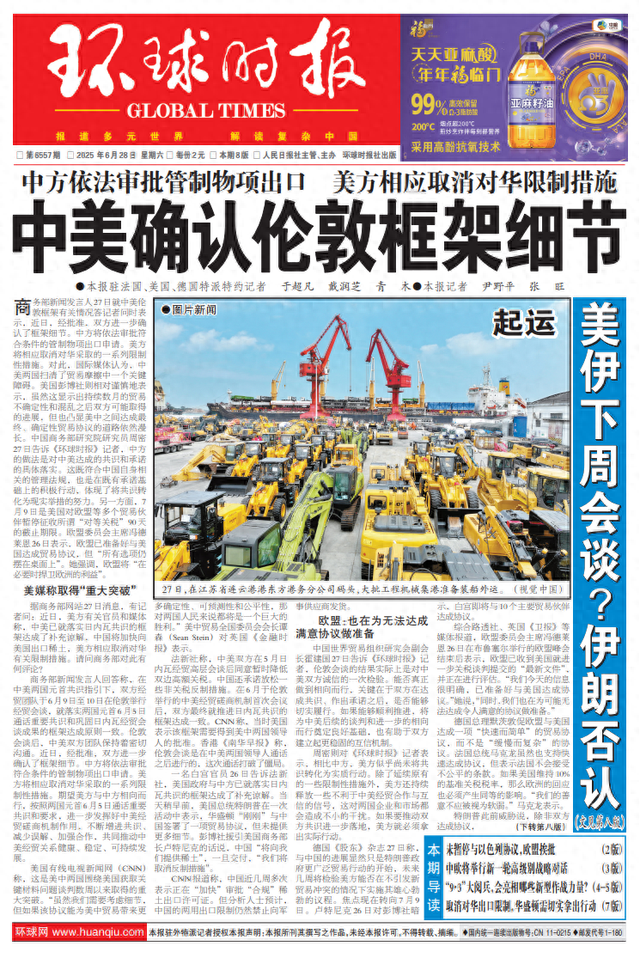
Group 1 - The core viewpoint of the articles indicates that China and the U.S. have made significant progress in resolving trade tensions, particularly through the confirmation of a framework for cooperation regarding the export of controlled items and the lifting of certain restrictions by the U.S. [1][2][3] - The Chinese Ministry of Commerce has stated that it will approve export applications for controlled items that meet specific criteria, while the U.S. will correspondingly remove a series of restrictive measures against China [1][2][3] - International media, including Bloomberg, express cautious optimism, noting that while this represents a step forward, the path to a final and definitive trade agreement remains long and complex [1][2][3] Group 2 - The discussions between the U.S. and China were guided by the consensus reached by the leaders of both countries, with trade teams meeting in London to solidify the framework established during previous talks [2][4] - The U.S. has indicated that it is prepared to engage in further negotiations with the EU and other trade partners, with a deadline approaching for the suspension of certain tariffs [1][5][6] - Analysts suggest that the success of these negotiations will depend on both sides' ability to translate agreements into actionable steps, with a focus on maintaining mutual trust and cooperation [5][6][7]
豆粕又崩了,为啥?
Sou Hu Cai Jing· 2025-06-27 08:58
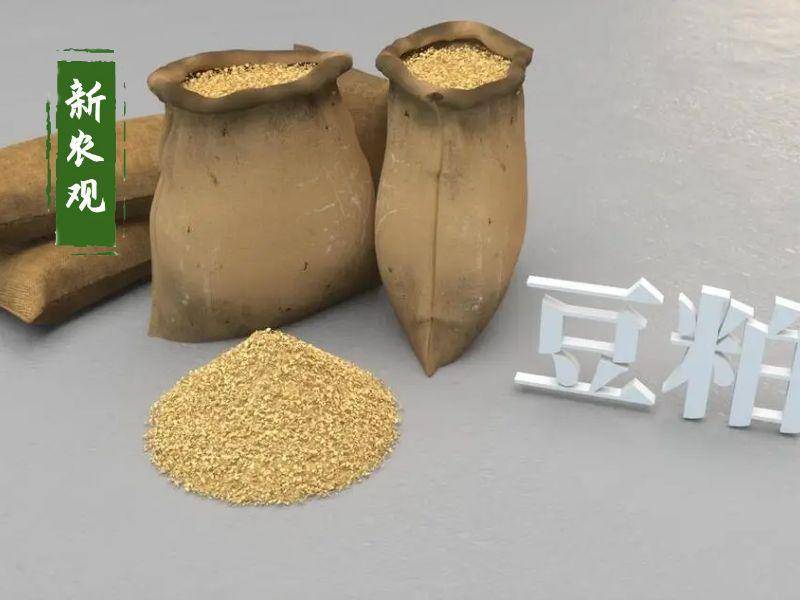
豆粕的奇迹没上演几天,就又下跌了,并且再次跌破2800元/吨这个关键位置。 为什么2800是个关键位置? 我们之前分析过,因为从近两年行情来看,豆粕跌破2800后,时间很短就会出现一波回调,也就说明豆粕在这个位置是有支撑的。 支撑从哪来呢? 一是成本,二是需求,三是市场情绪及预期。 比如拿去年举例,去年豆粕库存压力很大,但也依然在跌破2800以后就跌不动了。 为什么? 说白了,进口大豆也有成本,也不是大风刮来的,更不是想刮多少就刮多少的,所以七七八八算下来有刚性成本支撑。 而需求方面,去年猪价好转,养殖户扭亏为盈,生猪补栏等操作量也增加了,所以也有刚性需求支撑。 今年猪价虽然说有所走弱,但整体生猪产能仍处于高位,刚性需求也并不少。 至于市场预期要从短期和长期两个维度来看了。 短期看,豆粕比较弱,因为当前正是南美大豆出口旺季,进口大豆到港量庞大,再加上天气不稳定,巴西大豆保存难度增加,所以油厂也是开足马力,大肆 生产,所以豆粕有累库的现象。 但豆粕不一样,由于我们对进口大豆的依赖太大,所以可以说国际市场的风吹草动,都会影响到豆粕。 比如,近期国际市场的变化就有点大。 但是需求主体提货不仅要考虑短期,更要考虑长期 ...
外贸企业创新思路、各显神通 手握逆境突围“底牌”跑赢新“赛道”
Yang Shi Wang· 2025-06-24 05:55
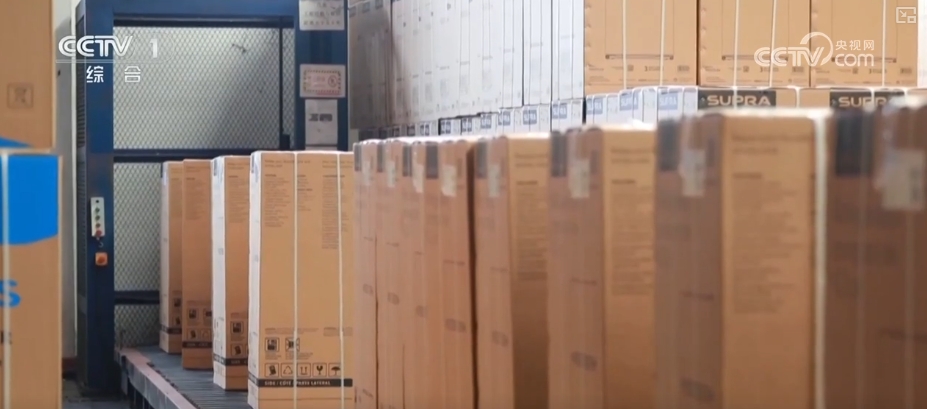
Core Viewpoint - Since 2025, the U.S. government's unilateral tariff policies have impacted global trade order, yet Chinese foreign trade continues to progress steadily in a complex environment. The recent U.S.-China Geneva trade talks have opened a 90-day "foreign trade window" for companies to adapt and innovate [1]. Group 1: Impact of Tariffs on Trade - The company experienced significant inventory issues due to U.S. tariffs, with many products, including refrigerators, being stuck in warehouses. However, the recent trade window has allowed for the reshipment of these goods [1][3]. - From 2021 to 2024, the company's average annual export to the U.S. reached 600 million RMB, accounting for 50% of its total exports. Following the new round of tariff adjustments, U.S. clients quickly resumed orders [5]. - The logistics sector is adapting to the challenges posed by rising shipping costs, with U.S. buyers willing to pay double the transportation costs to expedite shipments [5][9]. Group 2: Innovation and Adaptation - The company has leveraged innovation as a key strategy to overcome challenges, exemplified by the development of the world's first countertop ice ball machine, which took years of research to perfect [7]. - Some companies have proactively managed tariff risks by preparing contracts that account for potential tariff increases, allowing them to maintain steady exports even during high tariff periods [15][20]. - The company has successfully maintained long-term relationships with U.S. clients, ensuring consistent growth despite tariff fluctuations [16]. Group 3: Market Expansion and New Products - Companies are exploring new markets and product lines, such as the "starry sky room," which features innovative design and materials, targeting international customers [25][32]. - The company has increased production capacity to fulfill new orders from Middle Eastern clients, demonstrating adaptability in product offerings [29]. - The use of advanced materials in new products has positioned the company to meet international standards and consumer preferences, enhancing market competitiveness [32].