
云计算

Search documents
财经早报:超六成私募倾向于满仓过节 锂价“第三次超级周期”要来了?丨2026年2月12日
Xin Lang Zheng Quan· 2026-02-12 00:15
Group 1 - The Chinese government is advancing artificial intelligence (AI) technology innovation and application across various industries, highlighting its potential to transform production and lifestyle [2][3] - The government aims to establish a comprehensive AI ecosystem, focusing on algorithm innovation, high-quality data supply, and commercial applications to enhance AI's market presence [3] - The initiative includes promoting international cooperation and developing a robust governance framework for AI applications to ensure safety and compliance [3] Group 2 - The State Council of China has set a goal to establish a unified national electricity market by 2030, with market-based transactions accounting for approximately 70% of total electricity consumption [4] - The implementation plan includes 19 key tasks aimed at breaking down market barriers and encouraging participation from various stakeholders, including private enterprises [4] - This initiative is expected to enhance the efficiency of the energy sector and stabilize energy costs, thereby improving the global competitiveness of Chinese companies [4] Group 3 - The private equity sector shows optimism for the market, with over 62% of surveyed firms preferring to hold significant positions during the upcoming holiday, indicating confidence in structural opportunities despite market volatility [11] - The ETF market has seen a significant outflow of funds, with a 38.11% decrease in trading volume, while the total number of ETF shares increased by 1.68% [13] - The consumer sector in Hong Kong is experiencing a resurgence in IPO activity, with over 10 companies filing for H-shares in early 2026, indicating a growing interest in the market [14] Group 4 - The U.S. labor market showed unexpected growth in January, which may influence the Federal Reserve's interest rate decisions, suggesting a potential pause in rate hikes [15] - The technology sector is facing challenges, particularly in software stocks, as concerns about AI's impact on job functions and valuations continue to rise [6] - The cryptocurrency market experienced significant sell-offs, with Bitcoin dropping below $66,000, reflecting broader market volatility [6] Group 5 - Tianji Co. is under investigation by the China Securities Regulatory Commission for information disclosure violations, which may impact its operations [16] - The company has recently corrected financial reporting errors and is undergoing scrutiny for its governance practices [16] - The divorce settlement involving a major shareholder of a public company highlights the financial implications of personal matters on corporate governance [17] Group 6 - Wenta Technology announced that its control over Anshi Semiconductor remains limited due to ongoing investigations, affecting its operational strategy [19] - The company is facing challenges in its governance structure as it navigates legal and regulatory hurdles [19] - The semiconductor industry is under scrutiny, with companies like Wenta needing to adapt to changing regulatory environments [19]


罗杰斯股价异动分析:基本面改善与行业情绪共振
Jing Ji Guan Cha Wang· 2026-02-11 19:53
经济观察网截至2026年2月11日收盘,罗杰斯(ROG.N)股价报110.14美元,单日上涨3.91%,振幅达 4.00%;近5日累计涨幅7.44%,年初至今涨幅20.28%,显著跑赢电子元器件板块及美股大盘。此次异动 主要受以下因素驱动: 公司基本面 行业政策现状 人工智能、云计算等需求推动高端材料市场增长,罗杰斯的主营产品(如高频电路材料)应用于5G、服务 器等领域,受益于产业链升级。知名投资者吉姆.罗杰斯在2026年1月公开表示已减持美国资产并看好中 国板块,但未直接提及罗杰斯公司。市场可能将"罗杰斯"这一名称与投资大师观点误读,短期情绪助推 股价。 未来发展 罗杰斯股价异动是基本面改善、技术突破与行业情绪共振的结果。投资者需重点跟踪其下一财季盈利能 否持续回升,以及电子材料需求是否进一步兑现。盈利增长持续性待验证,净利润同比下滑趋势需关注 后续季度能否扭转。成交活跃度偏低,日均成交额常低于1000万美元,低流动性环境下股价波动可能放 大。 以上内容基于公开资料整理,不构成投资建议。 2025财年第三季度财报显示,公司归母净利润860万美元,净利率3.98%,尽管净利润同比下滑 19.63%,但营收同比 ...
【公告全知道】光模块+算力租赁+智谱AI+国产芯片+人形机器人!公司拟定增募资不超10亿元用于国产智能算力中心建设项目
财联社· 2026-02-11 15:35
Group 1 - The article highlights significant announcements in the stock market, including "suspensions and resumption of trading, share buybacks, investment wins, acquisitions, earnings reports, unlocks, and high transfers" [1] - A company plans to raise no more than 1 billion yuan for the construction of a domestic intelligent computing center, with signed orders related to computing business exceeding 2.4 billion yuan [1] - Another company has achieved mass production and commercial delivery capabilities for its 800G CPO silicon photonic switch products, focusing on light modules, cloud computing, AI applications, domestic chips, and robotics [1] Group 2 - A company is set to acquire a controlling stake in an automotive parts manufacturer, linking its strategy to the low-altitude economy, military applications, and Tesla [1]

美股三大指数集体高开,存储概念股反弹
Feng Huang Wang Cai Jing· 2026-02-11 14:38
Group 1: Market Performance - US stock indices opened higher, with Nasdaq up 0.76%, Dow Jones up 0.41%, and S&P 500 up 0.62% [1] - Storage stocks rebounded, with Micron Technology rising over 6%, SanDisk over 6%, and Western Digital over 4% [1] - Ride-sharing company Lyft fell over 15% as its Q4 2025 revenue did not meet market expectations [1] Group 2: Company News - Capgemini announced a strategic partnership with Microsoft to launch a managed cloud service model focused on data sovereignty, compliance, and business continuity [2] - Google received EU approval for its $32 billion acquisition of cybersecurity startup Wiz, aimed at enhancing its cloud computing and cybersecurity capabilities [3] - European automotive battery company ACC has suspended plans to build battery super factories in Italy and Germany due to lower-than-expected demand for electric vehicles [4] - TotalEnergies reported a Q4 adjusted net profit of $3.84 billion, exceeding market expectations, with production at 2.55 million barrels of oil equivalent per day [5] - NetEase reported a Q4 revenue of 27.5 billion yuan and an annual revenue of 112.6 billion yuan, with an annual operating profit of 35.8 billion yuan, a 21% year-on-year increase [6] - Omdia reported that Alibaba Cloud's market share in China increased to 36% in Q3 2025, driven by growing demand for AI in cloud infrastructure [7] - QuestMobile reported that Qianwen's daily active users reached 73.52 million, surpassing Yuanbao's 18.28 million and approaching Doubao's 78.71 million [8] - Bombardier announced an order for 40 Challenger 3500 business jets valued at $1.18 billion, with an option for an additional 120 aircraft [9]
合众思壮:公司的核心技术与产品能力主要聚焦在水利监测方向
Zheng Quan Ri Bao· 2026-02-11 12:37
Core Viewpoint - The company focuses on water monitoring technology and solutions, integrating advanced technologies to enhance water resource management and disaster response capabilities [2] Group 1: Company Technology and Capabilities - The company's core technology and product capabilities are centered on water monitoring, utilizing high-precision Beidou positioning technology, IoT, and cloud computing [2] - The company provides detailed operation and maintenance management materials to management departments, aiding in disaster response and emergency situations [2] Group 2: Digital Solutions and Project Engagement - The company's digital construction products and solutions offer a "full lifecycle management" approach for water engineering projects, including three-dimensional mechanical control guidance [2] - The company aims to actively pursue commercial opportunities in major national engineering projects, keeping a close watch on national water infrastructure policies and projects [2]

德能森智能科技(宜宾)有限公司成立,注册资本500万人民币
Sou Hu Cai Jing· 2026-02-11 12:03
经营范围含技术服务、技术开发、技术咨询、技术交流、技术转让、技术推广;工程管理服务;软件外 包服务;互联网数据服务;云计算设备销售;人工智能基础资源与技术平台;物联网设备制造;物联网 设备销售;信息系统集成服务;网络与信息安全软件开发;信息技术咨询服务;物联网技术服务;物联 网技术研发;软件开发;智能家庭消费设备制造;智能家庭消费设备销售;人工智能行业应用系统集成 服务;数字家庭产品制造;智能家庭网关制造;商务代理代办服务;互联网销售(除销售需要许可的商 品);电气设备销售;会议及展览服务(出国办展须经相关部门审批);信息咨询服务(不含许可类信 息咨询服务);物联网应用服务;智能农业管理;机械设备销售;销售代理;家具销售;机械电气设备 销售;计算机软硬件及辅助设备零售;电子产品销售;工业工程设计服务;电子元器件与机电组件设备 销售;电子元器件与机电组件设备制造;照明器具销售;半导体照明器件销售;合同能源管理;节能管 理服务;在线能源计量技术研发;在线能源监测技术研发;新兴能源技术研发。(除依法须经批准的项 目外,凭营业执照依法自主开展经营活动) 企业名称德能森智能科技(宜宾)有限公司法定代表人董永术注册资本5 ...
蔡崇信谈初遇马云:阿里创业在公寓二楼的办公室外边一堆鞋子,洗手间十余把牙刷,睡袋随处可见
Sou Hu Cai Jing· 2026-02-11 11:25
Core Viewpoint - The core viewpoint of the article emphasizes the unique leadership qualities of Jack Ma as perceived by Joe Tsai, highlighting the importance of AI as a shared global technology rather than a competitive race between nations [3][5]. Group 1: Leadership and Company Culture - Joe Tsai recalls his first meeting with Jack Ma, describing him as charismatic and possessing essential leadership qualities such as communication skills and talent recognition [3][5]. - Tsai was deeply impressed by Ma's vision of using the internet to help Chinese manufacturing and trade businesses go global, which reflected the pure and passionate entrepreneurial culture of Alibaba [4][5]. Group 2: Early Contributions to Alibaba - In 1999, Tsai joined Alibaba as a co-founder with an annual salary of $600, playing a crucial role in establishing the company's foundational structure [5]. - Tsai led nearly all early financing negotiations, successfully securing $5 million from Goldman Sachs and facilitating Alibaba's international expansion [5][6]. Group 3: AI and Global Technology Development - Tsai expressed that AI should be viewed as a universal technology essential for human life, advocating for competition among companies rather than between nations [5][6]. - He highlighted significant achievements of AI in the medical field, emphasizing the need for global cooperation to harness AI's positive potential [6].



700亿紫光股份,宣布两大消息
Zhong Guo Ji Jin Bao· 2026-02-11 11:09
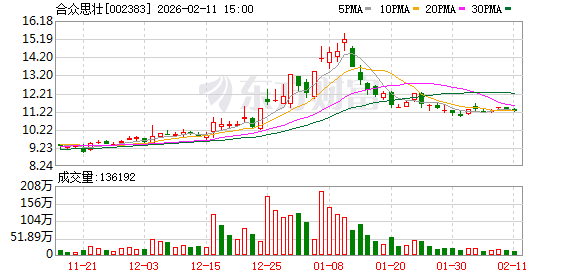
Core Viewpoint - Unisplendour Corporation plans to raise no more than 5.57 billion RMB through a private placement of A-shares while terminating the issuance of H-shares for listing on the Hong Kong Stock Exchange [1][6] Group 1: Fundraising and Investment Plans - The company intends to issue up to 430 million shares, with the net proceeds after issuance costs aimed at acquiring a 6.98% stake in H3C, purchasing R&D equipment, and repaying bank loans [1][2] - The total investment for acquiring the 6.98% stake in H3C is approximately 3.53 billion RMB, while the R&D equipment purchase is estimated at 401 million RMB, and bank loan repayment amounts to 1.67 billion RMB, totaling around 5.6 billion RMB [2] Group 2: Strategic Importance of H3C Acquisition - The acquisition of the additional stake in H3C is expected to enhance the company's control over H3C and improve profitability, as the company has seen significant growth in asset quality, revenue, and profit since acquiring a 51% stake in 2016 [2][3] - By increasing its stake in H3C to 81%, the company aims to bolster its net profit attributable to shareholders, thereby strengthening its operational sustainability [2][3] Group 3: R&D and Financial Structure - The company is focusing on capital investment to accelerate technological innovation in a rapidly evolving industry characterized by digital technologies such as AI, cloud computing, and big data [3] - The fundraising will also help reduce the company's debt-to-asset ratio, which has risen above 80% as of September 30, 2025, and optimize its financial structure by alleviating financial pressure through loan repayment [3] Group 4: H3C's Financial Performance - As of September 30, 2025, H3C reported total assets of 57.14 billion RMB, with revenues of 59.62 billion RMB and a net profit of 2.53 billion RMB for the first three quarters of 2025 [4][5]

今晚美国非农“年度大修”万众瞩目;三大期指齐涨;亚马逊4500颗卫星获批;SpaceX与xAI合并上市在即;波音发力提升737产能【美股盘前】
Mei Ri Jing Ji Xin Wen· 2026-02-11 10:52
Group 1 - U.S. stock index futures are showing positive movement, with Dow futures up 0.22%, S&P 500 futures up 0.19%, and Nasdaq futures up 0.16% [1] - The U.S. will release the non-farm payroll data for January, with expectations of a 70,000 increase in jobs, slightly above December's 50,000. The unemployment rate is expected to remain at 4.4% [1] - The upcoming non-farm payroll report will include annual revisions of employment data for the past two years, with a projected downward adjustment of 750,000 to 900,000 jobs [1] Group 2 - TotalEnergies shares rose over 1.3% after reporting a Q4 adjusted net profit of $3.84 billion, a 13% year-over-year decline but above market expectations of $3.81 billion [1] - Mattel shares fell over 30% due to Q4 profits for 2025 falling short of market expectations, with forecasts for the entire year also below expectations [2] - Lyft shares dropped over 17% after Q4 revenue did not meet analyst expectations, and the Q1 guidance was also disappointing [2] Group 3 - The European Union approved Google's acquisition of Wiz for $32 billion, aimed at enhancing Google's position in cloud computing and cybersecurity [2] - The FCC approved Amazon's plan to deploy 4,500 satellites, expanding its satellite constellation to approximately 7,700, allowing it to compete with SpaceX [2] - SpaceX completed a stock-for-stock acquisition of xAI, but half of the founding team has left the company, raising concerns about its future [3] Group 4 - Deutsche Bank raised Micron Technology's target price by 67% to $500, maintaining a "buy" rating, indicating potential for significant stock price increases [3] - Boeing plans to increase the monthly production of its 737 aircraft to 63 units within the next few years, which is crucial for improving its financial situation and debt repayment [3][4] - The production rate of the 737 aircraft is expected to grow by approximately 15% over the next 18 months, which is vital for Boeing's revenue [4]
【美股盘前】今晚美国非农“年度大修”万众瞩目;欧盟批准谷歌320亿美元收购Wiz;与SpaceX合并上市在即,xAI创始团队半数成员已离职;亚马逊在美获...
Mei Ri Jing Ji Xin Wen· 2026-02-11 10:13
其中,今晚的一大重头戏是对截至2025年3月底的12个月里的就业数据的进一步修正,业内预估的最终 下修幅度可能要略小——在75万至90万之间;此外,美国劳工统计局此次还将发布去年4月至12月经修 订的月度就业人数变动数据,美国银行的经济学家估计,该周期内的新增就业人数可能平均每月下调2 万至3万人。 ③ 【道达尔能源涨超1.3%】道达尔能源盘前涨超1.3%。消息面上,该公司Q4调整后净利润为38.4亿美 元,同比下降13%,但高于市场预期的38.1亿美元。 ④ 【美泰跌超30%】全球玩具制造巨头美泰盘前跌超30%。消息面上,该公司2025年Q4利润不及市场 预期,且该公司预测2025年全年利润也将低于预期。 ⑤ 【Lyft跌超17%】出行公司Lyft盘前跌超17%。消息面上,该公司2025年Q4营收未达分析师预期,且 今年Q1业绩指引未达预期。 ⑥ 【欧盟批准谷歌320亿美元收购Wiz】当地时间2月10日,欧盟反垄断机构正式宣布,批准美国谷歌公 司以320亿美元(约合人民币2212亿元)的价格收购网络安全初创公司Wiz。据悉,谷歌公司于2025年3 月宣布此项全现金收购交易,旨在加强该公司在云计算和网络安全领 ...