新旧动能转换

Search documents
同比增长26.1%!
Sou Hu Cai Jing· 2025-12-20 05:23
Group 1 - In the first 11 months of the year, China's e-commerce has continuously stimulated consumer vitality, with digital consumption and online services being the main growth drivers [2] - The growth of digital products monitored by the Ministry of Commerce increased by 8.2%, with smart wearables and smart robots maintaining double-digit growth [2] - Online service consumption saw a significant increase of 21.7% [2] Group 2 - The average price index for China's bulk commodities is expected to be 112.1 points in 2025, showing a trend of stabilization and recovery, with clear characteristics of new and old kinetic energy conversion [3] - In November, actual foreign investment used in China increased by 26.1% year-on-year, with 61,207 new foreign-invested enterprises established in the first 11 months, a 16.9% increase [3] - In November alone, 7,425 new foreign-invested enterprises were established, marking a year-on-year growth of 35.3% [3] Group 3 - The 2025 China International Tourism Trade Fair opened in Haikou, attracting over 1,000 travel merchants and representatives from 101 countries and regions, with a total exhibition area of 65,000 square meters [3] Group 4 - Beijing has enhanced public services related to Taiwan, focusing on eight areas including entry, residence, travel, education, employment, medical care, social security, and assistance, resulting in a streamlined service process [4] - A total of 13 "process testing" sessions have been conducted to address specific issues in areas such as medical care and social security, improving the experience for Taiwanese residents [4] Group 5 - The second "Tongqi Zhi Guang" Cross-Strait Animation Fashion Design Week was held in Shanghai, promoting cultural exchange and collaboration between the two sides through various activities [5] - The event serves as a significant platform for youth cultural exchange, fostering substantial interaction among young talents in the creative and cultural sectors [5]

21社论丨着力拓展投资增长空间,确保稳增长
21世纪经济报道· 2025-12-20 03:30
Core Viewpoint - The article emphasizes the importance of expanding effective investment during the "14th Five-Year Plan" period, focusing on the integration of investment in physical assets and human capital to stimulate economic growth and support the new development pattern [1]. Group 1: Investment Strategy - The central economic work conference highlights the need to stabilize investment as a key task, especially in light of external environmental changes and domestic economic challenges [1]. - Fixed asset investment growth has declined, with a year-on-year decrease of 2.6% from January to November, influenced by local government debt and real estate adjustments [1]. - Long-term effective investment opportunities remain, as per capita capital stock in China is still lower than that of developed economies, indicating room for growth in infrastructure and public services [1]. Group 2: Funding Sources - The central economic work conference proposes to implement a more proactive fiscal policy, increase central budget investment, optimize local government special bond usage, and leverage new policy financial tools to enhance funding sources [2]. - Predictions suggest that upcoming policies will help alleviate local financial pressures and amplify government investment's impact [2]. - The focus on high-quality implementation of major national strategies and projects aligns with the need for improved infrastructure and human resource development [2]. Group 3: Private Investment - The article stresses the necessity of a collaborative investment approach led by the government and driven by the market, aiming to enhance private sector participation in major projects [3]. - Measures have been introduced to stimulate private investment, including expanding access, addressing bottlenecks, and strengthening guarantees [3]. - The central economic work conference calls for improving regulations to boost private sector confidence and investment willingness [3]. Group 4: Future Investment Demand - The development of new industries and the need to address existing gaps will continuously generate investment demand [4]. Group 5: Investment Growth Expectations - Investment is expected to have a greater elasticity compared to consumption, and with the implementation of various policies, investment growth in the coming year looks promising [5]. - More detailed work is required to ensure sustainable investment growth and optimize supply structure [5].

着力拓展投资增长空间,确保稳增长
2 1 Shi Ji Jing Ji Bao Dao· 2025-12-20 00:43
Core Viewpoint - The National Development and Reform Commission emphasizes the importance of effective investment during the 14th Five-Year Plan period, focusing on expanding domestic demand and enhancing government investment to stimulate private investment and reform investment mechanisms [1][2]. Group 1: Investment Strategy - The central economic work conference identifies stabilizing investment as a key task for the upcoming year, with a focus on reversing the decline in fixed asset investment, which has decreased by 2.6% year-on-year from January to November [1][2]. - The government aims to combine investment in physical assets and human capital, enhancing infrastructure and public services while addressing the needs of new urbanization and rural revitalization [2][3]. Group 2: Funding Sources - The central economic work conference proposes a more proactive fiscal policy, including increasing central budget investment and optimizing the use of local government special bonds to enhance funding sources for investment [2][3]. - New policy financial tools are highlighted as crucial for stabilizing investment, indicating a shift towards early implementation of these tools [2]. Group 3: Project Implementation - The 15th Five-Year Plan will prioritize high-quality implementation of major national strategies and projects, focusing on infrastructure and public service development in response to demographic changes [3][4]. - The government aims to create a collaborative investment environment by enhancing the role of private enterprises in major project construction and increasing the proportion of private investment [3][4]. Group 4: Private Investment Activation - The State Council has issued measures to stimulate private investment, including 13 targeted initiatives to improve access, eliminate bottlenecks, and strengthen guarantees for private investors [4]. - The central economic work conference emphasizes the need to boost private sector confidence through improved regulations and timely payment of debts owed to enterprises, fostering a conducive environment for private investment [4].
科创“新动能”、产业“新里程”,2025第一财经资本年会顺利召开
Di Yi Cai Jing· 2025-12-19 13:33
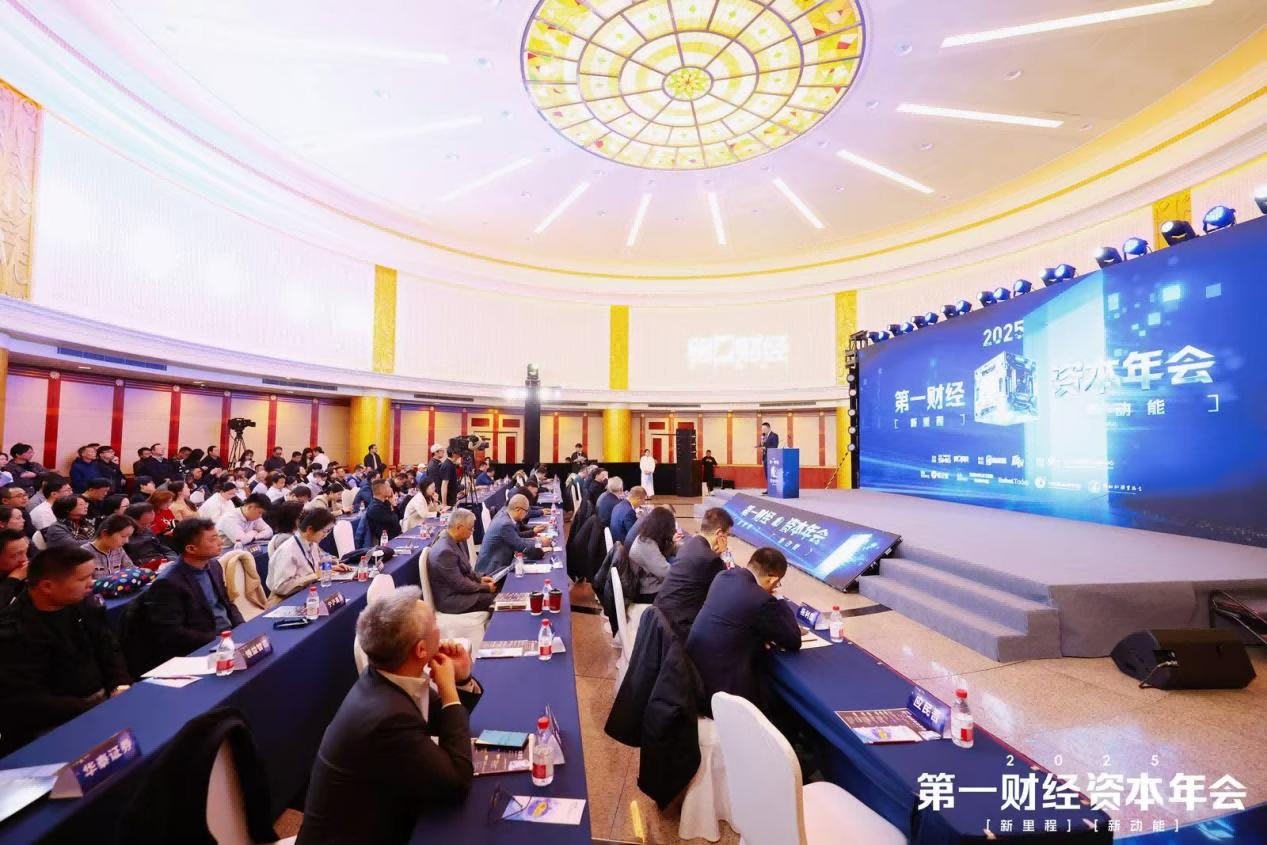
"十五五"新程:科技创新迈向高质量发展新纪元 以"新动能、新里程"为主题,2025第一财经资本年会于12月18日在上海举行。 2025年是"十四五"收官与"十五五"开局的关键交汇点,更是新质生产力加速崛起的一年。 12月18日,2025第一财经资本年会在上海举行。本届年会以"新动能、新里程"为主题,会上,专家学者围绕中国经济韧性、硬科技突围、科创生态建设等核 心议题,通过主旨演讲、圆桌对话、成果发布等多元形式,共话资本市场与科技创新的双向奔赴,共探产业高质量发展的实践之道。 第一财经总编辑杨宇东在致辞时表示,2025年,"韧性"二字贯穿了中国经济的整体叙事。全球经济复苏与地缘格局趋势仍不明朗,在这样的压力测试下,中 国经济依然展现出自身的内生稳定性与发展活力。但这份"稳"并非偶然,也相当不易,是科技创新与政策引导协同发力、产业升级与市场机制深度融合的建 设成果。 "即将到来的2026年,是'十五五'规划的开局之年,面对新时代的命题,我们需要更广阔的全球视野、更深刻的历史自觉、更紧密的生态协作。"杨宇东称, 作为中国最具影响力的财经媒体集团之一,第一财经始终是时代发展进程中的观察者、记录者和推动者,也是共识的凝 ...

科创“新动能”、产业“新里程”,2025第一财经资本年会顺利召开
第一财经· 2025-12-19 13:00
Group 1 - The year 2025 marks a critical intersection between the conclusion of the "14th Five-Year Plan" and the beginning of the "15th Five-Year Plan," emphasizing the rise of new productive forces [1] - The theme of the 2025 First Financial Capital Annual Conference is "New Momentum, New Milestones," focusing on discussions around China's economic resilience, breakthroughs in hard technology, and the construction of a science and technology innovation ecosystem [1][3] - The conference highlighted the importance of technology innovation and policy guidance in achieving economic stability and vitality, particularly in the context of global economic recovery and geopolitical uncertainties [3] Group 2 - Experts emphasized that the resilience of China's economy is closely tied to its super-large scale, which allows for iterative innovation based on existing technologies rather than blindly pursuing high-tech advancements [7][9] - The transition from old to new driving forces and technological innovation is essential for high-quality economic development, with recommendations for building a high-quality innovation development pattern from multiple dimensions [9][11] - The development of AI technology is seen as a significant driver for various industries, with expectations for more growth in sectors like pharmaceuticals and AI, leveraging China's advantages in engineering talent and manufacturing [11][13] Group 3 - The capital market plays a crucial role in supporting the industrialization of scientific and technological achievements, with discussions on the key paths for capital market support for innovation-driven industries [17][20] - The conference addressed the importance of patience and long-term capital in supporting industrial development, with a focus on the strategic planning for the "15th Five-Year Plan" period [20] - The establishment of a multi-tiered capital market structure in China is seen as beneficial for different types of innovative enterprises, providing tailored exit channels [19][20] Group 4 - The conference released multiple research findings, including the "Dialogue with Unicorns" report, which outlines industry development trends and enterprise needs, aiming to guide the efficient allocation of innovation resources [26][30] - The Shanghai high-quality incubator initiative aims to create a comprehensive ecosystem for innovation and industry integration, with a focus on nurturing new models of incubation [30][32] - Awards were given to 32 listed companies for their outstanding performance in various categories, highlighting the recognition of innovation and competitiveness in the market [32][34]
2026年这一主线,会有大机会
大胡子说房· 2025-12-19 10:09
Group 1 - The core viewpoint of the article emphasizes that by 2026, there will be a significant consumer stimulus that everyone can feel, driven by a focus on domestic demand [1][5][21] - The recent rise in the consumer sector of the A-share market is linked to the upcoming policies aimed at stimulating consumption [3][4] - The key theme for 2026 is "domestic demand-led growth," which is expected to be a crucial focus area [5][21] Group 2 - The article discusses the inadequacy of previous consumption stimulus measures, such as consumption vouchers and subsidies, which have not effectively reached lower-tier cities [7][14] - The lack of consumer spending is attributed to issues related to income distribution and safety perceptions, indicating that income and security must be addressed to boost consumption [8][10][18] - A proposed solution is to bind local government revenue to residents' income, which would incentivize local authorities to implement effective consumption-boosting measures [19][21] Group 3 - The article highlights the importance of increasing residents' income through specific policies, such as raising minimum wage standards and providing skill training [22][23] - It suggests that reducing household burdens through tax relief and optimizing public spending on education, healthcare, and pensions can indirectly enhance consumer confidence [24][27] - The need for a comprehensive social safety net is emphasized, which would provide individuals with a sense of security to spend on improving their quality of life [28][29] Group 4 - The article points out that the current economic structure is imbalanced, with over-reliance on exports, and stresses the necessity of enhancing domestic consumption to address internal economic issues [31][34][35] - It notes that 2026 is a pivotal year for transitioning from old to new economic drivers, with a clear focus on consumer spending as a viable option for local tax revenue [30][32][40] - The article also mentions the government's commitment to stabilizing the real estate and stock markets, which are crucial for enhancing household wealth and, consequently, consumer spending [48][50] Group 5 - The article concludes that consumption will be a long-term mainline focus, while also acknowledging the potential for short-term market fluctuations [51][52] - It suggests that technology will also be a significant focus area for investment, as institutional funds are currently betting on this sector [53] - The article advises a diversified investment strategy to navigate potential market volatility and emphasizes the importance of being prepared for short-term market influences [55][56]

山东巨野:特色产业“攀高向新”动能澎湃
Zhong Guo Jing Ji Wang· 2025-12-19 07:40
同在产业园内的山东达宁半导体有限公司,通过数字化管理实现月产LED线性光源300万米,生产周期 平均缩短2天,效率提升18%。园区内企业"上下楼即上下游"的协同模式日益成熟,集聚效应正推动新 一代信息技术产业集群加速成型。 走进山东菏泽市巨野县乾元半导体科技有限公司的无尘车间内,芯片测试分选设备稳定运行,工人们在 操作台前有条不紊地进行LED芯片的精密封装与精准调试。作为巨野县新一代信息技术产业园的龙头企 业,该公司总投资达15亿元,已构建起覆盖LED外延片设计、芯片测试分选、光电探测器芯片及深紫外 光LED器件与应用产品的完整产业链,整体技术达到国际先进水平。 "我们的MiniLED芯片尺寸较传统产品缩小20倍,已广泛应用于车灯、显示屏、城市亮化等领域。"山东 乾元半导体总经理曹存景介绍。 "十四五"以来,巨野县累计落地过亿元项目320个。其中2022年,落地项目107个,计划总投资307.26亿 元,超额完成"双百"目标。新增国家级高新技术企业52家,科技型中小企业80家,"专精特新"企业77 家,市级以上科技创新平台达到88个。累计实施省级重点项目85个,技改投资项目190个,技改投资年 均增长10%。 ...
【锡价】暖风携浪推锡价,岁末长虹贯新红!
Xin Lang Cai Jing· 2025-12-19 07:26
Core Viewpoint - The tin market is experiencing a strong upward trend driven by supply-demand balance, geopolitical risk premiums, and expectations of liquidity easing, with current prices reaching new highs since June 2022 [1][2]. Market Price Trends - As of December 19, 2025, the price of 1 tin in the Changjiang spot market is quoted at 336,500-338,500 CNY per ton, with an average of 337,500 CNY per ton, reflecting an increase of 4,000 CNY per ton from the previous day [1]. - The cumulative increase over three days exceeds 5.5%, with the Shanghai tin futures contract closing at 338,410 CNY per ton, marking a 1% rise [1]. Macroeconomic Influences - The latest U.S. CPI data for November shows a year-on-year increase of 2.7%, significantly below the expected 3.1%, reinforcing expectations for a Federal Reserve rate cut [2]. - Easing liquidity conditions globally are supporting risk assets, including tin, while China's economic policies aimed at stabilizing growth and expanding domestic demand are enhancing market confidence [2]. - Geopolitical risks related to the supply chain of critical minerals are adding a risk premium to tin prices, alongside disruptions in supply from the Democratic Republic of the Congo and logistical issues in Cambodia [2]. Supply and Demand Dynamics - The supply side is characterized by structural tightness with limited marginal improvements, primarily due to slow recovery in Myanmar, policy restrictions in Indonesia, and ongoing raw material shortages [3]. - Global refined tin production is declining, and visible inventories are at historically low levels, amplifying the price impact of any supply disruptions [3]. - Demand is transitioning with traditional sectors like consumer electronics facing weakness, while emerging sectors such as AI servers, electric vehicles, and photovoltaics are becoming key growth drivers [3][5]. Industry Structure and Challenges - The upstream sector is dominated by a few major regions, facing challenges from declining ore grades and geopolitical risks, which restrict effective supply release [3]. - The midstream sector is under pressure due to high raw material costs and inefficiencies, pushing the industry towards higher efficiency and concentration through technological upgrades [4]. - The downstream sector is witnessing a structural transformation, with traditional demand stagnating while high-end applications in emerging industries are driving growth [5]. Short-term Price Outlook - The tin market is expected to remain in a high-level oscillation, balancing supply disruptions and cost support against weak demand and inventory pressures [5]. - Key factors influencing this balance include the actual recovery of supply from major producing regions and the efficiency of cost transmission to downstream demand [5].

2026年中国经济展望:新旧动能转换与宏观治理下的稳增长
Bank of China Securities· 2025-12-19 06:14
Group 1 - The core viewpoint of the report emphasizes the transition from old to new growth drivers as a key factor influencing China's economic performance, particularly in the context of the real estate market adjustment and changes in domestic population and international geopolitical landscape [2][6][9] - The report forecasts that macroeconomic policies will maintain appropriate support, with a more active fiscal policy expected to arrange 12.28 trillion yuan in new government bonds, including a general public budget deficit of 5.88 trillion yuan, local government special bonds of 4.6 trillion yuan, and special government bonds of 1.8 trillion yuan [3][14] - It is anticipated that the GDP growth rate for 2026 will be around 4.7%, with domestic demand contributing more significantly to GDP growth, particularly through stable growth in household consumption and a recovery in investment driven by major project launches and government investment expansion [9][10][14] Group 2 - The report highlights that while the real estate market adjustment continues, its impact on economic growth is expected to weaken due to its declining share in the economy, with real estate investment declines projected to narrow from -16.5% in 2025 to between -10% and -15% in 2026 [10][12][44] - Inflationary pressures are expected to ease, with the CPI projected to rise by 0.5% in 2026, driven by a recovery in food prices and stable growth in non-rent service prices, although rental prices may continue to decline [38][41][44] - The external demand and trade policy environment are expected to remain relatively stable, with export growth projected at around 3% in 2026, reflecting a slight slowdown from 5.1% in 2025 [12][13]
如何推动投资止跌回稳?丨落实会议部署 问答中国经济
Zheng Quan Shi Bao· 2025-12-19 04:54
Core Viewpoint - The Central Economic Work Conference has outlined the overall requirements and policy direction for economic work in the coming year, emphasizing the need to stabilize investment and address both old problems and new challenges in the economy [1] Group 1: Investment Trends - Investment has faced downward pressure since 2025, with fixed asset investment growth declining by 2.6% year-on-year from January to November [1] - While traditional engines like real estate and infrastructure are weakening, investments in high-tech sectors such as clean energy and aerospace are rapidly increasing, indicating a positive shift in investment structure [1] Group 2: Investment Focus Areas - Investment should be directed towards key areas that support long-term national development, including national security, industrial chain resilience, technological innovation, urban renewal, infrastructure, and energy [2] - The construction of the Chengdu-Shanghai high-speed railway exemplifies how major infrastructure projects can enhance regional economic coordination and improve public convenience, yielding significant indirect investment returns [2] Group 3: Addressing Social Needs - Increasing investment in public services such as education, healthcare, and disaster prevention is crucial for improving people's livelihoods and expanding domestic demand [3] - Investment in green transformation areas like energy conservation, carbon reduction, and ecological protection is essential for achieving carbon neutrality goals and enhancing competitive advantages [3] Group 4: Investment Sources - Government investment plays a critical role in guiding overall investment, particularly in public sectors where market forces may not allocate resources effectively [4] - Private investment, which accounts for over half of total fixed asset investment, is vital for sustaining investment growth, and measures must be taken to alleviate barriers and enhance confidence among private investors [4] Group 5: Policy Coordination - Accurate understanding of "what to invest in" and "who will invest" is essential for creating a cohesive policy approach that stimulates both government and private investment [5] - The focus should be on achieving short-term stabilization while also promoting long-term high-quality development, ensuring that investment recovery can contribute to economic transformation [5]