中美贸易战

Search documents
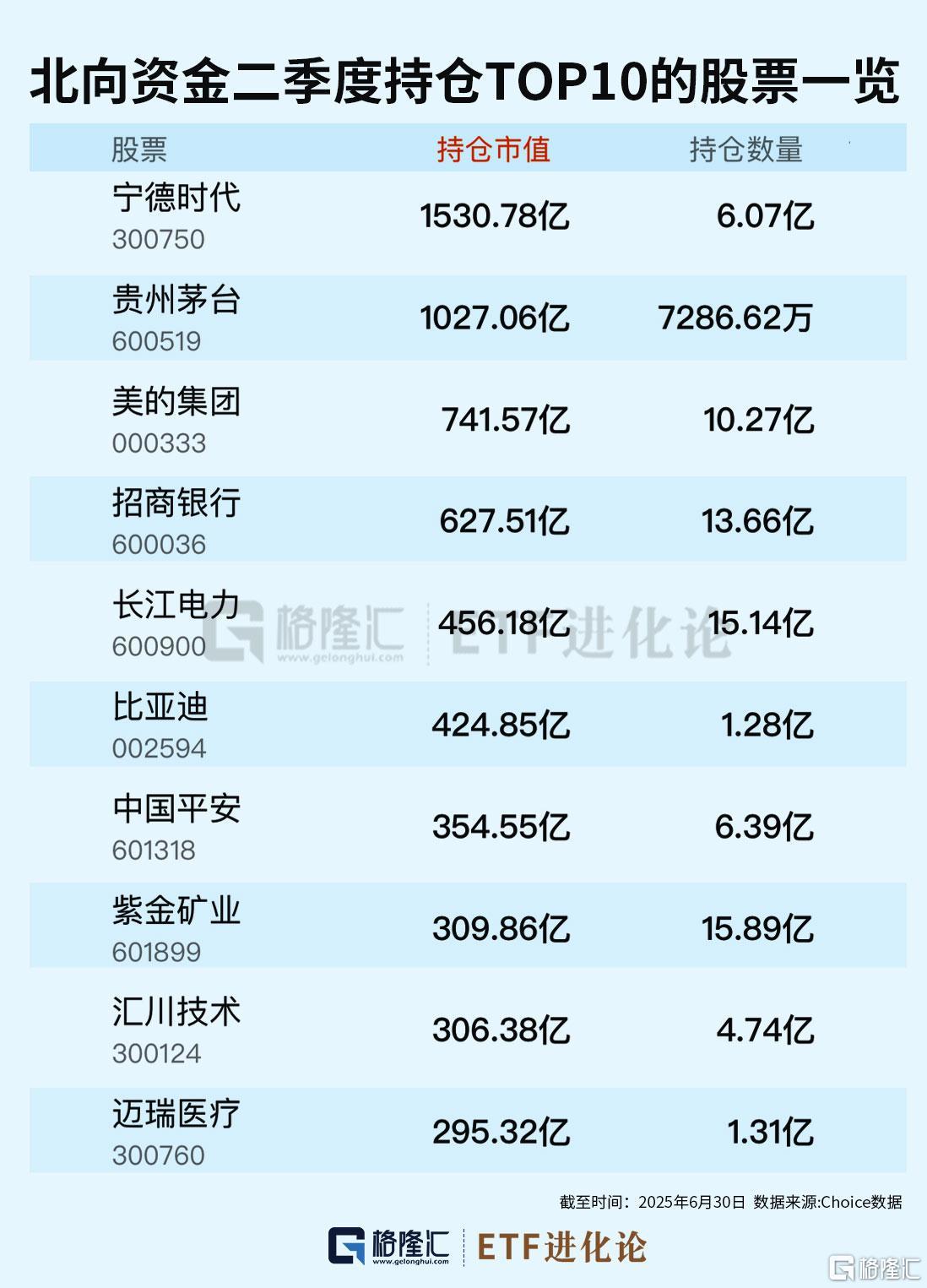
外资最新动向来了!二季度持仓股出炉
Ge Long Hui· 2025-07-09 07:43
Group 1 - As of the end of Q2, northbound funds held a market value of 2.29 trillion yuan, an increase of over 2% compared to the end of Q1, with a total of 3,572 A-shares held [1] - The top ten stocks held by northbound funds include Ningde Times, Kweichow Moutai, Midea Group, China Merchants Bank, Yangtze Power, BYD, Ping An Insurance, Zijin Mining, Huichuan Technology, and Mindray Medical [1][2] - The net buying amounts for the top five stocks in Q2 were Ningde Times (12.58 billion yuan), Hengrui Medicine (7.36 billion yuan), Dongpeng Beverage (4.04 billion yuan), Zijin Mining (3.98 billion yuan), and WuXi AppTec (3.32 billion yuan) [3][4] Group 2 - The top five stocks with the largest net selling amounts in Q2 were Kweichow Moutai (-10.32 billion yuan), Midea Group (-8.13 billion yuan), Wuliangye (-4.27 billion yuan), BOE Technology Group (-4.16 billion yuan), and Luxshare Precision (-3.64 billion yuan) [3][4] - The interest from foreign institutions in A-shares has been increasing, with 643 foreign institutions conducting research on 4,835 A-share companies this year [5] - Key sectors attracting foreign interest include electronics, pharmaceuticals, and machinery, with hot topics being AI applications, humanoid robot layouts, innovative drug development, dividends, and merger plans [5] Group 3 - UBS analyst Meng Lei predicts that after short-term fluctuations, the A-share market is expected to see some upward opportunities in the second half of the year, with a projected profit growth of around 6% for the CSI 300 index [6] - There is uncertainty regarding macroeconomic conditions, including the progress of the US-China trade war, domestic policy strength, and overall economic environment factors such as inflation and real estate trends [6] - The proportion of foreign ownership in A-shares has been declining since 2021, influenced by the pandemic and economic conditions, but may stabilize or return to 2021 levels if the Chinese economy continues to recover [6]







越南、柬埔寨与美国协议是背叛?得了吧,大哥没有发话,他敢?
Sou Hu Cai Jing· 2025-07-08 08:16
Group 1 - Vietnam and the United States have reached a significant agreement regarding tariffs, imposing a 20% tariff on goods exported from Vietnam, while a higher 40% tariff will be applied to goods from third countries that are transshipped through Vietnam to the U.S. [1] - Cambodia has also reached a tariff agreement with the U.S., expected to be similar to Vietnam's agreement, although specific details are not yet fully disclosed [1][7]. - China has expressed its stance, stating it opposes any agreements that harm its interests and will take countermeasures if necessary, indicating potential risks to its economic interests from these agreements [1][3]. Group 2 - The relationships between China and both Vietnam and Cambodia are traditionally friendly, leading to confusion among Chinese netizens regarding these countries' agreements with the U.S., which may be perceived as a betrayal [3]. - Smaller countries like Vietnam and Cambodia, lacking negotiating power, may find it necessary to align with the U.S. for survival, despite their historical ties with China [3][4]. - The agreements with the U.S. were anticipated, as these countries are not expected to serve as useful bargaining chips in the U.S.-China trade war [4].

周期之王,越赚越多了
Hu Xiu· 2025-07-07 22:47
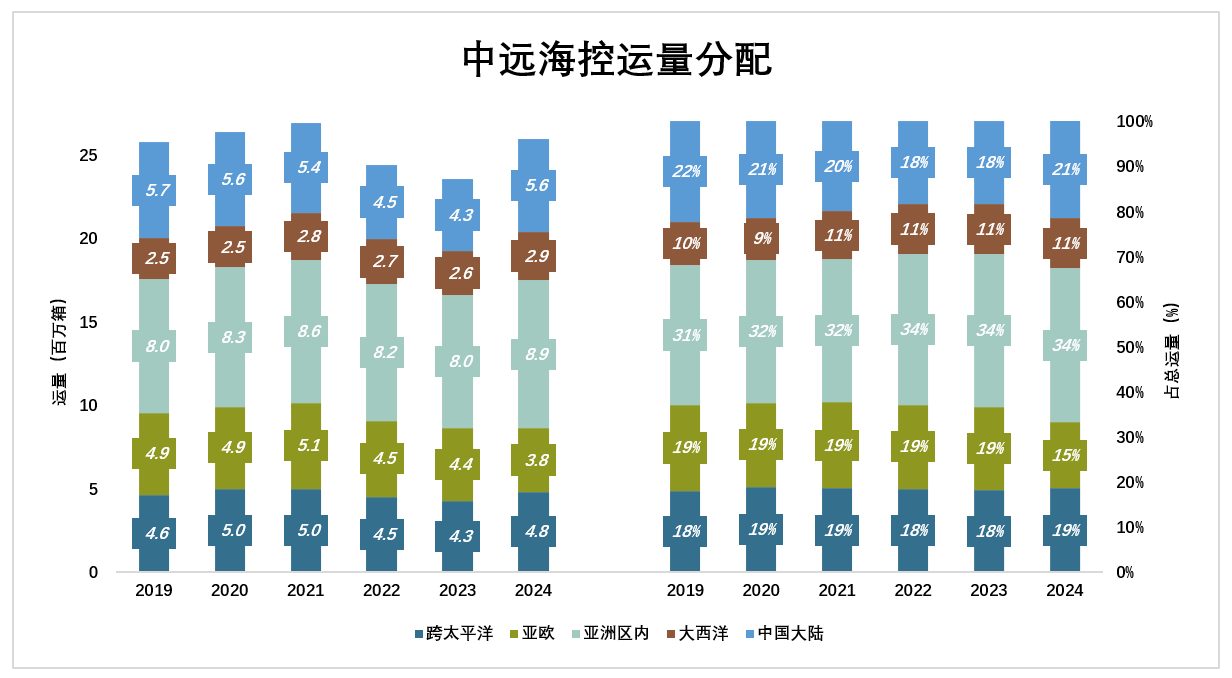
Core Viewpoint - The article highlights the strong cash returns and valuation of China COSCO Shipping Holdings (中远海控), emphasizing its resilience in the shipping industry despite concerns over trade wars and capacity expansion [1][3][4]. Group 1: Dividend and Returns - China COSCO Shipping Holdings implemented a dividend of 10.3 yuan per 10 shares for the annual report and 5.2 yuan for the interim report, resulting in a cash return of 10.29% for shareholders within a year [1]. - In contrast, Kweichow Moutai (贵州茅台) offered a lower dividend yield of 3.63% during the same period [2]. Group 2: Valuation and Market Concerns - The dividend yield of China COSCO Shipping Holdings is 2.8 times that of Kweichow Moutai, with a low dynamic price-to-earnings ratio of 5.1 times [3]. - Investor concerns stem from three main issues: trade wars leading to reduced cargo, capacity expansion causing freight rate collapse, and profit shrinkage when freight rates drop without a corresponding decrease in costs [3]. Group 3: Performance Analysis - Over the past six years, China COSCO Shipping Holdings has experienced fluctuations in performance due to the pandemic and trade wars, yet maintained an average annual net profit of 48.13 billion yuan, which is 80% of Kweichow Moutai's net profit over the same period [4]. - The shipping volume has shown stability, with only a 0.78% difference between 2019 and 2024, indicating that concerns about cargo availability may be overstated [5]. Group 4: Shipping Routes and Trends - The article discusses changes in major shipping routes, noting that the trans-Pacific route saw an increase in volume during the pandemic, while the Eurasian route has declined due to reduced purchasing power in Europe [6][9]. - The Asia-Pacific routes have shown significant growth, with a volume increase of 11.2% from 2019 to 2024, indicating a shift in trade dynamics [7][10]. Group 5: Revenue and Pricing Dynamics - Revenue from the trans-Pacific route has increased significantly despite fluctuations in shipping volume, with a revenue index of 210 in 2021 compared to 2019 [12]. - The Eurasian route has also seen a rise in revenue despite a decrease in shipping volume, with a revenue increase of 60% compared to 2019 [13]. Group 6: Cost and Profitability - The relationship between costs and prices is crucial, with shipping costs rising at a slower rate than freight rates, allowing shipping companies to maintain profitability [20][24]. - In 2024, the total cost as a percentage of revenue decreased to 65%, indicating improved profitability for China COSCO Shipping Holdings [27]. Group 7: Future Prospects - China COSCO Shipping Holdings is in discussions to acquire a stake in ports owned by Li Ka-shing, which could significantly enhance its revenue and operational capacity [32][40]. - The potential acquisition of a 25% stake in Li Ka-shing's ports could double the revenue and overseas throughput of China COSCO Shipping Holdings [40].

尝到被中方拒绝的苦果,特朗普有些坐不住,连签3道对华让步命令
Sou Hu Cai Jing· 2025-07-07 09:22
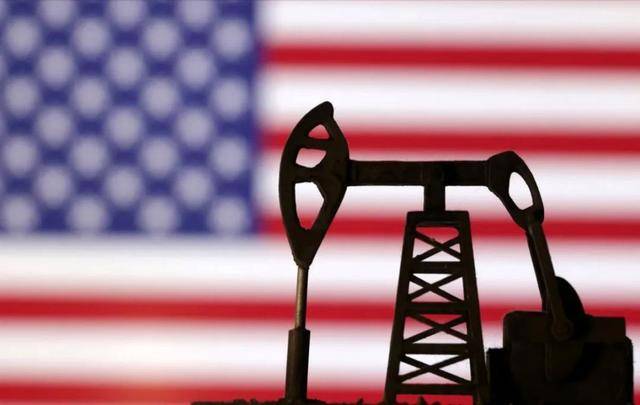
Group 1 - China has not imported any U.S. crude oil for three consecutive months, marking the longest streak since 2018, which significantly impacts U.S. shale oil producers already struggling with falling oil prices [1][3] - The U.S. oil exports have dropped to a two-year low, exacerbating the challenges faced by shale oil companies that rely on overseas orders to manage excess capacity [3] - The recent U.S. government actions, including lifting export restrictions on ethane and key aviation components, indicate a shift in strategy as the U.S. seeks to ease tensions with China amid ongoing trade disputes [5][7] Group 2 - The U.S. has allowed General Electric to resume exports of LEAP-1C engines to China, which are essential for the C919 aircraft, reflecting a significant concession in the ongoing trade conflict [5][9] - The lifting of restrictions on ethane exports to China is crucial as the Chinese market previously accounted for nearly half of U.S. ethane exports, highlighting the importance of this trade relationship [7] - The progress of China's CJ-1000A engine development for the C919 aircraft demonstrates China's commitment to achieving self-sufficiency in critical technologies, potentially undermining U.S. dominance in the aviation sector [9][12]
短期受钢厂减产消息提振,螺矿盘面延续反弹走势
Cai Da Qi Huo· 2025-07-07 07:51
Report Industry Investment Rating - No relevant information provided Core Viewpoints - Short - term, the steel and iron ore futures markets are boosted by steel mill production cut news, showing a rebound trend. For steel, with the influence of high - temperature and rainy weather, steel demand faces seasonal weakening pressure, and the short - term steel price rebound has great pressure. For iron ore, high hot metal production and low steel mill inventories strongly support the price, but attention should be paid to the marginal impact of weakening terminal demand and steel mill production cuts on hot metal [3][7][10] Summary by Related Catalogs 1. Steel Futures - This week, the steel 10 - contract maintained a small - scale rebound driven by long - position main force position - increasing. As of Friday, it closed at 3072 yuan/ton, up 77 yuan from last week, with a weekly increase of 2.57% [5] Spot - This week, the mainstream steel prices in major regions generally increased significantly, and overall trading improved slightly. As of Friday, the national average steel price increased by 65 yuan to 3263 yuan/ton, and prices in different regions such as Shanghai, Hangzhou, etc. also increased to varying degrees [5] Fundamentals - **Supply**: The blast furnace operating rate of 247 steel mills nationwide was 83.46%, a 0.36% week - on - week decrease and a 0.65% year - on - year increase; the blast furnace iron - making capacity utilization rate was 90.29%, a 0.54% week - on - week decrease and a 1.21% year - on - year increase. The average operating rate of 87 electric furnace steel mills was 66.87%, a 3.27% week - on - week decrease and a 3.12% year - on - year decrease; the average electric furnace capacity utilization rate was 51.05%, a 3.44% week - on - week decrease and a 2.03% year - on - year increase. The weekly steel production increased by 3.24 tons to 221.08 tons, still at a low level year - on - year [5] - **Demand**: This week, the building materials trading volume and the apparent steel consumption both increased slightly. The 5 - day average building materials trading volume increased by 1.12 tons to 10.85 tons, and the apparent steel consumption increased by 4.96 tons to 224.87 tons. In absolute terms, the apparent steel consumption remained at a low level in the same period [7] - **Inventory**: This week, the inventory of five major steel products continued to increase slightly, while the steel inventory continued to decrease slightly. As of Friday, the total steel inventory decreased by 3.79 tons to 545.21 tons. In absolute terms, the current steel inventory remained at a low level in the same period. Among them, the social steel inventory increased by 1.34 tons to 364.74 tons, and the factory inventory decreased by 5.13 tons to 180.47 tons [7] - **Basis**: As of Friday, the lowest warehouse - receipt quotation for steel in Shanghai was 3170 yuan/ton, with a premium of 98 yuan over the steel 10 - contract, a 13 - yuan increase from last week. Currently, the steel basis is near the average. It is expected that the steel basis will likely increase in the future [7] 2. Iron Ore Futures - This week, the iron ore 09 - contract maintained a small - scale rebound driven by short - position main force position - reducing. As of Friday, it closed at 732.5 yuan/ton, up 16 yuan/ton from last week, with a weekly increase of 2.23% [7][8] Spot - This week, the prices of mainstream imported iron ore varieties generally increased slightly, while the price of domestic iron ore concentrate remained stable, and overall trading was average. As of Friday, the prices of different iron ore varieties at ports such as Qingdao and Tianjin changed to varying degrees [9] Fundamentals - **Supply**: As of the 30th, the total iron ore shipments from Australia and Brazil were 2882.3 tons, a 178.5 - ton week - on - week decrease. The 45 - port iron ore arrivals were at a medium - to - high level in the same period. The 45 - port iron ore inventory started to increase slightly, currently at 13878.40 tons [9] - **Demand**: The current daily average ore removal volume at 45 ports is 319.29 tons, a 6.65 - ton week - on - week decrease; the weekly average trading volume of iron ore port spot increased by 0.3 tons to 98.9 tons; the daily average hot metal production of 247 steel mills was 240.85 tons, a 1.44 - ton week - on - week decrease; the daily consumption of imported ore by 247 steel mills was 300.81 tons, a 0.43 - ton week - on - week decrease [9] - **Inventory**: As of July 4th, the 45 - port iron ore inventory started to increase slightly, currently at 13878.40 tons, a 51.83 - ton week - on - week decrease. The imported iron ore inventory of 247 steel mills was 8918.57 tons, a 71.1 - ton week - on - week increase [9] - **Basis**: As of Friday, the best - deliverable iron ore at Qingdao Port was 742 yuan/ton, with a premium of 9 yuan over the iron ore 10 - contract, a 12 - yuan decrease from last week. Currently, the iron ore basis is below the average, and it is expected that the future contraction space of the iron ore basis is limited [9]
中阿签下大单,价格超一千万美元?特朗普态度变了,欧盟更急
Sou Hu Cai Jing· 2025-07-03 09:18
Group 1: Energy Cooperation - Energy has been a significant area of cooperation between China and the EU over the past 50 years, with both sides having a mutual need for traditional fossil fuels [1] - Future collaboration in renewable energy is expected to increase, as both Europe and China require substantial imports of oil and natural gas, leading to numerous global partnerships in upstream oil and gas exploration [1] - Companies like Total Energy are already engaged in cooperative exploration projects with China, aiming to lower costs through joint financing and procurement of Chinese products and services [1] Group 2: Agricultural Trade - Several Chinese feed manufacturers have signed an agreement to purchase 30,000 tons of Argentine soybean meal, marking the first order since the 2019 agreement allowing such imports [1] - The transaction price for the soybean meal is reported to be $360 per ton, including costs and freight, with expected delivery in September to Guangdong, China [1] - This order is viewed as a "test case," with expectations for more transactions if it passes China's inspection and quarantine [1] Group 3: US-China Trade Relations - The trade war initiated during Trump's first term has led China to reduce its reliance on the US, with significant decreases in imports of LNG, oil, meat, and soybeans from the US [3] - China has successfully negotiated contracts with other countries to replace US imports, causing anxiety in the US, particularly among industries reliant on the Chinese market [3] - The ongoing trade tensions have made US businesses wary, as escalating tariffs could significantly increase annual expenses for American households [3] Group 4: EU's Position - The EU has recognized that the US may exploit its alliance, prompting a reevaluation of its cooperation with the US against China [6] - European leaders, such as French President Macron, advocate for a "third way" that avoids taking sides in the US-China rivalry, aiming to establish a new alliance [4] - The EU's potential distancing from the US could limit America's strategic options and undermine its isolationist policies [6]

美国疯狂囤积铜这是为稀土大战准备筹码吗?未来稀土牌要怎么打?
Sou Hu Cai Jing· 2025-07-02 06:34
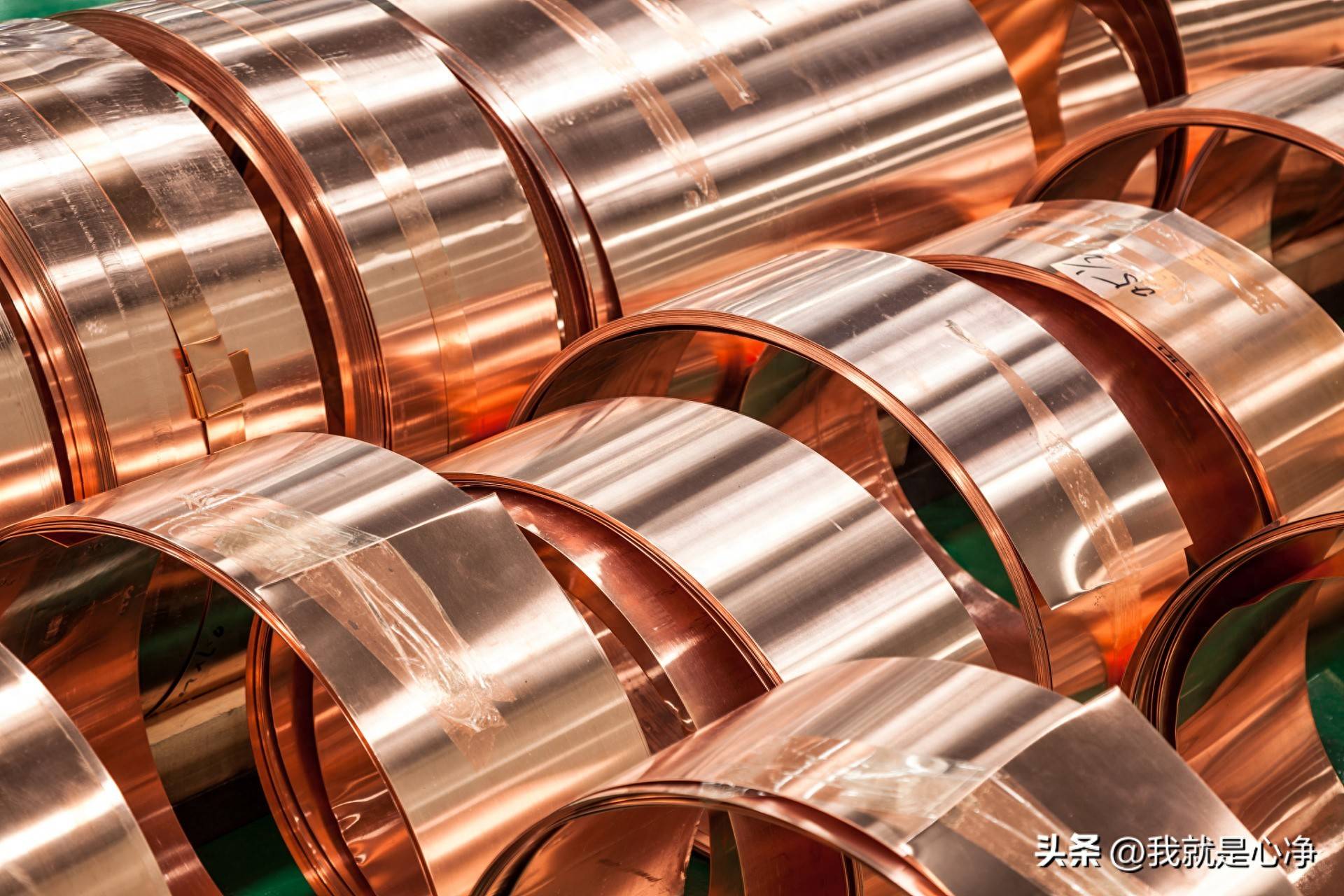
Group 1 - The core issue is the escalating global rare earth conflict, with the US and Europe facing severe shortages, particularly in rare earth magnets, which are critical for their industries [1][2] - The EU's ambassador to China expressed urgent need for cooperation from China to resolve the rare earth supply crisis, indicating a shift in Europe's previously strong stance [1][2] - China's dominance in the rare earth market, controlling approximately 90% of global supply, leaves Europe with limited alternatives, forcing them to seek assistance from China [1][2] Group 2 - The US is also experiencing a shortage of rare earths, prompting a strategic pivot towards copper as an alternative resource, with imports exceeding 500,000 tons in a few months [3][4] - The surge in copper imports is driven by fears of potential tariffs and a strategy to leverage copper in negotiations with China, highlighting the interdependence of the two economies [4][7] - Despite the importance of copper, its strategic value is considered limited compared to rare earths, as the US's reliance on copper is not as critical as Europe's dependence on rare earths [7][9] Group 3 - The ongoing trade war between the US and China is characterized as a long-term economic conflict, with both sides continuously adapting their strategies [9][12] - Recent indications of progress in US-China trade negotiations suggest that rare earths have become a pivotal point in the discussions, with potential easing of restrictions being considered [12][13] - The evolving international landscape necessitates vigilance and adaptability from both the US and China, as the competition for resources continues to shape their economic strategies [15][16]
国新国证期货早报-20250702
Guo Xin Guo Zheng Qi Huo· 2025-07-02 01:03
Report Summary 1. Investment Rating The provided content does not mention any industry investment ratings. 2. Core Views - On July 1, 2025, A-share market showed mixed performance with the Shanghai Composite Index up 0.39%, Shenzhen Component Index up 0.11%, and ChiNext Index down 0.24%. The trading volume reached 1.466 trillion yuan, slightly down by 20.8 billion yuan from the previous day [1]. - The prices of various commodities showed different trends. For example, the CSI 300 index rose slightly, while the coke and coking coal weighted indexes declined. The prices of Zhengzhou sugar, rubber, palm oil, etc., were affected by different factors such as supply - demand relationships, weather conditions, and international trade situations [1][2][3]. 3. Summary by Variety Stock Index Futures - On July 1, the Shanghai Composite Index closed at 3457.75, up 0.39%; the Shenzhen Component Index closed at 10476.29, up 0.11%; the ChiNext Index closed at 2147.92, down 0.24%. The trading volume was 1.466 trillion yuan, a slight decrease of 20.8 billion yuan [1]. - The CSI 300 index closed at 3942.76, up 6.68 [2]. Coke and Coking Coal - On July 1, the coke weighted index closed at 1393.2, down 34.8; the coking coal weighted index closed at 823.9 yuan, down 27.8 [3][4]. - For coke, the cost of coking enterprises with long - term contracts may decrease, while those with market - based procurement may face higher costs. The probability of price increases after four rounds of price cuts is low [5]. - For coking coal, supply has tightened recently, and the inventory structure has improved. However, there is a strong expectation of coal mine resumption, and the terminal demand is under pressure [5]. Zhengzhou Sugar - Affected by the expected good harvest in Thailand and India, and the 22.1% decrease in Brazil's sugar production in the first half of June, the US sugar price fell on Monday, and the Zhengzhou sugar 2509 contract declined on Tuesday [5]. Rubber - Due to excessive rainfall in Thailand affecting rubber tapping, the spot price in Southeast Asia has been firm. The Shanghai rubber futures rose on Tuesday and fluctuated slightly at night. The inventory in Qingdao Port continued to increase [6][7]. Palm Oil - On July 1, palm oil was in a volatile state, closing at 8336, up 0.07%. As of June 27, the commercial inventory of palm oil in key regions increased by 23.57% week - on - week and 25.67% year - on - year [7]. Soybean Meal - Internationally, on July 1, CBOT soybeans fluctuated. The good condition of US soybeans was offset by the rise in soybean oil prices. Domestically, the soybean meal M2509 contract closed at 2961 yuan/ton on July 1. With sufficient soybean imports and high oil mill operating rates, soybean meal inventory will gradually increase, and it will run weakly [8]. Live Pigs - On July 1, the live pig futures contract LH2509 closed at 13865 yuan/ton, down 0.04%. The market is in a state of loose supply and demand, and the futures will run weakly [9]. Copper - Macroscopically, copper prices are supported by tight mines and low inventory, but the slowdown of Fed rate cuts and US tariff policies limit the upside. Fundamentally, overseas premiums drive LME copper inventory reduction, and domestic social inventory is lower than last year, so copper prices will continue to be strong [9]. Iron Ore - On July 1, the iron ore 2509 contract fell 1.32% to close at 708.5 yuan. Overseas shipments and domestic arrivals have decreased, while steel mills' blast furnace profits are good, and iron ore will fluctuate in the short term [9]. Asphalt - On July 1, the asphalt 2509 contract rose 0.17% to close at 3562 yuan. The processing profit has improved slightly, but demand is still weak, and the price will fluctuate in the short term [10]. Logs - On July 1, the log 2509 contract opened at 784, with a low of 778, a high of 789, and closed at 787, with an increase of 48 lots. The inventory in ports has increased slightly, and demand is weak [11]. Cotton - On the night of July 1, the Zhengzhou cotton main contract closed at 13775 yuan/ton. The cotton inventory in Xinjiang's designated delivery warehouses decreased by 62 lots [11]. Steel - On July 1, rb2510 closed at 3003 yuan/ton, and hc2510 closed at 3136 yuan/ton. The black - series rebound has paused, and although there are rumors of production cuts, terminal demand is still weak [11]. Alumina - Under the situation of supply surplus in the third quarter, alumina prices will be mainly determined by cost. The price is under pressure due to the expected large - scale new production capacity in the future [12]. Aluminum - The supply of electrolytic aluminum is close to the industry limit. Although terminal demand is in the off - season, the processing link has maintained a certain level of demand. Low inventory is currently supporting aluminum prices, but there is a risk of demand weakening in the future [12].
稀土牌双线打法威力有多大?特朗普急于访华,美企已停工关厂了!
Sou Hu Cai Jing· 2025-07-01 08:00
Core Viewpoint - The ongoing supply chain battle between China and the U.S. is intensifying, with the U.S. employing export controls as a central issue in trade negotiations, while China retaliates by controlling rare earth supplies [1][3]. Group 1: Supply Chain Dynamics - The U.S. has implemented stringent measures in the chip sector, effectively isolating China, while China has responded by leveraging its control over rare earth resources [1][6]. - China has adopted a "dual-line" strategy in rare earth exports, tightening controls on critical materials while easing restrictions on ordinary rare earths to meet civilian demand [6][4]. Group 2: Export Control Measures - Since April 2023, China has introduced an export licensing system for seven critical minerals, leading to a complete halt in exports of certain rare earths like terbium and dysprosium, which were previously exported in significant quantities [3][4]. - The U.S. has felt the pressure from these export restrictions, with companies like Ford experiencing production halts due to a lack of rare earth magnets essential for manufacturing [4][6]. Group 3: International Reactions - The G7 countries are collaborating on a "critical minerals action plan" to counter China's rare earth strategy, with the U.S. pushing for resource development in regions like Greenland and Canada [6][7]. - Despite these efforts, China maintains a dominant position, controlling 80% to 90% of the global rare earth supply, making it challenging for the U.S. and its allies to reduce dependency [6][7]. Group 4: Future Implications - The control of rare earth resources is pivotal in the trade war, with potential significant impacts on U.S. high-tech industries if China escalates export restrictions [7]. - The effectiveness of any agreements between the two nations will depend on the U.S.'s genuine commitment to reducing trade friction, as past behaviors have led to skepticism from China [7].

突发,中国同意给美国稀土!特朗普访华有三大目的,会参加阅兵吗
Sou Hu Cai Jing· 2025-06-30 16:21
中美达成了一项关于稀土供应的"谅解协议",这不仅仅是一次简单的贸易往来,更像是一场博弈中的战术撤退。中国向美国企业发放了有效期仅六个月的稀 土出口许可证,涵盖风力涡轮机、喷气式飞机等多种用途,而作为回应,美国撤销了五月实施的对华限制措施。这一举动看似是对抗中的短暂和平,实则是 中方策略性的一招。 短期性的许可证安排,既保证了供应链短期内的稳定,也给未来留下了足够的谈判空间和反制筹码。 在中美贸易战的背景下,特朗普计划率领包括马斯克(特斯拉)、黄仁勋(英伟达)在内的十名顶尖CEO访华的消息,无疑为这场紧张的关系带来了新的变 数。 这些行业巨头代表着新能源、人工智能、半导体等关键领域,他们对中国市场的依赖程度极高。此次访问不仅是商界对政治决策的一种无声抗议,更是对美 国对华"脱钩"政策失败的公开承认。面对国内债务危机、低迷的支持率以及经济压力,特朗普不得不寻求与中国的合作以缓解内部矛盾。 特朗普可能希望通过这次访问解决美债危机,挽救其不断下滑的支持率,并缓解中美之间的经贸压力。随着中国连续减持美债,美元霸权受到了前所未有的 挑战。同时,由于贸易战的影响,美国经济增长放缓,就业市场受损。 而且,截至目前为止,没有任 ...