以旧换新

Search documents
机构论后市丨A股慢牛趋势不变;业绩线索权重上升
Di Yi Cai Jing· 2026-01-18 10:03
Core Viewpoint - The A-share market is experiencing mixed performance, with the Shanghai Composite Index down 0.45% and the Shenzhen Component Index and ChiNext Index up 1.14% and 1% respectively, indicating a divergence in market trends as institutions provide insights on future movements [2] Group 1: Institutional Insights - CITIC Securities highlights that the adjustment of financing margins does not affect the overall upward trend of the market but impacts its structure, emphasizing the importance of performance indicators as the annual report preview period approaches [2] - Huaxi Securities maintains that the slow bull trend of A-shares remains intact, with a focus on sectors showing high growth or improving conditions as macro policies support economic recovery [3] - Galaxy Securities notes that investor sentiment is highly active, with a continuous increase in margin trading balances, indicating a stable long-term bullish foundation for the market despite short-term fluctuations [4] Group 2: Investment Opportunities - Investment opportunities are identified along two main lines: the acceleration of global changes favoring technology innovation and growth sectors, and the recovery of manufacturing and resource sectors due to improved supply-demand dynamics [5] - The first main line focuses on technology sectors such as AI and robotics, while the second emphasizes the recovery paths for industries like non-ferrous metals and basic chemicals [5] - Auxiliary opportunities include the continuation of consumption policies aimed at boosting demand and the trend of companies expanding their profitability through international markets [5]
广发证券纺织服饰行业:纺织服装与轻工行业数据周报1.12-20260118
GF SECURITIES· 2026-01-18 08:06
Core Insights - The textile and apparel industry is experiencing a positive outlook due to rising wool prices and a tight supply-demand balance, with recommendations to focus on leading companies exploring new product lines for growth [5][6] - The report highlights the potential of companies like Li Ning, which is expected to benefit from its partnership with the Chinese Olympic Committee for the 2025-2028 period, leveraging the upcoming Los Angeles Olympics to enhance brand and performance [5] - The report also emphasizes the growth opportunities in the home textile sector, particularly for companies like Luolai Life and Mercury Home Textile, which are capitalizing on the rising sleep economy [5] Textile and Apparel Industry Review - During the period from January 10 to January 16, the Shanghai Composite Index fell by 0.45%, while the ChiNext Index rose by 1.29%. The textile and apparel sector (SW) decreased by 0.38%, ranking 22nd among 31 primary industries [13][15] - The report indicates that the latest PE (TTM) for the textile and apparel industry is 20.75X, with historical highs and lows of 57.80X and 14.44X, respectively [15][16] Key Company Valuation and Financial Analysis - Companies such as Mercury Home Textile (closing price: 20.25 CNY, target price: 23.08 CNY), and Nanshan Zhishang (closing price: 18.54 CNY, target price: 27.61 CNY) are highlighted for their strong growth potential [6] - The report provides detailed financial metrics for various companies, including EPS, PE ratios, and ROE, indicating a generally favorable investment outlook across the sector [6] Light Industry Manufacturing Review - The light industry sector is showing signs of recovery, with improved sales driven by real estate policy changes and consumer upgrades [5] - The report notes that the paper industry is expected to benefit from reduced production by leading companies, leading to a rebound in paper prices [5] Data Tracking in Textile and Apparel - The report tracks significant price movements in key materials, such as PA66 and PA6, with PA66 priced at 14,833 CNY/ton, reflecting a year-on-year decrease of 13.64% [5] - It also highlights the decline in textile exports from China, with a 4.10% drop in textile export value and a 10.10% drop in apparel export value in December 2025 [5]
深圳“南山换房易”活动满月 “以旧换新”助力楼市轮动
Zheng Quan Shi Bao Wang· 2026-01-16 12:15
记者在深圳多区采访时发现,不少二手房的房源挂牌价在近一年的时间里多次下调。多位购房者表示, 自己碍于手上的二手房难以卖出,从而打乱了置换计划。 证券时报记者吴家明 乐有家最新业主验真价显示,截至去年12月底深圳全市二手房挂牌均价每平方米6.08万元,环比下跌 0.8%,降幅对比11月略有收窄。2025年挂牌均价累计跌幅为8%,挂牌价与成交价之间的差距逐渐缩 小。而在2025年1月初,二手房客户议价率为8.2%,到了去年12月上涨至11.2%,增加了3个百分点,也 是全年最高值。 为提高楼市活跃度和一二手房联动性,不少城市提出了"以旧换新"的政策方向,帮助居民卖旧买新。 乐有家研究中心认为,"卖一买一"的换房需求十分活跃,助推楼市整体轮动。在"南山换房易"等专项活 动的助力下,2026年或有更多举措助力降低交易成本来打通换房链条。满足改善型需求的大户型、高品 质住宅将有更多需求。 而在深圳市场,"南山换房易"以旧换新专项活动于去年12月中旬正式启动,至今已正式"满月"。1月16 日,记者从乐有家研究中心获悉,活动报名的"旧房"达到近1500套,最终成交超过170套。 乐有家研究中心的数据显示,从置换的总价及面积 ...
总投资5188亿,北京160个重大项目开工,冲刺一季度“开门红”
Xin Lang Cai Jing· 2026-01-16 11:53
Core Viewpoint - Beijing's economic development is expected to have a strong start in Q1 2026, supported by various initiatives aimed at boosting consumption, expanding investment, and enhancing industry growth [1] Investment and Projects - The city plans to initiate 160 major projects with a total investment of approximately 518.8 billion yuan [2] - The investment will focus on four key areas: modern industrial system construction, modern infrastructure system construction, improving people's livelihoods, and urban renewal actions [4] - The "Three 100" key engineering projects, with a total investment exceeding 1.4 trillion yuan, will play a significant role in supporting over 30% of the city's investment in 2026 [3] Economic Actions - Six major special actions will be implemented to stimulate consumption, expand investment, and stabilize expectations [5] - Specific measures include promoting consumption through trade-in programs for large goods, enhancing tourism promotion, and organizing high-quality cultural and commercial events [6][7] Policy and Support - The city will release its annual land supply plan by the end of January and aims to ensure that 40% of the fixed asset project construction funds are allocated before the Spring Festival [8] - A focus on providing tailored services to enterprises will be emphasized, particularly for high-growth companies and key industries [10] Employment and Social Welfare - Initiatives will be taken to promote high-quality employment and provide support for vulnerable groups, including job matching and career guidance [11]
苹果突然宣布,支持华为、小米等以旧换新
中国基金报· 2026-01-16 07:33
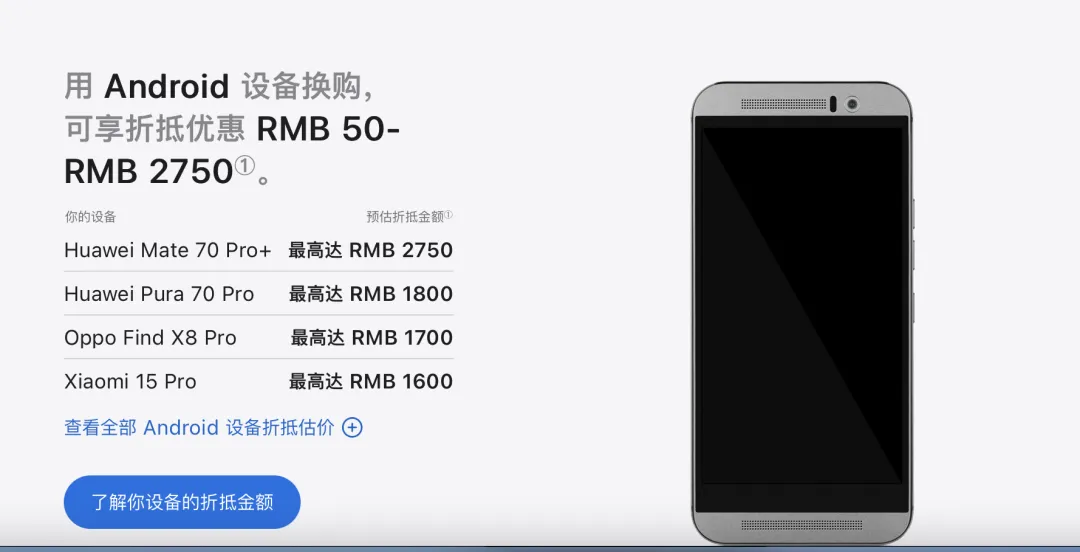
Group 1 - Apple's Trade In program now includes Android brands such as Huawei and Xiaomi for device trade-in [2][3] - The trade-in values for various devices are as follows: iPhone 16 Pro Max up to 5800 yuan, iPad Pro up to 5800 yuan, iPad Air up to 3500 yuan, MacBook Pro up to 6050 yuan, and Mac Pro up to 14000 yuan [4] - Specific trade-in values for Android devices include: Huawei Mate X5 up to 2850 yuan, Huawei Mate 70 Pro+ up to 2750 yuan, Oppo Find X8 Pro up to 1700 yuan, Vivo iQOO 13 up to 1600 yuan, and Xiaomi 15 Pro up to 1600 yuan [4] Group 2 - Previously, only e-commerce platforms like JD and Tmall supported cross-brand trade-in services, while Apple's official site only accepted its own brand devices [6] - IDC forecasts that global smartphone shipments will reach 1.26 billion units by 2025, with Apple maintaining the top position in shipments at 247 million units, a 6.3% year-on-year increase [7] - In the Chinese market for 2025, Huawei is projected to lead with a market share of 16.4%, closely followed by Apple at 16.2% [7] - IDC warns that the smartphone market, particularly for Android manufacturers, will face significant challenges in 2026, with a potential decline in sales due to a shortage of storage chips [7]



苹果官网活动扩容:华为、小米、OV也能“以旧换新”了
Guan Cha Zhe Wang· 2026-01-16 06:31
Core Insights - Apple's "Trade in" program has expanded to include devices from Chinese brands such as Huawei, Xiaomi, OPPO, and vivo, in addition to its own products [1][3] Group 1: Trade-in Program Details - The trade-in values for selected devices are as follows: Huawei Mate 70 Pro+ can be traded in for up to RMB 2750, Huawei Pura 70 Pro for up to RMB 1800, OPPO Find X8 Pro for up to RMB 1700, Xiaomi 15 Pro for up to RMB 1600, and vivo iQOO 13 for up to RMB 1600 [3][5] - Huawei devices dominate the trade-in list, including models like Huawei Mate X5, Mate X3, Mate 70 series, and P60 series, while OPPO follows with devices like OPPO Find N3 and Find X8 series [3][4] Group 2: Market Performance - According to IDC, the total shipment of smartphones in China for 2025 is projected to be approximately 285 million units, a slight decline of 0.6% year-on-year [6] - Huawei leads the Chinese market with a shipment of 46.7 million units, a year-on-year decrease of 1.9%, holding a market share of 16.4% [6] - Apple follows closely with 46.2 million units shipped, marking a 4% increase year-on-year and a market share of 16.2% [6] - In the fourth quarter, Apple achieved a shipment of 16 million units, securing a market share of 21.1%, with a significant year-on-year increase of 21.5% [7]
苹果官宣:华为、小米也能以旧换新了
财联社· 2026-01-16 05:49
Core Viewpoint - Apple has adjusted the trade-in values for its devices, including iPhones, iPads, and Macs, and has also included Android models from brands like Huawei and Xiaomi in the trade-in program [1][4]. Group 1: Trade-in Values for Apple Devices - The Apple Trade In program offers significant trade-in values for various devices, with the iPhone 16 Pro Max having a maximum trade-in value of RMB 5800 [4][5]. - Other iPhone models have varying trade-in values, such as RMB 4900 for the iPhone 16 Pro, RMB 4175 for the iPhone 16 Plus, and RMB 3400 for the iPhone 16 [5]. - For iPads, the iPad Pro can be traded in for up to RMB 5800, while the iPad Air has a maximum value of RMB 3500 [7]. - Mac devices also have substantial trade-in values, with the MacBook Pro reaching up to RMB 6050 and the Mac Pro up to RMB 14000 [10]. Group 2: Trade-in Values for Android Devices - The trade-in program now includes several Android devices, with the Huawei Mate X5 having a maximum trade-in value of RMB 2850, and the Huawei Mate 70 Pro+ valued at RMB 2750 [10]. - Other Android models such as the Oppo Find X8 Pro, Vivo iQOO 13, and Xiaomi 15 Pro have trade-in values of RMB 1700, RMB 1600, and RMB 1600 respectively [10]. Group 3: Trade-in Program Details - The trade-in values provided are estimates and the actual amount may vary based on the device's condition, configuration, release year, and the country of sale [12]. - Participation in the trade-in program is limited to individuals aged 18 and above, and the trade-in value can be applied towards the purchase of new Apple devices [12].
北京:优化实施机制 持续推动汽车、家电等大宗商品消费增长
Xin Lang Cai Jing· 2026-01-16 04:41
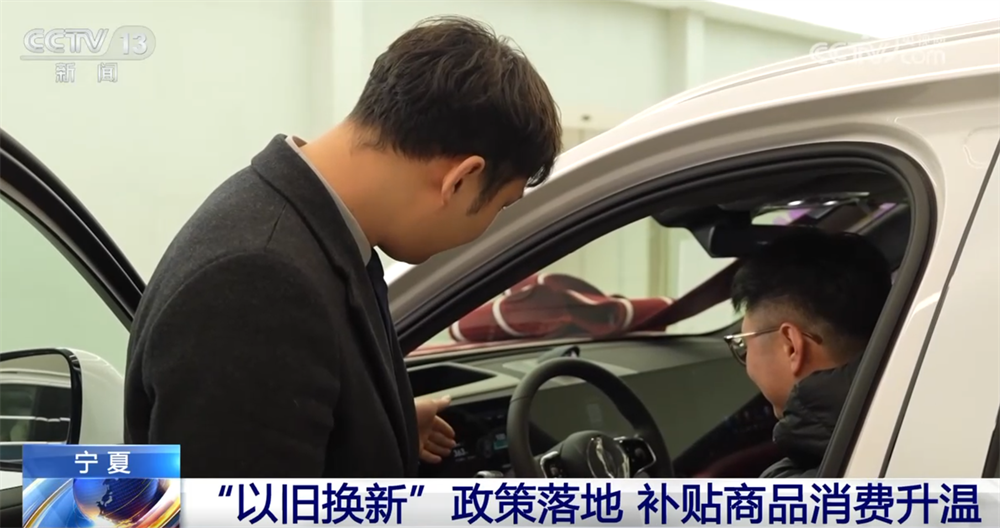
观点网讯:1月16日,北京市发改委综合处处长王育玲表示,对于市民关心的"以旧换新",今年本市将 主动对接国家新一轮以旧换新政策举措,优化实施机制,持续推动汽车、家电等大宗商品消费增长。开 年时刻历来是扩大投资的关键时间点。 免责声明:本文内容与数据由观点根据公开信息整理,不构成投资建议,使用前请核实。 市发改委投资处处长王丹丽透露,一季度,本市将坚持投资于物和投资于人紧密结合,加快建设和储备 重大项目,做好各类要素保障,持续扩大有效投资。按照计划,1月底前本市将发布全年供地计划,力 争一季度集中供应一批优质地块,春节前下达40%的市政府固定资产项目建设资金,2月底前发行首批 地方政府专项债券。1月底前还将形成城市更新储备项目和攻坚项目清单,推动建筑指标统筹、功能混 合和复合利用、优化土地续期和房屋租期等创新政策集成落地。 ...
“以旧换新”政策、多种补贴等举措全力激发消费新活力 节前市场“红红火火”
Yang Shi Wang· 2026-01-16 03:15
Group 1: Ningxia's "Old for New" Policy - Ningxia has officially implemented the "Old for New" policy for automobiles and home appliances in 2026, leading to increased consumer demand for these products [1] - The policy features a precise implementation method, with subsidies for scrapping and updating vehicles requiring qualification through the "My Ningxia" app, and a lottery system for vehicle replacement subsidies [1] - Consumers purchasing new energy vehicles can receive a subsidy of up to 12% of the vehicle price, capped at 20,000 yuan, while those buying fuel vehicles with an engine size of 2.0 liters or less can receive up to 10%, capped at 15,000 yuan [1] Group 2: Home Appliance Subsidies - The subsidy scope for home appliances has been expanded to include digital and smart products, utilizing an online consumption voucher system that provides a 15% discount on the selling price for traditional appliances and digital products [3] - The first phase of the automobile "Old for New" program saw over 7,600 registrations, with 4,226 winners selected through a lottery, and over 6,300 transactions for home appliances and digital products, directly driving consumption of 31.9 million yuan [5] Group 3: Consumption Trends in Anhui - In Anhui's Linquan County, various subsidies have stimulated pre-holiday consumption, with government-issued consumption vouchers being used to reduce prices on digital products [6] - The recent week has seen a rise in sales of digital products due to the application of national consumption vouchers [8] - The county has achieved full e-commerce coverage across 406 administrative villages, enabling same-day delivery of home appliances to rural households [10] Group 4: Quality and Smart Product Trends - The pre-holiday consumption in Linquan County shows a clear trend towards quality and smart products, with consumers shifting from traditional goods to various smart products [12] - The local government is enhancing supply chains and optimizing product offerings to quickly adapt popular smart products from urban areas to rural households, stimulating potential demand for consumption upgrades [12] Group 5: Guangdong's Consumption Promotion - Guangdong Province has launched the "Guangdong Goods Go Global" spring consumption promotion activity, aiming to invigorate consumer spending through online and offline collaboration [13] - The first promotional event for home appliances took place in Foshan, showcasing hundreds of companies with AI appliances, energy-saving products, and smart kitchen devices [13] - In the first quarter of this year, Guangdong plans to hold 12 promotional events, involving over 6,000 enterprises and more than 10 major commercial platforms [15]
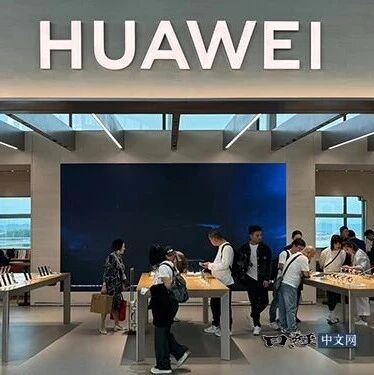
2025华为手机出货量5年来重回中国第一
日经中文网· 2026-01-16 03:05
Core Viewpoint - Huawei is projected to lead the Chinese smartphone market in 2025 with a shipment of 46.7 million units, despite a slight decrease of 1.9% from 2024, primarily due to the decline of competitor Vivo [3][5]. Group 1: Huawei's Performance - Huawei's flagship Mate series and budget nova series are performing well, both equipped with self-developed Kirin semiconductors [6]. - The company has managed to recover from a decline in sales caused by U.S. sanctions that limited semiconductor procurement, leading to a drop in product performance since 2019 [1][6]. - The latest model, Mate 80, launched in November 2025, features enhanced performance and AI capabilities while being priced lower than its predecessor, aiming to increase the user base of the HarmonyOS [6]. Group 2: Competitor Analysis - Apple ranks second with a shipment of 46.2 million units, showing a growth of 4%, bolstered by strong sales of the iPhone 17 series launched in September 2025 [6]. - Vivo, which held the top position in 2024, saw a significant decline of 6.6%, resulting in a shipment of 46.1 million units in 2025 [3][5]. - Xiaomi and OPPO follow with shipments of 43.8 million and 43.4 million units, respectively, with Xiaomi experiencing a growth of 4.3% and OPPO a modest increase of 2.1% [5]. Group 3: Market Overview - The overall smartphone shipment in China for 2025 is projected to be 284.6 million units, a decrease of 0.6% year-on-year, marking the first decline in two years [6]. - Government incentives for trade-ins have had a positive impact, but some regions have exhausted their subsidy quotas, leading to a slowdown in demand [6]. - IDC forecasts a further decline in shipments to 278 million units in 2026, continuing the downward trend [6].