
高端化

Search documents
魏氏家族80后少帅接班,能拯救失血的康师傅帝国吗
商业洞察· 2026-01-08 09:08
Core Viewpoint - The retirement of Chen Yingrang marks a significant transition for Master Kong, as the new CEO Wei Hongcheng faces the challenge of revitalizing growth in a changing market landscape [5][7][20]. Group 1: Leadership Transition - Chen Yingrang, the long-serving CEO of Master Kong, will retire at the end of 2025, with Wei Hongcheng set to take over as CEO from January 1, 2026 [5][6]. - Wei Hongcheng is the third son of the founder and has been involved in the company’s leadership, indicating a complete handover to the second generation of the Wei family [6][8]. Group 2: Financial Performance - In the first half of 2025, Master Kong reported revenues of 40.092 billion yuan, a decrease of 1.109 billion yuan or 2.69% year-on-year [6][12]. - The beverage segment contributed 65.74% of total revenue, generating 26.359 billion yuan, down 2.61%, while the instant noodle segment accounted for 33.59% with revenues of 13.465 billion yuan, down 2.52% [12][18]. Group 3: Market Challenges - The rise of the food delivery industry has significantly impacted the demand for instant noodles, with major competitors like Alibaba, Meituan, and JD.com reshaping the market dynamics [11][20]. - The number of distributors for Master Kong decreased from 67,215 at the end of 2024 to 63,806 in the first half of 2025, indicating potential issues in the distribution network [6][13]. Group 4: Strategic Responses - Master Kong has implemented a "one code for one item" strategy to enhance channel control and reduce gray market profits, but this has led to a reduction in distributor engagement [14][18]. - Despite revenue declines, the company managed to increase net profit to 2.271 billion yuan, up over 20% from the previous year, through cost-cutting measures and price increases [18][19]. Group 5: Competitive Landscape - The competitive landscape for ready-to-drink tea has shifted, with competitors like Nongfu Spring's Oriental Leaf capturing significant market share, leading to a decline in Master Kong's market share from 29.5% to 27.7% [22][23]. - The market capitalization of new tea brands has surpassed that of Master Kong, highlighting the intense competition and changing consumer preferences [11][12].


报告:海尔连续17年居全球大型家用电器品牌零售量第一
Ren Min Wang· 2026-01-08 03:24
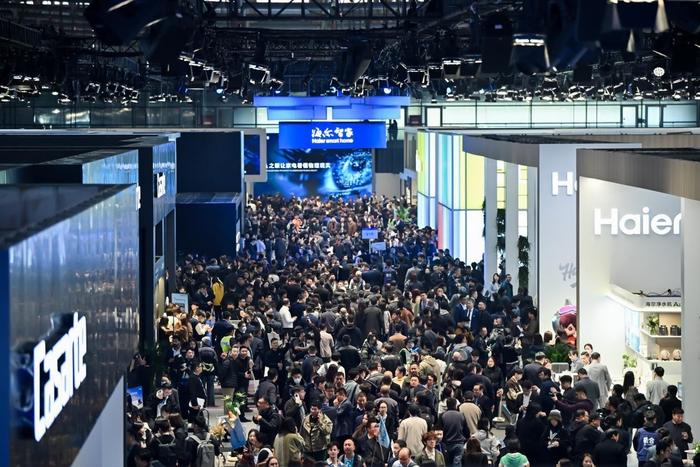
Core Insights - Haier has maintained its position as the world's leading brand in large home appliances for 17 consecutive years, with a global market share increase from 6.3% to 12.1% since 2009, demonstrating robust growth and resilience [1] - The company's growth is attributed to its smart home strategy, transitioning from merely selling appliances to providing a platform service ecosystem that enhances user experience through software-defined scenarios [1] Group 1: Strategic Framework - Haier's success is a result of its user-centric "126" strategy, which includes one innovative channel (smart home), two major platforms (customer platform and user lifecycle platform), and six capabilities (globalization, high-end, digitalization, intelligence, ecology, and greenness) [2] - The globalization aspect focuses on enhancing capabilities across sales, marketing, service, logistics, procurement, R&D, and manufacturing, allowing for localized product adaptations based on regional needs [2] Group 2: High-End and Digital Transformation - The high-end strategy emphasizes leadership through technological innovation, with products like the "Lazy Three-Tub Washing Machine" achieving significant sales milestones shortly after launch [5] - Digital transformation aims for "extreme efficiency," enhancing user experience through a fully digitized process that allows for synchronized delivery and installation, significantly reducing delivery times [5][6] Group 3: Intelligent and Ecological Innovations - Haier's approach to intelligence involves moving from product intelligence to scenario intelligence, integrating AI capabilities into home appliances for enhanced user interaction and automation [6] - The ecological strategy connects over 66 million resources to provide comprehensive services across various life scenarios, extending smart living from home to travel [6] Group 4: Commitment to Sustainability - Haier integrates ESG principles into its governance, offering green products that exceed energy efficiency standards, with commitments to achieve global carbon neutrality by 2050 [6]

realme为何在此时回归OPPO?
Tai Mei Ti A P P· 2026-01-08 01:26
"这是为进一步协同作战、整合资源......未来,OPPO与realme、一加将共同为全球用户提供更具创新力 和差异化的产品,以及更便捷周到的服务。"上述人士如此表示。 智通财经也在报道中指出,realme回归OPPO后将与一加合并,realme CEO 李炳忠(Sky Li)将领导整 体子品牌业务,一加中国区总裁李杰职责不变。 此后,一加将专注国内和部分海外线上市场,非中国区海外市场由realme和主品牌OPPO承接。 从现有信息看,realme回归OPPO,尚未涉及到更深层次的高管变动及组织架构调整。 realme新品也将如期发布,同时将全面接入OPPO售后服务体系。真我已于1月5日官宣,其2026年首款 新品真我Neo 8将于本月发布。 文 | 听潮TI,作者 | 许雯雯,编辑 | 张晓 1月7日,多家媒体报道,智能手机品牌realme将回归OPPO,成为旗下子品牌。 听潮TI已向OPPO相关人士证实,此消息属实。 从一加到realme:不同的市场环境、相似的回归剧本 市场对realme回归OPPO不算陌生,一加也走过相似的路径: 不同的市场环境下,核心高管脱离OPPO体系独立创业,做出一定成绩、被市场 ...

竞争力重塑 传统产业转型集中发力
Jing Ji Ri Bao· 2026-01-08 01:01
Group 1: Core Insights - Traditional industries are the backbone of China's manufacturing sector, accounting for approximately 80% of key indicators such as value added and employment [1] - The transformation of traditional industries towards high-end, intelligent, and green development is essential for building a modern industrial system [1] Group 2: Cost Reduction and Efficiency Improvement - In Zhengzhou, the use of intelligent manufacturing systems has led to a 10% to 15% increase in production efficiency and a 5% to 10% reduction in delivery cycles, with overall costs decreasing by 3% to 5% [2] - Traditional industries are shifting from relying on scale and experience to a data-driven approach that integrates hardware and software ecosystems [2] Group 3: Smart Factory Development - Over 35,000 basic-level and more than 7,000 advanced-level smart factories have been established since the start of the 14th Five-Year Plan, significantly enhancing production efficiency and reducing costs [3] - Continuous investment in new technology and the application of AI and smart technologies are crucial for traditional industries to enhance their high-end and intelligent capabilities [3] Group 4: Green Development Opportunities - The "dual carbon" goals are driving traditional industries to transition from resource dependency to technology value addition, creating new growth opportunities through smart and green technologies [4] - By 2024, the utilization of recycled resources such as waste steel and waste copper is expected to exceed 400 million tons, highlighting the push for industrial decarbonization and green growth [4] Group 5: Energy Transition and Circular Economy - Traditional energy companies are encouraged to explore clean energy development, while steel companies can utilize recycled materials to reduce costs and emissions [5] - The development of carbon trading markets presents opportunities for traditional industries to profit from energy-saving and emission-reduction efforts [5] Group 6: Consumer Market Dynamics - The expanding consumer market is providing new opportunities for traditional industries, emphasizing the need for precise alignment of production with consumer preferences [7] - The demand for higher quality and diverse products is driving traditional industries to innovate and enhance product offerings [8] Group 7: Value Enhancement Challenges - The ultimate goal for traditional industries is to address the challenge of value enhancement through technological innovation and brand building [9] - Improving product quality and brand premium capabilities are essential for driving value enhancement in traditional enterprises [9]
山东:重点培育四大铜产业集群 突破5N高纯铜、集成电路铜合金靶材背板等技术
Zheng Quan Shi Bao Wang· 2026-01-07 10:45
Core Viewpoint - The Shandong Provincial Department of Industry and Information Technology, along with other departments, has issued a "Work Plan for Stable Growth in the Nonferrous Metal Industry," focusing on creating specialized industrial clusters in the copper and aluminum sectors [1] Copper Industry - The plan emphasizes the development of four major copper industrial clusters: Dongying (coordinated smelting + copper-based new materials), Liaocheng (mining copper smelting + high-end foil material deep processing), Yantai (by-product copper smelting + special rod and wire deep processing), and Linyi (recycled copper smelting + urban mining) [1] - Key technological breakthroughs targeted include 5N high-purity copper, integrated circuit copper alloy target backplanes, high-strength high-conductivity copper alloy rolled foils, ultra-thin lithium battery copper foils, GPU high-speed copper cables, large high-performance easily segregated copper alloys, and dispersion-strengthened copper [1] - The initiative aims to advance the copper industry towards high-end and specialized development, enhancing its core competitiveness [1] Aluminum Industry - The aluminum sector aims to strengthen four industrial clusters: Binzhou (lightweight aluminum new materials), Liaocheng-Linyi (green recycling of aluminum industry), Yantai (high-end transportation aluminum materials), and Weifang (high-end aluminum innovative applications) [1] - The plan promotes integrated die-casting body components, aluminum parts for high-speed rail, aviation, and power batteries, photovoltaic aluminum frames, aluminum public facilities, and food-grade aluminum foil packaging products [1] - The objective is to expand the application fields, scale, and levels of aluminum materials and products [1]
研判2025!中国甲基异丁基酮行业发展历程、产业链、产量、进出口、竞争格局和未来趋势分析:国内供应量增加,进口规模逐渐下降[图]
Chan Ye Xin Xi Wang· 2026-01-07 01:05
Core Viewpoint - The domestic market for methyl isobutyl ketone (MIBK) in China is experiencing significant growth due to technological advancements and increasing application demands, leading to a reduction in import dependency and an increase in production capacity and output [1][5]. Industry Overview - MIBK, also known as 4-methyl-2-pentanone, is a colorless liquid with a camphor-like odor, soluble in most organic solvents and slightly soluble in water. It has applications in organic synthesis, rubber manufacturing, and coatings [1]. - The production methods for MIBK include the acetone method and the isopropanol method, with the acetone method being more efficient for continuous production [2][3]. Production Capacity and Output - From 2016 to 2024, China's MIBK production capacity is projected to grow from 75,000 tons to 150,000 tons, while output is expected to increase from 54,000 tons to 120,000 tons [1][5]. - The industry is expected to continue its growth trend due to the intensive commissioning of MIBK projects in the future [1]. Import and Export Dynamics - In 2024, China's MIBK imports are expected to be 9,167.5 tons with an import value of $12.51 million, while exports are projected at 3,654.21 tons valued at $5.68 million. By 2025, exports are anticipated to significantly exceed imports [5][6]. Competitive Landscape - Major global producers of MIBK include South Africa's Sasol, Korea's Kumho Petrochemical, and Japan's Mitsui Chemicals. Domestically, companies like Juhua Chemical, Ruibai New Materials, and Wanhua Chemical are key players in the market [7]. - Wanhua Chemical is expanding its MIBK production capacity, with a new project in Yantai expected to enhance its market position [7][8]. Industry Development Trends 1. **Green Development**: The MIBK industry is moving towards sustainable practices, focusing on reducing waste and emissions through advanced catalyst systems and resource recycling [9]. 2. **High-end Product Demand**: There is a growing demand for high-purity MIBK in sectors like new energy vehicles and high-end electronics, prompting companies to invest in R&D for better quality products [10]. 3. **International Expansion**: The industry is looking to expand into international markets, particularly in Southeast Asia and the Middle East, to tap into the rising demand in manufacturing sectors [11].


比亚迪(002594):全年销量同比提升,持续推进高端化和出口
Soochow Securities· 2026-01-06 07:46
Investment Rating - The investment rating for BYD is "Buy" (maintained) [1] Core Views - BYD's sales for 2025 are expected to increase year-on-year, continuing its push towards high-end products and exports [1] - The company is projected to achieve a total revenue of RMB 839.36 billion in 2025, reflecting an 8.01% year-on-year growth [1] - The net profit attributable to shareholders is forecasted to be RMB 35.01 billion in 2025, representing a decrease of 13.03% compared to the previous year [1] - The earnings per share (EPS) is estimated at RMB 3.84 for 2025, with a price-to-earnings (P/E) ratio of 25.55 [1] Financial Projections - Total revenue projections for BYD from 2023 to 2027 are as follows: - 2023: RMB 602.32 billion - 2024: RMB 777.10 billion - 2025: RMB 839.36 billion - 2026: RMB 962.02 billion - 2027: RMB 1,107.28 billion [1] - Net profit projections for the same period are: - 2023: RMB 30.04 billion - 2024: RMB 40.25 billion - 2025: RMB 35.01 billion - 2026: RMB 50.93 billion - 2027: RMB 66.39 billion [1] - The company expects to maintain a net profit margin of approximately 4.17% in 2025 [9] Sales and Market Performance - BYD's cumulative sales for 2025 are projected to reach 5.52 million units, a 20% increase year-on-year, with exports expected to account for 150,000 to 160,000 units [8] - The company has seen a significant increase in high-end vehicle sales, with December sales reaching 70,000 units, a year-on-year increase of 161% [8] - The company has established overseas production capacity exceeding 300,000 units per year, with factories in Brazil, Thailand, and Uzbekistan already operational [8] Battery and Energy Storage - BYD's battery installation for 2025 is expected to grow by 47%, with external battery supply also experiencing significant growth [8] - The company anticipates battery shipments for energy storage to exceed 50 GWh in 2025 and approximately 80 GWh in 2026 [8]

十年来,长江经济带创新动能更强劲
Ke Ji Ri Bao· 2026-01-06 01:51
Core Insights - The development of the Yangtze River Economic Belt is a major regional strategy personally planned, deployed, and promoted by General Secretary Xi Jinping, focusing on ecological protection and sustainable development [1] Environmental Protection - The proportion of water quality in categories I-III in the Yangtze River Economic Belt has increased from 67% in 2015 to 96.5% now, a rise of nearly 30 percentage points, with the main stream maintaining Class II water quality for six consecutive years [2] - The total phosphorus concentration in the Yangtze River basin has decreased by over 40% compared to ten years ago, and over 90% of black and odorous water bodies in county-level cities have been eliminated [2] Industrial Development - The Yangtze River Economic Belt is a crucial area for industrial aggregation, with 30 strategic emerging industry clusters cultivated, accounting for 45% of the national total [3] - The region contributes nearly half of the national GDP while accounting for about one-third of energy consumption and carbon emissions, emphasizing its role in green development [3] Transportation Infrastructure - The high-grade waterway mileage in the Yangtze River system has reached 11,500 kilometers, allowing for significant improvements in shipping capabilities [4] - By 2025, the port throughput along the Yangtze River is expected to reach 4.2 billion tons, with the number of major ports increasing to 18, reflecting substantial growth since 2015 [5]
深市2025年业绩预告“开门红” 多行业龙头展现增长韧性
2 1 Shi Ji Jing Ji Bao Dao· 2026-01-05 23:09
Core Viewpoint - The A-share market is witnessing a wave of positive earnings forecasts for 2025, with several representative companies from various sectors reporting expected net profit increases of over 25%, with some exceeding 300%, reflecting strong growth momentum [1] Group 1: Company Performance - Salt Lake Co. expects a net profit of 8.29 billion to 8.89 billion yuan for 2025, a year-on-year increase of 77.78% to 90.65%, driven by stable production and sales of potassium fertilizer and lithium carbonate, along with the successful advancement of new lithium salt projects [2] - Tianqi Materials anticipates a net profit of 1.1 billion to 1.6 billion yuan for 2025, representing a growth of 127.31% to 230.63%, attributed to increased demand for electric vehicle batteries and effective cost control through vertical integration [3][4] - Huazhong Steel forecasts a net profit of 2.6 billion to 3 billion yuan for 2025, with a growth of 27.97% to 47.66%, driven by its transformation towards high-end, green, and intelligent production [6] - Shougang Co. expects a net profit of 920 million to 1.06 billion yuan for 2025, reflecting a growth of 95.29% to 125.01%, supported by technological innovation and green low-carbon initiatives [7] - Chuanhua Zhihui anticipates a net profit of 540 million to 700 million yuan for 2025, a significant increase of 256.07% to 361.57%, due to business transformation and optimization strategies [8] - Kid King, a consumer service provider, projects a net profit of 275 million to 330 million yuan for 2025, a growth of approximately 51.72% to 82.06%, driven by strategic expansions and acquisitions [9][10] Group 2: Industry Trends - The new round of prosperity in the upstream of the new energy industry chain is benefiting leading companies with core resource reserves and significant technological advantages, showcasing strong earnings elasticity [2] - The lithium battery materials industry is expected to enter a key upward cycle in 2026, driven by the dual resonance of energy storage and stable growth in power batteries, with an optimized supply-demand balance [3][4] - The steel industry is transitioning from quantity expansion to quality upgrading, with new infrastructure projects expected to drive demand growth [6] - The consumer service market is evolving from traditional retail to a comprehensive consumption ecosystem, integrating products, services, and social interactions to meet family needs [10]


华润啤酒20260105
2026-01-05 15:42
Summary of China Resources Beer Conference Call Company Overview - **Company**: China Resources Beer - **Industry**: Beverage (Beer and Liquor) Key Points and Arguments Revenue and Sales Outlook - China Resources Beer expects stable revenue and sales in 2026, consistent with 2024 and 2025, with no significant growth anticipated [2][4] - The company aims to maintain overall revenue stability by focusing on market trends towards premium and niche products [2][7] Profitability and Cost Management - Gross margin improved in the first half of 2025 due to lower procurement costs, but decreased in the second half due to reduced benefits [2][5] - The anticipated rise in aluminum can prices in 2026 is expected to have a limited impact on gross margins, with the company confident in managing costs effectively [2][5][17] - China Resources Beer plans to continue cautious expense control and efficiency improvements to counter rising material costs [2][6] Market Dynamics - The restaurant channel is expected to gradually recover, supported by national policies encouraging consumption, which is projected to positively impact the company [2][8] - The liquor business faces impairment issues, with the amount yet to be determined, reflecting significant changes in the market that require a redefinition of development strategies [2][9] Business Performance Expectations - For 2025 and 2026, the company anticipates stable business performance with slight revenue growth and profit growth potentially exceeding revenue growth, reaching mid to high single-digit levels, assuming no major economic changes [2][10] Strategic Planning - The "15th Five-Year Plan" includes promoting premium product development, expanding in South China (especially Guangdong), and enhancing cost efficiency to achieve profit growth faster than revenue growth [2][11] - The company has seen success in the South China market, benefiting from competitors facing inventory pressures [2][12] Sales Channels and Partnerships - Instant retail channels significantly contribute to sales, accounting for a mid-single-digit percentage of overall sales [3][14] - Collaborations with partners like Wanma Delivery have deepened, allowing for better understanding of customer needs and the introduction of differentiated products [3][13] Cost and Pricing Strategy - Barley and aluminum can prices are largely locked in, with manageable pressure on barley prices and slight increases in aluminum can prices expected [16][18] - The company has effective measures in place to address future uncertainties regarding costs [16] Regional Focus and Product Growth - In 2026, the company will focus on East and South China markets, with supermarkets as key development areas [19] - China Resources Beer aims for double-digit growth in 2026, while maintaining stable performance for its core products [20] Brand Development - The Chaoyong brand has significant market potential within the 8-10 RMB price range, although achieving large-scale sales remains challenging [21] - The company will adopt a multi-faceted strategy to adjust development directions based on market conditions [21] Dividend Policy - China Resources Beer plans to gradually increase its dividend payout ratio, targeting 60% in 2025 and aiming for over 70% in the next two to three years [22]