
关税战

Search documents
鲍威尔暗示再次降息,央行开展了910亿元7天期逆回购操
Dong Zheng Qi Huo· 2025-10-15 00:47
1. Report Industry Investment Ratings No relevant content provided. 2. Core Views of the Report - Powell's latest remarks suggest that the Fed needs to cut interest rates again and stop balance - sheet reduction, indicating a non - changing trend of monetary policy easing and a weakening US dollar index [14]. - On October 14, the stock market closed lower again with significant trading volume. Due to the lag and long - tail effects of the tariff war and more upcoming negotiations, the situation needs to be observed [2]. - Sino - US trade relations are an incremental positive for the bond market. If the equity market is confirmed to be in high - level consolidation, the bond market will see a slight upward trend [3]. - Steel prices continue to be weak, with iron ore price declines bringing cost - side risks. There is still inventory pressure on finished products, and caution is advised regarding steel prices [4]. - In the short term, lithium prices may show a combination of strong reality and weak expectations, with narrow - range fluctuations. It is advisable to focus on short - selling opportunities on price rallies [5]. - The IEA monthly report slightly lowers the global demand growth forecast, and concerns about oversupply have pushed oil prices down [6]. 3. Summary by Directory 3.1 Financial News and Comments 3.1.1 Macro Strategy (Foreign Exchange Futures - US Dollar Index) - Trump announced the end of the war, but the path to peace in the Middle East remains fragile. The US government shutdown has entered its 14th day, and the White House vows to continue layoffs [12][13]. - Powell suggests that the Fed may cut interest rates by 25 basis points later this month and stop balance - sheet reduction in the coming months. This indicates a non - changing trend of monetary policy easing and a weakening US dollar index [14]. - Investment advice: Expect the US dollar index to weaken [15]. 3.1.2 Macro Strategy (Stock Index Futures) - The National Development and Reform Commission issued a management method to support energy - saving and carbon - reduction renovations in key industries [16]. - The Premier of the State Council held an economic situation symposium. On October 14, the stock market closed lower with significant volume. Due to the tariff war uncertainties and more upcoming negotiations, the situation needs to be observed [17][18]. - Investment advice: Allocate evenly among stock indices [19]. 3.1.3 Macro Strategy (US Stock Index Futures) - Powell leaves the door open for interest rate cuts and may stop balance - sheet reduction in the future. Fed Governor Bowman expects two more interest rate cuts by the end of the year [20][21]. - Goldman Sachs' Q3 revenue reached a record high for the same period. Fed officials' dovish remarks support market sentiment, and the 10 - month interest rate meeting is expected to cut rates [22]. - Investment advice: Given the lingering tariff threat, pay attention to negotiation progress and look for opportunities to enter the market on dips [23]. 3.1.4 Macro Strategy (Treasury Bond Futures) - The central bank conducted 600 billion yuan of 6 - month (182 - day) outright reverse repurchase operations on October 15 and 91 billion yuan of 7 - day reverse repurchase operations on October 14 [24][25]. - Sino - US trade relations are positive for the bond market. However, factors such as the stock market adjustment rhythm, policy expectations, and the fund fee rate new regulations may affect the bond market. - Investment advice: Hold existing long positions, be cautious about adding new long positions. There will be opportunities to buy on dips after the fund fee rate new regulations are implemented [26]. 3.2 Commodity News and Comments 3.2.1 Black Metals (Coking Coal/Coke) - The coking coal market in Hebei is stable. Coal mine production is stable, and high iron - water production supports coking coal demand. However, the steel market still faces supply - demand pressure, and short - term steel prices may be under pressure [27]. - Investment advice: In the short term, the coking coal fundamentals are weak. Pay attention to future demand [28]. 3.2.2 Agricultural Products (Soybean Meal) - ANEC predicts that Brazil's soybean exports in October will be 731 million tons. The estimated soybean crushing volume of NOPA members in September is 186.34 million bushels. CONAB predicts an increase in Brazil's soybean production and exports in the 25/26 season [29][30][31]. - Investment advice: The domestic and international futures prices are expected to remain weak and volatile. Pay attention to Brazilian weather, Sino - US relations, and whether the M2601 contract can find support at 2900 [31]. 3.2.3 Agricultural Products (Cotton) - In Xinjiang, the purchase price of cottonseed in the northern region has stabilized, and the "fixed - price" sales model is becoming more popular. The global textile industry is facing challenges, and China's textile and clothing exports from January to September decreased by 0.3% year - on - year [32][33][34]. - Investment advice: In the short term, Zhengzhou cotton is expected to be weak and volatile. Pay attention to new cotton purchases, Sino - US relations, and macro - level dynamics [35]. 3.2.4 Agricultural Products (Soybean Oil/Rapeseed Oil/Palm Oil) - Indonesia is considering regulating palm oil exports to meet B50 demand, which may reduce global edible oil supply [36]. - Investment advice: The B50 policy in Indonesia will cause supply shortages. Unless the policy fails, it is advisable to buy on dips [37]. 3.2.5 Black Metals (Rebar/Hot - Rolled Coil) - The world steel demand in 2025 is expected to be about 1.75 billion tons, and it will rebound by 1.3% in 2026. In early October, the daily output of crude steel by key steel enterprises was 2.032 million tons, and the inventory increased [38][39]. - Investment advice: In the short term, adopt a weak - volatility mindset, short on price rebounds, or wait for price drops [41]. 3.2.6 Agricultural Products (Red Dates) - The price of red dates in the Guangzhou Ruyifang market is stable. The futures price of the main contract slightly declined. The Xinjiang production area is in the drying - on - the - tree period, and the demand in distribution areas is stable [42][43]. - Investment advice: Before the main trading logic becomes clear, it is advisable to wait and see. Pay attention to price negotiations and purchase progress in the production area [43]. 3.2.7 Agricultural Products (Corn Starch) - On October 14, 2025, the theoretical profits of corn starch enterprises in Heilongjiang, Jilin, Hebei, and Shandong were 12 yuan/ton, 56 yuan/ton, 69 yuan/ton, and 57 yuan/ton respectively, with an increase in losses [44]. - Investment advice: Continue to look for opportunities to narrow the spot rice - flour price spread in the long - term. If the deterioration of the real - world fundamentals is slow, the 11 - contract rice - flour price spread may still have room for upward correction [44]. 3.2.8 Black Metals (Steam Coal) - In September, brown coal imports were 46 million tons, a year - on - year decrease of 3.3%. From January to September 2025, the cumulative coal imports decreased by 11.1% year - on - year [45][46]. - Investment advice: Due to supply reduction, strong thermal power demand, and winter storage, steam coal prices are unlikely to fall significantly in the short term, and there is strong support around 700 yuan/ton [46]. 3.2.9 Black Metals (Iron Ore) - Rio Tinto's Pilbara iron ore production in Q3 2025 was 84.1 million tons. Iron ore prices may fluctuate narrowly between 100 - 110 US dollars due to insufficient finished - product demand and stable iron - water production [47]. - Investment advice: Iron ore is expected to fluctuate narrowly between 100 - 110 US dollars. Maintain a volatility - market mindset [47]. 3.2.10 Agricultural Products (Corn) - Domestic corn prices are weak. The futures price of the main contract has fallen below 2100 and then rebounded. The basis is expected to weaken, and the futures price may gradually outperform the spot price [48]. - Investment advice: Hold existing short positions and closely monitor market sentiment. Do not enter long positions too early for a rebound [49]. 3.2.11 Non - Ferrous Metals (Polysilicon) - South Korea's OCI acquires a Vietnamese silicon wafer factory. The spot price of polysilicon is stable, and the production in October is expected to increase. The prices of silicon wafers and battery cells are stable, and the component price may fluctuate [50][51][52]. - Investment advice: The progress of platform companies may cause market fluctuations. It is advisable to consider going long on the PS2512 contract when it is at a discount to the spot. Look for reverse - arbitrage opportunities between the PS2511 - PS2512 contracts at around - 2000 yuan/ton [53]. 3.2.12 Non - Ferrous Metals (Industrial Silicon) - Dongyue Silicon Materials' net profit in the first three quarters of 2025 is expected to decline significantly. The start - up of northern silicon plants is increasing, while southern plants may reduce production. There may be seasonal inventory accumulation and depletion, but the supply - demand contradiction is not obvious [54]. - Investment advice: It is more advisable to go long on industrial silicon at low prices, but be cautious about chasing up [55]. 3.2.13 Non - Ferrous Metals (Lead) - On October 13, the LME 0 - 3 lead was at a discount of 45.35 US dollars/ton. The Shanghai lead futures price fluctuated downward, and the LME lead price was weak. The domestic lead - ingot import window opened briefly, and the social inventory decreased [56]. - Investment advice: For single - side trading, look for opportunities to buy on dips and beware of delivery risks. For arbitrage, look for positive - arbitrage opportunities in the month - spread and short - term internal - external reverse - arbitrage opportunities [56]. 3.2.14 Non - Ferrous Metals (Zinc) - On October 13, the LME 0 - 3 zinc was at a premium of 201.6 US dollars/ton. The zinc - ingot export window has opened, and the LME inventory has increased. The domestic demand improvement is limited [57][58]. - Investment advice: For single - side trading, it is advisable to wait and see. For arbitrage, look for medium - term positive - arbitrage opportunities and maintain a positive - arbitrage mindset for internal - external trading, and take profits on positive - arbitrage positions in batches on dips [58]. 3.2.15 Non - Ferrous Metals (Lithium Carbonate) - In September, the combined production of power and other batteries in China increased by 35.4% year - on - year. Currently, the lithium carbonate market is in the peak - season inventory - depletion phase, but the supply is expected to remain high, and the demand may face a decline [59]. - Investment advice: In the short term, lithium prices may fluctuate narrowly. It is advisable to focus on short - selling opportunities on price rallies and look for reverse - arbitrage opportunities between the LC2511 - 2512 contracts [59]. 3.2.16 Non - Ferrous Metals (Nickel) - A fire occurred at an HPAL project in Indonesia, but it does not affect the project progress. Short - term macro factors are volatile. The nickel ore price is expected to rise in Q4, and the refined nickel may face inventory accumulation pressure in Q4 [60][61]. - Investment advice: Consider going long on nickel after macro risks stabilize [61]. 3.2.17 Energy Chemicals (Crude Oil) - The IEA monthly report slightly lowers the global demand growth forecast, and concerns about oversupply have pushed oil prices down [6]. - Investment advice: Oil prices are expected to be weak and volatile in the short term [63]. 3.2.18 Energy Chemicals (Carbon Emissions) - On October 14, the CEA closing price was 55.82 yuan/ton, a decrease of 2.33% from the previous day. The carbon market trading volume has not increased significantly, and the price is under pressure [63]. - Investment advice: The CEA price is expected to be weak and volatile in the short term [64]. 3.2.19 Energy Chemicals (Caustic Soda) - On October 14, the price of high - concentration caustic soda in Shandong decreased. The supply has increased, and the demand is average [66]. - Investment advice: Due to the weakening of the Shandong spot price and the poor performance of the macro - economy and coal market, be cautious about bottom - fishing [66]. 3.2.20 Energy Chemicals (PVC) - On October 14, the domestic PVC powder market price decreased, and the trading volume was weak. The supply pressure is increasing due to new capacity releases, and the demand is pessimistic due to anti - dumping measures [67][68]. - Investment advice: The PVC fundamentals are weak, and the inventory is accumulating. The price is expected to remain weak and volatile in the short term, with limited room for further decline [68]. 3.2.21 Energy Chemicals (Bottle Chips) - Bottle - chip factory export prices continue to decline. Polyester raw material prices have fallen, and bottle - chip factories have lowered their prices. The short - term supply - demand contradiction is not prominent, but it may accumulate in Q4 [69][71]. - Investment advice: Pay attention to the resumption of factory production and new capacity releases. The supply - demand contradiction may increase in Q4, putting pressure on processing fees [71]. 3.2.22 Energy Chemicals (Soda Ash) - On October 14, the soda ash market in Shahe was volatile. The futures price decreased due to the overall risk - appetite decline in the commodity market. The new capacity of Yuangxing's Phase II project is delayed, but the supply is high, and the demand is average [72]. - Investment advice: In the medium - term, maintain a short - selling mindset on price rallies and pay attention to new capacity releases [72]. 3.2.23 Energy Chemicals (Float Glass) - On October 14, the float glass price in the Shahe market decreased. The glass futures price continued to fall, mainly due to the delay in the coal - to - gas conversion of several coal - fired production lines in Shahe [73]. - Investment advice: The glass market shows a lack of peak - season strength. Due to supply - side uncertainties, single - side trading is risky. It is recommended to look for arbitrage opportunities by going long on glass and short on soda ash when the price spread widens [74]. 3.2.24 Energy Chemicals (Urea) - In September 2025, China's fertilizer imports were 122,400 tons, and exports were 5.438 million tons. From January to September, imports decreased by 6.7% year - on - year, and exports increased by 45.4% year - on - year [75]. - Investment advice: Due to weather - related demand delays, pay attention to whether the demand in Northeast China can be released. When the 2601 contract falls below 1600 yuan/ton, gradually close out short - selling positions. Reserve entities are advised to continue with a dispersed purchasing strategy [77].
商务部:敦促美方尽快纠正错误做法
Zhong Guo Zheng Quan Bao· 2025-10-15 00:03
Group 1 - The core viewpoint is that the U.S. should not impose new restrictions while seeking dialogue with China, and both sides should work towards maintaining the progress made in trade negotiations [1][2] - China emphasizes its commitment to national security and international stability through its export control measures, asserting that these are lawful and not prohibitive [1] - The Chinese government criticizes the U.S. for its discriminatory practices and the ongoing imposition of restrictions that harm bilateral trade relations [1] Group 2 - China's stance on the trade war is clear: it is open to negotiations but will respond firmly to any aggressive actions from the U.S. [2] - The previous rounds of trade negotiations have demonstrated that mutual respect and equal dialogue can lead to effective solutions [2]
美方威胁对华加征100%关税,中方重申立场:打,奉陪到底;谈,大门敞开
Sou Hu Cai Jing· 2025-10-14 16:27
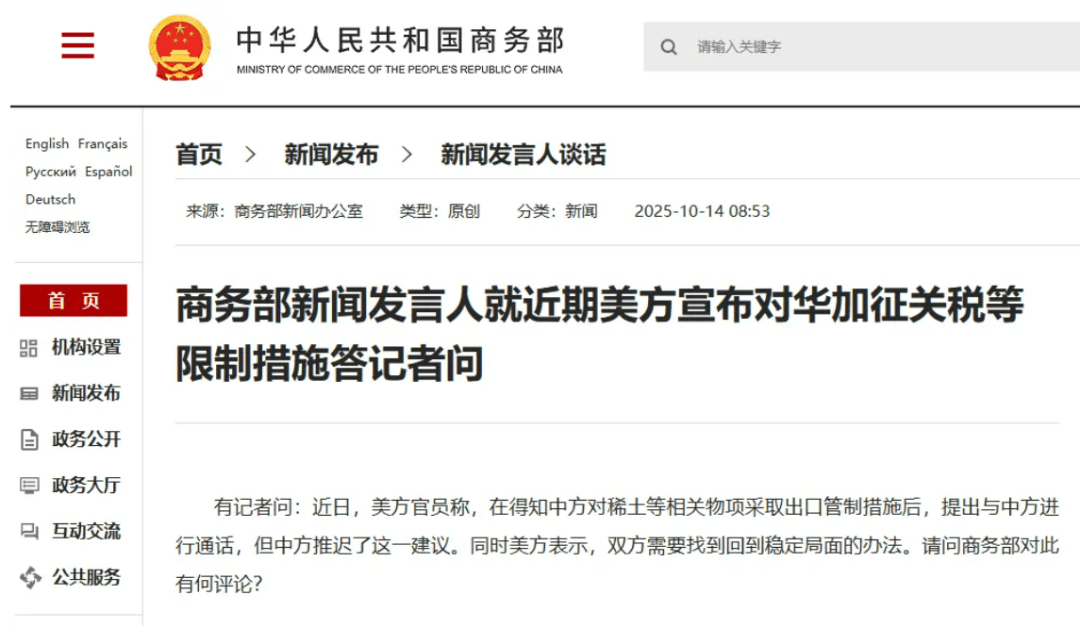
关于关税战、贸易战,中方立场是一贯的。打,奉陪到底;谈,大门敞开。中美拥有广泛的共同利益和广阔的合作空间,双方合则两利,斗则俱伤。过去 4轮经贸磋商充分证明,中美在相互尊重、平等协商基础上,能够找到解决问题的办法。双方在中美经贸磋商机制框架下一直保持沟通,昨天还进行了工 作层会谈。我想指出,美方不能一边要谈,一边威胁恐吓出台新的限制措施,这不是与中方相处的正确之道。中方敦促美方尽快纠正错误做法,拿出谈的 诚意,与中方相向而行,以两国元首通话重要共识为引领,维护好来之不易的磋商成果,继续发挥中美经贸磋商机制作用,通过对话协商解决各自关切, 妥善管控分歧,推动中美经贸关系健康、稳定、可持续发展。 10月14日,商务部新闻发言人就近期美方宣布对华加征关税等限制措施答记者问。 有记者问:近日,美方官员称,在得知中方对稀土等相关物项采取出口管制措施后,提出与中方进行通话,但中方推迟了这一建议。同时美方表示,双方 需要找到回到稳定局面的办法。请问商务部对此有何评论? 答:中方注意到有关情况。近日,中方已就美威胁对华加征100%关税等限制措施阐明了有关立场。我愿重申,关于稀土等相关物项的出口管制措施,是 中国政府依据法律法 ...

美财长出面替特朗普“认怂”,关税战必败无疑,美国确实不敢再打
Sou Hu Cai Jing· 2025-10-14 12:05
Core Viewpoint - The U.S. Treasury Secretary, Bessent, has indicated that the proposed 100% tariffs on China may not be implemented, reflecting a shift in the U.S. stance amid ongoing trade negotiations [5][8][12] Group 1: U.S.-China Trade Relations - Bessent's comments suggest a more optimistic outlook on U.S.-China relations, emphasizing that communication channels have reopened and new working-level meetings are scheduled [8][9] - The Chinese Ministry of Commerce has confirmed ongoing negotiations, indicating a willingness to maintain dialogue despite tensions [9][17] - Bessent's remarks are seen as an attempt to calm U.S. financial markets, which have been volatile due to fears of a renewed trade war [12][14] Group 2: Historical Context and Strategic Implications - Bessent pointed out that the U.S. has historically neglected strategic issues like rare earth elements, which China now leverages in negotiations [10][18] - The U.S. administration's aggressive rhetoric towards China is viewed as counterproductive, potentially leading to further complications in negotiations [16][17] - China's control over rare earth resources is not merely a bargaining chip but a reflection of its established dominance in the supply chain, which poses a significant challenge to U.S. interests [18][19] Group 3: Market Reactions and Future Outlook - Following Bessent's statements, U.S. stock markets experienced a rebound, indicating that investor sentiment may be improving amid the uncertainty [14] - However, if substantial progress is not made in the upcoming negotiations, the positive market sentiment may not be sustainable [15] - The ongoing trade tensions highlight the complexities of U.S.-China relations, with both sides needing to reassess their strategies to achieve a mutually beneficial outcome [19]

懂王怂了,接下来市场会怎么走?
大胡子说房· 2025-10-14 11:58
Core Viewpoint - The article discusses the recent fluctuations in the Chinese stock market, particularly in response to the U.S. tariff situation, highlighting the mixed performance of individual stocks despite a relatively stable index performance [2][6][10]. Market Performance - The Shanghai Composite Index opened at 3897 points, dropped to 3800 points, and closed at 3889 points, only down 7 points for the day, which exceeded market expectations [4][5]. - Despite the index's stability, many individual stocks experienced significant declines, indicating a divergence in market performance [9][10]. Tariff Situation - The risk of a renewed tariff war appears to have subsided temporarily, as the U.S. President expressed a desire to ease tensions with China [6][12]. - However, the unpredictability of the U.S. President's decisions poses ongoing risks for the market, as sudden changes in stance could lead to sharp corrections in stock prices [14][15][26]. Investment Strategy - Investors are advised to be cautious and observe market movements rather than making hasty decisions, as significant capital is currently rotating between different sectors [22][29]. - It is suggested to focus on undervalued stocks with solid performance rather than chasing high-flying tech stocks that have already reached historical highs [24][30]. Upcoming Events - The article notes that a significant meeting at the end of the month may influence market dynamics, with major funds likely to wait for policy direction before committing to further investments [28][25].

中国反制手段层出不穷!华尔街发出警告,特朗普已无计可施
Sou Hu Cai Jing· 2025-10-14 11:01
Group 1 - The article discusses the escalating trade tensions between the US and China, particularly highlighting the significant increase in tariffs imposed by the US on Chinese goods, which reached as high as 145% [3][5][9] - China's response to US tariffs has included measures such as export controls on rare earth materials, which are crucial for high-tech industries, thereby impacting US companies heavily reliant on these materials [7][9] - The article notes that despite the US's attempts to negotiate and reach agreements, the trade relationship remains fraught with challenges, and recent actions from both sides have led to renewed tensions [5][11] Group 2 - The economic implications of the trade war are severe, with warnings from Moody's about potential recessions in 22 US states, affecting a significant portion of the population and leading to increased debt burdens on middle and low-income families [11][13] - The US government's debt is highlighted as a critical issue, with projections indicating a deficit of $1.7 trillion for the fiscal year 2025, raising concerns about the sustainability of US fiscal policy and the potential for a debt crisis [13] - The article emphasizes the interconnectedness of the US and Chinese economies, suggesting that the trade relationship's deterioration could have far-reaching consequences for the global economy [11][13]
美国丢失中国大豆订单,又遭稀土领域重击,渐渐不支!
Sou Hu Cai Jing· 2025-10-14 08:55
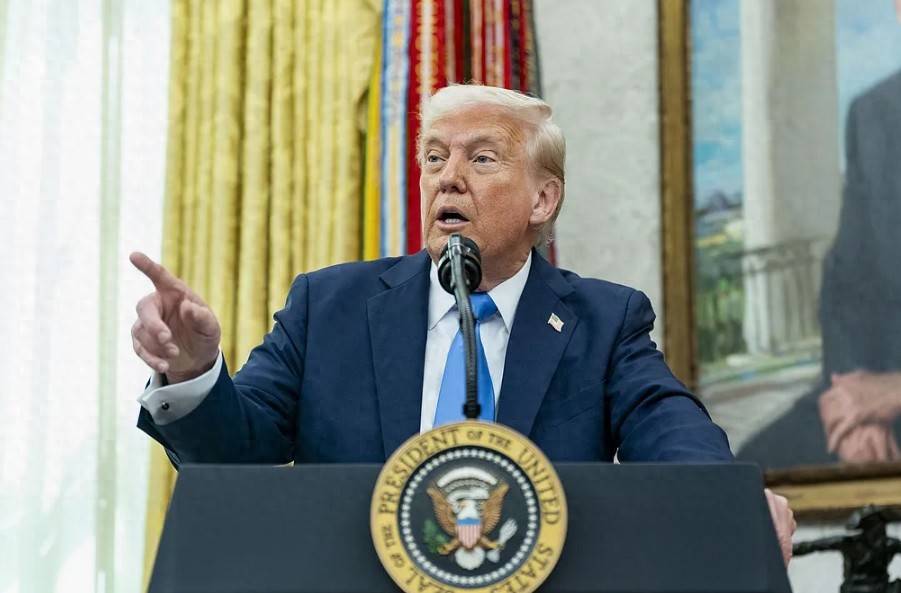
Group 1 - The core viewpoint highlights China's strengthened control over rare earth resources, leading to a significant shift in the U.S. administration's approach, from aggressive tariffs to a more conciliatory stance [2] - Since May, China has ceased purchasing U.S. soybeans, potentially resulting in a loss of 14 to 16 million tons for the U.S., which could negatively impact support for the Trump administration [4] - The U.S. continues to impose tariffs but faces strong resistance from China, leading to a situation where the U.S. is increasingly on the defensive as the soybean harvest approaches [5] Group 2 - China has implemented a series of strategic measures to deter U.S. aggression, including showcasing advanced military capabilities and tightening controls over rare earth resources, which are crucial for the U.S. military industry [5] - The combination of tariff strategies, refusal to purchase U.S. soybeans, and the rare earth strategy is designed to provoke the U.S., gradually exhaust its resources, and compel it to compromise with minimal costs [7]
固收、宏观周报:不确定性仍存,避险情绪提升-20251014
Shanghai Securities· 2025-10-14 07:10
Report Investment Ratings - No specific industry investment ratings are provided in the report. Core Views - The uncertainty remains, and the risk aversion sentiment has increased. The A-share market may fluctuate in the short term, but there are still structural opportunities. It is recommended to pay attention to sectors such as gold, rare earths, AI, computing power, energy storage, solid-state batteries, and innovative drugs. Gold is expected to continue rising, and the bond market is turning bullish [15][16]. Summary by Related Content Stock Market Performance - In the past two weeks (20250929 - 20251012), the three major US stock indexes declined, with the Nasdaq, S&P 500, and Dow Jones Industrial Average changing by -1.24%, -1.37%, and -1.66% respectively. The Nasdaq China Technology Index changed by 0.29%, and the Hang Seng Index rose by 0.62% [3]. - Most A-share sectors rose. The Wind All-A Index changed by 1.63%. Among different indexes, the CSI A100, SSE 50, and others showed varying degrees of increase, while some indexes like the ChiNext Index and the North Securities 50 Index declined [4]. - Among the 30 CITIC industries, 25 industries rose, and 5 declined. The leading industries were non-ferrous metals, steel, basic chemicals, and building materials, with gains of more than 4.0% in the past two weeks [5]. Bond Market Performance - In the past two weeks, the price of interest rate bonds rose, and the yields of most maturity varieties declined. The 10-year Treasury bond futures main contract rose by 0.28% compared to September 28, 2025. The yield of the 10-year active Treasury bond declined by 5.75BP to 1.8206% [6]. - The capital price decreased. As of October 11, 2025, R007 was 1.4120%, a decrease of 22.60BP compared to September 28, 2025, and DR007 was 1.3945%, a decrease of 16.11BP. The central bank's open market operations had a net withdrawal of 144.64 billion yuan in the past two weeks [7]. - The bond market leverage level decreased. The 5-day average of the inter-bank pledged repurchase volume decreased from 6.35 trillion yuan on September 28, 2025, to 5.61 trillion yuan on October 11, 2025 [8][9]. - US Treasury yields declined, and the yield curve shifted downward as a whole. As of October 11, 2025, the 10-year US Treasury yield declined by 15BP to 4.05% compared to September 26, 2025 [10]. Foreign Exchange and Commodity Markets - The US dollar appreciated. The US dollar index increased by 0.64% in the past two weeks. The US dollar had different exchange rate changes against the euro, pound, and yen, and also had mixed changes against the offshore and onshore RMB [11]. - Gold prices rose. The London gold spot price rose by 5.43% to $3,974.50 per ounce, and the COMEX gold futures price rose by 6.75% to $3,986.20 per ounce. Domestic gold prices also increased [11]. Policy and Trade Issues - China has strengthened export controls on some rare earth-related items and technologies. These controls are mainly targeted at military use items, and civilian and compliant items will be permitted. The policy has a reasonable transition period, and the government will promote compliant trade [12]. - The US has threatened to impose a 100% tariff on China in response to China's rare earth export controls. China's Ministry of Commerce has responded, stating that China is not afraid of a tariff war. Whether the US will actually impose the tariff is uncertain, and if it does, China may retaliate. The impact on the A-share market is expected to be less than that in early April [14][15].
商务部回应美国加征100%关税:打,奉陪到底;谈,大门敞开
Sou Hu Cai Jing· 2025-10-14 03:01
Core Viewpoint - The Chinese government emphasizes its commitment to maintaining national security and international stability through its export control measures, particularly regarding rare earth elements, while criticizing the U.S. for its discriminatory practices and threats of tariffs [3][4]. Group 1: U.S.-China Trade Relations - The Chinese government has expressed its readiness to engage in dialogue with the U.S. but insists that the U.S. must cease its threats and discriminatory measures against China [3][4]. - China has reiterated its stance on the ongoing trade war, stating that it is prepared to respond to U.S. actions while remaining open to negotiations [4]. Group 2: Export Control Measures - China's export control measures on rare earth elements are described as legitimate actions based on legal regulations aimed at enhancing its export control system [3]. - The Chinese government assures that its export controls do not equate to a ban, as applications that meet regulations will continue to be approved [3]. Group 3: Bilateral Communication - China has communicated its position to the U.S. through bilateral export control dialogue mechanisms prior to the implementation of its measures [3]. - The Chinese government highlights the importance of maintaining communication within the framework of U.S.-China economic consultations to address mutual concerns and manage differences effectively [4].
中原期货晨会纪要-20251014
Zhong Yuan Qi Huo· 2025-10-14 02:12
Report Industry Investment Rating No relevant content provided. Core Viewpoints of the Report - The A - share market's short - term trend is uncertain, with high - level volatility likely to increase this month. In the medium term, despite external trade frictions, the Chinese economy will continue to develop, and the bull market will resume after the market's risk appetite recovers. [17][18] - For different commodities, their trends are affected by various factors such as supply - demand relationships, policies, and international trade situations. Traders should adjust their strategies according to specific commodity characteristics and market conditions. [10][11][12][14][16] Summary by Relevant Catalogs 1. Macro News - The implementation of special port dues for US ships starts today. Ships meeting certain conditions related to the US need to pay the fee, with some exemptions. [6] - In September, China's goods trade imports and exports reached 4.04 trillion yuan, a year - on - year increase of 8%. Exports were 2.34 trillion yuan, up 8.4%, and imports were 1.7 trillion yuan, up 7.5%, with consecutive 4 - month year - on - year double - growth. The third - quarter trade also had a 6% year - on - year increase. However, China's rare - earth exports in September were 4000.3 tons, showing a third - consecutive - month decline. [6] - China's three major telecom operators have obtained approval for eSIM mobile phone service commercial trials, and Apple will launch the iPhone Air in China. [7] - The 2025 Nobel Economics Prize is awarded to Joel Mokyr, Philippe Aghion, and Peter Howitt. [7] - Regarding Pakistan - US rare - earth cooperation and the Dutch government's restrictions on Chinese chip manufacturers, the Chinese Foreign Ministry has responded, emphasizing market principles and the protection of legitimate rights. [7] - Since October 13, 24:00, domestic gasoline and diesel prices have been reduced by 75 yuan and 70 yuan per ton respectively, with a 0.06 - yuan per - liter reduction for 92 - octane, 95 - octane gasoline, and 0 - octane diesel. It is expected that the next round of refined - oil price adjustments may be downward. [8] 2. Morning Meeting Views on Major Varieties 2.1 Agricultural Products - Peanut futures on October 13 closed at 7902 yuan/ton, up 1.10%, breaking through the shock range. In the short term, it may continue to be strong, but there is pressure around 7950 yuan and support at 7800 yuan. [10] - Sugar futures on October 13 closed at 5470 yuan/ton, down 0.85%, weaker than expected. After breaking the 5500 - yuan support, there is limited downward space, and it is recommended to wait for stabilization before going long. [10] - Corn futures on October 13 closed at 2092 yuan/ton, down 1.83%, with supply pressure from new - season corn in the Northeast and cautious demand. It is recommended to go short, focusing on the 2080 - 2090 - yuan support. [10] - The pig market is under pressure due to post - holiday supply release and consumption decline, with prices continuing to fall and the market in a weak and bottom - exploring state. [10] - Egg prices are expected to be low - volatile, with some regions continuing to be weak. It is recommended to go long on the far - month contract and conduct inter - month reverse spreads. [12] - Cotton futures on October 10 closed at 13325 yuan/ton, up 0.26%, with supply pressure from new cotton and weak demand. It is expected to be bottom - oscillating, with pressure at 13400 yuan and support at 13200 yuan. [12] 2.2 Energy and Chemicals - The domestic urea market price is weak, with good low - price sales. The daily output is expected to decline briefly and then recover. Attention should be paid to downstream follow - up and Indian tenders. [12] - For caustic soda, the market supply is relatively abundant, and the 2601 contract is under pressure. Attention should be paid to the support at the 2400 - point level. [12] - For coking coal and coke, the port prices are stable, and the steel mills' procurement is cautious. The prices are expected to be weakly volatile in the short term. [12][14] 2.3 Industrial Metals - For copper and aluminum, due to the intensification of Sino - US trade frictions, prices have dropped significantly, and short - term adjustment risks should be noted. [14] - For alumina, the supply is in excess, and the 2601 contract is running weakly. Attention should be paid to factors such as bauxite. [14] - For rebar and hot - rolled coils, the spot market has weak transactions, and the prices are under pressure in mid - month. The short - term downward space is limited, and they are expected to be weakly volatile. [14] - For ferroalloys, the fundamentals are weak, and attention should be paid to the impact of macro and Sino - US tariff frictions on the financial market. [16] - For lithium carbonate, the price is under pressure due to increased supply and weak demand. Attention should be paid to the support at 71800 yuan. [16] 2.4 Options and Finance - On October 13, the three major A - share indexes corrected, with more falling stocks. The trading volume was 2.37 trillion. For stock - index futures and options, the basis and implied volatility changed. Trend investors can consider buying bullish call spreads, and volatility investors can consider buying straddles or wide - straddles. [16] - The A - share market is in high - level shock, and it is recommended to buy on dips and reduce positions when the market sentiment is high. [17][18]