
原油供应过剩

Search documents
原油日报:原油震荡上行-20251114
Guan Tong Qi Huo· 2025-11-14 12:37
Report Summary 1. Report Industry Investment Rating No investment rating is provided in the report. 2. Core View of the Report The report anticipates that the crude oil market will remain in a supply - surplus situation, with the price expected to experience weak and volatile fluctuations. The end of the consumption peak season, a decline in the US ISM manufacturing index, OPEC+ accelerating production increases, and rising exports from the Middle East all contribute to the supply - surplus situation. The adjustment by OPEC from a shortage to a surplus in Q3 2025 and the IEA's prediction of slower demand growth and increased supply in Q4 further solidify this view [1]. 3. Summary by Relevant Catalogs 3.1 Market Analysis - OPEC+ decided to increase production by 137,000 barrels per day in December, with a suspension of production increases in Q1 2026. Saudi Aramco lowered the official selling prices of crude oil to Asia in December. The end of the demand peak season, an unexpected increase in US crude oil inventories, and a record - high US crude oil production all add to the supply pressure. The US sanctions on Russian oil companies, potential changes in India's oil imports, and the military confrontation between the US and Venezuela also impact the market. The market is concerned about weakening demand due to factors like the decline in the US ISM manufacturing index [1]. - The OPEC adjusted the global oil situation from a shortage of 400,000 barrels per day in Q3 2025 to a surplus of 500,000 barrels per day, and the IEA expects slower demand growth and increased supply in Q4 [1]. 3.2 Futures and Spot Market Conditions - The main crude oil futures contract 2512 rose 0.66% to 457.4 yuan/ton, with a low of 450.9 yuan/ton and a high of 462.9 yuan/ton. The open interest decreased by 7,385 to 11,067 lots [2]. 3.3 Fundamental Tracking - EIA predicts that global liquid fuel production will increase by 2.7 million barrels per day in 2025 and another 1.3 million barrels per day in 2026. It also raised the forecast of US crude oil production in 2026 by 200,000 barrels per day to 13.5 million barrels per day. OPEC adjusted the Q3 2025 global oil situation from shortage to surplus and the 2026 situation from a shortage of 50,000 barrels per day to a surplus of 20,000 barrels per day. OPEC maintained its global crude oil demand growth forecasts for 2025 and 2026 at 1.3 million barrels per day and 1.38 million barrels per day respectively. IEA raised the global crude oil supply and demand growth forecasts for 2025 and 2026 [3]. - As of the week of November 7, US crude oil inventories increased by 6.413 million barrels, exceeding expectations. Gasoline and refined oil inventories decreased less than expected. OPEC's September production was adjusted down by 13,000 barrels per day, while its October production increased mainly due to Saudi Arabia and Kuwait. OPEC+ production decreased in October compared to September. US crude oil production reached a record high of 13.862 million barrels per day in the week of November 7 [4]. - The four - week average supply of US crude oil products increased to 20.605 million barrels per day, with a year - on - year decrease of 0.38%. Gasoline and diesel weekly demand increased, driving a 2.03% week - on - week increase in the single - week supply of US crude oil products [4][6].
沥青日报:震荡运行-20251114
Guan Tong Qi Huo· 2025-11-14 12:35
1. Report Industry Investment Rating - Not provided in the given content 2. Core View of the Report - The asphalt market is expected to oscillate weakly. Supply is decreasing, demand is weakening, and the crude oil supply surplus situation is becoming more obvious, leading to a decline in crude oil prices and a weakening of the asphalt basis. The spot price is weak, and the market is cautious [1]. 3. Summary by Relevant Catalogs 3.1. Market Analysis - Supply: This week, the asphalt operating rate decreased by 0.7 percentage points to 29.0% week - on - week, 2.0 percentage points lower than the same period last year, at a relatively low level in recent years. In November, domestic asphalt is expected to have a production of 2.228 million tons, a month - on - month decrease of 454,000 tons (16.9%) and a year - on - year decrease of 274,000 tons (11.0%). Some refineries plan to switch to producing residual oil, and the asphalt operating rate will remain low [1]. - Demand: This week, the operating rates of most downstream asphalt industries were stable. The road asphalt operating rate decreased by 1 percentage point to 33% week - on - week, slightly higher than the same period last year, restricted by funds and weather. With the continuous decline in northern temperatures, road construction is gradually ending, and subsequent demand will further weaken, while the increase in southern projects is limited [1]. - Inventory: The inventory - to - sales ratio of asphalt refineries increased slightly week - on - week but remained at the lowest level in the same period in recent years. The national asphalt shipment volume decreased by 31.02% week - on - week to 21,300 tons, at a moderately low level [1]. - Price: The OPEC adjusted the global oil situation from a shortage of 400,000 barrels per day in Q3 2025 to a surplus of 500,000 barrels per day, and the crude oil supply surplus pattern has become more of a consensus, leading to a decline in crude oil prices. The forward low - price resources of refineries are being released intensively, the asphalt basis in Shandong has weakened recently, and the spot price is weak, causing the asphalt futures price to oscillate weakly [1]. 3.2. Futures and Spot Market Conditions - Futures: Today, the asphalt futures 2601 contract rose 0.10% to 3,037 yuan/ton, below the 5 - day moving average. The lowest price was 3,001 yuan/ton, the highest was 3,056 yuan/ton, and the open interest decreased by 1,021 to 192,751 lots [2]. - Basis: The mainstream market price in Shandong remained at 3,000 yuan/ton, and the basis of the asphalt 01 contract fell to - 37 yuan/ton, at a neutral level [3]. 3.3. Fundamental Tracking - Supply: Refineries such as Qilu Petrochemical and Shanghai Petrochemical switched to producing residual oil, and the asphalt operating rate decreased by 0.7 percentage points to 29.0% week - on - week, 2.0 percentage points lower than the same period last year, at a relatively low level in recent years [4]. - Investment: From January to September, the national highway construction investment decreased by 6.0% year - on - year, and the cumulative year - on - year growth rate rebounded slightly compared with January - August 2025 but was still negative. From January to September 2025, the cumulative year - on - year growth rate of the actual completed fixed - asset investment in the road transport industry was - 2.7%, a slight rebound from - 3.3% in January - August 2025 but still in negative growth. From January to September 2025, the cumulative year - on - year growth rate of the fixed - asset investment in infrastructure construction (excluding electricity) was 1.1%, continuing to decline from 2.0% in January - August 2025 [4]. - Social Financing: From January to September 2025, the year - on - year growth rate of social financing stock was 8.7%, a 0.1 - percentage - point decline compared with January - August. In September, the new social financing reached 3.53 trillion yuan, but year - on - year it was 233.5 billion yuan less due to the high base. Attention should be paid to the progress of forming physical work volume [4]. - Inventory: As of the week of November 14, the inventory - to - sales ratio of asphalt refineries increased by 0.4 percentage points to 14.5% compared with the week of November 7, but it remained at the lowest level in the same period in recent years [4].
沥青周度报告-20251114
Zhong Hang Qi Huo· 2025-11-14 10:33
1. Report Industry Investment Rating No relevant content provided. 2. Core View of the Report - This week, the asphalt futures market showed a narrow - range oscillation. There is a rebound - repair momentum after last week's sharp decline, and the relatively strong oil prices at the beginning of the week provided some support. The asphalt social inventory continued to decline. However, the market lacks bullish drivers and is expected to remain weak. As the asphalt downstream enters the off - season, the fundamentals are difficult to improve effectively, and the expectation of crude oil supply surplus will suppress the market in the medium - to - long term. The cost side offers limited upward support. In the short term, due to the large decline, there is still room for rebound - repair, and the increased volatility of crude oil will intensify short - term market fluctuations. It is recommended to short on rebounds and pay attention to the pressure in the range of 3130 - 3170 yuan/ton for the BU2601 contract [8][52] 3. Summary According to the Catalog 3.1 Report Summary - Market focus: Tensions between the US and Venezuela continue, with the US increasing military operations in the Caribbean. The US EIA weekly crude oil inventory increased significantly, and the OPEC market expectation shifted from tight to surplus [7] - Key data: As of November 12, the operating rate of domestic asphalt sample enterprises was 29%, a 0.7 - percentage - point decrease from the previous statistical period. As of November 14, the weekly asphalt output was 51.4 tons, a decrease of 1.8 tons from the previous week; the factory inventory of domestic asphalt sample enterprises was 64.1 tons, an increase of 0.6 tons from the previous week; the social inventory was 82.5 tons, a decrease of 7.2 tons from the previous week [7] 3.2 Multi - and Short - Focus - Bullish factors: Supply decline and geopolitical risks [11] - Bearish factors: Weakening demand [11] 3.3 Macroeconomic Analysis - OPEC's monthly report shows that the global crude oil market expectation has shifted from balanced to surplus. Previously, OPEC expected a shortage of 400,000 barrels per day, but now it indicates a surplus of 500,000 barrels per day. OPEC has raised the supply growth forecast of non - OPEC countries by 110,000 barrels per day. In October, OPEC's crude oil production was 28.46 million barrels per day, a month - on - month increase of 33,000 barrels per day, and OPEC+'s production was 43.02 million barrels per day, a decrease of 73,000 barrels per day from September. The global crude oil demand growth rate is expected to be 1.3 million barrels per day in 2025 and 1.38 million barrels per day in 2026. From January to September this year, global oil inventories increased by 304 million barrels. The expectation of crude oil supply surplus is the main pressure on the market, but OPEC+ has suspended the production increase plan for the first quarter of next year, and the relatively strong demand provides some support. Geopolitical uncertainties will intensify oil price fluctuations, and it is expected that crude oil will maintain a wide - range oscillation. It is recommended to pay attention to the WTI crude oil price range of $55 - $60 per barrel [12] - The Russia - Ukraine conflict continues, and short - term negotiations are unlikely. The relationship between the US and Venezuela remains uncertain. Geopolitical uncertainties have not caused substantial losses to global crude oil supply for the time being, but they will affect market sentiment and intensify oil price fluctuations [13] 3.4 Supply - and - Demand Analysis - Supply: As of November 14, the weekly asphalt output was 51.4 tons, a decrease of 1.8 tons from the previous week. The operating rate of refineries is in a seasonal decline, and it is expected that the supply will continue to decrease [14] - Demand: As of November 14, the weekly asphalt shipment volume was 36.2 tons, a decrease of 8.3 tons from the previous statistical date, reaching the lowest level since May. The demand in the north has decreased due to low - temperature weather, and the improvement in the south is not obvious. The weekly capacity utilization rate of modified asphalt was 11.22%, a 0.8 - percentage - point increase from last week but a 0.55 - percentage - point decrease year - on - year. It is in a seasonal decline [24][27] - Inventory: As of November 14, the factory inventory of domestic asphalt sample enterprises was 64.7 tons, a week - on - week increase of 0.6 tons, mainly in the southwest and south regions. The social inventory was 82.5 tons, a week - on - week decrease of 7.2 tons, continuing the downward trend since August [34][41] - Spread: As of November 14, the weekly profit of domestic asphalt processing dilution was - 613 yuan/ton, a decrease of 19.8 yuan/ton from the previous week. The domestic asphalt basis was 301 yuan/ton, at a high level in recent years. As of November 12, the asphalt - to - crude oil ratio was 52.38 [50] 3.5 Market Outlook - The market lacks bullish drivers and is expected to remain weak. It is recommended to short on rebounds and pay attention to the pressure in the range of 3130 - 3170 yuan/ton for the BU2601 contract [52]
金信期货观点-20251114
Jin Xin Qi Huo· 2025-11-14 09:51
Group 1: Investment Ratings - No investment ratings provided in the report Group 2: Core Views - The market has reached a consensus on the oversupply of crude oil, and the price is expected to fluctuate weakly. PX and PTA are expected to follow the crude oil price fluctuations. MEG is expected to continue to oscillate at the bottom. The price rebounds of BZ and EB may not be sustainable [4][5] Group 3: Summary by Commodity Crude Oil - The OPEC+ meeting decided to increase production by 137,000 barrels per day in December and suspend production increases in Q1 2026. The peak demand season is over, US crude oil inventories are rising, and production is at a record high. The market is concerned about Russian oil exports [4] PX & PTA - Domestic PX load is at a high of 90%, with multiple units restarting and increasing load. PTA has new capacity, and the supply - demand pattern is tight. PXN is stable at around $250/ton. PTA has many unit shutdowns for maintenance, with a weekly开工率 of 75.8%. There is an expectation of supply increase and demand weakness before the end of the year, with a slight inventory build - up [4][8][14] MEG - The overall load of ethylene glycol has changed little. Coal - based MEG profits are shrinking, and the开工 rate is decreasing. Cost support is weakening, port inventories are at a high, and it is expected to continue to oscillate at the bottom in the short term [5][18] BZ & EB - The pure benzene开工率 is rising, and future planned maintenance is limited. Downstream demand is weakening, but overseas blending oil demand may provide some support. Benzene ethylene开工率 is recovering, and the short - term supply contraction effect may fade. The fundamentals of BZ and EB have limited positives, and price rebounds may not be sustainable [5][26][27] Polyester - The average weekly产能利用率 of the Chinese polyester industry is 87.52%, with little change. Downstream polyester short - fiber and long - fiber inventories are slightly decreasing. The comprehensive开工率 of the Jiangsu and Zhejiang textile industry is 67.99%, and new orders are weakening [21]
《能源化工》日报-20251114
Guang Fa Qi Huo· 2025-11-14 02:40
1. Report Industry Investment Ratings - No industry investment ratings are provided in the reports. 2. Core Views Crude Oil - Despite concerns about crude oil supply glut, US government's end of shutdown and tightened sanctions on Russia led to a slight rebound in overnight oil prices. OPEC+ faces continuous production - increase pressure, with a weak fourth - quarter supply - demand outlook. EIA周报 shows significant increase in US crude production and large inventory growth, so oil prices remain under pressure. Short - term Brent may trade in the range of $60 - 66 per barrel, with a bearish view. Attention should be paid to substantial sanctions on Russia and the Russia - Ukraine geopolitical situation [2]. Polyolefins - PP shows both supply and demand increase. Supply rises due to fewer maintenance, and demand remains resilient in the automotive and home - appliance sectors, but there is slight inventory accumulation this week under new - capacity pressure. PE has weak supply and demand. Although unplanned maintenance eases supply pressure, import sources are abundant, and non - agricultural - film demand generally declines. There is inventory reduction this week, but port inventory remains high. The cost side has crude oil fluctuating and coal strengthening, with a slight repair in PDH profit. High inventory and cost support continue to compete, and market expectations are still weak [4]. Methanol - Delayed gas restrictions in Iran put significant pressure on the port methanol market. High inventory, combined with positive import profit from Iran, leads to continuous trading and weakening willingness to hold goods, resulting in price decline and stable basis. In the inland market, Baofeng continues external procurement, and Jiutai has unexpected maintenance, with subsequent increase in domestic production. Overseas gas restrictions are less than expected. On the demand side, multiple MTO units reduce load due to profit reasons, and traditional downstream purchases for rigid demand. The market currently trades on the "weak reality" logic, with the core contradiction being high port inventory. The inventory problem of the 01 contract cannot be solved, and the weak reality will continue to be traded before gas restrictions in Iran [8]. Natural Rubber - On the supply side, there are still periodic rainfall disturbances in overseas production areas, but overall, a strong output is expected during the peak - production period, and raw - material prices have some downward space. Domestic production areas are gradually entering the output - reduction period, with firm domestic raw - material prices. On the demand side, some northern regions are entering the off - season in the month, with slower market sales, mainly digesting inventory and purchasing as needed. With market digestion, some replenish in small quantities in the middle of the month. In the short term, due to large macro fluctuations, rubber prices are expected to fluctuate. Follow the raw - material output in the peak - production period of major production areas and macro changes. If raw - material supply is smooth, prices may weaken; if not, rubber prices are expected to trade around 15,000 - 15,500 [11]. PVC and Caustic Soda - **Caustic Soda**: Low - concentration caustic soda gets price support from increased inquiries from alumina plants, but overall, there is a lack of real positive factors. The caustic - soda industry still faces supply - demand pressure, with few maintenance enterprises and an increasing supply. The main downstream alumina price is weakening, with shrinking industry profit and increasing losses, so the main demand side provides weak support, suppressing caustic - soda prices. Although there may be periodic replenishment demand from middle - and downstream inventory consumption, prices are still under pressure due to increasing supply and weakening demand. The non - aluminum market is sluggish. It is expected that caustic - soda prices will trend down in the long run, but there is short - term support from downstream periodic demand. Track the rhythm and sustainability of downstream replenishment [12]. - **PVC**: The supply - demand surplus problem has not improved, with increasing supply pressure, weakening demand expectations, insufficient cost support, and no positive macro expectations. It is expected that prices will continue to weaken. On the demand side, major downstream sectors such as real estate are still weak, and product enterprises like profiles and pipes have limited new orders, mainly purchasing for rigid demand, which cannot provide continuous market support. In November - December, there will still be an impact from new production capacity. After the maintenance of Inner Mongolia Sanlian, Qilu Petrochemical, and Inner Mongolia Junzheng ends next week, production is expected to increase. From November to January of the next year is the traditional off - season, with reduced outdoor construction in the north, and overall real - estate demand decline is a negative factor. The situation of anti - dumping duties in India is unclear, and exports are mainly in a wait - and - see state. The supply - demand surplus persists, and prices are not optimistic, expected to continue weakening at the bottom [12]. Glass and Soda Ash - **Soda Ash**: Recently, with the previous price decline, middle - and downstream buyers have increased purchases, leading to a rebound in the futures price. However, the overall surplus situation is still prominent. Fundamentally, weekly production remains at a high level of around 750,000 tons, with obvious surplus compared to current rigid demand. Manufacturer inventory has been transferred to the middle - and downstream, and trade inventory continues to rise. In the medium term, there is no expectation of significant downstream capacity increase, so the overall demand for soda ash will continue the previous rigid - demand pattern. Without actual capacity exit or load reduction, the supply - demand situation will face further pressure. Track macro fluctuations and soda - ash plant load - adjustment situations. The supply - demand outlook is bearish. Short - term operation should be on the sidelines, and wait for opportunities to short on rebounds [13]. - **Glass**: Sales have weakened significantly, and the sales - to - production ratio has fallen below 100% in recent days. Although four production lines in the Shahe area were cold - repaired last week, there will be production - line restart and ignition, adding about 3,650 tons of daily capacity, which will put pressure on the supply side. The latest deep - processing order days have slightly improved, and there is still some rigid demand support in November as it is the year - end rush season. However, in the long - term, at the end of the peak season, there are concerns about future demand sustainability. As the temperature drops in the north, outdoor construction will stop, and glass prices will face pressure after December. The real - estate industry is still in the bottom cycle, with significant reduction in construction volume. The industry needs capacity exit to solve the surplus problem. The high sales - to - production ratio of spot has ended, and glass is expected to be weak in the short term [13]. Polyester Industry Chain - **PX**: Currently, Asian and domestic PX loads remain high. In the short - term, PTA load is maintained, and the previous terminal and polyester demand was better than expected. With low polyester inventory, load is expected to remain relatively high from November to December. PX demand still has short - term support. Yesterday, PX showed a strong trend due to the lifting of India's BIS certification and the start of the Asia - America aromatics arbitrage. However, limited by weak overall oil - price support and expected weakening of terminal demand in the industry chain, the PX rebound space is restricted. Short - term PX short positions should be avoided [14]. - **PTA**: There are still many PTA plant maintenance plans in November. The previous terminal and polyester demand was better than expected. With low polyester inventory, load is expected to remain relatively high in November - December. The supply - demand balance in November is expected to be tight, but it will be loose from December to the first quarter of next year. Yesterday, PTA showed a strong trend due to the cancellation of India's BIS certification and PX transfer - demand news, but the spot - market negotiation atmosphere was dull, and the basis was still weak. The PTA rebound space is restricted. Short - term TA should pay attention to the $4800 pressure level, and short positions should be avoided. TA1 - 5 can be treated as a rolling reverse spread [14]. - **Ethylene Glycol (EG)**: Recently, some coal - based EG plants are under maintenance, but Jinghai Petrochemical's plant has restarted production. Previously - maintained coal - based plants plan to restart in the middle - and late - November. Domestic supply remains high, and North American EG load has reached a high level. Middle - East supply shows no reduction, and overseas shipments are concentrated in January. Currently, polyester load is declining, and due to the high expected inventory accumulation in November - December, EG is under pressure. Hold out - of - the - money call options on EG2601 with a strike price of no less than 4100; go for reverse spreads on EG1 - 5 at high prices [14]. - **Short - fiber**: Currently, short - fiber factories have low inventory levels and reasonable processing fees, so short - fiber supply remains relatively high. In November, there is an expected seasonal weakening of terminal demand. Yesterday, the cancellation of India's BIS certification made raw - material PTA stronger, but it mainly benefited PTA and long - fiber, having relatively little impact on short - fiber. In the short - term, due to the weak supply - demand expectation, the short - fiber rebound space is restricted, and processing fees are expected to be compressed. The strategy is the same as PTA for single - side trading; the processing fee on the disk fluctuates in the range of 800 - 1100, and short positions should be taken at high prices [14]. - **Bottle - grade polyester chips**: In mid - November, the Huarun plant has both maintenance and restart. According to Longzhong Information, the commissioning of Dongying Fuhai's new plant is postponed, and domestic supply changes little. Considering the November market off - season, soft - drink and catering demand decline slightly, and demand provides insufficient support for bottle - grade chips. The supply - demand situation remains loose. Bottle - grade chips' social inventory is likely to enter the seasonal inventory - accumulation phase, with prices fluctuating with the cost side. Processing fees are limitedly boosted by supply - demand and change with raw - material costs. The strategy for single - side trading is the same as PTA; the main - contract processing fee on the disk is expected to fluctuate in the range of 300 - 450 yuan per ton [14]. Pure Benzene and Styrene - **Pure Benzene**: There are new capacity commissioning, plant restart, and planned/unplanned maintenance expectations for pure benzene recently, but overall domestic supply may remain loose. On the demand side, some loss - making downstream products have production - reduction and price - protection expectations, so demand support is limited. Although East - China port inventory decreased this week, supply pressure remains. There is an expected amount of imports from November to December, but the US - Asia arbitrage window and gasoline - blending may disrupt market sentiment, and the actual impact needs further consideration. With weak crude - oil supply - demand expectations, cost support is limited, and the rebound space is restricted. Follow plant changes. In the short - term, BZ2603 has weak self - driving force, pay attention to the 5640 pressure level, and be cautious about chasing up [16]. - **Styrene**: Two new styrene plants are operating stably, and previously - shut - down plants have restarted. There are also expected planned/unplanned maintenance in the near future, so overall supply may remain stable. Downstream EPS enters the seasonal off - season and reduces its operating rate due to high product inventory. PS has new plant commissioning and restart, and ABS remains stable. Overall demand changes little. Although inventory decreased this week, it is still at a high level, restricting the upside. Overseas and plant accidents may disrupt the domestic market. Overall, styrene supply - demand is expected to be in a tight balance, with insufficient price - driving force. Follow plant restart and production - reduction situations and cost changes. In the short - term, EB12 price may fluctuate with the cost side [16]. 3. Summaries by Related Catalogs Crude Oil - **Price Changes**: On November 13, Brent was at $63.01, up $0.30 (0.48%) from the previous day; WTI was at $58.69, up $0.20 (0.34%). Most refined - oil products also had price changes. For example, NYM RBOB was at 195.97, up 0.43 (0.22%); ICE Gasoil was at $697.75, down $27.00 ( - 3.73%) [2]. - **Crack Spreads**: Most crack spreads decreased. For example, US gasoline crack spread was at 23.62, down 0.02 ( - 0.08%); Singapore diesel crack spread was at 27.71, down 1.02 ( - 3.55%) [2]. Polyolefins - **Price and Spread Changes**: L2601 closed at 6818, up 30 (0.44%); PP2601 closed at 6480, up 20 (0.31%). L15 spread was at - 75, up 1 (1.32%); PP15 spread was at - 97, up 15 (13.39%) [4]. - **Inventory and开工率**: PE enterprise inventory was at 52.9, up 3.9 (7.96%); PP enterprise inventory was at 62.0, up 2.01 (3.35%). PE device operating rate was at 83.1%, up 0.55 (0.66%); PP device operating rate was at 79.6%, up 1.77 (2.28%) [4]. Methanol - **Price and Basis Changes**: MA2601 closed at 2103, down 5 ( - 0.24%); MA15 spread was at - 105, down 2 (1.94%); Taicang basis was at - 29, up 11 ( - 27.50%) [6]. - **Inventory and开工率**: Methanol enterprise inventory was at 36.925, down 1.72 ( - 4.44%); methanol port inventory was at 154.4, up 2.65 (1.75%). Upstream domestic enterprise operating rate was at 76.54%, up 0.45 (0.59%); downstream external - procurement MTO device operating rate was at 82.96%, down 2.02 ( - 2.38%) [7][8]. Natural Rubber - **Price and Spread Changes**: Yunnan state - owned whole - latex (SCRWF) was at 14800, up 50 (0.34%); 9 - 1 spread was at 125, down 10 ( - 7.41%); 1 - 5 spread was at - 85, down 5 ( - 6.25%) [11]. - **Production and开工率**: September Thailand production was at 477.50, down 26.00 ( - 5.45%); September Indonesia production was at 195.00, down 3.40 ( - 1.71%). Tire semi - steel tire operating rate was at 73.68%, up 0.01; tire full - steel tire operating rate was at 64.50%, down 0.96 [11]. PVC and Caustic Soda - **Price and Spread Changes**: Shandong 32% liquid caustic soda converted price was at 2468.8, unchanged; SH2601 was at 2337.0, down 7.0 ( - 0.3%); V2605 - V2601 was at 307.0, up 5.0 ( - 1.7%) [12]. - **开工率 and Inventory**: Caustic - soda industry operating rate was at 89.9%, up 1.5 (1.7%); PVC total operating rate was at 79.3%, up 2.2 (2.8%). Liquid caustic soda East - China factory inventory was at 21.5, down 0.8 ( - 3.5%); PVC total social inventory was at 54.6, up 0.1 (0.2%) [12]. Glass and Soda Ash - **Price and Spread Changes**: North - China glass quote was at 1110, unchanged; North - China soda - ash quote was at 1300, unchanged. Glass2601 was at 1056, up 7 (0.67%); Soda - ash2601 was at 1239, up 25.0 (2.06%) [13]. - **Supply and Inventory**: Soda - ash operating rate was at 86.89%, down 0.02 ( - 1.72%); soda - ash weekly production was at 75.76, down 1.3 ( - 1.71%). Glass factory inventory was at 6579.00, up 296.6 (4.72%); soda - ash factory inventory was at 170.20, up 4.2 (2.54%) [13]. Polyester Industry Chain - **Price and Spread Changes**: Brent crude (January) was at $63.01, up $0.30 (0.5%); POY150/48 price was at 6570, down 10 ( - 0.2%); PX - crude spread was at 366, down 1 ( - 0.3%) [14]. - **开工率 Changes**: PTA operating rate was at 76.4%, down 1.6 ( - 2.1%); MEG comprehensive operating rate was at 76.2%, down 3.8 ( - 4.9%); polyester comprehensive operating rate was at 91.3%, down 0.4 ( - 0.4%) [14
原油日报:原油震荡下行-20251113
Guan Tong Qi Huo· 2025-11-13 12:06
Report Industry Investment Rating - No relevant information provided Core Viewpoints - The crude oil market is in a supply - surplus situation, and the price is expected to oscillate weakly [1] Summaries by Related Catalogs Market Analysis - On November 2nd, OPEC+ eight countries decided to increase production by 137,000 barrels per day in December, the same as the October and November plans, and suspend production increase in Q1 2026. The next OPEC+ eight - country meeting will be on November 30th. This will intensify the Q4 supply pressure but unexpectedly relieve the Q1 2026 supply pressure [1] - Saudi Aramco lowered the official selling prices of crude oil sold to Asia in December, with the flagship Arab Light crude oil price cut by $1.20 per barrel [1] - The peak demand season for crude oil has ended. EIA data shows that the gasoline inventory drawdown exceeded expectations, but the U.S. crude oil inventory build - up exceeded expectations, and the overall oil product inventory increased slightly [1][3] - The U.S. production of crude oil continued to reach a new historical high. The U.S. sanctioned two major Russian oil companies, which is expected to limit Russian crude oil exports. There is a possibility that India will gradually reduce its imports of Russian oil [1] - The military confrontation between the U.S. and Venezuela has escalated, and the Ford Strike Group has reached the Caribbean Sea [1] - The consumption peak season has ended, the U.S. ISM manufacturing index in October decreased month - on - month and contracted for the eighth consecutive month. The market is worried about crude oil demand. OPEC+ is accelerating production increase, and Middle - East exports are rising, resulting in a supply - surplus pattern [1] Futures and Spot Market Conditions - The main crude oil futures contract 2512 fell 3.66% to 449.5 yuan/ton, with a minimum price of 446.9 yuan/ton, a maximum price of 464.1 yuan/ton, and the open interest decreased by 4417 to 18,452 lots [2] Fundamental Tracking - The EIA monthly report predicts that the global liquid fuel production will increase by 2.7 million barrels per day in 2025 and another 1.3 million barrels per day in 2026. It also raised the forecast of U.S. crude oil production in 2026 by 200,000 barrels per day to 13.5 million barrels per day [3] - The OPEC monthly report adjusted the global oil situation from a shortage of 400,000 barrels per day in Q3 2025 to a surplus of 500,000 barrels per day, and from a shortage of 50,000 barrels per day in 2026 to a surplus of 20,000 barrels per day. It maintained the global crude oil demand growth rate forecasts for 2025 and 2026 at 1.3 million barrels per day and 1.38 million barrels per day respectively [3] - The IEA's annual World Energy Outlook predicts that oil demand may continue to grow until 2050, while it previously expected global oil demand to peak in 2030 [3] - EIA data on November 5th showed that the U.S. crude oil inventory for the week ending October 31st increased by 5.202 million barrels, exceeding the expected increase of 603,000 barrels and was 5.34% lower than the five - year average. Gasoline inventory decreased by 4.729 million barrels, exceeding the expected decrease of 1.14 million barrels. Refined oil inventory decreased by 64,300 barrels, less than the expected decrease of 196,900 barrels. Cushing crude oil inventory increased by 30,000 barrels [3] Supply and Demand - OPEC's latest monthly report shows that its September production was adjusted down by 13,000 barrels per day to 28.427 million barrels per day, and its October production increased by 33,000 barrels per day to 28.46 million barrels per day, mainly driven by production increases in Saudi Arabia and Kuwait. OPEC+ production in October decreased by 73,000 barrels per day compared to September to 43.02 million barrels per day [4] - The U.S. crude oil production in the week ending October 31st increased by 700 barrels per day to 13.651 million barrels per day, reaching a new historical high [4] - The four - week average supply of U.S. crude oil products decreased to 20.344 million barrels per day, a 2.20% decrease compared to the same period last year. Gasoline weekly demand decreased by 0.56% to 8.874 million barrels per day, and the four - week average demand was 8.677 million barrels per day, a 2.08% decrease compared to the same period last year. Diesel weekly demand decreased by 3.63% to 3.71 million barrels per day, and the four - week average demand was 3.843 million barrels per day, a 1.66% decrease compared to the same period last year. The overall single - week supply of U.S. crude oil products decreased by 4.35% month - on - month [4]
沥青日报:震荡下行-20251113
Guan Tong Qi Huo· 2025-11-13 11:43
Report Industry Investment Rating - Not provided Core Viewpoints - The asphalt market is experiencing a downward trend with weak oscillations. The supply - demand relationship, crude oil price changes, and capital constraints are influencing the market. With the expected increase in production from some refineries and the weakening of subsequent demand, along with the decline in crude oil prices, the asphalt futures price is showing a weak performance [1]. Summaries by Related Catalogs 1.行情分析 (Market Analysis) - Supply side: Last week, the asphalt operating rate dropped 1.8 percentage points to 31.5% week - on - week, 3.5 percentage points higher than the same period last year, at a relatively low level in recent years. In November, the domestic asphalt planned production is 2.228 million tons, a decrease of 454,000 tons (16.9%) month - on - month and 274,000 tons (11.0%) year - on - year. Some refineries plan to resume production, and asphalt output will increase [1]. - Demand side: Last week, the operating rates of most downstream asphalt industries increased, with the road asphalt operating rate rising 1 percentage point to 34% week - on - week, slightly exceeding the level of the same period last year, but restricted by funds and weather. The national shipping volume decreased 6.79% to 308,800 tons week - on - week, at a neutral level. The subsequent demand will gradually weaken [1]. - Crude oil factor: OPEC adjusted the global oil market from a shortage of 400,000 barrels per day in the third quarter of 2025 to a surplus of 500,000 barrels per day, and the oversupply pattern of crude oil has become more of a consensus, leading to a decline in crude oil prices [1]. - Market situation: The concentrated release of long - term low - price resources from refineries has weakened the asphalt basis in Shandong recently, and the spot price has followed the decline, resulting in a weak oscillation of asphalt futures prices [1]. 2.期现行情 (Futures and Spot Market) - Futures: Today, the asphalt futures 2601 contract fell 1.05% to 3029 yuan/ton, below the 5 - day moving average. The lowest price was 2999 yuan/ton, the highest was 3058 yuan/ton, and the open interest decreased by 4500 to 193,772 lots [2]. - Basis: The mainstream market price in Shandong dropped to 3000 yuan/ton, and the basis of the asphalt 01 contract dropped to - 29 yuan/ton, at a neutral level [3]. 3.基本面跟踪 (Fundamental Tracking) - Supply side: Some refineries such as Zhonghua Quanzhou and Zhongyou Qinhuangdao stopped asphalt production, and the asphalt operating rate dropped 1.8 percentage points to 31.5% week - on - week, 3.5 percentage points higher than the same period last year, at a relatively low level in recent years. From January to September, the national highway construction investment decreased 6.0% year - on - year, and the cumulative year - on - year growth rate slightly rebounded compared with January - August 2025 but was still negative [4]. - Demand - related investment: From January to September 2025, the cumulative year - on - year growth rate of the actual completed investment in fixed assets of the road transport industry was - 2.7%, a slight rebound from - 3.3% from January to August 2025 but still in negative growth. The cumulative year - on - year growth rate of the completed investment in fixed assets of infrastructure construction (excluding electricity) was 1.1%, a further decline from 2.0% from January to August 2025 [4]. - Downstream operating rate: As of the week of November 7, the operating rates of most downstream asphalt industries increased, with the road asphalt operating rate rising 1 percentage point to 34% week - on - week, slightly exceeding the level of the same period last year, restricted by funds and weather [4]. - Social financing: From January to September 2025, the year - on - year growth rate of social financing stock was 8.7%, a 0.1 - percentage - point decline compared with January - August. In September, the new social financing was 3.53 trillion yuan, but year - on - year it was 233.5 billion yuan less due to the high base [4]. - Inventory: As of the week of November 7, the inventory - to - sales ratio of asphalt refineries dropped 1.2 percentage points to 14.1% compared with the week of October 31, remaining at the lowest level in recent years [4]
商品日报(11月13日):国际油价大幅下挫 白银再创历史新高
Xin Hua Cai Jing· 2025-11-13 08:53
Group 1 - Precious metals continue to show strength, with silver prices exceeding $54 per ounce and leading the domestic commodity market with a 5.48% increase in the Shanghai silver futures contract [2] - The recent rebound in precious metals is supported by expectations of liquidity restoration following the end of the U.S. government shutdown and potential easing from Federal Reserve officials [2] - Silver's supply-demand dynamics appear tight, with a notable increase in the one-month rental rate for silver in London and declining inventory levels at major exchanges [2][3] Group 2 - The polysilicon market experienced a significant rebound, with the main contract rising by 3.69% due to improved market sentiment following clarifications from industry associations [3] - Several silicon wafer manufacturers have announced price increases, indicating a potential stabilization in the polysilicon market despite limited supply-demand improvements [3] - The non-ferrous metals sector is also performing well, with tin showing strong gains due to tight supply expectations [3] Group 3 - The crude oil market faced a sharp decline, with international oil prices dropping over 3%, marking the largest single-day decrease since October 10 [4] - OPEC's report indicated a reduction in oil production, but the market has shifted from a daily shortfall of 400,000 barrels to a surplus of 500,000 barrels, leading to downward pressure on prices [4] - The International Energy Agency forecasts a continued rise in global oil inventories, potentially reaching record surplus levels by 2026, which could significantly impact long-term oil prices [4] Group 4 - The red date futures market continues to decline, with a 2.6% drop today, accumulating a total decline of approximately 20% since late October [6] - The upcoming harvest season is expected to influence market dynamics, with uncertainties regarding the extent of production reductions in the southern Xinjiang region [6] - Despite current price volatility, the anticipated reduction in production may limit further downside potential as the purchasing season begins [6]

OPEC预警叠加美油库存大增,原油市场“供应过剩”真的来了?
Hua Er Jie Jian Wen· 2025-11-13 06:34
Core Viewpoint - Signs indicate that the long-discussed global oil supply surplus may have arrived, with OPEC's pessimistic forecast and increasing inventory data suggesting supply is outpacing demand, putting continuous pressure on oil prices [1][6][8] Group 1: OPEC's Shift in Forecast - OPEC has revised its global supply-demand balance forecast for Q3 from a shortage to a surplus, causing a significant market reaction with Brent crude futures dropping nearly 4% [1] - The organization now expects that due to increased production from OPEC+ countries, global oil supply will slightly exceed demand by 2026 [8] Group 2: U.S. Market Indicators - In the U.S. market, WTI spot price differentials have entered a contango state, indicating ample short-term supply [6][7] - U.S. crude oil inventories have reportedly increased, with API data showing a rise of 1.3 million barrels in the week ending November 7 [8] Group 3: Global Economic Implications - A sustained drop in oil prices could lead to lower gasoline prices, alleviating global inflation pressures, which would be beneficial for central banks and consumers [6] - The potential for lower energy costs is seen as a policy victory for U.S. President Trump [6] Group 4: Market Sentiment and Geopolitical Factors - Despite clear signs of oversupply, market sentiment remains mixed, influenced by geopolitical risks and the potential for short-term disruptions in Russian exports due to sanctions [9] - Analysts suggest that the market's negative reaction may be overdone, as the fundamental outlook has not significantly changed [9]
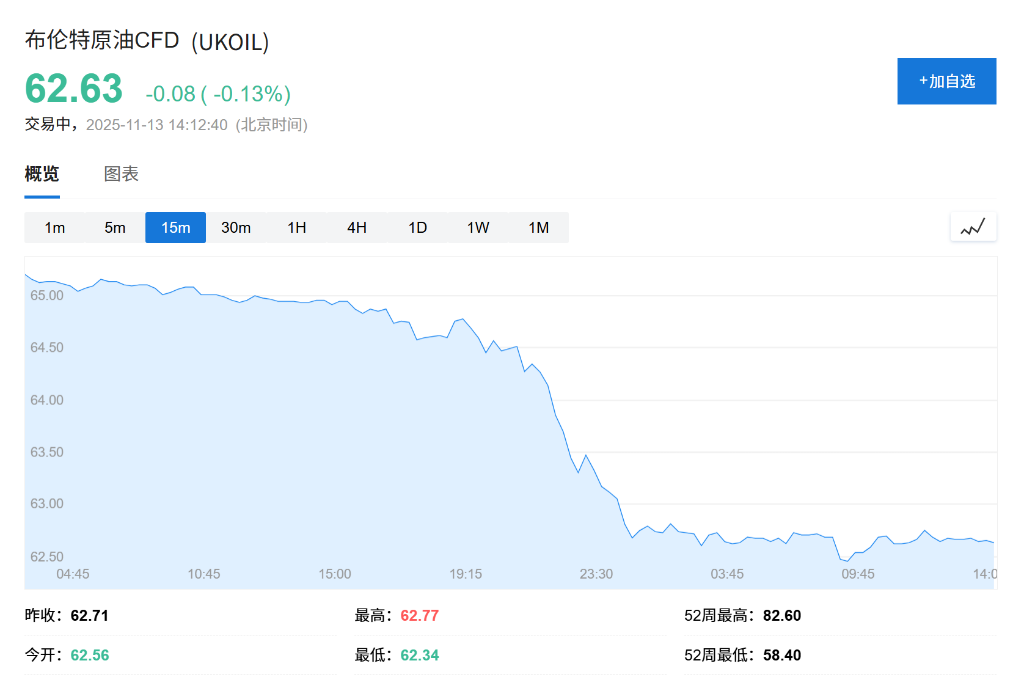
原油期货曲线表明供应过剩在美国市场最为突出
Ge Long Hui A P P· 2025-11-13 05:30
Core Insights - The global oil market is experiencing an oversupply, particularly evident in the Americas, especially the United States [1] - The WTI crude oil futures curve for most of 2026 is in a "contango" structure, indicating weak spot demand for crude oil [1] - High U.S. crude oil export levels further signify ample supply, with October exports reaching the highest level since July 2024 [1] - In contrast, the Brent crude oil futures curve has remained relatively flat since March, highlighting differing levels of oversupply across regions [1]