
情绪消费

Search documents
借助词“云”图盘点2025新图景 展望2026,一起向前接着干!
Yang Shi Wang· 2025-12-30 03:50
Group 1 - The core theme of 2025 highlights significant progress in China's economy and social welfare, with a focus on policies and support for the populace [1][3] - The financial market has seen steady inflows from insurance funds, social security funds, and public funds, with foreign institutions showing confidence in Chinese assets, leading to a recovery in IPOs [6] - The consumption and cultural tourism sectors have thrived, with notable successes such as the box office performance of "Nezha 2" and the emergence of new consumption trends like "emotional consumption" [9] Group 2 - Domestic markets have been active despite international challenges, with government interventions aiding foreign trade enterprises and promoting domestic sales [12] - The government has implemented measures to enhance the quality of life for the elderly, including subsidies for home care renovations and the removal of insurance restrictions based on household registration [16] - The outlook for 2026 remains optimistic, with a commitment to continued efforts and progress in various sectors [18]

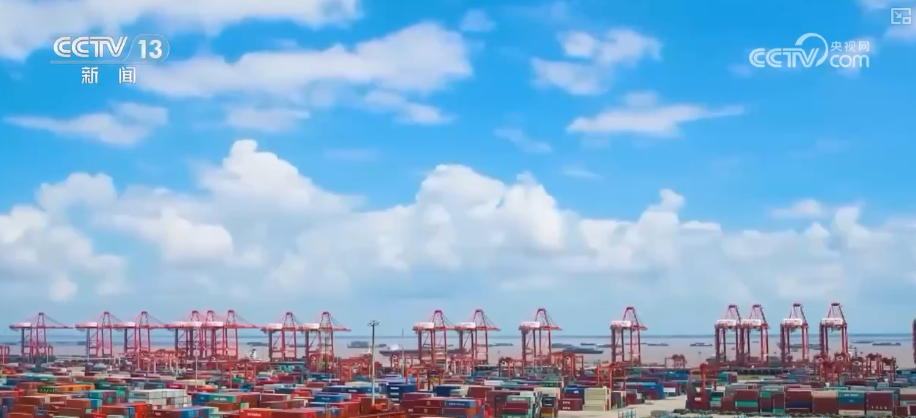
高质量发展潮经济|新业态激发消费新活力
Xin Hua Wang· 2025-12-30 01:19
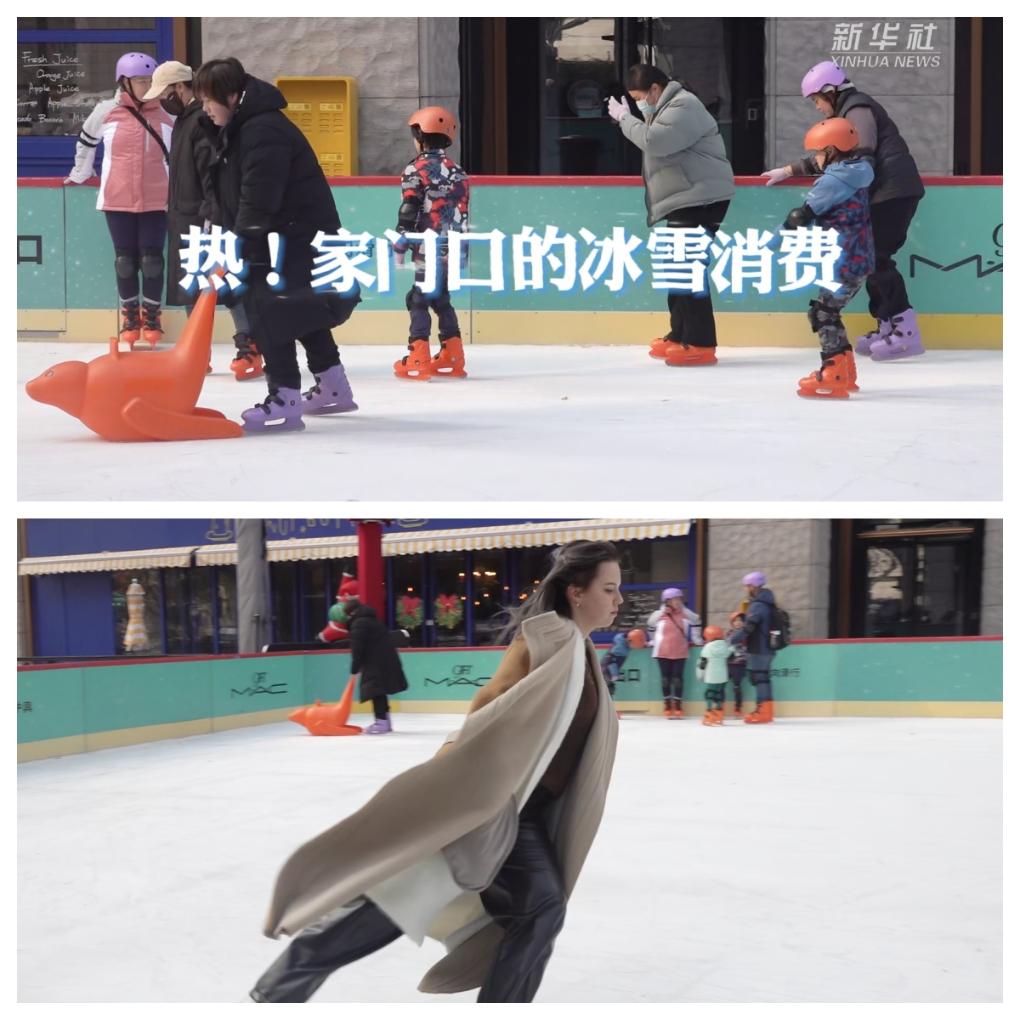
Group 1 - The central economic work conference this year proposed to "deeply implement special actions to boost consumption" [1] - As the year-end approaches, the consumption market in Shanghai is heating up, with various promotional activities taking place in major shopping districts [1] - New business models and scenarios, such as ice and snow economy, pet economy, emotional consumption, and first-store economy, are stimulating new consumption vitality in Shanghai [1]
年底才火的“爱你老己”,他们坚持了一整年
Xin Lang Cai Jing· 2025-12-29 13:04
Core Insights - The phrase "Love Yourself" has gained popularity, reflecting a growing trend of self-acceptance and personal well-being among individuals [1][3] - There is a noticeable shift in travel behavior, with more young people reclaiming their agency in travel experiences, focusing on personal narratives rather than just sightseeing [4][9] Group 1: Trends in Travel Content Creation - The focus of travel content has shifted from passive consumption to immersive storytelling, where creators share personal experiences and emotions during their journeys [4][9] - Creators are increasingly engaging with local cultures and communities, documenting their experiences with a sense of responsibility and respect [6][20] - The rise of "human-centric" storytelling in travel content emphasizes the creator's personal journey and emotional connection to the places visited [8][10] Group 2: Emotional and Story Consumption - The year 2025 has been characterized by a rise in "emotional consumption," where travelers seek experiences that provide emotional fulfillment rather than just material benefits [28][30] - The demand for "story consumption" has increased, with audiences drawn to unique narratives and personal insights gained during travels [28][30] - Popular travel hotspots in 2025 reflect a dual demand for emotional and narrative experiences, as creators prioritize sharing their feelings and reflections during their journeys [30][32] Group 3: Individual Narratives and Self-Exploration - The emergence of individual narratives in travel content aligns with the broader trend of self-exploration and personal growth, as travelers seek to understand their relationship with the world [32][35] - The travel industry is witnessing a transformation where experiences are viewed as avenues for self-care and self-discovery, rather than mere consumption [35] - The ongoing trend of returning to self in travel experiences is expected to deepen, encouraging more individuals to express their unique perspectives and stories [35]

纺织服饰2026年度策略:看好纺织制造板块改善,把握服装家纺板块结构性机会
Shanxi Securities· 2025-12-29 05:08
Group 1: Market Overview - The textile and apparel sector in 2025 saw a cumulative increase of 12.02%, underperforming the CSI 300 index by 4.08 percentage points, ranking eighteenth among thirty-one Shenwan primary industries [3][17] - The sub-sectors of textile manufacturing, apparel and home textiles, and accessories recorded cumulative increases of 9.65%, 11.31%, and 17.43% respectively [3][17] - The PE-TTM for the textile and apparel sector stands at 20.32 times, which is at the 76.86% percentile of the past five years [3][17] Group 2: Domestic Consumption - In 2025, the total retail sales of consumer goods reached 45.61 trillion yuan, with a year-on-year growth of 4.0% [4][30] - The consumer confidence index improved from 86.4 at the end of 2024 to 89.4 in October 2025 [4][30] - Retail sales of textiles and apparel, cosmetics, gold and silver jewelry, and sports/entertainment products grew by 3.5%, 4.8%, 13.5%, and 16.4% respectively from January to November 2025 [4][30] Group 3: International Consumption - U.S. apparel sales showed a year-on-year increase of 5.34% as of October 2025, with inventory levels at a low since 2022 [4][34] - European retail sales indices have turned positive since 2024, maintaining steady low single-digit growth in 2025 [4][34] - Vietnam's textile and footwear exports reached 35.91 billion USD in 2025, with a year-on-year growth of 6.7% [4][44] Group 4: Textile Manufacturing - The textile manufacturing sector faced revenue growth challenges in 2025, with a year-on-year revenue increase of only 4.3% and a decline in net profit by 5.6% [5][46] - The sector's performance was impacted by U.S.-China tariff pressures, leading to cautious ordering from brands [5][46] - Recommendations include focusing on leading manufacturers like Yuanyuan Group, Shenzhou International, and Huali Group, which have lower exposure to U.S. markets and strong recovery potential [5][67] Group 5: Apparel and Home Textiles - The apparel sector is experiencing a weak recovery, with a focus on consumer performance and innovation in home textiles [8][4] - Companies like Ge Li Si and Jiangnan Buyi are highlighted for their stable performance, with Ge Li Si showing a 40.2% increase in net profit in Q3 2025 [8][4] - The home textiles sector is driven by major products, with companies like Luolai Life and Mercury Home Textiles showing significant revenue growth [8][4]
任泽平:展望未来十年中国经济的十大趋势
Xin Lang Cai Jing· 2025-12-29 01:53
Group 1 - The core viewpoint is that China's economy is expected to surpass the United States by 2035, becoming the world's largest economy, leading to a reshuffling of global economic, trade, technology, and geopolitical orders, marking a critical period for great power competition [1] Group 2 - The explosive growth of artificial intelligence applications is anticipated to become a new growth point for the economy, leading a new wave of economic cycles and providing opportunities for the younger generation to achieve wealth [1] - Significant breakthroughs in life sciences are expected, with AI facilitating rapid innovation in drug development, potentially increasing human lifespan to 120 years, and redefining the concept of aging [1] Group 3 - The prevalence of humanoid robots is projected to replace simple repetitive labor, allowing humans to engage in creative, social, and emotional activities [1] - The unstoppable rise of autonomous driving is expected to lead to the complete elimination of fuel vehicles, providing ultimate solutions to urban traffic congestion, air pollution, and safety in transportation [1] Group 4 - A new green energy system is anticipated to emerge, with solar, wind, and controllable nuclear fusion completely replacing coal power, transforming the energy supply system to "distributed generation + storage," significantly improving the greenhouse effect [1] Group 5 - The arrival of the post-real estate era is expected, with a market bifurcation where housing prices in areas attracting 20% of the population may hit bottom or even reach new highs, while prices in areas losing 80% of the population may experience prolonged declines [1] Group 6 - Demographic trends such as aging population, declining birth rates, and increasing singlehood are expected to give rise to the silver economy, pet economy, single economy, and emotional consumption, with robots and AI assistants becoming integral parts of human life [1] Group 7 - By 2035, China's per capita GDP is projected to reach the level of moderately developed countries, leading to material abundance and a shift in consumer focus towards spiritual and emotional consumption [1] Group 8 - The transition from an internet-based existence to an AI-driven existence is expected to significantly change daily life through AI assistants, autonomous driving, virtual reality, AI-driven pharmaceuticals, robotic healthcare, telemedicine, and humanoid robots [1]
今年,消费彻底变了
Ge Long Hui A P P· 2025-12-28 08:57
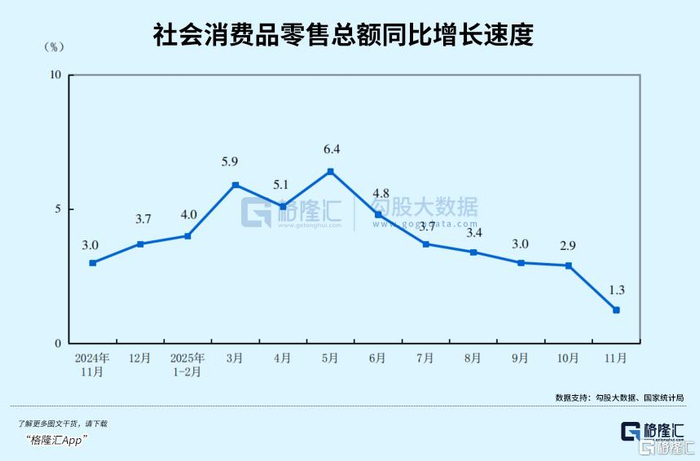
Core Insights - The consumption industry has undergone significant changes over the past year, with a shift in focus from traditional products like liquor to new consumption trends driven by emotional and social factors [1][10]. Group 1: Consumption Trends - Despite perceptions of a cooling consumption market, consumer demand has shown stability, with retail sales growing by 4.0% year-on-year in the first 11 months of this year, surpassing the 3.5% growth expected for the entire year of 2024 [4][5]. - The contribution of final consumption expenditure to economic growth reached 53.5% in the first three quarters of 2025, an increase of 9 percentage points compared to the entire year of 2024 [4]. - The concept of "new consumption" has emerged, characterized by emotional and social attributes, as seen in the popularity of brands like Bubble Mart and the rise of "self-reward" consumption [8][9]. Group 2: Consumer Behavior - Young consumers, particularly those from the Z generation, are becoming the main drivers of consumption, with 56.3% of them willing to spend on emotional value and interests, a 16.2 percentage point increase from 2024 [10][9]. - The trend of "rational consumption" is also evident, where consumers are increasingly focused on quality and value, with 47% of respondents indicating they only purchase essentials to avoid waste, while 68% are willing to spend more on products that help relieve stress [11][10]. Group 3: Market Opportunities - The second-hand economy is thriving, with platforms like Xianyu seeing a 30% year-on-year increase in transaction volume, reflecting young consumers' acceptance of "recycled consumption" [12]. - The health and wellness industry is benefiting from consumers' desire to invest in personal growth, with products like smart home devices and effective skincare gaining traction [14][13]. - The pet economy is emerging as a significant market, driven by the emotional support pets provide, with a wide range of related products and services [24]. Group 4: Future Outlook - The emotional consumption market in China is projected to reach 2.3 trillion yuan in 2024, with expectations to exceed 4.5 trillion yuan by 2029, indicating substantial growth potential [16]. - The consumption landscape is evolving into a complex ecosystem where rational and emotional consumption coexist, reshaping investment strategies and market dynamics [27].
商贸零售行业周报:潮宏基多渠道高效推新,毛戈平推出高端冻龄系列-20251228
KAIYUAN SECURITIES· 2025-12-28 02:41
Investment Rating - The industry investment rating is "Positive" (maintained) [1] Core Views - The retail industry is experiencing a transformation with a focus on emotional consumption and innovative product offerings, particularly in the jewelry and cosmetics sectors [6][33] - Companies like潮宏基 and毛戈平 are leveraging multi-channel strategies to enhance brand visibility and product sales, indicating a strong market presence [26][31] Summary by Sections Retail Market Overview - The retail index closed at 2462.73 points, with a weekly increase of 0.16%, underperforming the Shanghai Composite Index, which rose by 1.88% [5][15] - The retail sector has seen a year-to-date increase of 10.00%, lagging behind the Shanghai Composite Index's 18.26% rise [15][19] Company Highlights - **潮宏基**: Achieved a revenue of 62.37 billion yuan in the first three quarters of 2025, up 28.4% year-on-year, with a net profit of 3.17 billion yuan, reflecting a 0.3% increase [42] - **毛戈平**: Launched the "琉光赋活" skincare series, set to debut on January 1, 2026, focusing on high-end skincare needs [31] - **周大福**: Reported a revenue of 389.86 billion HKD for FY2026H1, a slight decrease of 1.1%, but with a net profit increase of 0.1% [39] Investment Themes - **Gold and Jewelry**: Focus on brands with differentiated product offerings and consumer insights, recommending潮宏基 and老铺黄金 as key players [6][33] - **Offline Retail**: Emphasis on companies adapting to market changes, with recommendations for永辉超市 and爱婴室 [6][33] - **Cosmetics**: Highlighting brands that innovate with emotional value and safe ingredients, recommending毛戈平 and珀莱雅 [6][34] - **Medical Aesthetics**: Targeting differentiated product manufacturers and expanding medical aesthetic chains, with recommendations for爱美客 and科笛-B [6][34]


从浙江市场三大特色关键词 看2025年消费新图景
Xin Hua Wang· 2025-12-27 06:51
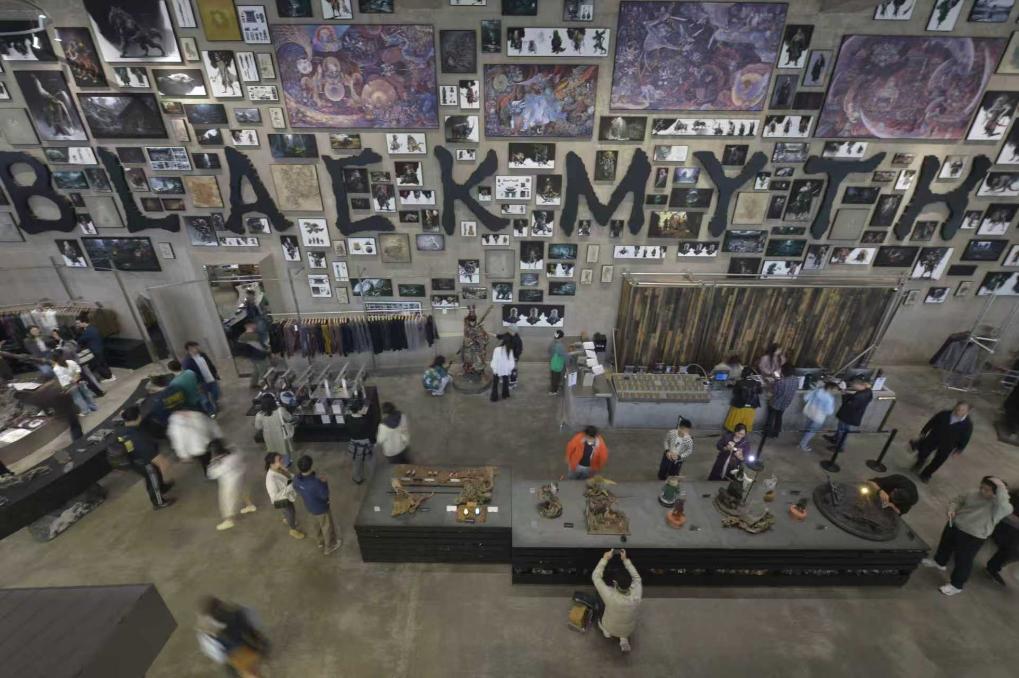
Group 1 - The Zhejiang consumer market is evolving with new dynamics, showcasing a vibrant and innovative consumption landscape driven by cultural IP, emotional consumption, and digital technology [1] - The first offline retail store of BLACKMYTH opened in Hangzhou, following the global success of the game "Black Myth: Wukong," which has maintained high popularity since its release [2][4] - The integration of cultural and commercial elements in the BLACKMYTH store creates a comprehensive cultural space, highlighting the rise of IP consumption economy [4] Group 2 - The opening of the sixth-generation global trade center in Yiwu marks a transition from traditional trade to a digital trade ecosystem [5] - AI applications in Yiwu's global trade center have significantly enhanced product development efficiency, with some businesses reporting a threefold increase [7] - Yiwu is shifting from traditional manufacturing to intelligent manufacturing, focusing on higher product value and quality improvements [7] Group 3 - The Zhejiang Provincial Urban Basketball League has expanded the boundaries of sports consumption, integrating it deeply with cultural tourism [8] - The league has generated significant economic impact, driving cultural, commercial, tourism, and sports consumption to a total of 2.918 billion yuan, with over 4.21 million attendees [10] - The integration of events and tourism has become a new engine for local consumption and cultural tourism industry upgrades [10]
热评(十二)I 情绪消费的“增长点”绝不是升级焦虑
Sou Hu Cai Jing· 2025-12-26 23:25
Core Insights - The article discusses the emergence of "emotional consumption" as a trend among the younger generation, shifting from "cost-performance" to "emotional value" in purchasing habits [2][3] - It highlights the dual nature of emotional consumption, where it can provide comfort and joy but can also lead to anxiety-driven marketing tactics that exploit consumer emotions [3][4] Group 1: Emotional Consumption Trends - The term "谷子(经济)" represents the "emotional economy," indicating a shift in consumer behavior towards purchases that provide emotional satisfaction [2] - Products like trendy toys and virtual goods serve as emotional outlets for young consumers, fulfilling their psychological needs and contributing to economic growth [2][3] Group 2: Negative Marketing Practices - Some businesses exploit consumer anxiety by creating a sense of urgency around products, such as limited edition blind boxes and exaggerated claims in the beauty industry [3] - This leads to a misperception among young consumers that happiness is tied to spending, resulting in financial burdens rather than emotional relief [3] Group 3: Recommendations for Stakeholders - There is a need for consumers to develop rational consumption awareness and to recognize the boundaries of emotional spending [4] - Businesses should focus on genuine emotional support rather than anxiety-inducing marketing strategies, while regulatory bodies must address misleading advertising and price inflation [4]

众品牌加码潮玩IP 情绪消费的狂热与风险
Xin Lang Cai Jing· 2025-12-26 21:01
Group 1: Core Insights - The holiday season, particularly Christmas, is a significant time for emotional consumption, with brands leveraging various IPs to boost sales and profits [1] - Companies are increasingly focusing on audience segmentation to create scarcity and collectability for core fans while emphasizing practicality and trendiness for broader audiences [1][5] - The IP collaboration trend is gaining momentum, with brands like Heineken and Pop Mart successfully launching products that resonate with consumers [2][3] Group 2: Market Trends - The Chinese IP retail market is experiencing historic growth, with retail sales reaching $13.77 billion in 2023, a 9.6% increase year-on-year [6] - The interest consumption market is projected to exceed 380 billion yuan by the end of 2025, reflecting a growth rate of over 10% compared to the previous year [2] - The collaboration between brands and popular IPs, such as Disney's "Zootopia 2," is seen as a benchmark for IP commercialization, with over 60 brands participating [5][6] Group 3: Business Models - There are three main business models for IP: self-owned IP, licensed IP, and short-term collaborations for exposure [7] - Successful IPs typically possess cross-media content value, allowing for low-cost and precise connections with users [7] - Companies like Disney have established a robust commercial ecosystem, generating $62 billion in retail sales from IP licensing [8] Group 4: Strategic Approaches - Brands are exploring innovative strategies to avoid homogenization in IP collaborations, such as creating unique product categories [6][7] - Miniso is actively signing original toy artists to build its own IP matrix, aiming for a dual strategy of international licensed IP and exclusive artist collaborations [8][9] - The emotional connection between consumers and IP characters is crucial for successful branding, requiring a deeper understanding of consumer needs [9]
