戴维斯双击

Search documents
石化ETF、化工产业相关ETF涨幅居前丨ETF基金日报
2 1 Shi Ji Jing Ji Bao Dao· 2025-11-28 02:31
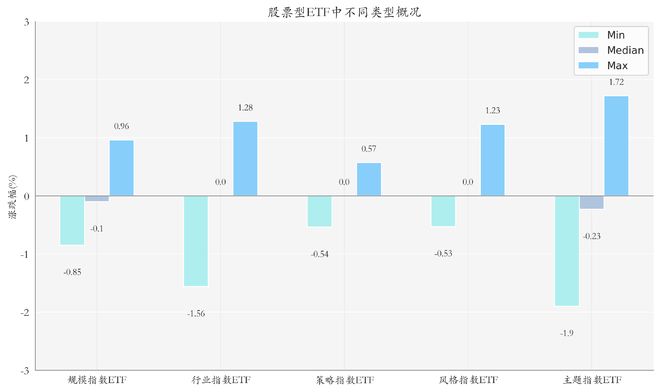
Market Overview - The Shanghai Composite Index rose by 0.29% to close at 3875.26 points, with a daily high of 3895.59 points [1] - The Shenzhen Component Index fell by 0.25% to close at 12875.19 points, with a daily high of 13082.77 points [1] - The ChiNext Index decreased by 0.44% to close at 3031.3 points, with a daily high of 3113.44 points [1] ETF Market Performance - The median return of stock ETFs was -0.11% [2] - The highest performing scale index ETF was the Yinhua CSI 2000 Enhanced Strategy ETF, with a return of 0.96% [2] - The highest performing industry index ETF was the China Tai CSI All-Share Integrated Circuit ETF, with a return of 1.28% [2] - The highest performing thematic index ETF was the E Fund CSI Petrochemical Industry ETF, with a return of 1.72% [2] ETF Gain and Loss Rankings - The top three ETFs by gain were: - E Fund CSI Petrochemical Industry ETF: 1.72% [4] - Penghua SSE Sci-Tech Innovation Board New Energy ETF: 1.6% [4] - E Fund SSE Sci-Tech Innovation Board New Energy ETF: 1.42% [4] - The top three ETFs by loss were: - E Fund CSI Software Service ETF: -1.9% [4] - Ping An CSI Hong Kong-Shanghai Online Consumption Thematic ETF: -1.69% [4] - Yinhua CSI Film and Television Thematic ETF: -1.63% [4] ETF Fund Flow - The top three ETFs by fund inflow were: - Huaxia SSE 50 ETF: 660 million yuan [6] - Huaxia CSI A500 ETF: 584 million yuan [6] - Hua'an ChiNext 50 ETF: 275 million yuan [6] - The top three ETFs by fund outflow were: - Southern CSI 500 ETF: 556 million yuan [7] - Southern ChiNext Artificial Intelligence ETF: 529 million yuan [7] - Huaxia SSE Sci-Tech Innovation Board 50 Component ETF: 510 million yuan [7] ETF Margin Trading Overview - The top three ETFs by margin buying were: - Huaxia SSE Sci-Tech Innovation Board 50 Component ETF: 451 million yuan [8] - Guotai CSI All-Share Securities Company ETF: 377 million yuan [8] - Jiashi SSE Sci-Tech Innovation Board Chip ETF: 293 million yuan [8] - The top three ETFs by margin selling were: - Southern CSI 1000 ETF: 71.19 million yuan [9] - Southern CSI 500 ETF: 47.35 million yuan [9] - Huatai Baichuan SSE 300 ETF: 34.25 million yuan [9] Industry Insights - China Galaxy Securities predicts that the chemical industry may see a cyclical upturn by 2026, driven by strong policy expectations and established supply-demand fundamentals [10] - Debon Securities indicates that core assets in the chemical sector are entering a long-term value zone, with potential for valuation and profit recovery [10]

【早盘三分钟】11月28日ETF早知道
Xin Lang Ji Jin· 2025-11-28 01:03
Core Insights - The chemical industry is expected to experience a cyclical turning point in 2026, driven by a reduction in supply due to negative capital expenditure trends and the clearing of outdated overseas production capacity [4][6] - The electronic sector has seen significant inflows of over 10.7 billion in main funds, with policies encouraging the development of smart consumer electronics, which is expected to boost the sector [6] Group 1: Chemical Industry - The average price of electrolytic solution reached 54,250 yuan per ton as of November 25, up from approximately 19,400 yuan per ton at the beginning of the year, indicating a substantial price increase [4] - Major electrolytic solution companies are experiencing a surge in orders, with some contracts extending to 2028, reflecting strong demand [4] - The chemical sector has shown superior performance this year, attributed to the "anti-involution" trend, which is expected to lead to a recovery in valuations and earnings growth [6] Group 2: Electronic Sector - The electronic sector attracted the highest amount of main fund inflows among 31 primary industries, with notable increases in stock prices for companies like Cambrian and Industrial Fulian, which rose by over 5% and 7% respectively [6] - The Ministry of Industry and Information Technology, along with five other departments, issued a plan to enhance the adaptability of supply and demand in consumer goods, promoting the development of smart home appliances and AI products [6]

重点关注,资金偷偷布局这个方向
Sou Hu Cai Jing· 2025-11-27 12:30
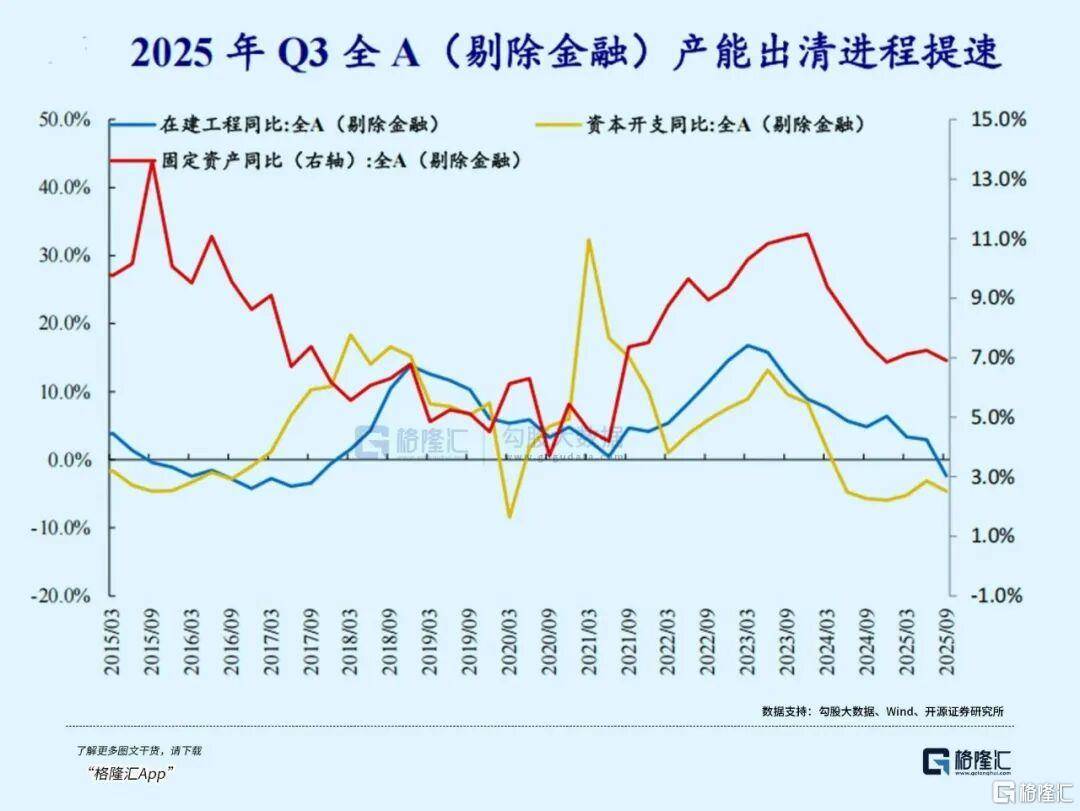
Core Viewpoint - The A-share market is at a critical point of style rebalancing by the end of 2025, with the ongoing "anti-involution" policy reshaping investment logic in cyclical industries [1][4] Group 1: Market Dynamics - Since Q3 2025, the A-share market has shown a significant "technology + cyclical" dual-driven pattern, indicating a transition from a single growth line to a balanced allocation of "growth + value" [1] - The technology sector has experienced a substantial cumulative increase, with the electronics industry rising by 45% and the communication equipment sector by over 38%, significantly outperforming the CSI 300 index's 14.7% [4] - The concentration of institutional holdings in the technology sector has reached nearly historical peaks, with TMT sector holdings exceeding 40.16%, indicating a risk of overcrowding [4] Group 2: Policy Impact - The Ministry of Industry and Information Technology has proposed three major measures for the chemical industry in 2026, signaling a shift from mere advocacy to substantial implementation of the "anti-involution" policy [4] - The "anti-involution" policy has extended to industry self-discipline, with products like long silk, PTA, and urea achieving industry collaboration through "production limits to maintain prices + price alliances + punitive agreements" [10] Group 3: Chemical Industry Insights - The chemical industry is experiencing a supply-side improvement driven by "downward capacity cycles + policy-guided elimination," with fixed asset investments in the chemical raw materials and products manufacturing sector decreasing by 5.6% year-on-year from January to September 2025 [5][6] - The demand side is supported by both domestic recovery and overseas improvement, with textile and apparel exports increasing by 8.7% year-on-year from January to October 2025 [12] Group 4: Investment Opportunities - Investment opportunities in the chemical industry under the "anti-involution" wave include selecting leading companies with strong management systems and cost advantages [14] - Specific sectors to focus on include: 1. Petrochemicals: Expected to see a turning point due to supply contraction and demand upgrades [15] 2. Coal chemicals: Benefiting from policy catalysts and cost advantages, with potential for profit recovery [16] 3. Polyester filament and PTA: Leading sectors in the implementation of the "anti-involution" policy, currently entering an inventory digestion phase [17]
头部电解液企业订单火爆,化工ETF(516020)收涨1.3%,机构:2026年化工行业或迎周期拐点向上
Xin Lang Ji Jin· 2025-11-27 11:53
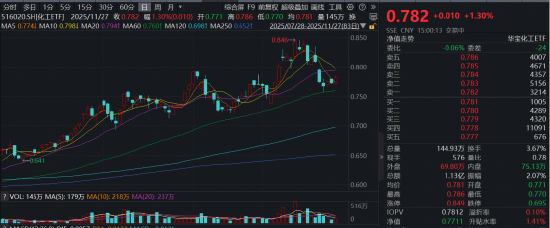
Core Viewpoint - The chemical sector has shown significant strength in the market, outperforming major indices like the Shanghai Composite and CSI 300, driven by a "de-involution" trend and favorable supply-demand dynamics [1][2][7]. Group 1: Market Performance - The Shanghai Composite Index weakened towards the end of the trading day, while the ChiNext Index turned negative, with the chemical sector leading the gains [1]. - The Chemical ETF (516020) experienced a daily increase of 1.30%, with a trading volume of 1.13 billion yuan [1]. - The cumulative increase of the Chemical ETF's underlying index reached 26.07% year-to-date, significantly outperforming the Shanghai Composite Index (15.62%) and the CSI 300 Index (14.75%) [2][3]. Group 2: Stock Performance - Notable stocks in the chemical sector included Xin Fengming, which rose by 5.75%, and several others like Lu Xi Chemical and Wan Hua Chemical, which saw increases of over 3% [2][4]. - The trading volume and transaction amounts for leading stocks indicate strong investor interest, with Wan Hua Chemical achieving a transaction amount of 2.464 billion yuan [2]. Group 3: Industry Trends - The solid-state battery concept remains active, with a significant increase in lithium battery material demand, as evidenced by the rise in electrolyte prices from approximately 19,400 yuan/ton at the beginning of the year to 54,250 yuan/ton recently [5]. - The current price-to-book ratio of the chemical sector stands at 2.27, indicating a relatively low valuation compared to historical levels, suggesting potential for long-term investment [5]. Group 4: Future Outlook - The chemical industry is expected to experience a dual uplift in performance and valuation due to the "de-involution" trend, with leading companies likely to gain market share through improved management and energy efficiency [7]. - Analysts predict that the chemical sector may see a cyclical upturn starting in 2026, driven by supply-side reforms and increased demand, particularly as the U.S. enters a rate-cutting cycle [7]. Group 5: Investment Strategy - Investors are encouraged to consider the Chemical ETF (516020) for efficient exposure to the sector, as it tracks the CSI Sub-Industry Chemical Index and includes a diversified portfolio of leading stocks [8].





重点关注,资金偷偷布局这个方向
格隆汇APP· 2025-11-27 10:46
Core Viewpoint - The A-share market is at a critical point of style rebalancing by the end of 2025, with the ongoing "anti-involution" policy reshaping the investment logic in cyclical industries [2] Group 1: Market Dynamics - Since Q3 2025, the A-share market has shown a significant "technology + cyclical" dual-driven pattern, indicating a transition from a single growth line to a balanced allocation of "growth + value" [4] - The performance improvement in cyclical sectors is sustainable, with a 23% year-on-year increase in the exit scale of backward production capacity in industries like chemicals and non-ferrous metals as of Q3 2025 [4] Group 2: Drivers of Market Style Shift - Three main supports for the current market style switch include: 1. The technology sector's significant cumulative increase, with the electronics industry up 45% and communication equipment over 38% year-to-date as of November 2025, far exceeding the 14.7% rise of the CSI 300 index [6] 2. Institutional holdings in the technology sector nearing historical peaks, with TMT sector holdings surpassing 40.16% [6] 3. Clear policy signals from the Ministry of Industry and Information Technology regarding the chemical industry, enhancing the certainty of supply-side contraction in cyclical industries [6] Group 3: Chemical Industry Insights - The core logic for supply-side improvement in the chemical industry is driven by "downward capacity cycles + policy-guided exit," with fixed asset investment in the chemical raw materials sector decreasing by 5.6% year-on-year from January to September 2025 [8][11] - The chemical industry has significant advantages over traditional cyclical industries in capacity optimization efficiency, industry collaboration, and high-end transformation paths [12] Group 4: Demand Recovery - The recovery in demand for the chemical industry is supported by both domestic and overseas factors, with domestic engines including improved real estate conditions and a resurgence in textile exports [13][14] - China's chemical product sales have maintained the top global position, with sales amounting to approximately €2.24 trillion in 2023, accounting for 43.1% of global sales [16][17] Group 5: Investment Opportunities in the Chemical Sector - Investment opportunities in the chemical industry under the anti-involution wave include: 1. Selecting leading companies with strong management and cost control [20] 2. Focusing on three reversal areas: petrochemicals, coal chemicals, and polyester filament + PTA, with specific companies highlighted for their potential [21][22][23]


任泽平:牛市终结有四大关键信号
水皮More· 2025-11-25 09:35
Core Viewpoint - The article discusses the recent bullish trend in A-shares and Hong Kong stocks, termed as the "confidence bull market," driven by unprecedented macro policies since late September 2024. It analyzes historical bull markets to identify patterns and potential future trends. Summary by Sections Historical Bull Market Analysis - A-shares bull markets require three conditions: policy shift, capital inflow, and low valuations, often starting amid controversy and despair, with subsequent valuation recovery igniting investor enthusiasm [6] - Bull markets typically go through three phases: policy-driven, capital-driven, and fundamental-driven, with initial phases less correlated to economic fundamentals [6] - A-shares exhibit characteristics of short bull markets and long bear markets, with average bull market duration of 17 months compared to 27 months for bear markets [8] - The first half of bull markets is primarily driven by policy, emotion, and capital, averaging 6.3 months with a 59% increase, led by technology, finance, and cyclical sectors [8] - Adjustments occur during bull markets due to various factors, but these adjustments can lead to stronger subsequent performance if sufficiently deep [8] - The second half of bull markets relies on economic fundamentals and corporate profit recovery, often resulting in a "Davis double play" where both valuation and profit growth occur [8] - Bull markets typically end due to high valuations, policy shifts, lack of new capital inflow, or economic recovery failures, often culminating in panic selling [8] Signals of Bull Market End - Key signals indicating the end of a bull market include: 1. Overvaluation, where high market valuations cannot be supported by corporate earnings [10] 2. Policy shifts that historically have marked the end of previous bull markets [13] 3. Absence of new capital inflow, which is crucial for sustaining market growth [15] 4. Economic recovery failures, where declining economic indicators lead to market downturns [15] Future Outlook - The current "confidence bull market" mirrors past bull markets, initiated during economic downturns with policy shifts and low valuations. Continued macro policy easing, interest rate cuts, and support for private sector investment are essential for sustaining this bull market [17] - The article emphasizes the need for careful monitoring of market signals, particularly regarding high valuations and potential policy changes, to avoid pitfalls associated with previous market cycles [18]
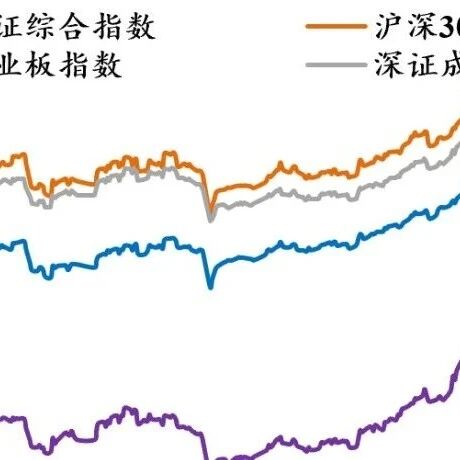
中国银河证券:化工业供需双底基本确立 2026年或开启“戴维斯双击”
智通财经网· 2025-11-25 09:13
Group 1: Oil and Chemical Industry Outlook - China Galaxy Securities forecasts Brent crude oil prices to range between $60-70 per barrel by 2026, with costs expected to stabilize [1] - The chemical industry is experiencing negative capital expenditure growth since 2024, with supply expected to contract due to the "anti-involution" trend and accelerated elimination of outdated overseas capacity [1] - The "14th Five-Year Plan" draft emphasizes expanding domestic demand, combined with the onset of the US interest rate cut cycle, which is expected to open up demand for chemical products [1] - A dual bottom in supply and demand is anticipated, with strong policy expectations catalyzing a potential cyclical upturn in the chemical industry by 2026, leading to a "Davis Double Play" from valuation recovery to earnings growth [1] Group 2: Specific Chemical Sector Recommendations - PTA industry is operating at low levels, with increasing calls for anti-involution; recommended companies include Hengli Petrochemical, Rongsheng Petrochemical, Xinfon Ming, and Tongkun [1] - Polyester filament capacity is becoming concentrated, with industry self-discipline enhancing cyclical elasticity; recommended companies include Xinfon Ming, Tongkun, and Hengyi Petrochemical [1] - The spandex industry is expected to see increased concentration; recommended companies include Huafeng Chemical and Xinxiang Chemical Fiber [1] - Global demand for pesticides is improving, with bottom-priced varieties likely to rebound; recommended companies include Yangnong Chemical, Runfeng Shares, Jiangshan Shares, Guangxin Shares, and Lier Chemical [1] - Organic silicon capacity expansion is nearing completion, with supply-demand dynamics expected to improve; recommended companies include Hesheng Silicon Industry, Xin'an Shares, and Dongyue Silicon Material [1] - The titanium dioxide industry is facing challenges and opportunities; recommended company is Longbai Group [1] - Refining capacity is being optimized, with a shift from oil to chemicals enhancing effective supply; recommended companies include Sinopec, PetroChina, Rongsheng Petrochemical, and Hengli Petrochemical [1] Group 3: Demand-Supported Chemical Sectors - Strong pricing power from suppliers is expected to sustain high demand for potash fertilizers; recommended companies include Yara International and Dongfang Iron Tower [2] - Phosphate supply and demand remain tight, benefiting resource-based companies; recommended companies include Batian Shares, Yuntianhua, Xingfa Group, and Chuanheng Shares [2] - Strict quota policies are expected to sustain high demand for refrigerants; recommended companies include Juhua Co., Sanmei Co., and Yonghe Co. [2] - Amino acids are expected to maintain their upward trend, with overseas capacity gradually exiting; recommended companies include New Hope Liuhe, Andisu, and Meihua Biological Technology [2] - The chlorinated sugar market is anticipated to see anti-involution, with significant potential for allulose; recommended companies include Jinhui Industrial, Bailong Chuangyuan, and Baolingbao Biology [2] - Vitamins are leading the current round of chemical price increases, entering the second phase; recommended companies include New Hope Liuhe and Zhejiang Medicine [2] - The EU's preliminary anti-dumping ruling is expected to reassess the value of overseas tires; recommended companies include Sailun Tire and Senqilin [2] - The civil explosives industry is developing steadily, with policy guidance likely accelerating industry consolidation; recommended companies include Guangdong Hongda, Yipuli, and Jiangnan Chemical [2] Group 4: New Materials and Technologies - Lightweight humanoid robots may benefit from PEEK as a key solution; recommended companies include Zhongyan Shares, Water Shares, and Guoen Shares [3] - AI is driving global demand for computing power, with electronic-grade PPO expected to grow; recommended companies include Shengquan Group and Dongcai Technology [3] - The domestic substitution of core chip materials, particularly photoresists, is accelerating; recommended companies include Wanrun Shares and Dinglong Shares [3]

名创优品20251124
2025-11-25 01:19
Summary of Miniso's Earnings Call Company Overview - **Company**: Miniso - **Date**: November 24, 2025 Key Points Industry and Market Performance - **Domestic Market**: The domestic market has stabilized and improved, contributing two-thirds of the company's profits. The business model and profitability are stable, reducing tail risks [3][12] - **Overseas Market**: The overseas market achieved low single-digit same-store sales growth. The Top Toy business grew by 110%, significantly contributing to revenue, although franchise and agency performance in Latin America and Asia was slightly below expectations [2][4] Financial Performance - **Revenue Growth**: Miniso reported a revenue growth of 28.2%, exceeding Bloomberg's consensus estimate of around 25%. Domestic same-store sales grew nearly 10% [4] - **Profitability**: The company's net profit growth was 12%, which was 3 percentage points lower than Bloomberg's consensus. This was primarily due to a 0.2 percentage point decline in gross margin, attributed to an increase in third-party products and tariff fluctuations [2][4][5] Future Projections - **Net Profit Forecast**: For 2025, Miniso expects a net profit of approximately 2.9 billion RMB, with a fourth-quarter profit of about 850 million RMB. If the profit margin of U.S. stores improves by 2-3 percentage points in 2026, adjusted net profit could reach 3.5 billion RMB [6][8] - **Valuation**: The current price-to-earnings ratio is around 15 times for 2025, considered low. If performance improves as expected, the valuation could significantly increase [6][13] U.S. Market Insights - **Contribution to GMV**: The U.S. market contributes about 10% to the company's GMV and 20-30% to revenue. In 2025, there are 421 U.S. stores with an average monthly sales of 700,000 RMB [7][11] - **Store Performance**: New stores have shown a 1.5 times increase in sales efficiency and a 1.3 times increase in sales per square meter compared to older stores. However, new stores still represent a small percentage of total stores, and overall effects will take time to materialize [10][11] Investment and Financing - **Investment in Yonghui**: Miniso's investment in Yonghui is measured using the equity method, accounting for 29% of Yonghui's net profit in Miniso's financials. Financing activities for the acquisition resulted in approximately 150 million RMB in interest costs [9] Market Sentiment - **Stock Price and Valuation Outlook**: The stock price has overly reflected negative news, with a market cap of about 45 billion HKD (approximately 40 billion RMB). Even under pessimistic forecasts, the P/E ratio for next year is around 13 times, indicating a potentially undervalued position [13]
中信建投:券商并购稳步推进 促进行业高质量发展
智通财经网· 2025-11-24 07:13
Group 1: Securities Industry - The integration of leading brokerages is accelerating, driven by supply-side reforms, promoting high-quality development in the industry [2] - Recent announcements from China International Capital Corporation, Dongxing Securities, and Xinda Securities indicate a merger plan that will enhance competitiveness and resource consolidation among top brokerages [2] - The merger aligns with the policy direction from the Central Financial Work Conference aimed at cultivating first-class investment banks, further increasing the concentration of the securities industry [2] Group 2: Insurance Sector - In October 2025, the premium growth rate for life insurance companies like Xinhua and Taibao decreased compared to September, with Xinhua showing a growth rate of +16.9% and Taibao at +9.9% for the first ten months of the year [3] - For October alone, Xinhua's premium growth was -7.2% while Taibao's was -11.2%, indicating a decline in monthly performance [3] - In the property insurance sector, both Zhong An and Taibao experienced a decline in premium growth for October, with Zhong An at +5.2% and Taibao at +0.4% for the first ten months [3] Group 3: Hong Kong Market - The Hong Kong stock market is experiencing liquidity easing against the backdrop of potential interest rate cuts by the Federal Reserve, with a focus on the upward elasticity of the non-bank sector [4] - The Hang Seng Index has decreased by 2.65% and the Hang Seng Tech Index by 8.68% since November, underperforming the MSCI World Index by 3.37% [4] - As of November 21, the total market capitalization of Hong Kong stocks was HKD 46.83 trillion, reflecting a 15.47% increase since the end of October, although trading activity has decreased with an average daily turnover of HKD 234.73 billion, down 14.62% [4]



暴跌后!A股的天真变了
Sou Hu Cai Jing· 2025-11-24 00:14
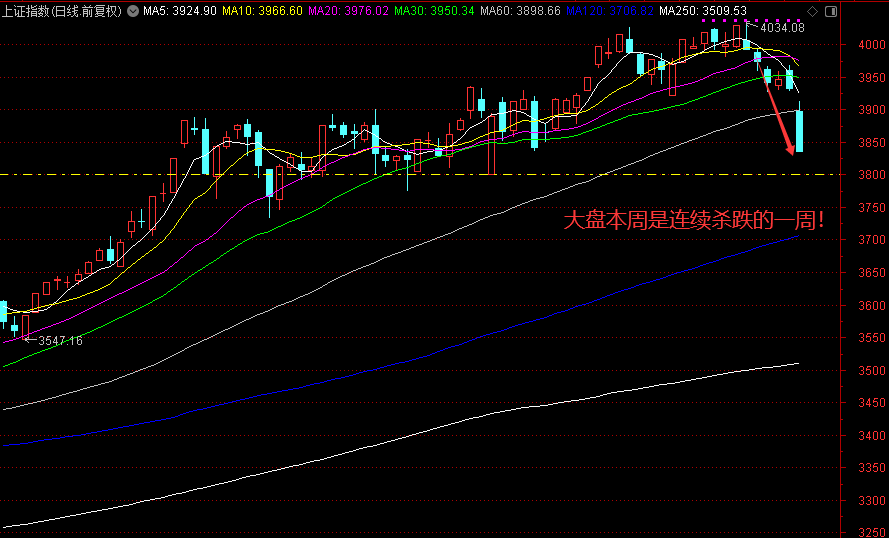
大盘在4000点三次磨蹭后,果然又是横久必跌、再次败阵下来。而本以为周一黑的,但没想的是一周黑,盘面个股从周二到周 五四日,每日都差不多8成个股杀跌,周五更是超过九成的杀跌,且还是暴风雨的重挫。 而经过周五的杀跌,很多人的心态都炸了。龙轩身边有部分朋友就很沮丧,有的说把全年的利润都打没了、有的则直接说这轮 不是牛市、还有人被套较深,咨询龙轩怎么办? 对此,龙轩之前就说这是结构性的牛市,因此对于本周的持续杀跌,我们要分开来看。另外就是仓位的问题,只要不是重仓 的,其实本周这种级别的杀跌根本就是小儿科。 首先科技股方面,这是市场天,而经过周五暴跌后,龙轩认为天已经变了。主要导火线之一就是美股科技也在全线回落,且像 软银等机构都开始全线清仓英伟达,说明机构对后市科技的谨慎,美股闪迪周四更是一夜暴跌20%! 但当前这些板块最大的问题是,阶段性涨幅巨大,很多个股从4月贸易战地点算起,都是大几倍、甚至十几倍的涨幅,这把未 来几年的业绩预期都打满了。 而2020-2021新能源迎来戴维斯双击的时候,也是出现如此爆发的。当时机构也普遍看好业绩,但过后大家都知道迎来了杀估 值,然后只有宁王、阳光电源等少数龙头今年走出。当前的A ...