
自动驾驶

Search documents
全国人大代表、广汽集团董事长冯兴亚:加快自动驾驶立法 护航汽车电动化智能化转型
Shang Hai Zheng Quan Bao· 2026-03-07 06:14
Core Viewpoint - The development of the autonomous driving industry is crucial for the transformation and upgrading of the automotive sector, with significant market potential and responsibilities for high-quality manufacturing [1] Group 1: Legislative and Standardization Needs - The establishment of a unified national standard and evaluation system is essential to address the bottlenecks in the industry's development [1] - Clear legal definitions regarding accident liability, road usage permissions, and data security management are necessary for the widespread adoption of autonomous vehicles [1] - A comprehensive legal framework is considered the "safety bottom line" for the large-scale implementation of autonomous driving [1] Group 2: Industry Competitiveness and Technological Advancements - The global autonomous driving industry is at a critical competitive stage, with China having developed its own advantages in smart driving technology [1] - Major automotive companies are increasing their R&D investments, with some achieving L4 level mass production capabilities [1] - The cost of Robotaxi models has significantly decreased, and commercial operations are beginning to scale [1] Group 3: Safety and Consumer Trust - Safety remains a fundamental principle in the automotive industry and is non-negotiable [1] - As the industry transitions to electrification and intelligence, the concept of safety is evolving [1] - Automotive companies must prioritize user safety in their technological innovations and enhance the safety of intelligent features to ensure secure smart travel for users [1]

全国人大代表、广汽集团董事长冯兴亚:加快自动驾驶立法 护航汽车电动化智能化转型
Shang Hai Zheng Quan Bao· 2026-03-06 20:35
Core Viewpoint - The article emphasizes the need for accelerating legislation on autonomous driving to support the development of the smart connected vehicle industry, which is seen as a crucial driver for the transformation and upgrading of the automotive sector [3][4]. Group 1: Legislative and Standardization Needs - The chairman of GAC Group, Feng Xingya, suggests that establishing a unified national standard and evaluation system is essential for overcoming bottlenecks in the industry [3]. - Clear legal definitions regarding accident liability, road usage permissions, and data security management are necessary as autonomous vehicles become more integrated into daily transportation [3][4]. - A comprehensive legal framework is viewed as the "safety bottom line" for the large-scale implementation of autonomous driving [3]. Group 2: Industry Development and Competitive Advantage - The global autonomous driving sector is at a critical competitive stage, with Chinese companies having developed advantages in smart driving technology [4]. - Major automotive companies are increasing their R&D investments, with some achieving L4 level mass production capabilities and significant cost reductions for Robotaxi models [4]. - The alignment of institutional supply with technological innovation is crucial for transforming technological advantages into industrial and market advantages, helping China gain a competitive edge in the global smart driving arena [4]. Group 3: Safety Concerns and Consumer Trust - Safety remains a fundamental principle in the automotive industry and is non-negotiable [4]. - As the industry transitions towards electrification and intelligence, the concept of safety is evolving, necessitating that companies prioritize user safety in their technological innovations [4]. - Enhancing vehicle safety and providing secure smart travel experiences for users are critical for building consumer trust in autonomous vehicles [4].

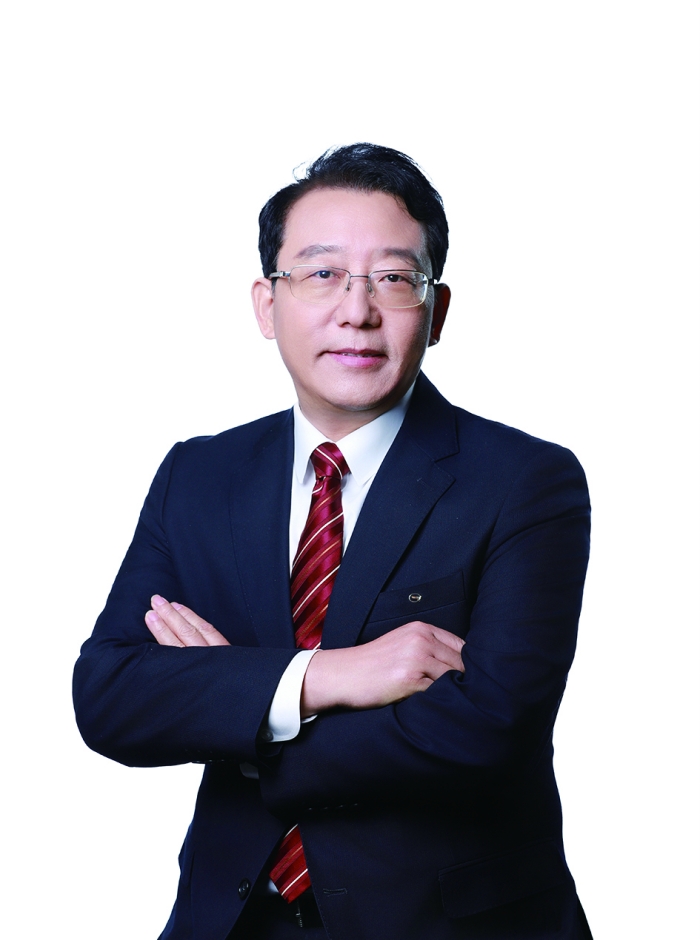
全国人大代表、广汽集团董事长冯兴亚:加快自动驾驶立法护航汽车电动化智能化转型
Shang Hai Zheng Quan Bao· 2026-03-06 20:07
Core Viewpoint - The article emphasizes the need for accelerated legislation on autonomous driving to support the electric and intelligent transformation of the automotive industry, highlighting the importance of establishing a unified national standard and evaluation system to address industry development bottlenecks [3][4]. Group 1: Legislative and Regulatory Framework - The chairman of GAC Group, Feng Xingya, suggests that a clear legal framework is essential for defining the responsibilities of car manufacturers, operators, and regulatory bodies to alleviate concerns and encourage the use of autonomous vehicles [4]. - A comprehensive legal framework is deemed the "safety bottom line" necessary for the large-scale implementation of autonomous driving technologies [3]. Group 2: Industry Development and Market Potential - The smart connected vehicle industry is identified as a crucial engine for the transformation and upgrading of the automotive sector, with a market potential valued in trillions [3]. - The article notes that various automotive companies are increasing their R&D investments, with some achieving L4 level mass production capabilities and significant cost reductions for Robotaxi models, indicating the initial stages of commercial operation [4]. Group 3: Safety and Consumer Concerns - Safety is highlighted as a fundamental principle in the automotive industry, with an evolving definition in the context of electric and intelligent vehicle transitions [4]. - Companies are urged to prioritize user safety in their technological innovations and enhance the safety features of vehicles to ensure secure intelligent travel for consumers [4].
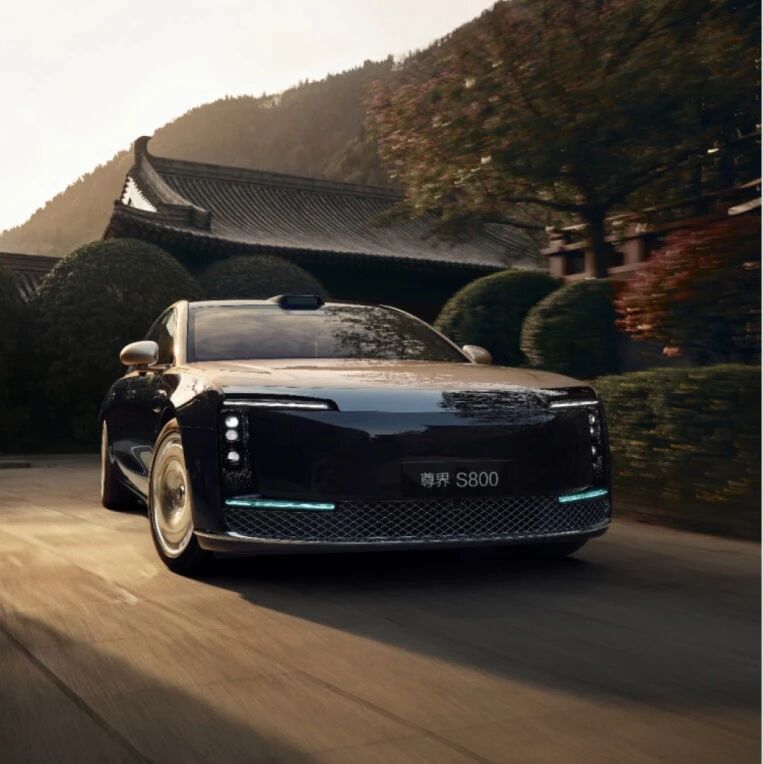
尊界 S800 首搭新一代双光路图像级激光雷达,产品体验的二次跨越
晚点LatePost· 2026-03-06 12:28
Core Viewpoint - The article highlights Huawei's advancements in the luxury automotive market, particularly through its flagship model, the Zun Jie S800, which has achieved significant sales and technological milestones, redefining competition in the ultra-luxury segment [3][12]. Group 1: Product Launch and Technology - Huawei's Hongmeng Zhixing has launched the world's highest production line laser radar with 896 lines, enhancing core perception technology [2][3]. - The new laser radar is integrated into the Zun Jie S800 and the Wenjie M9, improving perception and active safety capabilities [3][4]. - The dual-light path architecture of the new laser radar allows for independent control of wide-angle and telephoto laser reception, significantly enhancing imaging quality and detail recognition [6][8]. Group 2: Market Positioning and Strategy - The Zun Jie S800 aims to establish a technological benchmark in the ultra-luxury market rather than merely focusing on sales volume [5][12]. - The vehicle features advanced technologies such as the Huawei Tuling Longxing platform and the Angel Seat active safety system, which enhances user experience and safety [5][10]. - The Zun Jie S800 has delivered 15,000 units since its launch, indicating a strong market presence [5]. Group 3: User Demographics and Preferences - The primary user demographic for the Zun Jie S800 consists of high-net-worth males aged 40-50, many of whom have previously owned luxury brands like Rolls-Royce and Porsche [9]. - These users prioritize comprehensive driving experiences and safety over brand prestige, reflecting a shift in consumer expectations in the luxury automotive market [9][10]. Group 4: Technological Advancements and Safety Features - The upgraded ADS 4.1 system has improved safety metrics, with the average distance driven before a serious collision increasing from 7.09 million kilometers to 10.46 million kilometers, a 48% improvement [15]. - The Zun Jie S800 incorporates a comprehensive safety system that autonomously prepares for unavoidable collisions, enhancing passenger safety [10][12]. Group 5: Collaborative Ecosystem and Industry Impact - Huawei's collaboration with various automotive manufacturers has led to a transformation in China's automotive supply chain, pushing over 220 component manufacturers towards high-end production [18]. - The integration of Huawei's technology and market strategies is aimed at fostering high-quality development in the Chinese automotive industry, establishing a robust ecosystem for innovation and collaboration [17][18].
别认为小鹏还只是个造车的
虎嗅APP· 2026-03-06 09:59
Core Viewpoint - Xiaopeng Motors is transitioning from being merely a car manufacturer to creating a "super intelligent entity" with its second-generation VLA (Vision-Language-Action) model, which aims to revolutionize autonomous driving technology and enhance user experience [2][4][10]. Group 1: Technological Advancements - The second-generation VLA model features a disruptive architectural redesign that eliminates the "language translation" step, allowing for intuitive responses akin to human driving [2][5]. - The model integrates visual, auditory, and reading capabilities, enabling it to function as a foundational model for various applications, including Robotaxi and humanoid robots [5][9]. - Xiaopeng's approach to leap directly from L2 to L4 autonomous driving aims to clarify responsibility and streamline the development process, avoiding the complexities associated with L3 [7][8]. Group 2: Market Positioning and Strategy - Major investment banks, including Morgan Stanley and Bank of America, have issued buy ratings for Xiaopeng Motors, highlighting its potential to compete with Tesla in the global market due to advancements in autonomous driving technology [2][3]. - The company aims to double its overseas sales by 2026, with a target of selling 1 million vehicles abroad by 2030, contributing significantly to its profits [11][13]. - Xiaopeng's Robotaxi initiative is set to begin public road testing, with plans for operational deployment in Guangzhou by the end of 2026, marking a significant step in expanding its market beyond traditional passenger vehicles [14]. Group 3: Research and Development - The second-generation VLA has been trained on 50PB of data, with each model version utilizing 40 trillion tokens, showcasing Xiaopeng's commitment to data-driven development [9]. - The establishment of a "General Intelligence Center" consolidates the autonomous driving and smart cockpit divisions, emphasizing the integration of driving decisions and human-vehicle interaction [11]. - The company is investing heavily in the foundational model, which is seen as crucial for the future of various embodied intelligent systems, indicating a long-term vision for technological leadership [11][16].

Robotaxi系列报告三:汽车行业专题报告:中美两强竞争,全球商业化共振
Guohai Securities· 2026-03-06 08:07
Investment Rating - The report maintains a "Recommended" rating for the Robotaxi industry [2] Core Insights - The report addresses key questions regarding the evolution of Robotaxi from 2025 to present, comparisons between the US and China in Robotaxi deployment, and new players and investment opportunities in the Robotaxi sector for 2026 [7] - The US market is seeing accelerated commercialization of L4 Robotaxi, with Waymo and Tesla as the main players. Waymo has significantly increased its fleet and operational cities, aiming for over 1 million weekly orders by the end of 2026 [7][12] - In China, major cities are expanding Robotaxi operations, with companies like Xiaoma Zhixing, WeRide, and Loongrun leading the market. The focus is on transitioning from demonstration applications to operational models [7][35] - The competition in the L4 sector between the US and China is intensifying, with the US passing the 2026 Self-Driving Act to facilitate commercialization and counter China's advantages [7][29] Summary by Sections US Robotaxi Market - Waymo has expanded its operations to 10 cities, with a fleet of over 2,500 Robotaxis and a target of entering 20 more cities by the end of 2026 [12][17] - Tesla's Robotaxi service began in 2025, with plans to expand to 7 new cities in 2026, and the Cybercab model is set to launch commercially by 2027 [18][24] Chinese Robotaxi Market - Major cities like Guangzhou and Shenzhen are actively promoting Robotaxi trials and licenses, aiming to enhance operational areas and commercial viability [35][38] - Companies like Xiaoma Zhixing and WeRide are expanding their fleets and operational areas, with Xiaoma aiming for over 3,000 Robotaxis by 2026 [50][41] New Players and Investment Opportunities - New entrants in the Robotaxi market are emerging, with companies like Didi and Hello planning to scale their operations significantly by 2026 [51][55] - Investment recommendations include focusing on leading Robotaxi companies and related technology firms, with a positive outlook on the sector's growth [74]

全面解析“世界模型”:定义、路线、实践与AGI的更近一步
硅谷101· 2026-03-06 06:39
2026年将会是世界模型全面爆发的一年 World Model 如今的AI看起来似乎“无所不能” 它能写深奥的论文、复杂的代码 做出顶级的画面和视频 但它仍然缺乏理解世界、预测世界 以及在世界里推演并行动的能力 为了解决这个问题 OpenAI 谷歌 微软等大公司 Yann LeCun 李飞飞等顶尖学者 都开始抢着研究同一件事情 那就是 世界模型 很多人认为 随着多模态走向普及和成熟 如果这条技术线完全跑通 它将彻底重塑整个AI格局 但是我们也注意到 “世界模型”的爆火也带来了新的问题 那就是仿佛整个AI圈一夜之间都变成了“世界模型” 做视频生成的是世界模型 做机器人的是世界模型 做自动驾驶的是世界模型 做游戏开发的是世界模型 AR/VR是世界模型 Agent、仿真、训练环境…… 只要跟“世界”沾点边 几乎都是世界模型 它们看起来完全不一样 但现在全都被叫作同一个名字 我觉得这个也是很多人在神化世界模型的地方 其实很多现在世界模型 它就是一个视频模型 业界看到的这个世界模型 其实它更多的是世界模型的表现形式 如果一个世界模型 我们真的已经解决掉了 那我们现在科研的方向似乎就没有意义了 那么 世界模型到底是什么 ...

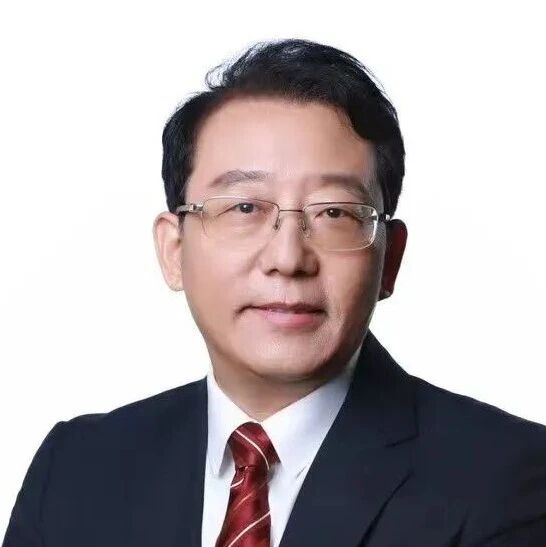
专访全国人大代表冯兴亚:汽车、低空经济与人形机器人要融合发展
21世纪经济报道· 2026-03-06 06:37
Core Viewpoint - The article emphasizes the importance of accelerating the development of legal regulations and standards for autonomous driving to facilitate the large-scale deployment of autonomous vehicles in China [1]. Group 1: Autonomous Driving and Technology Development - Multiple representatives at the National People's Congress highlighted autonomous driving as a key topic, with suggestions to advance policies from L2 to L4 levels while simplifying L3 [1]. - Morgan Stanley's report indicates that global automotive giants like Tesla will face competition from capable Chinese companies like Xpeng in the autonomous driving technology space [1]. - GAC Group's chairman, Feng Xingya, advocates for the integration of smart vehicles with low-altitude economy and humanoid robots, aiming to leverage the potential of low-altitude economic development [1]. Group 2: GAC's Strategic Initiatives - GAC has a mature supply chain and technology in the automotive sector, with over 70% of its components reusable in flying cars [2]. - The company is undergoing a transformation called "Panyu Action," focusing on self-revolution and integrated operations for its brands [2][12]. - GAC aims to enhance its market responsiveness and customer satisfaction through a customer-centric organizational transformation [14]. Group 3: Global Expansion and Ecosystem Building - GAC plans to expand its global footprint, transitioning from product exports to a comprehensive industry chain export model by 2026 [3]. - The company has seen a 47% year-on-year increase in overseas sales, with significant growth in new markets [18]. - GAC is actively building partnerships with leading companies like Huawei and Alibaba to enhance its technological capabilities and create a robust ecosystem [17]. Group 4: Innovation in Robotics and Low-Altitude Economy - GAC's humanoid robot, GoMate Mini, is set for small-scale production in March 2026, targeting the security sector as its initial application [9][8]. - The company is leveraging its experience in autonomous driving data collection to enhance the development of its humanoid robots [8]. - GAC's flying car, GOVY AirCab, has received nearly 2,000 orders and is expected to begin deliveries in 2026, showcasing the company's rapid production capabilities [10].
特斯拉的对手,不是比亚迪、不是理想、不是小米、更不是蔚来,而是它:卖车是副业,技术才是王牌!
Xin Lang Cai Jing· 2026-03-05 23:33
Core Insights - Morgan Stanley's report highlights a significant misjudgment in the global capital markets regarding XPeng Motors, indicating that the company is shifting its focus from merely selling cars to developing a comprehensive autonomous driving "operating system" [1][3]. Group 1: Technological Advancements - XPeng's second-generation VLA (Vision-Language-Action) model, launched in March 2026, is defined as the world's first "physical world large model," achieving a 12-fold increase in inference speed and reducing response latency from 200 milliseconds to 80 milliseconds, which translates to a nearly 3-meter reduction in braking distance at 80 km/h [3]. - In comparative tests, XPeng's VLA 2.0 required only one takeover in complex driving scenarios, while Tesla's FSD needed five, indicating a significant technological leap and a shift in competitive logic [3]. Group 2: Business Strategy - In July 2023, Volkswagen invested approximately $700 million in XPeng for a 4.99% stake to co-develop two B-class electric vehicles, which has evolved into a strategic partnership where Volkswagen acts as the first external customer for XPeng's VLA 2.0 technology [5][6]. - XPeng's revenue model is tied to sales through a "technology service fee," with projections suggesting that software revenue could exceed 20 billion yuan by 2027 [6]. Group 3: Market Valuation - The current market valuation of XPeng reflects only its status as an "automaker," failing to account for its technology licensing and Robotaxi business, which are undervalued at zero [11]. - Morgan Stanley notes a "cognitive framework mismatch," as the market evaluates XPeng using manufacturing industry P/E ratios, while the company is transitioning to a high-margin, replicable software and technology licensing platform [11]. Group 4: Future Vision - XPeng's ambitions extend beyond autonomous driving, aiming to create a "physical AI ecosystem" based on the VLA model, which includes plans for Robotaxi operations, flying cars, and humanoid robots, with the goal of becoming the first company to mass-produce these technologies in the same year [12][14][15]. - The competition with Tesla is framed as a battle for defining the next generation of human-machine interaction, with XPeng positioning itself as a potential "arms dealer" for autonomous technology [8][20]. Group 5: Structural Risks - Morgan Stanley assigns a 30% valuation weight to the potential success of XPeng's technology licensing, highlighting risks if the technology does not expand beyond Volkswagen or if Robotaxi scaling faces obstacles [18]. - The company's value is described as being in a "Schrödinger's cat" state, dependent on key signals such as the emergence of a second OEM customer, Robotaxi operational metrics, and the stability of cash flow from dual-power models [18][19].

中泰国际每日晨讯-20260305
ZHONGTAI INTERNATIONAL SECURITIES· 2026-03-05 02:12
Market Performance - The Hang Seng Index closed at 25,249.48 points, down 2.0% from the previous day[1] - The Hang Seng China Enterprises Index closed at 8,483.95 points, down 1.5%[1] - Total turnover in Hong Kong stocks was HKD 364.3 billion, a decrease of 1.7% from HKD 370.5 billion the previous day[1] Sector Performance - The technology, telecommunications, and materials sectors fell by 0.4%, 0.5%, and 0.8% respectively[1] - The composite enterprises, financial, and healthcare sectors declined by 4.0%, 2.9%, and 2.4% respectively[1] - China Hongqiao (1378 HK) and Xinyi Solar (968 HK) led the blue-chip gainers, rising by 6.0% and 4.2% respectively[1] - AIA Group (1299 HK) and WuXi Biologics (2269 HK) were the biggest losers, falling by 4.8% and 4.6% respectively[1] Commodity Prices - Gold prices returned to above USD 5,100[2] - WTI crude oil prices fluctuated around USD 76[2] - TTF natural gas futures fell to EUR 50[2] Economic Indicators - China's manufacturing PMI for February was 49.0, down from 49.3 in January and below the market forecast of 49.1[3] - Hong Kong's retail sales in January increased by 5.5% year-on-year, lower than December's 6.6% but above the forecast of 4.2%[3] - Japan's consumer confidence index for February was 40.0, up from 37.9 in January and above the forecast of 38.2[3] - The US ISM services PMI for February was 56.1, higher than January's 53.8 and the forecast of 53.5[3] Industry Developments - The automotive sector in Hong Kong saw most stocks decline, except for autonomous driving chip stocks which saw slight increases[4] - NAND flash memory prices are expected to rise by 85%-90% quarter-on-quarter due to supply-demand imbalance[4] - China Biologic Products (1177 HK) announced a global licensing agreement with Sanofi, receiving an upfront payment of USD 135 million and potential milestone payments of up to USD 1.395 billion[5]
