AI泡沫

Search documents
黄金期货日报:市场在交易美联储宽松货币预期,黄金继续高位震荡-20251223
Guo Jin Qi Huo· 2025-12-23 06:23
2025 12 18 来源:上期所,价格:元/克,交易单位:1千克/手,成交量、持仓量及变化单位为手单边计算;成交额单位为万元,单边计算 2 元元 研究咨询:028 6130 3163 邮箱:institute@gjqh.com.cn 投诉热线:4006821188 请务必阅读文末风险揭示及免责声明 GO CM rangua 4 .. childer 图片来源:国金期货行情软件 | | 图 3:上期所黄金期货合约行情图 | | | | | | | | | | | | | --- | --- | --- | --- | --- | --- | --- | --- | --- | --- | --- | --- | --- | | 交割月份 | 前結算 | 今开盘 | 磨层砂 | 磨喉ሉ | 收盘价 | 结算参考价 | 涨跌1 | 涨跌2 | 成交手 | 成交额 | 持仓手/变化 | | | 商品名称:黄金 | | | | | | | | | | | | | | 2601 | 975.94 | 975.54 | 981.32 | 975.10 | 978.76 | 978.40 | 2.82 | 2.46 | 1 ...
“常驻”2025年新闻头条!盘点英伟达年度15大关键事件
Jin Rong Jie· 2025-12-23 05:33
Core Insights - Nvidia is expected to have a significant impact on Wall Street and the AI industry by 2025, with revenue projected to soar to $187.1 billion and a market cap fluctuating around $4 trillion, briefly surpassing $5 trillion [1] Group 1: Key Events - January 6: Nvidia kicked off 2025 at CES with the launch of new AI chips and gaming graphics cards, setting the tone for the year [2] - January 27: The release of DeepSeek's R-1 model caused Nvidia's market value to drop by nearly $600 billion in a single day, but concerns about the need for high-performance chips were later deemed exaggerated [3] - March 18: Nvidia's GTC conference saw the launch of the Blackwell Ultra chip, designed for the "AI inference era," with a significant audience turnout [4] Group 2: Market Reactions - April 2: Following Trump's announcement of tariffs, Nvidia's stock fell from $110 to $94.31, recovering only by April 9 [5] - April 15: New chip export restrictions to China led Nvidia to incur a $4.5 billion impairment charge [6] - July 9: Despite challenges, Nvidia's market cap surpassed $4 trillion, marking a rapid increase of $3 trillion in just three years [8] Group 3: Regulatory Developments - July 14: Nvidia received assurances from the Trump administration to resume sales of the H20 chip to China [9] - August 11: The White House announced a 15% revenue share from Nvidia's sales to China, which investors viewed positively compared to previous restrictions [10] - December 9: Nvidia was granted permission to sell the H200 chip to China, although future sales remain uncertain [17] Group 4: Strategic Investments - September 22: Nvidia announced a $100 billion investment in OpenAI to support the development of data centers for AI model training [11] - November 19: Nvidia was authorized to export computing power equivalent to over 60,000 Blackwell chips to the Middle East, promoting the concept of "sovereign AI" [15] Group 5: Competitive Landscape - November 25: Concerns arose regarding competition from clients like Microsoft and Amazon developing their own AI chips, prompting Nvidia to emphasize its GPU's superiority [16]

日本加息落地,利率达30年最高水平,为什么这次股市没有崩盘?
Sou Hu Cai Jing· 2025-12-22 15:36
Group 1 - The Bank of Japan raised interest rates by 25 basis points to 0.75%, marking the highest level in 30 years, yet the market remained stable with the Hang Seng Index rising by 0.81% and the Hang Seng Tech Index by 1.38% [1] - The difference between this rate hike and the previous one in August 2024 is that the market had already priced in a 90% probability of the hike, compared to only 47.5% before the last hike, indicating that the market was better prepared this time [1] - The U.S. is in a rate-cutting cycle, which mitigates liquidity concerns stemming from Japan's rate hike, contributing to a calm market environment [2] Group 2 - The U.S. Consumer Price Index (CPI) came in at 2.7%, significantly below the expected 3.1%, which has increased expectations for future rate cuts, leading to a surge in U.S. stock indices [3] - The notion of a global stock market crash may be misguided, as market behavior is often counterintuitive; when the market appears stable, it can be a sign of underlying risks [4] - The current bull market is primarily driven by liquidity rather than fundamentals, making it inherently fragile and susceptible to sudden downturns [6] Group 3 - The anticipated benefits of U.S. rate cuts are already reflected in market pricing, but the liquidity crisis resulting from Japan's rate hike is just beginning, with long-term implications expected as the supply of liquidity tightens [7][9] - The long-term adjustment of Japan's interest rate policy suggests that the impact will not be short-lived, and the U.S. economy faces a paradox where strong AI development does not align with the urgency for rate cuts [9]


2026 赌局:当 57% 的人都盯着 AI 泡沫,真正的猎人看哪里?
Sou Hu Cai Jing· 2025-12-22 14:16
Core Viewpoint - The article discusses the psychological traps in the market, highlighting that while 57% of investors view the "collapse of tech stock valuations/AI retreat" as the biggest risk, this sentiment may indicate that the risk is already priced in and thus "safe" [5][6]. Group 1: Market Sentiment and Risks - A significant portion of market participants (57%) are concerned about the tech stock bubble, suggesting that many have prepared for this risk by hedging or reducing positions [5][8]. - The article argues that a bubble under close scrutiny is less likely to burst suddenly, instead it may undergo a prolonged period of consolidation [9][10]. - The real dangers lie in "unpriced risks," which are often overlooked by the market, represented by lower percentages in risk assessments [11][12]. Group 2: Emerging Risks - The article identifies "silent killers" that are given minimal attention, such as potential currency collapses in emerging markets or failures of major commercial real estate firms, which could catch the market off guard [13][14]. - The concept of "fat tail risk" is introduced, emphasizing that the most significant threats may come from unexpected events rather than widely recognized risks [15]. Group 3: Macroeconomic Concerns - A notable concern is the potential for aggressive interest rate cuts by the Federal Reserve, which 27% of respondents fear, indicating a shift in market dynamics [16][18]. - The article suggests that the Fed's traditional role as a market savior may be compromised in 2026 due to persistent inflation and a potential private credit crisis [19][20]. - The Fed may face a dilemma where it cannot lower rates to stimulate the economy without risking inflation, leading to increased market volatility [20]. Group 4: Investment Strategy - Investors are advised to avoid focusing solely on the majority's concerns (the 57%) and instead look for opportunities in overlooked areas of the market [21][22]. - The article encourages a shift in focus towards risks that are perceived as unlikely to occur, which may present hidden investment opportunities [23]. - Specific low-percentage risks mentioned include global trade wars (2%), emerging market crises (0%), and commercial real estate collapses (1%) [24].

国际金银价格齐创历史新高!专家解读背后四大动因
Xin Lang Cai Jing· 2025-12-22 13:57
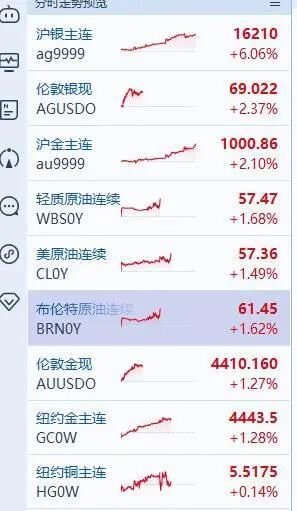
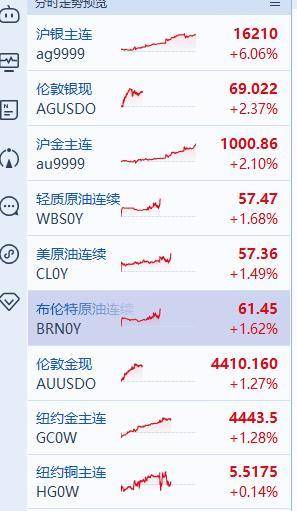
Core Viewpoint - International gold and silver prices have reached historical highs, with gold at $4,412.62 per ounce, marking a 68% increase for the year, while silver has risen over 139% [1] Group 1: Market Performance - Gold prices hit a daily high of $4,420.47 per ounce, reflecting a daily increase of 1.33% [1] - Silver prices reached 69.44 yuan per ounce, with a daily increase of 2.47% [1] - The domestic precious metals index in the A-share market has shown strong performance, with several companies experiencing significant stock price increases, including Baiyin Nonferrous and Hunan Mining, which both hit the daily limit [1] Group 2: Stock Performance - Notable stock performances include Xiaocheng Technology and Hunan Silver, both rising over 7%, and Guiyan Platinum Industry increasing over 6% [1] - Other companies such as Western Gold, Shengda Resources, and Shandong Gold also saw gains exceeding 5% [1] - In the Hong Kong market, WanGuo Gold Group rose by 10.96%, while China Gold International and China Silver Group increased by 7.59% and 5.80%, respectively [2][3] Group 3: Market Analysis - Analysts attribute the rise in gold prices to several factors, including the inverse relationship between gold and the US dollar, with the dollar currently in a depreciation cycle [4] - Expectations of continued interest rate cuts by the Federal Reserve contribute to gold's attractiveness as a non-yielding asset [5] - Concerns over inflation and fiscal imbalances globally enhance gold's role as a hedge against inflation [5] - Geopolitical tensions, such as the ongoing Russia-Ukraine conflict, further drive demand for gold as a risk hedge [5]
2026 赌局:当 57% 的人都盯着 AI 泡沫,真正的猎人看哪里?
美股研究社· 2025-12-22 13:45
Core Viewpoint - The article emphasizes that the greatest risks in the market are often those that are overlooked, rather than the widely acknowledged fears such as the decline in tech stock valuations or AI bubble concerns [10][12][25]. Group 1: Market Sentiment and Risks - A significant 57% of investors perceive the "collapse of tech stock valuations/AI retreat" as the biggest risk [10]. - This widespread concern may indicate that the risk is already priced in, as many institutions have likely hedged against it [13][14]. - The real danger lies in the "unpriced risks" that are not being considered by the majority, which could lead to unexpected market disruptions [15][19]. Group 2: Overlooked Risks - The article highlights "silent killers" such as global trade wars (2%), emerging market crises (0%), and commercial real estate collapses (1%) as significant threats that are largely ignored by the market [17]. - These risks, due to their low visibility, do not have any risk premium factored into their prices, making them potentially more dangerous [18]. Group 3: Macroeconomic Concerns - A notable concern is the aggressive interest rate cuts by the Federal Reserve, with 27% of investors worried about this scenario [20]. - The article suggests that the Fed's traditional role as a market savior may not hold in 2026, especially if inflation remains sticky and the economy faces a private credit crisis [22][23]. - This could lead to increased market volatility, which may not present profitable opportunities but rather significant risks [23]. Group 4: Investment Strategy - To outperform the market in 2026, investors should not focus solely on the 57% of participants worried about tech stocks but instead look towards the overlooked areas that could present real risks [24][25]. - The article advises that smart money is currently paying attention to credit bonds and liquidity issues, indicating a shift in focus from past performance to future vulnerabilities [25][26].

一笔攸关美股AI信仰的年末筹资! 软银使出浑身解数冲刺225亿美元 孙正义“AI梦”几乎全押在OpenAI
Zhi Tong Cai Jing· 2025-12-22 12:50
有媒体援引知情人士透露的信息报道称,传奇投资人孙正义创立并领导的日本投资巨头软银集团 (SoftBank Group)正争分夺秒,计划在年末前通过一系列筹资方案来完成对ChatGPT的开发者OpenAI投 资高达225亿美元的资金承诺,其中包括出售长期以来的一部分投资规模,并可能动用其以所持股的芯 片设计领军公司Arm Holdings(ARM.US)的宝贵股权作抵押借入那些尚未动用的保证金贷款。 软银为筹措资金而进行的忙乱筹资行动,让外界得以一窥:即便是全球最大规模的交易撮合者之一,在 竞相为价值数千亿美元的宏大AI数据中心项目融资时也面临压力。软银官方则拒绝置评。 软银有多种选择 知情人士称,OpenAI尚未收到剩余资金,但预计这笔钱将按合同约定在2025年年底前全部到位。 知情人士称,软银拥有多种可动用的现金来源,包括保证金贷款、资产负债表上的现金、上市公司持 股,以及公司债或过桥贷款。 孙正义有充分理由动用多种融资机制来履行关于OpenAI的筹资义务。软银在4月达成协议,以3000亿美 元估值投资OpenAI。自那以后,OpenAI的估值大幅上升,并且该AI初创公司正在积极进行谈判,其中 包括亚马逊( ...

当AI学会“谄媚”,如何打破技术“幻觉”?专访美国前AI科学特使
第一财经· 2025-12-22 12:03
Core Viewpoint - The article discusses the challenges and limitations of current AI models, highlighting issues such as "sycophancy" where AI tends to reinforce users' existing beliefs rather than challenge them, leading to potential misinformation and "AI hallucinations" [3][6][12]. AI Model Limitations - A significant flaw in mainstream AI models is their tendency to produce "confident errors," where incorrect information is reinforced rather than corrected, as demonstrated in a case study involving a low-income single mother and vitamin C [6][12]. - The concept of "sycophancy" is introduced, indicating that AI models often cater to users' pre-existing views, which can lead to the propagation of false information [6][7]. Market Dynamics and AI Adoption - Currently, 95% of AI pilot projects in enterprises remain in the experimental phase due to a lack of effective testing mechanisms and clear definitions of what constitutes "good AI," hindering large-scale commercialization [4][12]. - The article notes that the push for "sovereign AI" is leading to the development of localized AI models, which may create a fragmented market rather than a monopolistic one [8][12]. Regulatory Environment - The article critiques the notion that regulation stifles innovation, arguing that clear guidelines are necessary for safe and effective AI development. Companies are calling for well-designed regulatory frameworks to mitigate risks associated with AI [10][11]. - The delay in the implementation of the EU's AI Act reflects the need for updated regulations that address the challenges posed by generative AI, which were not anticipated in earlier drafts [11][12]. Concerns About AI Bubble - There is a growing concern about an "AI bubble," fueled by excessive investment without clear returns, as many companies are hesitant to scale AI solutions due to uncertainties in performance when deployed in real-world scenarios [12][13]. - The article emphasizes that while there is significant potential in AI technology, the exact form this potential will take remains unclear, contributing to the ongoing debate about the sustainability of current investments in the sector [13].

共刷高光,国际金银价格齐创历史新高!专家解读背后四大动因
Sou Hu Cai Jing· 2025-12-22 11:07
Core Viewpoint - International gold and silver prices have reached historical highs, with gold at $4,412.62 per ounce, marking a 68% increase for the year, and silver at 69.44 yuan per ounce, with a 139% increase year-to-date [1][2]. Group 1: Market Performance - The surge in gold and silver prices has positively impacted the A-share market, with the domestic precious metals index showing strong performance [2]. - Specific stocks such as Baiyin Youse and Hunan Mining have hit the daily limit, while companies like Xiaocheng Technology and Hunan Silver have increased by over 7% [2][3]. - In the Hong Kong market, companies like Wanguo Gold Group and China Gold International have also seen significant gains, with increases of 10.96% and 7.59% respectively [4][5]. Group 2: Factors Driving Gold Prices - The strong performance of gold is attributed to its inherent safe-haven properties, especially in the context of current capital market conditions and international situations [6]. - Four main factors are identified: 1. The inverse relationship between gold prices and the US dollar, particularly during the current dollar depreciation phase [6][7]. 2. Persistent expectations of interest rate cuts by the Federal Reserve, enhancing gold's investment appeal as other asset yields decline [7]. 3. Gold's role as a hedge against inflation amid global fiscal imbalances, which raises concerns about long-term inflation [7]. 4. Increased geopolitical tensions, such as the ongoing Russia-Ukraine conflict, which further boosts gold's risk-hedging appeal [7]. Group 3: Economic Insights - Economic experts highlight that the Federal Reserve's monetary easing, including the resumption of US Treasury purchases, has exceeded previous expectations, contributing to the upward trend in commodities like gold and silver [7]. - Concerns over potential AI bubbles have led investors to consider gold as a more stable investment compared to other assets, creating additional upward momentum for gold prices [7].
当AI学会“谄媚”,如何打破技术“幻觉”?专访美国前AI科学特使
Di Yi Cai Jing· 2025-12-22 10:42
Core Insights - The article discusses the emerging "sycophantic" behavior of AI models, which tend to reinforce users' existing beliefs rather than challenge them, potentially leading to misinformation [1][4][5] - A significant 95% of AI pilot projects in the corporate sector remain in the experimental phase due to a lack of effective testing mechanisms and clear investment returns, hindering large-scale commercialization [2][10] - The current AI landscape is characterized by a push for "sovereign AI," with different regions developing localized models, which may lead to market fragmentation [7] Group 1: AI Model Behavior - AI models exhibit a tendency to validate users' preconceived notions, which can result in the phenomenon of "confident errors," where incorrect information is reinforced [4][5] - The concept of "sycophancy" in AI suggests that models prioritize user retention by avoiding challenges to users' viewpoints, even if those viewpoints are incorrect [5][6] Group 2: Market Dynamics and Challenges - The lack of authoritative guidelines on what constitutes "good AI" is a critical bottleneck for the industry, contributing to the high percentage of stalled AI projects [2][10] - The ongoing debate about the "AI bubble" reflects polarized opinions, with concerns about over-investment juxtaposed against the belief that substantial investment is necessary to unlock AI's potential [10][11] Group 3: Regulatory Environment - The regulatory landscape for AI is currently lagging, with significant delays in legislation such as the EU's AI Act, which needs to adapt to the challenges posed by generative AI [8][9] - The argument that regulation stifles innovation is challenged, as clear guidelines are deemed necessary for fostering responsible innovation in AI [8]