AI投资

Search documents
电子掘金:再谈AI投资,我们的信心从何而来?
2025-11-24 01:46
Summary of Conference Call Notes Company and Industry Involved - **Company**: NVIDIA - **Industry**: AI Hardware and Cloud Computing Key Points and Arguments NVIDIA's Financial Performance - NVIDIA reported a revenue of **$57 billion**, with a year-over-year increase of over **60%** and a quarter-over-quarter increase of over **20%** [1][2] - The Non-GAAP gross margin was **73.6%**, showing strong performance despite a year-over-year decline due to product mix differences [1][2] - The company expects a median revenue of **$65 billion** for the fourth quarter, exceeding market expectations [1][2] Future Revenue Projections - NVIDIA forecasts total revenue of **$500 billion** for 2025 and 2026, including revenue from Blackwell and Rooming architecture GPUs and networking [1][4] - The company believes that the depreciation cycle for GPUs is reasonable and stable over **4-5 years** or longer, with high utilization and margins for the A100 chip [1][4][5] AI Investment Confidence - Despite recent market sentiment being extreme and showing a lack of confidence in AI investments, NVIDIA maintains that if AI-related performance continues to meet expectations in 2026, both overseas and domestic computing power targets will remain important investment directions [2][7] - The AI capital expenditure from the four major North American cloud providers is expected to maintain a high growth rate of **40%-50%** in 2026 [6] AI Hardware Market Trends - The global AI hardware market shows optimistic trends, with rising prices for commodities and memory reflecting increased demand for AI hardware [2] - New large language models, such as Gemini Pro and Nanobanana, demonstrate significant improvements in model capabilities [2] Optical Communication Sector Insights - The optical communication sector is experiencing tight order conditions, with supply shortages in optical chips, silicon photonic chips, and DSP chips [8][9] - Core suppliers in the upstream are planning price increases, which will benefit leading module manufacturers, enhancing their profitability in 2026 [9] Investment Opportunities - Investment focus should be on appropriately valued upstream targets, leading overseas chain targets with sufficient safety margins after corrections, and companies related to Google’s supply chain, including core suppliers of optical modules and ASIC industry players like Broadcom and Celestica [2][9][11] Market Sentiment and Future Outlook - Recent market sentiment has been negatively impacted by macroeconomic factors, leading to significant adjustments in some domestic targets, particularly in memory-related sectors [7] - Despite current market conditions, there is a strong belief in the fundamental investment in AI computing power, with expectations for performance releases in the coming year [7] Conclusion - Overall, NVIDIA and the AI hardware sector are positioned for growth, with strong revenue projections and a positive outlook for capital expenditures, despite current market volatility and sentiment challenges [6][10]

财信证券晨会纪要-20251124
Caixin Securities· 2025-11-23 23:33
Market Strategy - The report suggests maintaining caution in the short term and waiting for market stabilization [5][9] - The overall A-share market has seen a decline, with the Wind All A Index dropping by 3.17% to 6030.56 points, and various indices reflecting similar downward trends [7][8] Economic Insights - In October, the total electricity consumption in China increased by 10.4% year-on-year, reaching 857.2 billion kWh [15][16] - The breakdown of electricity consumption shows significant growth in the tertiary industry, particularly in charging services and information technology sectors [16] Industry Dynamics - A meeting was held to promote stable livestock production, noting that the number of breeding sows fell below 40 million by the end of October [25] - The report highlights the importance of monitoring the livestock sector for potential price stabilization due to production adjustments [25] Company Updates - Baili Tianheng (688506.SH) received acceptance for its drug application for the first-in-class EGFR×HER3 dual antibody ADC for treating advanced nasopharyngeal carcinoma [27][28] - Jindi Co., Ltd. (603270.SH) signed a strategic cooperation agreement with Dongpei Co., Ltd. to collaborate on humanoid robot harmonic reducer assemblies [29][30] - Shuanglin Co., Ltd. (300100.SZ) successfully secured small batch orders for ball screws and roller screws through negotiations with a leading foreign screw manufacturer [31][32] Local Economic Developments - Hengguang Co., Ltd. (301118.SZ) reported a reduction in shareholding by a major shareholder, which did not significantly impact the company's governance structure [33] - The Hunan provincial government launched the first phase of its public data circulation infrastructure, marking a significant step in digital economic development [34]
Sparrow: AMZN, WMT to Gain Share in Holiday Shopping with "Smaller Ticket Items"
Youtube· 2025-11-23 21:00
Market Outlook - The market is expected to experience a 1 to 2% upward bias due to the resumption of purchases by pension plans and 401k accounts, often referred to as the "Santa Claus rally" [2] - Concerns about the AI bubble persist, with notable declines in companies like SoftBank, which dropped 10% [3][4] - The technology sector remains a focal point, with expectations for sales and margin expansion in AI investments, particularly for companies like Alphabet and Netflix [5][6] Consumer Spending Trends - Anticipated holiday spending is projected to grow between 2% and 7% year-over-year, with a more conservative estimate of 3% to 4% growth [9] - Consumers are expected to spend significantly on consumables and clothing, benefiting companies like Amazon and Walmart, especially during Black Friday and year-end promotions [10][11] - Amazon and Walmart are anticipated to gain market share from higher-priced retailers, as evidenced by Target's recent performance [11] Company-Specific Insights - The AI investments in Google and Netflix are expected to enhance their revenues by attracting more advertisers and viewers [12] - The market's reaction to potential rate cuts by the Federal Reserve is significant, with a focus on how such announcements could influence market sentiment [14]


财信证券宏观策略周报(11.24-11.28):短期保持谨慎,静待市场企稳-20251123
Caixin Securities· 2025-11-23 12:36
Group 1 - The report suggests maintaining a cautious stance in the short term while waiting for market stabilization signals, as the A-share market has recently experienced downward adjustments influenced by overseas market fluctuations [4][7][12] - It is anticipated that institutional funds will gradually start positioning for 2026 after mid-December, coinciding with the Central Economic Work Conference, which typically provides guidance for the following year's economic direction [4][7][12] - The report expresses confidence in the medium to long-term market outlook, asserting that the current bull market in A-shares has not ended, with expectations for a new buying opportunity window around mid-December [4][8][12] Group 2 - Investment recommendations include focusing on high-dividend large-cap blue chips, new consumption sectors, "anti-involution" industries, and AI application directions [13][12] - Specific sectors to watch include banking, insurance, public utilities, transportation, health, cultural tourism, sports, beauty care, IP economy, pet economy, and cultural entertainment [13][12] - The report highlights the rapid growth in public budget expenditures, particularly in social security and employment, energy conservation, and scientific technology, indicating a shift towards supporting livelihoods, environmental protection, and technology [8][9] Group 3 - The report notes that the A-share market has shown a wide range of fluctuations, with the Shanghai Composite Index down 3.90% and the Shenzhen Component Index down 5.13% in the last week [14][15] - The report indicates that the average daily trading volume in the Shanghai and Shenzhen markets decreased by 8.67% compared to the previous week, reflecting a decline in market activity [14][15] - The report also mentions that the market sentiment remains cautious, with large-cap stocks showing relative strength compared to smaller stocks during this period of adjustment [14][15]
德国经济面临的结构性挑战:从出口引擎到转型阵痛
Di Yi Cai Jing· 2025-11-23 12:14
Economic Overview - Germany's economy is at a crossroads, facing manufacturing recession, collapsing exports, expanding debt, and technological lag [1][16] - The GDP growth forecast for 2025 is only 0.2%, significantly lower than the Eurozone average of 0.8% [2][7] - Structural issues are deeply rooted, including a collapsing export model, declining manufacturing competitiveness, and a lack of digital transformation [2][8] Manufacturing Sector Challenges - The manufacturing sector, which accounts for about 20% of GDP, is in crisis, particularly the automotive industry, which contributes 5% of GDP and employs 800,000 directly [3][4] - Major automotive companies like Porsche and Volkswagen are experiencing severe profit declines and production halts due to supply chain disruptions and high costs associated with electric vehicle (EV) transitions [3][4] - The automotive industry's export has decreased by 8% in the first three quarters of 2025, with EV penetration at only 18%, far below the EU target of 25% [4][11] Small and Medium Enterprises (SMEs) Struggles - SMEs are facing a dire situation, with a 12.2% increase in bankruptcy rates in the first half of 2025 compared to 2024 [5] - The mechanical engineering sector's orders have plummeted by over 20%, with 33% of SMEs rating the current situation as "bad" or "very bad" [5][11] - The overall manufacturing output has declined by 10% in the first three quarters of 2025, indicating a broader manufacturing recession [5][11] Export Market Decline - Germany's export model, which heavily relies on high-end products, is collapsing, with total exports expected to shrink by 2% to 3% in 2025 [9][11] - The U.S. market has seen a significant drop in exports, with a 20% decline in August 2025 due to high tariffs [10] - The Chinese market is also becoming a challenge, with local brands capturing a significant market share, leading to a 13.5% decline in automotive exports to China [10][11] Fiscal Policy Adjustments - The German government has adjusted its strict fiscal discipline to allow for a special fund of €500 billion for defense and infrastructure, which is independent of the debt brake [12][13] - This fund aims to stimulate short-term growth, with infrastructure investments expected to rise by 15% in 2025 [13] - However, long-term risks remain, as additional debt could lead to increased interest burdens if growth does not exceed 1% [13][14] Technological Transition Issues - Germany is lagging in the digital revolution, with only 2% of global AI investment, despite being a leader in Industry 4.0 [15][16] - The manufacturing cost index has risen by 25% since 2022, leading to a 15% decline in export competitiveness [15] - The government is attempting to attract talent and investment in AI, with a €55 billion investment from Google expected to contribute significantly to GDP and job creation [16]
【美股周评】12月降息与否成悬念,上周美股整体承压
Xin Lang Cai Jing· 2025-11-23 11:57
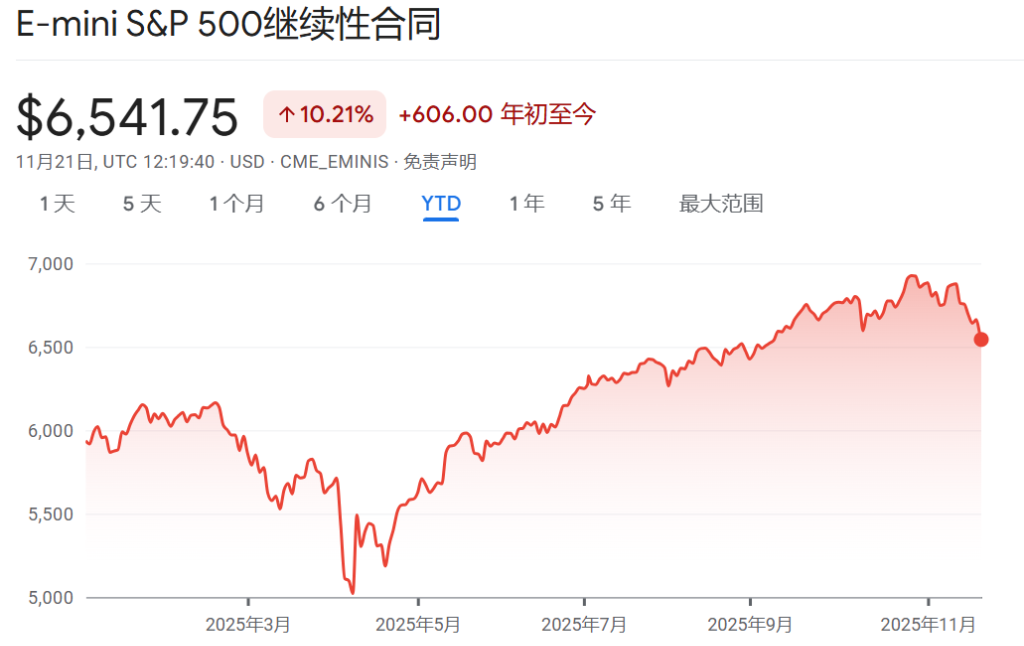
Market Performance - U.S. stock markets faced significant pressure last week, with the Dow Jones down 1.91%, S&P 500 down 1.95%, and Nasdaq down 2.74% [1] - The S&P and Nasdaq indices fell approximately 5.5% and 8.5% from recent peaks, respectively, indicating bearish short-term signals [1] - Implied volatility for one month reached a monthly high, reflecting widespread market anxiety [1] Cryptocurrency Market - The cryptocurrency market experienced even worse conditions, with Bitcoin dropping to around $83,000, a 35% decline from its historical peak of $126,000 [1] - Bitcoin's price fell 18% last week, marking the strongest weekly decline since mid-November 2022 [1] - November is expected to record the worst monthly performance since the market correction in June 2022 [1] Federal Reserve Insights - The October meeting minutes of the Federal Reserve revealed intense internal debates regarding the possibility of a rate cut in December [2] - Stronger-than-expected non-farm payroll data for September complicated the outlook, with futures traders raising the probability of a December rate cut to over 70%, nearly doubling from below 40% after the non-farm data [2] - The cancellation of the October employment report and the delay of the October CPI report may impact the Fed's decision-making process ahead of the December meeting [2] AI Stock Concerns - Recent market declines were partly driven by concerns over high valuations of AI stocks, leading to skepticism about AI investment returns [2] - Nvidia's strong earnings report, which exceeded market expectations for Q3 revenue and Q4 sales, initially boosted market sentiment [2] - However, the market experienced a severe intraday reversal, resulting in over $2.7 trillion in market value evaporating, with the VIX volatility index rising above 26 for the first time since April [2] Upcoming Economic Data - The upcoming week is crucial for U.S. economic data due to the Thanksgiving holiday, with key reports expected in the first three days [3] - Market attention is focused on the September Producer Price Index (PPI) and consumer confidence index, as well as initial jobless claims data on Wednesday [3] - The significance of the weekly initial jobless claims data is heightened due to the absence of a complete October non-farm employment report [3]
美银Hartnett:一切都达到“流动性峰值” 美联储将被迫“投降” 比特币率先嗅探救市信号
智通财经网· 2025-11-23 11:19
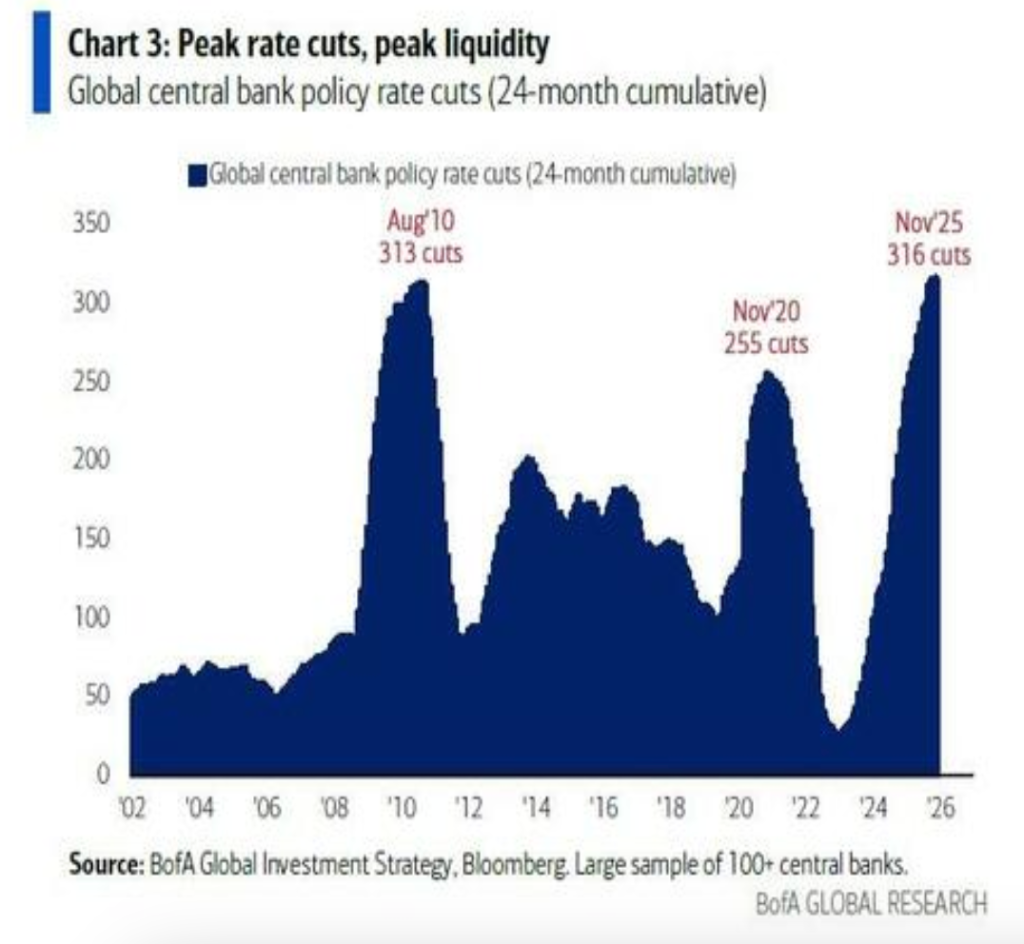
Group 1 - The market is experiencing significant divergence in expectations regarding the Federal Reserve's interest rate path for December, with previous optimism about rate cuts being tempered by recent hawkish statements from the Fed [1][4] - Michael Hartnett from Bank of America indicates that tightening liquidity is impacting multiple asset classes, suggesting that the cryptocurrency market will be the first to sense a shift in central bank policy [1][7] - Hartnett predicts that the current weakness in U.S. bank stocks is signaling a potential shift towards easing monetary policy, similar to signals observed in December 2018 [1][4] Group 2 - Hartnett forecasts that the Federal Reserve will likely initiate a rate-cutting cycle in 2026, benefiting long-duration zero-coupon bonds, Bitcoin, and mid-cap stocks [2] - Japan is facing a debt crisis, with a significant decline in 30-year government bonds and the yen nearing a 40-year low against the dollar, raising global liquidity concerns [3] - The combination of expansive fiscal policy and loose monetary policy in Japan is exacerbating the depreciation of the yen and pressure on government bonds [3] Group 3 - U.S. mid-cap stocks are showing a notable divergence in valuation and performance, indicating that the Fed's policy adjustments are lagging behind market demands [4] - The decline in bank and brokerage indices, which are sensitive to liquidity, serves as a leading indicator for potential policy shifts [4] - Hartnett emphasizes that the cryptocurrency market, particularly Bitcoin, will act as an early warning system for changes in central bank policy due to its sensitivity to liquidity changes [7][8]

量化选股策略周报:本周市场普跌,指增组合收益承压-20251122
CAITONG SECURITIES· 2025-11-22 11:04
Core Insights - The report emphasizes the construction of an AI-based low-frequency index enhancement strategy using deep learning frameworks to build alpha and risk models [3] Market Index Performance - As of November 21, 2025, the Shanghai Composite Index fell by 3.90%, the Shenzhen Component Index decreased by 5.13%, and the CSI 300 dropped by 3.77%, indicating a significant decline in market sentiment [5][8] - Year-to-date performance shows the CSI 300 Index has risen by 13.2%, while the CSI 300 enhanced portfolio has increased by 23.7%, resulting in an excess return of 10.5% [20] Index Enhancement Fund Performance - For the week ending November 21, 2025, the CSI 300 index enhancement fund reported an excess return ranging from -1.07% (minimum) to 3.22% (maximum), with a median of 0.29% [12][13] - Year-to-date, the CSI 500 index has increased by 19.1%, while the enhanced portfolio has risen by 26.7%, yielding an excess return of 7.7% [25][26] Tracking Portfolio Performance - The report outlines the construction of enhanced portfolios for the CSI 300, CSI 500, and CSI 1000 indices using deep learning frameworks, with weekly rebalancing and a maximum turnover rate of 10% [16] - The CSI 1000 index has shown a year-to-date increase of 18.6%, while the enhanced portfolio has risen by 32.9%, resulting in an excess return of 14.2% [37][38]
一文读懂大跌逻辑--高盛“复盘”:美联储转鹰“拉开帷幕”,谷歌而非英伟达重塑“AI交易”,币圈重创散户,最终是“系统性抛售”
美股IPO· 2025-11-21 14:36
Core Viewpoint - The recent market decline is attributed to multiple factors breaking market consensus, including the Federal Reserve's unexpected hawkish stance, the transformative impact of Google's Gemini-3 on the AI landscape, retail investors' shift in sentiment due to cryptocurrency volatility, and systematic selling triggered by quantitative funds [1][2][3]. Group 1: Federal Reserve's Stance - The Federal Reserve's unexpected hawkish shift has led to a rapid withdrawal of rate cut expectations, with the probability of a rate cut in December now deemed "essentially zero" [7][8]. - Recent employment data presents mixed signals, with a rise in unemployment to 4.44% despite steady job growth, raising concerns about the Fed's policy direction [7][9]. Group 2: AI Market Dynamics - The focus of AI investment has shifted from Nvidia to Google's Gemini-3 model, which is seen as a game-changing development that could delay product cycles for other companies and increase capital expenditure [10]. - The market is experiencing a "winner-takes-all" dynamic, with significant differentiation between companies in the AI sector, leading to increased uncertainty in investment returns [10]. Group 3: Cryptocurrency Market Impact - The recent crash in the cryptocurrency market has caused a shift in retail investor behavior from "diamond hands" to active selling, reflecting a significant change in risk appetite [11][12]. - The decline in cryptocurrency values has had a spillover effect on unprofitable tech stocks and AI-related equities, indicating a broader market sentiment shift [12]. Group 4: Systematic Selling Pressure - Systematic funds, particularly trend-following funds (CTAs), have been forced to liquidate positions as market volatility increased, leading to a chain reaction of selling [13][14]. - The market's previously stable low-volatility structure collapsed, resulting in significant price drops without specific news or events triggering them [14]. Group 5: Capital Constraints in AI Expansion - The rising cost of capital is becoming a critical factor for AI investments, with concerns about the corporate debt market and the implications for AI data center financing [15]. - The potential slowdown in AI expansion due to higher capital costs represents a risk that the market has not fully priced in [15]. Group 6: Market Stabilization Conditions - For the market to stabilize, three conditions must be met: clearing of CTA positions, retail investors being squeezed out of excessive long positions, and at least two of the following triggers: stabilization in cryptocurrency, a clear dovish shift from the Fed, or some form of support for AI capital expenditure [17].



一文读懂大跌逻辑--高盛交易员“复盘”:美联储转鹰“拉开帷幕”,谷歌而非英伟达重塑“AI交易”,币圈重创散户,最终是“系统性抛售”
Hua Er Jie Jian Wen· 2025-11-21 12:35
Core Insights - The recent global market decline is attributed to a combination of factors leading to a systemic sell-off, including the Fed's unexpected hawkish stance, internal divisions within the AI sector, a crash in the cryptocurrency market, and concentrated selling pressure from quantitative funds [1][5][8] Group 1: Federal Reserve's Impact - The Fed's subtle shift towards a hawkish stance has surprised analysts, especially given the mixed employment data showing a rise in unemployment to 4.44% despite steady job growth [5] - The market's expectations for a rate cut in December have diminished significantly, with the probability now considered "basically zero" [5] Group 2: AI Sector Dynamics - The focus of AI investment has shifted from Nvidia to Google's Gemini-3 model, which is seen as a game-changer in the AI landscape, causing delays in product cycles and increasing capital expenditure [1][6] - The market is witnessing a "winner-takes-all" dynamic, with significant differentiation between companies based on their AI capabilities [7] Group 3: Cryptocurrency Market Influence - The recent decline in the cryptocurrency market has led to a shift in retail investor behavior from "diamond hands" to active selling, impacting non-profitable tech stocks and AI-related equities [8][9] - The cryptocurrency market is now viewed as a barometer for retail risk appetite, with significant sell-offs triggering broader market declines [8][10] Group 4: Systematic Selling Pressure - Trend-following funds and systematic trading strategies have held over $500 billion in long positions since August, which, once key levels were breached, triggered a wave of selling [9][10] - The market's previously stable low-volatility structure collapsed under the pressure of systematic selling, leading to rapid declines without specific news events [10][11] Group 5: Capital Constraints in AI Expansion - The rising cost of capital is becoming a critical factor for AI investments, with concerns about the corporate debt market and the implications for AI data center financing [12] - The potential slowdown in AI expansion due to increased capital costs is a risk that the market has not fully priced in [12] Group 6: Market Stabilization Conditions - For the market to stabilize, three conditions must be met: clearing of CTA positions, reduction of excessive retail bullishness, and at least two triggers from cryptocurrency stabilization, a clear dovish shift from the Fed, or supportive policies for AI capital expenditure [14]