中美博弈

Search documents
中东,正在成为AI时代的新硅谷
Hu Xiu· 2025-06-26 09:03
Core Points - CambioML, an AI startup, is shifting its focus from Silicon Valley to Dubai, reflecting a broader trend of AI startups relocating to Gulf countries [1][2][3] - The Middle East is emerging as a significant hub for AI development, comparable to Silicon Valley, driven by substantial investments and a favorable business environment [5][6][27] Group 1: Economic Factors - Gulf countries, particularly Saudi Arabia and the UAE, are making massive investments in AI infrastructure, including a $600 billion order for advanced chips from the US and a $200 billion agreement to build the world's largest AI data center in Abu Dhabi [15][42] - The region's wealth, primarily from oil, allows for significant funding in AI initiatives, with energy costs being substantially lower than in Europe and North America [21][20] - The UAE is providing free access to AI tools like ChatGPT Puls for its residents, indicating a commitment to fostering AI adoption [16] Group 2: Geopolitical Dynamics - The US is increasing its presence in the Middle East's AI sector, reversing previous restrictions on chip exports to Gulf countries, which were initially imposed to prevent technology transfer to China [34][39] - High-profile visits from US tech leaders and government officials signal a strategic shift towards collaboration in AI development, with significant investments being made to counter Chinese influence [31][37] Group 3: Business Environment - The Middle East is attracting global talent and investment due to its low tax rates and favorable business policies, such as allowing 100% foreign ownership of companies [60][62] - Initiatives like the Golden Visa in the UAE are designed to attract wealthy individuals and entrepreneurs, further enhancing the region's appeal as a business hub [65][67] - The establishment of numerous AI startups in Dubai and Abu Dhabi highlights the region's growing importance in the global AI landscape, with over 800 AI companies in Dubai alone [71]

中方警告全球:不允许配合!美媒直言:中国已到超越的“分水岭”
Sou Hu Cai Jing· 2025-06-21 19:16
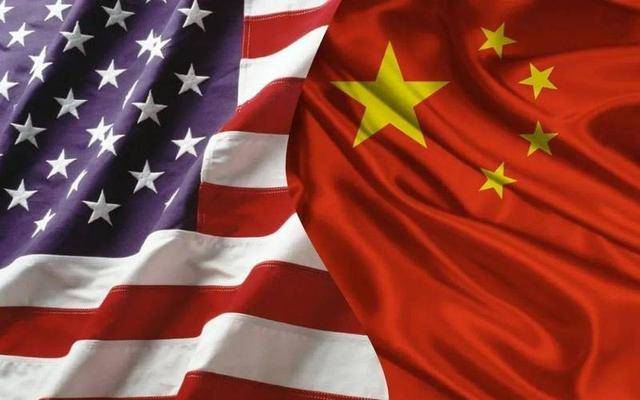
Group 1 - The article highlights the increasing urgency in the U.S. as it perceives China is on the verge of surpassing it, marking a significant turning point in global dynamics under Trump's administration [3][10][31] - The U.S. is concerned about China's advancements in emerging technologies, particularly in areas like artificial intelligence and electric vehicles, where companies like BYD are outperforming Tesla [4][5] - The article argues that Trump's short-sighted policies, particularly the tariff wars, have weakened U.S. innovation and competitiveness, leading to a decline in its global market position [5][27] Group 2 - China is taking a strong stance against U.S. attempts to restrict its advanced technology, warning that any country cooperating with the U.S. will face consequences [12][14] - The Chinese government has enacted laws, such as the Anti-Foreign Sanctions Law, to counteract U.S. sanctions and protect its interests [16] - The article suggests that the U.S. is increasingly resorting to aggressive policies out of fear, as it can no longer rely on its previous advantages in the global market [20][23] Group 3 - The article critiques the notion that Trump's policies are solely responsible for America's decline, arguing that the U.S. would still struggle against China even without these tariffs due to China's growing technological and industrial capabilities [25][30] - It posits that the trend of China's rise and America's decline is inevitable, regardless of who is in power in the U.S. [28][31]
成都场线下分享会感受
老徐抓AI趋势· 2025-06-19 18:59
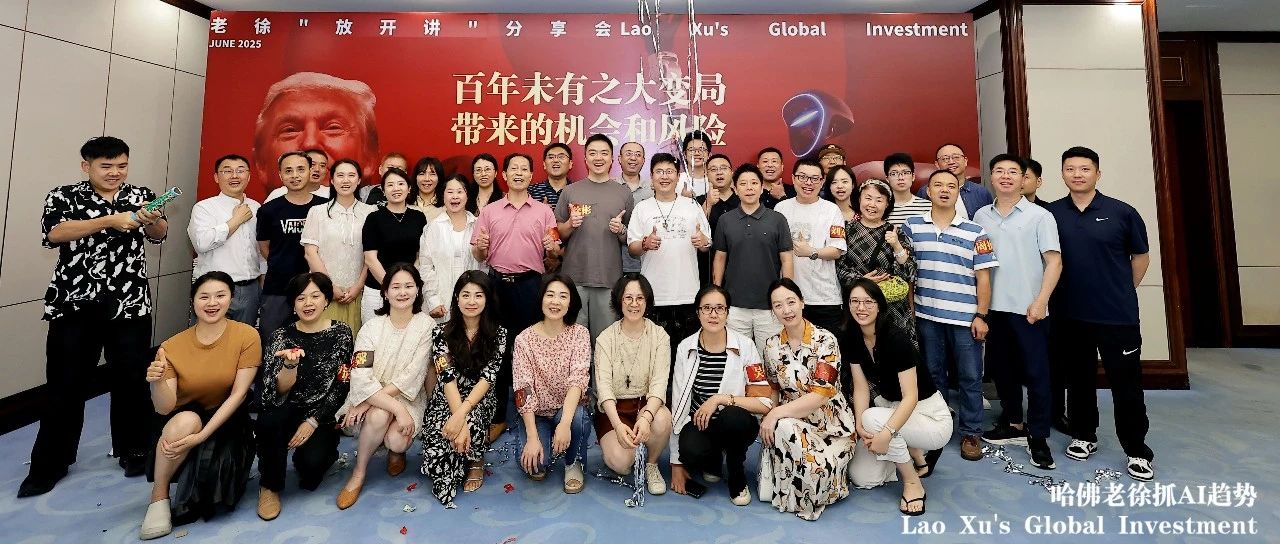
Group 1 - The article emphasizes the importance of adapting to rapid changes in the world, particularly due to the convergence of two significant cycles: US-China relations and AI development [3] - The content shared during the offline meeting included insights on the next hotspots in AI, the current status and outlook of major tech companies like Tesla, Google, and Apple, and the long-term value of stablecoins [6] - The author expresses a more optimistic view on the Chinese economy and the A-share market, indicating a shift in perspective [6] Group 2 - The article highlights the unexpected benefits of offline meetings, such as connecting with young individuals and providing them with alternative ways to engage with AI beyond entrepreneurship and investment [5] - The author plans to hold more offline meetings in various cities, including Shenzhen, Beijing, and Shanghai, indicating ongoing engagement with the audience [11] - A recommended reading list of ten essential books was compiled for attendees, showcasing the author's commitment to providing valuable resources [12]
中国稀土反制让美国傻眼?特朗普芯片禁令成最大败笔,中美博弈新战场曝光!
Sou Hu Cai Jing· 2025-06-18 07:13
Core Viewpoint - The article discusses the escalating tensions between China and the United States over rare earth elements, highlighting China's strategic use of its dominance in this sector to counter U.S. actions, particularly in the technology and defense industries [3][4][8]. Group 1: Rare Earth Supply Chain Dynamics - China's rare earth exports are now subject to a permanent licensing system, complicating U.S. efforts to stockpile and mitigate supply chain issues [3][4]. - The automotive industries in Europe and Japan are facing significant challenges due to rare earth shortages, with companies like Toyota and Honda experiencing urgent inventory crises [3][4]. - U.S. rare earth mining companies are attempting to stockpile resources in anticipation of potential supply disruptions from China [3][4]. Group 2: U.S. Challenges in Rebuilding Supply Chains - The U.S. has struggled to establish a complete rare earth supply chain, with projects like the Round Top in Texas projected to only meet 20% of domestic demand by 2027 [6]. - The ReElement project, aimed at recycling rare earths from electric vehicle batteries, faces high technical and cost barriers, making it an impractical short-term solution [6]. - The U.S. government's attempts to revitalize its rare earth industry through funding and legislation have not yielded significant progress [6]. Group 3: Strategic Implications of the U.S.-China Standoff - The ongoing standoff reflects a complete breakdown of strategic trust between the U.S. and China, with both sides unwilling to make concessions [8]. - The global nature of the rare earth supply chain makes unilateral decoupling unrealistic, as both nations are interdependent [8]. - The article concludes that the rare earth conflict has no clear winners, emphasizing that control over core resources is crucial in the ongoing technological cold war [10].


2025年第二季度即将走完,我国GDP增速能达到多少呢?
Sou Hu Cai Jing· 2025-06-16 10:57
2025年第二季度的最后一个月已走完一半的路程,该出预测文章了——根据当前的多项经济数据分析、解读及展望,南生认为:4至6月的我国GDP实际提 升力度将在4.7%至4.9%区间,取个中位数,4.8%吧。 增速预计维持在4.8%左右,主要依赖三大动能 一是企业对非美市场的拓展获得了巨大的成绩,不仅对冲对美贸易的损失,而得到了更多的收益——以5月份为例:中国对印度尼西亚出口上涨16.8%、对 越南出口上涨18.8%、对泰国出口大涨20.9%,对整个东盟的商品出口金额大涨了12.2%。 2025年5月份,我国对法国出口上涨5.9%,对德国出口金额提升了12.3%,对整个欧盟的出口增长了6.4%;对英国出口上涨7.4%,对加拿大出口上涨8.7%, 对拉美各国的商品出口上涨9.4%…… 对一带一路沿线国家的商品出口金额在今年5月份上涨了9.2%,对非洲各国的商品出口金额大涨了18.9%,并推动:我国5月份的外贸顺差金额暴涨至1032.2 亿美元,同比居然激增了40.3%,创新高。 是不是感到很惊讶啊?特朗普的本意是围剿中国,降低我国的外贸顺差,但结果却是:中国的对外贸易继续高歌猛进,单月顺差金额突破了1000亿美元。若 ...
打了3年,泽连斯基发现上当了,普京早就打好算盘,乌克兰喊话中国
Sou Hu Cai Jing· 2025-06-16 03:11
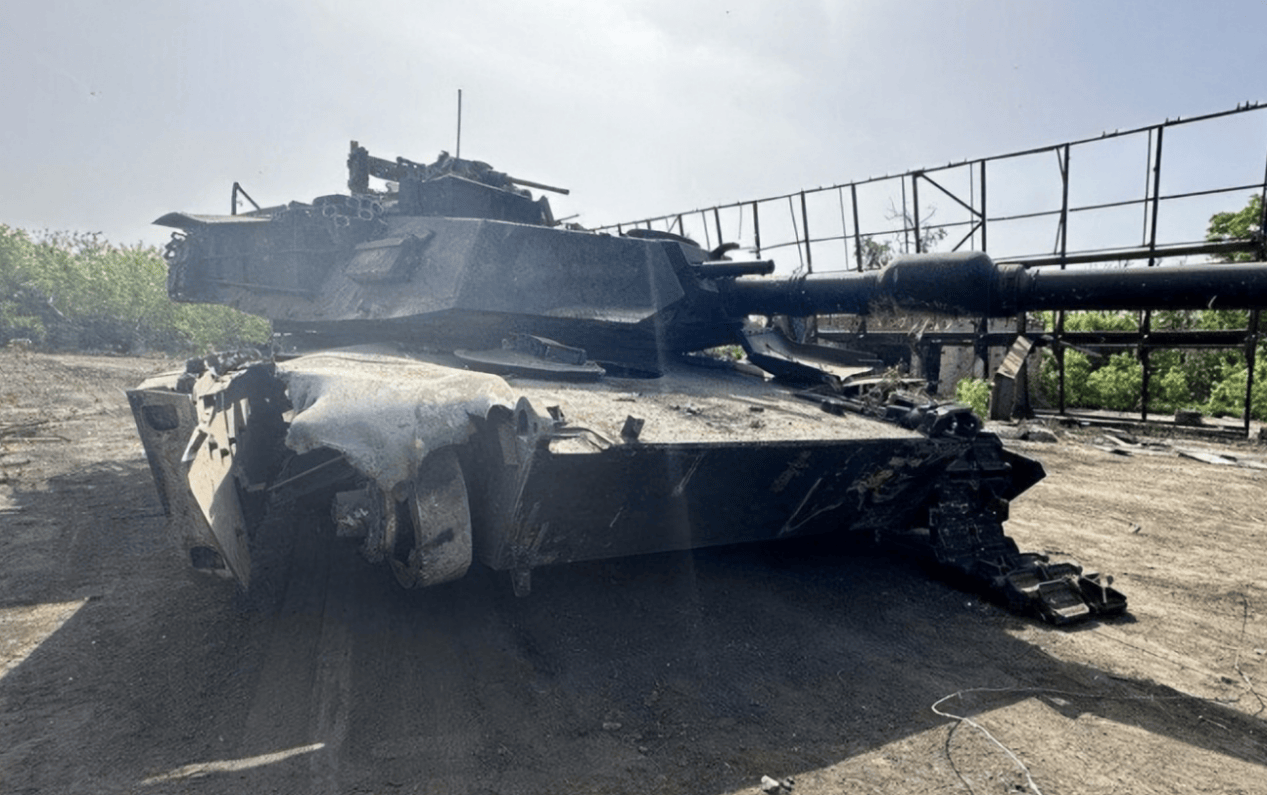
Group 1 - The U.S. government has pressured Ukraine to ensure that Chinese companies are excluded from the Ukrainian rare earth resource market, particularly in post-war reconstruction projects [1] - During recent U.S.-China trade talks, rare earth resources were a significant topic, with the U.S. seeking normal exports of rare earth products from China due to dwindling inventories [1][3] - The U.S. aims to control the rare earth supply chain and prevent China from becoming too strong, while also managing Ukraine's reconstruction efforts [3] Group 2 - China has approved a certain number of rare earth product export applications, indicating a controlled release of exports rather than a blanket ban, enhancing its control over rare earth resource exports [5] - The EU is planning to impose sanctions on two small Chinese banks for allegedly assisting Russia in evading sanctions, marking a significant move against third-country financial institutions [5] - The EU has proposed a new draft of sanctions against Russia, which would be the eighteenth round of sanctions, reflecting ongoing geopolitical tensions [7]
李嘉诚甩卖港口或迎大结局,中国企业出手,特朗普算盘要落空了?
Sou Hu Cai Jing· 2025-06-16 01:25
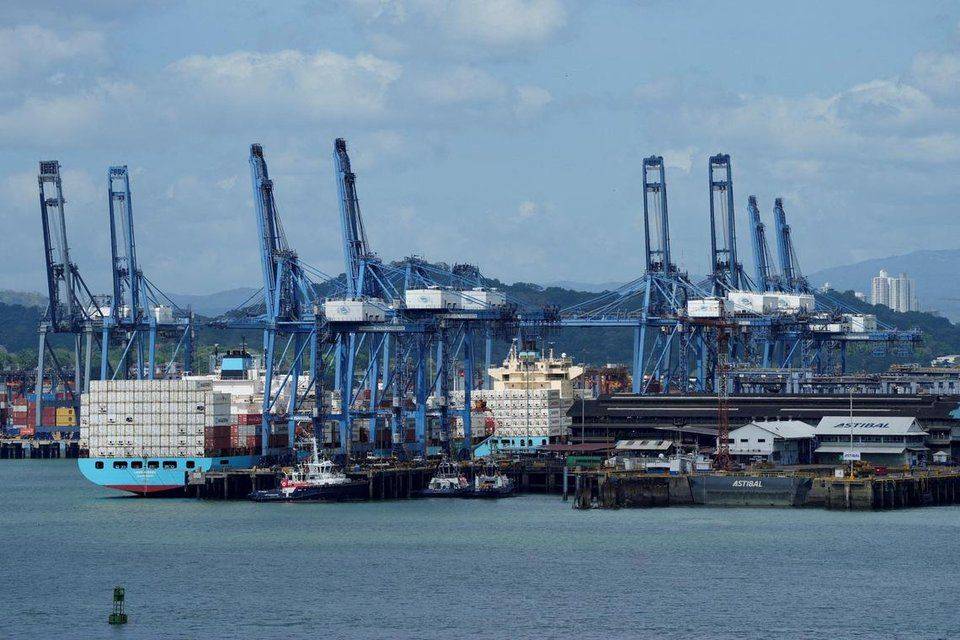
Core Viewpoint - The sale of a significant portfolio of port assets by Li Ka-shing's CK Hutchison Holdings has sparked international interest, particularly concerning two key ports located along the Panama Canal, which are critical to global shipping and geopolitical dynamics [1][3]. Group 1: Transaction Details - CK Hutchison Holdings is looking to sell a total of 43 global ports, with the Panama Canal ports being the most notable [1]. - The estimated total value of the transaction exceeds $19 billion [8]. Group 2: Involvement of International Players - An international consortium, led by the American company BlackRock, was initially set to acquire the ports, with support from former President Trump, who viewed it as a means to regain U.S. influence over the Panama Canal region [3][8]. - Chinese shipping giant COSCO Shipping Group is now reportedly seeking to participate in the transaction, indicating a shift in China's strategy from opposition to involvement [4][6]. Group 3: Geopolitical Implications - The involvement of Chinese enterprises in the port acquisition is seen as a response to the strategic importance of the Panama Canal in China's Belt and Road Initiative, which aims to expand its global port network [4][11]. - The transaction has evolved into a complex geopolitical contest between the U.S. and China, with implications for international capital dynamics [11].

军用稀土悬而未决?芯片封锁对稀土制裁!中美博弈谁能先破局?
Sou Hu Cai Jing· 2025-06-16 00:22
Group 1 - The core issue in the US-China negotiations revolves around rare earth elements, with ordinary rare earths being discussed, but military-grade rare earths remain contentious [1][3][12] - The US has not committed to supplying advanced chips to China, citing potential military applications, while China has not agreed to provide military-grade rare earths to the US [3][12][14] - China has agreed to expedite the approval process for non-military rare earth exports to US producers, but with limitations on quantity and time [8][9][12] Group 2 - The distinction between light and heavy rare earths is crucial, with China controlling heavy rare earths that are essential for various industries, including semiconductors and electric vehicles [5][12][14] - The US is heavily reliant on China for heavy rare earths, particularly for military applications, which poses a strategic challenge for the US defense sector [9][12][14] - The negotiations have not resolved the underlying tensions, and both countries are still in a state of strategic standoff, with China gaining more leverage in the current situation [19][21]
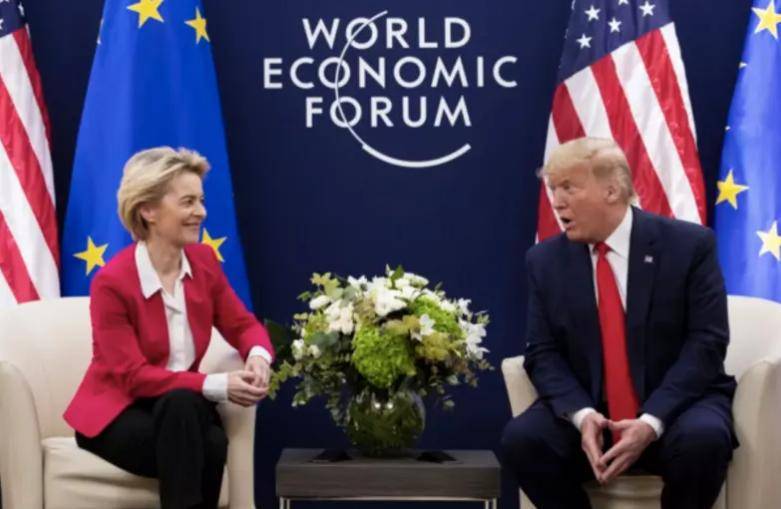
看到中国实力,欧洲有了和美掀桌的底气,女掌门亲自登门“取经”
Sou Hu Cai Jing· 2025-06-15 01:28
欧洲的策略:在中美博弈中寻求最大利益 事实上,中美第二轮贸易谈判已顺利结束,虽然双方并未公布具体细节,但大致方向已明朗:双方将做出各自让步。这意味着中国可能短期内放松对稀土的 出口限制,而美国也可能放宽对中国芯片出口的限制。这对长期受中美贸易摩擦影响的欧洲来说,无疑是双重利好。 7月9日,特朗普设下的美欧贸易谈判最后期限迫在眉睫。然而,谈判却陷入僵局,濒临破裂。 表面上,争端源于特朗普威胁对欧盟钢铝征收50%的惩罚性 关税,但深层原因在于欧盟难以调和"主权悖论"——它渴望经济自主,却在安全领域高度依赖美国。这种矛盾让欧盟在与美国谈判时左右为难,内部意见分 歧巨大。更棘手的是,特朗普要求欧盟坚定地站在美国对抗中国的立场上,而欧盟若想实现经济独立,中国却是不可或缺的合作伙伴。这种情况下,美欧谈 判形同"鸡同鸭讲",除非欧盟甘愿牺牲自身利益,完全屈服于美国,否则难以达成共识。特朗普虽然暗示可能延长期限,但其目的显然是为了施压欧盟尽快 做出决定。 此前,由于美国施压,中国对稀土出口实施严格审查,严重影响了欧洲,尤其对依赖稀土资源的欧洲汽车产业造成巨大冲击,许多著名车企面临停产威胁。 分析人士认为,中国此次对美放松稀土 ...
特朗普称中美已达成协议,美国将对华征收55%关税,商务部回应来了
Sou Hu Cai Jing· 2025-06-14 00:26
Group 1 - The article discusses the ongoing trade tensions between the U.S. and China, highlighting Trump's announcement of a 55% tariff on Chinese goods as a politically motivated move ahead of the midterm elections [1][10] - The breakdown of the 55% tariff includes a 10% base tariff, a 20% penalty tax on fentanyl, and a 25% trade war tariff, which the article describes as a complex and misleading calculation [2][4] - China's response to Trump's tariff declaration is characterized as strategic and measured, emphasizing the importance of adhering to WTO rules and opposing unilateral tariffs [5][10] Group 2 - The article highlights the significance of rare earth exports in the trade negotiations, noting that while the U.S. has received a temporary export license from China, it is limited and excludes military applications [7][10] - The U.S. finds itself in a difficult position, needing rare earth materials for its industries while also facing the challenge of acknowledging its reliance on China in the trade war [7][9] - The article suggests that China's approach to rare earth exports is a strategic maneuver, allowing limited access while maintaining leverage in the negotiations [10][12] Group 3 - The article concludes that the trade negotiations represent a new normal in U.S.-China relations, with the U.S. increasingly relying on public relations to mask its negotiating weaknesses, while China employs a more subtle and strategic approach [12][13] - The upcoming six-month period regarding the rare earth export license is framed as a critical test of Washington's political credibility and Beijing's strategic resolve [12][13]