
以旧换新

Search documents
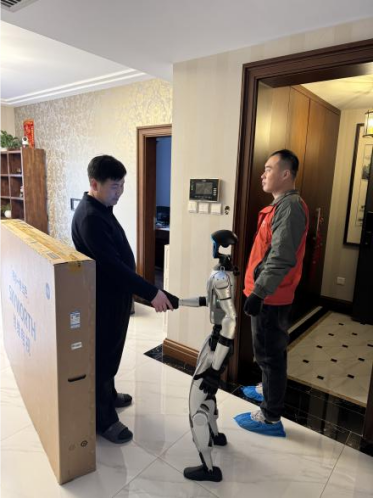
2026国补“首单机器人送货”在北京签收 用户点赞京东“人机搭档”新体验
Jin Rong Jie Zi Xun· 2026-01-04 04:55
Core Insights - The launch of the 2026 national subsidy program has led to a significant increase in consumer interest in purchasing home appliances, with innovative delivery methods such as robot-assisted delivery enhancing customer experience [1][3][5] Group 1: National Subsidy Program - Starting January 1, 2026, consumers can receive a subsidy of 15% on the purchase price for various electronic products, with a maximum subsidy of 500 yuan for certain items and 1500 yuan for major appliances [3][4] - Consumers can save up to 11,000 yuan cumulatively across ten categories of home appliances and digital products, with additional discounts available through trade-in programs and coupons [4] Group 2: Company Initiatives - JD.com has invested heavily in ensuring the effective implementation of the national subsidy program, with significant resources allocated to logistics, customer service, and marketing to enhance consumer experience [5] - The company has introduced a comprehensive service model that includes free old appliance pickup, dismantling, and transportation, as well as on-site activation for new devices [5] Group 3: Consumer Experience - The first delivery under the national subsidy program featured a combination of human and robot delivery, which has been well-received by consumers, enhancing the overall shopping experience [1][3] - JD.com aims to continue improving the consumer experience by providing a seamless integration of various subsidy programs and ensuring efficient service delivery [5]


元旦假期广西消费市场活力十足
Guang Xi Ri Bao· 2026-01-04 02:38
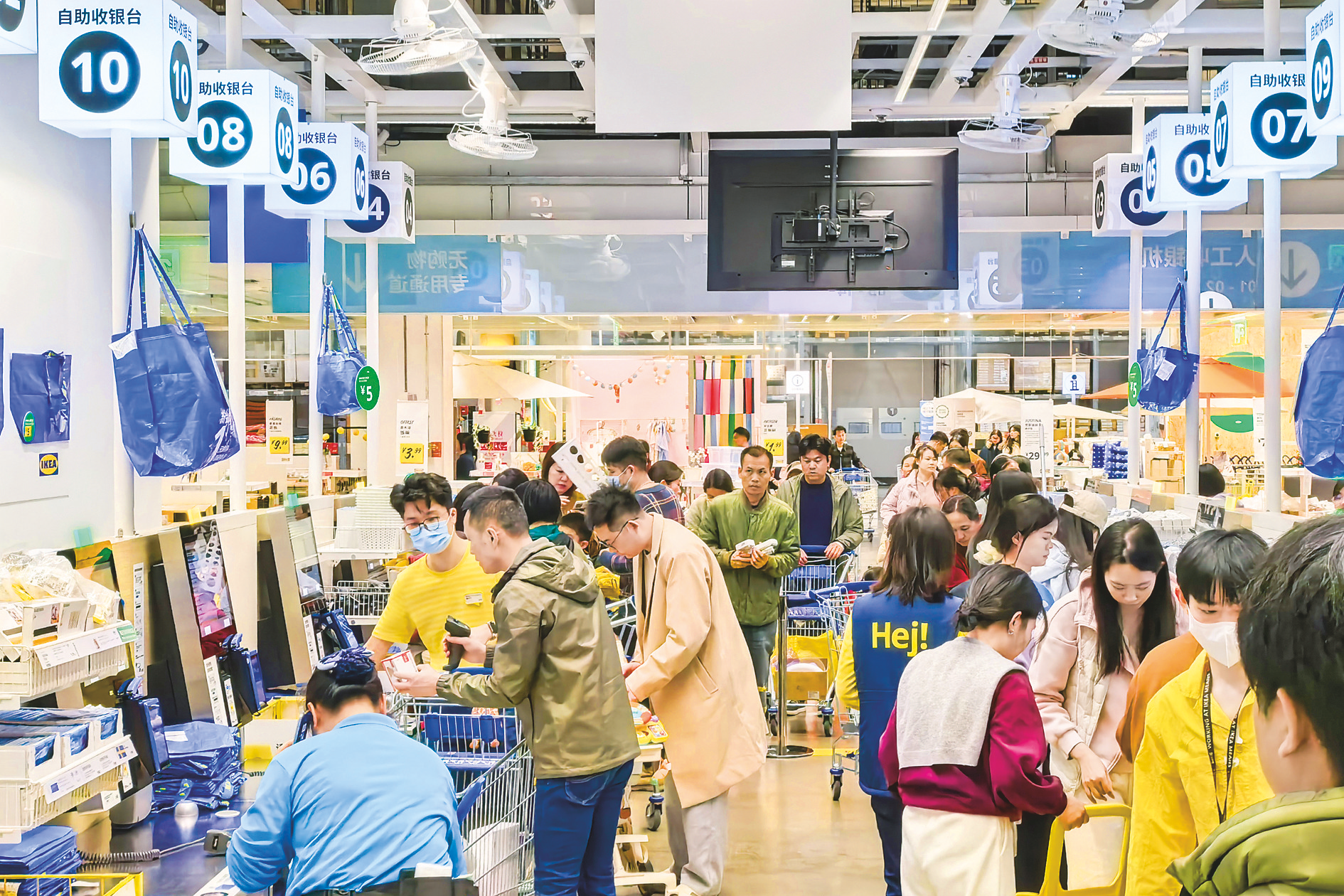
Core Insights - The consumption market in Guangxi is showing strong vitality and stability during the 2026 New Year holiday, driven by coordinated efforts among various sectors and innovative consumption scenarios [1] Group 1: Consumption Activities - The "old for new" consumption initiative launched on January 1, 2026, has effectively released consumer potential, with over 10,000 applications and subsidies exceeding 5.87 million yuan, leading to sales of over 41.25 million yuan within two days [1] - Key cities like Liuzhou and Guigang have reported significant sales increases, with Liuzhou's sales growing by 29.5% for home appliances and 200% for communication equipment [1] Group 2: Promotional Activities - Various promotional activities have been organized across the region, resulting in a 21% increase in daily foot traffic and a 16% increase in sales in 30 monitored pedestrian streets and commercial areas during the holiday [2] - Online promotional activities have also been robust, with over 400 live-streaming events promoting local products and expanding consumption channels [2] Group 3: Service Consumption Growth - Service consumption has shown strong growth, with a 20.1% increase overall, including a 5.8% rise in dining and a remarkable 185.4% increase in accommodation compared to the previous year [2] - Notable increases in restaurant attendance have been observed, with some areas reporting a 30% to 60% rise in customer volume [2] Group 4: Tourism and Entertainment - Tourism-related consumption in Guangxi has surged by 39.4% compared to the previous year, with a 35.2% increase in the number of visitors from outside the region [3] - The "performing arts economy" has gained traction, with significant increases in hotel bookings around concert events, and the number of tickets sold for New Year's events has seen exponential growth [3] - Data indicates a 270% increase in car rental bookings and over 230% growth in tour package reservations during the holiday period [3]
多重利好叠加四川消费市场热闹开场
Xin Lang Cai Jing· 2026-01-03 19:18
Core Insights - The consumption market in Sichuan is experiencing a vibrant start in 2026, driven by favorable factors such as the New Year holiday, the "old-for-new" national subsidy policy, and the launch of the "Tianfu Boutique" Spring Consumption Month [1] Group 1: Sales Performance - From January 1 to 2, 550 key commercial enterprises in Sichuan achieved an average daily revenue of 610 million yuan, representing a year-on-year increase of 0.9% [1] - Offline consumption in Sichuan totaled 19.733 billion yuan, with a year-on-year growth of 3.54% [1] Group 2: "Old-for-New" Policy Impact - A total of 7,293 enterprises in Sichuan actively promoted the "old-for-new" policy through various channels, stimulating consumer demand [2] - Sales of home appliances and digital products under the subsidy program reached 182,000 units, generating 740 million yuan in consumption [2] - Major retailers like JD.com and Suning launched promotional activities, with discounts as low as 75% and maximum subsidies of 3,000 yuan for mobile phone exchanges [2] Group 3: Consumer Experience and Events - Various cross-year activities were organized across Sichuan to enhance the festive atmosphere, significantly boosting consumer engagement [4] - In Chengdu, the "Chengdu Lights Up for You" event attracted thousands, leading to a revenue increase of 93.7% in the Jiazi Park business district, with visitor numbers up by 111.4% [4] - The integration of culture, tourism, and sports is being promoted to create immersive holiday experiences, with significant impacts on local consumption [5] Group 4: Dining and Online Consumption Trends - The restaurant sector saw a daily average revenue of 230 million yuan from 139 enterprises, marking a year-on-year increase of 6.5% [6] - Online consumption demand surged, particularly for grocery delivery and restaurant takeout services, with a notable increase in revenue for key restaurants in Chengdu [6]
政策惠 场景火 市场活
Xin Lang Cai Jing· 2026-01-03 19:17
Core Viewpoint - The New Year's holiday in Guangxi has seen a significant boost in consumer activity, driven by a new round of trade-in policies and collaborative efforts among local governments, banks, and businesses, particularly in Nanning, which has emerged as a leading market for holiday consumption [1][4]. Group 1: Consumer Activity and Trends - Nanning has innovatively created diverse consumption scenarios during the holiday, including immersive performances and smart home experiences, which have attracted significant foot traffic and consumer engagement [2][3]. - Key shopping districts in Nanning reported a 21% increase in daily foot traffic and a 16% rise in sales during the holiday period, with some shopping centers experiencing over a 30% increase in visitor numbers [4]. - The introduction of various promotional activities, such as cultural events and themed exhibitions, has further stimulated consumer interest and spending [2][4]. Group 2: Cross-Industry Collaboration - The integration of commerce, culture, and tourism has been highlighted through events like concerts, which have significantly increased hotel bookings and travel to Nanning, with hotel reservations up 17 times compared to the previous year [5]. - Over 400 cultural and tourism activities were organized across the region, enhancing the overall consumer experience and driving economic activity [5][6]. Group 3: Trade-In Policies and Sales Performance - The launch of a trade-in program for home appliances and smart products has led to a doubling of sales for certain energy-efficient appliances, with government subsidies further incentivizing purchases [7]. - Within just two days of the trade-in policy's implementation, over 1 million yuan in subsidies were claimed, resulting in sales exceeding 4,125 million yuan [7]. - Sales of home appliances and communication devices during the holiday period saw year-on-year increases of 4.2% and 5.0%, respectively [7]. Group 4: Price Stability and Market Monitoring - The overall price of essential goods remained stable during the holiday, with minor fluctuations in certain categories, ensuring a well-functioning market without significant disruptions [8].
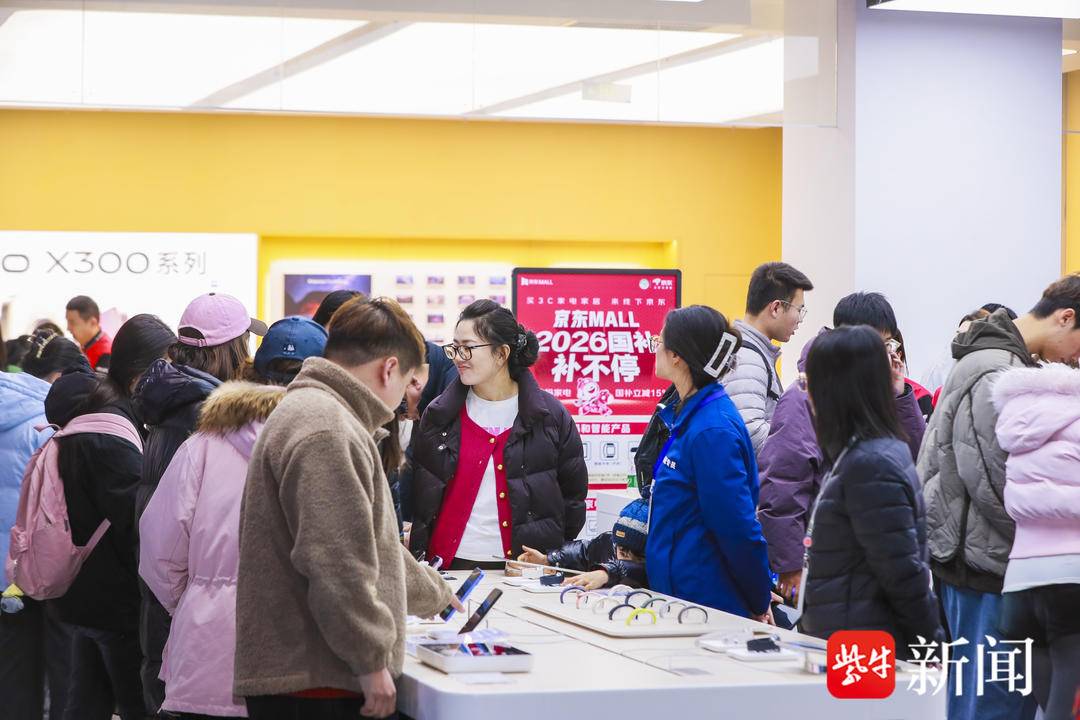
2026国补开启!全国多地手机数码家电元旦迎“开门红”
Yang Zi Wan Bao Wang· 2026-01-03 13:39
Core Insights - The implementation of the national "old-for-new" policy starting January 1, 2026, has sparked a surge in consumer demand for mobile and home appliance products across various regions in China, particularly benefiting platforms like JD MALL [1][5] Group 1: Consumer Behavior - The first "old-for-new" order under the national subsidy program was completed at JD MALL in Guangzhou shortly after midnight on January 1, 2026, with consumers taking advantage of significant discounts [3][5] - Consumers are motivated to purchase due to the combination of national subsidies and additional manufacturer discounts, leading to a vibrant shopping atmosphere during the New Year [1][11] Group 2: Sales and Promotions - JD MALL experienced a notable increase in foot traffic during the New Year holiday, with many stores reporting high sales volumes for electronic products, particularly mobile phones and computers [1][9] - The promotion includes a 15% subsidy on eligible products, with specific limits on the amount of subsidy available for different categories, such as a maximum of 1,500 yuan for home appliances and 500 yuan for digital products [14] Group 3: Service Enhancements - JD MALL and JD Electric have introduced integrated services such as free installation and old product recycling for large appliances, enhancing the overall shopping experience for consumers [14] - Additional services for mobile products include on-site activation and data migration, allowing consumers to use their new devices immediately [14]
万物新生(RERE):首次覆盖报告:二手经济龙头,飞轮驱动高增
国泰海通· 2026-01-03 08:43
Investment Rating - The report assigns an "Accumulate" rating to the company, with a target price of $6.61 based on a projected market capitalization of 10.23 billion RMB for 2026, using a 15x PE ratio for adjusted net profit [1][8][20]. Core Insights - The second-hand trading platform is in a rapid growth phase, with the company demonstrating significant competitive advantages in sourcing quality supply and pricing power. It is also exploring category expansion and steadily advancing its international business [2][8]. - The company is positioned as a leader in the domestic circular economy for second-hand goods, evolving from a single recycling platform to a full industry chain service provider [23][29]. - The company benefits from the rational consumption trend and the increasing availability of quality social inventory, with the second-hand goods market in China experiencing rapid growth driven by policies like trade-in programs and product replacement cycles [8][19]. Financial Summary - The company’s total revenue is projected to grow from 12,966 million RMB in 2023 to 32,253 million RMB in 2027, with year-on-year growth rates of 31.4%, 25.9%, 28.1%, 25.0%, and 23.3% respectively [4][19]. - Adjusted net profit is expected to increase from 225 million RMB in 2023 to 1,028 million RMB in 2027, with significant year-on-year growth rates of 342.9%, 39.5%, 27.7%, 70.1%, and 50.8% [4][19]. - The adjusted operating profit margin is projected to improve from 1.9% in 2023 to 3.7% in 2027, indicating enhanced profitability as the company scales [4][19]. Business Model and Strategy - The company has established a comprehensive service system covering the entire recycling chain, including collection, processing, and resale, primarily focusing on 3C consumer electronics [31][39]. - The strategic partnership with JD.com provides a significant advantage in sourcing quality supply and enhances the company's market position [44]. - The company is actively expanding into new categories such as luxury goods and gold, leveraging its established brand and operational capabilities [16][29]. Market Position and Growth Drivers - The company is expected to benefit from the increasing penetration of trade-in programs and the growing consumer acceptance of second-hand goods, particularly in the electronics sector [19][26]. - The market for second-hand consumer electronics in China is projected to reach significant growth, with the company poised to capture a substantial share due to its established infrastructure and brand recognition [8][19].

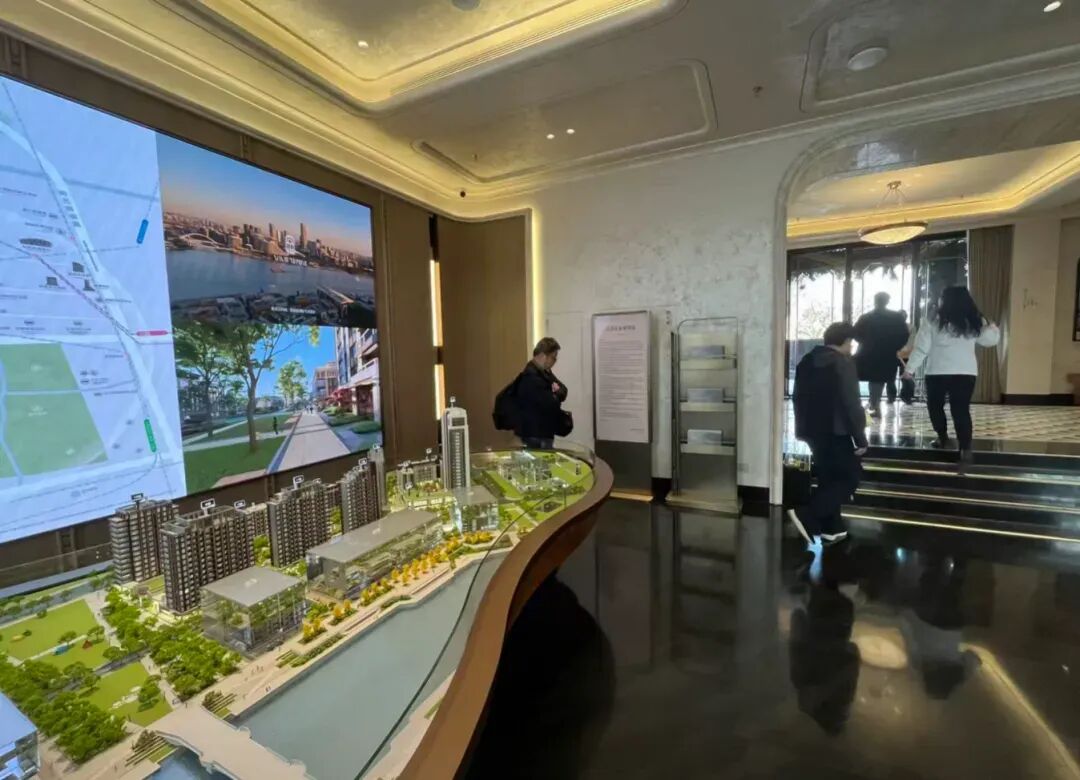
均价11.65万元/m ,上海江景楼盘低姿态入市,认筹金50万元!购房者:再等等
Mei Ri Jing Ji Xin Wen· 2026-01-03 01:33
Core Viewpoint - The Shanghai real estate market is experiencing a surge in activity due to favorable policies and a decrease in property prices, prompting potential buyers to reconsider their purchasing strategies [1][3][5]. Group 1: Market Activity - The weather in Shanghai improved during the New Year holiday, leading to increased foot traffic at real estate sales offices [1]. - Multiple new housing projects were launched in both urban and suburban areas during the holiday, indicating a robust supply side [3]. - The "Qing'an" project in Jing'an District and the "Xiangyu Tianyu Lanchang" project in Minhang District both initiated subscriptions, with average prices of 12,000 yuan/sqm and 8,000 yuan/sqm respectively [3]. Group 2: Pricing and Demand - The "Baoli Duhui Hexu" project in Minhang District offered 144 units at an average price of 69,888 yuan/sqm, while the "An Gao Haiyin Huating" project had a subscription rate of only 44% on its first day [4]. - The "Qing'an" project had a subscription price of approximately 82,590 yuan/sqm, with a total of 30 groups subscribing [4]. - The "Qing'an" project had a total of 384 units listed, with a total value of approximately 39.5 billion yuan, indicating a significant market entry [5]. Group 3: Policy Impact - New policies effective from January 1 aim to reduce the tax burden on home sellers, particularly through a reduction in the value-added tax for properties held for over two years [4][5]. - Adjustments in mortgage rates for both first and second homes were implemented, with rates for first-time buyers dropping from 2.35% to 2.1% for loans under five years [4]. - These policy changes are expected to stimulate demand by lowering the overall cost of purchasing homes, encouraging sellers to list their properties [5]. Group 4: Market Sentiment - There is a noticeable cautious sentiment among potential buyers, with many opting to wait for more favorable conditions before making purchases [1][7]. - The reduction in the subscription deposit to 500,000 yuan for the "Qing'an" project is aimed at attracting more potential buyers amid a climate of reduced impulsive buying [7].
2025年以旧换新相关商品 销售额超2.6万亿元
Xin Lang Cai Jing· 2026-01-02 23:43
Core Insights - The sales of products related to the "trade-in for new" policy are expected to exceed 2.6 trillion yuan by 2025, benefiting over 360 million people [1][2] Group 1: Sales Projections - By 2025, the trade-in for new policy is projected to result in the following sales: over 11.5 million cars, 129 million home appliances, 9.1 million digital products, 120 million home renovation items, and 1.25 million electric bicycles [1] - The retail sales of consumer goods from January to November increased by 4.0% year-on-year, with the trade-in policy contributing over 1 percentage point to this growth [1] Group 2: Industry Upgrades - In the automotive sector, nearly 60% of trade-ins involve new energy vehicles, leading to a retail market share for new energy passenger cars exceeding 50% for nine consecutive months, reaching 59.4% in November [1] - In the home appliance sector, over 90% of traded-in products are first-class energy efficiency (water efficiency) products [1] - Sales of communication equipment have shown continuous growth for 11 months [1] Group 3: Economic and Environmental Impact - By 2025, the volume of scrapped cars is expected to increase by 24.5%, resulting in the recycling of approximately 9.6 million tons of steel and 1.3 million tons of non-ferrous metals, thereby reducing carbon emissions by about 24.5 million tons [1] - Since the full implementation of the policy in September 2024, over 480 million direct subsidies have been issued to consumers, facilitating the entry of numerous green, low-carbon, and smart products into daily life [2] - For every two new household cars sold, one will benefit from the trade-in subsidy, and the number of old electric bicycles being replaced has exceeded nine times that of 2024 [2]
去年以旧换新商品销售额超2.6万亿元
Xin Lang Cai Jing· 2026-01-02 22:39
Group 1 - The core viewpoint of the articles highlights the significant impact of the "trade-in for new" policy on consumer spending and economic growth, projecting a sales volume exceeding 2.6 trillion yuan by 2025, benefiting over 360 million people [1][2] Group 2 - In the automotive sector, over 11.5 million vehicles are expected to be traded in, with nearly 60% being new energy vehicles, contributing to a retail market share of over 50% for new energy passenger cars for nine consecutive months [1] - The home appliance sector anticipates over 129 million units to be traded in, with over 90% of new products being first-class energy efficiency [1] - The retail sales of consumer goods increased by 4.0% year-on-year in the first eleven months of the previous year, with the trade-in policy contributing over 1 percentage point to this growth [1] Group 3 - The policy is expected to promote a green economic transformation, with a projected 24.5% increase in scrapped vehicle recovery by 2025, leading to the recycling of approximately 9.6 million tons of steel and 1.3 million tons of non-ferrous metals, while reducing carbon emissions by about 24.5 million tons [1] - Since the full implementation of the policy in September 2024, over 480 million direct subsidies have been issued to consumers, facilitating the entry of numerous green, low-carbon, and smart products into daily life [2] Group 4 - The trade-in policy has stimulated offline retail, with consumers increasingly opting for in-store experiences, leading to a 30% increase in consumer spending in areas with concentrated home appliance trade-in stores [2]
去年以旧换新商品销售额超2.6万亿元 家电零售额创历史新高
Jing Ji Ri Bao· 2026-01-02 22:10
Core Insights - The latest data from the Ministry of Commerce indicates that by 2025, the sales volume of products related to trade-in programs will exceed 2.6 trillion yuan, benefiting over 360 million people [1] - The trade-in program for automobiles is projected to exceed 11.5 million units, while home appliances will see over 129 million units traded in, and digital products like smartphones will account for over 91 million units [1] - The program is expected to significantly support consumer spending and drive economic growth, with retail sales of consumer goods increasing by 4.0% year-on-year in the first 11 months of last year [1] Consumer Impact - Since the full implementation of the policy in September 2024, over 480 million direct subsidies have been issued to consumers, leading to the introduction of numerous green, low-carbon, and smart products into everyday life [2] - For every two new household cars sold in 2025, one will benefit from the trade-in subsidy, enhancing the quality of life for consumers [2] Economic and Environmental Benefits - The trade-in program is expected to promote a green economic transition, with a projected 24.5% increase in the recycling of scrapped vehicles by 2025, resulting in the recycling of approximately 9.6 million tons of steel and 1.3 million tons of non-ferrous metals [1] - The program is also anticipated to reduce carbon emissions by about 24.5 million tons [1] Retail and Commercial Growth - The trade-in program is driving growth in offline retail, with more consumers opting for in-store experiences and benefiting from subsidies, which in turn stimulates cross-sector consumption in leisure, entertainment, and dining [2] - In areas with concentrated home appliance trade-in stores, consumer spending in surrounding businesses has increased by over 30% within a 1-kilometer radius [2]