AI产业

Search documents
内存条变身「电子茅台」,谁买单?
36氪· 2025-11-17 00:10
Core Viewpoint - The article discusses the significant price increase in memory products, particularly DRAM and SSDs, driven by a "super cycle" in the memory supply chain, influenced by the rise of AI and structural changes in global production capacity [5][17]. Group 1: Price Trends - The price of 16GB DDR4 memory has surged from around 200 RMB to over 400 RMB within a year, with some models increasing by more than 300% [10]. - High-end DDR5 memory prices have also doubled, with some models reaching nearly 2000 RMB, reflecting a 100% increase compared to two months prior [12]. - The average price of 1TB PCIe4.0 SSDs has risen over 60% since the beginning of the year, with some popular models seeing price hikes of 80% or more [14]. Group 2: Supply and Demand Dynamics - The demand for DRAM has surged due to the AI industry's growth, with AI servers requiring eight times more DRAM than standard servers [18]. - Major memory manufacturers like Samsung and SK Hynix are shifting production towards high-end chips, reducing the supply of DDR4, which is expected to remain tight until mid-2026 [21][23]. - The recovery of the consumer electronics market and the growth in smart vehicle technology are further exacerbating the supply-demand imbalance [24]. Group 3: Market Speculation - Speculative behavior in the memory market has amplified price volatility, with some dealers hoarding memory products in anticipation of price increases [25][27]. - The article warns that while there may be opportunities for profit, the risks associated with speculation in the memory market are significant, likening it to past gold market experiences [30][33]. Group 4: Future Outlook - The transition from DDR4 to DDR5 and HBM is irreversible, suggesting that prices will continue to rise as demand outstrips supply [29]. - Domestic memory manufacturers are expected to increase their market share significantly by 2025, indicating a potential shift in the competitive landscape [35].

科技板块获逆势加仓 “哑铃策略”重回视野
Zhong Guo Zheng Quan Bao· 2025-11-16 20:09
Core Viewpoint - The A-share and Hong Kong stock markets experienced high-level fluctuations last week, showcasing a structural market with a focus on both growth and value sectors, leading to a renewed interest in the "barbell strategy" among investors [1][5]. Group 1: Market Performance - The A-share and Hong Kong markets displayed notable structural characteristics, with the Hong Kong innovation drug and gold sectors leading the market [2]. - The Hang Seng Innovation Drug ETF (159316) and other ETFs tracking the Hong Kong pharmaceutical sector saw weekly gains of around 7% [2]. - A500 ETF and other major ETFs in the A-share market recorded significant trading volumes, with A500 ETF achieving over 130 billion yuan in total trading [2]. Group 2: Investment Trends - Despite a general pullback in technology-themed ETFs, funds flowed into the Sci-Tech 50 index, which saw a net inflow of 2.3 billion yuan, making it the top equity index for net inflows [3]. - The AI-themed ETFs also attracted over 1 billion yuan in net inflows, indicating strong investor interest in emerging technology sectors [3]. - The overall liquidity in A-share and Hong Kong markets is expected to remain reasonably ample, with emerging industries like AI and innovative pharmaceuticals poised for further development [3]. Group 3: Barbell Strategy - The high dividend sectors in the Hong Kong market attracted significant capital, with products like the Hang Seng Dividend Low Volatility ETF gaining attention [5]. - The "barbell strategy," which combines technology growth and high dividend stocks, is being emphasized by various institutions as a key investment approach in the current market environment [5][6]. - The current allocation of public funds in the TMT sector has reached historical highs, indicating a potential shift in market dynamics and a focus on structural opportunities [5][6].
8000亿元!央行,明日操作!
Zheng Quan Shi Bao· 2025-11-16 16:00
Group 1: Semiconductor Industry - The Chinese Ministry of Commerce expressed hope that the Netherlands would bring constructive proposals to resolve the semiconductor issue with ASML, emphasizing the need for genuine cooperation [2] Group 2: Financial Market Operations - The People's Bank of China announced an 800 billion yuan reverse repurchase operation scheduled for November 17, with a term of six months, aimed at maintaining ample liquidity in the banking system [4] Group 3: Capital Market Developments - The China Securities Regulatory Commission (CSRC) is focusing on enhancing market resilience and stability, promoting a more inclusive and attractive regulatory framework, and improving the quality and value of listed companies [5] - The IPO guidance for Yushut Technology has been completed, indicating ongoing activity in the capital markets [7] Group 4: Regulatory Changes - The State Administration for Market Regulation released a draft for public consultation on antitrust compliance guidelines for internet platforms, aiming to address new types of monopoly risks in the platform economy [8] Group 5: Airline Industry - Several airlines, including China Southern Airlines, Air China, and Eastern Airlines, announced free ticket changes and refunds for flights to Japan due to safety concerns for Chinese citizens [9] Group 6: Stock Market Insights - A total of 56 companies will have their restricted shares unlocked this week, with a total market value of approximately 983.46 billion yuan, highlighting significant market movements [10] - CITIC Securities remains bullish on gold and notes an increase in institutional interest in various sectors, including basic chemicals and defense [10][11]

哪些低估滞涨方向尚未轮动?
Huaan Securities· 2025-11-16 11:24
Core Insights - Economic and financial data show marginal weakening, with internal policy support expectations rising, but the probability of new incremental policies being introduced near year-end is low, leading to continued high-level fluctuations in the market [3][4] - The AI industry adjustment provides better layout opportunities, while sectors with earnings support such as energy storage/batteries, military industry, storage, and engineering machinery should also be emphasized [3][6] Market Perspective - October macroeconomic data continues to show marginal slowdown, with investment declining rapidly and consumption growth remaining low. The GDP growth rate for October is estimated at around 4.6%, which is a marginal decline from the second quarter [4][13] - The third-quarter monetary policy execution report indicates an increased probability of monetary policy easing to support the economy, with a shift in focus towards interest rates rather than quantity [5][22] Industry Allocation - The market has entered a high-level fluctuation phase since early October, with significant increases in industry rotation intensity. Consumption sectors have shown strong performance recently, while resource sectors led the previous week [6][29] - Low valuation and stagnant sectors such as non-banking, food and beverage, agriculture, public utilities, and home appliances are expected to see short-term rebound opportunities [6][30] Financial Data Analysis - Fixed asset investment in October showed a cumulative year-on-year decline of 1.7%, with manufacturing investment growth at 2.7%, and real estate investment down by 14.7% [16][19] - The real estate sector continues to show a downward trend, with property investment in October down 23% year-on-year, indicating significant cash flow pressure on real estate companies [19][20] Future Outlook - The AI industry remains a key focus for investment, with specific attention on computing power and application sectors. The third-quarter reports continue to validate the relative performance advantages of growth styles [38][40] - Sectors with strong earnings support, including energy storage, military, storage, and engineering machinery, are also highlighted as promising areas for investment [40]
内存条变身「电子茅台」,谁买单?
Xin Lang Ke Ji· 2025-11-16 00:49
Core Viewpoint - The recent surge in memory prices, driven by increased demand from the AI industry and supply chain constraints, has led to significant price hikes in DRAM and SSD products, creating a "super cycle" in the memory supply chain [2][8][10]. Group 1: Price Trends - The price of 16GB DDR4 memory has increased from around 200 yuan to over 400 yuan within a year, with some models seeing price increases of over 300% [5][7]. - High-end DDR5 memory prices have also surged, with some models doubling in price, such as the G.Skill Royal 32GB DDR5-6000, which has reached 2500 yuan [6][7]. - TrendForce reported a staggering 171.8% year-over-year increase in DRAM prices by Q3 2025, outpacing traditional safe-haven assets like gold [7][10]. Group 2: Supply Chain Dynamics - The memory market is experiencing a structural supply shortage, exacerbated by major manufacturers like Samsung and SK Hynix prioritizing high-end products over DDR4, leading to a significant reduction in DDR4 production [10][11]. - The demand for memory from the AI sector is a primary driver, with AI servers requiring eight times more DRAM than standard servers, significantly increasing overall demand [8][10]. - The shift in production focus from traditional consumer electronics to high-performance server memory is expected to continue, impacting the availability of DDR4 and LPDDR4 products until at least mid-2026 [13][22]. Group 3: Market Speculation - Speculative behavior in the memory market has intensified, with some dealers hoarding memory products in anticipation of further price increases, leading to artificial price inflation [14][16]. - The phenomenon of "memory speculation" has drawn parallels to past gold market behaviors, where rapid price fluctuations can lead to significant financial risks for uninformed investors [17][20]. - The current market dynamics suggest that while there are opportunities for profit, the risks associated with speculation are high, particularly for average consumers [20][22]. Group 4: Future Outlook - The memory market is expected to stabilize as domestic manufacturers like Changxin Technology and Yangtze Memory Technologies ramp up production, potentially alleviating supply constraints [22]. - The ongoing demand from AI and emerging technologies will continue to shape the memory market, but a return to rational pricing is anticipated as production capacities increase [22]. - Companies that focus on core technology and steady production expansion are likely to emerge as long-term winners in this evolving landscape [22].
石化化工行业2026年投资策略:石化化工行业景气度有望复苏
Guoxin Securities· 2025-11-15 15:20
Core Insights - The petrochemical industry is expected to recover in 2026, with a focus on resource products, anti-involution policies, and emerging industries as investment opportunities [3][27] - The industry has shown signs of stabilization and recovery since 2025, with a year-on-year increase of 10.56% in net profit attributable to shareholders in the first three quarters of 2025 [3] - Key sectors identified for investment include oil and gas, potassium fertilizer, phosphorus chemicals, fluorochemicals, sustainable aviation fuel (SAF), electronic resins, and certain anti-involution sectors [3] Industry Overview - The petrochemical industry is cyclical, with net profits in the SW basic chemical sector reaching a historical high in 2021, followed by a downturn, with 2024 profits expected to be only 52% of 2021 levels [3] - The supply side has seen a decline in fixed asset investment since June 2025, indicating the end of the current expansion cycle [3] - The "anti-involution" policy aims to address low-price competition and promote the orderly exit of outdated capacities, which is expected to alleviate the oversupply issue in the petrochemical sector [3] Demand Dynamics - Traditional demand is anticipated to recover moderately due to global central banks entering a rate-cutting cycle and fiscal stimulus [3] - Emerging demands from sectors such as new energy and AI are expected to drive growth in key chemical materials [3] - The domestic chemical industry is projected to increase its global market share as overseas capacities are cleared out [3] Investment Recommendations - Recommended companies for investment in 2026 include China Petroleum, China National Offshore Oil Corporation, Yara International, Yuntianhua, Juhua Co., Sanmei Co., Jiaao Environmental Protection, Zhuoyue New Energy, Shengquan Group, Wanhua Chemical, Baofeng Energy, and Xinhecheng [3] Sector Performance - The petrochemical sector's revenue decreased by 7.1% year-on-year in the first three quarters of 2025, while net profit fell by 11.1% [24] - The basic chemical sector showed a recovery with a 1.9% increase in revenue and an 8.9% increase in net profit [24] - The oilfield services sector was the only sub-sector to achieve growth in both revenue and net profit during this period [24] Price Trends - The China Chemical Product Price Index (CCPI) has shown a downward trend, with a reported decline of 11.5% from the beginning of the year [13] - The PPI for the chemical industry is expected to show marginal improvement in the second half of 2025, although it remains in a downward trend overall [16] Policy Impact - The "anti-involution" initiative is expected to promote a rebalancing of supply and demand in traditional chemical products, with various sectors responding positively to this policy [27] - Key meetings and documents from government bodies indicate a focus on maintaining growth and regulating new capacity in the petrochemical sector [27]




浪人早报 | 奇瑞汽车就天门山测试意外致歉、李彦宏称现在的AI产业不健康、腾讯第三季度营收同比增长15%…
Xin Lang Ke Ji· 2025-11-14 00:41
Group 1 - Chery Automobile issued an apology regarding an incident during an extreme challenge test at Tianmen Mountain, where a safety harness unexpectedly detached, causing the vehicle to slide and hit a guardrail, but fortunately no injuries occurred [2] Group 2 - Baidu's founder Li Yanhong highlighted the unhealthy structure of the current AI industry, where chip manufacturing captures most of the value, while model applications receive significantly less, indicating a need for a transition to a healthier large model product structure [3] - Baidu's Wenxin large model 5.0 was officially launched, showcasing improvements in multimodal understanding, creative writing, intelligent planning, and instruction adherence, with a parameter scale exceeding 2.4 trillion [3] Group 3 - Tencent reported a 15% year-on-year revenue increase in Q3 2025, reaching 192.87 billion yuan, with a net profit of 63.13 billion yuan, surpassing expectations [4] - The combined monthly active accounts of WeChat and Weixin reached 1.414 billion, reflecting a 2% year-on-year growth [4] - Tencent's online gaming revenue totaled 63.6 billion yuan, with international market game revenue growing by 43% year-on-year, surpassing 20.8 billion yuan [4] Group 4 - JD Group's Q3 2025 revenue grew by 14.9% year-on-year to 299.1 billion yuan, exceeding expectations, while net profit decreased to 5.3 billion yuan from 11.7 billion yuan in the same period last year [5] - JD's CEO Xu Ran emphasized a long-term strategic approach to the food delivery business, aiming for sustainable growth and independent viability [5] Group 5 - Xiaomi's Yu7 won the Best Structure Award at the 2025 International Die Casting Competition, highlighting the company's commitment to R&D for safer and more reliable vehicles [5] Group 6 - Apple announced a new "Mini Program Partner Program" to expand support for mini programs on the App Store, offering developers an 85% revenue share on eligible in-app purchases, with a 15% commission rate [6] Group 7 - Wang Ziru discussed the controversial betting agreements, advising entrepreneurs to consider such agreements only if they have strong confidence in their industry and projects, using JD's founder Liu Qiangdong as an example of someone who signed many betting agreements due to his confidence in the business [7] Group 8 - Tesla is reportedly testing the integration of Apple CarPlay into its vehicles, marking a potential shift in stance from CEO Elon Musk, who has previously criticized Apple's App Store policies [7] Group 9 - China has completed the first phase of 6G technology trials, accumulating over 300 key technology reserves over the past four years [9] Group 10 - China plans to launch a special plan for power batteries, aiming to promote the development of the new battery industry and establish a carbon management policy framework for power batteries [10]





科技股行情进入深水区,私募积极挖掘潜力细分领域
Zhong Guo Zheng Quan Bao· 2025-11-13 23:36
Group 1 - The A-share market is experiencing increased volatility, with semiconductor, power grid equipment, and robotics becoming market focal points driven by the AI industry wave and domestic logic [1] - The consensus among first-tier private equity firms indicates a shift in the technology stock market from broad increases to structural differentiation, emphasizing the need to identify genuine opportunities rather than simply distinguishing between "new" and "old" themes [1][2] - Investment strategies are evolving from whether to continue investing to how to invest, focusing on discerning true value and maintaining a balanced approach [3][4] Group 2 - The investment landscape for technology stocks is not a simple binary of "new" versus "old," as both categories can benefit from the high prosperity of global AI development [2] - Key areas of focus include "old opportunities" like semiconductors and AI servers, which are foundational for AI, and "new opportunities" such as robotics and power grids that arise from AI-driven demand [2] - Private equity firms are advised to avoid blindly chasing high valuations and instead prioritize companies with solid earnings and numerous orders, employing a strategy of gradual buying to mitigate risks [4] Group 3 - There is a strong belief in the long-term trends of core technology industries like AI and semiconductors, with a focus on application deployment and potential industry catalysts [5] - The AI computing infrastructure is expected to maintain high prosperity until 2026, driven by significant capital expenditures from overseas cloud vendors and accelerated domestic investments [5] - Emerging technologies and applications, such as AI glasses and storage chips, are being closely monitored for their potential to become future market leaders [6]

4000点附近攻守道:左手双创宽基,右手红利ETF
Sou Hu Cai Jing· 2025-11-13 10:51
Core Viewpoint - After the National Day holiday, the A-share market experienced significant fluctuations around the 4000-point mark, leading to challenges for investors who frequently chase trends [1] Group 1: Market Performance - On October 9, the Shanghai Composite Index closed with a strong upward trend, while the ChiNext and STAR Market indices showed long upper shadows, indicating that many funds were reducing positions at high points [1] - From October 10 to November 12, the STAR 50 Index fell by 10.37%, the ChiNext 50 Index decreased by 4.22%, while the Dividend Index rose by 7.99% [9] - The Shanghai Composite Index fluctuated between a low of 3800 points and a high above 4000 points during this period [6] Group 2: Investment Strategy - Investor "Old Wang" anticipated a likely pullback in the dual innovation indices and decided to adjust his positions to mitigate risks, opting not to fully liquidate his holdings in dual innovation stocks [3] - Old Wang reallocated his investments into a mix of 25% STAR 50 ETF, 20% ChiNext 50 ETF, 45% Dividend ETF, and 10% cash reserves [3][4] - This balanced allocation helped Old Wang hedge against the pullback in the dual innovation indices, as his ETF investments mirrored the performance of the underlying indices [9] Group 3: Fund Performance - Historical data indicates that in similar market conditions, the average adjustment period for A-share main lines is about 20 trading days with an average decline of 18% [15] - The top 10 open-end funds by performance this year showed that 9 out of 10 continued to rise in the past month, with the highest increase being 11.30% [15]

港股红利年内涨幅超越恒生科技,重视红利的关注价值——银华投顾每日观点2025.11.12
Xin Lang Cai Jing· 2025-11-13 10:17
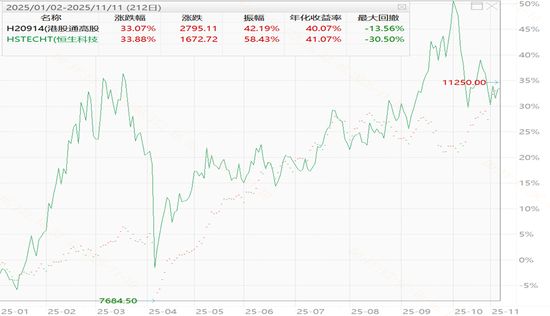
Core Insights - The central viewpoint of the article indicates that the central bank's third-quarter monetary policy report suggests a policy combination of "stable total volume and structural strength," which implies a need to moderately lower expectations for significant short-term monetary policy easing, leading to a relatively calm period for policies, data, and external environments in the near term, with the market likely to continue fluctuating [1][2][5] Monetary Policy - The central bank emphasizes a scientific approach to financial total indicators, aligning social financing scale and money supply growth with nominal economic growth, while acknowledging that a slightly lower loan growth rate is reasonable [2] - The report highlights the ongoing transformation of the monetary policy adjustment framework, focusing more on price-based regulation and enhancing the linkage between interest rate adjustments on banks' assets and liabilities, thereby supporting banks in stabilizing net interest margins and broadening the counter-cyclical adjustment space for monetary policy [2] Market Performance - As of November 11, 2025, the Hang Seng Tech Total Return Index has seen a cumulative increase of 33.88% this year, while the defensive Hang Seng High Dividend Index has outperformed the tech index, with a cumulative increase of 33.07% [3][5] - The maximum drawdown for the Hang Seng High Dividend Index is only 13.56%, compared to a maximum drawdown of 30.5% for the Hang Seng Tech Index, indicating a significantly better holding experience for high dividend stocks [3][5] Investment Strategy - Given the negative correlation observed between the Hang Seng Tech and high dividend stocks since October, investors in tech stocks may consider maintaining a focus on dividend stocks to reduce portfolio volatility [3][5] - The article suggests that in the context of the global AI investment phase and the high valuations in the stock market, dividend assets may continue to outperform tech stocks for a period [5]