
全面牛市

Search documents
基金经理年底调仓现分歧:“高切低”与“看长做长”
2 1 Shi Ji Jing Ji Bao Dao· 2025-11-19 11:48
Core Viewpoint - The A-share market is experiencing a significant style shift as fund managers face year-end performance assessments, leading to a "high cut low" strategy where funds are reallocating from high-performing technology sectors to undervalued cyclical sectors like coal, banking, and steel [1][2][3] Group 1: Market Dynamics - The technology sector, previously leading the market, has seen a notable decline, with the electronic sector down nearly 8% and both media and computer sectors down over 5% since the beginning of the fourth quarter [2] - In contrast, cyclical sectors such as coal and oil have surged, with both sectors gaining over 11%, while banking and steel sectors have increased by more than 7% [2] - There is a clear trend of capital outflow from high-performing technology stocks into lower-valued sectors, indicating a shift in investor sentiment [2] Group 2: Fund Manager Behavior - Fund managers are engaging in a complex game of balancing long-term investment strategies with short-term performance pressures, leading to varied approaches to year-end reallocation [1][3] - The "high cut low" strategy is primarily aimed at locking in profits and managing rankings, with fund managers reducing exposure to high-flying tech stocks while increasing positions in undervalued assets [3][4] - Some fund managers choose to maintain their positions in technology stocks, believing that recent declines are merely profit-taking rather than a sign of a market downturn [4][5] Group 3: Institutional Investor Actions - Insurance funds are also adjusting their strategies, often focusing on stability in the fourth quarter due to their annual performance assessments, which differ from public funds [8][9] - Some insurance institutions are taking advantage of the market's shift by increasing their positions in growth stocks while others are moving towards value stocks [9][10] Group 4: Future Market Outlook - Analysts predict that the market may experience increased volatility as it prepares for a potential transition from a structural bull market to a comprehensive bull market in 2026, with opportunities across both technology and traditional sectors [11][12] - The investment strategy is shifting towards a "rebalancing" approach, focusing on both cyclical sectors and undervalued technology stocks, aiming for a balanced portfolio to mitigate risks [11][12]
杨德龙:2026年本轮牛市行情将延续有望从结构牛走向全面牛
Xin Lang Ji Jin· 2025-11-19 09:56
从全球局势来看,G2格局逐步确立,未来国际格局中,中美有望出现你追我赶、齐头并进的发展态 势,而非美国在科技上遥遥领先的局面。未来,中美在经贸领域还会继续在合作中竞争、在竞争中发 展。我国在硬件和软件两个方面均实现突破,特别是DeepSeek大模型横空出世,以及在芯片、半导体 方面实现的突破,都提升了全球资本对于中国科技创新的信心,这也是这轮牛市以科技为主线的重要原 因。虽然前期科技板块涨幅较大,一些投资者选择暂时获利了结,导致科技板块出现调整,但科技牛市 预计并没有结束。人工智能带来的科技进步以及生产力提升的趋势将会延续。结构性牛市以科技为主, 主要体现在资金集中投资于少数科技创新板块,如机器人、芯片、半导体、算法创新、固态电池等;到 了全面牛市阶段,更多板块可能会出现上涨,这或将会给市场带来赚钱机会。因此,预计2026年市场的 赚钱效应可能比今年更强,投资机会可能也更多,投资者的体验也可能会更好。 2025年,市场虽走出了牛市走势,但呈现出典型的哑铃型结构:一头是以银行为代表的低估值、高股息 板块,部分个股甚至创新高;另一头是代表新质生产力的科技股大幅上涨,而大多数板块没有明显表 现。2026年,如基本面 ...
这轮牛市券商涨不过银行和保险?真相和机会来了!
格隆汇APP· 2025-11-19 09:06
Core Viewpoint - The article discusses the performance of brokerage stocks compared to banks and insurance stocks during a slow bull market, emphasizing that brokerage stocks have not underperformed as perceived, but rather are in a consolidation phase after a strong rally [2][3][4]. Group 1: Performance Comparison - From September 24, 2024, to the present, the brokerage sector has seen an overall increase of over 47%, while the banking sector has risen over 36% and the insurance sector slightly over 33% [5]. - Since April 7, 2025, the brokerage sector has rebounded by 14%, outperforming banks at 9% and insurance at 5%, with Agricultural Bank showing a significant increase of nearly 57% during this period [7]. Group 2: Asset Characteristics - The perception that banks and insurance outperform brokerages is attributed to the inherent characteristics of these asset classes, where brokerages have a higher beta, leading to greater volatility and less favorable experiences for impatient retail investors [8][9]. - Banks and insurance companies are considered stable investments, benefiting from interest margins and long-term premiums, with consistent dividend yields of 3%-5%, providing a safety net during market fluctuations [9][10]. Group 3: Market Dynamics - The article highlights that the strong performance of individual stocks, such as Agricultural Bank, can create a misleading impression of the overall banking sector's performance, as many smaller banks have not seen similar gains [13][14]. - Brokerages are described as "bull market amplifiers," with their earnings closely tied to market activity, leading to significant gains during bullish phases but also sharp declines during downturns [15][16]. Group 4: Future Outlook - The current market is characterized as a slow bull market, with banks and insurance benefiting from their stability, while brokerages are expected to gain momentum for the next bull market anticipated in 2026 [22][23]. - The article suggests that the period from year-end to the Chinese New Year often presents seasonal opportunities for brokerages, with an 80% probability of price increases during January and February over the past five years [26][27].


杨德龙:一轮持续两三年以上的牛市可以有效拉动消费
Xin Lang Ji Jin· 2025-11-18 08:27
Group 1 - The recent fluctuations around the 4000-point mark in the market have raised concerns about the sustainability of the technology-driven rally, particularly among the "Seven Sisters" of U.S. tech stocks [1][2] - The current market structure is characterized as a "dumbbell" model, with low valuation, high dividend sectors like banks on one end and high-growth tech stocks on the other, both showing strong performance this year [2][3] - The adjustment in tech stocks is seen as a normal profit-taking phase rather than an end to the bull market, with expectations for a gradual transition to a broader bull market by 2026 [2][3] Group 2 - The influx of new capital is expected to shift towards "mid-dumbbell" stocks, which are anticipated to outperform traditional "old-dumbbell" stocks as economic fundamentals improve [3][4] - A healthy bull market is viewed as a key driver for consumer spending, with the potential for sustained wealth effects that could enhance consumer confidence and expenditure [4][5] - The market is expected to experience increased volatility as the year-end approaches, with a recommendation for investors to maintain a balanced portfolio across different sectors to mitigate risks [5][6]
杨德龙:牛市下半场宜采取均衡配置策略
Xin Lang Ji Jin· 2025-11-13 08:08
Core Viewpoint - The market is currently at a critical juncture around the 4000-point level, with differing opinions on whether it marks the end or the beginning of a new bull market phase [1][2]. Market Sentiment - Investors are divided on the significance of the 4000-point level, with pessimists viewing it as a potential peak and optimists seeing it as a starting point for further gains [1]. - Recent data indicates a significant increase in new stock accounts, surpassing 25 million this year, suggesting a shift of household savings into the capital market [2]. Sector Focus - The technology sector has been the primary beneficiary of market funds, with a notable performance in hardware companies compared to software firms [3][5]. - Investment interest is shifting towards specific sub-sectors such as humanoid robots, semiconductor technology, and innovative pharmaceuticals, which are expected to drive future growth [3]. Investment Strategy - The current market phase is characterized by a structural bull market, with expectations of transitioning to a more comprehensive bull market in the coming year [2][5]. - Investors are advised to balance their portfolios between high-growth technology stocks and traditional blue-chip stocks, particularly as market conditions evolve [6][7]. Long-term Outlook - The long-term trajectory of the humanoid robot industry is anticipated to follow a similar path to that of the electric vehicle sector, with significant production goals set by companies like Tesla [4]. - The market is expected to maintain a slow bull trend through 2026, encouraging investors to adopt a value investment approach for sustainable growth [7].

午评:沪指跌0.24%,半导体、化工等板块走低,银行、保险板块逆市拉升
Zheng Quan Shi Bao Wang· 2025-11-12 05:40
Market Performance - Major stock indices in the two markets showed weakness, with the Shanghai Composite Index falling below the 4000-point mark again, and the ChiNext and Sci-Tech 50 indices dropping over 1% [1] - As of the midday close, the Shanghai Composite Index decreased by 0.24% to 3993.35 points, the Shenzhen Component Index fell by 1.07%, the ChiNext Index dropped by 1.58%, and the Sci-Tech 50 Index declined by 1.65% [1] - The total trading volume in the Shanghai and Shenzhen markets reached 12,704 billion yuan [1] Sector Performance - Sectors such as semiconductors, chemicals, automobiles, non-ferrous metals, brokerages, and steel experienced declines, while insurance, banking, oil, and pharmaceuticals saw gains [1] - Concepts related to brain engineering and innovative pharmaceuticals were active in the market [1] Investment Outlook - Long-term trends for technology growth stocks show insufficient cost-effectiveness, with increasing short-term fundamental concerns [2] - There is a lack of established structures to lead the market breakout, suggesting that the A-share market may continue to experience a volatile phase [2] - The spring of 2026 is projected to be a potential peak, but it is unlikely to represent the peak for the entire year or the current bull market [2] - Three areas of mid-term returns are anticipated: cyclical improvement in fundamentals, asset allocation shifts towards equities leading to valuation reassessment, and increased global influence of China enhancing economic conditions and valuation [2] - The effective return of the framework of "policy bottom, market bottom, economic bottom" is expected by mid-2026, coinciding with a potential start of a new bull market phase [2]
A股收评:三大指数小幅收跌,有机硅、氟化工板块逆市走高
Ge Long Hui· 2025-11-07 07:50
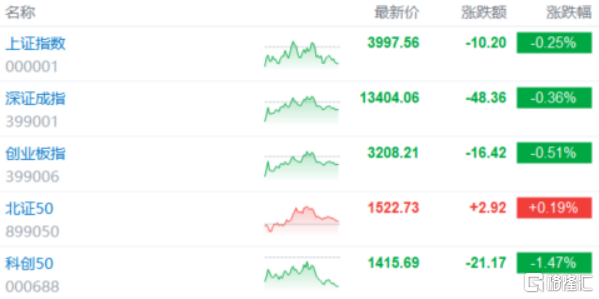
Market Overview - On November 7, A-shares experienced a slight decline, with the Shanghai Composite Index down 0.25% to 3997 points, the Shenzhen Component Index down 0.36%, and the ChiNext Index down 0.51% [1] - The total market turnover was 2.02 trillion yuan, a decrease of 557 billion yuan compared to the previous trading day, with over 3100 stocks declining [1] Sector Performance - The organic silicon sector saw significant gains, with companies like Dongyue Silicon Material and Hesheng Silicon Industry hitting the daily limit [3][5] - The fluorochemical sector also surged, with stocks such as Yongtai Technology and Duofluorite reaching the daily limit [3][5] - The lithium mining sector strengthened, with Shengxin Lithium Energy hitting the daily limit [3] - Conversely, the robotics actuator and reducer sectors declined, with Top Group leading the losses [3] Key Stocks - Notable gainers included: - Dongyue Silicon Material: +20.04% [6] - Huasheng Lithium Battery: +19.16% [6] - Fuxiang Pharmaceutical: +14.01% [6] - The fluorochemical sector saw stocks like Qichuan Chemical and Yongtai Technology also reaching the daily limit [8] Price Trends - The price of lithium hexafluorophosphate continued to rise, nearing 120,000 yuan per ton, driven by supply-demand imbalances [7] - The report from Longzhong Information indicated that the market price for lithium hexafluorophosphate fluctuated between 113,800 and 119,800 yuan per ton [7] Industry Insights - The organic silicon industry is undergoing consolidation, with leading polysilicon companies planning to form a consortium to eliminate excess capacity and settle industry debts [5] - The implementation of new energy consumption standards is expected to increase industry concentration by phasing out non-compliant production capacities [5] Future Outlook - According to Shenwan Hongyuan, the spring of 2026 may mark a phase peak, but it is unlikely to be the peak for the entire year [19] - The report suggests that as supply clears, the effective return of "policy bottom, market bottom, and economic bottom" will likely occur, potentially signaling the start of a new market cycle [19]


午评:沪指震荡翻红,煤炭、电力板块拉升,海南自贸概念活跃
Zheng Quan Shi Bao Wang· 2025-11-05 04:38
Market Overview - The stock indices experienced fluctuations in early trading on the 5th, with the Shanghai Composite Index slightly rising by 0.05% to 3962.04 points, while the Shenzhen Component fell by 0.15% and the ChiNext Index increased by 0.17% [1] - The total trading volume across the Shanghai, Shenzhen, and North markets reached 1.1499 trillion yuan [1] Sector Performance - The semiconductor sector declined again, while coal, electricity, oil, and steel sectors saw gains [1] - Retail and food & beverage sectors also showed upward movement, with active trading in Hainan Free Trade Zone, smart grid, and nuclear power concepts [1] Investment Outlook - According to Shenwan Hongyuan Securities, the Shanghai Composite Index has been in a narrow range since early September, attributed to the technology growth sector reaching a long-term price-performance ratio that lacks significant attractiveness [2] - The market's expectations for the continuation of the current technology-led rally are low, but growth remains relatively high in terms of value and cyclical stocks [2] - A potential peak is anticipated in the spring of 2026, but it is unlikely to be the peak for the entire year [2] - Conditions for a comprehensive bull market are expected to become more favorable over time, with a return to effective frameworks for "policy bottom, market bottom, economic bottom" by mid-2026 [2] - The fourth quarter is already reflecting improvements expected in 2026, with a potential rebound in PPI from negative to positive [2] - Short-term demand-side highlights may present elastic opportunities, with technology growth expected to perform better next year compared to this year [2]
前海开源基金董事总经理杨德龙:牛市的下半场将会从现在的结构性牛市走向全面牛市
Xin Lang Zheng Quan· 2025-11-02 07:12
Core Viewpoint - The current market is in the first half of a bull market, with the index just reaching 4000 points, and it is expected to transition into a full bull market next year [1][2]. Group 1: Market Conditions - The market is currently experiencing a shift, with a focus on small-cap stocks, while clean energy funds are nearing record highs, indicating a rotation of capital among sectors [1]. - There is a significant amount of household savings, amounting to 170 trillion yuan, as many investors struggle to find good investment channels due to a sluggish real estate market [1]. Group 2: Future Predictions - In the coming year, external funds are expected to accelerate their entry into the market, particularly benefiting traditional blue-chip stocks and sectors such as consumer goods and innovative pharmaceuticals, which are anticipated to have high future demand [2]. - The transition from a structural bull market to a full bull market is predicted for next year, as more investors gain confidence in the market's upward trajectory [2].
中泰证券:市场胜率坚实 “结构牛”情形下赔率空间相对有限
Xin Lang Cai Jing· 2025-10-30 23:35
Core Insights - The market odds indicator is currently at a relatively high level under a "structural bull" scenario [1] - The A-share market's securitization rate and median valuation are comparable to the structural bull levels at the end of 2021, with historical exceedance only during the comprehensive bull markets of 2009 and 2015 [1] - The Shanghai Composite Index and CSI 300's equity risk premium (ERP) is below the previous two market peaks, situated at the lower end of the rolling three-year average plus two standard deviations [1] - Overall, under the "structural bull" scenario, the market's odds space is relatively limited, and historical experience suggests that a transition to a comprehensive bull market would require a significant improvement in macro expectations or further liquidity expansion [1]
