
出口退税政策调整

Search documents
财政部:今年财政总体支出力度“只增不减”
Qi Huo Ri Bao Wang· 2026-01-21 02:53
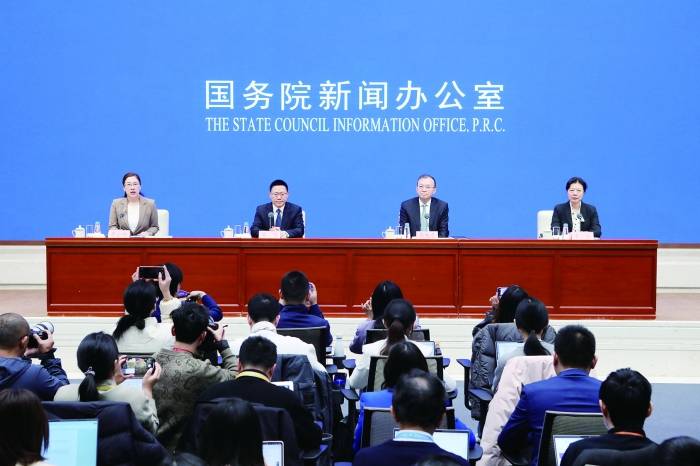
Group 1 - The Chinese government is implementing a package of policies aimed at boosting effective demand through increased consumption and expanded private investment [1] - In 2026, the fiscal department will continue to adopt a more proactive fiscal policy characterized by increased total volume, optimized structure, improved efficiency, and stronger momentum [1] - The total scale of fiscal deficit, debt, and expenditure will be maintained at necessary levels, ensuring that overall expenditure increases and key areas remain well-supported [1] Group 2 - The export tax rebate is a significant tax system arrangement in China, with adjustments made based on economic and social development needs [2] - Starting from April 1, 2026, the export tax rebate for products such as photovoltaic and phosphochemical products will be canceled, with battery product rebates phased out over two years [2] - This adjustment in export tax policy is aimed at promoting efficient resource utilization, reducing environmental pollution and carbon emissions, and facilitating a comprehensive green transformation of economic and social development [2]
如何更好激发民间投资?财政部答上证报记者
Sou Hu Cai Jing· 2026-01-20 23:50
Core Viewpoint - The core focus of the recent policies is to stimulate private investment, aiming to help enterprises reduce financing costs and enhance profitability through a comprehensive set of measures [4][5]. Group 1: Policies Supporting Private Investment - A package of policies has been introduced, including a special guarantee plan for private investment, optimized financial subsidies for equipment updates, and loan interest subsidies for small and micro enterprises [5][6]. - The policies are designed to lower financing costs and reduce barriers for private enterprises, addressing the issues of expensive and difficult financing [6][7]. - The new special guarantee plan increases the maximum guarantee amount for individual enterprises from 10 million to 20 million yuan, with the government's risk-sharing ratio rising from 20% to 40%, allowing for a maximum government guarantee of 8 million yuan on a 20 million yuan loan [6][7]. Group 2: Fiscal Policy Direction for 2026 - The fiscal policy for 2026 will focus on increasing total expenditure, optimizing expenditure structure, improving efficiency, and enhancing economic vitality [8][9]. - The total fiscal deficit, debt scale, and expenditure will be maintained at necessary levels, ensuring that overall expenditure increases and key areas are prioritized [8]. - The government aims to optimize the expenditure structure by reducing ineffective spending and directing more funds towards consumption, human investment, and social welfare [8][9]. Group 3: Market System and Export Tax Adjustments - The Ministry of Finance has announced the cancellation of export tax rebates for certain products, including photovoltaic and phosphorous chemical products, starting from April 1, 2026, to promote efficient resource use and reduce environmental pollution [11]. - This adjustment is part of a broader strategy to guide reasonable industrial structure adjustments and promote high-quality economic development [11]. - The Ministry will focus on deepening fiscal and tax reforms, standardizing fiscal subsidies, and optimizing government procurement to support the construction of a unified and competitive market system [11].

美国“股债汇”三杀!黄金新高;特朗普称不排除武力夺取格陵兰岛可能性;U23国足首次闯入亚洲杯决赛;李亚鹏最新发声,将关闭打赏 | 每经早参
Mei Ri Jing Ji Xin Wen· 2026-01-20 22:04
Group 1 - The U.S. stock market experienced significant declines, with the Dow Jones falling by 1.76%, the S&P 500 down by 2.06%, and the Nasdaq dropping by 2.39%, marking the largest single-day drop since October of the previous year [4] - Major tech stocks saw substantial losses, including Oracle and Broadcom down over 5%, Nvidia and Tesla down over 4%, and Amazon and Apple down over 3% [4] - The Nasdaq Golden Dragon China Index fell by 1.44%, with notable declines in Chinese stocks such as Bilibili down over 6% and XPeng down over 3% [4] Group 2 - The U.S. 10-year Treasury yield rose by 6.76 basis points to 4.2906%, while the 30-year yield increased by 7.92 basis points to 4.9158%, reaching highs not seen since September of the previous year [4] - The Danish pension fund "AkademikerPension" plans to sell all its U.S. Treasury holdings by the end of January due to perceived credit risks associated with Trump's policies [4] - Bridgewater's founder Ray Dalio warned that escalating trade tensions and increasing fiscal deficits could undermine confidence in U.S. debt, suggesting investors consider gold as a hedge [4] Group 3 - The international oil price showed slight fluctuations, with WTI crude oil up by 0.1% at $59.49 per barrel, while Brent crude oil fell by 0.05% to $53.91 per barrel [6] - International gold prices reached new highs, with spot gold rising by 1.91% to $4,760.02 per ounce, and COMEX gold futures up by 1.88% to $4,764.6 per ounce [6] Group 4 - The Chinese Ministry of Finance and other departments announced the continuation of tax and fee preferential policies for community family services, including elderly care and childcare, exempting related income from VAT [8] - A special guarantee plan for private investment was announced, with a total quota of 500 billion yuan to support loans for small and micro enterprises [9] - The Ministry of Finance stated that the cancellation of export tax rebates for photovoltaic products aims to address "involution" and promote high-quality economic development [10] Group 5 - Netflix has adjusted its acquisition proposal for Warner Bros. to an all-cash offer totaling $82.7 billion, with a cash price of $27.75 per share, gaining unanimous support from Warner Bros. board [17] - Netflix reported Q4 revenue of $12.05 billion, slightly below analyst expectations, and projected 2026 revenue between $50.7 billion and $51.7 billion [17] Group 6 - SK Hynix announced a record performance bonus of over 1.36 million KRW (approximately 64,000 RMB) per employee, reflecting the strong performance in the semiconductor industry [25] - The diamond market is experiencing a significant price drop, with De Beers announcing a price reduction of 10%-15% for rough diamonds, influenced by weak demand and competition from lab-grown diamonds [22]

1月20日重要资讯一览
Sou Hu Cai Jing· 2026-01-20 15:00
Group 1: New Stock Offerings - Medela's new stock offering has a subscription code of 920119, with an issue price of 41.88 yuan per share and a price-to-earnings ratio of 14.99 times, allowing a maximum subscription limit of 720,000 shares per account [2] Group 2: Fiscal Policy and Economic Measures - The Ministry of Finance will continue to implement a more proactive fiscal policy, aiming for increased total spending, improved structure, better efficiency, and stronger momentum, with necessary levels of fiscal deficit, total debt, and spending maintained through 2026 [3] - The Ministry of Finance has optimized the personal consumption loan interest subsidy policy, including credit card installment payments, removing restrictions on certain consumption areas, allowing all consumer loans to enjoy interest subsidies [3] - Starting April 1, 2026, export tax rebates for photovoltaic products will be canceled, and electronic product export tax rebates will be phased out over two years, promoting efficient resource use and guiding rational industrial structure adjustments [3] - Tax and fee preferential policies for community services such as elderly care, childcare, and housekeeping will continue, benefiting institutions providing these services [3] Group 3: Commodity Market Adjustments - The Shanghai Futures Exchange will adjust margin ratios and price fluctuation limits for futures contracts of copper, gold, and other commodities starting January 22, 2026 [4] - Domestic gasoline and diesel prices will increase by 85 yuan per ton due to rising international oil prices, marking the first price hike in 2026, with an average increase of 0.07 yuan per liter for 92 and 95 gasoline and 0 diesel [4] - Shanghai has released an action plan to enhance the linkage between spot and futures markets for non-ferrous metals, aiming to expand the international influence of "Shanghai prices" [4] Group 4: Company Earnings Forecasts - Huicheng Environmental Protection plans to increase its shareholding by 25 million to 50 million yuan [7] - JianTou Energy expects a net profit increase of approximately 253.38% year-on-year for 2025 [7] - Hikvision's performance report indicates a year-on-year growth of 18.46% in net profit attributable to shareholders for 2025 [7] - Longzi Co. anticipates a net profit increase of 245.25% to 302.8% year-on-year for 2025 [7] - Zhaoyan New Drug expects a net profit increase of 214% to 371% year-on-year for 2025 [8] - Huachen Equipment forecasts a net profit increase of 193.64% to 242.04% year-on-year for 2025 [8] - Qianyuan Power anticipates a net profit increase of 160% to 190% year-on-year for 2025 [8] - Jin Fang Energy expects a net profit increase of 123.97% to 193.7% year-on-year for 2025 [8] - Other companies such as Zhongfu Industrial, Batian Co., and Dongwei Technology also project significant year-on-year profit increases for 2025, ranging from 50% to over 300% [8][9]




财政部回应“取消光伏产品出口退税”:有利于产业结构合理调整,综合整治“内卷式”竞争
Sou Hu Cai Jing· 2026-01-20 10:51
Core Viewpoint - The Chinese government is adjusting its export tax rebate policy, particularly for solar, phosphor chemical products, and batteries, to promote high-quality economic development and green transformation [3]. Group 1: Policy Changes - The Ministry of Finance announced that starting from April 1, 2026, export tax rebates for solar, phosphor chemical products, and batteries will be canceled, following a reduction in tax rebate rates in December 2024 [3]. - This policy adjustment aims to enhance resource efficiency, reduce environmental pollution, and lower carbon emissions, aligning with China's transition to a greener economy [3]. Group 2: Economic Implications - The changes in export tax rebates are intended to guide reasonable adjustments in industrial structure and promote industrial transformation and upgrading [3]. - The policy is part of a broader strategy to combat "involution" competition and foster high-quality economic development [3].
2026年财政总体支出力度“只增不减”!财政部发声
Sou Hu Cai Jing· 2026-01-20 09:49
Group 1 - The Chinese government plans to issue 1.3 trillion yuan in ultra-long special bonds to support consumption and economic transformation, with 300 billion yuan allocated for consumer subsidies, expected to boost related sales by approximately 2.6 trillion yuan [1] - The government aims to enhance consumption by implementing personal consumption loan and service industry loan interest subsidy policies, as well as supporting new consumption models and international consumption environment [1] - The fiscal deficit rate for 2025 is projected to be around 4%, an increase of 1 percentage point from the previous year, with new government debt expected to reach 11.86 trillion yuan, reflecting a significant rise compared to previous years [3] Group 2 - The government will continue to arrange ultra-long special bonds in 2026 for "two heavy" and "two new" projects, optimizing policies and improving the effectiveness of bond funds [4] - The Ministry of Finance will maintain a more proactive fiscal policy, ensuring that total expenditure increases while optimizing structure and improving efficiency [5] - Local government debt risks are gradually being mitigated, with an average interest cost reduction of over 2.5 percentage points after debt replacement [6] Group 3 - The cancellation of export tax rebates for photovoltaic and electronic products is aimed at promoting efficient resource utilization and addressing "involution" in competition, thereby fostering high-quality economic development [7] - A new policy will provide risk-sharing funds from the central government to support private enterprises and private equity investment institutions in issuing bonds, offering credit support to mitigate investor losses [8] - Preliminary data suggests that the fiscal revenue and expenditure for 2025 may achieve balance, with strong budgetary support for economic and social development [9][10]
2026年财政总体支出力度“只增不减”!财政部发声
券商中国· 2026-01-20 09:32
Core Viewpoint - The article discusses the Chinese government's proactive fiscal policies aimed at boosting economic growth and enhancing the quality of life for citizens, with a focus on consumption and structural adjustments in the economy. Group 1: Fiscal Policy and Economic Growth - In 2025, the government plans to issue special long-term bonds totaling 1.3 trillion yuan, with 300 billion yuan allocated for consumer subsidies to stimulate sales exceeding approximately 2.6 trillion yuan [2] - The fiscal deficit rate for 2025 is set at around 4%, an increase of 1 percentage point from the previous year, with new government debt expected to reach 11.86 trillion yuan, up by 2.9 trillion yuan from the previous year [4] - The Ministry of Finance will continue to implement a more proactive fiscal policy, ensuring that total expenditure increases while optimizing structure and enhancing efficiency [6] Group 2: Consumer Support and Debt Management - The government will optimize personal consumption loan interest subsidy policies, allowing all consumer loans to qualify for subsidies, including credit card installment payments [13] - Local government debt risks are gradually being mitigated, with an average interest cost reduction of over 2.5 percentage points after debt replacement [7] - A new risk-sharing fund will be established to support private enterprises and private equity investment institutions in issuing bonds, providing credit support to mitigate investor losses [10] Group 3: Structural Adjustments and Market Regulations - The adjustment of export tax rebate policies for photovoltaic and electronic products aims to promote efficient resource utilization and address "involution" in competition [9] - The government will continue to arrange special long-term bonds for "two new" and "two heavy" projects in 2026, optimizing policy and enhancing the effectiveness of bond funds [5] - The aim is to create a more favorable consumption environment through the introduction of new consumption scenarios and support for innovative business models [2]

2026年财政总体支出力度“只增不减”!财政部重磅发声
2 1 Shi Ji Jing Ji Bao Dao· 2026-01-20 07:56
Group 1 - The central government will maintain a proactive fiscal policy in 2026, ensuring that overall expenditure increases and key areas are strongly supported [1] - The total fiscal deficit, debt scale, and expenditure will remain at necessary levels, with a commitment to "only increase" in overall spending [1] - The cancellation of export tax rebates for photovoltaic products and electronics aims to promote efficient resource utilization and address disordered competition [2] Group 2 - In 2025, the central government allocated approximately 1.2 trillion yuan for basic pension insurance subsidies, with a 2% increase in pension levels [3] - The new government debt scale for 2025 is 11.86 trillion yuan, an increase of 2.9 trillion yuan from the previous year, reflecting a more aggressive fiscal policy [5] - The focus of the loan interest subsidy policy for small and micro enterprises will be on 14 key industrial chains, including new energy, automotive, and medical equipment [6] Group 3 - In 2026, the government will continue to issue ultra-long special bonds to support "two new" and "two heavy" construction projects, optimizing policy and enhancing the effectiveness of bond funds [4]
官宣落地!光伏出口退税 “归零”,3个月窗口期引发行业 “抢出口” 大战
Sou Hu Cai Jing· 2026-01-20 06:03
Core Viewpoint - The Ministry of Finance and the State Taxation Administration announced the cancellation of VAT export rebates for certain products, including photovoltaic (PV) products, effective April 1, 2026, marking a significant policy adjustment that has raised concerns across the industry chain [1][2] Policy Adjustment - The adjustment specifically targets the export of PV products, including monocrystalline silicon wafers, solar cells, and PV modules, which are primarily affected by the policy change [2] - The previous reduction of the export rebate rate from 13% to 9% in December 2024 is part of a broader trend of tightening export rebate policies amid declining global PV prices and increasing competition [2][3] Cost Impact - The cancellation of approximately 9% export rebate is expected to increase the cost of PV products by 0.06 to 0.07 yuan per watt, necessitating a price adjustment to maintain reasonable profit margins [3] - The policy change is anticipated to directly impact the pricing structure, order composition, and profit models of companies in the industry [3] Market Reaction - A three-month transition period has been established, leading to expectations of a surge in PV product exports before the new policy takes effect, with some companies accelerating production and signing contracts to mitigate cost pressures [4] - Research institutions predict a potential doubling of battery module exports in the first quarter of 2026 as companies rush to capitalize on the policy window [4][5] Industry Dynamics - The current trend shows a divergence between the export volume and export value of PV products, with significant growth in volume but a 13.2% decline in total export value to $24.42 billion in the first ten months of 2025 [5] - The policy aims to guide the industry away from low-price competition and towards high-quality development, addressing the issues of price erosion and international trade friction [6][7] Long-term Implications - The adjustment is seen as a means to encourage the PV industry to move beyond low-cost competition and to promote higher quality and sustainable growth [7][8] - The cancellation of export rebates is expected to accelerate industry differentiation, benefiting companies with premium capabilities while pressuring low-margin firms to exit the market [8]

退税取消,倒逼光伏锂电加速洗牌
Zhong Guo Hua Gong Bao· 2026-01-20 02:32
Group 1 - The Ministry of Finance and the State Taxation Administration announced the cancellation of export VAT rebates for photovoltaic and lithium battery products starting April 1, 2026, significantly increasing export costs and putting pressure on profits, with companies expected to rush to declare exports before the deadline [1] - China's photovoltaic industry holds 80%-90% of global capacity and has been the world's largest in production and installation for over a decade, but faces structural contradictions due to excessive capital inflow and a large number of small enterprises, leading to disordered capacity expansion [1] - The adjustment of the export tax rebate policy is seen as a targeted measure to reduce reliance on subsidies, encouraging technological innovation and shifting the industry from low-price competition to value competition [2] Group 2 - The policy is expected to benefit leading companies by promoting industry concentration and eliminating low-price competition, with companies that have strong technology and cost control likely to gain in the medium to long term [3] - Some companies are signaling a cautious approach, with Tianqi Materials planning to suspend production of a lithium hexafluorophosphate line and adjust investment projects, indicating a shift from large-scale expansion [3] - The introduction of the export tax rebate policy is anticipated to intensify the competition between upstream and downstream sectors, potentially driving up material prices, as most major materials have shown significant price increases since December [3]