制造业升级

Search documents
为什么中国不能走“消费大国”那条捷径?真正的底牌永远是制造业
Sou Hu Cai Jing· 2026-01-14 15:52
Core Argument - The article argues that transitioning from a manufacturing-based economy to a consumption-driven one in China is not feasible without a strong production system, high labor productivity, and stable employment and income growth [3][4][42]. Group 1: Understanding "Consumer Power" - The concept of a "consumer power" is often misunderstood as merely spending more money, but it requires a robust economic structure that supports income generation [5][6]. - A true consumer power must meet three criteria: high income and productivity, sustainable employment structures, and a strong position in international division of labor [7]. Group 2: The Role of Manufacturing - Manufacturing is not an outdated model but serves as a safety net, employment pool, technological foundation, and fiscal base for a country of China's size [4]. - The unique value of manufacturing lies in its ability to organize large-scale employment across various sectors, which is crucial for improving income and job stability [8][10]. Group 3: Economic Structure and Welfare - High welfare and wages are not achievable without a strong underlying economic structure, which includes high productivity, strong capital returns, and advantages in international division of labor [19][20]. - Countries that cannot create high added value while seeking high welfare and consumption may end up relying on debt, inflation, or industrial relocation, which ultimately harms the lower-income groups [20]. Group 4: Path to Sustainable Growth - The article emphasizes that the correct approach is to strengthen industries that can continuously create value before discussing welfare and consumption upgrades [21][24]. - The logical chain for sustainable growth is: upgrading manufacturing → more stable employment and higher productivity → stronger household income → natural consumption upgrade [24]. Group 5: Recommendations for China - China should focus on enhancing manufacturing to support stronger consumption capabilities, with key areas of investment including high-end equipment, advanced materials, and smart manufacturing [27][28]. - Employment absorption capacity should be a hard indicator in industrial policy, as industries that can create numerous middle-skill jobs are essential for expanding the middle class and solidifying the consumption base [28]. - Improving lower-income levels should rely on skills, productivity, and fair distribution mechanisms rather than one-time subsidies [29]. - Development of productive service industries, which can enhance overall efficiency and wage levels, is crucial, as these services are symbiotic with manufacturing [31]. Group 6: Conclusion - The article concludes that a large country's strength lies not in its ability to spend but in its capacity to produce, innovate, and create jobs [42].


美国“电荒”,中国“电卷”
华尔街见闻· 2026-01-14 10:40
Core Viewpoint - The article contrasts the electricity pricing dynamics in the United States and China, highlighting the stark differences in how each country manages electricity supply and demand, leading to divergent pricing trends [3][5][19]. Group 1: United States Electricity Market - In Loudoun County, Virginia, residents express concerns over rising electricity costs due to the influx of data centers, which are consuming significant power resources [2][8]. - The pricing mechanism in the U.S. is characterized by a transparent and immediate reflection of supply shortages, where electricity prices surge when reserve margins fall below safety thresholds [8][10]. - The average electricity price in the U.S. has been on the rise over the past two years, driven by necessary infrastructure upgrades to support increasing demand from AI and other sectors [9][10][11]. - The burden of higher electricity costs falls on end-users, who face immediate financial impacts, leading to public protests and calls for regulatory hearings [19][22]. Group 2: China Electricity Market - In contrast, China's electricity prices are experiencing a downward trend, with a reported 10% year-on-year decrease in purchasing prices since the beginning of 2025 [3][14]. - The Chinese electricity market is undergoing a "passive clearing" process, where supply-side expansions, particularly in coal and renewable energy, are outpacing demand growth, resulting in lower prices [14][16]. - The role of data centers in China is seen as beneficial, as they help absorb excess electricity generated from renewable sources, particularly in regions with surplus capacity [17][20]. - The financial burden of low electricity prices is shifted to the supply side, where power generation companies and equipment manufacturers face squeezed profit margins, leading to a "utility-like" operational model [20][21].

当前时点,如何看待“2X”ERP压力位
Bank of China Securities· 2026-01-09 02:54
策略研究 | 证券研究报告 — 总量点评 2026 年 1 月 9 日 策略点评 当前时点,如何看待" 2X " ERP 压力位 全 A 虽临 2X 估值极值压制,但随阈值动态抬升与盈利驱动,全年仍具双位 数空间。 中银国际证券股份有限公司 具备证券投资咨询业务资格 策略研究 证券分析师:王君 (8610)66229061 jun.wang@bocichina.com 证券投资咨询业务证书编号:S1300519060003 证券分析师:徐亚 (8621)20328506 ya.xu@bocichina.com 证券投资咨询业务证书编号:S1300521070003 历史回溯:理解"2X"作为极端风险阈值的指标意义。股权风险溢价 (ERP)的两倍标准差(2X)上沿是衡量 A 股是否进入"极致泡沫化" 的关键阈值 。从历史长周期来看,万得全 A 指数仅在 2007 年(持续 102 个交易日)和 2015 年(持续 157 个交易日)这两次大牛市中真正实现过 突破 。截至 2026 年 1 月 7 日,万得全 A 的 ERP 为 2.3%,距离 2.18%的 "2X"压力线仅差 0.12% 。这意味着在不考虑盈利 ...
第十届中国制造强国年会:“十五五”加速推进制造业升级
Zhong Guo Hua Gong Bao· 2025-12-31 06:08
Group 1 - The core viewpoint of the articles emphasizes the need for high-quality development and upgrading of China's manufacturing industry during the "14th Five-Year Plan" period, focusing on intelligent, green, and integrated industrialization [1][2][3] - The conference highlighted six key tasks for future development, including enhancing technological innovation, developing the digital economy, and fostering new industrial ecosystems [1] - Experts suggest that the key to upgrading China's manufacturing lies in developing competitive high-end equipment industries and fostering collaboration among teams focused on equipment organization, manufacturing, and key technology research [2][3] Group 2 - The strategy for the next decade should focus on solidifying the industrial foundation, advancing high-level technological self-reliance, and nurturing new productive forces [2] - There is a call for increased support for basic research and cutting-edge technologies in industries that have already reached a world-leading status [3] - The implementation of a "key breakthrough" strategy should be continued while also incorporating new industries such as smart instruments and biological manufacturing [3]
广发基金刘彬:与变化共舞把握科技制造产业趋势
Shang Hai Zheng Quan Bao· 2025-12-28 13:28
Core Insights - The essence of growth investment is to adapt to changes, requiring continuous learning and understanding of industry trends [1][2] - Liu Bin's investment strategy is based on deep industry research, focusing on long-term growth and the combination of cyclical and growth sectors [1][2] Investment Philosophy - Liu Bin believes that short-term market pricing is often efficient, but there are discrepancies in long-term industry trend understanding, leading to early investment opportunities [2] - The investment portfolio is characterized by a "large-cap growth" style, avoiding stocks with a market capitalization below 100 billion [2] - Liu Bin emphasizes the importance of industry penetration rates and technological advancements, identifying significant returns during phases of rising penetration [2] Portfolio Management - The investment approach includes diversifying across multiple sectors with favorable economic conditions to capture various industry trends [3] - Liu Bin maintains a balanced allocation across different industry stages, with the top ten sectors comprising around 60% of the portfolio [3] Focus on Core Competitiveness - The future source of excess returns is expected to come from the continuous release of engineer dividends, with China having advantages in engineer numbers and R&D costs [4] - R&D investment is a critical metric for stock selection, alongside cost control capabilities, which encompass supply chain management and production efficiency [5] Sector Focus - Liu Bin's expertise lies in the "technology manufacturing" sector, with a focus on hard tech industries such as TMT, electronics, new energy, and automotive [6] - The automotive sector, particularly in electric vehicles, is seen as a significant growth area, with Chinese brands poised for substantial profits [6] - The AI industry is also a key focus, with an emphasis on domestic computing power and storage, as well as the potential of robotics as a transformative industry [7]
云南先进制造业股权投资母基金落地
FOFWEEKLY· 2025-12-18 10:01
Core Viewpoint - The establishment of the Yunnan Advanced Manufacturing Equity Investment Mother Fund marks a significant step in supporting the transformation and upgrading of traditional industries and fostering strategic emerging industries in Yunnan Province [1] Group 1: Fund Overview - The fund has been successfully registered with the Asset Management Association of China, indicating its official launch [1] - Managed by Yunnan Chantuo Equity Investment Fund Management Co., Ltd., the fund aims to invest in various sectors [1] Group 2: Investment Focus - Investment areas include the deep processing of non-ferrous metals, particularly aluminum and copper, as well as new materials in precious metals like indium, germanium, and platinum [1] - The fund will also focus on high-efficiency and high-value utilization of phosphorus resources for new energy batteries and fine phosphorus chemical industries [1] - Additional sectors of interest include high-end equipment manufacturing, green food, and deep processing of traditional Chinese medicine [1] - The fund aims to support the cultivation of manufacturing champions and specialized "little giant" enterprises [1]

助力国潮发展 近六成受访青年期待创新消费场景
Zhong Guo Qing Nian Bao· 2025-12-04 01:00
Core Insights - The rise of "Guochao" products reflects a blend of high aesthetics, creativity, and deep cultural roots, appealing to the younger generation [1][3] - A survey indicates that 65.3% of young respondents rated their satisfaction with Guochao products at 8 or above on a scale of 10, with 12.8% giving a perfect score [1] - There is a growing expectation for Guochao products to enhance practicality and variety, moving beyond mere aesthetics to become more integrated into daily life [2][3] Consumer Preferences - 60.7% of young respondents desire more "tech-driven" and "green" Guochao products, while 58.1% look for innovative consumption scenarios like immersive offline experience stores [2] - 57.8% of respondents want deeper cultural integration, merging Chinese aesthetics and storytelling into product designs [2] Industry Development - The Guochao phenomenon is seen as a significant representation of China's manufacturing upgrade and youth cultural confidence, evolving from a consumer trend to a cultural phenomenon [3] - Experts suggest that to promote Guochao development, brands should collaborate with cultural institutions and universities to explore traditional cultural resources for product design [3] - There is a call for increased R&D investment to combine modern technology with traditional culture, enhancing product practicality and consumer experience [3] Demographics - Among surveyed youth, 42.4% are male and 57.6% are female, with 26.7% being post-2000s, 24.1% post-1995, and 22.7% post-1990 [4] - The survey participants include 40.1% from first-tier cities, 35.2% from second-tier cities, and 18.9% from third and fourth-tier cities [4]
机构:钢铁行业未来存在估值修复的机会
Zheng Quan Shi Bao Wang· 2025-12-04 00:55
Core Viewpoint - The steel industry in China is currently facing supply-demand contradictions, but with the implementation of "stabilizing growth" policies, steel demand is expected to remain stable or slightly increase, supported by real estate stabilization, steady infrastructure investment, continuous manufacturing development, and high steel exports [1] Group 1: Production and Demand - In October, China's stainless steel crude steel production reached 3.6244 million tons, an increase of 78,700 tons month-on-month, representing a growth of 2.22% [1] - The overall profit of the steel industry is declining, but the total steel demand is anticipated to remain stable due to various supportive factors [1] Group 2: Supply and Industry Structure - The supply side is expected to tighten under the influence of policy expectations, leading to increased industry concentration [1] - The macro trend of high-quality economic development and new productive forces is expected to benefit high-end steel products, particularly those with high barriers and added value [1] Group 3: Investment Opportunities - The steel industry is expected to see a stable and improving industrial pattern, with some companies currently undervalued, presenting structural investment opportunities [1] - Companies with high gross margins and strong cost control, as well as leading steel enterprises benefiting from economies of scale, are likely to have valuation recovery opportunities in the future [1] Group 4: Long-term Outlook - Under the ongoing supply-side "anti-involution," steel production capacity is concentrating on quality leading companies [1] - On the demand side, special steel is expected to benefit from manufacturing upgrades and AI transformation, while leading companies in the ordinary steel sector may benefit from improvements in the industry supply-demand structure in the medium to long term [1]
雷军放话:5 年后人形机器人进驻小米工厂,这个赛道的商业化拐点要来了?
Sou Hu Cai Jing· 2025-12-03 04:43
Core Insights - Xiaomi's founder Lei Jun predicts that humanoid robots will be widely deployed in Xiaomi factories within the next five years, emphasizing that all industries should leverage AI technology [1][3] - The demand for humanoid robots in home settings is expected to surpass that in industrial applications, indicating a significant market potential [1][5] Industrial Scene - Xiaomi's advancements in AI-enabled manufacturing, particularly in its automotive factory, demonstrate the transformative value of AI in manufacturing, achieving a tenfold increase in efficiency for certain tasks [3][4] - The industrial sector is seen as the primary area for the initial deployment of humanoid robots, addressing challenges such as rising labor costs and labor shortages in hazardous jobs [4][6] - Industry forecasts suggest that the market for industrial humanoid robots could exceed 100 billion in the next 5-10 years, with applications expanding from simple tasks to more complex collaborative work [4][6] Home Scene - The home environment presents a significant market opportunity for humanoid robots, but current technological limitations pose challenges for commercialization [5][6] - Mainstream humanoid robots still struggle with tasks requiring advanced navigation, object manipulation, and natural language interaction, hindering their widespread adoption in households [5][6] - The market for household humanoid robots is projected to evolve from single-function devices to multifunctional smart home hubs over the next decade, potentially reaching a market size of 1 trillion [5][6] Industry Chain - The development of humanoid robots is heavily reliant on the supply chain, including key components like servo motors, sensors, and AI algorithms [6][7] - Significant progress has been made in the localization of core components in China, which reduces R&D costs and supports domestic companies like Xiaomi in their humanoid robot initiatives [6][7] - The entry of leading companies into the humanoid robot space is expected to stimulate technological innovation across the industry chain, creating a positive feedback loop that accelerates industry maturity [6][7] Technological Development - The humanoid robot industry is on the verge of significant advancements, driven by the need for automation in manufacturing and ongoing breakthroughs in core technologies [7] - Despite existing challenges, the scaling of industrial applications is imminent, and the commercialization of household robots is anticipated to become a reality as technology continues to evolve [7]



目标10万亿,新机遇来了
3 6 Ke· 2025-11-23 23:30
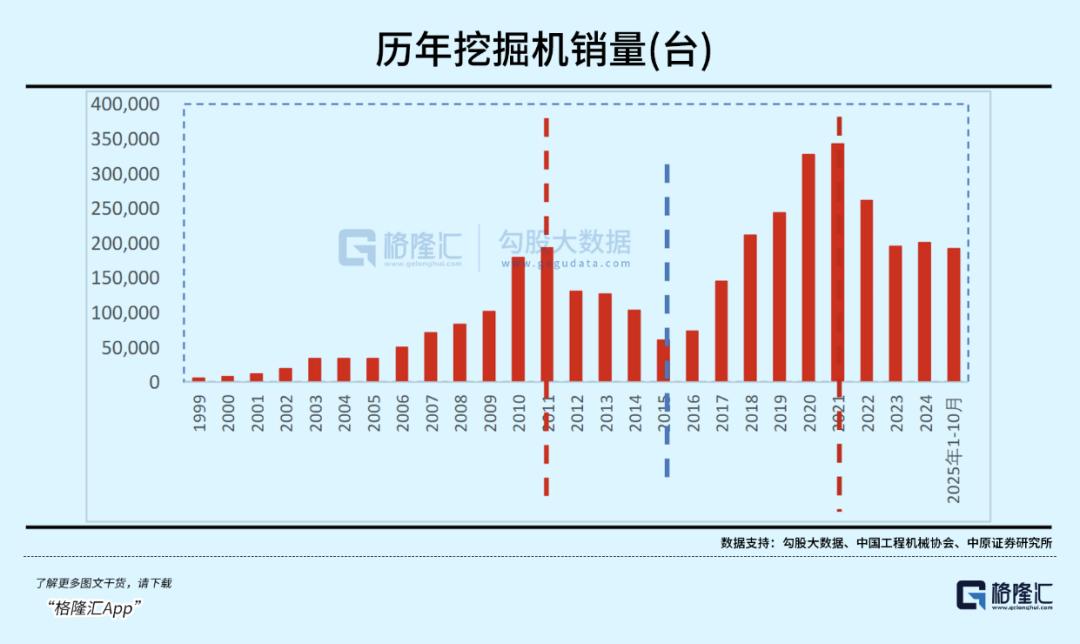
Core Viewpoint - The mechanical industry is experiencing a dual opportunity of technological iteration and demand expansion, becoming a core pillar for high-quality development of the real economy [1] Group 1: Mechanical Industry Overview - Domestic companies are accelerating breakthroughs in key technologies such as high-end machine tools and industrial robots, leading to a simultaneous increase in both volume and price [1] - The 14th Five-Year Plan emphasizes high-level technological self-reliance and control over the industrial chain, indicating strong future support for the basic components industry [1] - The "Mechanical Industry Stabilization Growth Work Plan (2025-2026)" targets an average annual revenue growth rate of 3.5%, aiming to exceed 10 trillion yuan [1] Group 2: Engineering Machinery - The engineering machinery sector is characterized by significant cyclical attributes, with equipment updates and export expansion being the main demand drivers [3] - The new equipment update cycle is expected to begin in 2025, following the previous cycle from 2016 to 2021, and is projected to last until 2030 [3] - In Q3 2025, the revenue of the engineering machinery sector reached 2,449.72 billion yuan, with a year-on-year increase of 11.49% [6] Group 3: Shipbuilding Industry - In the first nine months of 2025, China's shipbuilding industry completed a total of 38.53 million deadweight tons, a year-on-year increase of 6.0% [7] - The industry maintains a leading global position, with a 53.8% share of global completed shipbuilding volume [7] - The shipbuilding sector's revenue in Q3 2025 was 1,191.5 billion yuan, reflecting a year-on-year growth of 17.57% [10] Group 4: Lithium Battery Equipment - The lithium battery equipment sector is witnessing a recovery in demand, driven by the explosive growth in domestic and international energy storage markets [14] - In Q3 2025, the revenue of the lithium battery equipment sector reached 263.32 billion yuan, with a year-on-year increase of 8.75% [17] - The industry is transitioning from a phase of "scale expansion" to "quality improvement," supported by effective policies and expanding demand [14] Group 5: Investment Outlook - The engineering machinery sector is expected to continue its recovery in 2025, with a confirmed bottom and the initiation of an equipment update cycle [21] - The shipbuilding industry is in a prolonged recovery phase, with a focus on high-value orders and structural optimization [21] - The lithium battery equipment sector is benefiting from the growth of new energy vehicles and energy storage demand, indicating a reversal in supply and demand dynamics [21]