存储周期

Search documents
“扛不住了”!电脑涨价压力太大,联想、戴尔、惠普最新消息
Mei Ri Jing Ji Xin Wen· 2025-12-08 23:25
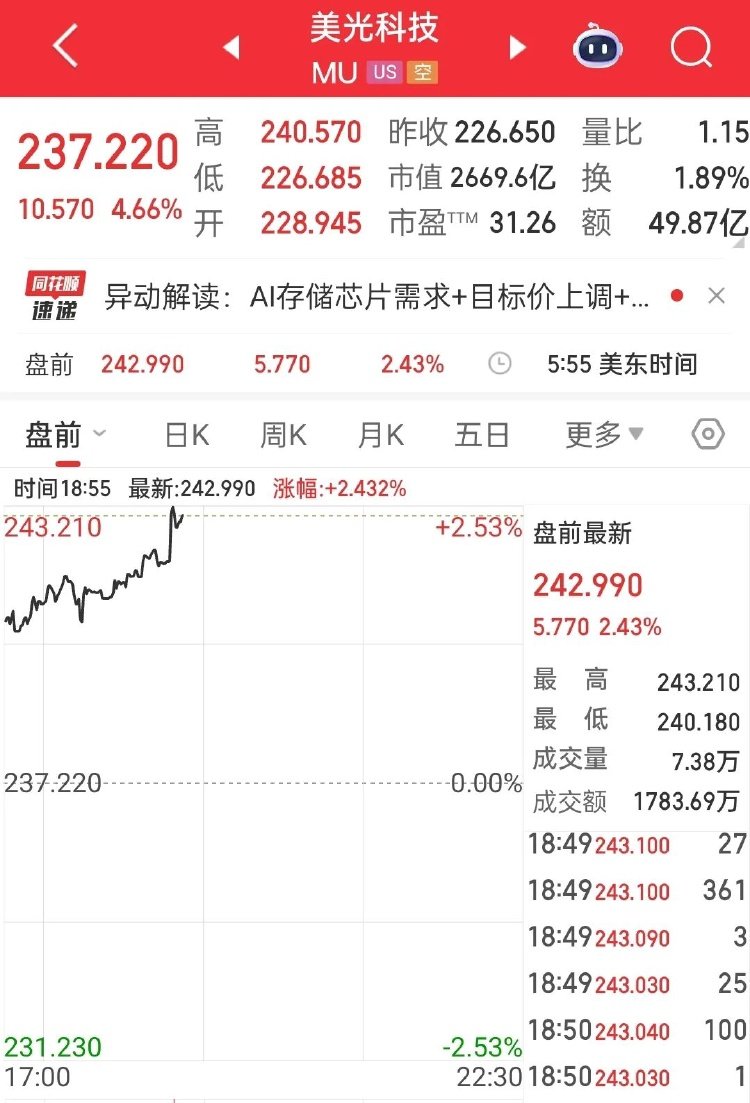
Group 1 - The core viewpoint of the articles highlights a significant surge in storage chip prices, particularly DDR4x, which has increased over four times this year, leading to a "hoarding" phenomenon among distributors while manufacturers face historically low inventory levels [1] - Major PC manufacturers such as Lenovo, Dell, and HP are planning price increases for their products, with expected hikes of up to 20%, due to rising memory chip costs [1] - Lenovo has already notified customers about upcoming price adjustments, with new pricing set to take effect by January 1, 2026, while Dell is considering price increases of at least 15%-20% as early as mid-December [1] Group 2 - Micron has announced the termination of its consumer brand Crucial to focus on data center clients, which have higher profit margins, causing stock prices of related companies like SK Hynix and KIOXIA to rise significantly [2] - The A-share storage chip sector has also seen strong gains, with companies like Shannon Microelectronics and Jiangbo Long rising over 10% [2] - Analysts predict Micron's Q3 revenue will reach $13.2 billion, exceeding Wall Street's expectations of $12.7 billion, with an expected earnings per share of $4.15, higher than the average forecast of $3.84 [4] Group 3 - Reports indicate that major storage manufacturers like SanDisk, Micron, and Samsung are issuing price increase notices, establishing a trend of rising storage prices into Q4 2025, driven by strong demand from AI data center construction [5] - The DRAM market is expected to remain tight due to sustained demand for HBM and high-capacity DDR5, while NAND supply shortages are emerging, further boosting enterprise SSD demand [5] - Overall, the storage industry is in the early stages of a super cycle, with high visibility of shortages expected to last until at least the end of 2026, indicating a positive outlook for the current structural cycle [5]


券商晨会精华 | 2026年机械行业中科技板块仍具备最大投资机会
智通财经网· 2025-12-08 00:46
Group 1 - The market showed a rebound last Friday, with the Shanghai and Shenzhen stock exchanges recording a transaction volume of 1.73 trillion, an increase of 176.8 billion compared to the previous trading day. The Shanghai Composite Index rose by 0.7%, the Shenzhen Component Index by 1.08%, and the ChiNext Index by 1.36% [1] - Sectors such as insurance, precious metals, Fujian, and commercial aerospace saw significant gains, while banking, traditional Chinese medicine, and film and television sectors experienced declines [1] Group 2 - CITIC Securities highlighted a "super cycle" in resources, emphasizing the investment value of strategic mineral resources amid increasing global macroeconomic and geopolitical uncertainties. The long-term investment logic for copper, aluminum, and gold is clear, driven by supply constraints and green economic demand [2] - China International Capital Corporation (CICC) expressed optimism for the technology sector within the machinery industry in 2026, focusing on domestic demand recovery and high export growth as key structural opportunities [3] - Huatai Securities released an outlook for the electronics industry in 2026, maintaining a positive view on the AI chain and noting the impact of the storage cycle. The report suggests several focus areas, including the potential for sustained price increases in the storage sector driven by AI data centers [4]



Sandisk Stock To $110?
Forbes· 2025-12-04 15:10
Core Viewpoint - SanDisk is experiencing significant stock price growth, currently trading at approximately $210, but faces potential risks of a 50% decline due to market volatility and pricing pressures in the NAND sector [2][12]. Financial Performance - SanDisk reported approximately $7.4 billion in revenue for 2025, reflecting a modest growth of 10% amid stabilizing NAND prices [4]. - The stock is valued at around 16x forward earnings and 4x forward sales, indicating a premium valuation based on optimistic forecasts for the storage cycle extending into 2026 [5]. Market Dynamics - NAND pricing remains vulnerable, with potential supply increases from major competitors like Samsung, SK Hynix, and Micron threatening recent pricing improvements [6]. - Margins are under pressure due to rising costs and yield challenges, particularly with the transition to 238-layer NAND [7]. - Increased competition in the enterprise SSD market from hyperscalers and lower-priced Chinese competitors is impacting SanDisk's market share [8]. Strategic Positioning - SanDisk maintains a strong position in consumer and OEM markets, benefiting from established distribution channels and partnerships [11]. - The company has implemented efficiency improvement initiatives that could enhance profitability if pricing remains stable [10]. Long-term Outlook - If the storage cycle remains constrained, SanDisk could sustain its pricing power into 2026, potentially stabilizing its current valuation [10][13]. - However, if NAND pricing softens or market share declines, the stock could face a significant downcycle, potentially dropping to around $110 [12].

踩中存储行情,这家芯片分销商凭啥3个月翻6倍?
芯世相· 2025-12-03 09:47
Core Viewpoint - The article discusses the rapid rise of Xiangnon Chip Creation, a chip distributor, whose stock price surged sixfold in a few months due to the booming storage chip market driven by AI demand and server expansion. The company has become one of the top ten global chip distributors, but faces challenges related to profitability and supplier dependency [3][21][24]. Group 1: Stock Performance and Market Dynamics - Xiangnon's stock price increased from 22.88 yuan at the beginning of the year to around 204.57 yuan by November, with a total market value exceeding 900 billion yuan [4][21]. - The surge in stock price is attributed to the company's deep involvement in the storage sector, with storage products accounting for approximately 70% of its distribution business [3][4]. - The first wave of price increases began in April, with major manufacturers like Samsung and SK Hynix reducing production of DDR4 chips, leading to a tightening supply and subsequent price hikes [5][7]. Group 2: Financial Performance - In the first three quarters of the year, Xiangnon's revenue exceeded its total revenue for 2024, reaching 264 billion yuan, with significant year-on-year growth [19][21]. - The company's gross profit margin has been under pressure, dropping below 3%, the lowest in five years, despite revenue growth of 115.4% in 2024 [21][24]. - The operating costs increased by 63.37% year-on-year, outpacing revenue growth, indicating potential profitability issues [24][26]. Group 3: Company Background and Transformation - Xiangnon Chip Creation originated from a washing machine parts manufacturer and transformed into a semiconductor distributor after acquiring a controlling stake in a chip distribution company in 2019 [11][12]. - The company rebranded and shifted its focus to electronic component distribution, with distribution business accounting for nearly 97% of its revenue by 2024 [12][19]. - The acquisition of key supplier rights from major manufacturers like MediaTek and SK Hynix has been crucial for Xiangnon's growth trajectory [15][19]. Group 4: Risks and Challenges - The company faces significant risks due to its high dependency on a few suppliers, with SK Hynix accounting for 52.3% of its procurement [22][23]. - The concentration of revenue from a limited number of customers poses a risk, as nearly 90% of sales come from the top five clients [22][23]. - The cyclical nature of the storage industry introduces volatility in profit margins, with potential inventory devaluation risks if market conditions change [24][26].

20cm速递|创业板50ETF国泰(159375)盘中涨超1.2%,国产算力板块有望成为市场主线
Mei Ri Jing Ji Xin Wen· 2025-12-03 02:59
Group 1 - TrendForce forecasts a 45-50% quarter-over-quarter increase in final conventional DRAM contract prices for Q4, with overall DRAM contract prices expected to rise by 50-55% [1] - Adata's chairman anticipates a complete shortage of DRAM and NAND Flash in the first half of 2026, with NAND shortages expected to be deeper and with larger price increases than previously assessed due to reduced supply from earlier DRAM capacity constraints [1] - The "14th Five-Year Plan" emphasizes technological self-sufficiency, positioning the domestic computing power sector as a market focus, while also maintaining optimism about the storage cycle and innovation cycle in consumer electronics driven by the AI wave [1] Group 2 - The Guotai 50 ETF (159375) tracks the ChiNext 50 Index (399673), which has a daily price fluctuation of 20%, reflecting the performance of 50 high liquidity and large market capitalization stocks from the ChiNext market [1] - The index's constituent stocks are primarily distributed across high-growth sectors such as power equipment and biomedicine, showcasing a combination of technological innovation and sustained growth potential [1]

北京君正:DRAM涨价利于公司产品推广销售,将根据市场情况调整价格
Xin Lang Cai Jing· 2025-11-25 04:37
Group 1 - The core viewpoint is that the upward trend in storage cycles and the continuous price increase of DRAM are beneficial for the promotion and sales of the company's products [1] - The company will adjust prices based on market conditions [1]

兆易创新:存储周期更趋乐观 利基型DRAM市场将持续供不应求
Zheng Quan Shi Bao Wang· 2025-11-24 09:44
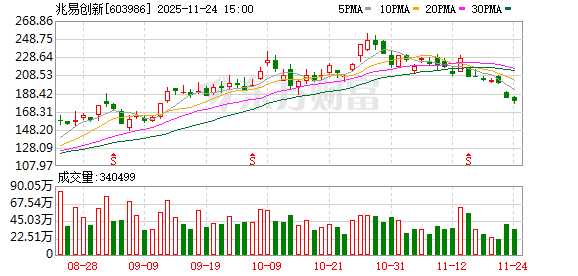
Core Viewpoint - The company, Zhaoyi Innovation, has experienced significant growth in Q3 2023, driven by strong demand for storage products and an improved storage cycle, with a year-on-year profit increase of approximately 60% [2] Financial Performance - In Q3 2023, the company's revenue increased by 31.4% year-on-year to 2.68 billion yuan, while net profit attributable to shareholders rose by 61.1% to 508 million yuan, with a quarter-on-quarter growth of 49% [2] - The gross margin for Q3 improved by 3.7 percentage points to 40.72% due to price increases in storage products [2] Product Line Developments - The niche DRAM market is experiencing a clear supply-demand imbalance, with expectations for price increases to continue over the next two quarters and maintain relatively high levels in subsequent quarters [2][4] - The company's niche DRAM products are expected to surpass MCU business to become the second-largest product line, with significant revenue growth anticipated in the second half of the year [3] - NOR Flash is in a mild price increase cycle, and SLC NAND products are also beginning to see price increases [3] Market Outlook - The company is optimistic about the storage cycle, with expectations for continued demand driven by AI infrastructure and computing power growth from major tech companies [4] - The company anticipates that the niche DRAM market will remain tight over the next two years, with prices expected to rise further in Q4 and maintain good levels in the following year [4] Strategic Partnerships - The company has invested a total of 2.3 billion yuan in Changxin Technology, which provides good capacity support for its niche DRAM products [4] - The company plans to mass-produce its self-developed LPDDR4X series products next year and is also working on the development of LPDDR5X small-capacity products [4] Product Portfolio - The company's current product offerings include standard interface storage products such as niche DRAM (DDR3L 2Gb/4Gb, DDR4 4Gb/8Gb, LPDDR4 small-capacity products), NOR Flash, and SLC NAND Flash [5] - The company aims to leverage changes in the industry supply landscape to develop higher-density products in the 2D NAND space, but has no plans for 3D NAND or DDR5 products [5]

小米集团-W(1810.HK):汽车单季度实现盈利 存储周期带来手机成本端压力
Ge Long Hui· 2025-11-21 03:44
Core Insights - The company reported a significant increase in revenue and adjusted net profit for Q3 2025, with revenue reaching 113.1 billion yuan (up 22.3% year-on-year) and adjusted net profit at 11.3 billion yuan (up 80.9% year-on-year) [1] Automotive Business - The automotive segment achieved profitability in Q3, with vehicle deliveries reaching 108,796 units (up 173.4% year-on-year) [1] - Revenue from automotive and AI-related innovative businesses in Q3 was 29 billion yuan (up 199.2% year-on-year), with automotive revenue at 28.3 billion yuan (up 197.9% year-on-year) [1] - The average selling price (ASP) per vehicle was 260,000 yuan (up 9.0% year-on-year), driven by higher ASP from models SU7 Ultra and YU7 [1] - The gross margin for automotive-related businesses reached 25.5% in Q3, and the segment achieved a quarterly operating profit of 700 million yuan for the first time [1] Smartphone Business - The smartphone segment faced challenges due to rising storage costs, with Q3 shipments exceeding 43 million units (up 0.5% year-on-year) [2] - Revenue from the smartphone business was 46 billion yuan (down 3.1% year-on-year), primarily due to a decline in ASP, which was 1,062.8 yuan (down 3.6% year-on-year) [2] - The gross margin for the smartphone business was 11.1%, a decrease of approximately 0.6 percentage points year-on-year [2] - The company anticipates cost pressures in 2026 for smartphones, tablets, and laptops due to ongoing increases in the global memory market [2] IoT and Consumer Products - Revenue growth for IoT and consumer products slowed, with Q3 revenue at 27.6 billion yuan (up 5.6% year-on-year) [3] - Revenue from certain consumer products increased by 20.4%, while wearable products saw a 22.5% increase; however, revenue from smart home appliances decreased by 15.7% due to reduced shipments from subsidy cuts and increased competition [3] - The company’s smart appliance factory has commenced operations, with a planned peak annual capacity of 7 million units [3] Profit Forecast and Investment Recommendation - The company adjusted its net profit forecasts for 2025-2027 to 44.1 billion yuan, 52.4 billion yuan, and 65.3 billion yuan, respectively, from previous estimates of 43.1 billion yuan, 57.4 billion yuan, and 68.7 billion yuan [3] - Despite pressures on consumer electronics profitability from rising memory costs, the automotive segment's profitability is expected to offset some of these challenges, and the company maintains a "recommended" rating following recent valuation adjustments [3]

半导体股逆势拉升,存储大周期来了!科创50ETF(588000)成交额超11亿,持仓股晶晨股份大涨8%
Mei Ri Jing Ji Xin Wen· 2025-11-18 03:01
Group 1 - The A-share market opened lower on November 18, with the three major indices declining collectively. The Kexin 50 ETF (588000) experienced a peak increase of 0.98% during the morning session, driven by semiconductor stocks, with significant gains from companies like Jingchen Co. (over 8% increase) and others like Zhongwei and Hanwha Microelectronics (over 3% increase) [1] - The Kexin 50 ETF (588000) has seen substantial capital inflow recently, with a net inflow of over 666.5 million in the last three days and over 2.143 billion in the last five days. The trading volume for the ETF exceeded 1.134 billion [1] - Semiconductor company SMIC reported a significant demand for various storage products, including NOR/NAND Flash and MCU, indicating a supply shortage in the storage industry that is expected to maintain high price levels [1] Group 2 - Changjiang Securities forecasts that the current storage cycle is being driven by increasing demand from AI, transitioning from a supply-controlled price cycle to a demand-driven industrial cycle. By 2026, the storage market is expected to see strong demand from AI, with manufacturers focusing more on server products, potentially reducing supply for consumer-grade products [2] - The Kexin 50 ETF (588000) tracks the Kexin 50 Index, with 69.3% of its holdings in the electronics sector and 5.17% in the computer sector, totaling 74.47%. This aligns well with the development of cutting-edge industries such as AI and robotics. The ETF also covers various high-tech sectors, including medical devices, software development, and photovoltaic equipment, indicating a strong long-term outlook for China's hard technology sector [2]

A股哪家存储模组公司能在周期中行稳致远?
Ju Chao Zi Xun· 2025-11-16 15:49
Group 1 - The core viewpoint of the articles highlights a structural and long-term shortage in the global storage industry due to increased AI investments by North American cloud service providers, leading to a significant supply gap in HDDs and a surge in demand for high-capacity QLC SSDs [2] - Major DRAM manufacturers such as SK Hynix, Samsung, and Micron, along with NAND manufacturers like Kioxia and Yangtze Memory Technologies, have seen their capacities fully utilized, indicating that the shortage issue is unlikely to be resolved in the short term, with relief expected only by the end of 2026 [2] - A-share storage module companies are currently prioritizing inventory management over order fulfillment, as the production cycle from wafer procurement to sales impacts profit margins positively when storage wafer prices rise, making inventory a critical asset [2] Group 2 - Among A-share storage module companies, Jiangbo Long leads in inventory with 8.51687 billion yuan, followed by Baiwei Storage, Demingli, Wanrun Technology, Langke Technology, and Tongyou Technology with inventories of 5.69514 billion yuan, 5.93952 billion yuan, 386.74 million yuan, 290.83 million yuan, and 138.24 million yuan respectively [3] - A-share storage module companies have been increasing R&D investments in enterprise storage, high-end consumer storage, overseas business, and self-developed main control chips, which are expected to drive profitability through internal growth factors [3] - Jiangbo Long has the highest R&D investment of 700.86 million yuan for the first three quarters of 2025, followed by Baiwei Storage with 409.93 million yuan, while Demingli, Wanrun Technology, Tongyou Technology, and Langke Technology have significantly lower investments [3] Group 3 - In terms of year-on-year growth rates for R&D investments, Langke Technology shows a notable increase of 32.2264%, followed by Demingli at 25.7229% and Baiwei Storage at 20.9762%, while Jiangbo Long, Wanrun Technology, and Tongyou Technology have much lower or negative growth rates [4] - Jiangbo Long and Baiwei Storage are positioned as leading companies in the industry, with both high inventory levels and R&D investments, which significantly exceed their peers, allowing them to build a competitive moat and widen the gap with competitors [4]