
它经济

Search documents
当Aesop也推出宠物沐浴露
FBeauty未来迹· 2026-01-10 11:04
Core Insights - The pet beauty market is evolving, driven by the emotional connection between pets and their owners, leading to a significant market size of over 100 billion [3] - By 2024, the pet care market in China is projected to reach $13.2 billion, with the cleaning and beauty segment holding a major share [5] - The market is characterized by high repurchase rates and resilience against economic cycles, as evidenced by double-digit growth in financial reports from companies like Zhongchong Co. and Guai Bao Pet [3] Market Dynamics - The pet beauty sector is witnessing a competitive landscape with participation from international beauty giants and local biotech firms, each leveraging their unique strengths [4] - The convergence of two consumer trends is fueling the rise of pet beauty products: the migration of beauty standards from human to pet products and the shift in pet ownership from functional to emotional companionship [5] Key Players and Strategies - International beauty brands like Kiehl's and Aesop are extending their product lines to include pet care, focusing on high-end consumers and emotional connections [6][8] - Fast-moving consumer goods (FMCG) companies like Unilever and Lion are treating pet care as a new growth category, emphasizing professional and scalable operations [11] - Local companies are repurposing existing technologies for pet products, with brands like Huaxi Biotech and Chaoyun Group launching innovative offerings [14] Product Innovation Trends - The evolution of pet beauty products mirrors that of human beauty, transitioning from basic cleaning to functional and emotional value [19] - Innovations are focusing on systemic solutions for specific pet care challenges, such as odor elimination and allergen management, reflecting a deeper understanding of consumer needs [21] - The introduction of high-end pet grooming products, such as those incorporating hyaluronic acid, showcases the trend towards premiumization in the pet beauty market [25] Emotional Value and Consumer Engagement - The emotional value of pet products is becoming increasingly important, with brands like Dolce & Gabbana and Paw Scent creating products that resonate with consumers on a deeper level [25][28] - Brands are also engaging in community-building initiatives, such as charity projects and experiential marketing, to foster emotional connections with consumers [30][32] - The future of the pet beauty market will depend on brands' ability to understand and address the nuanced emotional needs of pet owners [33]


宠物险如何走向“共赢”
Jing Ji Guan Cha Bao· 2026-01-08 04:44
Core Viewpoint - The pet insurance market is experiencing rapid growth, with premiums expected to exceed 3 billion yuan by 2025, driven by the increasing emotional value placed on pets as family members [1][2]. Group 1: Market Growth and Challenges - The pet insurance premium scale is projected to grow from millions to over 1.7 billion yuan from 2020 to 2024, making it one of the fastest-growing segments in the property insurance industry [1]. - Despite the growth, pet owners express dissatisfaction with claims processes, coverage limitations, and overall insurance experience, while insurance companies face high payout rates and cost control challenges [1][2]. - The lack of standardized medical practices and transparent pricing in the domestic pet medical industry leads to significant cost discrepancies and complicates risk management for insurance companies [2]. Group 2: Recommendations for Improvement - Establishing standardized pet medical practices and data sharing is crucial, including the creation of disease classification standards and treatment guidelines to regulate pet hospitals [4]. - Insurance companies should enhance their risk management capabilities by leveraging technology such as AI, big data, and blockchain to address issues like multiple pet insurance and pre-existing conditions [4]. - Building a multi-party trust mechanism is essential, which includes simplifying claims processes and improving transparency in service delivery to foster long-term relationships with pet owners [4]. Group 3: Future Outlook - The future of pet insurance should not merely extend existing products but should serve as a critical link within the "it economy," connecting medical services, customer service, and insurance protection [5][6].
胖猫咪也有减肥药了?它经济何以驶入千亿赛道
Sou Hu Cai Jing· 2026-01-07 23:20
Core Insights - The introduction of a weight management drug for cats, specifically the GLP-1 receptor agonist, marks a significant innovation in the pet healthcare market, addressing the obesity issue affecting approximately 28.1% of pet cats globally [1][2][4] - The pet economy in China is rapidly evolving, driven by emotional consumption, technological innovation, and capital investment, creating a market projected to reach hundreds of billions [4][7] Group 1: Market Dynamics - The number of pets in China is expected to grow from 310 million in 2020 to 430 million by 2024, with urban pet cat numbers reaching 71.53 million by 2024 [4][5] - The demand for pet healthcare is increasing, with a notable rise in consultations for overweight pets, leading to a shift towards specialized dietary products and medical solutions [5][6] - The pet healthcare sector is experiencing a surge in new companies, with nearly 20,000 pet medical enterprises projected by the end of 2025, indicating a robust growth phase [6][7] Group 2: Technological Advancements - Over 2,700 patents related to pet healthcare have been filed in China, with more than 60% being invention patents, showcasing a strong focus on innovation in the industry [6] - The integration of AI and blockchain technology is transforming the supply chain in pet healthcare, enhancing efficiency in drug procurement and management systems [6][7] Group 3: Consumer Trends - Pet owners are increasingly viewing their pets as family members, leading to a rise in spending on health-related products and services, including specialized diets and insurance [5][8] - The emergence of the cat weight management drug reflects a broader trend towards preventive medicine and the management of chronic conditions in pets, moving beyond traditional treatment methods [4][6] Group 4: Geographic Expansion - The pet healthcare market is expanding beyond major cities, with significant growth observed in lower-tier cities, indicating a shift in consumer behavior and market opportunities [7][8] - New business models are being adopted to penetrate these emerging markets, including local partnerships and hybrid online-offline sales strategies [7][8]


“它经济”业态多元化 深圳去年零售市场供应亮点纷呈
Zheng Quan Shi Bao Wang· 2026-01-06 12:00
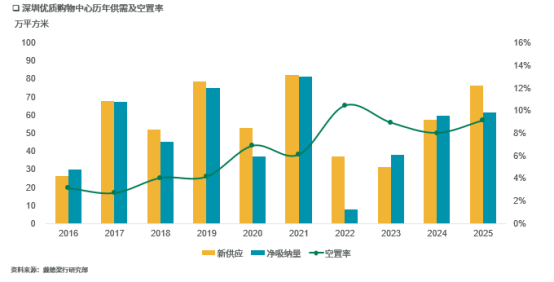
Group 1 - The "pet economy" is rapidly growing, with increasing consumer spending and diversification of pet-related services in shopping centers [1][2] - In 2025, Shenzhen will see the opening of several high-quality shopping centers, contributing to a total supply of 793.7 million square meters, with a net absorption of 61.3 million square meters [2][3] - The retail landscape in Shenzhen is evolving, with a notable increase in the proportion of dining and lifestyle services, while the pet economy is expanding into new product categories [2][3] Group 2 - The competitive environment is driving shopping center owners to introduce flagship stores to differentiate themselves, supported by policies and the growth of the tech industry [3] - The inbound tourism market in Shenzhen is growing, benefiting from an increase in visa-free countries, which is expected to boost high-end retail and tourism-related consumption [3] - The average rent for premium office buildings in Shenzhen has decreased by 10.7% to 697.1 yuan per square meter, reflecting market pressures [3][8] Group 3 - The office market is facing challenges due to economic uncertainties, with a net absorption of 26.4 million square meters in Shenzhen, which is less than half of the new supply [6][8] - The demand for office space is being driven by the TMT sector, particularly in AI and emerging consumer electronics, which are becoming significant sources of leasing demand [8][9] - Future supply of premium office buildings in Shenzhen is projected to exceed 500 million square meters over the next four years, indicating a competitive landscape [9]
暴利的宠物,大厂的坟墓
创业邦· 2026-01-04 10:35
Core Viewpoint - The pet economy, with a market size of 300 billion and a gross margin of up to 50%, appears lucrative but is proving challenging for large companies to profit from [6]. Group 1: Market Dynamics - The pet food sector is the most popular category, with domestic brands achieving gross margins of 40%-50%, and some products, like high-end cat food, reaching a gross margin of 44.7% [8]. - Despite the high gross margins, many companies in the pet industry, such as Zhongchong Co. and Petty Co., report low net profit margins, with Zhongchong's gross margin at 28.16% and net margin at only 9.33% for 2024 [9]. - The high gross margins in the pet economy are often offset by significant marketing and operational costs, leading to a situation where companies struggle to convert revenue into profit [11][12]. Group 2: Challenges Faced by Large Companies - Large companies entering the pet market, like Hema, have faced significant losses, with Hema's Pet Fresh store losing over 20,000 yuan per month and closing after just nine months [6][9]. - The reliance on KOLs (Key Opinion Leaders) for marketing has led to increased sales expenses, which can consume a large portion of revenue, making it difficult for companies to achieve profitability [12][16]. - The pet economy is characterized by a high degree of fragmentation, with many successful businesses being small, owner-operated shops rather than large chains [20][24]. Group 3: Emotional Value vs. Cost - The perceived high margins in the pet economy are often attributed to the emotional value pet owners place on their pets, but this emotional value comes with significant costs, particularly in marketing and service delivery [11][14]. - Services like pet grooming and veterinary care can be profitable, but they require skilled personnel, making it difficult for large companies to scale effectively [20][23]. Group 4: Comparison with Other Industries - The challenges faced by the pet economy are similar to those in other high-margin industries like beauty and medical aesthetics, where the profitability often lies with individual practitioners rather than large companies [18][19]. - The pet industry, like the beauty industry, is heavily reliant on personal relationships and trust, which complicates efforts to scale operations [22][24].


新消费2025:十大关键词,一个新江湖
3 6 Ke· 2026-01-04 02:36
Core Insights - The article highlights significant changes in the consumer market in 2025, emphasizing the emergence of new consumption patterns and the evolution of various sectors within the industry [2]. Instant Retail - Instant retail is recognized as the "explosion year" in 2025, expanding beyond food delivery to encompass a wide range of products [3]. - Major players like JD.com and Alibaba have entered the market, leading to intense competition and a subsidy war among platforms [4]. - The industry is shifting towards a more sustainable model, focusing on long-term ecological coexistence rather than short-term gains [4]. Emotional Consumption - Emotional consumption has become a key trend, driven by the desire for psychological comfort and social recognition among consumers [5]. - The market for emotional consumption in China reached 2.3 trillion yuan in 2024, with projections to exceed 4.5 trillion yuan by 2029 [5]. - Various segments, including healing products and immersive experiences, are gaining popularity, reflecting a shift in consumer preferences [6]. Reverse Tourism - There is a notable increase in tourism orders in county-level areas, with local entrepreneurs capitalizing on unique cultural experiences [7]. - The focus has shifted from traditional sightseeing to immersive local experiences, appealing to younger demographics [7]. Consumption Downward - Lower-tier cities are experiencing a surge in consumer activity, with significant growth in orders during events like Double 11 [8]. - Brands are increasingly targeting these markets, with local players gaining traction through culturally resonant products [8]. Hard Discounts - The hard discount retail sector is expanding, challenging the perception that low prices equate to low quality [11]. - Major internet companies are driving this trend, with new store formats and streamlined supply chains enhancing efficiency [11]. Light Health - Health-conscious products are becoming popular among younger consumers, with a focus on convenience and effectiveness [13]. - The market is evolving to include innovative health products that cater to the busy lifestyles of young professionals [14]. Circular Economy - The circular economy is gaining traction, with a shift in consumer attitudes towards second-hand goods and sustainability [16]. - Platforms like Xianyu and Zhuanzhuan are adapting their strategies to enhance trust and user experience in the second-hand market [17]. Pet Economy - The pet economy is experiencing rapid growth, with a market size exceeding 811.4 billion yuan and a 25.4% annual growth rate [18]. - There is a diversification of products and services catering to pet owners, reflecting a shift towards more personalized and premium offerings [18]. Value Export - Chinese brands are increasingly focusing on global markets, leveraging cultural resonance and operational efficiency to build brand loyalty [19]. - The strategy of value export is reshaping perceptions of "Made in China" and driving foreign trade growth [19]. Prepared Dishes - The prepared dishes industry is moving towards standardization and innovation, addressing consumer trust issues through transparency [20]. - Technological advancements in preservation and quality control are enhancing product offerings in this sector [20].
暴利的宠物,大厂的坟墓
36氪· 2026-01-03 13:08
Core Viewpoint - The pet economy, while appearing lucrative with a market size of 300 billion and gross margins up to 50%, is not a profitable venture for large companies due to high operational costs and reliance on human capital rather than scalable business models [4][10][30]. Industry Overview - The pet economy is characterized by high gross margins, particularly in pet food, where domestic brands can achieve margins of 40%-50% [10][11]. - Service sectors such as grooming and veterinary care also show high potential margins, but the actual profitability for companies is often low due to high operational costs [10][15]. Company Performance - Major players like Pet Fresh and others have faced significant losses, with Pet Fresh closing 18 stores after burning through 178 million RMB in just nine months, averaging losses of over 200,000 RMB per store monthly [5][11]. - Companies like Zhongchong Co. and Petty Co. report low net profit margins, with Zhongchong's gross margin at 28.16% and net margin at only 9.33% [11][12]. Marketing and Sales Costs - The cost of acquiring customers through KOLs (Key Opinion Leaders) and marketing has skyrocketed, with sales expenses for companies like Guibao Pet increasing from under 100 million RMB in 2017 to 500 million RMB in 2024, leading to diminished net profit margins despite increased sales [13][14]. Challenges in Scaling - The pet economy is heavily reliant on personal relationships and trust between pet owners and service providers, making it difficult for large companies to replicate the success of smaller, independent businesses [27][30]. - The high costs associated with maintaining quality service and customer trust, such as expensive store locations and high employee wages, hinder profitability for larger firms [15][28]. Comparison with Other Industries - Similar challenges are observed in other high-margin industries like beauty and medical services, where the core value lies in skilled personnel rather than scalable business operations [19][20][24]. - The pet industry exemplifies a trend where the most profitable segments are those that rely on individual expertise and customer relationships, rather than mass-market strategies [30].

三年投资亏逾百万后黯然离场,得利斯陷业绩困局与合规危机
Sou Hu Cai Jing· 2025-12-30 18:27
Core Viewpoint - The announcement of the equity change by Shandong Delisi Food Co., Ltd. reveals the failure of its expansion strategy outside the province, particularly in the prepared food sector, culminating in a loss exceeding one million yuan from its investment in Sichuan Dingdelisi Sauce Industry Co., Ltd. [1] Group 1: Investment and Financial Performance - Delisi invested 2.5 million yuan to acquire a 25% stake in Dingdelisi Sauce Industry in September 2022, aiming to leverage its advantages in raw materials and processing to expand into the southwestern market [2][3] - The investment in Dingdelisi has resulted in continuous losses, with reported losses of 400,400 yuan in 2023, 441,000 yuan in 2024, and 179,600 yuan in the first half of 2025, totaling 1,021,000 yuan over three years, reflecting a negative return on investment of 40.8% [4] - Delisi has faced significant financial challenges, reporting net losses of approximately 33.99 million yuan in 2023 and 33.67 million yuan in 2024, with revenues declining by about 4.1% to 2.965 billion yuan in 2024 [9][10] Group 2: Strategic Decisions and Market Position - Following Delisi's exit from Dingdelisi, the latter changed its name to remove "prepared food," indicating a shift away from this market segment, which has become a burden rather than an opportunity [6][8] - The exit and rebranding suggest a mutual recognition of the declining prospects in the prepared food sector, with both companies acknowledging the need to withdraw from a failing market [8] - Delisi's core business in chilled and frozen meat has also been under pressure, with revenues from this segment declining by 10.51% in 2024 and further decreasing by 1.25% in the first half of 2025, indicating a weakening position in its primary revenue source [13][14] Group 3: Compliance and Operational Challenges - Delisi has encountered compliance issues, including being suspended from military procurement activities due to allegations of submitting false materials, which raises concerns about its internal controls and operational integrity [19][20] - The repeated compliance violations suggest a lack of adequate oversight and management awareness of regulatory boundaries, potentially complicating future recovery efforts [20]


破译“它经济” !“粤宠同行”广东宠物友好空间测评项目启动
Nan Fang Du Shi Bao· 2025-12-29 07:19
Core Insights - The article highlights the growing trend of pet-friendly travel and the challenges pet owners face, such as transportation and accommodation issues, which often lead to frustrating experiences [1][2] - The "Yue Pet Together" project aims to systematically promote a pet-friendly ecosystem in Guangdong, supporting the high-quality development of the trillion-yuan pet economy [1][3] Group 1: Market Overview - The pet consumption market in China is projected to exceed 500 billion yuan by 2025, with a significant talent gap of one million professionals in the industry [2] - The Guangdong pet industry is becoming a new engine for consumption upgrade, with a pet ownership penetration rate of 23.5% in the Greater Bay Area and an average annual spending of over 4,000 yuan per pet [3] Group 2: Project Initiatives - The "Yue Pet Together" project includes the launch of a pet-friendly space evaluation initiative, which will cover standards for space construction, service experience optimization, and emergency support systems [3] - The project also features a "Pet-Friendly Space Collection" activity, inviting the public and businesses to contribute to the development of pet-friendly consumer spaces [3] Group 3: Emotional and Economic Drivers - The essence of the pet economy is identified as an emotional economy, with 85.7% of pet owners considering their pets as family members, driving consumption upgrades [4][5] - The majority of pet owners are from the post-80s and post-90s generations, with the post-95 demographic showing the fastest growth in online consumption [4] Group 4: Health and Nutrition Insights - Experts emphasize the importance of pet health management as a means of safeguarding family health, highlighting the need for regular check-ups and preventive measures against parasites [6][8] - Nutritional guidance for pets is also discussed, focusing on the importance of high-quality animal protein and the necessity of personalized dietary plans for pets at different life stages [7][8] Group 5: Event Highlights - The "Yue Pet Carnival" featured immersive experiences for pet owners and their pets, including a pet playground and interactive activities, reinforcing the concept of a pet-friendly environment [10][11] - The event served as a platform to connect pet owners emotionally and promote the pet-friendly philosophy, showcasing the commitment to shared joy and care for life [11]
退股,肉制品巨头的扩张梦碎了?
3 6 Ke· 2025-12-25 01:49
Core Viewpoint - The article discusses the transformation journey of the meat product giant Delisi (002330.SZ), highlighting its recent exit from the joint venture with Ding Delisi Sauce Industry, which reflects the company's strategic reassessment in the pre-made food sector [2][10]. Group 1: Company Actions and Changes - Delisi exited its approximately three-year investment in the joint venture Ding Delisi Sauce Industry on the same day the company removed "pre-made food" from its name, indicating a potential shift in strategy [2][10]. - Delisi initially invested 2.5 million yuan for a 25% stake in Ding Delisi Sauce Industry in September 2022, aiming to expand its market presence in the southwest and enhance its competitiveness in pre-made food [3][5]. - The company reported that the investment in Ding Delisi Sauce Industry did not positively impact its operating profits, with losses recorded under equity method accounting [7][9]. Group 2: Financial Performance - Delisi has faced financial difficulties, reporting net losses of 33.997 million yuan and 33.672 million yuan for 2023 and 2024, respectively, with a consistent loss of around 34 million yuan [8]. - Despite a 14.95% year-on-year revenue growth, the net profit for the first three quarters of the year was only 5.4038 million yuan, reflecting an 18.50% decline compared to the previous year [8]. - The company's core business of chilled and frozen meat saw a revenue decline of 1.25% in the first half of the year, with a significant drop of 10.51% in the previous year [15]. Group 3: Strategic Initiatives - Delisi has been exploring various strategies to address its profitability challenges, including partnerships with other companies for product supply and market expansion [16]. - The company announced plans to transfer 11% of its subsidiary's equity to introduce external shareholders, aiming to leverage the capabilities of its new partner in the high-end beef processing and pre-made food sectors [17][18]. - Delisi has also appointed a new vice president with extensive experience in the fast-moving consumer goods and food industries to bring fresh perspectives to its operations [18].
