生物育种

Search documents
我国连续两年实现农作物种子贸易顺差 “中国粮”主要用上了“中国种” 种业科技创新整体进入世界第一方阵
Ren Min Ri Bao· 2026-01-21 22:25
Core Insights - The core viewpoint of the articles emphasizes the significant progress in China's seed industry, highlighting the country's increasing self-sufficiency and export capabilities in agricultural seeds, particularly in hybrid rice and other crops [1][2][3]. Group 1: Seed Export and Trade Surplus - By 2025, China's seed export volume is projected to reach 62,000 tons, achieving a trade surplus of $7.5 million, marking the second consecutive year of surplus following the first instance in 2024 [1]. - Currently, over 95% of the area planted with crops in China consists of self-bred varieties, with domestic market shares exceeding 80% for livestock and over 86% for aquatic species [1]. Group 2: Technological Advancements and Innovation - The seed industry has seen a significant increase in self-bred varieties, with the area of self-selected corn varieties rising from 91% in 2020 to 94%, and vegetable varieties from 87% to 91% [2]. - China has established a world-class national resource bank for crop, livestock, and marine fish genetic resources, and has created multiple national and regional innovation platforms for seed industry development [2]. Group 3: Strategic Goals and Future Plans - The "14th Five-Year Plan" suggests the continuation of the seed industry revitalization actions, aiming to enhance seed quality and ensure food security by 2030 through improved breeding innovation and resource utilization [3].
趋势研判!2026年中国花生种子行业发展现状、进出口情况及未来发展趋势分析:进出口量稳质升,高油酸品种突围[图]
Chan Ye Xin Xi Wang· 2026-01-21 01:08
Core Insights - The peanut seed industry is crucial for oil security and economic development, with the government implementing various policies to support its growth towards quality, intensification, and scale [5][6][8] - China's peanut processing industry is projected to reach a value of 214 billion yuan in 2024, with stable planting areas and increasing consumption [6][7] - The domestic peanut seed market is dominated by local varieties, with imports primarily for research purposes, and a recovery in trade expected in 2025 [9][10] Industry Overview - Peanut seeds are essential oil and economic crops, requiring strict quality standards, including a germination rate of ≥92% and purity of ≥98% [2][3] - The industry is characterized by a high domestic seed ratio of 98.7%, with a focus on high-oil and disease-resistant varieties [9][10] Policy Background - The government has positioned the seed industry as a key component of agricultural development, launching initiatives to enhance breeding innovation and regulatory frameworks [5][6] Current Development Status - China leads globally in peanut production, processing, and trade, with a total production of 19.23 million tons in 2024, accounting for 38.8% of the world's total [7][8] - The planting area remains stable at over 4.7 million hectares, with significant contributions from key provinces [7][8] Consumption Trends - The peanut consumption market is growing steadily, with a compound annual growth rate of 1.48%, driven by diverse applications including oil extraction and direct consumption [8] Import and Export Analysis - The peanut seed trade is characterized by significant fluctuations, with imports and exports expected to rebound in 2025 after a decline in 2024 [9][10] - The average import price has shown considerable volatility, influenced by factors such as scarcity and logistics costs [10] Future Development Trends - The industry is expected to focus on specialized and resilient varieties, with advancements in breeding technology to shorten development cycles [11][12] - A shift towards an integrated and collaborative industry structure is anticipated, enhancing market concentration and service offerings [13] - Continuous policy support and market demand will drive standardization and internationalization efforts, promoting domestic seeds in emerging markets [14]


消费行业2026年春节机会
2026-01-19 02:29
Summary of Conference Call Records Industry Overview - **Consumer Industry**: The consumer industry is expected to see opportunities during the 2026 Spring Festival, particularly in the export chain and food sectors. Key companies like Jiangxin Home, Zhongxin Co., and Gongchuang Turf are projected to maintain steady growth in 2026 [1][2]. - **Agriculture Sector**: The 2026 Central Document No. 1 will focus on food security, poverty alleviation, and agricultural technology. Grain production has exceeded 1.4 trillion jin for two consecutive years, but supply and demand remain tight, necessitating improvements in yield [1][4]. - **Alcohol Industry**: The white liquor market is facing a pessimistic outlook for the Spring Festival, with expected sales declines of nearly double digits due to the impact of alcohol bans and high inventory levels from the previous year [1][7]. Key Companies and Their Performance - **Jiangxin Home**: Transitioning from OEM to OBM, with over 1,000 brand stores established. Stable performance is expected despite short-term stock price fluctuations due to currency changes [3]. - **Zhongxin Co.**: Anticipated profits exceeding 600 million yuan in 2026, with a current PE ratio of about 13 times. The company is performing well in Thailand's pulp molding production [3]. - **Gongchuang Turf**: Expected to maintain a 20% growth rate in 2026, with double-digit revenue growth continuing into the fourth quarter [3]. - **Anjixin Foods**: Projected revenue growth of nearly 20% in December, indicating a rebound in the food supply sector [1][9]. Investment Opportunities - **Export Chain**: Companies in the light industry are expected to perform well, with a positive outlook for Jiangxin Home, Zhongxin Co., and Gongchuang Turf [2]. - **Research Services**: Companies like Haoyuan Pharmaceutical, Baiaosaitu, and Nami Technology are well-positioned to benefit from the overseas expansion of innovative drugs [2][13]. - **AI in Home Appliances**: The potential for AI applications in home appliances is significant, with companies like Ugreen launching AI NAS to integrate localized computing power [2][14]. Agricultural Focus Areas - **High-Standard Farmland Construction**: Aiming to build 1.35 billion mu of high-standard farmland by 2030, with an investment of over 150 billion yuan annually [5]. - **Biotechnology**: Continued emphasis on the commercialization of genetically modified crops, with a focus on increasing planting areas and supporting regulations [5][6]. Consumer Behavior Insights - **White Liquor Sales**: The sales rhythm for white liquor during the Spring Festival is unclear, with expectations of a significant decline in sales due to changing consumer purchasing habits [7]. - **Non-Alcoholic Gifts**: Demand is shifting towards non-alcoholic gifts, including snacks and beverages, as consumers adapt to new purchasing trends [8]. Travel and Dining Sector - **Travel Industry**: Companies like Ctrip are expected to benefit from increased travel flow during the Spring Festival, with significant growth in hotel bookings and dining reservations [10][12]. - **Dining Sector**: Haidilao is highlighted as a key investment opportunity due to its improving turnover rates and potential for rapid expansion under new leadership [10][11]. Challenges and Innovations - **Smart Home Industry**: The smart home sector faces challenges such as high costs and the need for standardization across devices, but it remains a promising area for future growth [17][19]. - **Robotic Innovations**: Companies like Roborock are innovating in the robotic cleaning space, enhancing user interaction through AI capabilities [20]. This summary encapsulates the key insights and opportunities discussed in the conference call, providing a comprehensive overview of the consumer, agriculture, and technology sectors.
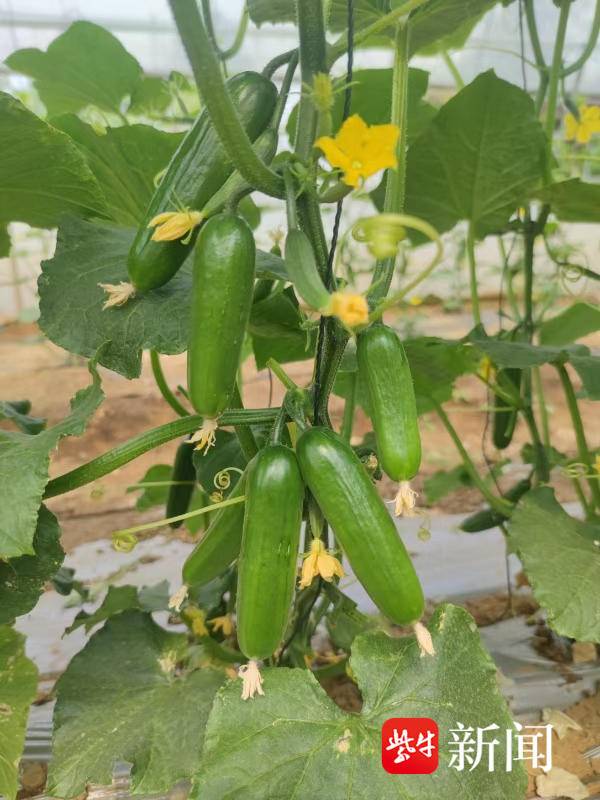
叫“小爱”的黄瓜出圈了,南农发布十大农业科技应用成果
Yang Zi Wan Bao Wang· 2026-01-18 08:02
Core Viewpoint - The "Nannong Xiaoi" mini cucumber, characterized by its straight shape, lack of spines, and tender, crispy sweetness, was showcased at the third Social Cooperation Innovation Development Conference held by Nanjing Agricultural University on January 17, as one of the "Top Ten Agricultural Science and Technology Application Achievements" for 2025 [1][3]. Group 1: Agricultural Innovations - The top ten achievements include new varieties and technologies that address production pain points, injecting new momentum into high-quality agricultural development [3]. - "Nannong Xiaoi" is designed to optimize planting time and improve production efficiency for farmers, utilizing existing strawberry cultivation facilities for vertical planting during the idle period from May to August [3]. - The yield of "Nannong Xiaoi" can exceed 3,000 kilograms per acre, with an average income of over 12,000 yuan per acre [3]. Group 2: Modern Agricultural Development Center - The first concept validation center in Jiangsu's modern agricultural sector was inaugurated, focusing on organized transformation and optimizing the integration of talent, achievements, capital, and market elements [5]. - The center aims to enhance the discovery of technological value and facilitate the transfer and transformation of scientific achievements, concentrating on areas such as biological breeding, smart agriculture, biomedicine, and future foods [5]. - Nanjing Agricultural University is collaborating with the Nanjing National Agricultural Innovation Center to select promising research outcomes for validation, with several projects already listed for initial concept validation [5]. Group 3: Strategic Direction - The university plans to align its research with national strategies, addressing urgent industry needs and transitioning research topics from "disciplinary logic" to "industry logic" to ensure that innovative outcomes are practical and applicable [5]. - There is an ongoing effort to establish a university science park to cultivate new niches and dynamics, facilitating the transition of innovative results from academic papers to practical applications in production [5].
我省3家农业科技企业入选农业农村部企业重点实验室
Hai Nan Ri Bao· 2026-01-15 01:40
Core Insights - The Ministry of Agriculture and Rural Affairs has announced the addition of 164 enterprise key laboratories nationwide, with three agricultural technology companies from Hainan being selected, indicating a significant enhancement in technological innovation and industrial transformation capabilities in key areas such as tropical specialty crop processing, green plant protection technology, and biological breeding [1][4] Group 1: Company Highlights - Hainan Xingke Tropical Crop Engineering Technology Co., Ltd. has established the Key Laboratory for High-Value Processing of Specialty Spice Beverages, focusing on high-value processing of tropical spice crops like coffee and vanilla, with 6 pilot production lines and over 300 technology products developed [2] - Longping Biotechnology (Hainan) Co., Ltd. has set up the Key Laboratory for South Breeding Biological Breeding Technology, specializing in the development of multi-gene molecular stacking technology for major crops, collaborating with over 300 seed industry units to promote the industrial application of biological breeding technology [3] - Hainan Zhengye Biotechnology Co., Ltd. operates the Key Laboratory for Plant Immune Induction Technology, dedicated to green plant protection technology and aiming to reduce chemical pesticide usage while enhancing agricultural product quality and ecological safety [3] Group 2: Industry Implications - The establishment of these key laboratories is part of a national strategy to strengthen the role of leading agricultural technology enterprises in innovation, focusing on technology research and development, product creation, and integrated transformation [4] - The laboratories aim to foster collaborative innovation mechanisms between enterprises and research institutions, facilitating breakthroughs in critical agricultural technologies and the rapid transfer and application of technological achievements [4]

南繁CRO平台获国家级认证
Sou Hu Cai Jing· 2026-01-14 00:45
Core Viewpoint - China Seed Group Co., Ltd. has achieved recognition for its South Breeding CRO platform from the China National Accreditation Service for Conformity Assessment (CNAS), indicating that its technical capabilities and management systems have reached international standards [1][2]. Group 1 - The CNAS is the only national accreditation body in China, and its recognition is accepted by over 40 laws and regulations domestically, with international recognition in more than 100 countries and regions [1]. - The South Breeding CRO platform's laboratory has met ISO/IEC 17025 international standards in 11 key quality and safety indicators, including rice milling rate, whole grain rate, grain shape, chalkiness, amylose content, and cadmium content [1]. - The platform has also led the application for the "Hainan Province South Breeding Crop Biotechnology Innovation Application Pilot Research Base," which has been recognized as a provincial pilot research base by the Hainan Provincial Department of Science and Technology [2]. Group 2 - The Hainan Province South Breeding Crop Biotechnology Innovation Application Pilot Research Base will focus on the development needs of the South Breeding seed industry, emphasizing the application verification and pilot maturation of new crop genes, technologies, and platforms [2]. - The base aims to establish a comprehensive service system for "core technology innovation—pilot verification—industrial promotion," following a "1+2+3+N" construction approach [2]. - The dual recognition of the "CNAS laboratory" and "provincial pilot base" enhances the South Breeding CRO platform's role in connecting research and industry, promoting the implementation of biotechnology achievements, and supports the revitalization of the seed industry and food security [2].
利好来了!“国家队”投向明确!四部门联合发布
凤凰网财经· 2026-01-12 13:37
Core Viewpoint - The article discusses the recent issuance of guidelines by four government departments in China aimed at strengthening the planning and investment direction of government investment funds, marking a significant step in defining the future of these funds, which are crucial for supporting emerging and future industries [2][3]. Group 1: Government Investment Fund Guidelines - The guidelines, titled "Work Method for Strengthening the Layout Planning and Investment Direction of Government Investment Funds (Trial)," were jointly released by the National Development and Reform Commission, Ministry of Finance, Ministry of Science and Technology, and Ministry of Industry and Information Technology [3]. - The guidelines focus on three main aspects: where to invest, how to invest, and who manages the funds, proposing 14 policy measures to optimize fund allocation [3]. - Funds are required to support major strategies and key areas, particularly in sectors where market resources are inadequately allocated, emphasizing early, small, long-term investments in hard technology [3][5]. Group 2: Investment Direction and Evaluation - The investment direction must align with national major plans and encourage industries listed in the national industrial catalog, avoiding investments in restricted or eliminated sectors [4]. - Local development and reform departments are tasked with creating lists of key investment areas to optimize fund allocation based on regional characteristics [5]. - The guidelines also clarify the roles of national and local funds, with national funds focusing on supporting the modernization of the industrial system and overcoming key technological challenges [6]. Group 3: Evaluation Management Method - The "Management Method for Evaluating Investment Direction of Government Investment Funds (Trial)" was also released, establishing a comprehensive evaluation system that combines quantitative and qualitative assessments [6]. - The evaluation includes three primary indicators: policy compliance (60% weight), optimization of productivity layout (30% weight), and policy execution capability (10% weight) [6][7]. - The evaluation aims to ensure that funds effectively support new productive forces, technological innovation, and the development of the digital economy, among other areas [8].

中信建投:央国企改革进入纵深推进阶段
Zheng Quan Shi Bao Wang· 2026-01-12 00:05
Core Viewpoint - The report from CITIC Construction Investment indicates that the reform of central state-owned enterprises (SOEs) will deepen from late 2025 to early 2026, focusing on professional restructuring, strategic upgrades, and industrial synergy [1] Group 1: Restructuring and Integration - The vertical integration of Sinopec and China Aviation Oil serves as a benchmark, creating a comprehensive "refining-storage-distribution" system [1] - This integration not only aligns with the policy direction of SOE reform but also addresses the industry's pain points regarding insufficient collaboration in aviation fuel [1] Group 2: Competitive Advantage and Supply Security - The restructuring enhances international competitiveness and supply security capabilities [1] - The establishment of a Sustainable Aviation Fuel (SAF) industrial ecosystem supports the low-carbon transition of the aviation industry [1] Group 3: Focus Areas for Future Development - Central SOEs are concentrating on intelligent, green, and integrated transformations, leveraging the "14th Five-Year Plan" to expand into emerging industries [1] - Key focus areas include new energy, 6G technology, and biobreeding [1]


今年农业生产支持政策多
Xin Lang Cai Jing· 2026-01-09 18:43
Group 1 - The city will provide a reward of 50,000 yuan for each enterprise that obtains national plant variety rights, promoting a commercial breeding system led by enterprises [1] - Financial subsidies for large-scale grain production will be implemented, including 100 yuan per mu for oilseed planting over 50 mu, 200 yuan per mu for wheat, rice, and corn planting over 50 mu, and 400 yuan per mu for hybrid rice and corn seed production over 100 mu [1] Group 2 - The city will continue to support agricultural managers with financial support policies and pension insurance subsidies, with a contribution rate of 20% based on 60% of the previous year's average provincial salary [2] - Financial assistance for facility agriculture includes a maximum of 40% subsidy for vegetable production facility upgrades, capped at 2 million yuan per project, and 30% for new cold storage facilities, capped at 1 million yuan [2] - For the renovation of cold storage facilities, a subsidy of 40% of the total cost will be provided, with a maximum of 200,000 yuan per entity [2]
中农种源获中科创星A+轮投资:打造领先的猪设计育种技术平台
IPO早知道· 2026-01-06 01:19
Core Viewpoint - Zhongnong Zongyuan is a leading pig breeding technology platform in China, combining top-notch research capabilities with mature industrialization abilities, recently completing an A+ round of financing to further its technology development and commercialization [3][5]. Group 1: Company Overview - Zhongnong Zongyuan was established in October 2022 and is a national high-tech enterprise incubated by the Shenzhen Agricultural Genomics Research Institute of the Chinese Academy of Agricultural Sciences [3]. - The company has completed several rounds of financing amounting to hundreds of millions of RMB, with notable investors including Sequoia China Seed Fund and Lenovo Ventures [3]. - The company has established a collaborative network across multiple locations in Shenzhen, Tianjin, Hainan, and Wuhan, focusing on disruptive breeding technology and disease model creation [3]. Group 2: Technology and Product Development - Zhongnong Zongyuan has developed a diverse product pipeline, including standardized disease model pigs for new drug development and disease research [4]. - The company has achieved a full-chain technology closed loop from design breeding to production application, leveraging its leading somatic cell cloning technology and proprietary "Zongyuan Zhixin" liquid phase chip [5]. - The company is positioned favorably in the context of global regulatory policy optimization for gene-edited animals, with significant developments in the U.S. and EU regarding gene editing regulations [5]. Group 3: Strategic Importance and Market Position - The company aims to drive independent innovation in animal breeding technology and ensure genetic resource security, aligning with China's agricultural technology and seed industry revitalization strategies [6]. - Zhongnong Zongyuan's focus on precision editing for key traits such as disease resistance and meat quality is expected to provide a competitive edge in the breeding industry, particularly in the context of China's reliance on imported breeding stock [6]. - The company is set to expand its breeding bases and international market presence, with plans to establish subsidiaries in Hainan, Tianjin, and Wuhan, and a new subsidiary in Hunan [5][6]. Group 4: Investment and Future Growth - The recent financing round will primarily support the advancement of core product lines, expansion of breeding bases, and international market strategies [5]. - The company is anticipated to experience explosive growth as domestic and international regulatory policies for gene editing become clearer, enhancing its market share and technological barriers [7].