端到端技术

Search documents
辅助驾驶模型越做越大,小鹏、理想先进入70亿参数量级
3 6 Ke· 2025-10-15 10:15
Core Insights - The automotive industry's driver assistance systems are rapidly transitioning to AI, with leading new players approaching the parameter scale of many AI large models [1] - Xpeng Motors and Li Auto are both developing in-car large models with parameters reaching at least 7 billion, indicating a significant shift towards AI-driven solutions in the automotive sector [1][5] Summary by Sections Xpeng and Li Auto's AI Strategies - Xpeng's in-car large model is distilled from its cloud-based "Xpeng World Foundation Model," addressing limitations in computing power and storage for in-car deployment [2] - By the second half of 2024, Xpeng plans to transition to a cloud-based model with a foundational parameter count of 72 billion, set to be unveiled at the upcoming AI Technology Day [2] - Li Auto's current in-car model has over 4 billion parameters, with plans to exceed 7 billion next year following the deployment of its self-developed driving chip [5] Technical Developments - Xpeng's "Turing" AI driving chip, launched in June, is designed for AI needs and can handle models with up to 30 billion parameters, showcasing significant advancements in hardware [4] - Li Auto's approach involves a dual-system model combining fast and slow systems, with a focus on the VLA model, which has become the mainstream technology in embodied intelligence [6][5] Industry Trends and Comparisons - Despite the push for larger models, companies like Tesla have achieved superior driving assistance performance with fewer parameters, suggesting that model size does not directly correlate with effectiveness [7][8] - The emphasis on end-to-end technology, which mimics human driving behavior, contrasts with the logic reasoning capabilities of large models, indicating a potential misalignment in resource allocation [8] Motivations Behind AI Model Adoption - The drive for larger AI models is partly due to companies like Li Auto redefining themselves as AI enterprises, viewing vehicles as applications of artificial intelligence [9] - The marketing impact of AI models, influenced by the success of Chat-GPT, has led companies to promote their AI capabilities as a competitive advantage, although the primary goal should remain enhancing driving assistance experiences [11]


从 Cruise 到小鹏,刘先明为何能接任智驾一号位?
雷峰网· 2025-10-10 12:02
Core Viewpoint - The appointment of Liu Xianming as the new head of Xiaopeng's autonomous driving center signals a strategic shift towards AI-driven models in the company's smart driving technology [2][3][12]. Group 1: Leadership Change - On October 9, Xiaopeng Motors announced the departure of Li Liyun from the position of head of the autonomous driving center, with Liu Xianming taking over [2]. - Liu Xianming's appointment is seen as a necessary move for Xiaopeng to build new technological barriers in the face of increasing competition from rivals like Li Auto and Huawei [3][12]. Group 2: Strategic Shift - Xiaopeng's autonomous driving strategy is transitioning from an engineering logic focus to an AI logic approach, emphasizing the development of a "base model" for smart driving [4][12]. - The company aims to leverage AI and data to regain its competitive edge in autonomous driving capabilities [12][13]. Group 3: Liu Xianming's Background - Liu Xianming joined Xiaopeng in March 2024 and has a strong background in model research, having previously worked at Facebook and Cruise [6][8]. - His experience in AI infrastructure and end-to-end development positions him well to lead Xiaopeng's efforts in building a unified AI model development department [11]. Group 4: Industry Context - The shift in Xiaopeng's leadership reflects a broader industry trend moving from traditional engineering-driven approaches to data-driven and model-centric paradigms in autonomous driving [13].

VLA的论文占据自动驾驶前沿方向的主流了。。。
自动驾驶之心· 2025-09-19 16:03
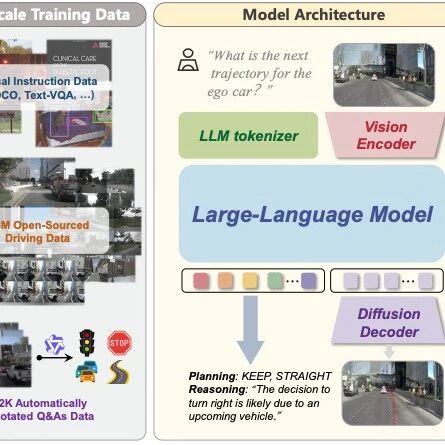
Core Insights - The article emphasizes the growing importance of Vision-Language Alignment (VLA) in the field of autonomous driving, highlighting its dominance in recent conferences and research outputs [1][3]. - VLA enables autonomous vehicles to make decisions in diverse scenarios, moving beyond traditional single-task methods, and offers potential solutions for corner cases [3][4]. Summary by Sections VLA in Autonomous Driving - VLA and its derivatives have become a primary focus for both autonomous driving companies and academic institutions, accounting for nearly half of the advancements in the field [1]. - The technology stack for autonomous driving VLA is still evolving, with numerous algorithms emerging, leading to challenges in entry and understanding [4]. Educational Initiatives - A new course titled "Practical Tutorial on Autonomous Driving VLA" has been developed in collaboration with Tsinghua University to address the challenges faced by learners in this field [5][6]. - The course aims to provide a comprehensive understanding of the VLA technology stack, covering various modules such as visual perception, language, and action [4][5]. Course Features - The course is designed to facilitate quick entry into the field by using a Just-in-Time Learning approach, making complex concepts more accessible [5]. - It aims to build a framework for research capabilities, helping students categorize papers and extract innovative points [6]. - Practical applications are emphasized, with hands-on sessions to bridge theory and practice [7]. Course Outline - The curriculum includes an introduction to VLA algorithms, foundational algorithms, and the role of Vision-Language Models (VLM) as interpreters in autonomous driving [12][14][16]. - It covers modular and integrated VLA approaches, detailing the evolution of language models from passive descriptions to active planning components [18]. - The course also addresses reasoning-enhanced VLA, focusing on long-chain reasoning and memory integration in decision-making processes [20]. Learning Outcomes - Participants are expected to gain a thorough understanding of current advancements in autonomous driving VLA and master core algorithms [25][26]. - The course requires prior knowledge in autonomous driving basics, familiarity with transformer models, and a foundation in probability and linear algebra [28]. Course Schedule - The course is set to commence on October 20, with a duration of approximately two and a half months, featuring offline video lectures and online Q&A sessions [29].
侯晓迪全无人L4卡车,端到端了
3 6 Ke· 2025-09-17 09:00
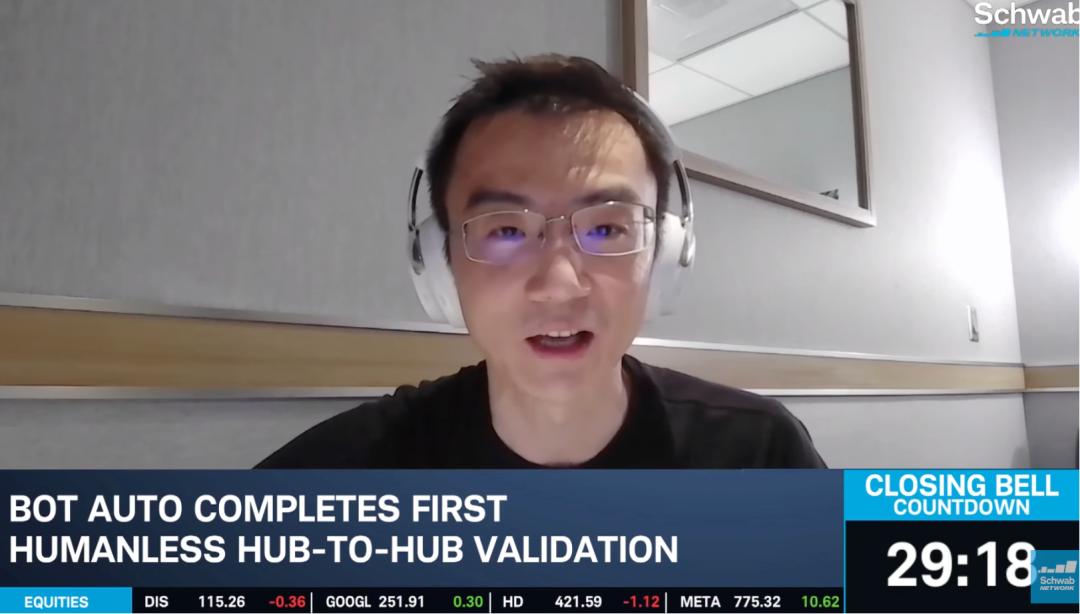
Core Insights - Bot Auto, co-founded by Hou Xiaodi, has made significant progress in achieving fully autonomous operations with its Hub to Hub commercial testing, marking a milestone that was previously outlined in TuSimple's vision [1][6] - The company has successfully completed its first product launch within two years, utilizing a total of $45 million (approximately 290 million RMB) for development, which is notably efficient compared to other autonomous driving companies [4][5] Funding and Financials - Bot Auto was established in July 2023 and has publicly disclosed a Pre-A funding round led by Linear Capital and M31 Capital, raising $20 million, with earlier funding rounds totaling over $45 million [2] - The efficient use of funds has allowed Bot Auto to achieve results that would typically take other companies significantly more time and money, with a cost efficiency ratio 50 times better than traditional autonomous driving firms [5] Testing and Development - The testing route covered 40 miles (approximately 64 kilometers) in Houston, demonstrating the system's ability to navigate complex urban and highway environments, including recognizing traffic signs and avoiding obstacles [5] - Bot Auto aims to validate multiple operational routes quickly, with the first route taking three months to verify, but future validations expected to be completed in two months or less [7] Business Model - Bot Auto operates under a Transportation as a Service (TaaS) model, focusing on running its own fleet of Level 4 autonomous trucks rather than selling vehicles to logistics companies [9] - The company is addressing a significant shortage of truck drivers in North America, positioning itself to meet the growing demand in logistics and e-commerce sectors [17][24] Technology and Safety - Bot Auto's technology stack incorporates both camera and LiDAR systems, enhancing safety for highway driving, and is inspired by Tesla's advancements in autonomous driving [11][13] - The company has developed a comprehensive safety net for its autonomous trucks, ensuring reliable operation even in adverse conditions [14] Market Position and Competition - Hou Xiaodi views the market as vast, with a significant shortage of truck drivers that cannot be filled by existing autonomous freight companies by 2030, indicating a large opportunity for growth [24] - The competitive landscape includes various players like Aurora and Waabi, but the company does not perceive them as direct competitors due to the market's size [24]
新势力 | 8月:车市平稳向上 新势力销量环比增长【民生汽车 崔琰团队】
汽车琰究· 2025-09-02 14:30
Core Viewpoint - The article highlights the steady growth of the new energy vehicle market in August 2025, with significant delivery increases for various companies, while also noting the competitive landscape and technological advancements in the industry [3][4][10]. Group 1: Market Performance - In August 2025, the retail market for narrow passenger vehicles is estimated at approximately 1.94 million units, representing a year-on-year growth of 2.0% and a month-on-month increase of 6.2% [3]. - The new energy vehicle retail sales are projected to reach 1.1 million units, with a penetration rate of about 56.7% [3]. - Six sample new force car companies (excluding Xiaomi) delivered a total of 199,279 vehicles in August, showing a year-on-year increase of 20.0% and a month-on-month increase of 5.9% [3]. Group 2: Company Deliveries - **Leap Motor**: Delivered 57,066 vehicles in August, up 88.3% year-on-year and 13.8% month-on-month, driven by strong sales of the B10 and C10 models [4]. - **Xpeng**: Reported deliveries of 37,709 vehicles, a year-on-year increase of 168.7% and a month-on-month increase of 2.7% [5]. - **NIO**: Achieved 31,305 vehicle deliveries, reflecting a year-on-year growth of 55.2% and a month-on-month increase of 15.9% [6]. - **Li Auto**: Delivered 28,529 vehicles, but experienced a year-on-year decline of 40.7% and a month-on-month decrease of 7.2% [6]. - **Aion**: Reported 27,044 deliveries, down 23.5% year-on-year but up 1.8% month-on-month [6]. - **Zeekr**: Delivered 17,626 vehicles, showing a slight year-on-year decline of 2.2% but a month-on-month increase of 3.8% [7]. - **Xiaomi**: Exceeded 30,000 vehicle deliveries in August, with strong demand for its new SUV model [7]. Group 3: Technological Advancements - The article discusses the acceleration of end-to-end technology applications in autonomous driving, marking the beginning of a new era in intelligent driving [8][10]. - Companies like Xpeng and those associated with Huawei have been leading the iteration and promotion of intelligent driving technologies since 2024 [10]. - The advancements in intelligent driving technology are expected to lower hardware barriers and expand applications in the mainstream market, particularly for vehicles priced under 200,000 yuan [10]. Group 4: Investment Recommendations - The article suggests a focus on companies with strong autonomous driving capabilities and those that are well-positioned in the new energy vehicle supply chain, including Geely, Xpeng, Li Auto, BYD, and Xiaomi [11][18]. - It emphasizes the importance of intelligent driving as a competitive factor and the potential for domestic suppliers to gain market share through cost-effective and responsive solutions [11].


民生证券:8月车市平稳向上 新势力销量环比增长
智通财经网· 2025-09-02 08:56
Core Insights - The retail market for narrow passenger vehicles in August is estimated at approximately 1.94 million units, showing a year-on-year growth of 2.0% and a month-on-month growth of 6.2%, with new energy vehicle (NEV) sales expected to reach 1.1 million units, achieving a penetration rate of around 56.7% [1] - Six sample new force car companies (excluding Xiaomi) delivered a total of 199,279 vehicles in August, representing a year-on-year increase of 20.0% and a month-on-month increase of 5.9% [1] - The market is experiencing a stabilization in pricing due to the reduction of terminal discounts and the arrival of new subsidy funds, which are expected to further release consumer potential [1] Group 1: New Force Companies Performance - Leap Motor delivered 57,066 vehicles in August, a year-on-year increase of 88.3% and a month-on-month increase of 13.8%, driven by strong product offerings in the under 200,000 yuan segment [2] - Xiaopeng Motors reported deliveries of 37,709 vehicles in August, a year-on-year increase of 168.7% and a month-on-month increase of 2.7%, with significant contributions from the MONA M03 model [3] - NIO delivered 31,305 vehicles in August, reflecting a year-on-year increase of 55.2% and a month-on-month increase of 15.9%, with the ET5T model being a key contributor [3] Group 2: Market Trends and Innovations - Li Auto delivered 28,529 vehicles in August, a year-on-year decrease of 40.7% and a month-on-month decrease of 7.2%, attributed to market price wars and a slowdown in the high-end market [4] - Zeekr delivered 17,626 vehicles in August, with a month-on-month increase of 3.8%, and is set to launch the Zeekr 9X, a luxury plug-in hybrid SUV [5] - Xiaomi reported over 30,000 vehicle deliveries in August, with the new YU7 SUV expected to be a competitive product in the 200,000 to 300,000 yuan price range [6] Group 3: Technological Advancements - The end-to-end technology is accelerating the application of intelligent driving, with companies like Xiaopeng and Huawei leading the charge in promoting intelligent driving capabilities [7] - The advancements in intelligent driving technology are expected to lower hardware barriers and expand applications in the mainstream market under 200,000 yuan, providing a competitive edge against joint venture brands [7]
地平线HSD量产在即:国内最像特斯拉FSD的辅助驾驶系统,定义行业新高度
IPO早知道· 2025-08-25 03:39
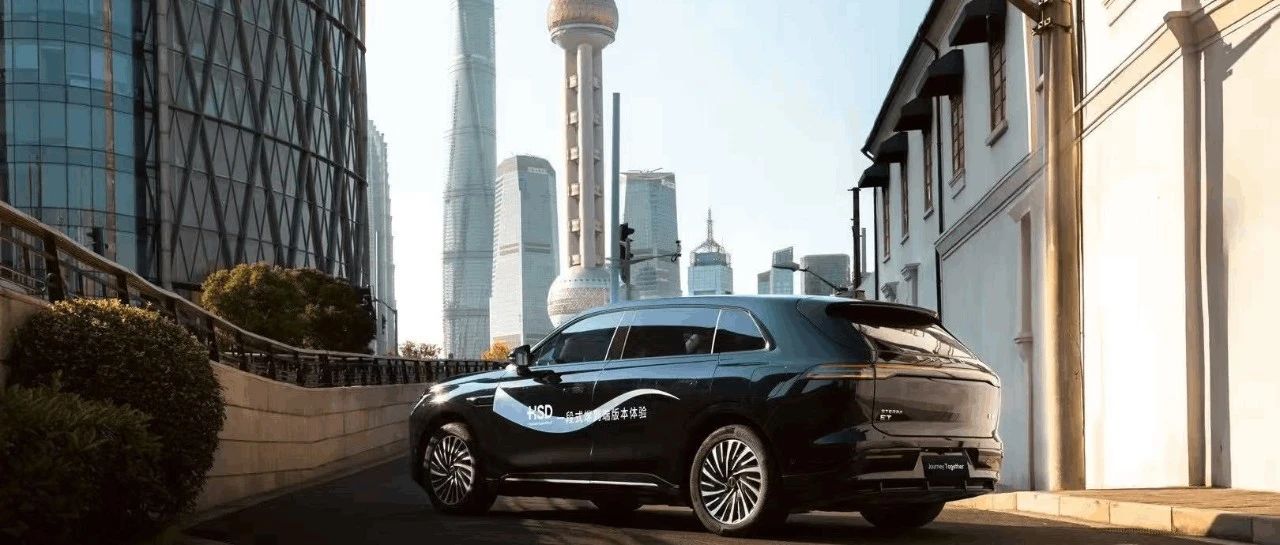
Core Viewpoint - Horizon has launched its most significant upgrade of the high-performance urban auxiliary driving product HSD, which is recognized as the "most Tesla-like FSD system" in China, enhancing safety, efficiency, and comfort in driving [3][5]. Group 1: Product Development and Features - HSD is built on the Journey 6P platform, achieving ultra-low latency from "photon input to trajectory output" and introducing reinforcement learning for maximizing model potential [8]. - The product covers various driving scenarios, including urban areas, highways, rural roads, and parking lots, and can handle complex driving tasks without relying on memory mapping [3][5]. - Horizon has established cooperation intentions with nearly 10 global automotive brands, with the first mass production set to be launched on Chery's Exeed Star Era E05 [3][5]. Group 2: Market Trends and Growth - The high-level auxiliary driving technology is transitioning from validation to large-scale adoption, with 902,200 new cars equipped with urban NOA delivered in China in the first five months of the year, marking a 152.5% year-on-year increase [5]. - Horizon has achieved over 8 million sets of front-mounted mass production shipments and over 200 mass-produced vehicle models as of the end of Q1 this year [16]. Group 3: Strategic Vision and Competitive Edge - The founder and CEO of Horizon emphasizes the importance of continuous technological iteration and the launch of high-performance products to maintain market leadership [16]. - Horizon's strategy of "soft and hard integration" has allowed it to achieve over 1000 times improvement in computing performance over the past decade, supporting the mass production of over 10 computing solutions [19][21]. - The company aims to become a leading player in the high-level auxiliary driving market, leveraging its unique position as a "full-stack soft and hard technology enterprise" with extensive practical experience [23].
机智谈|清华大学赵明国:首创5v5足球赛将促进机器人生态完善
Bei Ke Cai Jing· 2025-08-14 12:29
Core Insights - The article discusses the advancements in robotics, particularly focusing on humanoid robots and their applications in competitions like the RoboCup and the upcoming 2025 World Humanoid Robot Soccer Championship, highlighting the technological evolution and the significance of these events in the robotics industry [1][4]. Industry Development - Beijing's robotics industry is leading in China, accounting for approximately one-third of the national humanoid robot market, with a nearly 40% revenue growth in the first half of the year [4]. - The city is implementing initiatives such as "Hundred New Robot Products" and "Hundred Application Scenarios Demonstration" to further support the development of the robotics sector [4]. Technological Innovations - The 2025 World Humanoid Robot Soccer Championship will introduce a 5v5 format, emphasizing the need for improved coordination and strategic decision-making among robots [5][8]. - Key technological challenges include enabling robots to autonomously recover from falls and implementing powerful shooting techniques using end-to-end algorithms [8][10]. Educational Impact - The competitions serve as a platform for students to develop problem-solving skills and innovative thinking, which can translate into future career paths in robotics and engineering [11]. - Participation in robotics competitions can inspire youth to pursue careers in science and technology, fostering a new generation of engineers and innovators [11]. Cross-Disciplinary Advantages - Beijing benefits from a rich pool of talent and interdisciplinary collaboration, which is crucial for the evolution of intelligent robotics, moving beyond traditional mechanical and control systems to integrated intelligent solutions [12].

理想“大桌板”被黑惨了,能靠“冰箱彩电大沙发”卖爆也是真本事?
3 6 Ke· 2025-08-13 03:13
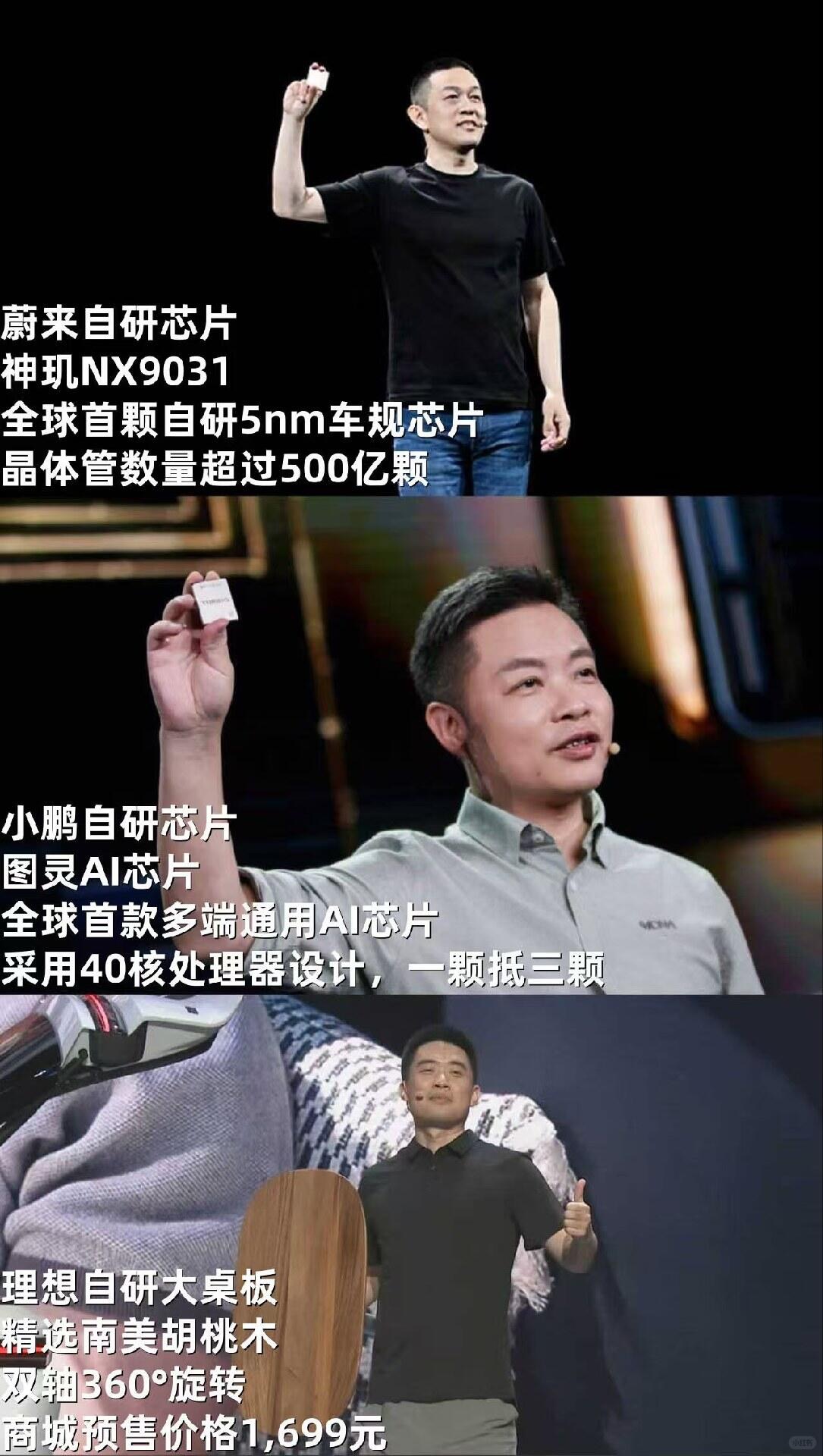
Core Viewpoint - The controversy surrounding the "large table board" priced at 1699 yuan in the Li Auto i8 highlights a shift in consumer perception and expectations in the electric vehicle market, contrasting with competitors who focus on advanced technology [1][5][6] Group 1: Product Features and Market Perception - The "large table board" has been criticized as a gimmick, with comparisons made to competitors NIO and Xpeng, who are perceived to be advancing in "black technology" [5][6] - Li Auto's focus on comfort features like the "large table board" raises questions about whether the company is prioritizing the right aspects of vehicle development [6][8] - The practicality of the "large table board" is debated, as it may not appeal to a broad audience despite its potential benefits for specific users [8][13] Group 2: Industry Comparisons and Criticism - Other automakers, such as Ferrari, have criticized the trend of adding non-essential features, arguing that it detracts from the core driving experience [11] - The backlash against Li Auto's comfort features is seen as a reaction to perceived over-marketing rather than a rejection of the features themselves [14][23] - Competitors like BYD and Dongfeng Fengshen are also incorporating similar comfort features, indicating a market acceptance of such configurations [13][15] Group 3: Technological Developments - Li Auto is advancing its VLA driver model, which allows for voice command control, positioning itself as a leader in the application of this technology among new energy vehicle brands [16][19][22] - The VLA technology is being developed in parallel with similar initiatives from competitors, highlighting a competitive landscape in the EV sector [19][22] - Despite criticisms, Li Auto's focus on family-oriented features has resonated with consumers, contributing to its market success [23][24]
新势力 | 7月:车市平稳运行 新势力销量维持稳定【民生汽车 崔琰团队】
汽车琰究· 2025-08-03 15:23
Core Viewpoint - The article highlights the stable performance of the new energy vehicle market in July 2025, with a focus on the delivery volumes of key players and the competitive landscape of the industry [2][3]. Group 1: Delivery Volumes of Key Players - Leap Motor delivered 50,129 units in July, a year-on-year increase of 126.9% and a month-on-month increase of 4.4% [2][11]. - AITO (问界) delivered 40,753 units, showing a year-on-year decrease of 1.9% and a month-on-month decrease of 8.8% [2][11]. - Xpeng delivered 36,717 units, marking a year-on-year increase of 229.4% and a month-on-month increase of 6.1% [2][11]. - Li Auto delivered 30,731 units, reflecting a year-on-year decrease of 39.7% and a month-on-month decrease of 15.3% [2][11]. - NIO delivered 27,017 units, with a year-on-year increase of 31.8% and a month-on-month increase of 8.4% [2][11]. - Aion delivered 26,557 units, showing a year-on-year decrease of 24.6% and a month-on-month decrease of 4.6% [2][11]. - Zeekr delivered 16,977 units, with a year-on-year increase of 8.4% and a month-on-month increase of 1.6% [2][11]. - Xiaomi delivered over 30,000 units, with its new SUV YU7 launched in June 2025 [2][11]. Group 2: Market Trends and Insights - The narrow passenger vehicle retail market size in July is estimated at approximately 1.85 million units, a year-on-year growth of 7.6% but a month-on-month decline of 11.2% [3]. - The penetration rate of new energy vehicles reached around 54.6%, with retail sales expected to hit 1.01 million units [3]. - The competitive landscape is improving due to regulatory measures by the Ministry of Industry and Information Technology, which aim to standardize the competition order in the new energy vehicle sector [3]. - The "trade-in" policy continues to provide growth momentum, supporting stable market performance [3]. Group 3: Company-Specific Insights - Leap Motor's growth is attributed to the strong performance of its B10 and C10 models, which are competitively priced under 200,000 yuan [4]. - AITO's M8 model, a family-sized SUV, is set to launch in August 2025, with pre-orders already initiated [4]. - Xpeng's sales are driven by the popularity of the MONA M03 model, and the company has expanded its charging network significantly [5]. - Li Auto's sales are under pressure due to market price wars and a shift in consumer preference towards lower-end models [6]. - NIO has launched several new models, including the ET5 and EC6, which are expected to enhance its market presence [7]. - Zeekr is preparing to launch the 9X model, which features advanced technology and luxury positioning [8]. - Xiaomi's YU7 SUV is positioned as a competitive offering in the 200,000 to 300,000 yuan price range, with strong initial order numbers [8]. Group 4: Technological Advancements - The article discusses the acceleration of end-to-end technology applications in autonomous driving, indicating a shift towards a more equitable access to smart driving capabilities [9]. - The advancements in smart driving technology are expected to lower hardware barriers, making it accessible in the mainstream market [9]. - The article emphasizes the importance of intelligent capabilities as a competitive factor among automakers, with a focus on companies that are leading in smart technology [10].