设备更新政策

Search documents
国泰海通|医药:设备更新政策持续落地,医疗设备景气度延续
国泰海通证券研究· 2025-09-12 08:52
Core Viewpoint - The medical equipment bidding scale continues to show good growth, driven by the implementation of equipment renewal policies, which is expected to lead to a long-term increase in medical equipment procurement levels [1][3]. Group 1: Investment Recommendations - Maintain an "overweight" rating, recommending medical equipment companies that are likely to benefit from the performance recovery driven by the implementation of equipment renewal policies [2]. - In August 2025, the new equipment bidding scale showed significant year-on-year growth: MR increased by 36.7%, CT by 77.5%, DR by 50.2%, ultrasound by 35.2%, while endoscopes decreased by 2.7% and surgical robots by 51.9% [2]. - Cumulatively, from January to August 2025, the new equipment bidding scale showed substantial growth: MR increased by 83.9%, CT by 93.6%, DR by 85.9%, ultrasound by 64.2%, endoscopes by 31.6%, and surgical robots by 46.5% [2]. Group 2: Policy and Market Trends - The equipment renewal policy is being implemented, which is expected to drive medical equipment procurement levels over a long period. The goal is to increase the investment scale in the medical and health field by over 25% compared to 2023 by 2027 [3]. - In 2024, various provinces and cities are expected to release large-scale procurement plans for domestic medical equipment renewal projects [3]. - Since 2025, the national push for large-scale equipment renewal has become more normalized and specialized, significantly enhancing the procurement enthusiasm of medical institutions [3]. Group 3: Market Characteristics and Funding Structure - The equipment renewal is showing more market-oriented characteristics, with an increasing proportion of self-purchases to meet the upgrading needs of medical institutions in high-end medical imaging and radiation therapy [4]. - The funding structure for equipment renewal is becoming more diversified, with local government funds, county-level medical community special funds, and self-raised funds from medical institutions increasingly contributing to the sustainability of equipment updates [4]. - Since 2025, county-level medical equipment renewal has become one of the more active areas in the market, with the demand driven by county medical community construction occupying a significant share of the overall market [4].


今年超长期特别国债支持设备更新的投资补助资金带动总投资超一万亿元 大规模设备更新带来什么(深度观察)
Ren Min Ri Bao· 2025-09-02 22:59
Core Viewpoint - The implementation of a new round of large-scale equipment updates is a crucial measure to promote high-quality development, expand effective investment, facilitate industrial upgrades, drive green development, and improve people's lives. Since the launch of the "Two New" initiative last year, large-scale equipment updates have been continuously effective, with approximately 8,400 projects supported by special long-term bonds by 2025, leading to a total investment exceeding 1 trillion yuan [1]. Policy Impact - The equipment update policy has shown significant results in stabilizing investment, growth, and promoting transformation. In 2024, the total number of equipment updates in key areas nationwide is expected to exceed 20 million units. From January to July this year, investment in equipment and tools increased by 15.2% year-on-year, outpacing overall investment growth by 13.6 percentage points, contributing to a 2.2 percentage point increase in total investment [9][10]. Financial Support - The special long-term bonds are led by the National Development and Reform Commission to support key equipment update projects and high-level recycling projects. Central fiscal policies provide interest subsidies of 1.5 percentage points on bank loans for eligible entities. The funding for scrapping and updating old operational vehicles and agricultural machinery is shared between central and local governments, with varying support ratios across regions [4][5]. Local Initiatives - Various regions have creatively implemented the equipment update policy. For instance, Jiangsu Province introduced "Transportation Loans" with fiscal interest subsidies, benefiting local companies significantly. As of July this year, Jiangsu's cooperative banks had issued 100 "Transportation Loan" projects, amounting to 6.783 billion yuan in loans with over 70 million yuan in interest subsidies [5]. Application Process - The application process for enjoying the equipment update policy is straightforward and efficient. Companies have reported quick approval times for subsidy applications, with some receiving funds within two months of application [6][7]. Environmental Focus - The equipment updates also emphasize green initiatives. For example, the State Grid has completed energy efficiency upgrades for over 240,000 transformers, increasing the proportion of transformers with energy efficiency ratings of level 2 and above to 10% [12][13]. Community Benefits - The equipment update policy not only focuses on industrial upgrades but also enhances public welfare. For instance, the government has allocated 6.2 billion yuan in 2024 to support the update of 41,000 old residential elevators, benefiting nearly 1.7 million households [14]. Recycling and Standards - The promotion of large-scale equipment updates involves two critical aspects: recycling and standard enhancement. The re-manufacturing industry has seen its annual output value rise to nearly 200 billion yuan, with significant improvements in recycling rates for core products [16][17]. Additionally, the introduction of advanced technology and production processes is driving equipment towards higher-end, intelligent, and green development, supported by updated national standards [18].
联影医疗(688271):25Q2营收同比增长19%,国内业务稳步复苏
Guoxin Securities· 2025-09-02 14:29
Investment Rating - The investment rating for the company is "Outperform the Market" [5][19]. Core Views - The company's performance is showing a recovery driven by the rebound in the domestic bidding market, with significant growth in overseas markets. The revenue forecast for 2025-2027 has been raised, expecting revenues of 124.1 billion, 145.1 billion, and 169.4 billion respectively, with year-on-year growth rates of 20.4%, 16.9%, and 16.8% [3][19]. Financial Performance - In the first half of 2025, the company achieved revenue of 60.16 billion yuan, a year-on-year increase of 12.79%, and a net profit of 9.98 billion yuan, up 5.03%. In Q2 2025 alone, revenue reached 35.38 billion yuan, growing by 18.60% year-on-year [1][8]. - The revenue from equipment sales in the first half of 2025 was 48.9 billion yuan, reflecting a 7.6% increase, while the maintenance service business grew rapidly, generating 8.16 billion yuan in revenue, a 32.2% increase [1][13]. Market Segmentation - The domestic market generated 48.7 billion yuan in revenue in the first half of 2025, up 10.7%, benefiting from accelerated equipment update policies and a significant recovery in the bidding market. The overseas market saw revenue of 11.4 billion yuan, a remarkable increase of 22.5%, with revenue contribution rising to 19% [2][13]. Profitability and Cost Control - The company's gross margin for the first half of 2025 was 47.93%, a slight decrease of 2.45 percentage points, primarily due to price competition from centralized procurement. However, all expense ratios, including sales, management, R&D, and financial expenses, showed a decline, indicating effective cost control [2][18]. Earnings Forecast - The forecast for net profit for 2025-2027 has been adjusted to 19.5 billion, 23.7 billion, and 27.7 billion yuan respectively, with corresponding year-on-year growth rates of 54.5%, 21.7%, and 16.7% [3][19]. Valuation Metrics - The current stock price corresponds to a price-to-earnings (PE) ratio of 64, 53, and 45 for the years 2025, 2026, and 2027 respectively [3][19].

宏观政策效应进一步释放,7月工业生产保持较快增长
Xin Lang Cai Jing· 2025-08-15 02:56
Group 1 - In July, the industrial added value of large-scale industries increased by 5.7% year-on-year, a slight decline of 1.1 percentage points compared to the first half of the year [1] - From January to July, the industrial added value grew by 6.3% year-on-year [1] - Among the three major sectors, mining increased by 5.0%, manufacturing by 6.2%, and electricity, heat, gas, and water production and supply by 3.3% in July [1] Group 2 - In July, 35 out of 41 major industries maintained year-on-year growth in added value, with notable increases in chemical manufacturing (7.2%), transportation equipment manufacturing (13.7%), electrical machinery (10.2%), and computer and electronic equipment manufacturing (10.2%) [1] - The equipment manufacturing sector saw an 8.4% increase in added value, while high-tech manufacturing grew by 9.3%, both exceeding the overall industrial growth rate by 2.7 and 3.6 percentage points respectively [1] - The policy for equipment updates has stimulated demand across industries for upgrading equipment, supported by financial assistance and policy incentives [1] Group 3 - The National Development and Reform Commission announced that 188 billion yuan of special government bonds for equipment updates have been allocated, supporting approximately 8,400 projects across various sectors, leading to a total investment exceeding 1 trillion yuan [2] - Analysts predict that industrial production momentum may weaken in the second half of the year due to declining exports and increased domestic consumption and investment efforts [3] - The overall industrial production growth rate is expected to slow down, potentially aligning with or slightly below GDP growth, indicating a shift in economic growth drivers towards the service sector [3] Group 4 - The Ministry of Industry and Information Technology plans to introduce growth stabilization measures for key industries such as steel, non-ferrous metals, petrochemicals, and building materials [4] - The ministry aims to support major industrial provinces in implementing supportive policies, fostering new growth points, and enhancing industrial transformation to stabilize industrial economic operations [4]
激发民间投资活力靠什么(子夜走笔)
Ren Min Ri Bao· 2025-08-12 21:55
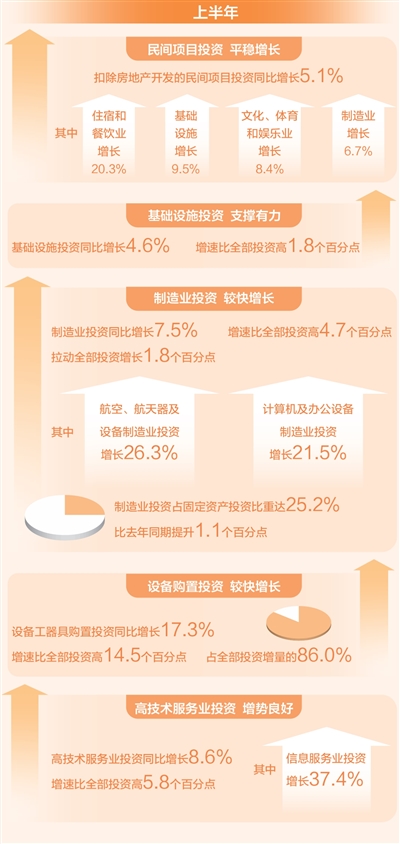
Core Insights - The article emphasizes the importance of stimulating private investment to effectively unleash domestic demand potential, with private project investment (excluding real estate) showing a year-on-year growth of 5.1% in the first half of the year, indicating strong resilience [2]. Group 1: Investment Growth and Support - The "Two New" and "Two Heavy" initiatives have effectively supported investment, with a significant increase in equipment and tool purchases, which rose by 17.3% year-on-year, contributing 86.0% to overall investment growth [2]. - Private investment in the manufacturing sector grew by 6.7%, with notable growth in sub-sectors such as automobile manufacturing and specialized equipment manufacturing, reflecting the accelerated transformation of policy dividends into corporate development momentum [3]. Group 2: Local Government Initiatives - Local governments have actively implemented precise measures to unblock investment bottlenecks, such as Jiangsu breaking down market access barriers for private enterprises and encouraging participation in competitive infrastructure sectors like nuclear power and wind energy [3]. - Hubei has rolled out a list of investment projects aimed at private capital, with an expected total investment of over 700 billion yuan in three years, showcasing the effectiveness of local efforts in optimizing services and facilitating private investment [3]. Group 3: Long-term Investment Environment - For sustained vitality in private investment, it is crucial to further refine measures that create a fair competitive environment in areas such as resource acquisition, market access, and rights protection, thereby reducing institutional transaction costs [3]. - The goal is to ensure that private capital perceives an accessible and rewarding investment environment, which will support corporate innovation and drive high-quality development [3].
银河日评|十四五收官与十五五规划形成双轮驱动,全市场超3800只个股上涨
Sou Hu Cai Jing· 2025-08-04 13:35
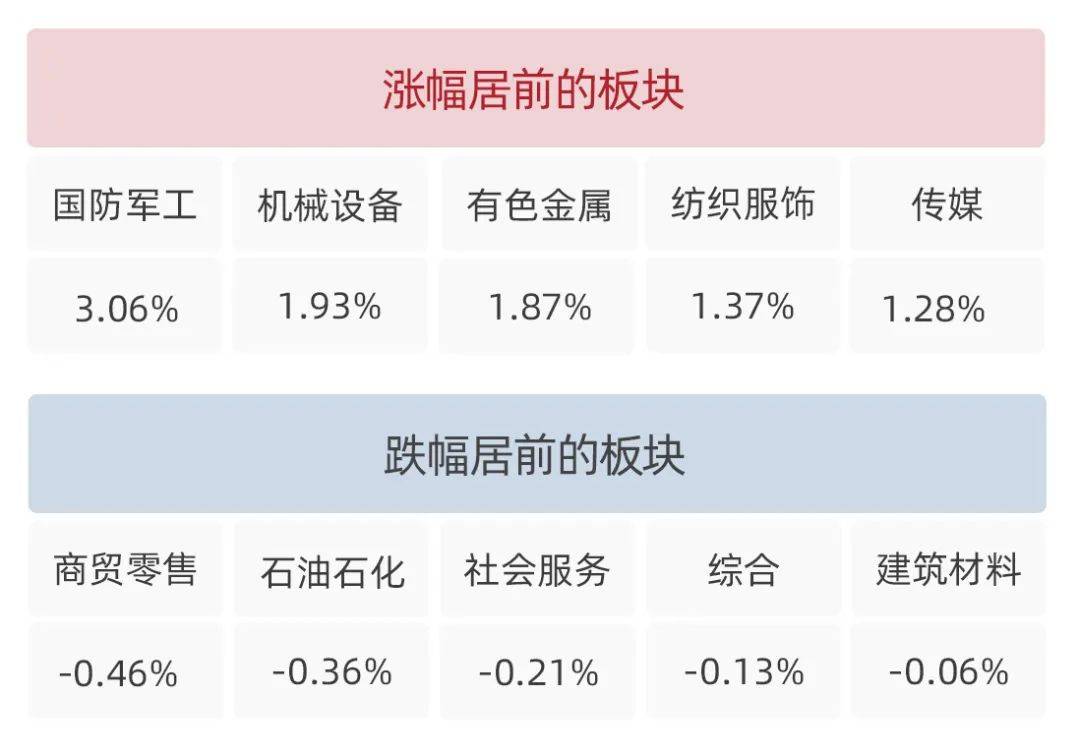
Market Performance - The defense and military, machinery equipment, and non-ferrous metals sectors showed the highest gains, with increases of 3.06%, 1.93%, and 1.87% respectively [1] - Over 3,300 stocks in the market experienced an increase [1] - The Shanghai Composite Index rose by 0.66%, while the CSI 300 and Shenzhen Composite Index increased by 0.39% and 0.46% respectively [1] Sector Analysis - The defense and military sector is driven by the dual momentum of the completion of the 14th Five-Year Plan and the initiation of the 15th Five-Year Plan, alongside increased demand due to international geopolitical conflicts [2] - The machinery equipment sector benefits from the upcoming implementation of the Ministry of Industry and Information Technology's growth stabilization plan and equipment renewal policies, with the manufacturing PMI returning to an expansion zone [2] - The non-ferrous metals sector is supported by a robust supply-demand dynamic, with industrial metals like copper, aluminum, and rare earths benefiting from infrastructure and new energy demands, while strategic metals like germanium and antimony are experiencing price premiums due to export controls [2] Weak Sectors - The retail sector is facing challenges due to the U.S. suspension of small-value tax exemptions, which may increase cash flow pressures for companies and suppress expansion expectations [2] - The oil and petrochemical sector is negatively impacted by OPEC+'s decision to increase production by 547,000 barrels per day starting in September, leading to a significant drop in international oil prices [2] - The social services sector is experiencing notable outflows of main funds, compounded by rapid sector rotation, resulting in declines [2] Future Outlook - The A-share market has shown adjustments amid internal and external disturbances, with increased market divergence [3] - The temporary relief from U.S.-China tariff pressures has not fully alleviated risks, as factors like delayed Fed rate cuts and domestic policy not exceeding expectations continue to suppress risk appetite [3] - The recent Politburo meeting emphasized the implementation of existing policies and capacity governance, shifting the policy focus from short-term stimulus to structural optimization, which may strengthen market positioning in the medium to long term [3]
国泰海通|宏观:PMI淡季回落,价格上涨——2025年7月PMI数据点评
国泰海通证券研究· 2025-08-01 09:44
Core Viewpoint - The manufacturing PMI declined in July, influenced by seasonal factors and the implementation of "anti-involution" policies aimed at capacity management in key industries, which has led to an increase in raw material prices. Additionally, weak real estate demand has negatively impacted domestic demand [1]. Manufacturing Sector - In July 2025, the manufacturing PMI was 49.3%, a decrease of 0.4 percentage points from the previous month. The construction business activity index was 50.6%, down 2.2 percentage points, while the services business activity index was 50.0%, a slight decline of 0.1 percentage points [2]. - The marginal decline in manufacturing PMI aligns with seasonal trends, with some regions experiencing supply and demand disruptions due to extreme weather conditions. There is a notable divergence in PMI performance between large and small enterprises [2]. - Production has entered a low season, with demand showing a greater-than-seasonal slowdown. Certain sectors, such as railway, shipping, aerospace, and computer communication, continue to see new orders in the expansion zone, likely due to ongoing equipment upgrade policies. Conversely, sectors like chemical raw materials and non-metallic mineral products remain below the critical point due to insufficient end-demand amid real estate pressures [2]. Services Sector - The service sector remains stable, supported by seasonal factors. The tourism-related industries have seen increased activity due to summer holiday effects, with transportation, postal, and entertainment sectors maintaining high business activity indices. However, real estate and residential services are in contraction zones, indicating weaker performance [3]. - The construction industry has experienced a greater-than-seasonal decline in activity, primarily due to weak real estate demand and a slowdown in fiscal spending on infrastructure projects. Future improvements in construction activity are anticipated, supported by major projects like the Yarlung Tsangpo River hydropower project, with a total investment of approximately 1.2 trillion yuan [3]. Policy and Investment Outlook - The central political bureau meeting in July emphasized the need for sustained macro policy efforts and timely enhancements. The focus should be on three main lines: first, the "anti-involution" policies are expected to adjust supply-side dynamics in certain industries, potentially boosting price levels; second, 69 billion yuan in special long-term bonds for consumer upgrades will be allocated in July, with remaining funds to be disbursed in October, supporting consumption; third, urban renewal projects are likely to enhance investment, particularly in municipal infrastructure and the renovation of old urban areas [4].

2025年7月PMI数据点评:PMI淡季回落,价格上涨
Haitong Securities International· 2025-07-31 14:31
Group 1: Manufacturing PMI Insights - In July 2025, the manufacturing PMI decreased to 49.3%, down 0.4 percentage points from the previous month[6] - The production index for July was 50.5%, reflecting a seasonal decline of 0.5 percentage points[13] - The new orders index fell to 49.4%, a decrease of 0.8 percentage points, indicating a stronger-than-seasonal decline in demand[13] Group 2: Sector Performance - The construction business activity index was 50.6%, down 2.2 percentage points, influenced by weak real estate demand and slowing fiscal spending on infrastructure projects[27] - The services business activity index remained stable at 50.0%, with tourism-related sectors performing well during the summer[25] - In key industries, the equipment manufacturing PMI was 50.3%, while the consumer goods industry PMI dropped to 49.5%, down 0.9 percentage points[12] Group 3: Raw Material Prices and Inventory - The main raw material purchase price index rose to 51.5%, an increase of 3.1 percentage points, marking the first rise above the critical point since March 2025[19] - The procurement index fell to 49.5%, down 0.7 percentage points, indicating reduced purchasing activity due to insufficient domestic demand[21] - The raw material inventory index decreased to 47.7%, down 0.3 percentage points, suggesting continued reduction in inventory levels[21] Group 4: Policy and Economic Outlook - The central political bureau emphasized the need for sustained macroeconomic policy efforts, including timely fiscal measures[29] - A total of 69 billion yuan was allocated in July for consumer support initiatives, with additional funds expected in October[29] - Urban renewal projects are anticipated to boost investment, particularly in municipal infrastructure and renovation of old neighborhoods[29]
国泰海通晨报-20250723
Haitong Securities· 2025-07-23 02:24
Group 1: Company Analysis - Yonyou Network - The report maintains a "Buy" rating for Yonyou Network, with a target price of 18.82 CNY, reflecting a dynamic PS of 6.5 times for 2025 [3][4] - In Q2 2025, the company is expected to achieve revenue of 21.82-22.62 billion CNY, marking a year-on-year increase of 6.1% to 10.0%, with contract signing amounts growing over 18% year-on-year in Q2 [3][4] - The company is transitioning to a subscription model, which is expected to impact short-term operations but is anticipated to enhance long-term profitability [3] Group 2: Industry Analysis - Medical Devices - The medical device procurement scale in the first half of 2025 has shown robust growth, with June procurement up 25% year-on-year and a cumulative increase of 41% for the first half [8][9] - The implementation of equipment update policies is expected to drive long-term growth in medical device procurement, with a target of over 25% growth in investment scale by 2027 compared to 2023 [9][10] - Hospital funding pressures are easing, which is likely to support the gradual recovery of medical device companies' performance [10] Group 3: Industry Analysis - Forklifts - The report highlights the potential for rapid development of unmanned forklifts due to advancements in AI and the maturation of supply chains, recommending traditional forklift companies with strong operational quality [11][12] - Unmanned forklifts, which integrate forklift and AGV technologies, are expected to see increased market penetration as their economic viability improves [11][12] - Traditional forklift leaders are well-positioned to benefit from the shift towards automation, leveraging their established sales networks and customer bases [12][13]
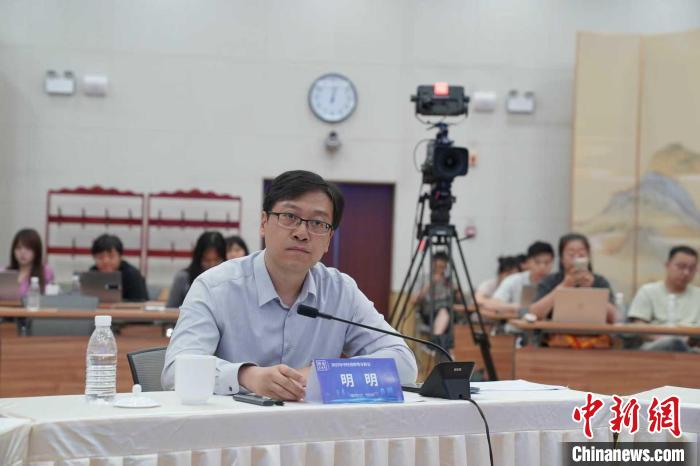
明明:财政、金融政策发力助上半年中国经济温和回升
Zhong Guo Xin Wen Wang· 2025-07-15 09:41
Core Viewpoint - The Chinese economy showed a moderate recovery in the first half of 2025, achieving a growth rate of 5.3%, supported by proactive fiscal and monetary policies [1][3]. Fiscal Policy - The fiscal policy has become more aggressive, with the issuance of special government bonds increasing from 1 trillion yuan to 1.3 trillion yuan, and the support for the trade-in program doubling from 150 billion yuan to 300 billion yuan [3]. - New special bonds amounting to 4.4 trillion yuan are expected to focus primarily on real estate acquisition [3]. - The government has maintained a high utilization rate of public fiscal deficits in the first quarter, indicating a continued expansion of fiscal spending [3]. Monetary Policy - Short-term interest rates have been lowered, with market interest rates declining more than benchmark rates since the second half of the first quarter [3]. - A series of financial support policies, including reserve requirement ratio cuts and interest rate reductions, have been implemented since May 7, which are expected to boost credit expansion and demand [3]. Consumption Sector - The consumption sector has seen a rebound in retail sales growth, driven by the trade-in policy, particularly in automobiles, home appliances, and digital products [4]. Manufacturing Sector - The industrial added value for large-scale enterprises grew by 6.4% year-on-year, with equipment manufacturing and high-tech manufacturing increasing by 10.2% and 9.5%, respectively [5]. - Manufacturing investment is projected to grow by approximately 8.4% in 2025, supported by policies aimed at enhancing new productive forces and equipment upgrades [5]. Future Outlook - The government is expected to implement expansionary policies in the second half of the year to support growth, particularly in weak areas such as real estate, services, and consumption [5]. - There is strong confidence in achieving a GDP growth rate of over 5% for the year, given the positive results from the first half [6].