
货币宽松政策

Search documents
美股连续三年两位数上涨,2026年是涨是跌?
日经中文网· 2026-01-06 07:22
Core Viewpoint - The S&P 500 index experienced a 16% increase in 2025, marking three consecutive years of double-digit growth, with a cumulative return of 78% from 2023 to 2025. Historical data suggests a high likelihood of significant volatility (over 10% up or down) in 2026 following such performance [2][4]. Group 1: Historical Context and Predictions - In the past century, there have been nine instances of the S&P 500 achieving three consecutive years of double-digit growth, with seven of those instances resulting in over 10% volatility in the following year [4]. - The most recent similar occurrence was from 2019 to 2021, which was followed by a 19% decline in 2022 due to aggressive interest rate hikes by the Federal Reserve in response to inflation [4]. - The absence of major events like midterm elections in 2026 shifts focus to the upcoming nomination of the next Federal Reserve chair, with current chair Jerome Powell's term ending in May [4]. Group 2: Potential Candidates for Federal Reserve Chair - Kevin Hassett, the Director of the National Economic Council, has a 40% chance of being nominated, seen as aligned with Trump's monetary policy intentions, which may lead to expectations of significant interest rate cuts [5]. - Other potential candidates include Kevin Warsh and Christopher Waller, both categorized as "doves" compared to Powell [5][6]. Group 3: Monetary Policy Scenarios - The core scenario anticipates a reduction of the policy interest rate to between 3.0% and 3.25%, with expectations of two rate cuts in 2026 [6]. - A bullish scenario suggests that a dovish new Fed chair could lower rates below 3%, potentially driving economic growth and stock market gains [8]. - Conversely, a bearish scenario posits that the Fed may need to raise rates again by the end of 2026 due to accelerating inflation and currency depreciation, despite a dovish chair [8]. Group 4: Market Projections - Under the core scenario, the S&P 500 index is projected to reach 7,750 points by the end of 2026, a 10% increase from 6,845 points at the end of 2025 [8]. - In a bullish scenario, the index could rise by 30% to 9,000 points, while in a bearish scenario, it could fall by 30% to 5,000 points [8].

国际金融市场早知道:1月6日
Xin Hua Cai Jing· 2026-01-06 00:56
Group 1 - The Federal Reserve officials suggest that the current interest rate levels may be close to the "neutral rate," with future policy direction dependent on the latest economic data [1][1][1] - The U.S. budget deficit is projected to reach $1.9 trillion this year, with debt-to-GDP ratio expected to rise to 100% and continue increasing [1][1][1] - Venezuela's oil production is being forced to cut back due to U.S. sanctions, which have led to export disruptions and full storage facilities [2][2][2] Group 2 - The Swiss government has frozen all assets held by Venezuelan President Maduro and related individuals in Switzerland for a period of four years [2][2][2] - French consumer behavior is becoming more cautious, reflecting deeper structural issues in the economy, with rising public debt and declining purchasing power [2][2][2] - The Bank of Japan's Governor Ueda emphasizes the continuation of interest rate hikes to achieve stable inflation targets and long-term economic growth [3][3][3] Group 3 - The Dow Jones Industrial Average rose by 594.79 points, closing at 48,977.18, marking a 1.23% increase [4][4][4] - COMEX gold futures increased by 3.00% to $4,459.70 per ounce, while silver futures rose by 7.74% to $76.51 per ounce [5][5][5] - Crude oil prices saw an increase, with light crude futures up by $1.00 to $58.32 per barrel, and Brent crude futures up by $1.01 to $61.76 per barrel [6][6][6]
植田和男新年首讲“放鹰”:日本央行加息进程将持续推进
Zhi Tong Cai Jing· 2026-01-05 06:50
Core Viewpoint - The Governor of the Bank of Japan, Kazuo Ueda, emphasized the intention to continue raising the benchmark interest rate in response to economic recovery and inflation trends [1] Group 1: Interest Rate Policy - The Bank of Japan raised the benchmark interest rate to 0.75% on December 19, marking the highest level since 1995 [1] - Ueda indicated that timely adjustments to monetary easing policies are essential for achieving stable inflation targets and promoting long-term economic growth [1] - Market expectations suggest that the next rate hike may occur around mid-year, although some analysts warn that the risk of an earlier increase is rising due to a weak yen [1] Group 2: Economic Indicators - The yield on Japan's 10-year government bonds has reached its highest level since 1999, driven by market expectations of further rate hikes [1] - Ueda noted a positive cycle between moderate wage growth and inflation, which is expected to be maintained [1] - Japan's core inflation has remained above the central bank's 2% target for over three and a half years, leading to increased pressure on households due to rising living costs [2] Group 3: Currency Impact - The yen was trading around 157.18 against the dollar, having previously hit a two-week low of 157.25, with the exchange rate approaching a critical threshold of 160 [1] - The weak yen is contributing to higher import costs, exacerbating inflationary pressures in the economy [2]
黄金调整还没结束,但牛市仍在!
Sou Hu Cai Jing· 2026-01-02 02:15
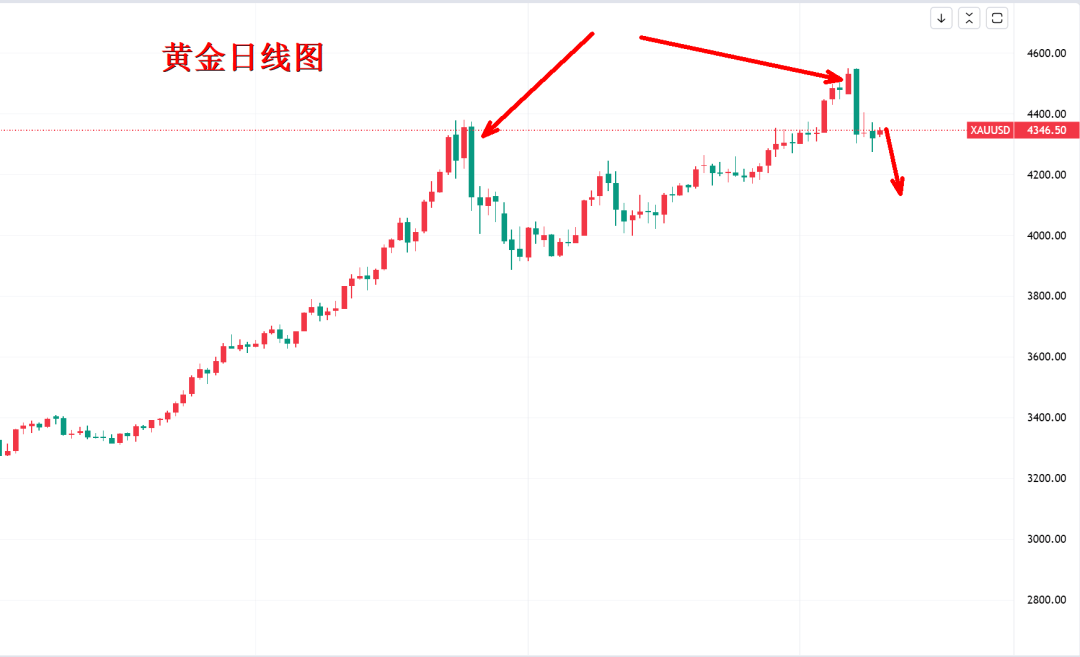
Group 1 - The current gold bull market is under discussion, with potential price targets of $5000 or $6000, and RMB gold prices possibly reaching 1200 or 1300 [1] - The US dollar has declined by over 8%, and further interest rate cuts by the Federal Reserve could lead to a more significant drop by 2026, which would benefit non-USD currencies, particularly the RMB [2] - The upcoming announcement of the new Federal Reserve Chair is crucial, as a more aggressive monetary easing policy could further suppress the dollar and boost the gold and silver markets [2] Group 2 - The ongoing power struggle between the President and the Federal Reserve is expected to intensify, especially with the upcoming elections and the limited time frame of the current administration [3] - Recent fluctuations in gold prices have shown a significant drop from $4550 to around $4300, with current trading between $4400 and $4300 [4] - The gold market is experiencing a typical adjustment phase, with key resistance at $4400, indicating potential opportunities for future buyers [6]
Analyst eyes 'calm before storm' as gold and silver hit record highs
Yahoo Finance· 2025-12-31 17:29
Core Insights - Precious metals, particularly gold and silver, have reached record highs due to geopolitical concerns and inflation worries stemming from the tariff war [1] - Gold's price peaked at $4,549 per ounce and silver at $83.62, prompting higher projections from market analysts [1] Market Trends - Historically, surges in gold and silver prices indicate the beginning of a new market cycle rather than the end of an existing one [2] - The current rally in precious metals is compared to the market behavior observed in mid-2020, where monetary easing led to increased liquidity and a flow of capital into safe-haven assets [3] Investment Behavior - Gold is viewed as a hedge against U.S. dollar devaluation, reacting more swiftly than stocks, while silver has both monetary and industrial value, typically following gold's price movements [4] - Following the March 2020 market crash, gold rose from $1,450 to $2,075 per ounce, and silver increased from $12 to $29 as the Federal Reserve injected liquidity [5] Capital Rotation - The initial rally in precious metals did not immediately trigger a rise in risk assets like Bitcoin, which remained in the $9,000-$12,000 range until after precious metals peaked [6] - This capital rotation signifies a shift from fear-driven positioning to growth-driven investment, reflecting similarities to the market cycle of 2020 [7]
《经济学人》:美国经济似乎即将加速增长
美股IPO· 2025-12-31 16:31
Core Viewpoint - The article presents an optimistic outlook for the U.S. economy in 2026, driven by tax cuts and potential government spending increases, despite concerns about tariffs and inflation [3][10]. Economic Growth Predictions - U.S. Treasury Secretary Scott Bessen predicts accelerated economic growth starting in 2026, supported by the tax cut law "One Big Beautiful Bill Act" (BBB), which is expected to provide a stimulus equivalent to 0.3% of GDP [3][4]. - The Federal Reserve Bank of Philadelphia's survey indicates a potential slowdown in economic growth to 1.8% in 2026 due to policy confusion and tariff pressures [3]. - The annualized GDP growth rate for Q3 2025 was reported at 4.3%, indicating a healthy economic environment prior to potential disruptions from government shutdowns [3]. Government Spending and Taxation - The Hutchins Center estimates that government spending restoration could provide an additional GDP stimulus of 0.6% alongside the tax refunds [4]. - A significant reduction in IRS budget could lead to increased tax evasion, potentially impacting GDP by 0.25% or more [4]. Tariff Implications - The Congressional Budget Office forecasts tariff revenues to reach $215 billion by 2026, which could indirectly affect consumer purchasing power through higher prices [6]. - The Supreme Court's potential ruling on tariffs could necessitate refunds for companies that paid illegal tariffs, impacting GDP by approximately 0.5% [6][7]. Monetary Policy and Market Outlook - The Federal Reserve has lowered interest rates to a range of 3.5%-3.75%, the lowest since 2022, indicating a shift towards more accommodative monetary policy [7]. - Predictions suggest that the S&P 500 index could rise by 9% in 2026, which would enhance household wealth and stimulate consumer spending [9]. Global Economic Context - Analysts predict that 2026 could witness strong international economic growth, driven by fiscal expansions in Germany and consumer stimulus reforms in China [10]. - Current Brent crude oil prices are at $61 per barrel, near a four-year low, which could further support economic growth [10]. Labor Market and Inflation Concerns - Despite a tight labor market, strong wage growth suggests resilience rather than weakness, although low hiring numbers remain a concern [10]. - The article warns that combining fiscal and monetary stimulus could reignite concerns over government debt, potentially undermining the credibility of the Federal Reserve's inflation target [10].

费雪方程式为什么在中国失灵了?
Sou Hu Cai Jing· 2025-12-31 15:11
Group 1 - The year 2025 is expected to be a "water release year" for monetary easing, with consumer subsidies doubled, yet the consumer price index from January to November shows a year-on-year change of 0.0% [2] - The Fisher equation, proposed by economist Irving Fisher in 1911, suggests that an increase in money supply typically leads to rising prices. In China, broad money supply (M2) surged by 8% to 337 trillion yuan (approximately 48 trillion USD), significantly exceeding the money supply of the US, Japan, and the Eurozone combined [4] - The increase in M2 has not translated into consumer spending, as the funds have primarily flowed to the production side rather than directly to consumers, indicating a disconnect in the expected economic cycle [4] Group 2 - The failure is not in the Fisher equation but in investment policies, as the production side has not effectively stimulated demand and employment, leading to diminishing returns on investment [6] - The root cause of diminishing efficiency is resource misallocation, where funding decisions are made by office elites rather than responding to market signals, highlighting the need for reforms in the factor market [6] - The upcoming year will see a renewed emphasis on strengthening the demand side, with consumer subsidies expected to double again, although international institutions maintain a conservative outlook due to limited available tools [6]

韩国12月通胀有所降温 但不太可能促使央行重启宽松政策
Xin Hua Cai Jing· 2025-12-30 23:53
Core Insights - The consumer price index in South Korea rose by 2.3% year-on-year in December, a slight decrease from 2.4% in November, indicating a moderation in price pressures [1] - The core inflation rate remained steady at 2%, consistent with the growth rate in November, suggesting that overall inflation is still close to the Bank of Korea's target of 2% [1] Inflation Trends - The data indicates a reduction in inflationary pressures, but it is unlikely to prompt the Bank of Korea to resume monetary easing on January 15 [1] - Concerns over rising housing prices and increasing mortgage debt levels are causing the central bank to hesitate in implementing further stimulus measures [1] Future Outlook - There are warnings from authorities that the trend of rising food prices may lead to inflation exceeding expected levels in the coming year, despite overall price pressures remaining manageable [1]
中信建投:2026年铜将迎来历史级别上涨
Di Yi Cai Jing· 2025-12-30 01:07
Core Viewpoint - The report from CITIC Securities indicates that the macroeconomic trends driving the surge in gold prices this year will lead to a rise in copper prices by 2026, as the old order collapses and a new pricing structure for copper is established [1] Group 1: Macroeconomic Trends - The "collapse of the old order" in 2025 will result in a surge in gold prices, while 2026 will see the establishment of a new order that will drive copper prices higher [1] - The era of Tariff 2.0 is reshaping the global economic order, accelerating the restructuring of supply chains, with copper being a core raw material for industrial manufacturing, thus expanding its demand as the industrial chain shifts [1] Group 2: Geopolitical Dynamics - In 2025, the focus of major power competition will be on tariff impacts, leading to an increase in gold prices, while in 2026, the competition will shift towards technology and security, resulting in higher copper prices [1] - The demand for copper will continue to grow due to new momentum generated by the AI industry, particularly in areas such as AI data centers [1] Group 3: Domestic Demand and Monetary Policy - In 2025, major powers will concentrate on tariff disputes, which will elevate gold prices, while in 2026, there will be a return to stable domestic demand in both China and the U.S., contributing to a rise in copper prices [1] - The gradual transmission of monetary easing policies to traditional industrial sectors will improve manufacturing sentiment, directly linking to a recovery in the old momentum demand for copper, thereby solidifying its demand base [1]

中信建投宏观首席周君芝:2026年铜将迎来历史级别上涨
Sou Hu Cai Jing· 2025-12-30 01:05
Core Viewpoint - The macroeconomic trends driving the surge in gold prices this year are expected to shift towards copper pricing by 2026, indicating a transition in the global economic order [1] Group 1: Macroeconomic Trends - The "collapse of the old order" in 2025 will lead to a rise in gold prices, while 2026 will see the establishment of a new order with rising copper prices [1] - The era of tariffs 2.0 is reshaping global economic and trade orders, accelerating the restructuring of supply chains, with copper being a core industrial manufacturing raw material [1] Group 2: Geopolitical Dynamics - In 2025, the focus of major power competition will be on tariff impacts, leading to increased gold prices, while in 2026, the competition will shift towards technology and security, resulting in higher copper prices [1] - The demand for copper will grow due to new momentum from the AI industry, particularly in areas like AI data centers [1] Group 3: Domestic Demand and Monetary Policy - In 2025, major powers will concentrate on tariff disputes, which will elevate gold prices, while in 2026, they will return to stable domestic demand, positively impacting copper prices [1] - The gradual transmission of monetary easing policies to traditional industrial sectors will improve manufacturing sentiment, directly linking to a recovery in copper's old momentum demand [1]